Blogs
|
Sorry, but I have to take a moment away from Technology in Education to help spread the news about some devastating decisions that are made in Hawaii by our government leaders. Legislators in Hawaii are attempting to pass bills (some as late as 2 a.m. in the morning) that will strip teachers collective bargaining rights. This is very similar to what happened to educators in Wisconsin.Please read further to find out how you can help, and you don't have to live in Hawaii to help us out!Our state legislators are threatening to strip teachers of our collective bargaining rights. The same situation that occurred in Wisconsin a year ago. We need to stand and fight and we need all the help we can get. Below is a letter I sent to ALL of our State Representatives and Senators. Feel free to borrow it and change it to fit your opinion.Please share my message with your friends. Tweet it, Facebook it, e-mail it. Blog it. What ever it takes.-----------------------Hello,My name is Michael Fricano II. I am an elementary school teacher. I am an educator and I am a professional. I'm not just another state employee. I care about my job. I care about my profession. I care about the people I work with and the people I work for. I care about the students and families that I deal with. And I care about all these things no matter what the outcome is.I was recently informed that a group of our state legislator's met (in what seems like secrecy) at 2 a.m. this morning to pass out a teacher evaluation bill that would effectively strip teachers of the collective bargaining rights currently provided by law. It seems this legislation would give the BOE unilateral rights to make changes to our contract without bargaining and this seems eerily similar to what was done to teachers in Wisconsin just one year ago.I respectfully ask that legislators please let us negotiate, don’t legislate this away from us. Negotiate, don’t legislate, don’t mandate, don’t negate the rights of Hawaii’s teachers.We have earned and we deserve the right to negotiate these and other issues with our employer. We don't appreciate the decision by a few to take those rights away from us and force decisions upon us that we either don't understand or don't agree with. This shows a GREAT DEAL of disrespect to your state employees and to the teaching profession in general.Just because other states seem to be taking this road in how decisions are made, doesn't mean Hawaii needs to follow and doesn't make this method of decision making the right method. Be a leader and set an example for the rest of the nation and the world and do what is right rather than following those who are wrong.Thank you for taking the time to read the opinion of one professional educator and thank you for your consideration. I look forward to hearing an honest and non-generic response from you.Michael Fricano II-----------------------You can send your letters to the following email address.ALL Representatives: reps@capitol.hawaii.govALL Senators: sens@capitol.hawaii.gov
Michael Fricano II
.
Blog
.
<span class='date ' tip=''><i class='icon-time'></i> Jul 23, 2015 07:50am</span>
|
|
As you (probably) know, I am a South African expat, living in the UK. If you're an expat, too, you will know that a conversation about your accent is something that takes place pretty much on a daily basis. Shopkeepers, people with whom you strike up conversations on the train, people on the other end of the phone, fellow attendees at business meetings... everywhere and anywhere seems to be the right place and any time seems to be the right time for "Where are you from?"Some people like to guess. South Africans ('saffas'), New Zealanders (kiwis) and Australians (ozzies) often get mistaken for each other. At one stage, I worked with an Australian. We had a lot in common and we got on really well. His family and mine spent social time together on the weekends. This clearly showed in the way we interacted with each other at work, and many people assumed we were a couple, because we got on so well together and 'had the same accent.'These are three very competitive sporting nations and in general, it doesn't go down too well with a national from one to be mistaken for another. I was no exception. I bristled when I was asked if (and sometimes told that) I was an ozzie or a kiwi. A facetious "g'day mate" brought out the worst in me.But then I realised something. I can't tell accents apart, either. Yes, I can tell my ozzies from my kiwis (it's in the As and the Is), but I can't tell a Pole from a Latvian - and we have many of both in our town. I can't tell a Pakistani from an Indian, and there are many of both of those all over the UK. I have no idea how offended a Polish person is when asked if they're Latvian, or vice versa. I have no idea whether a cricket fan from Pakistan bristles at being asked if s/he is enjoying an England/India game being televised at the time.So I decided to get down off that high horse before I got a nosebleed. It really isn't a big deal. And at least the person is showing some interest and making conversation about something other than the weather.But I'm still ridiculously pleased when someone gets it right. Just this morning, I popped into a little shop on the Charing Cross station and the man behind the counter identified me as a South African. I asked how he could tell, and he said (a) that he was a fan of cricket in general and Kepler Wessels in particular and (b) that with the South African embassy being just across the road, hordes of saffas visited his shop on a daily basis. The man himself was from India...or Pakistan...or Bangladesh...or maybe even Sri Lanka. I couldn't tell. Something I am readier to admit from ground level than I ever was from my perch on that horse I mentioned.Now if I can just learn to stop bristling when people try to 'do the accent' which I have never heard anyone do successfully...
Karyn Romeis
.
Blog
.
<span class='date ' tip=''><i class='icon-time'></i> Jul 23, 2015 07:50am</span>
|
|
This is post #1 of a series of posts that I will be publishing involving a new support group that I've started at my school. I call it the "Eno Click IWB Support Group." It involves a group of teachers at my school that have recently received an interactive whiteboard (or IWB for short) as well as a "media cart" (which I will get into a little later). These teachers range from young, new, and willing to experiment with new technology to experienced and hesitant to try new technology, but what I love about them all is that they aren't afraid to try something new! Many teachers may see this as "just one more thing on their plate" but what many fail to realize is the convenience it adds to the classroom and the engagement is brings for students.POST #1 **Disclaimer: This post is no way attempting to advertise or promote PolyVision's product(s). I have no other relationship with PolyVision other than being a recent customer. This post is my opinion based on my experiences and may be different from other opinions.**This school year, our school had the opportunity to purchase interactive whiteboards. We received two separate grants which required us to use the money to specifically purchase interactive whiteboards, or IWBs for short. We were only given about $8000 dollars to spend for each grant, so I had to do a little research to get the most for our money. We had already purchased four SMART boards in the past, but for $8000, we would only be able to purchase 1 more SMART board. A typical SMART board runs for about $5000. Not a great investment, in my mind. And we wouldn't be able to purchase another for only $3000. We wanted to get the most for our money, especially with our ever shrinking budget.So, during my research, I came across the company PolyVision. They sell a product called the Eno Click. The Eno Click is an Interactive Whiteboard that is affordable, durable, multipurpose, and relatively mobile. They sell the Eno Click for around $2000. For this price, we could afford 2 boards for the cost of one SMART board. What a deal! But that's not all. In my opinion, the Eno Click is way better than a SMART board. Let me explain why.First, let me start with what I don't like about the SMART board. When I was in the classroom a few years ago, I had a mobile SMART board. The board fit on a rolling stand and it took up way too much space. If you put the stand against a wall, it literally sticks out about three feet. And since I hardly had enough space for my 30+ students, that three feet was precious to me. So the board became somewhat of an inconvenience. And mounting the board on the wall was out of the question. It would be too expensive and would take away from the regular whiteboard space that I had.Also, even though you are supposed to be able to write on the SMART board surface with whiteboard markers, I was always hesitant to do so. When I attempted to write on the surface and tried to erase it, it would always smear and cause a bigger mess.And the biggest issue I had with the SMART board was the ability to use your fingers to write. It was the one feature I loved the most and hated the most. Mostly hated because when you write with your hand you tend to rest your palm on the surface. Don't try this with a SMART board, though! Resting your hand on the surface while attempting to write will confuse the heck out of the board!Now, let me explain why Polyvision's Eno Click is way better! First of all, it's an IWB for less than half of what a SMART board is! And it does the same thing and MORE! The board's surface is multpuprose! Meaning, it's an interactive board, a regular whiteboard (that wipes off clean!), and magnetic. The magnetic feature is missing from the SMART boards that we have, and is a bonus for our teachers because they love putting charts and posters on the board to show the students.Another reason I love the Eno Click is because most of it's magic comes from the pen. The pen is what makes the board interactive and what controls your computer. It becomes your mouse and your writing tool. And, the Eno Click allows up to 3 (yes, 3!) pens to draw on the board at the same time. Teachers love this feature because it means more than one person can be at the board, writing or drawing, at the same time. What is also nice about this feature is that each pen syncs separately with the software. So, for example, one pen could be writing in red, another pen could be writing in black, and the third pen could be writing in green, all at the same time.The last thing I really love about the Eno Click is it's ease of installation. This board weighs about 30 pounds out of the box and takes literally 1 minute to install in the classroom. That's because the board is equipped with extremely powerful magnets on the back. So all you have to do is remove it from the box and slap it up on a magnetic white board surface. It's really that easy! And although it may seem heavy, the ability to take it down and move it to another classroom is quite easy as well. This is much more convenient than a SMART board sticking 4 feet out from the wall.And the one thing I emphasis the most to all of the teachers that use these boards is that the Eno Click is simply an interactive surface in which the pen controls your mouse. It does the same thing as a $5000 SMART board, for far less. All you do is control your computer from the board with the pen. Simple as that.The next installment in this series will be about the support group's first meeting and what resources and information was shared with the teachers who are beginning on their new technology adventure!If you would like to discuss this post further or disagree with my description of the SMART board, please leave a comment below. I would love to continue the discussion!
Michael Fricano II
.
Blog
.
<span class='date ' tip=''><i class='icon-time'></i> Jul 23, 2015 07:50am</span>
|
|
This week is election week in the UK. As a mixed nationality family, it took us a while and a few false starts to figure out who was allowed to vote in which election. This is what we have established:My husband and sons, who are Swedish (and therefore EU) nationals are entitled to vote in local elections and European elections. So they have a say in who their local councillors are and who their MEPs are. But they may not vote in a national election. So they have no say in who their MP is.I, as a South African (and therefore a Commonwealth) national, am allowed to vote in all elections: local, national and European (even though I'm a non-European).It's kind of weird, really, because my husband and sons are allowed to live and work in the UK (or anywhere else in the EU) without having to apply for permits or visas or any of that malarkey. I am only allowed to live in the UK (or anywhere else in the EU) if I have a residence permit. But I get more of a voice than they do. Go figure.If you've been wondering who in your family may and may not vote, I hope our experience is of some help to you. It was only after my husband had voted in at least one national election that we found out he wasn't entitled to do so. How his name was included on the electoral roll is anybody's guess. Our story was even included in our local newspaper a few years back, because of the mix ups, contradictions and misinformation we had experienced in our quest for a definitive position on our voting rights.During our 15 years in the UK, we have encountered a few instances of racism* (see below). But these have been the exception. However, our subjective experience is that, in the run up to this election, there is more of it about. There seems to be a great deal of anger just below the surface, and we have found ourselves on the receiving end of more of it than usual. I find it unsettling, as I'm sure you understand.It will be interesting to see the outcome of the election, and the aftermath. Will it settle back down to life as usual, or will the tensions continue? For the first time in fifteen years, I'm actually nervous about going to the polls alone, in case of unpleasantness.In spite of my enthusiastic involvement as a student, I don't think I was designed for politics. The anger and unpleasantness unsettles me.*People outside the UK might be surprised to learn that the term 'racism' is used in these instances. I was too, the first time I encountered it, so just to provide some context: A teenaged neighbour had physically and verbally abused me on my own doorstep, and I had dialled the police to find out what I should do about it, if anything. I was asked if I wanted to lay a charge of racist abuse against her, and I was totally non-plussed. "But we're the same race!" I protested. But the police officer explained that that didn't matter. The term 'racism' in the UK is used more broadly than appears to be the case elsewhere, and can apply to abuse based on cultural or heritage differences, too.
Karyn Romeis
.
Blog
.
<span class='date ' tip=''><i class='icon-time'></i> Jul 23, 2015 07:49am</span>
|
|
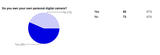
For the first time at my school, we allowed students to bring their own digital cameras for a school project, titled the BYOC School Project. After attempts to purchase more digital cameras failed due to budget cuts, I had to find a way to get enough cameras so that every student in the fifth grade (around 170) would be able to use one for a currently running project.The students' project is to create a movie using Apple's iMovie software that reflects their memories and experiences while in elementary school. Their project needs to include pictures of themselves, their classmates, their friends, faculty and staff, and the campus, so when they look back at their movie 5, 10, or 15 years from now, they will know what everyone and everything looked like in elementary school.Instead of trying to share 14 digital cameras with each class of around 30 students each, I decided to attempt a BYOC (Bring Your Own Camera). I sent a letter home about a week before our next technology class that explained to parents the need for their child to bring a digital camera. If the parents were willing to allow their child to bring a camera from home then they would have to sign a permission form and return it to school. I had to make it clear to parents that if their child would not be able to bring their own camera, then the school would provide them with one during class time, but I also shared the advantages for students who could bring their own camera to school. Those students would have more freedom and flexibility with the amount of pictures they could take and the times in which they could take them. It also had to be made clear to parents that the technology teacher (myself) and the general education teacher would not be responsible for teaching the students how to use their personal cameras. With such a wide variety of digital cameras on the market, it would have been a major time waster trying to figure out how each student's camera worked and then showing them how to use it. I would only be responsible for teaching students how to upload pictures to iPhoto and then how to access them in iMovie. I also required that students bring the charging cables and the USB transfer cable for their personal cameras if provided. But SD Cards could also be used with our classroom iMacs. Surprisingly, only about 37 students were unable to bring a camera from home and every student that did bring a camera already knew how to use it. I figured as much already, seeing as how young kids these days already have smartphones and handheld devices and most are experts at using them compared to adults.Before I started the picture taking/uploading phase of the project, I had each student take a quick 5 minute Google survey in which I asked them questions about their digital cameras.Here are the results of my survey. Not very surprising to me.The responses to this question were close, and probably the most surprising out of the entire survey. These are only 5th grade students, so it shocks me that so many of them actually have their own personal digital camera. I specifically mentioned to the students during the survey that I did not want them to count their family/parents' digital camera. I wanted to know if they, themselves, have their own camera.Its great to see that most families allow their younger children to use their family cameras, let alone touch them!Even though 43% don't own their own cameras, almost 100% of the students have used digital cameras before. Awesome!I correct myself. This one is and is not a shocker. I love the fact that 98% of the students feel comfortable using a digital camera which relieved me when thinking of the wide variety of cameras that would be brought to school.This response makes me happy! And then I wonder who the 4 students are who weren't excited and why. Oh, well...can't please them all I suppose.Before allowing the students the chance to actually use their cameras during the technology class time, I had to go over some very strict rules and consequences. The fact that we were allowing them bring their own cameras to use during school was a privilege, therefore rules had to be implemented in order to prevent chaos and disruption.(I am also allowing students to bring thumb drives with pictures they have taken on past field trips in which they were allowed to bring cameras.) DIGITAL CAMERAS/THUMB DRIVE RULESPersonal cameras are to be used by the owner ONLY. No one else may use the camera (unless you are having someone take a picture of you).Cameras are to be used during designated times only. You should not be using your camera while on school campus unless you are given permission by your teachers. (That includes before & after school)While on school campus, cameras are to be used for the Portfolio iMovie Project ONLY.The flash is to be used for picture taking purposes ONLY and should only be used when you are in a dark place, not outside or in a lighted room.Cameras and Thumb Drives may only be connected to computers with teacher permission and supervision.You may only take pictures of other people if they have given you permission. It is polite to ask a person first if you may take their picture.FAILURE TO FOLLOW THESE RULES WILL RESULT IN YOUR CAMERA BEING CONFISCATED AND LOSING THE PRIVILEGE OF USING PHOTOS FOR YOUR PROJECT. Overall, the first day of this BYOC project turned out very well. The students were excited and focused. Students will continue to use their cameras during the last few weeks of school to take those lasting shots of their final elementary days.
Michael Fricano II
.
Blog
.
<span class='date ' tip=''><i class='icon-time'></i> Jul 23, 2015 07:49am</span>
|
|
I happened upon a very interesting website today called PicLits.com.According to the website, "PicLits.com is a creative writing site that matches beautiful images with carefully selected keywords in order to inspire you. The object is to put the right words in the right place and the right order to capture the essence, story, and meaning of the picture." When you visit PicLits you are presented with a random picture. Below the picture is a long list of words organized into nouns, adjectives, adverbs, verbs, and universal. You drag and drop the words onto the picture to form unique, poetic sentences. When you are finished with your creation you can email it, blog it, or share it through your social networks.You also have the option of "freestyle," which allows you to create your own words to drag to the picture.I see this as a fun opportunity for students to show their creative writing skills. If a student doesn't like the picture they are presented with, they could always choose a different picture from the scrolling collection across the top of the page.What a great way to inspire and encourage students to write!
Michael Fricano II
.
Blog
.
<span class='date ' tip=''><i class='icon-time'></i> Jul 23, 2015 07:49am</span>
|
|
When the news is filled as it currently is with news of a data compromise at eBay, it is quite common to hear people say things like "this is what happens when we are over-dependent on technology." They say the same things when the link to an online learning resource won't work, or people lose their connection to a webinar. Isn't it terrible? We're so dependent on technology, and everything grinds to a halt when it lets us down.But let's just stop a moment before we all get hysterical about technology being to blame for all that goes wrong in the world. Our lives are filled with technology that we don't even refer to by that name any more. Your cooker is technology. Your pen is technology. Your car is technology. Your old manual typewriter (supposing you have one) is technology. They've just been around so long that you don't think of them as such any more.When your cooker stops working, you don't curse your over-dependence on gas/electricity to provide food for your family. When your car breaks down, you don't make a blanket statement about how we should have stuck with horses. Did you once use overhead projectors? Did the bulb sometimes go when you were right in the middle of a class/workshop/presentation? Should we have reverted back to the days before OHPs were invented? Nah, you just came up with an alternative and moved on. Because you're resourceful like that. The thing that has happened at eBay is serious. It could be more serious than they're letting on. But the dust will probably settle and people will go back to business as usual. Mistakes and challenges have always been a part of life and always will be. The technologies that we curse when things go wrong were developed in the first place to address some other problem. Before we had online learning, distance learning had to involve large quantities of printed materials being sent hither and yon, which was costly on so many levels. Before we had distance learning, people had to travel somewhere to participate in a learning event, which was ditto, and disruptive to boot.So the next time you lose connection to your online learning event (which might happen to me within the next half an hour as I try to log in to a webinar with a splendiferous thunderstorm doing its thang overhead), take a breath and try again. The world hasn't come to an end, and it's probably no more of an inconvenience than when the assignment you submitted by mail didn't reach its destination by deadline date, or your car broke down on the way to a residential course. And, just to keep your sense of humour intact, the next time the water is cut off to your home while they work on the pipes somewhere in your neighbourhood, say out loud to yourself, "This is what happens when we become too dependent on running water!" Because taps (faucets) are technology too.
Karyn Romeis
.
Blog
.
<span class='date ' tip=''><i class='icon-time'></i> Jul 23, 2015 07:49am</span>
|
|
This is post #2 of a series of posts that I will be publishing involving a new support group that I've started at my school. I call it the "Eno Click IWB Support Group." It involves a group of teachers at my school that have recently received an interactive whiteboard (or IWB for short) as well as a "media cart" (which I will get into a little later). These teachers range from young, new, and willing to experiment with new technology, experienced, and hesitant to try new technology, but what I love about them all is that they aren't afraid to try something new! Many teachers may see this as "just one more thing on their plate" but what many fail to realize is the convenience it adds to the classroom and the engagement it brings for students.Post #1: http://technocation.blogspot.com/2012/04/eno-click-iwb-support-group-series-post.html POST #2Before I began the support group I wanted to create a list of resources that the teachers could use once they became familiar with their IWB. I scoured the web for both software and web-based applications that can be used on an IWB and with students. Here is a Google document that I created that contains a list of resources with their respective links.To view the document please click on the link: IWB Resources by TechnocationI shared a version of this Google Doc with my support group and gave them each permission to view and edit the document. I asked them to add any resources that they may find while using their IWB. That way, if anything new is found, every teacher in the group will have access to that information quickly and conveniently.If you know if any resources that can be used with an IWB please feel free to share in the comments below.
Michael Fricano II
.
Blog
.
<span class='date ' tip=''><i class='icon-time'></i> Jul 23, 2015 07:49am</span>
|
|
Today is my wedding anniversary. Mr Namasi and I have ben married for 26 years - that's more than half my life. And I'm struck by how much there is in common between our marriage and our worklives - it's mainly about priorities and choices.We chose to view our wedding as the first day of our marriage. The marriage was - and remains - the main thing. And has been a work in progress since its 'launch' 26 years ago today.On our respective Facebook pages, we are receiving the usual barrage of congratulatory messages, some of which imply that the success of our marriage is due to the 'fact' that we never argue.Ha!We argue a lot. I mean can you really believe that someone who writes this opinionated blog is going to have an argument-free marriage? My husband is a strong-willed man. But, as Kate Reynolds (Téa Leoni) says in The Family Man, "I choose us." So let's just unpick this for a moment:We got married on a shoe string budget. Neither of our parents had any money, so we paid for it ourselves. The ceremony was brief and to the point. It took minutes. It was held in my mother-in-law's granny flat above to my brother- and sister-in-law's house. I made the lunch (coq au vin) that followed, which was held downstairs. I made my own outfit out of fabric I bought from the designer I worked for (at staff discount) and it was something I could use again afterwards. My MIL made the cake. My SIL made the dessert (kiwi fruit pavlova) and took the photos. Bride and groom walked into the 'venue' together. We had no retinue (no bridesmaids or best men). We had no alcohol, due to the presence of one alcoholic and one recovering alcoholic. Just family and very close friends were in attendance - fewer than 30 people in all. To be honest, there are things I would do differently if I were to do it over again - it was one of the most stressful days of my life, because I took too much on myself.BUTBy the end of the ceremony we were just as married as anyone who has spent £15000 (because that's apparently the current UK average according to figures cited on Radio 4 the other day) on the ceremony. Our 4-day honeymoon in a small-town hotel a couple of hours' drive from the city was lovely, too, in spite of the fact that we both got food poisoning on our last day!Many of our friends and family have had magnificent productions on their wedding day. And I confess to occasional twinges of envy. But we started our married life without the massive debts that can result from the lavish event. We were stone broke, but we were stone broke together and everything we have today, we have acquired together.Something else that I've noticed is that planning the wedding can become so much the focus of the relationship that, once the wedding is over, some couples can feel quite bereft. Everything happened so much faster for us, that we didn't have time to develop that level of attachment to the occasion. We had been planning to get married in December 1988. But we realised at one point in April that we had no reason to wait - there wasn't going to be additional budget or resource freed up during that time. So we gave ourselves six weeks to bring the whole thing together and got on with it. So, much like a lot of projects, we had very little time. We had next to no money. We weren't in a position to produce anything shiny. We didn't have a big team of professionals, or an outsourced vendor. We faced a lot of opposition and naysayers who told us that it couldn't and/or shouldn't be done. We were a pair of amateurs who had never done this before, and were too naïve to realise how utterly ill-suited we were to the task at hand (or each other, come to that). We had a few (unpaid) helpers, some willing, some decidedly not so. We have had better, worse, richer, poorer, sickness and health. We have had disasters, catastrophes, we have had slow-burning, insidious challenges. But we stubbornly resolve every time to release a patch, an update.The project had a rather inauspicious start by average standards. But it is enduring, because the team is committed. :)
Karyn Romeis
.
Blog
.
<span class='date ' tip=''><i class='icon-time'></i> Jul 23, 2015 07:49am</span>
|
|
I'm catching up on this a little late, but better late than never!I received an email at the end of June from The Global Education Conference Network, announcing August as Connected Educator Month. According to the Connected Educator Month website,"Online communities and learning networks are helping hundreds of thousands of educators learn, reducing isolation and providing "just in time" access to knowledge and opportunities for collaboration. However, many educators are not yet participating and others aren’t realizing the full benefits. In many cases, schools, districts, and states also are not recognizing and rewarding this essential professional learning.For these reasons, the U.S. Department of Education’s Connected Educators initiative is launching Connected Educator Month in August 2012. Throughout August, there will be coordinated opportunities to participate in events and activities in dozens of online locations to develop skills and enhance one’s personal learning network."This is a great idea and I hope that it grows every year! I can testify that using social media and online networks is great for your PLN (Professional Learning Network). Most of the information I share through my social networks came from somewhere else and they are things that I found very interesting and helpful. I feel that PLN's are most often more helpful than the traditional in-school professional learning opportunities because it's learning on my time and geared towards my interests.Connected Educator Month includes a wide variety of events and activities on a daily basis throughout the month of August, and even reaching through October and November. A calendar of events and activities can be found at: http://connectededucators.org/cem/ If you create an account and log in, you can sync your favorite events to your personal calendar and/or phone.
Michael Fricano II
.
Blog
.
<span class='date ' tip=''><i class='icon-time'></i> Jul 23, 2015 07:49am</span>
|