Blogs
|
You may or may not have noticed that I've been out of the loop for a while.Since I am now in a new role, where the majority of my clients are late adopters of digital learning, I thought that it would be fitting to go there my first time back in the saddle.There seems to be an assumption that moving into the digital space is a big, scary deal. But consider the mistakes that have already been made, that the late adopter can avoid. If - that is - the late adopter is prepared to learn from the experience of those who are further down the path.I have found, though, that some late adopters are reluctant to go that route, so they wind up dealing with poor uptake for the very reasons early adopters struggled. But the early adopters persevered and found all sorts of ways of making digital resources more engaging. The wheel has been invented. We have figured out a lot of things along the way.We've figured out that throwing content on a screen does not constitute elearning. We've discovered that people don't actually read screens for the most part - they scan them. So we've learned to work with that.We've figured out that workplace learning is more about what you want people to do than what you want them to know. So we've learned to design solutions accordingly.We have moved past the idea that e-learning needs to be the complete solution. In the early days of 'blended learning', there was precious little blending going on. We were so excited with our digital goodie bag, that we abandoned everything else for a while, there. We're getting better at it now. It finally dawned on us that (and I forget who originated this expression) if you want to learn to swim, you're going to have to get wet at some point. So we learnt how to look at a learning requirement and allocate modalities as appropriate.We figured out that throwing the boring stuff online so that we could do the cool stuff in workshops also didn't work. If it was boring when it was in a workshop, it was going to be way more boring (and way easier to opt out of) on a screen.We've figured out how to go mobile. We can use tablets, smart phones, mp4 players... all that stuff.We've rediscovered the value of point of need support, and figured out how to design digital performance support tools.We've come to realise that we don't need to be precious. That the 'bloke at the next desk' is a valid and valuable resource. Some of us even factor them in to our solutions.That's not all, but it's a pretty good start. And instead of following the trail to where the early adopters now find themselves, the late adopters can simply choose to be airlifted into that space and join the conversation. It's an exciting journey...and I'm curious as to where it's going next.How about you?
Karyn Romeis
.
Blog
.
<span class='date ' tip=''><i class='icon-time'></i> Jul 23, 2015 07:58am</span>
|
|
Have you ever used e-books in your English classroom? Stacey Hughes, our Professional Development Services teacher trainer, tried out a lesson with adult learners using an e-book on the Oxford Learner’s Bookshelf. Watch the video below to see how she got on
I was really excited about trying out the American English File e-book and also a little bit apprehensive. My excitement came from knowing students would be able to watch the video at their own pace - pausing if needed to take a note or jumping back to catch something said. I was also interested in seeing how often students used the repeat function for the audio. This ability to focus bottom-up on a phrase or word was a real bonus since my students came from different countries.
At first, I was slightly nervous about using the Oxford Learner’s Bookshelf tools so experimented with the different tools and functionality. I wanted to find out what was possible and also get comfortable with using the tools. I did some of the exercises as a student would. To my surprise, I enjoyed using the audio notes the best and I wondered if fast finishers might be encouraged to create some audio notes about vocabulary that would help them study later.
During the lesson, I found I could do the same activities that I’d always done, but with some that I wasn’t able to do before. I really liked that the students could watch the video and listen to audio and their own pace and I was also pleased that students could check their own work automatically. One thing I did miss was having something to write on, so next time I’ll bring in a flip chart or shrink the e-book when I need to write on the Interactive Whiteboard.
See how my lesson went here:
Are you interested in using e-books with your students? Visit www.oup.com/elt/fingertips to see our wide selection of coursebooks and Graded Readers available via the Oxford Learner’s Bookshelf. We have e-books for all ages, levels, and interests.Filed under: Adults / Young Adults, Multimedia & Digital Tagged: Adult Learners, E-books, EdTech, m-learning
Oxford University Press ELT blog
.
Blog
.
<span class='date ' tip=''><i class='icon-time'></i> Jul 23, 2015 07:58am</span>
|
|
Yves Morieux delivers this very interesting talk about counteracting the increasing complexity of the workplace. My favourite quote from it comes from Jørgen Vig Knudstorp (CEO of the Lego group) "Blame is not for failure. It's for failing to help, or ask for help."
Karyn Romeis
.
Blog
.
<span class='date ' tip=''><i class='icon-time'></i> Jul 23, 2015 07:58am</span>
|
|
Magali Trapero Turrent is an ELT Editor at Oxford University Press, Mexico. She is the co-author of several books published by OUP as well as a teacher and former OUP Educational Services teacher trainer. In her posts, she shares her ideas for using Web 2.0 tools to develop learner’s language skills.
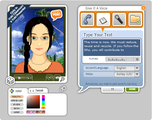
Listening is a difficult skill to develop for ELLs or any other foreign language learner. And yet, it is critical for language acquisition. In the past, we mostly used the audio materials included in textbooks to help our learners develop listening skills. However, with the advent of new technologies and the Internet, we have been able to add richness to our lessons by using podcasts, short videos or live radio programs from stations in other countries. Despite this, there are times when we want to create specific audio materials to suit our learners’ needs without having to record our voices. Fortunately, using Web 2.0 tools can give us the opportunity to create our own engaging and fun listening materials without having to record our voice or, better yet, we can engage our students in the process of creation. Text-to-Speech (TTS) technology is extremely helpful because we can select the speech rate, the gender and the accent of the voice that will be created from our text. iSpeech and Voki are examples of tools that employ TTS technology.
iSpeech can be used with computers or with tablets and smart phones through the mobile apps. Voki allows you, or your students, to generate fun listening activities through the creation of avatars to represent you, a fictitious character, or your students. You can use TTS, upload audio files or use your smart phone to record. You can place your listening activity (avatar) in your social network site or blog, or even email it for homework.
Figure 1: Sample Voki development page—Text extract from the OUP series Discover Science Level 3 Student’s Book
In designing a lesson, we can apply the pre-listening, while-listening and post-listening framework. Once the topic of the lesson is decided and after the instructional goal of the activity is established—top-down or bottom-up skill development (Rost, 2011)—we can begin developing our listening materials.
During the pre-listening stage, learners can begin work on top-down processing skills. Top-down processing takes place, for example, when learners use their previous knowledge on a topic to interpret a message. If they do not have any knowledge on the topic, regardless of how fluent they are, it will render a listening activity quite challenging. This principle applies even to native speakers. Imagine having to listen to a conversation about astrophysics—if you are not an astrophysicist, having to answer comprehension questions based on that conversation can be an overwhelming challenge. Therefore, establishing a context, pre-teaching vocabulary or sociocultural elements and activating previous knowledge are needed for comprehension of aural input (Ur, 1999).
In preparing a science lesson, I can use Google Earth to engage my learners and activate their previous knowledge on ecosystems and biomes during the pre-listening stage. As they engage in their virtual exploration of the Earth, I can begin eliciting content-specific vocabulary and teaching any lexis they will need to successfully complete their listening task.
Figure 2: Image courtesy of Google Earth
Moving on to the next stage of the lesson, besides top-down processing skills, more skills will need to be developed that are just as necessary—namely, bottom-up processing skills. The while-listening stage provides a great opportunity to develop decoding or bottom-up processing skills. In bottom-up processing, some degree of phonological, grammatical and lexical competence is needed. This is because when learners engage in bottom-up processing, they attempt to make sense of the message based on chunks of input, such as sounds, words, clauses or sentences—to name a few. Top-down and bottom-up processes do not happen in isolation—they interact (Vandergrift, 1999).
Continuing with the example of a science lesson, for the while-listening activity, I can use Woices to develop a guide to different biomes and the services they provide. I can embed the guide in a blog or a social network page, or use it directly from the site. Woices can be used with computers or with tablets and smart phones through the mobile apps. In a while-listening activity like this, depending on the instructional goal, I can have my learners complete a mind map in Mind42 with information from the aural input or follow the information on Google Earth as they capture images mentioned in the Woices guide for the post-listening activity.
Figure 3: Image courtesy of Woices
Figure 4: Images courtesy of Mind42 and Tiffany @Making the World Cuter
In fact, Woices, iSpeech and Voki can be used for the post-listening stage. You may decide, for example, to have your learners create their own Voki as a response. The advantage of using TTS technology is that if students have memorized words with the wrong pronunciation, once their text is converted to speech, they will notice the difference. After all, research shows that learners have consistently reported that memorizing words with the wrong pronunciation greatly interferes with their listening comprehension performance (Goh, 2008). The downside of TTS is that it may not provide the desired intonation if that is one of the instructional goals of a lesson.
In the next article in this series, we will explore the use of Web 2.0 tools for writing activities.
References and Further Reading
Goh, C. (2008). Metacognitive Instruction for Second Language Listening Development: Theory, Practice and Research Implications. RELC Journal: A Journal of Language Teaching and Research, 39(2), 188-213.
Rost, M. (2011). Teaching and Researching Listening (2nd ed., pp. 132-133). New York, NY: Pearson Education Limited.
Ur, P. (1999). Module 8 - Teaching listening. A Course in Language Teaching (pp. 41-47). Cambridge: Cambridge University Press.
Vandergrift, L. (1999). Facilitating Second Language Listening Comprehension: Acquiring Successful Strategies. ELT Journal, 53 (3), 168-176.Filed under: CLIL, Multimedia & Digital, Young Learners Tagged: CLIL, Digital tools for learning, Discover Science, E-learning, EdTech, Listening, listening skills, Multimedia, Science, Skills, Teenagers, Web 2.0 tools, Young Adults, Young Learners
Oxford University Press ELT blog
.
Blog
.
<span class='date ' tip=''><i class='icon-time'></i> Jul 23, 2015 07:58am</span>
|
|
I'm sure I'm not the only one who has noticed how there seems to be an increase in the number of people identified as being autistic. Any number of theories have posited as to why this may be. I'm not going into that today. I'm looking at a slightly different angle.A while back, you might have seen this TED talk by Jacob Barnett. Let me refresh your memory:I hope you found that inspiring (and a little challenging). But, had it not been for his mother, this lad might never have even be able to function in a socially acceptable 'normal' way. Here's some insight into how this woman threw away the labels, rejected the professional prognoses and adopted a child-led approach to learning.You might notice during the video clip in the link, that Jacob appears to be slightly uncertain as to how to hold himself when he is being spoken about, but not spoken to. But there is nothing about him that announces that he is a person with 'learning disability' or a 'special need'. In fact, I'd say he's a lot less socially awkward than most fifteen year olds!I have observed in my own sons - and in myself, truth be told - some markers of the autistic spectrum. None of us has ever been formally diagnosed (or even assessed), but none of us fitted comfortably into the educational model. I only wish I had had this woman's courage when it would have made a difference. In the absence of that, may I encourage parents not to allow labels to become self-fulfilling prophecies. Not everyone can go on to win a Nobel Prize, or even to be predicted to win one. But wouldn't life be so much more fulfilling if we were able to explore the thing that lights the spark in our eyes, rather than the thing some official board says we need to know?
Karyn Romeis
.
Blog
.
<span class='date ' tip=''><i class='icon-time'></i> Jul 23, 2015 07:57am</span>
|
|
In January we asked over 450 teachers from around the world to vote for the biggest writing challenge they face in their classroom. Since then we’ve dedicated a month to each of the top three voted for challenges with a series of webinars and blog posts from some of Oxford’s top teacher trainers. During our survey we also received some fantastic comments from teachers telling us about other writing challenges they’ve encountered. Join us as we take on 3 extra challenges raised by teachers like you. In this blog Elna Coetzer addresses the first of these challenges:
‘My students struggle to organise their ideas on the page’.
I wish I were Stephen King then I could also spend weeks and months writing my first line, but realistically speaking… So here goes!
Today we are going to look in more detail at a number of ways that we can help students organise their ideas more successfully through targeted practice tasks. I have also included some brainstorming techniques.
Firstly, what are targeted practice tasks?
Let’s think of lessons in which we expose our students to specific reading sub-skill practice:
- in these lessons we focus on helping students develop a specific sub-skill like guessing meaning from context, and
- the aim if achieved, is that our students are then better equipped to perform this type of reading sub-skill.
Linking this with targeted writing tasks, a lesson might focus on writing a blog post and the targeted tasks would then focus on using extreme adjectives. Another lesson could be writing an online profile in which the targeted writing task could be focused on working with the layout of profiles and the type of information that needs to be included. Over a period of time you can then help your students develop a whole range of writing skills or writing-related skills like structuring ideas or organising outlines, one targeted practice task at a time.
Why are these tasks so useful?
1. They allow students to focus on one achievable aspect of the writing process,
2. they raise students’ awareness of a specific facet of writing a certain type of text and
3. this is a more memorable way of helping students with specific writing challenges.
In addition to the above-mentioned, it also gives students a greater chance of success, because it only focuses on a certain part in the writing process.
Now let’s turn to the ‘how’ of these tasks!
This time around we are going to look at ways to help students with organising their ideas. Here are my tips…
TIP 1: Exposure
In order for our students - many of them coming from a very different L1 writing background - to organise their ideas into an effective whole, they need to be shown many examples of texts. For this reason we need to:
- make sure that we expose our students to a variety of text types and overtly discuss the components and ideas that make up the text. This type of activity is often part of Solutions writing lessons where students are prompted to answer questions about the content and layout of said text.
- use a content checklist which can raise our students’ awareness of the variety of ideas within a text and how these ideas are organised into a whole. These kinds of checklists can be compiled for any text type.
For example if you are looking at an online blog post about a hotel recommendation (your text type), you could include the following points:
1) Put the following in order: information about the staff, where did you find the hotel, information about the location of the hotel, how to make a reservation, reason for the visit, the facilities at the hotel, a short recommendation;
2) Did the writer include a description of the hotel?
3) Did the writer remember to mention all the details that are necessary for a specific type of traveller? Etc.
Students look at the text and by discussing the various items on the checklist, they are helped to notice how texts are organised and how ideas are combined to form these texts.
TIP 2: Deconstruct
For this type of activity one can use graphic organisers, flow charts and mind maps. In this tasks students again look at a text and take it apart, transferring the ideas onto a graphic display of some kind. One could use a text of any type for this activity, just make sure that you choose the best graphic display for your text type. In other words if you are working on writing stories, then using the following graphic organiser would be the best:
In this way the students deconstruct the story focussing on both the outline and the ideas included in the story. This can then lead to tip 3…
TIP 3: Reconstruct
Here the students use a given outline, either prepared by you or by the students (using the brainstorming techniques and graphic representations you have already taught them) to write their own text making sure that they include all the details mentioned in the outline. When they have completed this task, the students are given the original text for comparison. Again the purpose of the activities in both tip 2 and 3 is to help students notice the various building blocks which combine to form a well-written text.
TIP 4: Highlighters and colours
Introduce your students to a variety of brainstorming techniques - see some examples below:
- using the journalists technique: you answer the questions (what?, where?, when?, who?, why?, with whom? etc.) in order to gather all the information which should be included in the text.
- using mind mapping
Every time when you introduce a new technique, make sure that you also show your students how to link the ideas into a logical order by using highlighters or different colours. You could highlight ideas that belong together or underline ideas supporting the same main topic using the same colour. In this way students can organise their writing in a more visual way. What students then need to do is combine their ideas that are colour-coded in order to form a text.
Remember as with other targeted practice tasks, the purpose of these activities is to help students actively and overtly develop a specific skill: that of how to organise and structure their ideas to form a coherent text. Thus the students do not necessarily have to actually do the writing when doing tasks focussing on tips 1,2 and 4. By practising the specific tasks over and over again, the students will be able to structure and organise their writing better.
All that is left for me to say is: try these ideas, make them your own and let us know how it went! And as I said, you do not have to write a complete text to be working on your writing. In terms of writing with our students, it is about one focussed task at a time! Good luck!Filed under: Professional Development, Teenagers Tagged: EFL, elna coetzer, Professional Development, Solutions writing challenge, Teacher Development, teaching english writing, teaching writing, Teenagers
Oxford University Press ELT blog
.
Blog
.
<span class='date ' tip=''><i class='icon-time'></i> Jul 23, 2015 07:57am</span>
|
|
Lysette Taplin is an experienced English language teacher, editor and author of a number of ELT materials. Ahead of this year’s Teacher’s Day in Mexico, she discusses the changing role of the teacher and the implementation of digital tools in the classroom.
Teacher’s Day, celebrated in Mexico on May 15, honors the role educators play in providing students with quality education. Ten to twenty years ago, that role was to be the primary information giver who stood at the front of the classroom "pouring knowledge into passive students who wait[ed] like empty vessels to be filled"[1]. However, now that the 21st century is well under way, our role needs to shift towards becoming a facilitator: giving students an idea, a topic to discuss and providing them with the confidence to communicate. This type of teaching is known as student-centered learning, and has been favored in recent years as it puts the students’ learning experience at the center. Our responsibility as teachers is to make sure our lessons are tailored to the individual needs of our students, understanding that each student is unique and that they come with prior knowledge and their own perceptual frameworks. I’m not saying that we need to completely relinquish the traditional role; there are certain moments in the classroom when teacher-instruction is necessary, but we must encourage learners to contribute and communicate using their own ideas. The next Steve Jobs or Bill Gates may be sat in your class, but if we spoon-feed them the information, they are never going to reach their true potential. Today, being an English language teacher is not just about teaching students the language, but teaching them how to think critically, how to communicate and collaborate, and how to be creative: the famous 4Cs.
We also need to take into account that our world and consequently our lives are becoming increasingly more digitalized. Students need to learn how to use technology and with recent advances in web tools and apps, technology-based methodologies, such as blended learning, hybrid learning, the flipped classroom and MOOCs, have attracted more interest among educators as they create learning environments which propel students into the 21st century. However, what if we don’t have access to technology at school? What if the technology we do have is slow and outdated? As teachers, we have to be creative with the technology that is available to us. Most students today have cell phones, so rather than try to eliminate them as a distraction, we should try to capitalize on the technology that students already possess. With the built-in camera tool cell phones have, we can ask students to document their work by taking photos or videos, or use the voice recording feature to create podcasts which encourage communication and collaboration. We can also turn traditional writing activities into blogs to be published online or even have students write a short book review of 140 characters to publish on Twitter.
There are also a wide range of user-friendly apps available for iOS and Android. One of my favorites is Book Creator, a free app which lets students create eBooks using photos and images from their tablet or cell phone library, from the web, or by using the device’s camera. They can also add videos and music, record their own voice, and annotate their books using the pen tool. This is a great tool to use to bring together students’ work or evidence project work.
Another great app for iOS users is iMovie. This app allows students to drag videos and photos taken on their device into a movie clip to which they can add music and voiceovers. Depending on the task students are carrying out, they can use different movie templates, creating presentations which become more relevant to the real world. By using interactive technology, we make learning more engaging and memorable.
It is also important to understand that when our students graduate, they will have an advantage if they can work successfully with other cultures, and as teachers, we can promote that skill by setting up email or social network exchanges between students in different schools and countries.
I believe technology in the classroom is not just a new fad, but rather a vital empowering tool that engages students and brings discovery, excitement and fun into the classroom. The dismal fact is that, as teachers we will never know all there is to know about technology. So, why not create co-learning environments where students teach you how to do something techie. As facilitators, it is important to relinquish some control of the learning to the student which reinstates student-centered learning and will give students confidence to communicate their ideas.
For me, one of the most important aspects of being a teacher is be passionate and enthusiastic. We need to be so excited about what we are teaching that every single student wants to be involved. We need to tell our students that it is OK to make mistakes, and we need to show students that we are proud of what they CAN do, and not focus on what they can’t yet do. The best satisfaction a teacher can have is to be a facilitator, engaging and motivating their students to succeed. Happy Teacher’s Day!
References
[1] Constructivism as a Paradigm for Teaching and Learning, Thirteen Ed Online. Date of access: 08/04/2015. http://www.thirteen.org/edonline/concept2class/constructivism/index_sub1.html
Filed under: Multimedia & Digital, Professional Development, Skills Tagged: Digital teaching tools, EdTech, Professional Development, Skills
Oxford University Press ELT blog
.
Blog
.
<span class='date ' tip=''><i class='icon-time'></i> Jul 23, 2015 07:57am</span>
|
|
Today I came across a newspaper article in which we read how a body builder/personal trainer was advised by an NHS nurse that her BMI (body mass index) was too high and that she should eat less and exercise more. The newspaper article was accompanied by a picture of the body builder. She is what my sons call 'stacked'. Maybe you don't like that particular kind of body shape, and that's fine. But this woman has clearly worked very hard on getting her body to look the way she wants it to look. I'm pretty sure her body fat percentage is very low, but muscle weighs far more than fat, so a very muscular person, on the basis of BMI alone will register as overweight or even obese. I think it's safe to say that the nurse in question made no effort to address the woman's unique case. She unquestioningly followed a single set of guidelines as issued by the NHS.We seem to have guidelines for everything these days. So much so, that I wonder whether we're in danger of giving up the effort of thinking for ourselves.Sometimes guidelines are treated as inflexible rules. I mentioned once before on this blog about a friend of mine whose baby was struggling with reflux problems. She was worried about him, because when she laid him down to sleep, he would spit up and start choking. Because I had a son with a similar problem (apparently it's quite common for baby boys to have a slightly underdeveloped valve between the end of the oesophagus and the start of the stomach - it usually resolves once they become able to sit up by themselves), I suggested that she try laying him down on his side with a rolled up towel behind him to hold him in position, so that if he spit up in his sleep, it wouldn't get caught in his throat. Her response was "Ooh, no. We're not allowed to do that. The health visitor says we have to put him down on his back." Not allowed to. Not allowed to make a decision in respect of your own child that is contrary to what the health visitor has recommended based on the guidelines handed down to her by a faceless organisation that has never met the individual child in question.A few years back, we read glowing obituaries for a traffic engineer in Europe (I wish I could remember more details about him) whose view was that more information to drivers made roads less safe. He was credited with revolutionising traffic safety by removing most of the information given to drivers and allowing them to take ownership of their own driving habits.Now that I have health and safety guidelines that tell me it isn't safe to stand on a chair on top of a desk to change a light bulb, and warning signs over the hot taps in public facilities telling me that the water is hot, and labels on bags of nuts telling me that they contain nuts... do I need to do any thinking for myself? Perhaps the rationale is that it frees up my brain for important things. But I maintain that the more we are protected from the possibility of making stupid choices, the less likely it is that we will make inspired ones.I have no research to go on here, but I wonder if it isn't a bit like a sine wave. The ubiquitous 'they' are trying to remove the bottom half of the wave, but actually what's happening is that the entire wave pattern is getting flattened as the top half is reduced proportionately. Spike Milligan is reported to have hated the medication that took away the swooping lows of his bipolar disorder (or manic depression as it was known back then), because it also robbed him of the soaring highs. The two things aren't directly related, of course, but I wonder, if in the process of trying to move the whole wave upward, we don't actually just reduce its amplitude. And if we reduce it enough, will we all just, well, 'flatline' a la the movie Serenity?Surely being allowed to make a few stupid mistakes, will encourage us to think a bit more? Surely looking at a competitive body builder, a nurse can set the BMI guidelines aside? Surely the mother of a baby with reflux can experiment to see what works best for her own baby?
Karyn Romeis
.
Blog
.
<span class='date ' tip=''><i class='icon-time'></i> Jul 23, 2015 07:57am</span>
|
|
Many secondary second language learners face numerous challenges as they develop language and literacy in a second language at the same time they are learning subject area content in that second language. Fortunately, L1 academic literacy is not separate from L2 academic literacy. They are both manifestations of a common underlying proficiency. In this post Dr. Marylou M. Matoush, introduces her forthcoming webinar highlighting the ways that academic language and literacy proficiency can be developed through active reading, writing, speaking and listening in either or both languages.
Secondary schools are commonly structured as if all students need the same type of instruction, for the same amount of time, across the same curriculum. While this is far from ideal, it may not seem too problematic in some second language and literacy instructional settings, such as foreign language classrooms, where second language (L2) learners share somewhat similar first language (L1) language and literacy knowledge. However, the structure of secondary most schools can be very problematic in where diversity reigns.
Many teachers of second languages are painfully aware of the fact that the emphasis on "sameness" built into most secondary schools is at odds with the needs of L2 language and literacy learners, who are remarkably diverse. They know that it is not uncommon to find secondary school settings where L2 learners who have never been to school may be sitting, in at least some classes, among L2 learners who are partially literate in one or more languages, L2 learners who are fully literate in L1 but not in L2, bilingual students who are also fully biliterate, and native English speakers who also display a wide range of literacy development.
These teachers of second language learners also know that there are often notable differences between individual learners who happen to fall in each of those categories. Learners may begin second language instruction with very different first languages. Then, first language and literacy use is gradually mixed with second language and literacy use, in ways that are necessarily unique to each individual. As learners develop their abilities to use their languages and literacies, the varied effects of cultural backgrounds, life experiences, personal interests, academic background, linguistic understandings, and literacy skills accumulate with each passing school year.
Fortunately, becoming biliterate involves developing an interlanguage that is flexible enough to be useful in various L1 or L2 language and literacy contexts and the process underlying that development takes place in a generalized fashion, although not in the synchronized or linear fashion suggested by school structures. Therefore, despite considerable diversity among students, academic language and literacy learning that must occur alongside content learning can be grounded in single set fundamental principles:
Languages and literacies and the strategies associated with meaning making are interdependent, not separate. Reading, writing, listening, speaking, and viewing are all meaning based ways to communicate and compliment one another. Integrating them enables students to make flexible use of them as they make meaning of academic content.
Academic learning in one’s first language and academic learning in one’s second language are also interdependent, not separate or isolated from each other. Instead, they are manifestations of a common underlying proficiency that can be developed and applied to reading, writing, speaking and listening about content in either language. Further, since the use of L1, mixed language, or a student’s developing interlanguage represent varying manifestations of a common underlying proficiency, affording students opportunities to choose among them as they learn academic content enhances L2 academic language and literacy learning.
Active participation in actual language and literacy activity serves the needs of all students as they acquire language and literacy, but is particularly valuable for L2 students who may need the active support available from both teacher and peers that collaboration affords. Further, active languaging drives thinking just as thinking drives languaging and literacy. Therefore, carefully designed collaboration among flexibly grouped students can work to create an age-appropriate, cognitively compelling setting and exposure to diverse ideas and perspectives for diverse learners.
The forthcoming webinar will briefly discuss that interdependence among languages and literacies and the transferability of L1 literacy strategies to L2 learning. It will also present specific strategies and techniques that are effective for supporting academic second language learning during active languaging while reading, writing, listening, speaking and viewing.
Filed under: Adults / Young Adults, Professional Development, Teenagers Tagged: Academic language, Adults, Literacy, Professional Development, Teenagers, Young Adults
Oxford University Press ELT blog
.
Blog
.
<span class='date ' tip=''><i class='icon-time'></i> Jul 23, 2015 07:57am</span>
|
|
Recently, I engaged in a discussion on Facebook with the friend of a friend. The topic of the discussion was autism. It wasn't unfriendly, but there was disagreement. And I haven't stopped thinking about it since.The FOAF - let's call her Tanya - is on the autistic spectrum. In the UK, in terms of the Disability Discrimination Act and its associated guidelines, we are discouraged from referring to people like Tanya as 'autistic' or 'suffering from autism'. We are to say 'people with autism'. Because to say that someone is autistic (or diabetic or cerebral palsied or whatever) is to imply that they are defined by their condition. To say that they suffer from autism (or diabetes or cerebral palsy or whatever) is to imply that they are victims defeated by their condition. I mentioned this in the exchange. Tanya was not impressed.She referred to herself as autistic. And she had a fairly strong and succint argument as to why.She pointed out that the very political correctness around the way that labels are used is in itself discriminatory because - and here's where she completely took the wind out my sails - labels that we perceive as not implying any shortcoming are not applied in that way. We say the slim woman, the athletic man, the intelligent child, the blond woman, the healthy man, the honest child. We don't get hung up on saying things like 'the woman with slimness', the man with athleticism' and so forth.She also took another stance I found unexpected and interesting.I mentioned that I have long considered autism to be a spectrum we're all on somewhere. She didn't like that.For her, discovering she was autistic was a revelation. It explained why some things were a challenge for her, that came easily to others. Better than that, autism enabled her to do things that other people can't do. She was unique. She was special. And she wasn't about to give up on that to some warm and fuzzy liberal who wanted to paint the entire human race in varying shades of her colour.Fair point, Tanya. Fair point.
Karyn Romeis
.
Blog
.
<span class='date ' tip=''><i class='icon-time'></i> Jul 23, 2015 07:57am</span>
|