Blogs
|
I talk to myself…a lot…in my car.
I know it’s ok to admit this because I see others either doing the same or worse (ie. picking nose, reading papers, yelling on phone at someone). At least we car talkers have the potential to be constructive. :)
In the spirit of car talkers I’ve decided to start a new strand of blog posts that are, quite literally, produced as I drive to work. No, I’m not tapping on that tiny Iphone keyboard and putting untold thousands of lives at risk. I’m listening to CD books on my way to work and then recording reflections when the spirit moves me in audio format.
If for no other reason, at some point I’m sure someone I know will see me talking to myself and I can simply point to these traffic blog posts as evidence that I’m not completely insane.
Vblog #1
In my new position as an Educational Consultant for Region 11, I have about an hour to kill in the morning and another in the afternoon as I drive to and from work. Despite some gray naysayers saying that I would regret the drive, I’ve decided to buy tons of books on CD and work my brain while I drive to work.
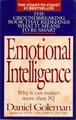
One of the books that piqued my curiosity recently is Emotional Intelligence by Daniel Goleman. It’s a little bit of an older book, but I’ve heard there is no expiration date on true knowledge and awesomeness.
One of the habits I’ve gotten into for better or worse is the act of throwing my book down or turning off my book on CD when I come across something in Plato or Aristotle or in this book that really blows my mind. I seriously have a physical reaction when awesomeness from a genius jumps the gap into my brain. I literally have to put the book down or pause the CD and tell somebody about it or reflect on it.
For those of you that know me, this is why you get messages every once in a while that seem to come out of nowhere. I have to convey and walk through the idea so I can better digest knowledge.
Today’s little gem: Institutions create formalize structures as a reaction to known tribulations from the past. In other words, the formal bureaucratic structures or dogmatic efforts businesses, schools, and even people get into (that soon become ruts) were created as a reaction to a problem. However, Mr. Goleman goes on to say that the most successful institutions ALSO have a "soft" network of unofficial structures that act as a flexible net to deal with the unforeseen problems. These organizations resist the temptation to formalize ALL associations because formalizing leads to calcification and calcification leads to rigidity.
Successful institutions/businesses/teams have informal structures (that mostly develop on their own) to deal with unforseen problems. Since these are informal in nature, they rely less on the hierarchical power structure of a corporation, let’s say, and more on the social bonds created by people to like or respect each other.
The official skeleton of a highly successful organization is fleshed out by the unofficial social bonds.
The need for this to be social in nature, and thus dependent on Emotional Intelligence, is that the unofficial structure is less reliant on power and more on faith and support. It is a different kind of structure that exists in everyday life outside of the office…but it exists none the less.
Since both structures are needed (one to deal with fires and escape routes and the other to deal with birthdays, deaths, and moral) the person "in charge" of both needs to live in each world as well.
Emotional Intelligence looks at the top certain % of CEOs in a given industry. They are all intelligent, driven, has amassed awards, and so on… What separates the top 10% from the rest is that they know how to pivot and change. They know how to socialize and make win/win deals. They know how to care about the person before they care about the "deal".
The top 10% (or whatever metric one uses) are there because they understand those "unofficial" structures that exist in every business or organization and they honor it. They know in the dogmatic structure, they are kings and queens…but in the unofficial pods across their real they may not be at the top of the pyramid.
In essence, they understand how the particular and the general fit together and flow together. Genius!Filed under: In The Classroom, Political Philosophy Tagged: Daniel Goleman, Daniel Goreman, EI, emotional groups, emotional intellignece, EQ, moral, morale, self esteem, Social Structure
Thrasymakos
.
Blog
.
<span class='date ' tip=''><i class='icon-time'></i> Jul 23, 2015 11:10am</span>
|
|
Filed under: Curious David Tagged: alumni, Carroll University, Jane Hart, Teaching Statistics, Top 100 Learning Tools
David Simpson
.
Blog
.
<span class='date ' tip=''><i class='icon-time'></i> Jul 23, 2015 11:10am</span>
|
|
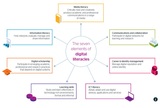
There is a nice JISC report out on ‘Developing students’ digital literacy’. They define digital literacies as ‘the capabilities, which fit someone for living, learning and working in a digital society’. They list the follow seven elements:
Media literacy - critically read and creatively produce academic and professional communications in a range of media.
Information literacy - find, interpret, evaluate, manage and share information.
Digital scholarship - participate in emerging academic, professional and research practices that depend on digital systems.
Learning skills - study and learn effectively in technology-rich environments, formal and informal.
Communications and collaborations - participate in digital networks for learning and research.
Career and identity management - manage digital reputation and online identity.
ICT literacy - adopt, adapt and use digital devices, applications and services.
They put forward a series of guidelines for improving students’ digital literacies:
Reviewing what support is available for digital literacies
Link digital literacies in with other priorities
Create a buzz
Get people talking
Provide support in the curriculum
Encourage students as change agents
e4Innovation
.
Blog
.
<span class='date ' tip=''><i class='icon-time'></i> Jul 23, 2015 11:10am</span>
|
|
We constantly see polls concerning the popularity of presidents…Who was the greatest president? Who is the smartest president? Who was the most popular?…so on and so forth…
The question that came up today as I was driving into work (and it was on a radio show that I was listening to) was "If you put all of the presidents in a ring for a fist fight, who would win?"
Let’s assume (for parameters sake) that we’re talking about presidents at the age they were during their presidency…so take each one at their peak physical condition during the four or eight years that they were president. There will be no breaks during the fight, they’re fully fed & hydrated and they are not distracted by thoughts of family or war or economic issues…AND they’re perfect ok with the time warp they just went through.
Who would your top 5 be?
As a bonus, let’s throw in a bear in round 2… Could all the presidents team up to kill the bear & then they would have to turn on each other… Who would win in a brawl once the bear was dead or incapacitated?Filed under: In The Classroom Tagged: #sschat, classroom, educator, flipped class, flipped learning, genius hour, hsgovchat, instructor, lesson crashers, lessoncrashers, POTUS, president, presidents, presidents of the united states, presidents of the united states of america, sstlap, teacher, thrasymachus, thrasymakos, war powers, what if
Thrasymakos
.
Blog
.
<span class='date ' tip=''><i class='icon-time'></i> Jul 23, 2015 11:09am</span>
|
|
Those who share power, weaken themselves, but those who share wisdom strengthen each other - Niccolo Machiavelli
I came across a great article this morning and, later, a tweet from Mr. Voyles, a teacher on my wife’s elementary campus, that push my mind in the same direction: education inspired distractions.
I wrote an article for TechEdge Magazine in which I derided (esoterically almost) the use of technology as a way to distract students as opposed to engaging them at high cognitive levels.
This type of approved "distraction" is and has been (in my opinion) the biggest weakness in education for decades. We look for new systems or tech to "engage" our kids, while we ignore good pedagogy and content. When we use terms like "engage", many of us really mean "distract".
These new systems and tech are throw at us (while the presenter uses statements like… "this training really should take 3 weeks, but we need to get through it in 15 minutes") without giving the consuming learner time to assimilate. The claim that there is an "educational pendulum" exists because new things are only half way implemented, deemed to be a failure, cast out, then replaced by the "new" new thing.
There is NOTHING that will replace good pedagogy. Our students are not mathematical variables that fit into an equation and, yes, they will get distracted by the newest tech…but, as an old professor of mine once said, "Education demands from the subject some effort, especially some effort of attention, while propaganda does not" (see where he stole that from in the image below :)).
Good pedagogy consists of what it has always been since Ancienc Athens… relationships (dare I say true friendships), guidance as opposed to indoctrination, high expectations as opposed to soft bigotry, and adopting a mindset that allows the teacher to prepare students for a future that will likely never experience by that teacher.
This approach allows our students to claim and expand upon their self identity. It allows them to stake a claim in the future that they are currently building. In short, allowing kids to take the helm as soon as possible in your class helps them reconnect their work and their dreams.
I’d like to call your attention to a piece of paper that was handed to me over 22 years ago by a college professor at Northlake Community College in Irving, Texas. The two underlined sentences have stuck with me this entire time.
"Learning how to learn is more important that any specific thing he can communicate."
That was in print 22 years ago. We’re aren’t inventing a better way to educate…we’re uncovering it.
How do we reconnect student’s work with their dreams? Teach them how to learn how to learn.
We have to let go.Filed under: About Me, In The Classroom Tagged: #caedchat, #edchat, #txed, #txeduchat, Aristotle, augmented reality, aurasma, classroom technology, ed tech, edtech, educaiton philosophy, education, education technology, gafe, google, google apps, Gueri11aEd, pedagogy, plato, student centered, teacher centered
Thrasymakos
.
Blog
.
<span class='date ' tip=''><i class='icon-time'></i> Jul 23, 2015 11:09am</span>
|
|
Picture from the Innovating Pedagogy report.
I read a blog post this morning, which argues that learning to learn will be the most significant classroom innovation in the next ten years, for both teachers and students. It’s always dangerous to make predictions about the future; none of us could have possibly imagined the impact the web would have had on all aspects of our lives. Mobile devices and tablets, and almost ubiquitous wifi, means that we have information at our finger tips 24/7. The blog post lists the following facets of learning to learn:
Learning how to learn will mean being able to find, filter, evaluate, categorize, store, remix and create information… no matter how much information is available or in what format, media, or language it is available.
Learning how to learn will mean being able to work and learn with (not just about) people at a global scale… no matter what geographic distance, time zone, culture or language.
Learning how to learn will mean being able to understand the different purposes of a variety of tools and platforms and being able to harness the power of these tools and networks so you can fluently switch between them or combine them … no matter how new or old the platforms or tools.
Learning how to learn will mean to adapt to new forms of media… no matter if this means letting go of nostalgic attachments or customary workflows or routine habits in reading, writing and communicating.
This resonates with the OU’s 2014 Innovating Pedagogy report which lists learning to learn as one of the ten key developments that are likely to have a significant impact on learning and teaching in the next few years. The report states:
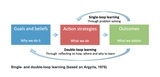
We are always learning. Throughout our lifetime we take on board new ideas and develop new skills. What we find difficult are learning what others want to teach us, and managing our learning in order to achieve particular goals and outcomes. Self-determined learning involves learning how to be an effective learner, and having the confidence to manage our own learning processes. ‘Double-loop learning’ is central to this process, for double-loop learners not only work out how to solve a problem or reach a goal, but also reflect on that process as a whole, questioning assumptions and considering how to become more effective. This helps them to become self-determined learners with the ability to seek out sources of knowledge and make use of online networks for advice and support.
Amongst the resources lists is an excellent article by Lisa Marie Blaschke - are your ears burning Lisa?
e4Innovation
.
Blog
.
<span class='date ' tip=''><i class='icon-time'></i> Jul 23, 2015 11:09am</span>
|
|
#TLAP meets Growth Mindset! A natural combination!
Source: storify.com
Love participating in twitter chats. Great collaboration!!!
See on Scoop.it - InformationCommunication (ICT)
Mr Kirsch's ICT Class Blog
.
Blog
.
<span class='date ' tip=''><i class='icon-time'></i> Jul 23, 2015 11:09am</span>
|
|
Filed under: Curious David, Screencasts, SPSS, teaching statistics Tagged: Carroll Alumni, Curious David, PSY205, Screencasts, SPSS, Teaching statistics and Experimental Design
David Simpson
.
Blog
.
<span class='date ' tip=''><i class='icon-time'></i> Jul 23, 2015 11:09am</span>
|
|
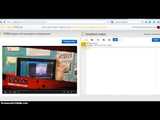
Videonot.es is an underutilized online resource that saves projects automatically to your Google Drive. Using this resources is easy as pie. First, connect your Google Drive account and import a useful YouTube video. Then, start taking notes on the right side of the page. Each time you write a note it is time stamped to your video. So, for example, if you have a multistep set of instructions your viewer can click on which ever step they want to watch and videonot.es will take them directly to that part of the video.
This means that viewers need only watch the parts of videos they need to watch. This saves your viewers time and frustration.
This tool can be used by everyone from session presenters (as follow up to your presentation or to flip your session and give background information prior to your session) to flipped classroom educators (introducing content at home so classroom time can be used to work on the work). To learn more, watch this video tutorial by clicking here.
Enjoy!
Put this resource in the hands of your students to make their video tutorials MORE helpful! Filed under: In The Classroom, Technology Tagged: adorable cats, classroom tech, Digital Learning, drive, ed tech, education tech, education technology, flipped, flipped classroom, flipped learning, flipped pd, good teachers, google, Gueri11aEd, GuerillaEd, instructional technology, it, region 11, tutorials, videonot.es, videonotes
Thrasymakos
.
Blog
.
<span class='date ' tip=''><i class='icon-time'></i> Jul 23, 2015 11:09am</span>
|
|
Now into my second month at Bath Spa University and I already feel as if I have been here forever Very impressed with the working environment. Stunning campus, nice office now complete with pictures. But there are a number of other things I am impressed with. Printing on the go (I know it’s nothing special but very convenient), just send your file go to the nearest printer, swipe your card and voila! Lots of recycling schemes, recycling bins everywhere. IT services are not only pleasant and friendly but efficient. Mac Book Pro up and running in no time, and now iPad Air (which I just love!) and mobile. Everyone uses Google Gmail and good drive for sharing. There is a good culture of sharing calendars as well. None of this is rocket science, but it all makes for a good working environment!
e4Innovation
.
Blog
.
<span class='date ' tip=''><i class='icon-time'></i> Jul 23, 2015 11:09am</span>
|