Blogs
|
I’m Maurya West Meiers, Senior Evaluation Officer at the World Bank and coauthor of A Guide to Assessing Needs: Essential Tools for Collecting Information, Making Decisions, and Achieving Development Results.
I often work with groups in carrying out needs assessments, collecting data, training, facilitating retreats, etc. So I’m always looking for facilitation tips and resources. Today I’m sharing some favorites.
Lessons learned:
If your end-goal in your meeting with a group is to gather data or make decisions (through focus groups, multi-criteria analysis, etc.), you’ll want to do some early rapport building to get people comfortable with one another and talking.
Make sure the right people are in the room. It seems obvious, but take the time to define your targets in advance and make sure that those participating are those targeted. Be prepared to gently remove people who don’t fit your pre-defined needs. Have another coordinator with you to help in this process. And have your room comfortably furnished and arranged.
Learn the names of participants in advance and give a warm greeting when they enter. These are common networking techniques because they work and put people at ease.
Use name badges and table tents. Have these items ready. You may wish to let participants write their own names instead of pre-printing them. Perhaps Jennifer prefers to have everyone call her Jen - so give her the chance to write her name as she wishes.
Get people talking early. As people enter the room, introduce them to others - and have ideas listed on a flip chart or card that they can discuss with one another. Keep people moving and mixing. Use a chime or bell to signal a move.
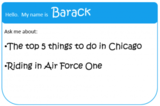
Use icebreakers. An easy icebreaker involves giving participants name badges and asking them to write two or three things they feel comfortable discussing with others. Example:
Energizers and games. If your group work - such as in a retreat - covers a lengthy period of time, use energizers (usually involving some movement) or games to keep people alert and engaged. If you search for energizers on YouTube, you’ll find many ideas you can adopt and adapt for your purposes and you’ll see how they work ‘in action’ and not just on paper. This quick and easy energizer is one such example.
Rad Resources. Here are some of my "go to" books and websites on facilitation techniques and tools.
The Ten-Minute Trainer: 150 Ways to Teach it Quick and Make it Stick! by Sharon Bowman
Liberating Structureswebsite and book by Henri Lipmanowicz and Keith McCandless. Check out their one-page Liberating Structures Menu.
Thiagi’s 100 Favorite Games by Sivasailam Thiagarajan
The American Evaluation Association is celebrating Needs Assessment (NA) TIG Week with our colleagues in the Needs Assessment Topical Interest Group. The contributions all this week to aea365 come from our NA TIG members. Do you have questions, concerns, kudos, or content to extend this aea365 contribution? Please add them in the comments section for this post on the aea365 webpage so that we may enrich our community of practice. Would you like to submit an aea365 Tip? Please send a note of interest to aea365@eval.org. aea365 is sponsored by the American Evaluation Association and provides a Tip-a-Day by and for evaluators.
AEA365
.
Blog
.
<span class='date ' tip=''><i class='icon-time'></i> Jul 27, 2015 11:44am</span>
|
|
Here’s my common sense response to the FLSA proposed rule. Pay your people for the work they are doing. Seriously, that’s all. Ideally, pay them what they are worth. If you don’t think they are worth what you’re paying them, it might be time to part ways. Let’s look at this together. You’re paying people $455 a week, and you’re lobbying that they won’t want to be hourly because being classified as "exempt" is an honor to them? Do you realize that $455 a week is $11.38/hour? That’s all! $11.38 an...
SHRM
.
Blog
.
<span class='date ' tip=''><i class='icon-time'></i> Jul 27, 2015 11:44am</span>
|
|
I’m Lisle Hites, Chair of the Needs Assessment TIG and Director of the Evaluation and Assessment Unit (EAU) at the University of Alabama at Birmingham (UAB). Today’s posting is about the use of data visualization to enhance your needs assessment.
Recently, my team worked with a state agency to help them identify potential sites for a pre-k development initiative. We used ArcGIS 10.2 Geographic Information Systems (GIS) technology to geocode and map all child care centers and grant applicants within the state. In turn, these data were displayed on an interactive, web-based map using ESRI’s ArcOnline platform. Supplemental data regarding percentage of people in poverty were added to the map to enhance the decision making process for policy makers (American Community Survey Census).
Displaying these multiple sets of data visually allowed state representatives to see the highest concentrations of four year olds in the state as well as potential gaps in service coverage by existing pre-k programs. In other words, these data were used to reduce the potential for duplication of services and to identify areas of greatest need.
Lessons Learned:
Needs assessments can be conducted in a variety of ways using existing data in new and innovative ways.
While state representatives had ideas of what they wanted to know, data visualization led them to refine their questions and identify additional sources of information to support their "data-driven" decision.
Hardcopy paper maps of each county did not provide enough geographic detail of childcare facilities. To maximize the large amount of disparate data, an online interactive mapping platform was critical to the success of this project.
Rad Resources:
ArcGIS Online (n.d.). The mapping platform for your organization. ESRI.
ArcNews (2013, Summer). ArcGIS 10.2 brings transformational capabilities to users. ESRI.
Azzam, T., & Robinson, D. (2013). GIS in evaluation: Utilizing the power of geographic
information systems to represent evaluation data. American Journal of Evaluation, 34(2),
207-224. doi: 10.1177/1098214012461710
Evergreen, S. (2013). Presenting data effectively: Community your findings for maximum
impact. NY: Sage Publications.
United States Census Bureau (2015). American community census.
The American Evaluation Association is celebrating Needs Assessment (NA) TIG Week with our colleagues in the Needs Assessment Topical Interest Group. The contributions all this week to aea365 come from our NA TIG members. Do you have questions, concerns, kudos, or content to extend this aea365 contribution? Please add them in the comments section for this post on the aea365 webpage so that we may enrich our community of practice. Would you like to submit an aea365 Tip? Please send a note of interest to aea365@eval.org. aea365 is sponsored by the American Evaluation Association and provides a Tip-a-Day by and for evaluators.
AEA365
.
Blog
.
<span class='date ' tip=''><i class='icon-time'></i> Jul 27, 2015 11:44am</span>
|
|
Editor's Note: This post originally appeared on Social Security Matters blog, the official blog of the Social Security Administration. We’re turning 80 this year, and boy, are we proud! We’re proud of our history, and we proudly remain committed to serving America, especially our most vulnerable people, including retirees, children, and individuals with disabilities. We’ll be celebrating this milestone by declaring July 19 through 25 as National my Social Security Week. ...
SHRM
.
Blog
.
<span class='date ' tip=''><i class='icon-time'></i> Jul 27, 2015 11:43am</span>
|
|
I am Ryan Watkins from George Washington University. Needs have been described and defined in many different ways of the years (see the December issue of New Directions in Evaluation for elaboration). One consequence of this often perplexing medley of definitions is that the word need has lost much of its meaning. Here I will try to help clarify some important relationships with a little additional precision to our language around needs we can greatly improve our results.
Lesson Learned:
When conducting a needs assessment…
Differentiate Needs from Solutions. It is easy to get tangled up in the distinction between needs and solutions to needs. Don’t confuse what you want to accomplished (closing needs) with the activities and resources used to achieve those results (such as, homeless shelters, mobile phones, and even money).
Use Need as a Noun, not as a Verb. You do NOT need to buy a new car. Nor do they need Internet access. These are options that may (or may not) help satisfy needs. Yet, by using need as a verb (or in a verb sense) we commit ourselves to one solution (a car, or Internet access) before we define the need. Rather, use need as a noun (50% reduction in gender-based violence this year) so that you have a basis for comparing potential solutions and guiding decisions.
Don’t Confuse Needs and Wants. Really strong wants or desires are frequently elevated to the status of needs through our choice of words. Just ask any 3-year-old in a toy store if they want or need a shiny new toy. Don’t confuse the two.
Expand to Include Individual, Group, and Societal Needs. Maslow’s Hierarchy of Needs popularized the concept that needs are individual. Nevertheless, groups (such as, teams, organizations, and institutions) have needs, as do societies. Quality needs assessments recognize and align needs across three levels.
Balance Needs and Felt-Needs. Felt-needs are often described as those perceived by the community rather than defined by an external expert. Both views on needs can be valuable. Recognize however that while people have perceptions of needs, their perceptions may not be an accurate reflection of reality. News reports, for example, may distort peoples’ perceptions on crime rates in a city. Therefore, integrate externally verifiable measures of needs in all assessments.
Rad Resource:
This blog is based on: Watkins, R., & Kavale, J. (2014). Needs: Defining what you are assessing. In J. W. Altschuld & R. Watkins (Eds.), Needs assessment: Trends and a view toward the future. New Directions for Evaluation, 144, 19-31.
The American Evaluation Association is celebrating Needs Assessment (NA) TIG Week with our colleagues in the Needs Assessment Topical Interest Group. The contributions all this week to aea365 come from our NA TIG members. Do you have questions, concerns, kudos, or content to extend this aea365 contribution? Please add them in the comments section for this post on the aea365 webpage so that we may enrich our community of practice. Would you like to submit an aea365 Tip? Please send a note of interest to aea365@eval.org. aea365 is sponsored by the American Evaluation Association and provides a Tip-a-Day by and for evaluators.
AEA365
.
Blog
.
<span class='date ' tip=''><i class='icon-time'></i> Jul 27, 2015 11:43am</span>
|
|
Managing multiple social media channels for your business or personal use can be difficult because each social channel is on a separate site. Managing these sites can take a lot of time out of your day, that’s why I use Hootsuite to manage AEA’s social channels, including Twitter and Facebook. Hootsuite is a social media management tool that helps you monitor your social channels and track what people are saying in the field. I have compiled a few ways you can benefit from Hootsuite!
Rad Resource: Monitor multiple channels in one place
The best feature of Hootsuite is that it allows you to manage multiple social media streams on one dashboard. The tool allows you to view:
Twitter
Facebook Profiles, Events, Groups, and Pages
LinkedIn Profiles, Pages, and Groups
Google+ Pages (currently not personal profiles)
Foursquare
You can post and monitor your social media pages all from this one tool. You can even post the same content across multiple platforms. However be careful here—your Facebook fans and Twitter followers may have different needs. Also, Twitter only allows 140 characters whereas Facebook allows much longer and richer posts with photos and videos.
Rad Resource: Schedule Posts
The scheduling feature on Hootsuite is very beneficial especially for the busy professional who still wants to have a presence on real time social conversations. Hootsuite allows you to determine the time, date, and channel for your post. We recommend not posting too far in advance in order to stay relevant with your followers.
Hot Tool: Customize your dashboard
Hootsuite allows you to customize the information you see about each of your social media channels. For example, if you add your Twitter account to Hootsuite, you can customize the dashboard to view your newsfeed, mentions from other twitter users, your tweets, new followers, retweets, scheduled tweets, and the list goes on. This allows you to see all the pieces of information that are truly relevant to your needs.
Rad Resource: Monitor topics and hashtags
In addition to creating streams for your social media channels, you can create streams for keywords and hashtags which allow you to follow conversations in the field. By simply choosing "add stream" then select "search" or "keywords" you can enter keywords, phrases, or popular hashtags. Follow words such as evaluation, eval, data visualization, or #dataviz. Hootsuite will show you all of the tweets and posts related to this theme or topic. This is a great way to stay on top of the latest conversations in the field.
Click here to learn more about getting started on Hootsuite.
Do you have questions, concerns, kudos, or content to extend this aea365 contribution? Please add them in the comments section for this post on the aea365 webpage so that we may enrich our community of practice. Would you like to submit an aea365 Tip? Please send a note of interest to aea365@eval.org. aea365 is sponsored by the American Evaluation Association and provides a Tip-a-Day by and for evaluators.
AEA365
.
Blog
.
<span class='date ' tip=''><i class='icon-time'></i> Jul 27, 2015 11:42am</span>
|
|
We all know that the Americans with Disabilities Act makes its unlawful for an employer to discriminate against an individual on the basis of his or her disability. But, the Act has even broader protections for employees. The ADA expressly prohibits "excluding or otherwise denying equal jobs or benefits to a qualified individual because of the known disability of an individual with whom the qualified individual is known to have a relationship or association." That’s one type of of associational discrimination, the most recent allegation of which came in a lawsuit the EEOC filed last week against a medical facility. The...
SHRM
.
Blog
.
<span class='date ' tip=''><i class='icon-time'></i> Jul 27, 2015 11:42am</span>
|
|
We are Zhao Min, Deputy Director of the Asia-Pacific Finance and Development Institute (AFDI) in Shanghai, China, and Ningquin Wu, Coordinator at AFDI. AFDI is a member of the CLEAR Initiative (Centers for Learning on Evaluation and Results) and hosts the East Asia CLEAR Center. CLEAR promotes evaluation capacity building in regional centers across the globe. This week’s blogs are by CLEAR members.
Effective governance and spending is important in a city like Shanghai, with a population of 24 million residents. To that end, in 2011, the Shanghai government established a performance-based budgeting (PBB) system. Performance budgeting aims to improve the effectiveness and efficiency of public expenditure by linking the funding of public sector organizations to the results they deliver. It uses systematic performance information (indicators, evaluations, program costings, etc.) to make this link. The effect of performance budgeting may be felt in improved prioritization of expenditure, and in improved service effectiveness and/or efficiency. Our partners at the Shanghai Municipal Finance Bureau (the Bureau) are working to establish a sound management approach in applying performance-based management concepts to their public budgeting framework. We’ve been researching their PBB efforts. Here are some lessons from their PBB experiences, useful to others who are working on using performance to better manage budgets and spending.
The key ingredients in setting up Shanghai’s PBB system are below, which drew on advanced theory and international practices of PBB management.
A strong framework for running the performance-based budgeting system
Sound legal systems in place
Signing of performance contracts by public managers to improve accountability
Public managers having sufficient discretion to achieve results
Use of accrual accounting to do comprehensive accounting of government costs
Institutional arrangements and manpower
There were many monitoring and evaluation elements that were also part of the PBB arrangements, described below.
An ex-ante budget review system was established, with an institutional framework for the evaluation of earmarked fiscal funds.
A mid-term monitoring system of fiscal budget funded projects was established.
Ex-post evaluations are planned for all public departments.
Self-evaluations are being phased in among budget departments
The application of evaluation findings to budget management has been enhanced.
Additionally, the Bureau is implementing these processes:
Releasing of evaluation findings to all public departments
Providing recommendations for improvement on performance related problems
Monitoring the implementation of action plans by public departments
Rad Resources:
Learn more about performance-based budgeting and how to do it with these resources.
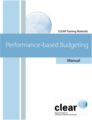
Performance-based Budgeting Manual
Program Classification for Performance-Based Budgeting: How to Structure Budgets to Enable the Use of Evidence (also available in Spanish).
The American Evaluation Association is celebrating Centers for Learning on Evaluation and Results (CLEAR) week. The contributions all this week to aea365 come from members of CLEAR. Do you have questions, concerns, kudos, or content to extend this aea365 contribution? Please add them in the comments section for this post on the aea365 webpage so that we may enrich our community of practice. Would you like to submit an aea365 Tip? Please send a note of interest to aea365@eval.org. aea365 is sponsored by the American Evaluation Association and provides a Tip-a-Day by and for evaluators.
AEA365
.
Blog
.
<span class='date ' tip=''><i class='icon-time'></i> Jul 27, 2015 11:41am</span>
|
|
This morning I had a great conversation with a group of people who I consider to be recruiting masterminds. One person had worked for a national, venture funded job board for the previous decade. Another has run a staffing agency for two decades. Another had helped create the employment brands for some of the nation’s most respected places to work. Needless to say, it was a diverse collection of people with unique perspectives on today’s recruiting landscape. The conversation could be summarized to one talking point: workplace culture shouldn’t be a crapshoot for today’s recruiters. The former job board...
SHRM
.
Blog
.
<span class='date ' tip=''><i class='icon-time'></i> Jul 27, 2015 11:40am</span>
|
|
I’m Neha Sharma from the CLEAR Global Hub at the World Bank’s Independent Evaluation Group. A key Hub role involves facilitating learning and sharing knowledge about evaluation capacity development. So I often think about how people learn. In this context, I’ve been reading a lot of behavioral science literature, and reflecting on what makes people learn to change behaviors.
Richard Thaler, University of Chicago Economist and Behavior Science Professor, recently wrote about how he changed his class’s grading scheme to minimize student complaints about "low" grades when he administered difficult tests (to get higher dispersion of grades to identify "star" students). His trick was to change the denominator in the grading scheme from 100 to 137, meaning that the average student now scored in the 90s and not in the 70s. He achieved his desired results: high dispersion of grades and no student complaints about "low" grades!
Thaler’s blog made me wonder what effect this change in grading scheme had on student learning and the lessons it carried for communicating tough evaluation results. The relationship between performance and learning holds critical lessons for evaluators - does a 70 disguised as a 90 have an effect on learning?
Like classroom tests, evaluations that are seen as overly harsh or critical are often questioned and lessons are underused by the evaluated agency. This doesn’t mean that poor results should not be communicated - they absolutely should - but evaluators need to keep in mind that receiving and then learning from bad performance is not easy when there is a lot at stake - future funding, jobs, professional growth, and political stability. On the other hand, evaluations that reaffirm stakeholder-biases are futile too.
This balance between communicating actual performance and encouraging learning may be key to determining evaluation use. If evaluations are to fulfill their learning mission the "how to" learn is just as, if not more, relevant as the evaluation itself. Cognitive science research about behavior change could teach us a lot about how to encourage learning through evaluations. For instance, we see that easy is better than complicated, attractive is better than dull, and social is better rather than teaching in isolation when trying to change behaviors. Behavior science is an interesting field of study for evaluators - to help us demystify the relationship between evaluation performance and learning.
Rad Resources:
Thaler is one of many behavioral scientists (and psychologists, economists) writing about what influences our behavior. Here are more.
Nudge: Improving Decisions About Health, Wealth, and Happiness
Thinking Fast and Slow
Scarcity: Why Having Too Little Means So Much
Dan Ariely’s website and research
The Paradox of Choice
Behavioral Insights Team (UK Nudge Unit)
The American Evaluation Association is celebrating Centers for Learning on Evaluation and Results (CLEAR) week. The contributions all this week to aea365 come from members of CLEAR. Do you have questions, concerns, kudos, or content to extend this aea365 contribution? Please add them in the comments section for this post on the aea365 webpage so that we may enrich our community of practice. Would you like to submit an aea365 Tip? Please send a note of interest to aea365@eval.org. aea365 is sponsored by the American Evaluation Association and provides a Tip-a-Day by and for evaluators.
AEA365
.
Blog
.
<span class='date ' tip=''><i class='icon-time'></i> Jul 27, 2015 11:40am</span>
|