Blogs
|
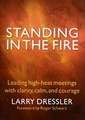
Standing in the Fire, Larry Dressler compares leading a combustible meeting with fighting a brush fire. When not tended to properly, a fire can cause suffering, proliferation, and destruction. However, the fire can also lead to illumination, cleansing, regeneration, and transformation.
High-heat meetings make everyone in the room uncomfortable, but this ‘fire’ is the catalyst that can inspire the creativity needed to solve the issues that brought participants together in the first place. Effective conveners handle the tension with a "way of being" which is engaged, open, authentic, relaxed, and grounded in purpose. Standing in the Fire offers a set of internal, self-directed principles and practices enabling the facilitator to remain calm and grounded while others feel hopeless, agitated, angry, and confused.
For a free trial of EBSCO Business Book Summaries click here.
Related book summaries in the BBS library: Putting Our Differences to Work, Crucial Conversations, 10 Steps to Successful Meetings
Jerry Eonta
.
Blog
.
<span class='date ' tip=''><i class='icon-time'></i> Jul 29, 2015 11:18am</span>
|
|
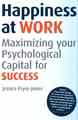
The old saw says that money cannot buy happiness. But what about the reverse? Does happiness matter in the workplace? In Happiness at Work, Jessica Pryce-Jones demonstrates that happy employees are more successful in a variety of indicators, including promotion, motivation, efficiency, and health. Happy employees contribute more, stay in their positions longer, and are better to work with. Furthermore, happiness is neither mysterious nor intangible—there are numerous strategies that individuals and businesses can adopt to enhance the happiness of their workplaces. In today’s economic climate, everyone in business should be looking to tap into this vast, often poorly understood human resource.
For a free trial of EBSCO Business Book Summaries click here.
Jerry Eonta
.
Blog
.
<span class='date ' tip=''><i class='icon-time'></i> Jul 29, 2015 11:18am</span>
|
|
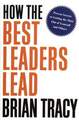
The quality of leadership can determine whether a company succeeds or fails. But how do the best leaders lead? In How the Best Leaders Lead, author Brian Tracy describes lessons he has learned about leadership during his years of working as a consultant and trainer with more than 1,000 companies. He suggests that leadership is not a position, but goal-oriented action that involves careful planning and analysis, and includes qualities and skills which may be learned and honed through practice.
For a free trial of EBSCO Business Book Summaries click here.
Related book summaries in the BBS library: The Art of Followership, Leadership Gold, Love Leadership
Jerry Eonta
.
Blog
.
<span class='date ' tip=''><i class='icon-time'></i> Jul 29, 2015 11:18am</span>
|
|
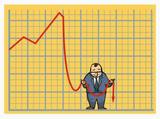
It’s pretty clear that the U.S. economy is in turmoil. Though the National Bureau of Economic Research may have declared that the recession ended in June of 2009, it’s obvious that the country is still dealing with its effects.
While the recession may have had its beginning on Wall Street, organizations and individuals should take a hint; unchecked spending and lack of financial awareness can lead to disaster. It’s time for organizations and their employees to work on developing their financial acumen. On an organizational level, this will help companies save money and reduce rampant spending. On the individual level, this will help employees with their personal finances and make them more aware of their personal role in ensuring the financial success of their company.
Financial acumen is no longer a competency that should be relegated to only those employees holding financial positions. Everyone should work to increase their financial knowledge as a way of not only helping themselves become more fiscally responsible and secure, but also helping their organization reach those same goals.
Related summaries in the BBS library: The 3 Financial Styles of Very Successful Leaders, Leadership in the Era of Economic Uncertainty, Strategic Corporate Finance
Jerry Eonta
.
Blog
.
<span class='date ' tip=''><i class='icon-time'></i> Jul 29, 2015 11:17am</span>
|
|
In her book The Female Brand, author Catherine Kaputa speaks from her background in advertising and personal branding to encourage women to view themselves as a "product" in the marketplace and to learn how to differentiate themselves from the competition. She argues that women bring unique strengths and aptitudes to the workplace, and that these "gender-based strengths" may be especially valuable in a twenty-first century marketplace in which most jobs are no longer machine-based and emphasize cooperation and teamwork. Women following her practical advice will learn how to cultivate a "female brand" which is both authentic and distinctive, and which strategically addresses specific needs in the marketplace.
For a free trial of EBSCO Business Book Summaries click here.
Related book summaries in the BBS library: Women Lead the Way, Why Women Mean Business
Jerry Eonta
.
Blog
.
<span class='date ' tip=''><i class='icon-time'></i> Jul 29, 2015 11:17am</span>
|
|
The key to high performance in the workplace goes beyond traditional "hard skills" — passion is an essential element of productivity. Employees who are able to identify a "passion and purpose" in their lives experience heightened engagement and innovation, and they feel connected to their work in exciting new ways. Organizations that cultivate this sense of engagement can gain a valuable edge in today’s competitive marketplace.
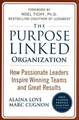
In The Purpose Linked Organization, leadership development experts Alaina Love and Marc Cugnon explain the powerful role passion and purpose play in the workplace and explain how leveraging them effectively can enhance organizational performance. Using the ten "Passion Profile Archetypes," the authors show readers how they can hone the temperaments necessary for high performance and channel them in a positive direction.
For a free trial of EBSCO Business Book Summaries click here.
Related book summaries in the BBS library: Purpose, Common Purpose
Jerry Eonta
.
Blog
.
<span class='date ' tip=''><i class='icon-time'></i> Jul 29, 2015 11:16am</span>
|
|
This month’s issue of Chief Learning Officer has an interesting article concerning learning management systems and the emerging practice of integrated Web 2.0 functionality within these systems to increase collaboration and participation. I believe this is a great move in the corporate learning space. Many companies have sophisticated ways of tracking formal learning and an individual’s progression towards a certain task, but informal learning is much harder to quantify and record. As a result, many companies have ignored the impact of informal learning on an individual’s learning process.
As Ed Cohen writes in the article:
With the introduction of each new technology and methodology, our industry is trying to make things more efficient and more effective. However, we can’t increase the rate at which a learner consumes information, so now the object is to make it more available.
Informal learning helps fill in the holes that formal learning leaves open. Related readings, videos, social networking, and discussion forums are all forms of informal learning that people participate in on a daily basis, yet many aren’t even aware that this constitutes learning.
Much of informal learning falls into the category of "just-in-time learning." Employees today, especially younger employees, are accustomed to having information available to them 24/7. They learn what they want to learn when they want to learn it. While an LMS is great for providing structured learning that is job-specific and will help employees excel in a given position, it does not always provide the answer to a particular task or question, which is where informal learning comes into play.
By implementing Web 2.0 tools within an LMS, companies can give their employees access to on-demand learning materials and facilitate a space for collaboration with colleagues. While this type of learning may be harder to measure and track, that shouldn’t prevent companies from implementing informal learning in addition to their formal learning activities.
Jerry Eonta
.
Blog
.
<span class='date ' tip=''><i class='icon-time'></i> Jul 29, 2015 11:16am</span>
|
|
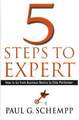
5 Steps to Expert
What does it take to become an elite performer? How can anyone become more expert in their field? Author Paul Schempp has spent his career as a professional speaker, coach, and consultant examining these questions. In his book Five Steps to Expert, Schempp discusses five specific, consistent steps through which all people progress to become experts, as well as three ways that experts attain their level of proficiency.
Expertise is not innate, but developed through hard work. Although experts represent a small percentage in any field, Schempp believes that anyone can become more expert at what they do by studying these principles, internalizing his advice, and practicing it in the workplace.
For a free trial of EBSCO Business Book Summaries click here.
Related book summaries in the BBS library: Go Put Your Strengths to Work, The Personal Efficiency Program, Ordinary Greatness
Jerry Eonta
.
Blog
.
<span class='date ' tip=''><i class='icon-time'></i> Jul 29, 2015 11:15am</span>
|
|
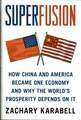
Over the past two decades, the Chinese and American economies have developed a symbiotic relationship with one another. China has become the United States’ largest creditor, while the American and multinational companies that went to China in the late 1980s and 1990s have developed a new international system of trade, production, and capital flows. The resulting global economic system is unlike anything the world has known. In Superfusion, Zachary Karabell traces how this integration between the Chinese and American economies developed and questions what the path forward will look like for these two countries. Will the United States try to develop the system for the mutual benefit of America and China, or will it resist the undeniable linkages with China? Only time will tell.
For a free trial of EBSCO Business Book Summaries click here.
Related book summaries in the BBS library: Getting China and India Right, The Coming China Wars, The Quest for Global Dominance
Jerry Eonta
.
Blog
.
<span class='date ' tip=''><i class='icon-time'></i> Jul 29, 2015 11:14am</span>
|
|
Some people are clearly much more effective at communicating than others. But why do people tune into some messages, and tune out others? Why do some messages stick? As John Maxwell, internationally respected leadership expert, says: "Talk is easy. Everybody talks. The question is, how can you make your words really count?"
In Everyone Communicates, Few Connect Maxwell draws upon his life experience, extensive research, and anecdotal examples to reveal the secret of the most effective communicators: they connect. Learning how to connect can be vital to success in relationships and careers, and Maxwell himself has worked hard to acquire this skill. In this book he suggests five principles of connecting, and five practices to becoming a communicator who connects. Believing that everyone can learn to connect with work and practice, he provides inspirational words to help communicators enrich the lives of their listeners and in the process, transform their own.
For a free trial of EBSCO Business Book Summaries click here.
Related book summaries in the BBS library: The Ripple Effect, Speak with Power and Confidence, The 5 Essential People Skills
Jerry Eonta
.
Blog
.
<span class='date ' tip=''><i class='icon-time'></i> Jul 29, 2015 11:14am</span>
|