Blogs
|
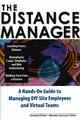
With an increasing number of employees working outside the central workplace, direct control over members of a project team is a thing of the past. In The Distance Manager, authors Kimball Fisher and Mareen Duncan Fisher have created a practical guide for employers and managers on how to get the most out of off-site employees and virtual teams. Emphasizing the value of management skills and resources required to keep the project on track, the Fishers offer simple tips and real examples in order to guide the prospective team to a project’s successful conclusion.
For a free trial of EBSCO Business Book Summaries click here.
Jerry Eonta
.
Blog
.
<span class='date ' tip=''><i class='icon-time'></i> Jul 29, 2015 11:27am</span>
|
|
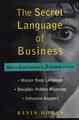
Nonverbal communication affects and influences all aspects of daily life, and its impact is widely overlooked. Successful professionals must be able to interpret the nonverbal signals everyone displays. In business, the secret language is about what is not said. The Secret Language of Business by Kevin Hogan is about reading people. Many individuals send messages they believe mean one thing but are received as something else. Not only does this cause misunderstandings but it also explains why so few people are influential.
For a free trial of EBSCO Business Book Summaries click here.
Jerry Eonta
.
Blog
.
<span class='date ' tip=''><i class='icon-time'></i> Jul 29, 2015 11:26am</span>
|
|
Perusing through the Huffington Post, I came across an article on Vulnerable Leadership that speaks to the fact that leaders must have the capacity to show weakness. Many leaders feel that showing any sign of weakness is a personal failure, but having the ability to admit one’s mistakes and ask for help when needed can have a lasting positive impact on employees.
It is important for employees to know that their boss is not impervious to challenges and obstacles in the workplace. Showing weakness can empower employees by showing them that successful people become successful by overcoming adversity. Asking team members for help during a project also makes them feel needed and respected.
It can be difficult for management to admit mistakes and show vulnerability, but leaders today must find a way to be a pillar of strength within their company while at the same time not being afraid to show their softer side.
Related book summaries in the BBS library: The Other Kind of Smart, The Inspiring Leader, The Adversity Advantage
Jerry Eonta
.
Blog
.
<span class='date ' tip=''><i class='icon-time'></i> Jul 29, 2015 11:25am</span>
|
|
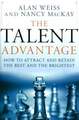
One of the biggest challenges facing business today is finding, grooming, and retaining the best and the brightest hires. Many organizations choose to assign this responsibility to the human resources department, but according to Alan Weiss and Nancy MacKay, this can be a fatal error.
The best organizations out there know that the war for talent must start at the top, where great leaders can assert control over the hiring process and foster top talent. In The Talent Advantage, Weiss and MacKay draw on their years of expertise in the recruitment and retainment field to provide successful strategies, techniques, and tips that will give any company a competitive advantage in the talent wars.
For a free trial of EBSCO Business Book Summaries click here.
Jerry Eonta
.
Blog
.
<span class='date ' tip=''><i class='icon-time'></i> Jul 29, 2015 11:24am</span>
|
|
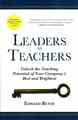
In 2000, Becton, Dickinson and Company (BD) was competing in a medical technology market that was much different from the one it had grown up in. The current market was fully globalized, and regulations were changing significantly, along with customer buying patterns. Company executives realized that many people in the company were unsure of BD’s direction. In response, BD revamped its learning and development infrastructure. In Leaders as Teachers, Edward Betof examines the leaders-as-teachers program and the benefits it can bring to a company, such as aligning the learning function with the organization’s goals, serving as a catalyst for leadership development, strengthening the organization’s culture, and promoting change.
For a free trial of EBSCO Business Book Summaries click here.
Jerry Eonta
.
Blog
.
<span class='date ' tip=''><i class='icon-time'></i> Jul 29, 2015 11:24am</span>
|
|
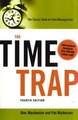
Who has never felt the need for more hours in the day to accomplish what must be done? The struggle to use time effectively in the face of overwhelming daily demands has not diminished since the late Alec Mackenzie first published this time-management classic in 1970. Indeed, new technology may have even increased the desperate struggle for efficiency, even as it has enabled unprecedented multi-tasking.
In this fourth edition of The Time Trap, author Pat Nickerson brings Mackenzie’s classic into the twenty-first century and updates it in light of new technologically-spawned time traps. She examines the unconscious habits of thought and behavior which usually underlie poor time management, introduces five tools, or "practices," for effective time management, and analyzes this century’s fourteen most common time traps, suggesting escape routes to each. The book includes reflections from managers who have attended Mackenzie and Nickerson’s time-management seminars about their own experiences in the "real world" struggle to use time effectively.
For a free trial of EBSCO Business Book Summaries click here.
Jerry Eonta
.
Blog
.
<span class='date ' tip=''><i class='icon-time'></i> Jul 29, 2015 11:22am</span>
|
|
In the education community, a useful body of research evidence related to training development and delivery has emerged only in the last 20 years. With that evidence, training practitioners now have a better idea of how learning occurs in the brain. In Evidence-Based Training Methods, Ruth Colvin Clark summarizes the most current research that relates to the decisions training professionals face on a daily basis. She explains techniques that maximize learning, provides evidence about the best ways to use examples and practice, and discusses how to organize content.
For a free trial of EBSCO Business Book Summaries click here.
Jerry Eonta
.
Blog
.
<span class='date ' tip=''><i class='icon-time'></i> Jul 29, 2015 11:21am</span>
|
|
Many people feel awkward in certain situations - a handicap that can prevent them from moving ahead personally and professionally. Drawing on almost 100 years of experience by Dale Carnegie Training, The 5 Essential People Skills presents a step-by-step guide to mastering five essential people skills: 1) rapport building, 2) curiosity, 3) communication, 4) ambition, and 5) conflict resolution.
The 5 Essential People Skills first examines the skill at the core of the five essential people skills: assertiveness, which it defines as the ability to speak and act in ways that cause people to respond attentively and positively. Assertive people are able to make their ideas known without inhibiting others from sharing their ideas. The remainder of the book instructs readers how to apply assertiveness to the five essential people skills, helping them feel empowered, respected, and at ease in any situation.
For a free trial of EBSCO Business Book Summaries click here.
Jerry Eonta
.
Blog
.
<span class='date ' tip=''><i class='icon-time'></i> Jul 29, 2015 11:20am</span>
|
|
In more stable times, adaptability in organizations and employees if often neglected. Companies become complacent in the way they do business, and many have an, "If it’s not broken, don’t fix it," mentality. In more turbulent times, however, adaptability becomes an invaluable skill. Companies and employees who are able to keep a level head and effectively deal with uncertainty are more capable of taking advantage of difficult situations.
Companies are currently facing drastic changes in the way they operate and do business. Layoffs, mergers, and an increased focus on efficiency have all lead employers and employees alike to think differently about the way they work and what truly matters to the business as a whole.
In order to navigate the uncertainties of today, it is important that companies instill the quality of adaptability in all their employees, from CEO to front line worker. A company built on employees who are readily able to handle transition is better positioned than a company that is resistant to change. Companies that are able to quickly and effectively adapt to the new economic realities and take advantage of transformed marketplaces are those companies that will weather the current economic crisis and emerge stronger and better prepared for future success.
Related book summaries in the BBS library: Corporate Agility, Leadership Agility, The Change Cycle, Built to Change
Jerry Eonta
.
Blog
.
<span class='date ' tip=''><i class='icon-time'></i> Jul 29, 2015 11:19am</span>
|
|
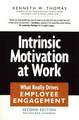
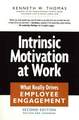
Maximizing productivity at work is a top priority for all business organizations, but all too often focus is limited to extrinsic rewards: tangible benefits such as pay, commissions, and bonuses. In Intrinsic Motivation at Work, author Kenneth W. Thomas explores the power of intrinsic rewards, the psychological rewards workers get from the work itself. Companies that harness intrinsic rewards can create a more engaged, self-managing, and committed environment for their employees. Speaking to workers and team leaders alike, Intrinsic Motivation at Work describes the four intrinsic motivations needed to improve workers’ self-management: a sense of choice, a sense of meaningfulness, a sense of competence, and a sense of progress.
For a free trial of EBSCO Business Book Summaries click here.
Related book summaries in the BBS library: Engaging the Hearts and Minds of All Your Employees, Engagement Is Not Enough, The Inspiring Leader
Jerry Eonta
.
Blog
.
<span class='date ' tip=''><i class='icon-time'></i> Jul 29, 2015 11:19am</span>
|