Blogs
|
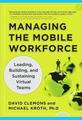
In Managing the Mobile Workforce by David Clemons and Michael Kroth, mobile workers are defined as those who are not physically located within a centralized building or who move between work locations, and who are able to access company resources through private networks, the Internet, and mobile networks. It is estimated that mobile workers worldwide will surpass one billion by 2011, which comprises 75 percent of the U.S. workforce. These technology-enabled workers will have unlimited global job opportunities and easy access to companies that will value them. Wireless broadband networks, mobile devices, social networking, cloud computing, and a global economy are changing communications and computing. For businesses, this is an opportunity to apply new forms of work and technologies that will lead to competitive advantages in their markets.
For a free trial of EBSCO Business Book Summaries click here.
Related book summaries in the BBS library: Making Telework Work, The Distance Manager, The 2020 Workplace
Jerry Eonta
.
Blog
.
<span class='date ' tip=''><i class='icon-time'></i> Jul 29, 2015 11:07am</span>
|
|
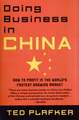
Over the past few years, China has transformed itself into a powerful, consumer-oriented culture, and many Western companies have flocked to China to take advantage of this new marketplace. However, entrepreneurs from the United States and Western countries often fail to realize that transacting business in China is a far cry from making deals at home. Ted Plafker, a Beijing correspondent for The Economist, leverages his extensive experience in Chinese culture and entrepreneurship to offer a primer for newcomers who are planning to expand their business into China. According to his book, Doing Business in China, "As many foreign companies have already proven, success in China is possible, but only for those with the patience, persistence, and resources to see it through."
For a free trial of EBSCO Business Book Summaries click here.
Related book summaries in the BBS library: The Coming China Wars, Getting China and India Right, Superfusion
Jerry Eonta
.
Blog
.
<span class='date ' tip=''><i class='icon-time'></i> Jul 29, 2015 11:07am</span>
|
|
Each day, Google processes some 400 million Internet searches, many of which are launched by people shopping for goods or services. As such, Google can be a tremendous resource for marketing professionals, but many of them do not understand the nuances of how Google performs searches or how the data produced by the searches can be employed to match consumers with products. In Everything I Know about Marketing I Learned from Google, Internet marketing veteran Aaron Goldman helps readers understand how people use Google, the opportunities in which consumers are most susceptible to marketing, and the proper use of keywords and other techniques that can help entrepreneurs use Google to their advantage.
For a free trial of EBSCO Business Book Summaries click here.
Related book summaries in the BBS library: Turn Clicks into Customers, Marketing in the Age of Google, Socialnomics
Jerry Eonta
.
Blog
.
<span class='date ' tip=''><i class='icon-time'></i> Jul 29, 2015 11:07am</span>
|
|
Although Google’s new social media site Google+ has only been out for a few weeks now, it is reported that over 20 million users have registered on the site already. Social media sites like Facebook, Twitter, and Google+ have become the go-to communication tools for keeping in touch with friends and family. They are easy to use, connect users to hundreds of contacts at once, and allow people to share their thoughts and interests with a single click.
Lately, many organizations have been trying to capture this same sense of community and sharing within their own companies as a way of increasing institutional learning. I ran across the below video that explains some ways to make these initiatives more successful:
Related book summaries in the BBS library: Social Media at Work, Driving Results through Social Networks, Socialnomics
Jerry Eonta
.
Blog
.
<span class='date ' tip=''><i class='icon-time'></i> Jul 29, 2015 11:05am</span>
|
|
With Generation Y, or "Millennials," coming into the workforce in greater and greater numbers, many companies are now recognizing that old teaching and learning techniques don’t necessarily work for younger employees. Millennials are much more apt to learn when a company’s learning initiatives take advantage of the technologies they use every day. This technology includes PDAs and other mobile devices, apps, and social networking sites, and younger generations prefer content presented in video or audio format.
While most companies have implemented the above technologies into their learning initiatives, one technology that remains on the fringes of learning is video games. This article speaks to the increased interest from e-learning providers in games for use in corporate learning. The aim is to help employees learn in an engaging way. The hope is that games will appeal more to younger workers and help them absorb information better than the typical assigned reading.
I think it’s great that companies are starting to experiment with new media to see what it can do to aid their learning initiatives. It’s obvious that as technology advances learning must follow suit, and games seem perfect for presenting learning content in an engaging way. Do you think games have a place in corporate learning strategies?
Jerry Eonta
.
Blog
.
<span class='date ' tip=''><i class='icon-time'></i> Jul 29, 2015 11:04am</span>
|
|
Three hundred sixty degree feedback helps managers to get a clear picture of how they are perceived by their bosses, direct reports, colleagues, and others. Comprehensive data are collected from those who work for or with the manager, data is compiled and reported to the manager, and a plan is created to use the data for the manager’s professional development. The Art and Science of 360° Feedback details how to manage the process of collecting the feedback, including preparing recipients, selecting raters, administering the collection instrument, analyzing the results, presenting the feedback, and creating the development plan.
For a free trial of EBSCO Business Book Summaries click here.
Related book summaries in the BBS library: Authentic Conversations, Communicating for Managerial Effectiveness, How to Tell Anyone Anything
Jerry Eonta
.
Blog
.
<span class='date ' tip=''><i class='icon-time'></i> Jul 29, 2015 11:04am</span>
|
|
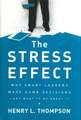
As competition and economic pressures increase, business leaders are guaranteed to experience higher levels of stress. This can cause even leaders with proven track records to make bad decisions. In The Stress Effect, Henry L. Thompson explores the relationship between stress and decision making. He analyzes how people make decisions under high levels of stress and how leaders can improve their decision-making capabilities in today’s high pressure business environment. The techniques described in The Stress Effect are designed to help leaders improve their cognitive and emotional abilities, resulting in better on-the-job performance, health, and relationships.
For a free trial of EBSCO Business Book Summaries click here.
Related book summaries in the BBS library: The Age of Speed, Executive Stamina, Happiness at Work
Jerry Eonta
.
Blog
.
<span class='date ' tip=''><i class='icon-time'></i> Jul 29, 2015 11:03am</span>
|
|
After hiking the price of their joint DVD mailing and instant streaming service without any knowledge from their customers, Netflix recently announced that it will be splitting into two separate companies. It will continue to offer its internet streaming service under its original name and logo. As of last week, it has decided to offer its original service, DVDs through the mail, under a new name and company, "Qwikster."
I recently received the following stock e-mail from Netflix co-founder and CEO, Reed Hastings: "It is clear from the feedback over the past two months that many members felt we lacked respect and humility in the way we announced the separation of DVD and streaming and the price changes. That was certainly not our intent, and I offer my sincere apology. Let me explain what we are doing. It’s hard to write this after over 10 years of mailing DVDs with pride, but we think it is necessary: In a few weeks, we will rename our DVD by mail service to "Qwikster". We chose the name Qwikster because it refers to quick delivery. We will keep the name "Netflix" for streaming."
I myself have been a devoted Netflix member for over 4 years. I was thoroughly excited at the prospect of their instant streaming service, and their ability to continue their great customer relations and low prices. Unfortunately, I do feel that the recent chain of events and consistent lack of dialogue with their customers has shown little respect for the immense member base that has led to their tremendous success. I only learned of their sudden price increase due to my credit card bill showing that my Netflix charge had almost doubled. Moreover, there was no response to this price increase for almost an entire month.
The mass generated e-mail is a gesture in the right direction, I suppose. Netflix’s actions have gone against even the most basic rule of customer relations: the customer comes first. I wonder now how important customers truly are to the company’s overall vision, and how many the past few months of conduct will cost them.
What do you think about Netflix’s recent split?
Jerry Eonta
.
Blog
.
<span class='date ' tip=''><i class='icon-time'></i> Jul 29, 2015 11:01am</span>
|
|
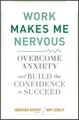
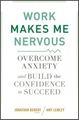
Many people experience anxiety on the job. This problem affects employees at every level of organizations, from entry-level workers to senior executives. Although workplace anxiety can be debilitating, it does not have to be. In Work Makes Me Nervous, Jonathan Berent and Amy Lemley describe a personal coaching system that conquers this problem. Berent developed the program based on his work with thousands of people. This process is designed to help readers diagnose their symptoms, build a map for change, and create a High Performance Mind.
For a free trial of EBSCO Business Book Summaries click here.
Related book summaries in the BBS library: The Stress Effect, The Three Signs of a Miserable Job, Speak with Power and Confidence
Jerry Eonta
.
Blog
.
<span class='date ' tip=''><i class='icon-time'></i> Jul 29, 2015 11:00am</span>
|
|
Few concepts in the United States are as deeply rooted as the American Dream. Hard work, determination, a willingness to take risks - these are the qualities needed to succeed, at least in the common narrative. According to author Chris Rabb, however, the reality is not so positive. Only a small fraction of businesses succeed past their first few years, and even fewer hire employees. In Invisible Capital, Rabb discusses the myths, realities, and opportunities behind entrepreneurship, explaining where the misconceptions come from and how damaging they can be for would-be business owners. According to Rabb, invisible capital is "the collection of largely intangible assets that improve the probability that a venture will grow and thrive." Invisible Capital reviews how invisible capital can be identified, leveraged, and shared in order to level the playing field for entrepreneurs.
For a free trial of EBSCO Business Book Summaries click here.
Related book summaries in the BBS library: Capitalism 4.0, Animal Spirits, Upstarts!
Jerry Eonta
.
Blog
.
<span class='date ' tip=''><i class='icon-time'></i> Jul 29, 2015 10:59am</span>
|