Blogs
|
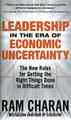
Leadership in the Era of Economic Uncertainty by Ram Charan is a common-sense guide outlining the management practices necessary to weather the current economic storm. Throughout the book Charan explains how to manage for cash and make tough decisions at every level of the business, from the CEO down to customer service. With the right strategies, and a little luck, an overwhelming challenge can become an incredible opportunity.
For a free trial of EBSCO Business Book Summaries click here.
Jerry Eonta
.
Blog
.
<span class='date ' tip=''><i class='icon-time'></i> Jul 29, 2015 11:35am</span>
|
|
It’s spring, and that means ASTD 2010 is upon us. The ASTD annual conference provides a forum in which training and development professionals can network with one another and meet vendors in the corporate learning space.
This year the conference will be held in Chicago. There will be over 230 educational sessions led by experts in the training and development industry, as well as an EXPO where attendees can interact with over 200 exhibitors.
EBSCO Publishing will be exhibiting from booth 833. We welcome everyone to stop by and view our corporate offerings, and we will be happy to answer any questions.
The following is the conference schedule. For more information visit www.astdconference.org.
Thursday, May 13, 2010 - Saturday, May 15, 2010
8:30 a.m. - 4:30 p.m. Certificate Programs
Saturday, May 15, 2010
8:30 a.m. - 4:30 p.m. Certificate Programs
9:00 a.m. - 5:00 p.m. Preconference Workshops
5:00 p.m. - 6:15 p.m. Newcomers Orientation
Sunday, May 16, 2010
9:00 a.m. - 10:15 a.m. First-Time International Attendee Orientation
9:45 a.m. - 11:00 a.m. Newcomers Orientation
12:00 p.m. - 5:00 p.m. Education Sessions
5:15 p.m. - 6:15 p.m. Annual Meeting
Monday, May 17, 2010
8:00 a.m. - 9:15 a.m. General Session
9:30 a.m. - 2:15 p.m. Expo Open
12:00 p.m. - 5:30 p.m. Education Sessions
Tuesday, May 18, 2010
8:00 a.m. - 9:15 a.m. General Session
9:30 a.m. - 4:00 p.m. Expo Open
10:00 a.m. - 5:30 p.m. Education Sessions
7:00 p.m. - 11:00 p.m. ASTD Celebration
Wednesday, May 19, 2010
8:00 a.m. - 2:45 p.m. Education Sessions
9:30 a.m. - 1:15 p.m. Expo Open
3:00 p.m. - 4:00 p.m. Closing Session Second City Communications
Jerry Eonta
.
Blog
.
<span class='date ' tip=''><i class='icon-time'></i> Jul 29, 2015 11:33am</span>
|
|
Studies indicate that employee turnover costs anywhere from 12 to 40 percent of a company’s pretax income, making turnover a critical issue for executives in all industries. Turnover is especially important in poor economies, since those who voluntarily leave their jobs are likely to be top performers. In Rethinking Retention in Good Times and Bad, author Richard Finnegan presents a practical new model that can help businesses of all kinds hold onto their best workers.
For a free trial of EBSCO Business Book Summaries click here.
Jerry Eonta
.
Blog
.
<span class='date ' tip=''><i class='icon-time'></i> Jul 29, 2015 11:31am</span>
|
|
Today’s business world has become so interconnected that most businesspeople now regularly work with colleagues, customers, or suppliers from other cultures. Not everyone in the world shares American attitudes toward the workplace, however, and learning how to recognize, read, and adapt to cultural signals is essential to succeeding in today’s global business marketplace.
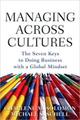
In Managing Across Cultures, Charlene M. Solomon and Michael S. Schell show readers how to use the CultureWizard (CW) Model to develop a global mindset that will help them work effectively with people from other cultures. By integrating the seven components of the CW Model into one’s attitudes and behaviors, and then using that understanding to forge effective business relationships, managers and businesspeople in general can better negotiate the challenges that the global workplace presents.
For a free trial of EBSCO Business Book Summaries click here.
Jerry Eonta
.
Blog
.
<span class='date ' tip=''><i class='icon-time'></i> Jul 29, 2015 11:29am</span>
|
|
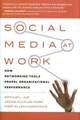
Today’s workforce is more diverse than ever, and in order to succeed, savvy businesses are looking to the emerging world of social media to help employees build relationships and solve problems together. In Social Media at Work, the authors outline the benefits of social media and provide step-by-step processes for designing and implementing strategies that harness its power.
Social media is here to stay, and its benefits and applications will only continue to grow in number. At some point, social media will not be a competitive advantage; it will be a "table stake"—a cost necessary to attract and retain workers in the 21st century. Social Media at Work provides a comprehensive guide for forward-thinking executives looking to leverage the power of social media and foster collaboration, build more effective and agile organizations, and sustain competitiveness.
For a free trial of EBSCO Business Book Summaries click here.
Jerry Eonta
.
Blog
.
<span class='date ' tip=''><i class='icon-time'></i> Jul 29, 2015 11:29am</span>
|
|
News of British Petroleum’s Deepwater Horizon oil spill has reached every corner of the globe. The spill has already far surpassed the Exxon Valdez oil spill of 1989, in which about 11 million gallons of oil was spilled off the coast of Alaska. Official figures suggest that the Horizon well is releasing around 200,000 gallons of oil into the Gulf of Mexico every day, and other figures have that number well over 1 million gallons per day. When all is said and done, the Horizon spill will likely become one of the largest oil spills in history.
This story highlights two very important aspects of executive leadership: 1) crisis management and 2) corporate responsibility.
While relatively few CEOs will have to confront a crisis of this magnitude, teaching crisis leadership is still a necessity. Leadership in a crisis can be learned, and it can be appropriately scaled to match the situation.
During a crisis, leaders must:
1. Act Timely. Leaders cannot afford to sit on their hands while the crisis grows unchecked. The longer the crisis continues without intervention, the harder it will be to resolve, and companies do not want to look apathetic.
2. Scale their Response. The response to the crisis must match its size. All personnel required to resolve the crisis should be informed and mobilized immediately. When in doubt, it is better to over commit than under commit resources.
3. Make Amends. After the crisis is under control, leaders must find a way to make amends with those affected by the crisis. This will help companies retain current customers and prevent alienation from potential customers.
It is not enough for a company to resolve a crisis; they must also take responsibility.
BP executive Tony Hayward has put his face on this crisis and has communicated BP’s full responsibility for the cleanup effort. While many people are critical of oil companies in general, Hayward has tried to save face for BP by stating the company would pay for the cleanup effort and plug the leaking well.
By appropriately responding to a crisis and taking responsibility, executive leaders and their companies will have a better chance of maintaining positive public relations, and while many executive leaders may not have to deal with national or global crises, training and preparation will assure a company will not be caught off guard.
Related book summaries in the BBS library: Leading in Times of Crisis, Corporate Reputation, Beyond Good Company, Just Good Business
Jerry Eonta
.
Blog
.
<span class='date ' tip=''><i class='icon-time'></i> Jul 29, 2015 11:29am</span>
|
|
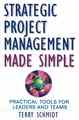
Too many project teams and project managers fail to accomplish their goals because they lack "the right tools to think, plan, and act effectively." In Strategic Project Management Made Simple, Terry Schmidt introduces a basic tool called a logical framework to help project managers meet and exceed expectations. The logical framework was initially developed to help the U.S. Agency for International Development plan and implement its multibillion dollar foreign aid programs, but it can be used effectively on all types of projects - large and small, simple and complex - in all types of businesses and organizations, as well as in personal growth efforts.
For a free trial of EBSCO Business Book Summaries click here.
Jerry Eonta
.
Blog
.
<span class='date ' tip=''><i class='icon-time'></i> Jul 29, 2015 11:28am</span>
|
|
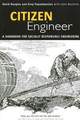
In the past, an engineer’s primary focus was finding simple and elegant ways of implementing design requirements. Today, however, engineers must also have knowledge of topics beyond the realm of traditional engineering - to succeed, they must possess an understanding of environmental issues, legal issues, and business issues.
In Citizen Engineer, David Douglas and Greg Papadopoulos examine the nature of engineering in today’s world and discuss how engineers are becoming the link between the world of science and society. They explain how product design is affected by environmental and intellectual property considerations, and explore how sustainable products and services can benefit business while also providing career growth for engineers.
For a free trial of EBSCO Business Book Summaries click here.
Jerry Eonta
.
Blog
.
<span class='date ' tip=''><i class='icon-time'></i> Jul 29, 2015 11:28am</span>
|
|
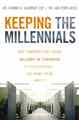
For the first time in history, corporate managers face the challenge of managing four generations at once: the Matures, Baby Boomers, Generation X, and Generation Y (the Millennials). As Boomers get ready to retire en masse, their children offer a unique challenge to corporations, which need to change their workplace cultures, recruiting methods, and retention strategies or face a loss of billions in turnover. Managers need to help their organizations and employees adapt to the highly educated, technologically savvy, confident, and demanding Millennials. The Millennials, born between 1980 and 1999, do things differently than their Boomer parents and bring a fresh new perspective to the workplace. If corporations make the changes necessary to keep their Millennial hires, all generations will ultimately benefit. In Keeping the Millennials by Dr. Joanne G. Sujansky and Dr. Jan Ferri-Reed, corporate managers learn strategies to create a multi-generational workplace.
For a free trial of EBSCO Business Book Summaries click here.
Jerry Eonta
.
Blog
.
<span class='date ' tip=''><i class='icon-time'></i> Jul 29, 2015 11:28am</span>
|
|
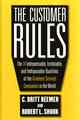
C. Britt Beemer and Robert L. Shook’s The Customer Rules presents the argument that the world’s most successful companies are those with an unwavering commitment to customer satisfaction. According to a study conducted by America’s Research Group (ARG), 40 percent of employees feel their job has little or nothing to do with a customer. Successful companies, however, make it clear that customer satisfaction is everyone’s job. One way to do this is to make customer satisfaction part of all employees’ job description. Unless the concept is clearly spelled out, most employees will assume that serving the customer is the job of sales and marketing.
For a free trial of EBSCO Business Book Summaries click here.
Jerry Eonta
.
Blog
.
<span class='date ' tip=''><i class='icon-time'></i> Jul 29, 2015 11:27am</span>
|