Blogs
|
I may be crazy but I love stuff like this!
Big Marble Run Machine: 11000 Marbles!!!
Stephen
Stephen Abram
.
Blog
.
<span class='date ' tip=''><i class='icon-time'></i> Aug 17, 2015 01:56pm</span>
|
|
Book review from Canada’s national news magazine.
Why libraries matter
Despite the benefits of the digital revolution, the history of the library reveals a mutable survivor that’s vital for democracy
Brian Bethune
"foraging ground for the pursuit of truth"
Stephen
Stephen Abram
.
Blog
.
<span class='date ' tip=''><i class='icon-time'></i> Aug 17, 2015 01:56pm</span>
|
|
10 QUESTIONS TO ASK ABOUT YOUR TEEN SERVICES
http://yalsa.ala.org/blog/2015/07/30/10-questions-to-ask-about-your-teen-services/
Can teens find quiet spaces for reading and studying in your library and vibrant spaces for hanging out, socializing, and creative activities?
Do you avoid charging fines and other penalties that can keep teens away from the library?
Do teens help you decide what you stock in the library?
Are you fighting against the stereotype of libraries as just book providers?
Are you going to where the teens are (outside of the library) to market your services?
Are you working to ensure that all library staff exhibit positive, welcoming attitudes toward teens?
Are your policies framed in positive language?
Are you matching your services to your teen community’s unique needs?
Do you provide opportunities for teens to demonstrate their knowledge and accomplishments, such as avenues for displaying teen fiction, teen photography, teen computer game designs, teen music compositions and performances, etc.?
Do you work hard to bring the teens in your community together at your library, either face-to-face or online?
Stephen
Stephen Abram
.
Blog
.
<span class='date ' tip=''><i class='icon-time'></i> Aug 17, 2015 01:56pm</span>
|
|
Why 15% of Americans don’t use the Internet
http://mashable.com/2015/08/03/us-adults-use-internet/
"Email, Facebook, cat videos — these are just a few of the things that 15% of American adults are missing out on every day because they don’t use the Internet.
However, that 15% is a huge reduction from the percentage of Americans who did not use the Internet in 2000, according to a new analysis of survey data by the Pew Research Center, a nonprofit organization in Washington, D.C. In that year, almost half of all Americans (48%) said they didn’t go online.
The number of people in the United States who use the Internet increased steadily from 2000 until 2012, when the percentage of offline adults fell to 15%. Since then, despite efforts by the government and social service organizations to encourage Americans to get online, that number hasn’t budged, according to Pew.
Why are some Americans so reluctant to sign on? A third of those surveyed who aren’t online (34%) said they don’t think the Internet is relevant to their lives, or that they’re simply not interested in what the Web has to offer. Another 32% of people who don’t use the Internet said the technology required to access the Internet is just too tough to get the hang of, and 8% said they were "too old to learn."
But some people said they don’t use the Internet because they cannot afford to do so, according to Pew. The survey data showed that 19% of those not online cited the expense of Internet service or owning a computer as their reason for staying offline.
Certain groups are more likely than others to go without Internet, the Pew researchers found.
Seniors are the most likely to say they don’t go online
Seniors are the most likely to say they don’t go online — 39% of people age 65 and older don’t use the Internet. In comparison, just 3% of 18- to 29-year-olds don’t use the Internet.
One-third of American adults who have less than a high school education are also offline, and as a person’s education level rises, so does the likelihood that he or she uses the Internet, according to Pew.
Where people live and how much they earn are also indicators of how likely they are to stay offline, the researchers found. Those living in rural areas are nearly twice as likely as city dwellers and suburbanites to say that they never use the Internet. And Americans in households earning less than $30,000 a year are about eight times more likely than the most affluent adults to say they don’t go online.
Differences in Internet usage are also apparent across racial and ethnic lines. 14% of white people surveyed by Pew said they don’t use the Internet, but 18 percent of Hispanics and 20% of black people in the U.S. don’t use the Internet, the researchers found. The group least likely to go without Internet is English-speaking Asian Americans — only 5% of people in this group said they don’t go online.
However, the researchers also said older adults are more likely to use the Internet than in 2000: In that year, 86% of those 65 and older said they didn’t use the Internet, but today, that figure has been cut in half. Now that the Internet has been around for several decades, it’s possible that many of today’s seniors learned how to use this technology in their younger years and are simply continuing to use the Internet as they age.
And although 33% of Americans with less than a high school education still don’t go online in 2015, there were far fewer Internet users among this group in 2000, when 81% of Americans without a high school diploma said they never went online."
Stephen
Stephen Abram
.
Blog
.
<span class='date ' tip=''><i class='icon-time'></i> Aug 17, 2015 01:56pm</span>
|
|
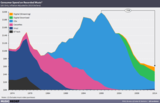
LESS MONEY, MO’ MUSIC & LOTS OF PROBLEMS: A LOOK AT THE MUSIC BIZ
http://redef.com/original/less-money-mo-music-lots-of-problems-the-past-present-and-future-of-the-music-biz
"Music may have been the first media format to be upended by digital, but more than 15 years later, it’s the only one still fixated on what was, not what can be. If the industry hopes to restore growth, both labels and artists will need to confront the changes brought about by the likes of iTunes and Spotify. Only then can a path forward be charted."
By Liam Boluk
The Decline of Recorded Music Sales
The End of the Age of Ownership: First Albums, then Tracks
Follow the link for more:
Concert Revenues: An Insufficient (but Well-Distributed) Savior
Why Music is Better, but Less Valuable than Ever Before
How Listening Hours Will Change and What That Means for the Industry"
Stephen
Stephen Abram
.
Blog
.
<span class='date ' tip=''><i class='icon-time'></i> Aug 17, 2015 01:56pm</span>
|
|
Scary:
Harris Poll: Number of Americans Who Support Book Banning Increases
http://lisnews.org/harris_poll_number_of_americans_who_support_book_banning_increases
"Harris Poll: Number of Americans Who Support Book Banning Increases
From The Guardian: "Are Americans Falling in Love with Censorship?
"[A] Harris poll of 2,244 US adults was released in July, revealing that, in the space of four years, the percentage of Americans believing that some books should be completely banned has increased by more than half. In 2011, 18% of those surveyed wanted some books banned; in 2015, 28% agreed with the assertion. Just under a half, 48%, said that no books should be banned, compared with 56% in 2011."
More in-depth breakdowns at The Guardian and Harris."
Stephen
Stephen Abram
.
Blog
.
<span class='date ' tip=''><i class='icon-time'></i> Aug 17, 2015 01:56pm</span>
|
|
Full Text Article: "Current State of Linked Data in Digital Libraries"
Via Gary Price at LJ InfoDocket
http://www.infodocket.com/2015/08/14/full-text-article-current-state-of-linked-data-in-digital-libraries/
"Note from infoDOCKET Founder/Editor, Gary Price:
Thank you once again to SAGE for opening their paywall to infoDOCKET so we can share the full text article linked below at no charge. The link to the article will be available for the next month. Just click and go. Registration is not required.
Title
Current State of Linked Data in Digital Libraries
Authors
Mariá Hallo
National Polytechnic School, Ecuador
Sergio Luján-Mora
University of Alicante, Spain
Alejandro Maté
University of Alicante, Spain
Juan Trujillo
University of Alicante, Spain
Source
Journal of Information Science
Published Online Before Print
July 21, 2015
Abstract
The Semantic Web encourages institutions, including libraries, to collect, link and share their data across the Web in order to ease its processing by machines to get better queries and results. Linked Data technologies enable us to connect related data on the Web using the principles outlined by Tim Berners-Lee in 2006. Digital libraries have great potential to exchange and disseminate data linked to external resources using Linked Data. In this paper, a study about the current uses of Linked Data in digital libraries, including the most important implementations around the world, is presented.
The study focuses on selected vocabularies and ontologies, benefits and problems encountered in implementing Linked Data in digital libraries. In addition, it also identifies and discusses specific challenges that digital libraries face, offering suggestions for ways in which libraries can contribute to the Semantic Web.
The study uses an adapted methodology for literature review, to find data available to answer research questions. It is based on the information found in the library websites recommended by W3C Library Linked Data Incubator Group in 2011, and scientific publications from Google Scholar, Scopus, ACM and Springer from the last 5 years. The selected libraries for the study are the National Library of France, the Europeana Library, the Library of Congress of the USA, the British Library and the National Library of Spain. In this paper, we outline the best practices found in each experience and identify gaps and future trends.
Direct to Full Text Article ||| Direct to PDF Version (11 pages; PDF)"
Stephen
Stephen Abram
.
Blog
.
<span class='date ' tip=''><i class='icon-time'></i> Aug 17, 2015 01:56pm</span>
|
|
What makes a corporate librarian valuable?
35 Habits That Make Employees Extremely Valuable
http://www.inc.com/kevin-daum/35-habits-that-make-employees-extremely-valuable.html?cid=sf01002
"Every employer wants employees who contribute to the overall success of the company. Here’s how the best bring long-term ROI.
If you are an employee, strive to make each of these a habit. If you are an employer, appreciate and reward the behavior.
1. They don’t wait to be asked.
Many employers are accustomed to just telling people what to do. Employees create value when they anticipate what is needed and get it done without any prompting.
2. They attack the disease, not the symptoms.
So much company time goes to firefighting on a reactive basis. Employees create value when they assess the root cause of the problems and make systemic change that eliminates the problems completely.
3. They are the pressure release, not the pressure builder.
Stress is natural in the workplace, and uptight people can feed off each other. Employees create value when they help people decompress so they can improve productivity.
4. They plan the work and work the plan.
Haphazard thinking and action usually delivers mediocre results. Employees create value when they add effective structure and drive the team forward with efficiency.
5. They do their homework.
Idea generation is useful, but not every suggestion is beneficial or appropriate. The wrong proposal can cause distraction or even derail the team. Employees create value when they research ideas before implementation so that little effort is wasted on the unachievable.
6. They look to be smarter than the boss.
People are never infallible, and even leaders need to learn. Employees create value when they bring knowledge to the table that fills the boss’s blind spots.
7. They view the path five steps ahead.
Many workers can barely see the tasks right in front of their face. Employees create value when they are looking out beyond step one and two. Often they will solve issues before they even come close to occurring.
8. They act with the big picture in mind.
People who only work in their own isolation often cause challenges for those in other parts of the company. Employees create value when they work to comprehend how their efforts impact the whole so they can adjust accordingly.
9. They build bridges, not bombs.
There are plenty of people looking to sabotage others while trying to get ahead. Employees create value when they encourage camaraderie and an environment where a rising tide lifts all boats.
10. They cross-train themselves and others.
A company with specified individualists is in constant danger of losing expertise or capability. Employees create value when they increase redundancy of process and talent.
11. They create a circle of influence.
A growing company needs leaders. Employees create value when they can inspire others to make things happen both internally and externally.
12. They work ahead of the curve.
The future is always moving closer, and signs of what’s to come are always present. Employees create value when they are future curious and consider what’s to come in their actions and thinking.
13. They proactively and effectively communicate.
Being ambiguous or leaving people hanging contributes to a frustrating work environment. Employees create value when they instigate consistent and complete communication that keeps everyone informed.
14. They know when to lead and how to follow.
A leader can’t lead all the time if others are going to grow. Employees create value when they encourage others to step up and support them as the enthusiastic second in command.
15. They fight for what’s right and commit to the achievable.
People who push without basis can eat time and cause consternation. Employees create value when they stand up for their beliefs and take a pragmatic view before going all in.
16. They make the office a great place to work.
People who are negative bring down morale and demotivate. Employees create value when they help create a positive environment that others can’t wait to join.
17. They integrate time for learning and working on the company.
There is more to growth than just the daily grind. Employees create value when theygrow themselves in ways that can help advance the company toward lofty objectives.
18. They motivate their co-workers and superiors.
People need encouragement, no matter their position. Employees create value when they make everyone feel good about what they do and why they do it.
19. They instigate admiration for the company.
One bad representative of the company reflects on the whole crew. Employees create value when they provide a positive image that reflects well on everyone else.
20. They make others look amazing.
A showoff can alienate the whole team, creating frustration and rancor. Employees create value when they share credit with others on the team, elevating everyone’s happiness and confidence.
21. They create pleasant surprises everyday.
Any work environment can become dull and unimaginative. Employees create value when they stimulate energy and creativity in the workplace.
22. They are problem solvers, not whiners.
Constant complaining runs rampant in the business world. Employees create value when they brush aside the complaints and help people focus on the resolution.
23. They clean up messes.
Even the most productive people can sometimes move so fast the details are left undone. Employees create value when they make sure the company is safe, compliant, and protected from carelessness.
24. They maintain a happy home, at home.
Home life can easily intrude on the workplace, making others uncomfortable and creating distraction. Employees create value when they establish boundaries and set an example of work-life balance so others can learn from their best practices.
25. They turn troublemakers into rainmakers.
There will always be problem people in business. Employees create value when they can turn cynics into advocates and fear mongers into champions.
26. They resolve unhealthy conflict.
The workplace is stressful, and often people channel that stress onto others. Employees create value when they can diffuse tense situations and help people return to civility.
27. They engage in healthy conflict.
A company without strong debate is bound to head over a cliff or be passed by eventually. Employees create value when they bring important issues to the table, even when against the popular view.
28. They make most things seem easy, especially when they are not.
Work today is more involved then ever before. Employees create value when they manage tasks seamlessly, inspiring others to raise their performance as well.
29. They don’t just do, they teach.
Companies need people who can help others grow. Employees create value when they improve the work force and delegate, giving others the opportunity to gain proficiency and confidence.
30. They manage obstacles as if they were opportunities.
Bumps in the road are bound to happen. Employees create value when they take on those issues with positivity and excitement.
31. They expand everyone’s network of influence.
A company doesn’t grow by accident, and the CEO can’t be the only one to get the good word out. Employees create value when they promote the company as evangelists, generating opportunities at every turn.
32. They influence often, and manipulate when necessary.
Sitting in a corner and grinding out tasks is the minimum work for pay. Employees create value when they encourage people to reach their potential and help them overcome their internal demons.
33. They leave a trail of manageable process behind.
Often companies move so fast they are constantly reinventing the wheel. Employees create value when they document what works and encourage replication.
34. They attract other valuable employees.
Valuable employees are hard to find, but they tend to know each other. Employees create value when they act as a beacon for others looking to be exemplary.
35. They embody the company’s core values.
A company misaligned is a company adrift and unlikely to succeed long term. Employees create value when they demonstrate to others the behavior and attitudes that will lead everyone to success."
Stephen
Stephen Abram
.
Blog
.
<span class='date ' tip=''><i class='icon-time'></i> Aug 17, 2015 01:56pm</span>
|
|
Social Media as Library Advocacy
http://colleengraves.org/2015/08/15/social-media-as-library-advocacy/
Stephen
Stephen Abram
.
Blog
.
<span class='date ' tip=''><i class='icon-time'></i> Aug 17, 2015 01:56pm</span>
|
|
Research Article: "Don’t Make Me Type: A Study of Students’ Perceptions of Library Catalogues on Tablet Computers"
Via Gary Price at LJ InfoDocket
"The following full text article appears in Partnership: The Canadian Journal of Library and Information Practice and Research.
Title
Don’t Make Me Type: A Study of Students’ Perceptions of Library Catalogues on Tablet Computers
Author
Erik Gordon Christiansen
University of Alberta
Source
Partnership: The Canadian Journal of Library and Information Practice and Research
Vol. 10, No. 1
Abstract
The objective of this mixed methods pilot study was to ascertain university students’ perceptions of online library catalogues using tablet computers, to determine how the participants used tablets and whether or not the NEOS consortium catalogue (NEOS) played an important role in the participants’ academic research. The researcher recruited four students from the University of Alberta who were each asked to use NEOS to complete a series of simple timed usability tasks on a tablet computer of their choosing. The participants also answered a variety of semi-structured interview questions regarding their tablet usage, internet browsing habits, device preferences, general impressions of NEOS, and whether they were receptive to the idea of a mobile NEOS application. Overall, the students found the functionality and design of NEOS to be adequate. Typing, authentication, and scrolling through lists presented consistent usability problems while on a tablet. Only one participant was receptive to the idea of a NEOS application, while the other three participants said tablets were not conducive to conducting academic research and that they preferred using a web interface on a laptop or desktop computer instead.
Direct to Full Text Article (17 pages; PDF)"
Stephen
Stephen Abram
.
Blog
.
<span class='date ' tip=''><i class='icon-time'></i> Aug 17, 2015 01:55pm</span>
|