Blogs
|
I have lost track of my blog readers, buffeted by eddies of excess digital content. I stumbled back upon D’Arcy Norman’s blog this afternoon with pure delight. (The is one of his Creative Commons licensed photos on Flickr … sometimes I prefer to just watch someone’s Flickr stream instead of read so much. Does anyone have a suggestion on how to set that up on an iPad for an idiot like me?)
It has been a long time since I visited D’Arcy’s blog. I new Alan Levine was heading that way and since I’ve been following Alan’s trip, the time felt right. I did not head for one post, I just read and scrolled. Kismet. Serendipity. This seems appropriate during August, where I am cutting myself some slack, in anticipation of an insane Fall work schedule. (Thus the gardening posts and food themed Tweets.)
My networks are now for the most part serendipity networks because they have become too large for me to track. When I need to research, interact, I can activate them for sure. But now they are like going to the candy store, staring at the counter for a few minutes, then picking a chocolate or two.
Here are a few chocolates from D’Arcy’s recent blogs.
he rides a steel cable. A link to a mind blowing YouTube video of a person who rides bikes where most of us can’t even imagine. I’ve watched it twice already.
ds106 campfire jam. Friends jamming F2F and online.
photo(s) friday: dock life. Beautiful family photos.
And my favorite, which is so good I have to copy snippets that D’Arcy quoted… Thanks, D’Arcy!
on conformity through positive reinforcement.
From Neil Strauss’ article in the WSJ:
Just as stand-up comedians are trained to be funny by observing which of their lines and expressions are greeted with laughter, so too are our thoughts online molded to conform to popular opinion by these buttons. A status update that is met with no likes (or a clever tweet that isn’t retweeted) becomes the equivalent of a joke met with silence. It must be rethought and rewritten. And so we don’t show our true selves online, but a mask designed to conform to the opinions of those around us.
and contrasting Like culture with the power of positive narcissism:
"Like" culture is antithetical to the concept of self-esteem, which a healthy individual should be developing from the inside out rather than from the outside in. Instead, we are shaped by our stats, which include not just "likes" but the number of comments generated in response to what we write and the number of friends or followers we have. I’ve seen rock stars agonize over the fact that another artist has far more Facebook "likes" and Twitter followers than they do.
and on freedom from Like culture:
So let’s rise up against the tyranny of the "like" button. Share what makes you different from everyone else, not what makes you exactly the same. Write about what’s important to you, not what you think everyone else wants to hear. Form your own opinions of something you’re reading, rather than looking at the feedback for cues about what to think. And, unless you truly believe that microblogging is your art form, don’t waste your time in pursuit of a quick fix of self-esteem and start focusing on your true passions.
Hallefrackinglujah.
Indeed, Hallefrackinglujah. And let’s hear it for summer serendipity.
Nancy White
.
Blog
.
<span class='date ' tip=''><i class='icon-time'></i> Aug 19, 2015 12:33am</span>
|
|
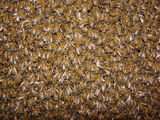
Bees, by kokogiak on Flickr, CC some rights reserved
From the wonderful and amazing Seattlefarmcoop : Seattle Farm Co-op comes evidence of the power of online communities and networks. Look at the time stamps.
8a. bee swarm
Posted by: "heatherleagr" (email revmoved)
Date: Thu Aug 18, 2011 10:37 pm ((PDT))
My bees just swarmed! I caught them and they have successfully moved into their new hive. I wonder if it is too late for them to build up enough to make it through the winter, or should I combine them with their old colony. Any beekeepers out there with suggestions? thanks, Heather
________________________________________________________________________
8b. Re: bee swarm
Posted by: "Andres Salomon" (email removed)
Date: Thu Aug 18, 2011 10:51 pm ((PDT))
Personally, I’d combine them with the old colony. There *are* still drones flying (at least outside of my hives), but they’re dwindling.
It would take a lot of luck (and heavy flows) for the old colony’s queen to mate, and the new swarm to build up quickly enough to put away 40lbs of honey for the winter.
However, if the old hive has a huge amount of capped honey and you’d like 2 colonies, you could transfer food stores to the swarm hive. Recombine or purchase a new queen if the virgin queen fails to mate.
Oh, and keep an eye out for afterswarms!
When the domain — what people care about — is clear, the repetoire of a community can be nimble and powerful.
Nancy White
.
Blog
.
<span class='date ' tip=''><i class='icon-time'></i> Aug 19, 2015 12:32am</span>
|
|
I often have a "deer in the headlight" look when someone asks me about evaluating communities of practice. I think that is because I have some stereotype in my head about evaluation. But in fact, when I let my common sense kick in, I know of and use many evaluation approaches. I guess I never called them "evaluation approaches." Recently my friends Etienne Wenger, Bev Trayner and Maarten deLaat wrote a lovely paper on "Promoting and Asessing Value Creation in Communities and Networks." It is lovely because in many ways it gives voice to the "common sense" practices I’ve used and seen around me. And it gave me confidence to say yes to an interview with the KMImpact Challenge earlier this year. The video came out today. Besides sounding like I’m on speed… what do you think? How do you evaluate your communities?
via Nancy White of Full Circle Associates on CoPs - YouTube.
Nancy White
.
Blog
.
<span class='date ' tip=''><i class='icon-time'></i> Aug 19, 2015 12:32am</span>
|
|
I believe in treating adults as adults. That doesn’t mean I, as a facilitator, cannot be inspired by techniques teachers use with children in their classrooms, right?
Here are a few inspirations from Karen Moler of FlamingoFabulous in 2nd Grade. Facilitators, be inspired! And see if any of Karen’s challenges show up for you working with adults!
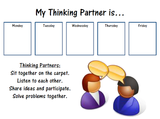
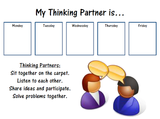
Here is a tool I use in my classroom to "randomly" partner my students up for activities. I love giving students the opportunity to choose their own partners but there are always a few who just can’t work together well but insist on doing it anyway. I also pass out cards and find the match to find their partner from time to time. But sometimes you need a quick way to ensure that your students are paired up academically or according to behavior. Soooo…. I created the partner wheel.
via Flamingo Fabulous in Second Grade: More Behavior Management and Freebie!.
And more http://flamingofabulous.blogspot.com/search/label/Behavior
Usually, I have the "turn to your elbow buddy" or use the partner wheel approach to finding thinking partners, but I wanted another mode for finding good thinking partners so I made this variation of Paula Rutherford’s Feathered Friends or Clock Buddies. Students will take their paper around the classroom and ask classmate’s to be their thinking partners for specific days. So if Johnny wanted to be partners with Sally, and they both had their Monday box available, Johnny would write Sally’s name on his paper and Sally would write Johnny’s name on her paper. It would go like this until everyone has every box filled. If it is done right, there should be no overlaps or duplicates. From then on, all I have to do is say, "Today children, I’d like you to sit with your Friday thinking partner on the carpet."
Nancy White
.
Blog
.
<span class='date ' tip=''><i class='icon-time'></i> Aug 19, 2015 12:31am</span>
|
|
This September, George Siemens, Stephen Downes and Dave Cormier are hosting another Massively Open Online Course, Change: Education, Learning and Technology. This time it is massive in soooo many ways. In length (September - May), in number of participants, in number of guest facilitators - of which I’m one. So it is time to prepare. And I have NO idea what I’m doing!
Here are the three things they are asking for and here is my draft. Your feedback is NEEDED!
1. A 500-1000 word overview of your work, why it’s important, and what you see happening next in that field. (We will compile these in an ebook).
Hm, of my work? That means I’d have to DEFINE my work. Without blabbering for hours, I’d say a couple of things about my work and I’m not sure it is entirely relevant in this context. I help people connect, communicate and get things done. And no matter how you slice it, these always involve learning but we are rarely talking about learning. So I decided the theme for my week would be "Triangulating, weaving and connecting our learning." So I have to write 500 words on this. Hm. Let’s try this and get some feedback from you. It’s still 159 words over, but I trust you’ll help me.
While we most often pay attention to "learning" in the contexts of organizations and institutions devoted to learning, the work I do out in the world is all about learning. Interestingly, we rarely talk about learning. We are learning as we work, play, and fulfill the myriad of roles in our lives. What I learn as a grandparent impacts my conversations with clients on organizational development. What I learn playing with my new iPad informs my graphic facilitation practice. Who I learn with in one context informs the other contexts. It is a rich tapestry of connections.
What I’d like to explore during my week is how we become a little more conscious of these connections. What practices help us tap the richness of our multiple contexts and roles as learners in the world. From international agricultural research to the neighborhood garden patch, learning is everywhere.
As a little background to these wooly wonderings, let me share three stories. That’s the best way I can think of to share my "work" and why it might have relevance for our conversations.
1. Connecting people accelerates learning AND turns traditional structures on their heads. In 2000 I got involved in a small grant project in the Southern Caucasus, run by a small Vermont based nonprofit seeking to connect small business owners in three post Soviet countries using the Internet. In three countries with less than 10% internet penetration at the time. Two of whom were (and are still) at war with each other. As you might guess, few of the entrepreneurs benefited, but the three country managers connected with each other in new ways, giving sufficient support to learn new things quickly and more easily than before, support each other in taking risks and rapidly iterating towards some amazing innovations. Being connected changed their leadership experiences and increased their learning more rapidly than a typical "country program manager" might. They all went all to lead amazing programs there and in other places. At the same time their home office got a little freaked out… and they actually suggested (with some humor) that I had provoked a cult. But what turned things around was that their funders were so impressed, the home office eventually came around. But it turned things upside down for a while…
2. Small things matter. The practices of connecting for learning abound in the era of social media. We have more opportunity than time or attention. So it is interesting to observe that big changes often turn on little actions. Someone introducing two people who might share an interest. A small, sincere thank you for a contribution to a network. A shift in web meeting scheduling to better accommodate diverse time zones. I was at a gathering of one of my core international networks some years back and we closed the meeting by "going round the circle" to briefly share what we were learning. A woman I had just met said something about appreciating learning from me. I looked across this circle and thought "who is this woman?" Now that woman is one of my key learning and working partners, even though we are half a world apart. If she had not spoken up the connection would not have happened.
3. Jumping domain and practice boundaries shines new light on our learning. Years ago I used to doodle to endure long, bureaucratic meetings that were part of my job. People started asking to have those doodles, as they reflected something in those meetings that resonated for them. Years later I have begun to do graphic facilitation - the use of visuals in group process. By stepping into a new practice - litterally and mentally, it has changed the way I connect with others and make sense of my interactions with them. Changing modes has changed my learning. This shows up again and again as I work in new domains and parts of the world. Diversity enriches our learning.
2. A list of readings that you feel are important for people to read in order to understand your work and the field in which you conduct your research. Try to keep this list to your (the field’s) "top 5″
I’m thinking here of drawing a picture and being totally disruptive. I think this week is more about looking inward than outward. What do you think?
3. Suggested activities for course participants - i.e. what do you want them to do after reading your intro and the articles that you reference. Do you want them to debate a particular topic? create a concept map? produce a video? If you’re inclined, connect the activity to what others have done in the course previously so we can start to integrate themes.
As I read number three, I realized I’m not so interested in focusing this week on reading, but on reflection and conversation about the everyday practices that support learning across boundaries. So now I have to think about what sorts of activities would support this. It also makes me wonder if this topic is either too thin, or too broad.
What do you think? Lend a hand, please!
Nancy White
.
Blog
.
<span class='date ' tip=''><i class='icon-time'></i> Aug 19, 2015 12:30am</span>
|
|
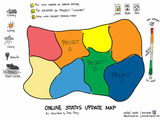
Browsing Rachel Smith’s blog today I came across this terrific idea. She was building on an idea of Dave Gray (of Brainstorming fame) to help people share their current state. Sort of a project emotional barometer. I love things that help us visualize and make discussable this often "internal weather."
Project Map | Flickr - Photo Sharing!.
I can imagine putting the image up on a webmeeting white board.
John Smith introduced me to a barometer for the ongoing health of a community of practice which I really liked. What this one does is taking it a step beyond simple data collection and add the emotive element.
Nancy White
.
Blog
.
<span class='date ' tip=''><i class='icon-time'></i> Aug 19, 2015 12:29am</span>
|
|
In a small way, I can share what Alan Levine, aka, @Cogdog, has been going through these past days after the death of his mom. Having lost my dad in March, I know the role that food, and the generosity of our communities and networks play in the path we travel known as death. Or grief. Or whatever.
I am very happy to join in today for Cookielove - a day of baking cookies and giving them away in honor of Alan’s mom. (See Blown Away By #Cookielove - CogDogBlog.) It turns out Alyce made cookies every Sunday and dispensed them to whomever was in need, or who had done a good turn for Alyce or others. (You can listen to her talk about it here.)
Today, wherever we are, we are baking cookies and giving them away in Alyce’s name and memory. A little community indicator. A culture of love. Reciprocity not to just one person, but out to the universe. Hey, you can bake and dispense as well. Share the love (and tag it #cookielove so Alan can feel the love.)
Like Alan, my global network of people I’ve met, and those I’ve never met (fondly known as my "imaginary friends" according to my husband) are always just an electron away. These are amazing people. They are looking out for us even when we don’t notice. They not only answer our questions and provoke our thinking, but they can and are emotionally connected to us, not just intellectually.
I’ll share the recipe in Alan’s Storybox, but suffice it to say, I did NOT follow the recipe’s direction (I considered others here…). The cookies are full of multiple grains (locally grown and ground whole wheat, oatmeal bran, flaxseed meal) fiber, butter and chocolate. Let’s keep our food balanced right? So some butter and chocolate to soothe, some fiber and grains to make us strong (and the cookies with enough chew and crunch).
We can’t erase the hole that is left when someone we loves dies, but we can continue to embrace the sweetness of life.
Nancy White
.
Blog
.
<span class='date ' tip=''><i class='icon-time'></i> Aug 19, 2015 12:29am</span>
|
|
Well, I’m only five months late sharing this, but because some of you, dear readers, travel in different circles, you may not have seen this. It is worth a read for anyone interested in online interaction from the good folks at the Community Roundtable!
The 2011 State of Community Management
View more documents from The Community Roundtable
Nancy White
.
Blog
.
<span class='date ' tip=''><i class='icon-time'></i> Aug 19, 2015 12:29am</span>
|
|
I thought this was worth sharing as I know many of you, dear readers, are as passionate about community as I am. Plus I’m preparing for a round of gatherings of communities that are very significant in my life in the coming weeks. In that spirit considers what triggers us to connect. What has catalyzed significant community engagement for you?
To: nancyw at fullcirc dot com
Subject: 9/11 & us
Fellow Meetuppers,
I don’t write to our whole community often, but this week is special because it’s the 10th anniversary of 9/11 and many people don’t know that Meetup is a 9/11 baby.
Let me tell you the Meetup story. I was living a couple miles from the Twin Towers, and I was the kind of person who thought local community doesn’t matter much if we’ve got the internet
and tv. The only time I thought about my neighbors was when I hoped they wouldn’t bother me.
When the towers fell, I found myself talking to more neighbors in the days after 9/11 than ever before. People said hello to neighbors (next-door and across the city) who they’d normally ignore. People were looking after each other, helping each other, and meeting up with each other. You know, being neighborly.
A lot of people were thinking that maybe 9/11 could bring people together in a lasting way. So the idea for Meetup was born: Could we use the internet to get off the internet — and grow local communities?
We didn’t know if it would work. Most people thought it was a crazy idea — especially because terrorism is designed to make people distrust one another.
A small team came together, and we launched Meetup 9 months after 9/11.
Today, almost 10 years and 10 million Meetuppers later, it’s working. Every day, thousands of Meetups happen. Moms Meetups,Small Business Meetups, Fitness Meetups… a wild variety of 100,000 Meetup Groups with not much in common — except one thing.
Every Meetup starts with people simply saying hello to neighbors. And what often happens next is still amazing to me. They grow businesses and bands together, they teach and motivate each other, they babysit each other’s kids and find other ways to work together. They have fun and find solace together. They make friends and form powerful community. It’s powerful stuff.
It’s a wonderful revolution in local community, and it’s thanks to everyone who shows up.
Meetups aren’t about 9/11, but they may not be happening if it weren’t for 9/11.
9/11 didn’t make us too scared to go outside or talk to strangers. 9/11 didn’t rip us apart. No, we’re building new community together!!!!
The towers fell, but we rise up. And we’re just getting started with these Meetups.
Scott Heiferman (on behalf of 80 people at Meetup HQ)Co-Founder & CEO, Meetup New York CitySeptember 2011
Do something, Learn something, Share something, Change something - Meetup.
Nancy White
.
Blog
.
<span class='date ' tip=''><i class='icon-time'></i> Aug 19, 2015 12:28am</span>
|
|
Today’s Monday video is a visual gift from Jim Denevan, an artist who takes the word "drawing" and turns it into a meditation of movement, beauty and empherality. KQED Spark - Jim Denevan - YouTube.
In the world of learning, knowledge management, organizational development, we see solutions that are "scalable" and "sustainable." But the gems, the breakthroughs, the insights, are most often a fleeting moment when something changes. We can’t capture that in a knowledge base, or "cook" it into a course design. It is lived, in the moment. It becomes the thing we reflect upon as we seek to apply it. But it is ephemeral.
For those wanting an additional visual treat and one that relates to community and conviviality, look at Jim working with tables at a meal. He says (and I strongly agree) "The table is a magnet for stories."
Nancy White
.
Blog
.
<span class='date ' tip=''><i class='icon-time'></i> Aug 19, 2015 12:28am</span>
|