Blogs
|
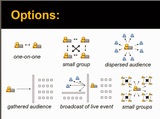
Fantastic to see such a good turnout for our Fall TeachT@lk Webinar Series! Different formats for Web-conferencingYesterday's webinar was on web-conferencing, and led by Peter van Leusen, PhD. He discussed best practices and "demoed" how to engage students in active learning exercises. We focused on Adobe Connect, as it is available to all ASU faculty for free, and fully supported by UTO.Comparison Table for Connect, Hangouts and SkypeBelow are some of the resources mentioned during the webinar, along with the slides and recording. If you have questions, or are interested in trying out web-conferencing for your class, please contact me at amy.pate@asu.edu. Webinar Recording (58 minutes): https://connect.asu.edu/p5o6ay3wkep/Slides: https://dl.dropboxusercontent.com/u/12594701/Web-Conferencing_final%20(2).pdfEducause article: 7 Things You Should Know About Video CommunicationASU Adobe Connect Site: Adobe Connect OverviewExamples:ASU’s Vidyo’s Education in Biological Diversity Penn State’s Adobe Connect Use Cases ASU TeachOnline Student Success with Video Chats To Register for future TeachT@lk Webinars: http://utotraining.eventbrite.comAs always, feel free to make comments to this post, and share your experiences! (Also SHARE the blog, and help us get the word out!)
Amy Pate & Peter Van Leusen
.
Blog
.
<span class='date ' tip=''><i class='icon-time'></i> Aug 20, 2015 07:47am</span>
|
|
This week I asked Dr. Ron Rutowski to address this question about keeping students involved specifically in a lab room. Dr. Rutowski has been a faculty member in SOLS for over 35 years doing research on animal behavior and coloration and teaching courses with laboratory components such as Comparative Invertebrate Zoology and Research Techniques in Animal Behavior.Ron Rutowski, PhDIn a lab, how do you engage a student that isn't actively participating?There are at least two circumstances where this can happen. One is that in whole-class discussion students can check out. Here are some ways to deal with that.Especially if they are near the back of the classroom, move so you are standing close to them. This is especially easy in lab rooms where the front may be less clearly defined, and also when student lab groups are presenting. Call on the inattentive person by name. This could be preceded with having all students briefly discuss an issue with their group and then call on the inactive student by name. If they say they do not know the answer or did not hear the question ask them to talk to their neighbor for a minute to develop a response. This is perhaps the most discomfiting tactic for you and the student but I have seen it work. A student usually only has to be the target of this tactic once for obvious reasons.The other circumstance is when the students are doing group work and one is not actively involved. Often this is because there is nothing for them to do because the more active students have quickly taken up the more active and interesting tasks. When I see this I have sometimes intervened and asked that the students switch jobs so everyone gets experience with all of the demands of the exercise.
Amy Pate & Peter Van Leusen
.
Blog
.
<span class='date ' tip=''><i class='icon-time'></i> Aug 20, 2015 07:47am</span>
|
|
By Jackie Gerstein, Ed.D. When a kid builds a model rocket, or a kite, or a birdhouse, she not only picks up math, physics, and chemistry along the way, she also develops her creativity, resourcefulness, planning abilities, curiosity, and engagement with the world around her. Maker Education, as I observed, has the following characteristics: Participation is... Read More ›
Classroom Aid
.
Blog
.
<span class='date ' tip=''><i class='icon-time'></i> Aug 20, 2015 07:47am</span>
|
|
"I felt privileged and flattered to be asked to participate in the ‘Sociology does Apprentice’ style games day. It was a great opportunity to be able to have a real input into University teaching methods and influence new and exciting ways to learn about a topic which could be seen by some students as just... Read More ›
Classroom Aid
.
Blog
.
<span class='date ' tip=''><i class='icon-time'></i> Aug 20, 2015 07:47am</span>
|
|
This presentation merges the benefits from mobile learning and MOOCs. The presentation was given during one of ADL Interagency Mobile Learning Webinars on 16 July 2013 by Inge Ignatia de Waard. Highlight Research: mobile learners enter into more interactions => more reflection A mobile accessible course will result in more learner interactions (more reflections, leading to knowledge... Read More ›
Classroom Aid
.
Blog
.
<span class='date ' tip=''><i class='icon-time'></i> Aug 20, 2015 07:47am</span>
|
|
Chris Thomas wrote about his thought of reading John Tagg’s "The Learning Paradigm College", and shared with us how he re-designed the new course for the Software Engineering. Opposed to the Instruction Paradigm College with its "One teacher, one room, x students all focussed on the teacher (or should be)", the Learning Paradigm College expects you to... Read More ›
Classroom Aid
.
Blog
.
<span class='date ' tip=''><i class='icon-time'></i> Aug 20, 2015 07:46am</span>
|
|
(This is the 13th article of the series of learning design tips from dominKnow KnowledgeBase) You can email media in an attachment to Claro and then import it into the Media Library. You can even email an attachment from your mobile device to Claro! The email subject is the title used in Claro and the body... Read More ›
Classroom Aid
.
Blog
.
<span class='date ' tip=''><i class='icon-time'></i> Aug 20, 2015 07:46am</span>
|
|
By Em Buchanan The NHS has revealed that 3 in 10 children are classified obese. Thanks to the increasing availability of electronic devices and microwave meals, more and more 8-11 year olds are spending their weekends plugged into the internet, eating junk food. Arguably, parents and carers are responsible for controlling these habits and allowing them to get out... Read More ›
Classroom Aid
.
Blog
.
<span class='date ' tip=''><i class='icon-time'></i> Aug 20, 2015 07:46am</span>
|
|
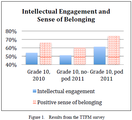
Using Mobile Technology for Fostering Intellectual Engagement Armando Paulino Preciado Babb, Candace Saar, Chenoa Marcotte, Jim Brandon, Sharon Friesen, University of Calgary, Calgary, Canada Published on International Journal of Interactive Mobile Technologies (Articles in this journal are published under the Creative Commons Attribution Licence , CC-BY.) DOI: http://dx.doi.org/10.3991%2Fijim.v7i3.2888 Abstract Student engagement, and in particular intellectual engagement, has been... Read More ›
Classroom Aid
.
Blog
.
<span class='date ' tip=''><i class='icon-time'></i> Aug 20, 2015 07:46am</span>
|
|
Everyone wants to go mobile today. But what’s out there is a mobile jungle - besides fragmentation across devices, platform fragmentation is very pronounced, and different mobile browsers. As BYOD(Bring Your Own Devices) is becoming common in workspace and schools, what does it mean for content developers? Mobile Jungle At least you might have heard of... Read More ›
Classroom Aid
.
Blog
.
<span class='date ' tip=''><i class='icon-time'></i> Aug 20, 2015 07:46am</span>
|