Blogs
|
We are in the midst of a nano-bio-info-techno-cogno revolution. We are entering the network era and change is coming fast, which may sound like a cliché, but consider the last major shift we went through. We had lots of time for our institutions to adapt.
When markets came about, we had a few hundred years to move from the Hanseatic League, adopt double-entry bookkeeping, and progress to high frequency trading. We also were able to develop education systems, from one-room schoolhouses, to public universities, and later business schools to fuel the new corporations. Today, we are seriously lagging behind in learning how to deal with the scientific advances of the network era. We do not have the time afforded to us during the last shift to a market society. We have to jump from following state-established curriculum to creating our own learning networks: in this generation. People need to learn and work in networks, shifting their hierarchical position from teacher to learner, or from manager to contributor. They need to not only take control of their professional development but find others who can help them. It is becoming obvious in many fields that we are only as good as our knowledge networks. We have to become collectively smarter.
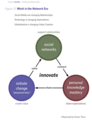
Personal Knowledge Management/Mastery is but one way to address the need to keep up with the scientific revolutions around us. I have worked on this framework for the past decade. It is designed to be appropriated and used in a different way for each person. But like e-learning and knowledge management, PKM is at risk of becoming a technology to buy and consume. Software vendors are turning PKM into a commodity, as well as other sense-making frameworks like personal learning networks (PLN). Society, and the workforce, cannot afford this. Consider the number of unemployed PhD holders today, educated for the last economy but adrift in this one. We need to take control of our learning, as neither the established institutions nor the markets will help us. Networks are the only answer, but we have to build them. PKM is not the only solution, but let’s not relegate it a box of code before even testing it out at scale.
PKM is only a technology in the sense that Harold Stolovitch defines it, "Technology is the application of organized and scientific knowledge to solve practical problems." If anyone is selling you a PKM system, they do not understand it. Walk away before you waste your money. The only technology for enabling PKM is the Internet, and particularly the Web, as long as it remains open. People don’t need anything else, other than getting rid of barriers that impede their learning. Internal barriers include social media policies, firewalls, inefficient work practices, defining people by their job, and many others, too numerous to name. Usually the barriers stem from the organizational structure or from management.
PKM is not productivity improvement, though that may be an emergent result of the discipline. It is not collecting things and filing them away, no matter how fancy it looks on some software platform. PKM is creating a sense-making process that works for you, and that you regularly use. PKM is beyond the workplace, just as workers are not always at work, but are always learning.
For me, it’s using writing, particularly here on my blog, to make sense of concepts, theories, experiences, and opinions related to my professional life. Sometimes my non-professional life gets involved, and that’s just fine with me. For you, it’s probably something else, and that is the wonderful thing: there is no single PKM system for all. People practising PKM, in their own ways, add to the diversity of thinking in organizations and society. A single system would kill diverse thinking, which in turn would destroy any potential for change or innovation.
PKM builds reflection into our learning and working, helping us adapt to change and new situations. It can also help develop critical thinking skills. The discipline of PKM helps each person become a contributing node in a knowledge network. It is the foundation for social learning, which will help us develop new network era infrastructures to replace outdated institutions and markets. It does not matter what it is called, but seeking knowledge networks, active sense-making, and sharing publicly, are practices that need to be widespread. Our collective future depends on it.
From: finding perpetual beta
Harold Jarche
.
Blog
.
<span class='date ' tip=''><i class='icon-time'></i> Aug 23, 2015 08:15am</span>
|
|
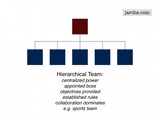
I have said many times that teamwork is overrated. It can be a smoke screen for office bullies to coerce fellow workers. The economic stick often hangs over the team: be a team player or lose your job, is the implication in many workplaces. One of my main concerns with teams is that people are placed on them by those holding hierarchical power and are then told to work together (or else). However, there are usually power plays internal to the team so that being a team player really means doing what the leader says. For example, I know many people who work in call centres and I have heard how their teams are often quite dysfunctional. Teamwork too often just means towing the party line.
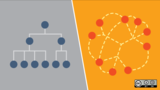
One solution to hierarchical teams are self-forming teams. Many of the companies described in the book, Reinventing Organizations, are based on the principle of self-organization where hierarchies are temporary, negotiated structures. Bosses are often voted on by their peers. Self-organizing teams are much more flexible than hierarchical ones, but they require active and engaged members. One cannot cede power to the boss, because everyone is responsible for the boss they chose. Like democracy, self-organized teams are hard work. But they are best to deal with complexity. As I have said before, hierarchies work well when information flows mostly in one direction: down. They are good for command and control. They are handy to get things done in small groups. But hierarchies are rather useless to create, innovate, or change.
"Our challenge is not to banish hierarchies, but to balance them with open systems, properly guided," says Ed Morrison. A network perspective is needed to see how teams and hierarchies should work, according to Eugene Eric Kim.
Networks are not a rejection of hierarchy. Networks are a rejection of rigidity. A hierarchy is an efficient form of decision-making, as long as it’s the "right" hierarchy. Powerful networks allow the right hierarchies to emerge at the right time.
But hierarchies are attractive, so they are not likely to go away soon, according to Professor Jeffery Pfeffer.
"There’s this belief that we are all living in some postmodernist, egalitarian, merit-based paradise and that everything is different in companies now," he says. "But in reality, it’s not." In fact, in a new paper that explores the notion that power structures haven’t changed much over time, Pfeffer explains that the way organizations operate today actually reflects hundreds of years of hierarchical power structures, and remains unchanged because these structures "can be linked to survival advantages" in the workplace. The beliefs and behaviors that go along with them, he writes, are ingrained in our collective, corporate DNA.
Pfeffer says that "relationships with bosses still matter for people’s job tenure and opportunities, as do networking skills." The job (salaried employment) is the key factor that will change the nature of work teams. As long as people have jobs, we will have hierarchical teams. The job is premised on the assumption that people can fit into existing teams like cogs in a machine and that team members can be easily replaced.
We already have other ways of organizing work. Orchestras are not teams; neither are jazz ensembles. There may be teamwork on a theatre production but the cast is not a team. It is more like a social network. Hierarchical teams are what we get when we use the blunt stick of economic consequences as the prime motivator. In a complex and creative economy, the unity of hierarchical teams can be counter-productive, as it shuts off opportunities for serendipity and potential innovation.
We are moving into a post-job economy, something that business school professors seem to be ignoring. Work will become much more complex and multifaceted than a simplistic model of Homo Economicus can address. Those of us who do not have jobs are already working in self-organized teams. Look to the edge cases to see the future. Hierarchies will become temporary arrangements to get things done. The future will be hierarchies in perpetual Beta.
Harold Jarche
.
Blog
.
<span class='date ' tip=''><i class='icon-time'></i> Aug 23, 2015 08:15am</span>
|
|
Every fortnight I collate some of the observations and insights that were shared on social media. I call these Friday’s Finds.
@EskoKilpi - "Scientific Revolution, the Enlightenment, and the Industrial Revolution were about sharing new ideas within networks of people"
@RDBinns - "The RSS reader is an antidote to the algorithmic feed of facebook, the impossible tide of twitter, and news site editorial filters."
@IndyJohar - "We are busy maintaining 17th C enlightenment notions of freedom in world where we have become slaves to the asymmetric power of networks"
Work Is Bullshit: The Argument For "Antiwork"
"Antiwork is a moral alternative to the obsession with "jobs" that has plagued our society for too long. It’s a project to radically reframe work and leisure. It’s also a cognitive antidote to the pernicious culture of "hard work," which has taken over our minds as well as our precious time."
Guardian: Fightback against internet giants’ stranglehold on personal data starts here - via @hughcartoons
‘The mechanism for rotating the playing field is our old friend, the terms and conditions agreement, usually called the "end user licence agreement" (EULA) in cyberspace. This invariably consists of three coats of prime legal verbiage distributed over 32 pages, which basically comes down to this: "If you want to do business with us, then you will do it entirely on our terms; click here to agree, otherwise go screw yourself. Oh, and by the way, all of your personal data revealed in your interactions with us belongs to us."’
Fortune: The Algorithmic CEO - via @C4LPT
"Indeed, the math house is shaping up as a new stage in the evolution of relations between businesses and consumers. The first stage, before the Industrial Revolution, was one-to-one transactions between artisans and their customers. Then came the era of mass production and mass markets, followed by the segmenting of markets and semi-customization of the buying experience. With companies such as Amazon able to collect and control information on the entire experience of a customer, the math house now can focus on each customer as an individual. In a manner of speaking, we are evolving back to the artisan model, where a market "segment" comprises one individual."
@ValaAfshar - "The average company lifespan on S&P 500 in 1960s was 60 years. Today, average age is 10 years"
Harold Jarche
.
Blog
.
<span class='date ' tip=''><i class='icon-time'></i> Aug 23, 2015 08:15am</span>
|
|
I had a conversation with a flight attendant on a long overnight trip last year. Most of the passengers were sleeping and we had time for a nice chat. We swapped a few stories. I’m always interested in how organizations are viewed by the people nearer the bottom than the top of the hierarchical pyramid. You can learn a lot about the culture.
The flight attendant told me a story about his manager for whom he had booked an executive class plane ticket to an international culinary conference. At the last minute, the manager decided he could not go, so he asked his subordinate to attend in his place. The flight attendant rearranged his schedule and agreed to go. On arriving at the airport he was surprised to find that his boss had taken the extra effort to downgrade the airfare to economy class. What was good enough for the manager was considered too good for his staff.
This story tells a lot about organizational culture. It is a culture of entitlement that has resulted in exorbitant CEO salaries and compensation, even when these CEO’s abjectly fail. Duty is seldom considered. As a young officer cadet I had to memorize a quote, which was posted above one of the college doorways.
"Duty is the great business of a sea officer; all private considerations must give way to it, however painful it may be." - Horatio Nelson
The manager’s private considerations gave way to any possibility of developing a professional relationship with his subordinate, who had lost respect for him. Respect is difficult to earn and easy to lose. Leadership by example is all the little things added up, day after day.
Harold Jarche
.
Blog
.
<span class='date ' tip=''><i class='icon-time'></i> Aug 23, 2015 08:15am</span>
|
|
In a recent CBC News story, a railway conductor lost her job following a derailment. She claimed she was not adequately trained. Here is a comment from the Railway Association representative:
"In your job, you are qualified and do your job, but you feel you should know more. It doesn’t mean you are not qualified for your job. You might have a personal perception, that you would need additional training, but the minimum standards for your position are determined by the railways."
Image: Pixabay
If you are interested in organizational performance issues, here are a few points to ponder. This is conjecture, based only on this article, but it highlights significant issues for training professionals.
Would more and better training have helped this conductor?
Would a longer on-job-training period have better prepared the conductor?
What if she had instant access to some experienced conductors at a support centre?
Would job aids have helped, such as emergency checklists used by pilots?
Would a non-training solution be better?
More staff on the train
Better identification of cargo
Safer trains
Safer tracks
New regulations
Many employees receive mandated training. Compliance training is a standard response by industry regulators when dealing with human performance issues. Usually an industry association, with training specialists, develops the guidelines. The owners of compliance standards, whether authorities like government and regulatory bodies, professional bodies, or internal legal counsel, are stuck in a mindset that in order to get good workplace performance you must have training. It is also an acceptable method of keeping executive officers out of prison if something goes wrong. If something REALLY goes wrong, the fact that someone had been through a training program means the organization is off the hook.
This mindset permeates the training industry. Too many people in the training department make the leap from a performance issue (lack of skills, abilities, knowledge; lack of access to appropriate data and resources; etc) directly to ‘training as the only solution’. This is a wrong approach and is the most costly. Management plays into this, with statements like "We have a training problem" while no one challenges that statement. There is no such thing as a training problem.
Here are some ‘training problems’ that are not solved through training:
Poor communications
Unclear expectations (such as policies & guidelines)
Inadequate resources
Unclear performance measures
Rewards and consequences are not directly linked to the desired performance
These barriers can be addressed without training. Only when there is a genuine lack of skills and knowledge, is training required. A trained worker, without the right resources and with unclear expectations, will still not perform up to the desired standard. Allison Rossett states that "… performance support is a repository for information, processes, and perspectives that inform and guide planning and action." There are many cases where performance support is needed to help workers, even if they are trained.
When performance is infrequent
When the situation is complex
When the consequence of errors is intolerable
When performance depends on a large body of information
When performance is dependent on knowledge or information that changes frequently
When performance can be improved through self-assessment
When there is a high turnover rate
When there is little time or money for training
Even trained workers need an effective performance support system.
Harold Jarche
.
Blog
.
<span class='date ' tip=''><i class='icon-time'></i> Aug 23, 2015 08:14am</span>
|
|
In the last half of the 20th century in Canada it was mostly assumed that as an adult you had a driver’s license and that you most likely owned or had access to a car. I know, I didn’t get my license until I was 26 and that made me a very rare specimen indeed. Our cities, and especially our rural areas, are still primarily designed for motor vehicles. Malls continue to be built without designated pedestrian paths or bicycle lanes. Meanwhile, many older malls are abandoned and crumbling. Around here, it’s still assumed that everyone moves around by automobile.We are now well into the second decade of the 21st century and the Web is over 25 years old and e-mail is much older than that. However, many of my generation (the boomers) are living their lives as if the Internet is an interesting thing to have around or ‘surf’ but not really essential, like a car is. But things are changing. Most younger people own a mobile device and manage several networks on the Web - Facebook, YouTube, Instagram, Snapchat, etc. For them, a car may be optional but a mobile Web device is essential.
Accessing the Web today is like driving a car 25 years ago. You need it to get around, work, and be social.
The web is critical for businesses and citizens to connect. For organizations, connecting on the Web cannot be left to a few specialists. We all need to get involved in the network era and learn by doing. You can’t become a driver without practice, and the same goes for the Web. I would suggest that anyone who doesn’t have a learner’s Web permit had better get one soon. That’s especially true for my fellow baby boomers.
Harold Jarche
.
Blog
.
<span class='date ' tip=''><i class='icon-time'></i> Aug 23, 2015 08:14am</span>
|
|
"Do you remember that document I sent you and briefed you about?" … "No, I didn’t think so."
It seems that few people have time to pay attention to anything that cannot be put into a known holding bin in their mind. If it’s new, complicated, or complex, there is no time to make sense of it in our hurried professional lives. In a world of general attention deficit disorder, understanding that nobody has understood what you have produced is a critical foundation for communication, especially in business. Assume that nobody has read what you have written. For those rare exceptions, assume they have interpreted it in a manner other than intended. So what can you do?
First of all, you need clarity of mind. Anything you believe is important to communicate has to be revised, tested, and edited many times. On this blog I have taken many half-baked ideas and worked at simplifying convoluted concepts over several years. But readers will take one point and run with it, taking it where they wish. I am not in control. They are. All I can hope is to engage them. Over time I may even be able to convince them of a new idea.
If you need to convince others to hire you, engage you, buy your product, or anything else, then your quiver needs many arrows. Even if one hits the target, it does not mean it will stick. These people are not those who have read your blogs posts, articles, or books. But they have probably put you into a category already. Your job is make it clear why your point of view is important to them. It’s best to assume everyone has a lack of time and a different frame of reference. It won’t make you more successful, but perhaps less frustrated. You should over-prepare, practice all the time, and pay attention to signals. It is not about you.
I’m working on being less frustrated
Harold Jarche
.
Blog
.
<span class='date ' tip=''><i class='icon-time'></i> Aug 23, 2015 08:14am</span>
|
|
Openness enables knowledge-sharing, which fosters innovation through a diversity of ideas. Trust emerges in networks that are open and transparent. This is how open source software is developed. There are lessons to learn for open source work.
Consider open source software versus software as a service. If you do not own the software, you do not really own your data, as they are usually useless without the software to use them effectively. The same can apply to labour. If the workers do not own the platform that provides the work, then they may be of little economic value without it. Über is an excellent example of platform capitalism that turns labour into an easily replaceable commodity. Some day that labour may even be automated, eliminating the need for drivers.
An open source network needs a core operating system that is open and transparent. The operating system is essential for the network to function but is not owned by anyone and can be taken to create a new network at any time. What keeps the network together is the trust amongst its members. Members influence the network through their reputation. Everyone has a stake in the network working better.
Labour does not currently work this way. The salaried employee has no power over the wealth generation platform. Freelancers may have more flexibility, but they are constrained by the contract relationship. An open source work model requires something similar to the relationship between corporations. Giving each worker the rights of a corporation would create a labour market of equals. In an economy based increasingly on intangible value, the primary capital is financial, itself an intangible good. This makes it open for disruption.
An open source work model might ensure a more resilient labour market and could reduce periods of mass unemployment. Open source software development brought us distributed collaboration tools such as blogs and wikis. It was also key in promoting learning out loud.
"Software developers have created an incredible educational environment for themselves that supports the idea of "public learning" … learning in a way that simultaneously makes the environment smarter." - Dave Weinberger
Perhaps open source can inspire a new labour model for the network era.
Source: opensource.com
Harold Jarche
.
Blog
.
<span class='date ' tip=''><i class='icon-time'></i> Aug 23, 2015 08:14am</span>
|
|
Automation of procedural work is accelerating. What was considered knowledge work yesterday will be routine tomorrow, and workers will be replaced by software and machines. At the same time, access to real-time data is making individuals more powerful, and managers obsolete.
"Startups are nimbler than they have ever been, thanks to a fundamentally different management structure, one that pushes decision-making out to the periphery of the organization, to the people actually tasked with carrying out the daily business of the company. And what makes this relatively flat hierarchy possible is that front-line workers have essentially unlimited access to data that used to be difficult to obtain, or required more senior managers to interpret." - WSJ 19 April 2015
Fewer people are needed to do "the daily business of the company". Machines and software help us get things done more efficiently. They can help us see patterns. Many current jobs will be done better by machines sometime in the near future. We should not try to work more like machines in order to compete with them. We should focus on being more human.
Artificial intelligence is not artificial creativity. Only people can be inspired. Often this inspiration comes through serendipity: happening upon and seeing new connections. As Steven B. Johnson wrote, "Chance favors the connected mind". Our social connections make us human. Interconnected people have the ability to adapt to a world dominated by machines and algorithms.
In a world where our social networks provide the safety net once afforded by institutions and organizations, a different form of work behaviour is needed. Companies and managers may promote the need for better collaboration, but it only profits their small worlds. Collaboration is working together for a common purpose. That purpose is usually provided by someone with positional authority. It is not often the common purpose of those assembled for the task.
On the other hand, cooperation is sharing freely with no expectation of direct reciprocity. We cooperate because it makes us feel better and humans are hard-wired through our evolution to cooperate. Cooperation is a necessary behaviour to be open to serendipity. It also encourages experimentation through new connections. Cooperative behaviour contributes to society, not the narrow objectives of the organization. As companies come and go, at an ever faster rate, the social relationships between people remain. When one person loses a job, it is the social network that will find other work. Contributing to the social network is good in the long run. It also requires a long term view, not a focus on quarterly results.
Cooperation makes us human. We can never be better computers. People can not become more efficient than machines. All we can do is be more empathetic, more passionate, more creative. Our social connections reflect and reinforce our humanity. Cooperation is social. Collaboration is a temporary agreement to get something done. Amongst trusted people, collaboration is the easy part. Machines cannot cooperate.
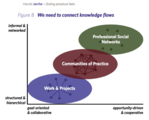
As the nature of work keeps changing, fueled by the nano-cogno-techno-bio revolutions, trying to be more productive is a fool’s errand. We need to be more social. As we look for our next way to earn a living, our résumés may be machine-readable, but our social networks will refect our real value. In the near future, our relationships will be predominantly informal & networked, doing work that derives from opportunity-driven & cooperative connections. The rest will be done by the machines.
Harold Jarche
.
Blog
.
<span class='date ' tip=''><i class='icon-time'></i> Aug 23, 2015 08:14am</span>
|
|
[Almost] Every fortnight I collate some of the observations and insights that were shared on social media. I call these Friday’s Finds.
Manage your time like Google invests its resources: 70/20/10 via @reuvengorsht
Designers: 70% on the visual specs for upcoming features, 20% exploring new features, and 10% on wireframes for entirely new concepts/styles.
Engineers: 70% building features and fixing bugs, 20% on prototyping fledgling ideas or exploratory data analysis, and 10% on speculative initiatives like a 10x performance improvement.
Sales: 70% on closing deals, 20% on bigger I/Os for the next quarter, and 10% on long-term relationships with agencies and big advertisers.
The Humbling Reason Why It’s Vital that You Encourage Autonomy at Work, via @marciamarcia
"The rule is this: the very best of us only get product decisions right 60% of the time. The rest of the time, we’re wrong … When Savage realized the 60% rule, that made him realize how micromanagement harmed his company. Micromanagement means actively getting involved in decision-making where you’re detached from the problem and lack situational awareness. Under these disconnected conditions, your hit rate on making the right decision as a manager is much, much lower."
How the next technological revolution starts
"There has been, and continues to be, a lot of discussion about what sort of technology will change everything - 3d printers, AI, space.
That is the wrong way to look at it. It is not technology that does the changing. Deep change comes from reorganizing ourselves around new principles in order to take the best advantage of the new technology."
Humanity V The Automaton Corporate by @Indy_Johar
"We have unwilling and unknowing let loose an age of global corporate automatons — without the safe guards of Asimov’s Laws.
These automatons are increasingly systemically beyond governance and driven to optimise ghost share holders returns even if the development of those returns destroys the social & environmental capital essential for the viability of its eventual ghost like beneficiaries — us …"
Sensemaking by Igor Kopelnitsky via @sebpaquet
Image by Igor Kopelnitsky
Harold Jarche
.
Blog
.
<span class='date ' tip=''><i class='icon-time'></i> Aug 23, 2015 08:14am</span>
|