Blogs
|
Just like you, I was fed up with politics. I was in a job I loved that was being made much too difficult by people playing games.I wanted to do a great job. Was that too much to ask? Let’s find opportunities. Help me help you be awesome. Let’s create great things together. These were my […]
The post Be Willing to be Fired - Now appeared first on VINJONES - Kevin D. Jones.
Kevin Jones
.
Blog
.
<span class='date ' tip=''><i class='icon-time'></i> Aug 23, 2015 08:18am</span>
|
|
Last month I wrote a post that included a presentation on enterprise social dimensions. It was based on three different perspectives I had come across. I recognized certain patterns and put these together to create a lens that could be used to determine if a selection of enterprise social network tools covered the spectrum of performance/learning needs in a networked workplace. The presentation has been well-received and so far I have not seen a similar approach.
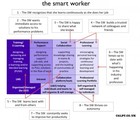
In working with the framework, I realized that not only do the seven facets address tool requirements, but they can also be used to look at workplace competencies in the digital workplace. I am not a fan of competency models but these facets might be handy in creating professional development plans. The seven facets align with several parts of Jane Hart’s Smart Worker model, specifically - encouraging employee generated content; learning and sharing with others; and developing trusted networks of colleagues.
Both collaborative behaviours (working together for a common goal) and cooperative behaviours (sharing freely without any quid pro quo) are needed in the network era. Most organizations focus on shorter term collaborative behaviours, but networks thrive on cooperative behaviours, where people share without any direct benefit. This is the major shift we need in creating Enterprise 2.0 or social businesses. Being "social" means being human, and humans are much more than economic units. We like to be helpful and we like to get recognition. We need more than extrinsic compensation and our behaviour on Wikipedia and online social networks proves this. For the most part, we like to help others. This is cooperation, and it makes for more resilient networks. Better networks are better for business.
The image below shows an initial set of competencies that focus not just on collaboration, but also cooperation.
Harold Jarche
.
Blog
.
<span class='date ' tip=''><i class='icon-time'></i> Aug 23, 2015 08:18am</span>
|
|
Here are some of the observations and insights that were shared via social media during the past week.
Leadership: To survive a shock to the system, become an unplanned organization - by @rbgayle
We see this again and again throughout history, as well as in our most entrepreneurial companies: the person who is best suited for dealing with one sort of shock (war, raising capital) is seldom the best for dealing with another shock (peace, shareholders, etc.) Since we cannot know what shocks are in store, nor what is really fragile in an organization, a robust solution to a world of shocks is to create a group of diverse and somewhat redundant talents with leadership dispersed in a way to allow the right talent to rise up when a particular shock hits the system.
Compounding Intelligence: learning social skills leads to better decision making - by @quinnovator
The point being that learning social skills, using good meeting processes, and emphasizing diversity, all actions similar to those needed for effective learning organizations, lead to better decision making. If you want good decisions, you need to break down hierarchies, open up the conversation channels, and listen. We have good science about practices that lead to effective outcomes for organizations.
"microblogging is the closest we have to human conversation" - by @RossDawson
One of my most consistent messages is that high-performance organizations are increasingly driven by the quality of their networks. Microblogs, through their ease of participation and the breadth of their visibility, are excellent facilitators of organizational networks. Staff can easily get a better sense of activities, capabilities, and personalities across the firm. After 15 years of ‘expertise location’ being on the agenda, microblogs are proving to be one of the simplest and best ways to find the relevant expertise in the organization to address a problem or opportunity.
BBC News - Nokia decline sparks Finnish start-up boom - via @tar1na
Miki Kuusi of Start-Up Sauna - a non-profit programme that coaches entrepreneurs before connecting them with investors - likens Nokia to a big tree in a very small forest.
"Now that Nokia is doing worse the ecosystem around it is developing," he says.
"Some people even say that the current downfall of Nokia is the best thing that’s happened to this country because it’s challenged us to come up with new ways to have a foundation for our welfare."
Harold Jarche
.
Blog
.
<span class='date ' tip=''><i class='icon-time'></i> Aug 23, 2015 08:18am</span>
|
|
John Stepper discusses how people can get started working out loud and shows examples of different types of networks that one could connect with. It’s very easy to understand, but not quite so easy to do. Most people are too busy managing in the industrial/information age workplace and have no slack to try to learn how work in the network age.
But they probably won’t. Because they’re already busy. Because they’re afraid to make a mistake or unsure of their writing or speaking skills. Because they’re simply not used to working this way.
The most important step in learning a new skill is the first one. This same step has to be repeated many times before it becomes a habit. As John concludes:
For these people I offer some very simple advice: Schedule time in your calendar for working out loud. Start with simple contributions. Keep shipping.
Over time, you’ll develop the skills you need to be effective and the habits you need to do it regularly.
I strongly suggest that the first step of starting to work out loud, as part of personal knowledge management, has to be as simple as possible.
Free Your Bookmarks: This is a very simple shift that only requires a slight deviation from a common practice: saving bookmarks/favourites on your browser. Using tools like Diigo, or Delicious moves them off a single device, makes them more searchable, and (later) makes them shareable. Being able to share is usually not a prime reason why people start using social bookmarks.
Aggregate: Driving as many information sources as possible through a feed reader such as Google Reader or Feedly, saves time and helps stay organized. It’s amazing how many people do not understand RSS or how to grab a feed and save it. Aggregation makes information flows much easier to deal with.
Connect: How do you get started micro-blogging on a platform like Twitter? I suggest beginning with an aim in mind, such as professional development or staying current in a specific field. Use the search function to find people who post about your area of interest. Then follow no less than 20 and no more than 30 interesting people. Dip into the stream once or twice a day and read through any posts that interest you. Over time, as you follow links, you may add or delete feeds. Within a week or two, you should be able to sense some patterns and then can modify your stream to help you in learning more about the areas that interest you.
Sometimes we get all caught up in the latest social media tools. Getting started working out loud is not complicated and should not involve a steep learning curve on a complicated system. Start with simple tools and frameworks and then use your experience over time to modify them.
Harold Jarche
.
Blog
.
<span class='date ' tip=''><i class='icon-time'></i> Aug 23, 2015 08:18am</span>
|
|
A three-part series on Foucault and Social media, by Tim Raynor, ends with this conclusion:
Foucault would recommend an artistic approach to managing the contradictions in our online and offline lives. We should imagine ourselves as works of art in progress. Works of art are not simple things; they pull together substances, practices, and social worlds. So do you. If you use social media creatively, you can use it to explore different aspects of your person, your potentials and singularities. If you feel fragmented, follow Walt Whitman’s lead:
‘Do I contradict myself? Very well then, I contradict myself. I am large, I contain multitudes’ Walt Whitman, Leaves of Grass (1855)
Engaging with social media can let us be better works in progress, or embrace perpetual Beta. While the problems inherent with playing to an online crowd are much discussed in this essay, I have found that social media are more liberating and controlling. I find it interesting that many critiques of online engagement, whether it be for learning, working, or just finding others with similar interests, come from people who live in large urban centres. For me, the Internet has been liberating, as I am no longer limited to rural Atlantic Canada. My son has said that his online activities, gaming, socializing & blogging, made high school bearable. I remember life before the Web, and it was nowhere near as interesting as it is today.
Social media have helped me explore different aspects of my learning and my profession, much more than I could have on my own or in my community. I do not think that it is unnatural to feel more affinity for some of my online connections than for my local neighbours. Living with contradictions can help develop critical thinking. As social media enable more of us to live like artists, constantly redefining ourselves and our work, traditional hierarchical institutions will continue to feel threatened. I think we will see greater backlash against the "evils" of a network-mediated life, as power continues to move to the edges. But there is great good that can be done with two billion people connected to each other.
I intend on continuing to embrace contradictions, explore new ideas, and be a work of art in progress. Much of this I will do while connected via the Net. As more of us do so, we can strengthen our commons, work for a better society, and promote democracy. The past decade of living a very active online life has helped me contain more multitudes. I would highly recommend it.
Harold Jarche
.
Blog
.
<span class='date ' tip=''><i class='icon-time'></i> Aug 23, 2015 08:18am</span>
|
|
2005 was the year when more than 50% of US workers’ occupations involved non-routine cognitive work, that long-awaited milestone. - Stowe Boyd
"Work has become distributed, discontinuous, and decentralized, hence, 3D", says Stowe. As hyperlinks subvert hierarchy, so does work fragmentation subvert organizations. Given the nature of 3D work, it may be possible that we are witnessing the end of the corporation as a wealth-generation machine, just as its current power seems to have no limits.
In knowledge-based work the primary unit of value creation has shifted from the organization to the individual. Work is modularized and distributed globally across algorithms and human work. - Ross Dawson
Stowe Boyd calls this the rise of the emergent business. We can look at this change from the perspective of knowledge networks, in which most of us will be working, whether we are farmers or software engineers. A knowledge network in balance is founded on openness which enables transparency. This in turn fosters a diversity of ideas, and promotes innovative thinking. The emergent property of all of these exchanges is trust.
In an economy based on trusted knowledge networks of individuals, the role of the organization may revert to merely a supporting one. We might even see corporations bidding for the privilege of supporting knowledge networks. This is quite the opposite from today, where someone recently stated on a forum that 95% of companies are not in the top 5%, yet they all demand the top 5% of talent. Perhaps in the future companies will have to fight for talent.
As more people work in distributed networks they may realize how little they have to gain from organizations. If autonomy, mastery, and a sense of purpose motivate people to work, as Dan Pink says, then networks are a much better vehicle for rewarding work than organizations can ever be. It’s the difference between intrinsic and extrinsic motivation. While the industrial era, based on the principles of scientific management, used extrinsic rewards, the network era requires personal motivation. Organizations, driven by external and formal direction, cannot compete with self-motivated and connected workers in the network era.
Harold Jarche
.
Blog
.
<span class='date ' tip=''><i class='icon-time'></i> Aug 23, 2015 08:18am</span>
|
|
Friday’s Finds:
"I want to stand as close to the edge as I can without going over; on the edge you find things you can’t see from the center." - KurtVonnegut. - via @JenniferSertl
"Everyone is a born leader … We were all leaders until we were sent to school to be commanded, controlled, and taught to do likewise." - Dee Hock - via @Jan Höglund
"By the excessive promotion of leadership, we demote everyone else." - Henry Mintzberg - via @flowchainsensei
"Privacy is a side effect of people not being connected." - Buster Benson - via @tar1na
@claytoncubitt - "Turning your phone off at the door is the new taking your shoes off at the door."
@MarkFederman - "‘Organizations are too complex; we must make things simpler.’ Wrong. Organizations are made too complicated in response to complexity."
Peter Kruse: Transforming Organizations into Social Brains | sense-making strategy - via @toughloveforx
Organizations that do not develop connectivity, arousal (or engagement) and collective valuation facility will have a poor chance of survival in the competition with organizations that do. That includes the organizational approach to strategy, leadership and communication, whose main task will be to enable neural facility (or at the very least not stand in its way!)
Success in the neural world will depend strongly on social empathy and an ability to work with social resonance phenomena, that steer and focus attention and energy through the net (Kruse—part 4).
The Financialisation of Labour - via @lpgauthier
At present companies are hoarding capital and worried about the future, so it is not in their interests to invest in plant - which is what robots are. Their outlook is essentially reactive and short-term, so they want a reactive, short-term workforce. They don’t want to undertake the capital expenditure required to automate. They don’t want to invest in workers long-term either because training and development is also a capital expense. And they don’t want to wait for full productivity: they want to buy in workers who can "hit the ground running" - hence the impossible requirement for young people entering the workforce to have "experience". However you look at this, there are structural problems in the labour market caused by companies’ short-term outlook and lack of confidence about the future.
Harold Jarche
.
Blog
.
<span class='date ' tip=''><i class='icon-time'></i> Aug 23, 2015 08:18am</span>
|
|
A couple of months ago I added a visual presentation to my About section, as I thought that might help convey my perspectives regarding my professional services a bit better. It’s what guides me, in my work.
I think many of my perspectives on learning were planted when I first went to school, in a one-room schoolhouse in the Rocky Mountains of BC. With only three pupils in my grade, we had a lot of freedom and we got to see what the older kids were doing. I was allowed to be quite independent and even more so later when I was home-schooled after the schoolhouse closed.
A basic assumption that I have developed is that many things can, and should, be simplified. Principles and values are often more resilient as guidelines than complicated rules and regulations, especially in dealing with complex issues. When it comes to learning, simplicity usually works best, as in simple systems to support learning. Often it’s just a case of removing barriers to learning.
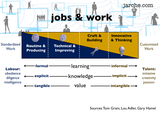
Our networked world is changing work fundamentally. In hyper-connected work environments, learning has to be part of working. This is because labour is increasingly based on unique talents, not easily replaceable tasks. This is also shattering our divisions of labour that many organizations are structured around, like IT, HR, KM and others. With an increase in customized, high-variety work we are seeing concepts like time at work or pay by the hour becoming obsolete.
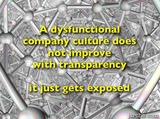
With these changes, organizational dysfunction is becoming obvious to all. Things aren’t worse today, there is just more exposure. To succeed in this networked world, organizations need to promote openness, transparency, and diversity. This enables innovation through more and better connections. It’s not just social business, but open business, that is needed to move from hierarchies (simple networks) to wirearchies (complex, human networks).
Harold Jarche introduction from Harold Jarche
Harold Jarche
.
Blog
.
<span class='date ' tip=''><i class='icon-time'></i> Aug 23, 2015 08:17am</span>
|
|
So Gartner states that only 10% of social networking roll-outs succeed. Surprised? I’m not. Computer World UK reports that certain characteristics are necessary for success, once a purpose has been provided:
The purpose should naturally motivate people to participate.
The purpose must resonate with enough people to catalyse a community and deliver robust user-generated content.
The purpose should have a clear business outcome.
Select purposes that you and the community can build on.
It’s a bit more complicated than that. First of all, most roll-outs focus on rolling-out, not changing behaviour. The hard work begins after the software vendors have provided the initial training and the organization is on its own. Social media, and social networks, change the way we communicate. Like any new language, they take time to learn, and adults are usually not very good at showing their lack of fluency with a second language. They don’t like to look foolish.
While people may say it’s not about the technology, unfortunately that’s where a large share of the budget goes in social network initiatives. The bigger change to manage is getting people to work transparently. Transparency is a necessity for cooperation and collaboration in networks, as a major benefit of using social media is increasing speed of access to knowledge. However, if the information is not shared by people, it will not be found.
It’s not a question of "motivating" people, but understanding why people are naturally motivated to share. I would surmise that the 90% failure rate may have a lot to do with the dysfunctional state of those organizations implementing social networks. Attempts to use enterprise social networks, that inevitably increase transparency, will only serve to illuminate organizational flaws.
The knowledge sharing paradox is that social networks often constrain what they are supposed to enhance. Why would people share everything they know on an enterprise network, knowing that on the inevitable day that they leave, their knowledge artifacts will remain behind? Enterprise knowledge sharing will never be as good as what networked individuals can do, because of ownership. Motivated or not, workers do not own the social network or their data. Individuals who own their knowledge networks will invest more in them.Those who do not, will not.
Even with a clear, resonating purpose, salaried employees still own nothing on the enterprise social network. Aye, there’s the rub.
Harold Jarche
.
Blog
.
<span class='date ' tip=''><i class='icon-time'></i> Aug 23, 2015 08:17am</span>
|
|
Part of the shift that organizations will have to make in the network era will be not only to add new dimensions, but to retrieve some old ones. Institutional life often required us to leave our family concerns at the door, and focus on the work to be done. In the military this could be for decades and in the church for life. Later we had to stay sharply focused on the hyper-competition of the market era. There was a battle to be done, and most marketing speak is still littered with military terms, taken from one of the largest institutions we ever created.
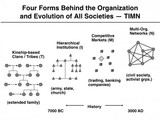
But we have shifted from a world dominated by Tribes, to one of Institutions, and currently a society of Markets. The next shift is to a world of Networks, as succinctly described in David Ronfeldt’s TIMN theory. According to TIMN, each new form has built upon and changed the previous mode. We are currently a predominantly triform society (T+I+M). What happens as we become a quadriform society (T+I+M+N) and what aspects of the other three will be helpful to provide balance?
TIMN by David Ronfeldt
As we examine the organizational change required for the network era, we should look at what we can retrieve from our past. The feeling for belonging we had in Tribes has been lost in Institutions (which include Corporations) as they no longer offer the stability they once did. Markets are overly focused on competition, and we know that the concept of perpetual growth cannot last on a finite globe.
So what does a connective, cooperative organization look like? It will be one that provides a sense of belonging like a Tribe, but with more diversity and room for personal growth. It will have the Institutional structure to manage the basic systems so people can focus on customers and community, not merely running the organization. It will have Market type competition, but without a winner-take-all approach.
There is a lot we can learn from our common story. Not all organizational change has to be new ‘E2.0′ techno buzz stuff. Builders of the network era organization, perhaps for the first time in history, have an advantage of being able to look back, not beholding to Institutional or Tribal leaders. Builders just need to be careful in listening to the Markets, for they too are voices from the past, but don’t yet realize it.
Harold Jarche
.
Blog
.
<span class='date ' tip=''><i class='icon-time'></i> Aug 23, 2015 08:17am</span>
|