Blogs
|
The other day I tweeted that I was learning so much from watching my daughter’s piano teacher in action. My friend Down Under @mnjorgenson messaged back to me that I should blog about it. A butterfly must have flapped its wings somewhere because I was literally thinking of doing it when I read his message. Here’s the deal with Yumi’s music class.
You go to a nondescript house and walk to the basement where a slightly cramped and most definitely humble little room awaits. Yamaha or Cosmo Music it is not, but it is painted in cheerful primary colours. You sit down with your child at one of the keyboards. There are eight kid-parent pairs in all. Ms. Lin sits up front at her piano. For one hour, you act as something of an Educational Assistant sitting beside your child as they take lessons from the formidable Ms. Lin.
Ms Lin is not the piano teacher of my childhood, of course. She does not hit my daughter with a ruler. She is friendly, but is so in a slightly distant way. In other words, she means business, and wants the kids to know that she means business. The hour burns by. Speaking as someone who is fairly confident in his educative capabilities, I would say that I am consistently amazed by Ms. Lin’s teaching methods. More importantly, I learn heaps from her.
‘Gradual Release of Responsibility’ is not just jargon; it works
Ms Lin probably doesn’t even know it, but she uses the GRR model of teaching an learning in her class. Everything revolves around a circular process of MODELED explicit instruction, SHARED/GUIDED practice, and INDEPENDENT work. It’s so bloody effective and reassures me that what I’m doing in my class is not just something invented by school teachers.
Kids can learn anything if you take it slow
When we first started in the class, Janet and I were a little mystified as to how Yumi ( a 5-year-old at the time) could possibly learn to, say, play a melody with the right hand while the left hand played a chord. Just pressing a key with one finger seemed to be a challenge. But after just one year of weekly lessons, she can now play an entire song doing that. Why? Because Ms. Lin never jumps to step 11 if the children have not confidently grasped step 9 and 10. I don’t think this means that all learning happens in a sequential, linear fashion. Rather, I think it means that you shouldn’t put students in positions to where they cannot possibly succeed.
Repitition is important
Nuff said.
Kids can’t sit for long
The children in the class do not ever sit at the keyboard for longer than 5 minutes at a time. Ms. Lin constantly alternates between stand-up activities at the front and sit down practice at the keyboard. It’s like she’s using a 6-year-old’s natural distractability against him/herself. In my own class, I’ve noticed that even something as simple as getting students to stand up out of their seat to be enormously beneficial. It’s like a metaphorical cigarette break without the lung cancer.
Homework is useful when it’s consistent and is merely practicing concepts from class
I don’t like homework. I don’t like doing it, assigning it, checking it, marking it, helping my kid with it, or giving it to the dog to eat. But, surely, the polarized debate surrounding it is a tad simplistic. Homework is just plain necessary for development in music, and it’s sometimes necessary for our classroom students as well.
Kids want to impress peers far more than their teachers/parents (and rightfully so)
When we mention to people that Yumi takes a piano class, instead of private lessons, they are often surprised. We ourselves even wondered about the efficacy of this model when we first began, but, wow, have we found it effective. The students in Ms. Lin’s class are constantly on display, accountable to an audience of their peers. I am not even certain if Yumi would practice at all if it weren’t for the fact that she has to (as they say in hip hop culture) represent. This is precisely why I use Web 2.0 tools like Moodle in my class program: Kids. Need. To. See. And respond to. Each others work/ideas. All the time.
There are most certainly a plethora of contextual and curricular differences between Yumi’s class and an average public school classroom. Not the least of these is are the differences in class size, parental involvement, and strictly skill-based nature of the piano class. I also realise that Ms. Lin is by no means breaking massive ground or telling us something any good teacher should already know. But sometimes it’s the little stuff that really matters.
Ms. Lin, I am sorry if you are horrified that one of the parents in your class is deconstructing your pedagogy on a weekly basis (no less blogging about it!) I just hope you know that at least one person gets what you’re doing.
Royan Lee
.
Blog
.
<span class='date ' tip=''><i class='icon-time'></i> Aug 23, 2015 06:03pm</span>
|
|
I have no idea why I’m starting my first ever blog four days before the start of a new school year. God knows I have other things I should be doing. Long range planning, lessons, nifty name tags. I must be a masochist. Actually, I’m a parent.
Being a dad to Yumi (6) and Jackson (2) is pretty awesome. One of the most spectacular things about it is that it makes me a better teacher. Every single day I learn things about pedagogy and psychology that astound me and lead straight to better classroom practice. Rather than being a strain on my time and energy, I really think of it more as a professional steroid of sorts. A Pedagogy Enhancing Drug. For instance, the other day I was at the playground with my 2yo. As Jackson is wont to do, he was climbing and sliding down everything in sight. This one thing cracked me up.
As he was trying to go up some bar climbers that were probably a bit too tall for a 2yo, he stopped three quarters of the way up and yelled, "Help Daddy!" What did I do to solve this crisis, knowing that the same skills he used to climb most of the way up would likely take him the rest of the way? I didn’t push him up or hold him. I simply placed my hand gently on his bum with all the pressure of a dandelion seed. With no trouble or complaint, he scooted to the top immediately.
I remember laughing when he did this. It was so funny to me because it told me everything I needed to know about one thing kids need from adults and teachers, especially in the 21st Century: the illusion of assistance.
Then there is my 6yo. Determined, silly, and occasionally haughty, she was so mad when her friend Emily could swing on the monkey bars like, well, a monkey, while her own swinging style was more like a paranoid R2D2. Little did we know that it was going to be Yumi’s summer raison d’etre to become monkey-like.
If she knew how to swear properly (actually, to be honest, she does) there would have been a lot of juicy expletives those first few days. Every single day we were at the playground, it was all about the monkey bars. Day after day, falling, sore hands, frowns. If we went to one without monkey bars, she’d make a disgusted face like Queen Elizabeth at a Bingo night.
Needless to say, she now kicks ass on the monkey bars.
So let’s recap: 1. Saw a friend do it, thought it was cool, desperately wanted to as well; 2. It was hard, kept trying, made heaps of mistakes; 3. Got it.
Barrie Bennett once said that he knows there’s good learning going on in a classroom if the kids look busy and the teacher is walking around. This may be a bit simplistic, but I like it because it fits in with my playground metaphor. When my kids are at the playground, they mess around, talk, brag, cry, get dirty, hurt themselves, ask for help, refuse help, direct themselves, create and tell stories, repeat things over and again, and always seek new challenges. I sometimes get involved to get them started, or stand close to ‘Watch This’, but I’m never in the drivers seat; always the passenger. And most of all, the playground experience is exponentially enhanced by the presence of my kids’ friends.
That’s essentially what I want to achieve in my class this year. I want it to be really fun, really challenging, and really safe. I want my ‘playground’ to be so cleverly designed and constantly evolving that only other playground architects can notice the subtleties of it. Oh, and I want the students to learn far more from one another than they do from me.
Cheers,
Royan
Royan Lee
.
Blog
.
<span class='date ' tip=''><i class='icon-time'></i> Aug 23, 2015 06:02pm</span>
|
|
I’ve opened up the floodgates. Students are bringing their own technology to my class.
First, a little context.
Most of the locations in our board are now completely wireless. The wifi is accessible with a student or staff username and password. The wifi in our school in particular is, in my opinion, just about as stable and reliable (touch wood) as one could expect. This is why I am lucky enough to be able to use my own personal Macbook and iPhone in the building.
My school is a comfortably middle class SES demographic. I would guesstimate that 95% of students have the most common technology and gadgets one would see in any Best Buy flyer. ‘Needy’ would not be a word to describe the students and families. I would not, however, classify them as privileged in a negative sense. On the contrary. A more rewarding community to be a teacher in I may never find again.
When given permission to bring in their own devices, my class of 31 (yes, sigh, 31) brought in 18 iPod Touches, 3 Nintendo DSis, 3 cell phones, and 3 laptops. That means that the classroom resources we have more than compensate for students not bringing devices in.
There are a few reasons why I’ve decided to do this in my class when most are staying clear with a 100 yard pole:
I want to effect change. I can’t bear the idea of my own children attending school without the ability to connect wirelessly to a network at school with their OWN device. It gives me a sharp pain in my stomach.
I want to explore. I want to see what it means to Backchannel, engage, be metacognitive, be critically literate, self-efficacious when students are permitted to use their OWN devices.
I want to listen to my students. They want it. They are very articulate in explaining why. Their devices are sitting in their backpacks and bedrooms collecting Facebook dust. No one else is facilitating their understanding of these devices as pedagogical and metacognitive tools.
Thanks to the following twitter buddies for inspiring this blogpost:
@kentmanning and @techieang, for their questions which sparked my need to blog it out
@rdelorenzo, for the great resources he provides on mobile learning (like this podcast on a mobile learning project in the States: http://podcast.cbc.ca/spark/plus-spark_20100317_mariebjerede.mp3)
@digitalnative, for everything
@slouca11, for also jumping into the handhelds in the classroom pedagogical casino with me (wouldn’t have done it without him)
@aaron_eyler, for this (among other) blogposts:
Recently, I read a tweet that made the following statement: the 21st century is a bad time to be a control freak. We need to start preaching that in our schools. Every teacher should feel it is his or her role to subvert the curriculum and prompt students to demand choice and democracy within the structure. It’s time for students to say enough with the uniform curriculum, enough with the uniform scope and sequence, enough with the rows, and enough with the hierarchy.
(from: http://coopcatalyst.wordpress.com/2010/03/22/democracy-starts-from-the-bottom-up/?utm_source=twitterfeed&utm_medium=twitter)
I’m going to try my best to post updates on our class’s trials and tribulations. Stay tuned.
Royan Lee
.
Blog
.
<span class='date ' tip=''><i class='icon-time'></i> Aug 23, 2015 06:02pm</span>
|
|
I’m fascinated by martial arts. I love the lessons on discipline, practice, and perseverance. I dig the concept of belt attainment, not as a carrot, but as a marker of development. I adore how you can only become exceptional if you have an awesome team to practice and bond with, and then how you hold your opponent to the highest esteem. I see how the assessment relationship of mentor and student involves constant conversational feedback of progress. I am impressed by the concept of learning to battle but never really fighting. I’ve never broken a piece of wood with my mean chop, but, in many ways, I like to approach my vocation of teaching and learning like Bruce Lee.
And now, for your enjoyment, my favourite fight scene of all time: Bruce Lee vs. Chuck Norris from Return/Way of the Dragon.
Royan Lee
.
Blog
.
<span class='date ' tip=''><i class='icon-time'></i> Aug 23, 2015 06:02pm</span>
|
|
Royan Lee
.
Blog
.
<span class='date ' tip=''><i class='icon-time'></i> Aug 23, 2015 06:02pm</span>
|
|
Royan Lee
.
Blog
.
<span class='date ' tip=''><i class='icon-time'></i> Aug 23, 2015 05:59pm</span>
|
|
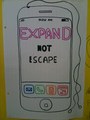
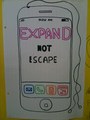
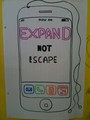
We’ve been working on a very exciting project in our literacy class analyzing and designing mobile app logos. Above you can see just a few of the stellar examples of student work. It was one of those units I thought up on a hunch after overhearing a discussion between students about their favourite apps. The learning has taken on a life of its own. I feel like more of a bystander, which is basically what I always seek to be, but don’t always achieve, in my room. Here are some of my reflections.
Student engagement is very high. The kids run to my class and need to be kicked out when it ends.
The kids are doing homework. Not because I’ve assigned any, but because they can’t stop working on their designs.
The self, peer, and teacher feedback in the class is natural and non-evaluative. The students just want help from each other to make their designs better. Talk is productive and meaningful. Moreover, it is initiated by the kids themselves.
We are experiencing a level of collaboration that is something I wish I could bottle and sell (it would be immensely expensive). One kid’s idea influences and spawns twenty others that could not have happened without the first. Eventually, there’s a web of influence between my 4 classes and 107 students. I just become ecstatic when this level of symbiosis occurs. True networked learning.
Still, my favourite part of the learning has been the way some of my historically less successful students have gotten a chance to shine and show off their reading and writing skills. I’m thinking of one boy in particular who I distinctly remember telling me once that he wished he was invisible. Today, I had tears welling up in my eyes when I saw him, shocked and red-faced, grinning from ear to ear, as one of the more popular kids grabbed his design, lifted it in the air, and yelled, "Hey everyone, look at this!"
As a teacher, it is impossible for me to achieve all of my desired outcomes in one year of learning. In fact, there is far more abject failure than success. I do hope, however, that at least a few of my students leave at the end of June understanding that reading and writing are concepts that are ever evolving, ever-expanding, and require an open mind to truly become successful in.
Royan Lee
.
Blog
.
<span class='date ' tip=''><i class='icon-time'></i> Aug 23, 2015 05:59pm</span>
|
|
So, how does social media in your classroom transform the meaning of shy/quiet? It’s not what you think.
It isn’t that shy kids who don’t like to literally talk in your class can now share their ideas in an online sphere. Anyway, at least it isn’t just that.
It’s that everyone in your class tends to become a more diverse, contemporary communicator. They get their ideas out for sharing in so many different ways that you stop labeling kids as the class clown, the shy kid, the leader, the follower. It helps students know and respect each other as learners in a way that is less encumbered by the complexities of childhood and adolescent social strata.
Read Susan’s interview with me here.
Royan Lee
.
Blog
.
<span class='date ' tip=''><i class='icon-time'></i> Aug 23, 2015 05:59pm</span>
|
|
These days, rarely a day goes by that I do not read an awesome post defending learning over technology. I just read Aviva’s fantastic post about putting expectations before toys, loved Zoe and Rodd‘s posts on a totally awesome analogue manner of teaching digital blogging, and was blown away by my buddy Danika’s gorgeously consice podcast episode on putting pedagogy ahead of the tool. I too mentioned this not long ago on this blog, but I feel compelled to add my two extra cents again.
It’s funny because I recall a time not long ago when the discourse of our PLN was far more entrenched in tool adulation. "Here’s another great, new, free web 2.0 tool …" "Check out this cool website …" "Here are some Delicious bookmarks for awesome IWB resources …" When I prowl through my Twitter feed these days I feel more likely to come across "5 Reasons SMARTBoards Suck …" "The iPad Pokes Out Pedagogy …" or "Why 1:1 is NOT the Answer …" in fact, it might even be a retweet of my own post. Perhaps this is a natural evolution, and even serves as a great analogy for your typical tech integrator’s continuum with digital tools. As my good friend @slouca11 says, it’s only when you get past the novelty that true learning begins.
To get past the novelty, however, you have to experience the novelty. We shouldn’t forget that integrating technology meaningfully often is preceded by a blissfully childish stage which resembles my daughter’s love of the ice cream shop, not because it’s the most important part, but because it is an unavoidable, perhaps even essential one. It’s a little disingenuous of us to suggest otherwise.
Royan Lee
.
Blog
.
<span class='date ' tip=''><i class='icon-time'></i> Aug 23, 2015 05:59pm</span>
|
|
Royan Lee
.
Blog
.
<span class='date ' tip=''><i class='icon-time'></i> Aug 23, 2015 05:58pm</span>
|