Blogs
|
Remember analogue photos and video? Taking care not to waste film, no one leaving comments on your photo of the day, inflicting pain on friends and family with living room slideshows instead of tormenting the world with them on Youtube?
I’m still amazed by this digital imaging thing. I can’t believe the ease with which we capture moments in our life. I love the fact that ‘photographer’ is now a relatively subjective title, and that ‘movie making’ can be done on a handheld device (not to mention what it means to be a news reporter). People talk about learning styles and multiple intelligences, but I don’t think it takes much rigour to come to the conclusion that virtually all of the kids walking through the halls of our schools can be called visual learners.
A digital camera is not only one of the most underrated #edtech tools around, but is also a perfect illustration of where we want all educational technology to be: normalized, mundane, at our fingertips.
I try and leverage this in the classroom at all times. I have witnessed the power of digital photos and video for reflection and metacognition in learning. Here’s an example of a simple activity I do regularly with my class:
Take photos and video during a unit of learning.
Do a quick edit of the clips and view them together.
While viewing, record a voiceover of discussion reflecting on the learning. What went as planned? What surprised us? What should we do differently next time? What was your favourite part?
Some of the benefits for learning are as follows:
It legitimizes the learning and conversations that occur inside the classroom.
It reminds students of the importance of collaborative learning, knowledge building, and timely feedback.
It values oral language.
It lauds the learning process as much as its product.
It motivates and engages students to ‘perform’ their learning.
It is a great assessment archive.
It makes students accountable for class talk and conduct towards one another.
It makes the students the stars of the show. Not the teacher.
This process is something I learned while witnessing my own children’s fascination with our family’s iMovie and iPhoto library. Below is a short clip of my son Jackson’s first time riding a two-wheeler. As many parents know, teaching a young child to ride a bike can be laborious and demanding. Depending on the child, keeping their self-efficacy up is perhaps the most important part of the process. We were amazed to see Jack’s fascination with seeing his success. The effect it had on his intrinsic motivation was palpable. If you were to come over to my house tomorrow, you would like see a little boy run up to you and say, "Would you like to see my biking movie?"
Royan Lee
.
Blog
.
<span class='date ' tip=''><i class='icon-time'></i> Aug 23, 2015 05:58pm</span>
|
|
At this year’s Quest Conference, Stephen Louca and I co-presented on Handhelds in the Classroom. It was at one of our sessions that we were asked a question I get quite often as a teacher leader who uses mobile devices and social media for learning.
"How do you deal with students using internet slang when they write?"
I wasn’t trying to be sarcastic when I said,
"You know, I think we all need to chillax a little about that."
As teachers of writing, I don’t believe our job is to try in vain to change the way kids talk and communicate with one another. What is the point of living if you can’t play, manipulate, and have loads of fun with language, especially as a child?
Rather, in this complex age, we should be far more concerned with teaching the navigation of context. These days, when people ask me questions about what I think is different about our time and place, I often say that it is the abundance of contextual difference. We are constant immigrants in multiple different cultural, language, and social frames of reference. Kids will be successful if they are able to navigate and metaphorically switch clothing and personas for multiple purposes.
Instead of denouncing playfulness with language, show students how it can be leveraged.
With this in mind, I thought I’d share how we are currently dealing with internet slang. We gave it an acronym, a name:
S: Creative Spelling
E: Emoticons
A: Abbreviations
P: Excessive Punctuation
My adolescent students and I have agreed not to let it SEAP into our formal writing.
Royan Lee
.
Blog
.
<span class='date ' tip=''><i class='icon-time'></i> Aug 23, 2015 05:58pm</span>
|
|
I love this drawing by my 8-year-old daughter Yumi. I adore the movement of the legs, as though they are made of gummy bear jelly, tangling around the bike and pedals. I dig the weirdly small wheels looking like they’re being squished. I laugh at the way my kid draws faces which exude pure happiness. The colours? Well, I totally delight in the way she is messily clean with her strokes. There’s a confidence that blows me away in her pics, because Yumi doesn’t draw for any other reason than because she loves it.
As a parent, all I want from my kids’ teacher is someone who honours this and, better yet, leverages it in my child’s learning.
You can find more of my kid’s pics at her blog: yoyoyumi.blogspot.com.
Royan Lee
.
Blog
.
<span class='date ' tip=''><i class='icon-time'></i> Aug 23, 2015 05:57pm</span>
|
|
CC licensed Flickr photo by sanfranannie
There are so many wonderful things about teaching. This is one of them.
Teaching is a gift because it gives you the opportunity to reflect on your own life in a much more informed way. Think about it, you’re actually doing informal and formal research about real, living, breathing people every single day. We get to influence and learn from such an array of the social fabric. Immigrants, the upper class, ghettoized communities, homogenous, heterogeneous, dominant culture, subaltern, soccer-loving, basketball-obsessed, religious, secular, tech-crazy, antiquated, library-goers, drug problems, middle-class, disabled, mentally ill, artists, athletes. Furthermore, you actually have the ear of many of these people. You can actually effect them, for better or for worse.
If you then teach as though your existence is based strictly on constant learning, the privilege becomes overwhelmingly evident.
Royan Lee
.
Blog
.
<span class='date ' tip=''><i class='icon-time'></i> Aug 23, 2015 05:57pm</span>
|
|
Here is the comment I wrote on P. Tucker’s post disagreeing with a retweet I made on Twitter about Social Media.
I agree with you Mr. Tucker that there are many pitfalls not only for our students who are minors, but also us as teachers. Social media and its potential use in the classroom certainly would not be the controversial topic it is were it not fraught with possible missteps or misguided use.
I would add, however, that successful and meaningful use of SM in schools needs strong leadership (such as the kind provided by people such as @gcouros), clear and articulated pedagogical purpose, and, most of all, resiliency. There is no point in walking down the SM path if mistake making is not accepted as part and parcel in the process.
I would further suggest that, at least from my vista, the ‘shouldn’t do’ educating, at least in terms of lectures, posters, pamphlets, and other media, is not something that is scarce. In my original retweet, I was simply acknowledging the derth of mainstream discourse on ‘the power and potential’ of SM for networked learning.
I agree with you that it is somewhat naive to look upon a technology such as SM as neutral. The medium changes people and the world. No question.
Perhaps what we should really do is stop polarizing SM’s effects and purpose as BAD and GOOD. It’s much more complex than that. In particular, I doubt we are ever going to reach an entire generation of young people who use SM in their daily lives so long as our dominant voice is one of perpetual admonishment.
Royan Lee
.
Blog
.
<span class='date ' tip=''><i class='icon-time'></i> Aug 23, 2015 05:57pm</span>
|
|
I love phys-ed.
I love the enthusiasm (most) children exhibit in finally having the shackles of desks, chairs, pencils, and paper abandoned for movement and sweating. I revel in the way the gym makes you feel comfortable to shout to the high heavens and escape the silence we too often demand in our classrooms. Most of all, I admire the way we accept very progressive ideas about assessment, evaluation, and achievement; no other subject has been doing observational assessment and instant feedback as a rule rather than a novelty.
I hate phys-ed. class.
I hate the seemingly immovable paradigm of ‘gym’ class. I crouch over when I think about the subtle ways we marginalize physical education in the big picture. I dislike the omnipresent gender issues that creep up when boys play with girls. Finally, I dislike the way ‘sports’ in gym class alienates many kids and causes them to literally and figuratively drop-out of gym.
As a (small ‘g’) gym teacher, I always try my best to make our physical education program as active, relevant, engaging, and equitable as possible. I’m really the furthest thing you can get to an impassioned expert in this area (and most days I would be embarrassed about the mistakes I make as a teacher in that gym), but I try my best. Here’s an idea I came up with that has been a rousing success.
We call it The Obstacle Course. In partners, students design a course that is:
fun
tests a variety of fine and gross motor movement skills
includes everyone
has everyone moving at all times
It has been so wonderful to see everyone step up and take leadership in my classes. No stickers or raffle tickets needed. These kids are trying their best to make a course that impresses the most important evaluators: their peers. In terms of assessment and feedback, it has been phenomenal. Think about it:
I design a game
I talk to all of you about it
You tell me how I think it could be improved
We play the game
As we play, I notice things that work, and things that should be changed
We make changes as we play
You learn from my game and make yours better
The play and outright exercise has been fantastic, but it has been perhaps more special to see the collaboration and constant feedback in the gym.
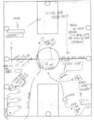
If you’re stuck for an idea, try this one out. Here is the organizer I gave kids in the planning stages. Let me know how it goes.
Royan Lee
.
Blog
.
<span class='date ' tip=''><i class='icon-time'></i> Aug 23, 2015 05:57pm</span>
|
|
CC Licensed Photo Shared by Flickr user Micah Sittig
Today I attended a very interesting presentation by a member of the AssistiveWare team. AssistiveWare develops some of the most simple yet revolutionary hardware and software for OS X and iOS. The things they are doing for physically and intellectually disabled persons is nothing short of rockin’. One app in particular caught everyone’s eye, Proloquo2Go, a mouthful to say but full of enormous potential pedagogically.
Proloquo2Go provides for the user a huge database of words+icons which you can select to turn into written or spoken sentences. You can customize, edit, and continually add to this database using your iDevice’s camera. Forget Special Ed., this is an app for everyone.
Sure, others exist that do similar things, but the people at AssistiveWare seem to get that aesthetics, portability, and intuitiveness are essential criteria for a successful technology in this day and age.
Of course, one of their main markets is the educational sphere. Oh how useful and maybe even a little transformative this tool could be. But we’re not ready. I don’t mean that this app and all the other technologies AssistiveWare makes will not continue to transform many people’s lives, it’s that we’re not ready yet in our systems. Here’s why.
We’re not comfortable yet with the idea of students using genuinely personal devices. Personal, as in, your laptop or your Blackberry or your iPad 2. Do you want to share your iPhone, or login to it every time you use it? I don’t mind people using mine (jeez, I let my children get all manner of kid goobies all over it), but I don’t want to put it back in a shared locked cupboard and go home without it. That’s preposterous.
Our smart phones and tablets are astonishing in many delightful ways, but in terms of the apps that you really use as tools (Evernote, Dropbox, Grocery Gadget, Bento, Echofon, Things, Reeder - these are all in my apps hall of fame), these are not possible without customization and personalization.
Proloquo2Go is great, but it’s downright beautiful if customizable to change and adapt to the user’s needs. Without this, it would be used as a novelty in our schools.
The road to ubiquitous wifi and mobile/soft-walled learning is fraught with many common, as well as unexpected, challenges. I’m not even trying to attest that it’s necessarily the best path.
What I am saying is that the potential of iPods and iPads in particular can only soar if kids can customize them to match their own needs.
Royan Lee
.
Blog
.
<span class='date ' tip=''><i class='icon-time'></i> Aug 23, 2015 05:56pm</span>
|
|
… to everyone who checks this blog out for amusement, insight, or information. I’m very grateful that people are interested in what I may have to say about schools and learning. I want to extend a special shout-out to a former student of mine, Christopher, who mysteriously seems to be interested in what his boring old teacher has to say.
Royan Lee
.
Blog
.
<span class='date ' tip=''><i class='icon-time'></i> Aug 23, 2015 05:56pm</span>
|
|
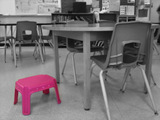
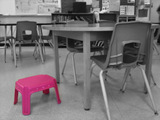
The small pink stool you see in the photo is used by one of my students (let’s call him Gregory) in lieu of a chair. I noticed early in the year that he had difficulty sitting still for any reason. The stool changed everything.
"Hey Gregory, I notice you’re always jiggling around and moving in your chair. Wanna try kneeling on this stool instead?"
"Ya sure, Mr. Lee … OHMIGOD! I LOVE IT!"
I will cause a million knowing heads to nod if I describe this 13-year-old: has a loud voice, is a reluctant reader/writer, is always ‘on the go’, and would possibly shrivel up and die if he couldn’t participate in competitive sports.
But this little pink stool and this rugged, masculine boy have found a match in one another. On the stool, he sits calmly and stays focused.
One of my favourite parts of this job is uncovering the little things that sometimes make a huge difference.
Royan Lee
.
Blog
.
<span class='date ' tip=''><i class='icon-time'></i> Aug 23, 2015 05:56pm</span>
|
|
My 7 month old daughter is at the stage where she thinks holding a piece of broccoli or red pepper in her hand and moving it to her mouth is the most fascinating thing in the world. Her eyes widen like a butterfly taking flight. She shakily grips the vegetable I give her like a knight taking his first sword.
My 4 year old is at this weird stage where he asks copious amounts of questions whose answers are evident. Just listen to my voice, I want to play with words like they are a musical instrument. That’s what I think he is thinking. At times it is annoying like a bad pop song, but it’s equally hilarious.
My 8 year old is in many fascinating stages. One of my favourites (and one I secretly encouraged) is the comic book stage. As a kid myself, I inhaled comics. Watching Yumi munch through them like a termite has been delightful. I can’t help but get giddy about it.
What I find so funny about these periods in their lives is the way it’s obvious they will outgrow them. Lucy will soon find the act of holding broccoli completely ordinary; Jackson will stop sounding like a walking Dora question machine; and Yumi will likely not find time to read her manga.
As a teacher of 13 year olds, I encounter a relatively mercurial and mysterious group of students. The mood swings, the seemingly random bouts of misbehaviour, the quiet anger. The changes they have gone through this school year are startling when you really break it down. It’s no wonder vampire novels touch such a chord; they’re wonderful monsters themselves, trying to make meaning of new found power, weakness, and complexity.
Some are to be savoured, while others endured, but all of life’s stages have their meaning and value.
Royan Lee
.
Blog
.
<span class='date ' tip=''><i class='icon-time'></i> Aug 23, 2015 05:56pm</span>
|