Blogs
|
For some certain romantic reasons, a segment of the English-language reading population fell in love with Roberto Bolaño in the first few years of this millennium. One invariably glimpsed Bolaño’s award-winning 1998 novel The Savage Detectives on endtables and nightstands after its translation in 2007, with or without bookmarks. When 2666—the Chilean writer’s dizzyingly enormous work on the darkest of events in 1990’s Northern Mexico—appeared, it did so posthumously, further elevating Bolaño’s literary outlaw mythos. In addition to being a hard-bitten Trotskyist nomad, Bolaño—who died of liver failure in 2003—was said to have been a heroin addict and alcoholic. Neither was the case, writes Hector Tobar in the LA Times, quoting a Mexico City-based journalist on the author: "He had a super boring daily life. It was a life built around his own writing rituals and habits."
For all his legendary exploits as a globetrotting journalist and poet, Bolaño also seems to have built his life around reading. "Reading," Bolaño has said, "is more important than writing." He finds much company with this statement among fellow writers. Patti Smith, for example, who urges reading "anything by Bolaño," could also "recommend a million" books to anyone who asks. A much shorter but still challenging list of hers reveals a deep and broad investment in literature. William S. Burroughs, who probably didn’t read Bolaño but worked in a similarly hallucinatory vein, taught a class on "Creative Reading" that was only secondarily a class on writing, filled with example after example from writer after treasured writer. The best writing advice writers can dispense, it seems, is this: Read.
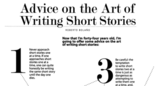
Such is the approach of Bolaño himself, in a short, pithy essay on how to write short stories. He begins in a perfunctory way, almost with a sigh: "Now that I’m forty-four years old, I’m going to offer some advice on the art of writing short stories." The advice, found in the graphic form above on The Paris Review‘s Tumblr and reprinted in a non-fiction collection titled Between Parenthesis, quickly becomes exuberantly pedantic, permeating the boundaries of its neatly ordered list form with tongue moving from cheek to cheek. Does he really mean that we should read "the notable Pseudo-Longinus" on the sublime? Or to suggest—after insistent reference to several essential Latin American writers’ writers—that "with Edgar Allan Poe, we would all have more than enough good material to read"? Probably. But the gist, with more than enough sincerity, is this: Read the greats, whoever they are, and read them often.
See Bolaño’s complete text here at Electric Cereal and an excerpted version below.
(1) Never approach short stories one at a time. If one approaches short stories one at a time, one can quite honestly be writing the same short story until the day one dies.
(2) It is best to write short stories three or five at a time. If one has the energy, write them nine or fifteen at a time.
(4) One must read Horacio Quiroga, Felisberto Hernández, and Jorge Luis Borges. One must read Juan Rulfo and Augusto Monterroso. Any short-story writer who has some appreciation for these authors will never read Camilo José Cela or Francisco Umbral yet will, indeed, read Julio Cortázar and Adolfo Bioy Casares, but in no way Cela or Umbral.
(5) I’ll repeat this once more in case it’s still not clear: don’t consider Cela or Umbral, whatsoever.
(6) A short-story writer should be brave. It’s a sad fact to acknowledge, but that’s the way it is.
(9) The honest truth is that with Edgar Allan Poe, we would all have more than enough good material to read.
(10) Give thought to point number 9. Think and reflect on it. You still have time. Think about number 9. To the extent possible, do so on bended knees.
(12) Read these books and also read Anton Chekhov and Raymond Carver, for one of the two of them is the best writer of the twentieth century.
Related Content:
Patti Smith’s List of Favorite Books: From Rimbaud to Susan Sontag
Junot Díaz’s Syllabi for His MIT Writing Classes, and the Novels on His Reading List
Predict Which 21st Century Novels Will Enter the Literary Canon? And Which Overrated Ones Won’t?
Josh Jones is a writer and musician based in Durham, NC. Follow him at @jdmagness
Roberto Bolaño’s 12 Tips on "the Art of Writing Short Stories" is a post from: Open Culture. Follow us on Facebook, Twitter, and Google Plus, or get our Daily Email. And don't miss our big collections of Free Online Courses, Free Online Movies, Free eBooks, Free Audio Books, Free Foreign Language Lessons, and MOOCs.
http://www.openculture.com/2015/07/roberto-bolanos-12-tips-on-the-art-of-writing-short-stories.html is a post from: Open Culture. Follow us on Facebook, Twitter, and Google Plus, or get our Daily Email. And don't miss our big collections of Free Online Courses, Free Online Movies, Free eBooks, Free Audio Books, Free Foreign Language Lessons, and MOOCs.
The post Roberto Bolaño’s 12 Tips on "the Art of Writing Short Stories" appeared first on Open Culture.
Open Culture
.
Blog
.
<span class='date ' tip=''><i class='icon-time'></i> Aug 26, 2015 02:46pm</span>
|
|
Who can call themselves fans of cyberpunk, or even modern science fiction, without having experienced William Gibson’s Neuromancer? That 1984 novel, which many see as the defining work of the sci-fi subgenre where, as Gibson himself put it, "high tech meets low life," has gone through many print runs in many languages. But you don’t need to read it to get to know its distinctive reality — its Japanese megalopolis setting of Chiba City, its characters like "console cowboy" Case and "street samurai" Molly Millions, its technologies like advanced artificial intelligence, electromagnetic pulse weapons, a virtual reality space called, yes, the Matrix. You can also hear it.
Last year, we featured the out-of-circulation audiobook version of Neuromancer read by Gibson himself, and though it faithfully transmits his characteristically sawed-off writing style, some may find that form a bit lacking in drama. But as luck would have it, the BBC, home to some of the last remaining masters of the radio drama form, adapted the novel in 2002, and you can hear the resulting two-hour production on the Youtube playlist above or stream it from SFFaudio. Even Gibson purists may well come away satisfied, since its respect for the original text begins right with the classic opening line: "The sky above the port was the color of television, tuned to a dead channel."
In any form, Neuromancer has endured for many reasons, not least that it still gets us thinking every time about the intersection between technology and humanity. It certainly gets critical theorist Fredric Jameson thinking, and you can read his thoughts in his new essay "A Global Neuromancer." He contends that, among other things, cyberspace still doesn’t exist: "It is a literary construction we tend to believe in; and, like the concept of immaterial labor, there are certainly historical reasons for its appearance at the dawn of postmodernity which greatly transcend the technological fact of computer development or the invention of the Internet." Jameson doesn’t write prose quite as easily followed as Gibson’s, but like any true classic, Neuromancer keeps inspiring not just works similar to it, but works wildly different from it as well.
Note: You can download for free a professionally-read version of Neuromancer (the complete book) if you take part in one of the free trials offered by our partners Audible.com and/or Audiobooks.com. Click on the respective links to get more information.
Related Content:
William Gibson Reads Neuromancer, His Cyberpunk-Defining Novel (1994)
Cyberpunk: 1990 Documentary Featuring William Gibson & Timothy Leary Introduces the Cyberpunk Culture
Take a Road Trip with Cyberspace Visionary William Gibson, Watch No Maps for These Territories (2000)
Timothy Leary Plans a Neuromancer Video Game, with Art by Keith Haring, Music by Devo & Cameos by David Byrne
William Gibson, Father of Cyberpunk, Reads New Novel in Second Life
Colin Marshall writes on cities, language, Asia, and men’s style. He’s at work on a book about Los Angeles, A Los Angeles Primer, and the video series The City in Cinema. Follow him on Twitter at @colinmarshall or on Facebook.
William Gibson’s Seminal Cyberpunk Novel, Neuromancer, Dramatized for Radio (2002) is a post from: Open Culture. Follow us on Facebook, Twitter, and Google Plus, or get our Daily Email. And don't miss our big collections of Free Online Courses, Free Online Movies, Free eBooks, Free Audio Books, Free Foreign Language Lessons, and MOOCs.
http://www.openculture.com/2015/07/william-gibsons-seminal-cyperpunk-novel-neuromancer-dramatized-for-radio-2002.html is a post from: Open Culture. Follow us on Facebook, Twitter, and Google Plus, or get our Daily Email. And don't miss our big collections of Free Online Courses, Free Online Movies, Free eBooks, Free Audio Books, Free Foreign Language Lessons, and MOOCs.
The post William Gibson’s Seminal Cyberpunk Novel, Neuromancer, Dramatized for Radio (2002) appeared first on Open Culture.
Open Culture
.
Blog
.
<span class='date ' tip=''><i class='icon-time'></i> Aug 26, 2015 02:44pm</span>
|
|
I don’t think anybody really knows why they’re doing anything. If you stop someone on the subway and say, "Where are you going - in the deepest sense of the word?" you can’t really expect an answer. I really don’t know why I’m here. It’s a matter of "What else would I be doing?" Do I want to be Frank Sinatra, who’s really great, and do I want to have great retrospectives of my work? I’m not really interested in being the oldest folksinger around.
- Leonard Cohen, speaking to author Pico Iyer in April 1998
One need not have lived a rock n’ roll lifestyle to be familiar with its pleasures and pitfalls. That heady mix of drugs, sex, and public adulation isn’t sustainable. Some can’t survive it. Some retire to a more staid domestic scene while others are left chasing a spotlight that’s unlikely to favor them twice. But rarely do you find one who chooses to give it all up to become a Buddhist monk.
Well, not all.
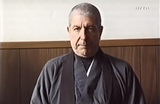
As director Armelle Brusq’s 1996 documentary, above, shows, singer-songwriter—and yes—Zen monk Leonard Cohen’s routine at the Mount Baldy Zen Center outside Los Angeles extended beyond the usual mindfulness practice. His simple quarters were outfitted with a computer, printer, radio, and a Technics KN 3000 synthesizer. He sometimes doffed his robes to enter the recording studio or enjoy a bowl of soup at Canter’s Deli. Comparatively, his worldly attachments were few, divvied between the professionally necessary and the fond. Still, calling his daughter, Lorca, to pass along a veterinarian’s update, Cohen sounds every inch the doting Jewish dad.
Celebrity devotion to Kabbalah or various Eastern spiritual practices often stinks of the superficial, a passing fancy that won’t last more than a year or two. Cohen’s relation to Zen Buddhism is enduring, a gift from his longtime friend and teacher, Mount Baldy’s Roshi, Kyozan Joshu Sasaki, who died last year at the age of 107.
One of Cohen’s responsibilities was helping Roshi with the myriad small details the elderly abbot would have had difficulty navigating on his own. Cohen seems entirely at peace in the roadie role, keeping track of luggage while on tour, and fetching cones for the entire party from a nearby ice cream truck.
The poem Cohen penned in honor of Roshi’s 89th birthday is of a piece with his most enduring work. Think Suzanne’s oranges were the only fruit? Not so:
His stomach’s very happy
The prunes are working well
There’s no one left in heaven
And there’s no one going to hell
Filmmaker Brusq is chiefly concerned with documenting Cohen’s spiritual reality, but she tosses in a few treats for those hungry for pop iconography, particularly the impromptu show-and-tell at the 25-minute mark, when the crew peeks into the legend’s memorabilia-filled LA office.
The soundtrack, too, is music to a Cohen fan’s ears, and lyrically inspired given the subject:
Waiting for The Miracle
Teachers
A Thousand Kisses Deep
Democracy
The Future
Suzanne
Dance Me to the End of Love
Closing Time
Never Any Good
Related Content:
How Leonard Cohen’s Stint As a Buddhist Monk Can Help You Live an Enlightened Life
Leonard Cohen Narrates Film on The Tibetan Book of the Dead, Featuring the Dalai Lama (1994)
Ladies and Gentlemen… Mr. Leonard Cohen: The Poet-Musician Featured in a 1965 Documentary
200 Free Documentaries Online
Ayun Halliday is an author, illustrator, and Chief Primatologist of the East Village Inky zine. Happy 18th birthday to her favorite formerly-17-year-old playwright! Follow her @AyunHalliday
A Day in the Life of Zen Monk Leonard Cohen: A 1996 Documentary is a post from: Open Culture. Follow us on Facebook, Twitter, and Google Plus, or get our Daily Email. And don't miss our big collections of Free Online Courses, Free Online Movies, Free eBooks, Free Audio Books, Free Foreign Language Lessons, and MOOCs.
http://www.openculture.com/2015/07/a-day-in-the-life-of-zen-monk-leonard-cohen.html is a post from: Open Culture. Follow us on Facebook, Twitter, and Google Plus, or get our Daily Email. And don't miss our big collections of Free Online Courses, Free Online Movies, Free eBooks, Free Audio Books, Free Foreign Language Lessons, and MOOCs.
The post A Day in the Life of Zen Monk Leonard Cohen: A 1996 Documentary appeared first on Open Culture.
Open Culture
.
Blog
.
<span class='date ' tip=''><i class='icon-time'></i> Aug 26, 2015 02:44pm</span>
|
|
A quick note: The director Andrew Hutton has seemingly made available online Vincent Van Gogh: Painted With Words, his 2010 film which features Benedict Cumberbatch as Van Gogh. The film, declares Hutton’s Vimeo channel, "won a Rockie for Best Arts Documentary at the Banff World Media Festival in 2011, receiving critical acclaim for its fascinating insight into the life of the artist and its unique approach to storytelling."
Vincent Van Gogh: Painted With Words will be added to our collection, 700 Free Movies Online: Great Classics, Indies, Noir, Westerns, etc..
Related Content:
Benedict Cumberbatch Reads a Letter Alan Turing Wrote in "Distress" Before His Conviction For "Gross Indecency"
Van Gogh’s 1888 Painting, "The Night Cafe," Animated with Oculus Virtual Reality Software
The Unexpected Math Behind Van Gogh’s "Starry Night"
Watch Vincent Van Gogh: Painted With Words, Starring Benedict Cumberbatch is a post from: Open Culture. Follow us on Facebook, Twitter, and Google Plus, or get our Daily Email. And don't miss our big collections of Free Online Courses, Free Online Movies, Free eBooks, Free Audio Books, Free Foreign Language Lessons, and MOOCs.
The post Watch Vincent Van Gogh: Painted With Words, Starring Benedict Cumberbatch appeared first on Open Culture.
Open Culture
.
Blog
.
<span class='date ' tip=''><i class='icon-time'></i> Aug 26, 2015 02:43pm</span>
|
|
Somewhere along the line today, take a break from the festivities and remind yourself what we’re actually celebrating here in America — the signing of America’s founding document 239 years ago. Drafted by Thomas Jefferson, The Declaration of Independence remains perhaps the best statement of our country’s aspirations. And after the Supreme Court’s recent Obergefell v. Hodges decision, many would say that the document — proclaiming that "all men are created equal" and have inalienable rights, "Life, Liberty and the pursuit of Happiness" — feels more alive than it has for some time. But no matter where you sit on the political spectrum, it’s helpful to return to The Declaration and its core principles. You can read the opening lines below, and the full text here.
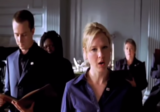
Above, we have some very recognizable Hollywood celebs (including eight Oscar winners) reading The Declaration. (Beneath it, we’ve included a grainier version that features a nice preface by Morgan Freeman). For the sake of making this worthwhile, pretend it isn’t the infamous Mel Gibson reading the very first lines.
When in the Course of human events, it becomes necessary for one people to dissolve the political bands which have connected them with another, and to assume among the powers of the earth, the separate and equal station to which the Laws of Nature and of Nature’s God entitle them, a decent respect to the opinions of mankind requires that they should declare the causes which impel them to the separation.
We hold these truths to be self-evident, that all men are created equal, that they are endowed by their Creator with certain unalienable Rights, that among these are Life, Liberty and the pursuit of Happiness.-That to secure these rights, Governments are instituted among Men, deriving their just powers from the consent of the governed, -That whenever any Form of Government becomes destructive of these ends, it is the Right of the People to alter or to abolish it, and to institute new Government, laying its foundation on such principles and organizing its powers in such form, as to them shall seem most likely to effect their Safety and Happiness. Prudence, indeed, will dictate that Governments long established should not be changed for light and transient causes; and accordingly all experience hath shewn, that mankind are more disposed to suffer, while evils are sufferable, than to right themselves by abolishing the forms to which they are accustomed. But when a long train of abuses and usurpations, pursuing invariably the same Object evinces a design to reduce them under absolute Despotism, it is their right, it is their duty, to throw off such Government, and to provide new Guards for their future security.-Such has been the patient sufferance of these Colonies; and such is now the necessity which constrains them to alter their former Systems of Government. The history of the present King of Great Britain is a history of repeated injuries and usurpations, all having in direct object the establishment of an absolute Tyranny over these States. To prove this, let Facts be submitted to a candid world.
Dan Colman is the founder/editor of Open Culture. Follow us on Facebook, Twitter, Google Plus and LinkedIn and share intelligent media with your friends. Or better yet, sign up for our daily email and get a daily dose of Open Culture in your inbox.
Related Content:
Free Online History Courses
Bertrand Russell’s Ten Commandments for Living in a Healthy Democracy
Hear Johnny Cash Deliver Lincoln’s Gettysburg Address
John Wayne Recites the Pledge of Allegiance
The Declaration of Independence Read by Thespians: Morgan Freeman, Kevin Spacey, Renee Zellweger & More is a post from: Open Culture. Follow us on Facebook, Twitter, and Google Plus, or get our Daily Email. And don't miss our big collections of Free Online Courses, Free Online Movies, Free eBooks, Free Audio Books, Free Foreign Language Lessons, and MOOCs.
http://www.openculture.com/2015/07/the-declaration-of-independence-read-by-thespians-morgan-freeman-kevin-spacey-renee-zellweger-more.html is a post from: Open Culture. Follow us on Facebook, Twitter, and Google Plus, or get our Daily Email. And don't miss our big collections of Free Online Courses, Free Online Movies, Free eBooks, Free Audio Books, Free Foreign Language Lessons, and MOOCs.
The post The Declaration of Independence Read by Thespians: Morgan Freeman, Kevin Spacey, Renee Zellweger & More appeared first on Open Culture.
Open Culture
.
Blog
.
<span class='date ' tip=''><i class='icon-time'></i> Aug 26, 2015 02:43pm</span>
|
|
In 1939, Igor Stravinsky emigrated to the United States, first arriving in New York City, before settling in Cambridge, Massachusetts, where he delivered the Charles Eliot Norton lectures at Harvard during the 1939-40 academic year. While living in Boston, the composer conducted the Boston Symphony and, on one famous occasion, he decided to conduct his own arrangement of the "The Star-Spangled Banner," which he made out a "desire to do my bit in these grievous times toward fostering and preserving the spirit of patriotism in this country." The date was January, 1944. And he was, of course, referring to America’s role in World War II.
As you might expect, Stravinsky’s version on "The Star-Spangled Banner" wasn’t entirely conventional, seeing that it added a dominant seventh chord to the arrangement. And the Boston police, not exactly an organization with avant-garde sensibilities, issued Stravinsky a warning, claiming there was a law against tampering with the national anthem. (They were misreading the statute.) Grudgingly, Stravinsky pulled it from the bill.
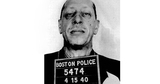
You can hear Stravinsky’s "Star-Spangled Banner" above, apparently performed by the London Symphony Orchestra, and conducted by Michael Tilson Thomas. The Youtube video features an apocryphal mugshot of Stravinsky. Despite the mythology created around this event, Stravinsky was never arrested.
via 3QD/Timothy Judd Violin
Dan Colman is the founder/editor of Open Culture. Follow us on Facebook, Twitter, Google Plus and LinkedIn and share intelligent media with your friends. Or better yet, sign up for our daily email and get a daily dose of Open Culture in your inbox.
Open Culture
.
Blog
.
<span class='date ' tip=''><i class='icon-time'></i> Aug 26, 2015 02:42pm</span>
|
|
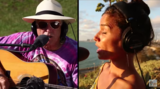
As the Grateful Dead gets ready to play its final show tonight, Playing for Change has released a lovely video featuring an international cast of musicians — some well-known, some not — playing "Ripple" (studio version here), a tune from the great 1970 album American Beauty. The new clip features appearances by Bill Kreutzmann, Jimmy Buffett, David Crosby, David Hidalgo of Los Lobos. Enjoy….
h/t @stevesilberman
Follow us on Facebook, Twitter, Google Plus and LinkedIn and share intelligent media with your friends. Or better yet, sign up for our daily email and get a daily dose of Open Culture in your inbox.
The Grateful Dead’s "Ripple" Played by Musicians Around the World is a post from: Open Culture. Follow us on Facebook, Twitter, and Google Plus, or get our Daily Email. And don't miss our big collections of Free Online Courses, Free Online Movies, Free eBooks, Free Audio Books, Free Foreign Language Lessons, and MOOCs.
http://www.openculture.com/2015/07/the-grateful-deads-ripple-played-by-musicians-around-the-world.html is a post from: Open Culture. Follow us on Facebook, Twitter, and Google Plus, or get our Daily Email. And don't miss our big collections of Free Online Courses, Free Online Movies, Free eBooks, Free Audio Books, Free Foreign Language Lessons, and MOOCs.
The post The Grateful Dead’s "Ripple" Played by Musicians Around the World appeared first on Open Culture.
Open Culture
.
Blog
.
<span class='date ' tip=''><i class='icon-time'></i> Aug 26, 2015 02:42pm</span>
|
|
Just about twenty years ago, on July 9, 1995, the Grateful Dead played their last show with Jerry Garcia. Neither the fans, nor the band knew this would be so, but anyone paying attention could have seen it coming. Garcia’s cocaine and heroin use had long dominated his life; despite interventions by his bandmates, a few stints in rehab, a diabetic coma, and the death of keyboardist Brent Mydland, the singer and guitarist continued to relapse. Exactly one month after that final concert, he died of a heart attack.
And what a poignant show it was. (See the tour poster above, hear the entire set below, and see a setlist here), opening with the band’s comeback hit "Touch of Grey" and closing with a fireworks display set to Hendrix’s "Star Spangled Banner." Garcia sounds frail, his voice a bit thin and ragged, and the lyrics—penned by Robert Hunter—strike a painfully ironic note: "I will get by… I will survive." Just last night, twenty years after that moment, fans once again said goodbye to the Dead, as they played their last of three final concerts without Jerry at Chicago’s Soldier’s Field, the same venue where Garcia last sang "Touch of Grey"‘s fateful words.
The Grateful Dead’s official output may have been uneven at times, marred by excess and tragedy, but the band’s words remained consistently inspired and inspiring, each song a poetic vignette filled with oblique references and witty, heartfelt turns of phrase. We mostly have Robert Hunter to thank for those hundreds of memorable verses. An accomplished poet and translator of Rainer Maria Rilke’s Duino Elegies and Sonnets to Orpheus, Hunter served, writes Rolling Stone, as the band’s "primary in-house poet." In a rare and moving interview with the magazine, the reclusive writer muses on his former role, and hedges on the meaning of his songs: "I’m open to questions about interpretation, but I generally skate around my answers because I don’t want to put those songs in a box."
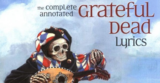
Hunter’s reluctance to interpret his lyrics hasn’t stopped fans and scholars of the Dead from doing so. There have been university exhibits and academic conferences devoted to the Grateful Dead. And true students of the band can study the many literary references and allusions in their songwriting with The Annotated Grateful Dead Lyrics, an online project begun in 1995 by UC Santa Cruz Research Associate David Dodd, and turned into a book in 2005. The extensive hypertext version of the project includes editorial footnotes explaining each song’s references, with sources. Also included in these glosses are "notes from readers," who weigh in with their own speculations and scholarly addenda.
If you have any doubt about just how steeped in poetic history the pre-eminent hippie band’s catalog is, see for example the annotated "Terrapin Station," a song that reaches back to Homer and alludes to Lewis Carroll, William Blake, Plato, and T.S. Eliot. Or, so, at least, say Dodd and his readers, though some of their interpretations may seem a bit tenuous. Hunter himself told Rolling Stone, "people think I have a lot more intention at what I do because it sounds very focused and intentional. Sometimes I just write the next line that occurs to me, and then I stand back and look at it and say, ‘This looks like it works.'" But just because a poet isn’t consciously quoting Homer doesn’t mean he isn’t, especially a poet as densely allusive as Robert Hunter.
Take, for example, "Uncle John’s Band," which contains the line "Ain’t no time to hate." One reader, Aaron Bibb, points us toward these lines of Emily Dickinson:
I had no time to Hate—
Because
The Grave would hinder Me—
And Life was not so
Ample I
Could finish—Enmity—
Woven throughout the song are references to American poetry and folk music—from Robert Frost’s "Fire and Ice," to the Gadsden Flag, to an Appalachian rag. Another of the band’s most popular songs, "Friend of the Devil," cribs its title and chorus from American folk singer Bill Morrissey’s song "Car and Driver"—and also references Don McLean’s "American Pie." Drawing as much on the Western literary canon as on the American songbook, Hunter’s writing situates the Dead’s Americana in a tradition stretching over centuries and continents, giving their music depth and complexity few other rock bands can claim.
The online annotated Grateful Dead also includes "Thematic Essays," a bibliography and "bibliography of songbooks," films and videos, and discographies for the band and each core member. There may be no more exhaustive a reference for the band’s output contained all in one place, though readers of this post may know of comparable guides in the vast sea of Grateful Dead commentary and compendiums online, in print, and on tape. The band may have played its last show twenty years ago, and again just last night without its beloved leader, but the proliferating, serious study of their songcraft and lyrical genius shows us that they will, indeed, survive.
Related Content:
The Grateful Dead’s "Ripple" Played by Musicians Around the World
10,173 Free Grateful Dead Concert Recordings in the Internet Archive
The Grateful Dead’s "Ultimate Bootleg" Now Online & Added to the Library of Congress’ National Recording Registry
Josh Jones is a writer and musician based in Durham, NC. Follow him at @jdmagness
Every Grateful Dead Song Annotated in Hypertext: Web Project Reveals the Deep Literary Foundations of the Dead’s Lyrics is a post from: Open Culture. Follow us on Facebook, Twitter, and Google Plus, or get our Daily Email. And don't miss our big collections of Free Online Courses, Free Online Movies, Free eBooks, Free Audio Books, Free Foreign Language Lessons, and MOOCs.
http://www.openculture.com/2015/07/every-grateful-dead-annotated-in-hypertext.html is a post from: Open Culture. Follow us on Facebook, Twitter, and Google Plus, or get our Daily Email. And don't miss our big collections of Free Online Courses, Free Online Movies, Free eBooks, Free Audio Books, Free Foreign Language Lessons, and MOOCs.
The post Every Grateful Dead Song Annotated in Hypertext: Web Project Reveals the Deep Literary Foundations of the Dead’s Lyrics appeared first on Open Culture.
Open Culture
.
Blog
.
<span class='date ' tip=''><i class='icon-time'></i> Aug 26, 2015 02:41pm</span>
|
|
Do you still need a working knowledge of the ideas of Michel Foucault to hold your own on the cocktail party circuit? Probably not, but the ideas themselves, should you bring them up there, remain as fascinating as ever. But how, apart from entering (or re-entering) grad school, to get started learning about them? Just look above: Alain de Botton’s School of Life has produced a handy eight-minute primer on the life and thought of the controversial "20th-century French philosopher and historian who spent his career forensically criticizing the power of the modern bourgeois capitalist state."
Perhaps that sounds like a parody of the activity of a French philosopher, but if you watch, you’ll find highlighted elements of Foucault’s grand intellectual project still relevant to us today. "His goal was nothing less than to figure out how power worked," as de Botton puts it, "and then to change it in the direction of a Marxist-anarchist utopia." Even if you have no interest in Marxist-anarchist utopias, you’ll find much to think about in Foucault’s criticisms, summed up in the video, of institutions of power having to do with medicine, mental health, criminal justice, and sexuality — under which we all, in some form or another, still live today.
Once the School of Life has got you briefed on this wealthy altar boy (!) turned widely-polarizing, sexually avant-garde intellectual, you can get into more depth on Foucault right here on Open Culture. We’ve got his UC Berkeley lectures (in English) on "Truth and Subjectivity" and "The Culture of the Self,;" an interview with him long thought lost; a 40-minute documentary on him, and the TIME article and fanzine that got his name spreading around America. You’ll find that, though Foucault himself passed away more than thirty years ago, his observations of modern society still have an impact — and they’ll surely raise an eyebrow or two at the next office party.
Related Content:
Michel Foucault - Beyond Good and Evil: 1993 Documentary Explores the Theorist’s Controversial Life and Philosophy
The 1981 TIME Magazine Profile That Introduced Michel Foucault to America
Hear Michel Foucault Deliver His Lecture on "Truth and Subjectivity" at UC Berkeley, In English (1980)
Hear Michel Foucault’s Lecture "The Culture of the Self," Presented in English at UC Berkeley (1983)
Watch a "Lost Interview" With Michel Foucault: Missing for 30 Years But Now Recovered
Read Chez Foucault, the 1978 Fanzine That Introduced Students to the Radical French Philosopher
Alain de Botton’s School of Life Presents Animated Introductions to Heidegger, The Stoics & Epicurus
Nietzsche, Wittgenstein & Sartre Explained with Monty Python-Style Animations by The School of Life
Colin Marshall writes on cities, language, Asia, and men’s style. He’s at work on a book about Los Angeles, A Los Angeles Primer, and the video series The City in Cinema. Follow him on Twitter at @colinmarshall or on Facebook.
Open Culture
.
Blog
.
<span class='date ' tip=''><i class='icon-time'></i> Aug 26, 2015 02:39pm</span>
|
|
Looking to expand your capacity for art appreciation, without spending much in the way of time or money?
You could play Masterpiece, or check some Sister Wendy out of the library…
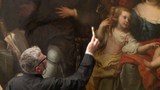
Or you could watch conservator Michael Gallagher tenderly ministering to 17th-century painter Charles Le Brun‘s Everhard Jabach and His Family, above.
Long considered lost, the life-size family portrait of the artist’s friend, a leading banker and art collector, was in sorry shape when the Metropolitan Museum acquired it from a private collection earlier last year.
Gallagher worked for ten months to counteract the various indignities it had suffered, including a re-stretching that left the original canvas severely creased, and a Gilded Age application of varnish that weathered poorly over time.
It’s a painstaking process, restoring such a work to its original glory, requiring countless Q-tips and a giant roller that allowed staffers to safely flip all 9 x 10.75 feet of the massive canvas. Gallagher identifies the last step, a sprayed-on coat of varnish necessary for teasing out the painting’s original luster, as the most nerve-wracking part of the odyssey.
Now that you know what went into it, you really should go visit it in person, if only to marvel at how the majority of visitors stream obliviously past, bound for the gift shop, the cafe, or other more name brand attractions.
(Certainly Le Brun, First Painter to Louis XIV, was a name brand in his day.)
Get even more out of your visit by boning up on some notable aspects of the work itself, such as the geometry of the subjects’ placement and the artist’s self-portrait, reflected in a mirror over his patron’s shoulder.
Gallagher and other Met staffers kept a detailed account of the restoration process on the Met’s Conservation blog. Read their posts here.
via Devour
Related Content:
The Metropolitan Museum of Art Puts 400,000 High-Res Images Online & Makes Them Free to Use
Download 448 Free Art Books from The Metropolitan Museum of Art
Watch a Japanese Craftsman Lovingly Bring a Tattered Old Book Back to Near Mint Condition
Ayun Halliday is an author, illustrator, and Chief Primatologist of the East Village Inky zine. Follow her @AyunHalliday
Open Culture
.
Blog
.
<span class='date ' tip=''><i class='icon-time'></i> Aug 26, 2015 02:39pm</span>
|