Blogs
|
Thomas Hardy—architect, poet, and writer (above)—gave us the fierce, stormy romance Far From the Madding Crowd, currently impressing critics in a film adaptation by Thomas Vinterberg. He also gave us Tess of the D’Urbervilles, The Return of the Native, and Jude the Obscure, books whose persistently grim outlook might make them too depressing by far were it not for Hardy’s engrossing prose, unforgettable characterization, and, perhaps most importantly, unshakable sense of place. Hardy set most of his novels in a region he called Wessex, which—much like William Faulkner’s Yoknapatawpha—is a thinly fictionalized recreation of his rural hometown of Dorchester and its surrounding counties.
Now, thanks to the University of Texas at Austin’s Harry Ransom Center, we can learn all about this ancient region in South West England, and Hardy’s transmutation of it, through Hardy’s own proof copy of a 1905 book by Frank R. Heath called Dorchester (Dorset) and its Surroundings, with revisions in Hardy’s hand. In the excerpt above, for example, from page 36 of this scholarly work, the author discusses Hardy’s use of Dorchester in The Mayor of Casterbridge and the so-called "Wessex Poems." In the margins on the right, we see Hardy’s corrections and glosses. Though this may not seem the most exciting piece of Hardy memorabilia, for students of the author and his investment in a rural corner of England, it is indeed a treasure.
The Hardy archive also contains scans of the author’s correspondence, manuscripts and signed typescripts, and architectural drawings, like that of St. Juliot’s Church in Cornwall, above. This extensive digital Hardy collection is but one of many housed in the Ransom Center’s Project Reveal, an acronym for "Read and View English & American Literature." Read and view you can indeed, through the intimacy of first drafts, manuscripts, personal writing, and other ephemera.
See, for example, a handwritten draft of Oscar Wilde’s Salome, in French, (excerpt above). Below, we have a handwritten list of Robert Louis Stevenson’s favorite books, and further down, a manuscript draft of Katherine Mansfield’s "Now I am a plant, a weed" from her personal poetry notebook.
Other authors included in the Project Reveal archive include Charlotte Perkins Gilman, Hart Crane, Henry James, Joseph Conrad, and William Thackeray. The project, writes the Ransom Center in a press release, generated more than 22,000 high-resolution images, available for use by anyone for any purpose without restriction or fees" (but with attribution). The literary storehouse on display here only adds to an already essential collection of artifacts the Ransom Center houses, such as the papers of Gabriel Garcia Marquez, syllabi, annotated books, and manuscripts from David Foster Wallace, scrapbooks of Harry Houdini, and the first known photograph ever taken. See a complete list of contents of the Ransom Center’s Digital Collections here, and learn more about this amazing library in the heart of Texas at their main site.
Related Content:
Library of Congress Launches New Online Poetry Archive, Featuring 75 Years of Classic Poetry Readings
Yale Launches an Archive of 170,000 Photographs Documenting the Great Depression
Literary Remains of Gabriel García Márquez Will Rest in Texas
David Foster Wallace’s Love of Language Revealed by the Books in His Personal Library
Josh Jones is a writer and musician based in Durham, NC. Follow him at @jdmagness
New Archive Offers Free Access to 22,000 Literary Documents From Great British & American Writers is a post from: Open Culture. Follow us on Facebook, Twitter, and Google Plus, or get our Daily Email. And don't miss our big collections of Free Online Courses, Free Online Movies, Free eBooks, Free Audio Books, Free Foreign Language Lessons, and MOOCs.
The post New Archive Offers Free Access to 22,000 Literary Documents From Great British & American Writers appeared first on Open Culture.
Open Culture
.
Blog
.
<span class='date ' tip=''><i class='icon-time'></i> Aug 26, 2015 02:54pm</span>
|
|
"What is Bresson’s genre? He doesn’t have one. Bresson is Bresson," wrote master filmmaker Andrei Tarkovsky in his seminal book Sculpting in Time. "The very concept of genre is as cold as the tomb."
Nonetheless, Tarkovsky made two of the most praised, best-regarded science fiction films in cinema. Stalker (watch it online) is a metaphysical riddle wrapped in the trappings of a sci-fi thriller. In the verdant area called the Zone, ringed off by miles of barbed wire and armed soldiers, pilgrims come to behold an uncanny landscape ruled by a powerful, otherworldly intelligence. The film seemed to prefigure the Chernobyl disaster that happened years later and proved to be the unlikely inspiration for a video game.
Adapted from a novel by Stanislaw Lem, Solaris (watch online) is about a space station that orbits a sentient planet that causes hallucinations in the cosmonauts. The hyper-rational protagonist, Kris Kelvin, is thrown for a loop when he is confronted by a doppelganger of his dead wife who killed herself years earlier. The logical side of him knows that this is a hallucination but he falls in love anyway, only to lose her again. Kelvin is caught in a hell of repeating the mistakes of his past.
Solaris was seen as a Cold War-era response to Stanley Kubrick’s 2001: A Space Odyssey. Both movies are mind-altering deep-space epics that raise more questions than they answer. Yet Tarkovsky hated 2001’s ostentatious use of cutting-edge special effects. "For some reason, in all the science-fiction films I’ve seen, the filmmakers force the viewer to examine the details of the material structure of the future," he told Russian film journalist Naum Abramov in 1970. "More than that, sometimes, like Kubrick, they call their own films premonitions. It’s unbelievable! Let alone that 2001: A Space Odyssey is phony on many points, even for specialists. For a true work of art, the fake must be eliminated."
Indeed, Tarkovsky seemed to deliberately half-ass the generic elements of film. He used leisurely shots of tunnels and highways of 1971 Tokyo to depict the city of the future. He devoted only a couple minutes of the film’s nearly three hour running time to things like spaceships. And you have to love the fact that the space station in Solaris has such distinctly unfuturistic design elements as a chandelier and a wood-paneled library.
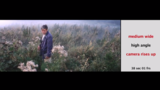
Tarkovsky, of course, isn’t interested in science. He’s interested in art and its way to evoke the divine. And his primary way of doing this is with long takes; epic shots that resonate profoundly even if the meaning of those images remains elusive. Solaris opens with a shot of water flowing in a brook and then, later in the scene, there is a sudden downpour. The camera presses into a shot of a teacup filling with rain. It’s a beautiful, memorable, evocative shot. Maybe the image means something. Maybe its beauty is, in and of itself, its meaning. Either way, Tarkovsky forces you to surrender to his deliberate cinematic rhythm and his pantheistic view of the world.
In a piece called Tarkovsky Shot by Shot, video essayist Antonios Papantoniou dissects a few scenes from Solaris, breaking down each according to camera angle, shot type and duration while pointing out recurring visual motifs. "Diametrically different from Hollywood’s extravagant moviemaking Tarkovsky’s Solaris is in a cinematic universe of its own," writes Papantoniou in one of the video’s copious intertitles. "Symbolic images and metaphysical manifestations are created and expressed in a poetic way where every visual detail matters." Watching Shot by Shot, you get a real sense of just how beautifully his films unfold with those gorgeously choreographed long takes. You can watch the full video above.
via Indie Wire
Related Content:
Tarkovsky Films Now Free Online
Watch Stalker, Andrei Tarkovsky’s Mind-Bending Masterpiece Free Online
The Masterful Polaroid Pictures Taken by Filmmaker Andrei Tarkovsky
Tarkovsky’s Advice to Young Filmmakers: Sacrifice Yourself for Cinema
A Poet in Cinema: Andrei Tarkovsky Reveals the Director’s Deep Thoughts on Filmmaking and Life
Jonathan Crow is a Los Angeles-based writer and filmmaker whose work has appeared in Yahoo!, The Hollywood Reporter, and other publications. You can follow him at @jonccrow. And check out his blog Veeptopus, featuring lots of pictures of vice presidents with octopuses on their heads. The Veeptopus store is here.
Open Culture
.
Blog
.
<span class='date ' tip=''><i class='icon-time'></i> Aug 26, 2015 02:53pm</span>
|
|
Last year, we highlighted a 1956 video from RCA Victor which demonstrated how vinyl records were made back in the good old days. If you have 23 free minutes, you can get a pretty good look at the production process — the live audio recording, the making of a master disc, the production of a mold, the eventual mass production of vinyl records, etc.
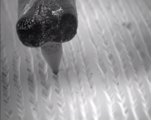
Almost 60 years later, vinyl is making a comeback. So why not let Ben Krasnow, a hardware engineer at Google X, give us a much more modern perspective on the LP? Above, watch Krasnow’s stop motion animation, made with an electron microscope, which shows us a phonograph needle riding through grooves on an LP. Much of the 9-minute video offers a fairly technical primer on what went into making this stop motion clip in the first place. So if you want to get to the action, fast forward to the 4:20 mark.
If you hang with Krasnow’s video, you can also see him take some microscopic looks at other media formats — CD-ROMs, early forms of DVDs, and more.
via Devour
Follow us on Facebook, Twitter, Google Plus and LinkedIn and share intelligent media with your friends. Or better yet, sign up for our daily email and get a daily dose of Open Culture in your inbox.
Related Content:
How Vinyl Records Are Made: A Primer from 1956 (That’s Relevant in 2014)
How to Clean Your Vinyl Records with Wood Glue
World Records: New Photo Exhibit Pays Tribute to the Era of Vinyl Records & Turntables
Watch a Needle Ride Through LP Record Grooves Under an Electron Microscope is a post from: Open Culture. Follow us on Facebook, Twitter, and Google Plus, or get our Daily Email. And don't miss our big collections of Free Online Courses, Free Online Movies, Free eBooks, Free Audio Books, Free Foreign Language Lessons, and MOOCs.
The post Watch a Needle Ride Through LP Record Grooves Under an Electron Microscope appeared first on Open Culture.
Open Culture
.
Blog
.
<span class='date ' tip=''><i class='icon-time'></i> Aug 26, 2015 02:53pm</span>
|
|
With her buttoned-up style, work with the UN, and name like a plucky character in a certain English wizard series, Delia Derbyshire may not seem a likely pioneer of experimental electronic music. But her work in the sixties and seventies indeed made her a forerunner of so much contemporary electronic music that most every current legend in the business—from Aphex Twin and the Chemical Brothers to Paul Hartnoll of Orbital, who calls her work "quite amazing" and "timeless"—credits her in some way or another. If you’ve never heard of Derbyshire, you can learn about her life and work in the 2010 BBC Radio 4 documentary above, "Sculptress of Sound."
As we recently noted in an earlier post, Derbyshire occupies a prominent place in the history of women in the field. She has also worked with everyone from Doctor Who composer Ron Grainer (who took sole credit for their work together) to Paul McCartney. Well almost. McCartney—a huge fan of Derbyshire’s work with the BBC’s Radiophonic Workshop—considered collaborating with her on an early version of "Yesterday," then went with strings instead. But her near hit with the Beatles showed just how far she had come since joining the BBC as a trainee studio manager in 1960. The previous year, Decca records rejected her application, telling her point blank that they did not hire women for studio work.
For contractual reasons, Derbyshire made many of her radio compositions under pseudonyms, and she may have been frustrated by her near-obscurity. She did withdraw from music in the mid-seventies, not to reappear until a few years before her death in 2001. But perhaps her departure had nothing to do with lack of fame. Derbyshire had the highest of technical standards and a mathematical approach to making music. Once commercial synthesizers became available, she felt that making electronic music had become too easy and her enthusiasm waned. The new music bored her, and instead of trying to hold on to her relevance, she made a graceful exit.
It’s only in recent years that Derbyshire has become recognized for the pioneer she was. See her above profiled in a 2009 short documentary, "The Delian Mode," by Kara Blake. Featured are Derbyshire’s innovative techniques with manipulated tape machines and found sounds for her TV and film scores and her original compositions under her own name and with influential early electro-pop band White Noise. The Guardian called Derbyshire’s way of making music "an analytical approach to synthesiz[ing] complex sounds from electronic sources." Her degree in mathematics informed her way of working, as did her conception of herself not primarily as a composer, but also as a scientist. "I suppose in a way," she said of her painstakingly-created scores, "I was experimenting in psycho-acoustics." Many of her experiments sound as fresh today as they did at the time, ready to inspire several more generations of composers and musicians.
You can dip into an archive of Derbyshire’s music over at UBU.com.
Related Content:
Hear Seven Hours of Women Making Electronic Music (1938- 2014)
Meet the Dr. Who Composer Who Almost Turned The Beatles’ "Yesterday" Into Early Electronica
Josh Jones is a writer and musician based in Durham, NC. Follow him at @jdmagness.
Open Culture
.
Blog
.
<span class='date ' tip=''><i class='icon-time'></i> Aug 26, 2015 02:52pm</span>
|
|
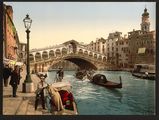
A few months ago, Mental Floss put up a post of "Fantastic 120-Year-Old Color Pictures of Ireland." Fantastic pictures indeed, although the nature of the technology that produced them seems as interesting to me as the 19th-century Irish life captured in the images themselves. They came from the Library of Congress’ geographically organized archive of photocrom prints, a method perhaps known only to die-hard historical photography enthusiasts. For the rest of us, the Library of Congress’ page on the photocrom process explains it: "Photochrom prints are ink-based images produced through ‘the direct photographic transfer of an original negative onto litho and chromographic printing plates.'"
Its inventor Hans Jakob Schmid came up with the technique in the 1880s, a decade that began with color photography consigned to the realm of theory. While Photocrom prints may look an awful lot like color photographs, look at them through a magnifying glass and "the small dots that comprise the ink-based photomechanical image are visible." "The photomechanical process permitted mass production of the vivid color prints," each color requiring "a separate asphalt-coated lithographic stone, usually a minimum of six stones and often more than ten stones." But that unwieldy-sounding technology and laborious-sounding process has given us, among other striking pieces of visual history, these lush images of fin de siècle Venice, which the writer of place Jan Morris once described as "less a city than an experience."
At the top of the post, we have a view of the Rialto Bridge, which spans one of the city’s famous canals; below that a scene of pigeon-feeding in St. Mark’s Piazza; the image just above leaves the pigeons behind to view the interior of St. Mark’s Basilica.
The photos below, all also taken between 1890 and 1900, depict the exterior and interior of the Doge’s Palace, as well as its view of San Giorgio Island by moonlight.
We may not consider these "real" color photographs, but the colors they present, vividly applied in the printing process, somehow more accurately represent the spirit of late 19th-century Europe — one of history’s truly vivid periods, in one of its enduringly vivid human environments. More color images of fin-de-siecle Venice can be viewed here.
via Mental Floss
Related Content:
Take a Virtual Tour of Venice (Its Streets, Plazas & Canals) with Google Street View
How Venice Works: A Short Film
Venice in a Day: From Daybreak to Sunset in Timelapse
Venice is Way Under Water…
Hand-Colored Photographs of 19th Century Japan
The First Color Photos From World War I: The German Front
The Oldest Color Movies Bring Sunflowers, Exotic Birds and Goldfish Back to Life (1902)
One of the Earliest Known Photos of Guys Sitting Around and Drinking Beer (Circa 1845)
Colin Marshall writes on cities, language, Asia, and men’s style. He’s at work on a book about Los Angeles, A Los Angeles Primer, and the video series The City in Cinema. Follow him on Twitter at @colinmarshall or on Facebook.
Venice in Beautiful Color Images 125 Years Ago: The Rialto Bridge, St. Mark’s Basilica, Doge’s Palace & More is a post from: Open Culture. Follow us on Facebook, Twitter, and Google Plus, or get our Daily Email. And don't miss our big collections of Free Online Courses, Free Online Movies, Free eBooks, Free Audio Books, Free Foreign Language Lessons, and MOOCs.
http://www.openculture.com/2015/07/venice-in-beautiful-color-images-125-years-ago.html is a post from: Open Culture. Follow us on Facebook, Twitter, and Google Plus, or get our Daily Email. And don't miss our big collections of Free Online Courses, Free Online Movies, Free eBooks, Free Audio Books, Free Foreign Language Lessons, and MOOCs.
The post Venice in Beautiful Color Images 125 Years Ago: The Rialto Bridge, St. Mark’s Basilica, Doge’s Palace & More appeared first on Open Culture.
Open Culture
.
Blog
.
<span class='date ' tip=''><i class='icon-time'></i> Aug 26, 2015 02:51pm</span>
|
|
In its second decade, cinema struggled to evolve. The first films by the Lumière Brothers and Thomas Edison were short and gimmicky - shots of trains racing towards the screen, couples kissing and cute kittens getting fed. A quick rush. A bit of fun. Its creators didn’t see much past the novelty of cinema but then other filmmakers like Georges Méliès, Edwin S Porter, Alice Guy-Blaché and D.W. Griffith started injecting this new medium with elements of story. It started aspiring towards art.
To this end, filmmakers started to expand the canvas on which they created. Films that were just two to eight minutes lengthened in duration as their stories grew in complexity. The first feature-length movie came in 1906 with the Australian movie The Story of the Kelly Gang. In 1915, D.W. Griffith premiered his racist masterpiece The Birth of a Nation, which crystallized film language and proved that longer movies could be financially successful. In between those two movies came L’Inferno (1911) - perhaps the finest cinematic adaptation of Dante’s Inferno out there and the first feature-length Italian movie ever.
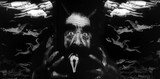
Like Griffith, the makers of L’Inferno - Francesco Bertolini, Adolfo Padovan and Giuseppe de Liguoro - sought to raise cinema to the ranks of literature and theater. Unlike Griffith, they didn’t really do much to forward the language of cinema. Throughout L’Inferno, the camera remains wide and locked down like the proscenium of a stage. Instead, they focused their efforts on creating gloriously baroque sets and costumes. Much of the film looks like it was pulled straight from Gustave Dorè’s famed illustrations of The Divine Comedy. Yet seeing a picture in a book of a demon is one thing. Seeing it leap around lashing the naked backs of the damned is something else entirely. If you were ever tempted by the sin of simony, you’ll think twice after seeing this film.
L’Inferno — now added to our collection of 700 Free Movies Online — became both a critical and commercial hit worldwide, raking in over $2 million (roughly $48 million in today’s money) in the US alone. "We have never seen anything more precious and fine than those pictures. Images of hell appear in all their greatness and power," gushed famed Italian novelist and reporter Matilde Serao when the film came out.
American film critic for The Moving Picture World, W. Stephen Bush, was even more effusive:
"I know no higher commendation of the work than mention of the fact that the film-makers have been exceedingly faithful to the words of the poet. They have followed, in letter and in spirit, his conceptions. They have sat like docile scholars at the feet of the master, conscientiously and to the best of their ability obeying every suggestion for his genius, knowing no inspiration, except such as came from the fountainhead. Great indeed has been their reward. They have made Dante intelligible to the masses. The immortal work, whose beauties until now were accessible only to a small band of scholars, has now after a sleep of more than six centuries become the property of mankind."
Of course, the film’s combination of ghoulishness and nudity made it ripe to be co-opted by shady producers who had less that lofty motives. Scenes from L’Inferno were cut into such exploitation flicks as Hell-O-Vision (1936) and Go Down, Death! (1944).
You can watch the full movie above. Be sure to watch to the end where Satan himself can be seen devouring Brutus and Cassius.
Related Content:
40 Great Filmmakers Go Old School, Shoot Short Films with 100 Year Old Camera
What David Lynch Can Do With a 100-Year-Old Camera and 52 Seconds of Film
A Trip to the Moon (and Five Other Free Films) by Georges Méliès, the Father of Special Effects
Gustave Doré’s Dramatic Illustrations of Dante’s Divine Comedy
Jonathan Crow is a Los Angeles-based writer and filmmaker whose work has appeared in Yahoo!, The Hollywood Reporter, and other publications. You can follow him at @jonccrow. And check out his blog Veeptopus, featuring lots of pictures of vice presidents with octopuses on their heads. The Veeptopus store is here.
Watch L’Inferno (1911), Italy’s First Feature Film and Perhaps the Finest Adaptation of Dante’s Classic is a post from: Open Culture. Follow us on Facebook, Twitter, and Google Plus, or get our Daily Email. And don't miss our big collections of Free Online Courses, Free Online Movies, Free eBooks, Free Audio Books, Free Foreign Language Lessons, and MOOCs.
The post Watch L’Inferno (1911), Italy’s First Feature Film and Perhaps the Finest Adaptation of Dante’s Classic appeared first on Open Culture.
Open Culture
.
Blog
.
<span class='date ' tip=''><i class='icon-time'></i> Aug 26, 2015 02:48pm</span>
|
|
I recently heard someone say his college-bound nephew asked him, "What’s a union?" Whether you love unions, loathe them, or remain indifferent, the fact that an ostensibly educated young person might have such a significant gap in their knowledge should cause concern. A historic labor conflict, after all, provided the occasion for Ronald Reagan to prove his bona fides to the new conservative movement that swept him into power. His crushing of the Professional Air Traffic Controllers Organization (PATCO) in 1981 set the tone for the ensuing 30 years or so of economic policy, with the labor movement fighting an uphill battle all the way. Prior to that defining event, unions held sway over politics local and national, and had consolidated power blocks in the American political landscape through decades of struggle against oppressive and dehumanizing working conditions.
In practical terms, unions have stood in the way of capital’s unceasing search for cheap labor and new consumer markets; in social and cultural terms, the politics of labor have represented a formidable ideological challenge to conservatives as well, by way of a vibrant assemblage of anarchists, civil libertarians, anti-colonialists, communists, environmentalists, pacifists, feminists, socialists, etc. A host of radical isms flourished among organized workers especially in the decades between the 1870s and the 1970s, finding their voice in newsletters, magazines, pamphlets, leaflets, and posters—fragile mediums that do not often weather well the ravages of time. Thus the advent of digital archives has been a boon for students and historians of workers’ movements and other populist political groundswells. One such archive, the Joseph A. Labadie Collection at the University of Michigan Library, has recently announced the digitization of over 2,200 posters from their collection, a database that spans the globe and the spectrum of leftist political speech and iconography.
We have cleverly-designed visual puns like the Chicago Industrial Workers of the World poster just above, titled "What is what in the world of labor?" Promoting itself as "One Big Union of All Labor," the IWW made some of the most ambitious propaganda, like the 1912 poster (middle) in which an "Industrial Co-Operative Commonwealth" replaces the tyranny of the capitalist, who is told by his "trust manager" peer, "Our rule is ended, dismount and go to work." In this post-revolutionary fantasy, the IWW promises that "A few hours of useful work insure all a luxurious living," though it only hints at the details of this utopian arrangement. Up top, we have an ornate May Day poster from 1895 by Walter Crane, hoping for a "Merrie England" with "No Child Toilers," "Production for Use Not For Profit," and "The Land For the People," among other, more nationalist, sentiments like "England Should Feed Her Own People."
"While all of the posters were scanned at high resolution," writes Hyperallergic, "they appear online as thumbnails with navigation to zoom." You can download the images, but only the smaller, thumbnail size in most cases. These hundreds of posters represent "just a portion of the material in the Labadie Collection"—named for a "Detroit-area labor organizer, anarchist, and author" who "had the idea for the social protest archive at the university in 1911." You can view other political artifacts in the UMich library’s digital collections here, including anarchist pamphlets, political buttons, and a digital photo collection. The collection as a whole gives us a potentially inspiring, or infuriating, mosaic of political thought at its boldest and most graphically assertive from a time before online petitions and hashtag campaigns took over as the primary circulators of popular radical thought.
via Hyperallergic (where you can find some other big, visually striking posters)
Related Content:
The Red Menace: A Striking Gallery of Anti-Communist Posters, Ads, Comic Books, Magazines & Films
Unz.org: A New, Vast and Slightly Right-Wing Archive of Magazines, Books and TV Shows
Wonderfully Kitschy Propaganda Posters Champion the Chinese Space Program (1962-2003)
Free Online Political Science Courses
Josh Jones is a writer and musician based in Durham, NC. Follow him at @jdmagness
2,200 Radical Political Posters Digitized: A New Archive is a post from: Open Culture. Follow us on Facebook, Twitter, and Google Plus, or get our Daily Email. And don't miss our big collections of Free Online Courses, Free Online Movies, Free eBooks, Free Audio Books, Free Foreign Language Lessons, and MOOCs.
http://www.openculture.com/2015/07/2200-radical-political-posters-digitized-a-new-archive.html is a post from: Open Culture. Follow us on Facebook, Twitter, and Google Plus, or get our Daily Email. And don't miss our big collections of Free Online Courses, Free Online Movies, Free eBooks, Free Audio Books, Free Foreign Language Lessons, and MOOCs.
The post 2,200 Radical Political Posters Digitized: A New Archive appeared first on Open Culture.
Open Culture
.
Blog
.
<span class='date ' tip=''><i class='icon-time'></i> Aug 26, 2015 02:48pm</span>
|
|
Plenty of us get tuned in to the Beats through print — maybe a yellowed copy of Howl, a mass-market Naked Lunch, a fifth- or sixth-hand On the Road — but sometimes the verse or prose that so thrills us on those pages fairly demands to be spoken aloud, preferably by the Beat in question. That may have proven a tricky desire to fulfill in decades past, but now Spotify has made it nearly effortless to hear the Beats whenever we like: you can find over eighteen hours of material on a playlist called, straightforwardly enough, The Beats.
These 249 tracks include not just figures like the previously alluded to Allen Ginsberg, William S. Burroughs, and Jack Kerouac, but other beloved Beats such as Gregory Corso, Peter Orlovsky — and Charles Bukowski, not a figure one necessarily associates closely with that movement. Some Bukowski and/or Beat enthusiasts will tell you that each would have nothing to do with the other. Yet the hard-living poet and self-confessed "dirty old man" occasionally admitted to something approaching fondness for certain members of the supposedly higher-minded counterculture: "He’s better to have around than not to have around," Bukowski once said of Ginsberg. "Without his coming through, none of us would be writing as well as we are doing now, which is not well enough, but we hang on."
With the Beats’ Spotify playlist, you can judge for yourself not only whether they and Bukowski wrote "well enough" (though literary history seems to have proven that piece of self-deprecation wrong), but also whether they spoke well enough — or rather, whether they performed their own work in the way you’d always imagined it in your head. Whatever your assessment, rest assured you won’t hear voices like Ginsberg’s, Burroughs’ and especially Bukowski’s anywhere else. If you don’t have the Spotify software itself yet, no problem: you can download it free here.
Related Content:
Naropa Archive Presents 5,000 Hours of Audio Recordings of Allen Ginsberg, William Burroughs & Other Beat Writers
Rare Footage of Allen Ginsberg, Jack Kerouac & Other Beats Hanging Out in the East Village (1959)
A Reading of Charles Bukowski’s First Published Story, "Aftermath of a Lengthy Rejection Slip" (1944)
Listen to Charles Bukowski Poems Being Read by Bukowski Himself & the Great Tom Waits
Hear 130 Minutes of Charles Bukowski’s First-Ever Recorded Readings (1968)
Colin Marshall writes on cities, language, Asia, and men’s style. He’s at work on a book about Los Angeles, A Los Angeles Primer, and the video series The City in Cinema. Follow him on Twitter at @colinmarshall or on Facebook.
Open Culture
.
Blog
.
<span class='date ' tip=''><i class='icon-time'></i> Aug 26, 2015 02:47pm</span>
|
|
At first blush, Yasujiro Ozu and Wes Anderson would seem to be miles apart. Ozu is the "most Japanese" of all directors. His films are small, quiet, finely calibrated works that document the slow reordering of the family unit in the face of Japan’s rapid modernization. Anderson’s movies are twee and whimsical, filled with wry humor and a shocking amount of violence against dogs.
Yet video essayist Anna Catley in her piece Wes Anderson & Yasujiro Ozu: A Visual Essay makes a pretty compelling case that these two auteurs are more similar than you might think. Both filmmakers have a clear and highly stylized manner of constructing their movies: Ozu’s films are characterized by symmetrical compositions and an unmoving camera that remains about two and a half feet off of the ground. Anderson’s movies are marked by symmetrical compositions, long complex camera moves and lots of overhead shots. Both Ozu and Anderson have a stable of actors that they work with repeatedly — Chishu Ryu and Setsuko Hara for Ozu, Jason Schwartzman and Bill Murray for Anderson. Both filmmakers’ movies are about the complex, often fraught, relationships between parents and children. And both directors often employed the point of view of children to highlight adult hypocrisy and disappointment.
Ozu’s movies, however, were relatively free of Cat Stevens songs.
You can watch the full video above. It might just make you watch a double feature of Ohayo and Moonrise Kingdom.
via Indie Wire
Related Content:
Watch 7 New Video Essays on Wes Anderson’s Films: Rushmore, The Royal Tenenbaums & More
Wes Anderson’s Favorite Films: Moonstruck, Rosemary’s Baby, and Luis Buñuel’s The Exterminating Angel
Watch Wes Anderson’s Charming New Short Film, Castello Cavalcanti, Starring Jason Schwartzman
Wes Anderson’s First Short Film: The Black-and-White, Jazz-Scored Bottle Rocket (1992)
Jonathan Crow is a Los Angeles-based writer and filmmaker whose work has appeared in Yahoo!, The Hollywood Reporter, and other publications. You can follow him at @jonccrow. And check out his blog Veeptopus, featuring lots of pictures of vice presidents with octopuses on their heads. The Veeptopus store is here.
Wes Anderson & Yasujiro Ozu: New Video Essay Reveals the Unexpected Parallels Between Two Great Filmmakers is a post from: Open Culture. Follow us on Facebook, Twitter, and Google Plus, or get our Daily Email. And don't miss our big collections of Free Online Courses, Free Online Movies, Free eBooks, Free Audio Books, Free Foreign Language Lessons, and MOOCs.
http://www.openculture.com/2015/07/wes-anderson-yasujiro-ozu.html is a post from: Open Culture. Follow us on Facebook, Twitter, and Google Plus, or get our Daily Email. And don't miss our big collections of Free Online Courses, Free Online Movies, Free eBooks, Free Audio Books, Free Foreign Language Lessons, and MOOCs.
The post Wes Anderson & Yasujiro Ozu: New Video Essay Reveals the Unexpected Parallels Between Two Great Filmmakers appeared first on Open Culture.
Open Culture
.
Blog
.
<span class='date ' tip=''><i class='icon-time'></i> Aug 26, 2015 02:47pm</span>
|
|
When Martin Scorsese isn’t making films, he’s busy preserving them, from helping fund the restoration of classics to collecting the ephemera of his youth, especially posters. A selection of his movie poster collection, representing the height of film advertising from the 1930’s to the 1960s, currently hangs at MoMA through October 25, 2015.
The power that a poster held in the imagination decades ago should not be understated. For many it was the only knowledge they had about the film they were about to see, and many artists, hired in house by the studios, hyped up the sexiest parts of the films. It sold tickets.
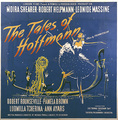
The MoMA exhibit is centered on the billboard sized poster for Powell and Pressburger’s Tales of Hoffmann (1951), a stunning work when seen large. (For an understanding about the impressive size of most posters, check out this graphic.)
It’s only because of collectors like Scorsese and Ira. M. Resnick (for whose book Scorsese wrote an introduction) that the artists behind these posters have been named and recognized.
Although the MoMA web page promoting the exhibition is surprisingly stingy when it comes to naming all the artists in the show, some internet sleuthing brings up some names. The illustrator behind the Hoffmann poster, Marc Stone, was also a painter of World War II propaganda posters in the UK.
The minimal, Risko-esque rendering of Veronica Lake for Sullivan’s Travels (1941) is credited to Maurice Kallis, though an anonymous comment on the movie poster blog Citizen K. credits it to Fritz Siebel, the commenter’s father. Siebel, who immigrated to the U.S. from Vienna, wound up illustrating A Fly Went By for Dr. Seuss’ children’s book imprint and creating the famous Yul Brynner-lookalike and cleaning product mascot Mr. Clean.
René Péron, who created the beautiful Expressionistic design for Erich von Stroheim’s The Lost Squadron (1932) started his career with posters for silent classics like Abel Gance’s Napoleon and Carl Theodor Dreyer’s The Passion of Joan of Arc (1928). But he’s probably best known for the iconic caricature of Jacques Tati gracing the poster for Mr. Hulot’s Holiday.
Both the poster for Powell and Pressburger’s Black Narcissus and Kazan’s On the Waterfront are by one of the Italian kings of movie posters, Anselmo Ballester. His style is lurid and pulpy, and if there is one dame in distress in a movie, he would make her the selling point of the poster. He was also known for his love of Rita Hayworth, for whom he would produce his best work. (Just look at this poster for Salome, which is way more interesting than the picture it represents.)
Lastly, Scorsese has added one of his own film’s posters: Peter Strausfeld’s stunning woodblock poster for Mean Streets. The British artist had a very particular style (text on one side, graphic on the other), and was hired by the Academy Cinema in London as their designer. (Now, *that’s* a job.)
The fact that we can watch trailers on our televisions and now iPhones has long diminished the power of the poster. However, there are still signs of life in the industry, and the amount of artists creating beautiful limited edition prints of posters for their favorite films increases every year.
via Quartz
Related content:
50 Film Posters From Poland: From The Empire Strikes Back to Raiders of the Lost Ark
100 Greatest Posters of Film Noir
Martin Scorsese Reveals His 12 Favorite Movies (and Writes a New Essay on Film Preservation)
Gaze at Global Movie Posters for Hitchcock’sVertigo: U.S., Japan, Italy, Poland & Beyond
The Strange and Wonderful Movie Posters from Ghana: The Matrix, Alien & More
Ted Mills is a freelance writer on the arts who currently hosts the FunkZone Podcast. You can also follow him on Twitter at @tedmills, read his other arts writing at tedmills.com and/or watch his films here.
A Look Inside Martin Scorsese’s Vintage Movie Poster Collection is a post from: Open Culture. Follow us on Facebook, Twitter, and Google Plus, or get our Daily Email. And don't miss our big collections of Free Online Courses, Free Online Movies, Free eBooks, Free Audio Books, Free Foreign Language Lessons, and MOOCs.
http://www.openculture.com/2015/07/a-look-inside-martin-scorseses-vintage-movie-poster-collection.html is a post from: Open Culture. Follow us on Facebook, Twitter, and Google Plus, or get our Daily Email. And don't miss our big collections of Free Online Courses, Free Online Movies, Free eBooks, Free Audio Books, Free Foreign Language Lessons, and MOOCs.
The post A Look Inside Martin Scorsese’s Vintage Movie Poster Collection appeared first on Open Culture.
Open Culture
.
Blog
.
<span class='date ' tip=''><i class='icon-time'></i> Aug 26, 2015 02:46pm</span>
|