Blogs
|
ABOUT THE AUTHOR
Al Switzler is coauthor of four New York Times bestsellers, Change Anything, Crucial Conversations, Crucial Confrontations, and Influencer.
READ MORE
Dear Crucial Skills,
I was recently promoted to supervisor within a highly stressful telecommunications center. My entire team has complained about another employee’s personal hygiene and said that the offensive odor and unsanitary conditions of the employee’s workspace are so bad that it contributes to a hostile work environment. In the past, this was handled ineffectively and has now become a disciplinary situation.
I know I need to hold this conversation, but because it is such a sensitive issue and the employee is otherwise a spectacular employee, I am at a loss as to how to begin the conversation. Please help!
Dreading B.O. Conversation
Dear Dreading,
What do we do when someone’s behavior negatively affects others and they don’t seem to know it or can’t seem to change? In addition to body odor and cleanliness, this behavior could include things like inappropriate dress or language, too much small talk, and smoking in incorrect places. All of these behaviors create gaps—the difference between what is agreed upon or expected and what is actually happening. We can endure small, infrequent gaps and hope they go away, but when the gap is serious and when it is a pattern—as it is in your situation—what do you do? Here are a few strategies.
Clarify two kinds of expectations. The first expectation is reviewing or discussing expected behaviors and the reason behind them. When you are first promoted, or when there is a new team member or a new quarter, take the opportunity to meet and talk about the few expectations that will help your team work together effectively. This might include talking about past gaps that have hindered the team or the work. For example, you might want to talk about proper dress and grooming standards. The reason for this is that customers have expectations, managers and employees have expectations, and these expectations make it easier to work in close quarters as a team. I suggest that you never work on more than three or four behavioral expectations as a team—these should be important issues your team struggles with most.
The second expectation is really important: when someone sees a gap, talk about it. Ask each team member to agree that when someone falls short of expectations, those who see it will privately, politely, and professionally talk to him or her. You won’t get angry or gossip; you’ll talk. The reason is that when we don’t talk about a gap, we lower the standards of the company and we increase the probability someone will get offended, gossip will run rampant, and team morale will go down. As a team, identify gaps and solve concerns before they become real problems.
Give the person the benefit of the doubt. We teach people who face a gap to ask themselves, "Why would a reasonable, rational, decent person act this way?" By asking that question, you avoid jumping to conclusions or making assumptions that can move you to make wrong diagnoses. It also prevents you from beginning your conversation in a way that says in essence, "I have held court in my head and found you guilty. Can we talk?" Such a beginning is not helpful and makes you part of the problem.
You want to start the conversation by sending the message that you are observant, inquisitive, and caring. You want to be part of the solution, not part of the problem. You do this by helping yourself understand that until you talk about it, you don’t know—you are only guessing. In your case, maybe the person has started taking a new medicine, or maybe his or her house burned down and he or she is living out of a car. You don’t know. Give yourself the opportunity to do a real diagnosis and to maintain the relationship.
Discuss gaps early. Identify the gap when it first appears, then find a safe time and a private place to talk. Over the years, we’ve talked about the skills for beginning an accountability conversation or "the hazardous half minute." And we know that if you begin correctly, you are much more likely to find a solution. In Crucial Confrontations, we teach that you should first describe the difference between what is expected and what has been observed then end with a question. For example, if an employee came in late you could say, "I just want to clarify that working hours start at 8:00 and I noticed you came in today at 8:25. What happened?" You should say this in a way that is nonjudgmental.
If the person is wearing too much perfume or cologne, you might begin with, "One of the expectations we have is that we will work together in ways that makes it pleasant for others. I have noticed that your cologne is very noticeable, and I’m hoping you can wear less of it. Can we discuss this?" Let’s assume the person says "yes" and we have caught it early. If they disagree, that is another problem.
If you don’t discuss it early, the problem lingers. Coworkers gossip and don’t invite this person to lunch. Another employee calls the person names behind his or her back and one person lets a sarcastic comment fly. Now trust and respect have diminished. Gossip and hurt feelings have increased. Why? Because nobody spoke up early about the gap.
Trust the process. If you begin your conversation in a way that says you are not judging, and that you are observant and caring—both about the standards and about your colleague—you are well on your way.
In a private place, at a good time, after you have your head and heart in the right place, and if you had previously clarified expectations as I described above, you might say, "A few weeks ago, we all agreed to a dress and grooming standard that would help us serve our customers and work well together. This is a bit awkward for me to say, but I’ve noticed that when you come to work you have a body odor that is noticeable. I don’t know what’s going on, but I’d like to talk about what’s going on and what could be done to meet the expectations." Your purpose is clear in your words and in your behavior.
If you didn’t have a clear expectation, you would substitute the first sentence by saying something like, "I think it’s important that everyone come to work in alignment with certain dress and grooming standards." Notice what should not be said at this point. For example, don’t say that others have complained to you. Share that information only if the person says it’s just your opinion. Don’t use inflammatory words like stink, stench, or reek. And certainly don’t use the indirect approach by anonymously leaving a bar of soap on the person’s desk.
Over the years, as I’ve discussed the idea of bringing up a tough subject in front of large groups, I’ve asked participants to raise their hands if they have ever had to talk to someone about a "body odor" issue. Hundreds of hands have been raised, most often accompanied by audible sighs and shaking heads as people reflect on many bad experiences. Then I asked how many should have spoken up but didn’t. Many more hands go up and I can see many more negative reflections. You are not alone.
I hope this advice will help you feel more motivated and able to step up to the conversation and help an otherwise spectacular employee.
I wish you the best,Al
Related posts:
Confronting Late Employees
When Your Employees Won’t Talk to You
Giving Feedback to Defensive Employees
Stacy Nelson
.
Blog
.
<span class='date ' tip=''><i class='icon-time'></i> Sep 10, 2015 07:36am</span>
|
|
When she first met her husband, Patty Loeffler was thin, active, and the picture of good health. But nine years into her marriage, Patty found herself 100 pounds overweight and a perpetual yo-yo dieter. She had joined and left Weight Watchers so many times that she was embarrassed to even consider going back. And yet, she knew she needed to make a big change. That’s why in 2012, she made the resolution to simply "get healthy"—and the timing couldn’t have been better.
In March 2012, Patty enlisted in Influencer Training by VitalSmarts. Already a Crucial Conversations certified trainer, she was excited to learn the Six Sources of Influence model for changing behavior. When prompted to identify a change challenge to which she could apply the model and principles, she selected her "get healthy" initiative. Shortly after, she received the newest book from VitalSmarts, Change Anything, which helped her further apply the Six Sources of Influence to her personal goals.
Patty started her "get healthy" change plan by identifying two vital behaviors that proved to be instrumental to her success:
1. Make a plan. Patty found planning to be essential. She not only planned her healthy meals, but also where she would go if and when she ate out. She learned where all the healthy restaurants and meals were in the city so she would never have to make a last-minute unhealthy choice.
2. Weigh daily. By weighing herself daily, she found that she could stay on top of her weight loss and most importantly, quickly get back on track if she started slipping.
Patty used all six sources of influence to help keep her vital behaviors, but she attributes the majority of her success to social motivation and ability. She says the social influence that was missing from her past diet attempts meant the difference between her success and the years of failure.
Patty recruited her husband and son to join her in her goal to get healthy. Like Patty, her husband also had a history of failed weight loss, and as a result, was pretty reticent to participate. But after Patty begged him, he agreed and they made a very serious commitment to each other that they would see the plan through to the end.
When Patty’s son came home from college that summer, she also recruited him to participate, and together the three found success in applying the model from Influencer and Change Anything. The Six Sources of Influence Patty identified to help keep her behaviors included:
Personal Motivation - Patty hung her skinniest jeans on her closet door which served as a daily reminder of what she looked like and how good she felt when she first met her husband. The jeans also reminded her that at the age of 53, her window of opportunity to change was closing as she may only face more health issues in the future.
Personal Ability - A key part of Patty’s plan included a nutrition program called Ideal You sponsored by her employer. At first, Patty was skeptical this would be just another failed diet plan, but this program taught her skills to control her diet with higher protein and lower carbohydrates and fats—skills she never learned before. There was also a phased approach which began by limiting her diet in the beginning and slowly adding in healthy foods as she learned to get her intake under control. The program also taught her effective strategies to maintain her weight loss.
Social Motivation and Ability - Patty and her husband faced every part of their weight loss journey together. They started by publicly announcing their diet at her daughter-in-law’s birthday party. This public proclamation lead to support from her entire extended family. Her husband also did most of the shopping under their approved dietary guidelines and they began exercising together and spent less of their time together watching TV or eating out at unhealthy restaurants.
Patty also garnered support at work. She teamed up with a few coworkers who also had a goal to get healthy and they spearheaded a transformation of their entire team. For example, they stopped bringing in unhealthy food to celebrate events and when they ate out together, they went to healthy restaurants. Patty’s family and friends never made her feel bad for wanting to choose healthy meal options. On the contrary, many actually thanked Patty for her example and motivating them to make their own healthy choices.
Patty also attributes much of her success in beginning an exercise regimen to the help of personal trainers who reintroduced her to exercise and how to do it effectively.
Structural Motivation - Instead of falling into old habits of rewarding herself with her favorite foods, Patty started going to the spa and treating herself to massages, manicures, and pedicures when she hit her weight loss goals. She was also really motivated to change by shopping for cute clothes she couldn’t fit into previously and the money she saved from giving up expensive and fattening fast food meals helped to offset the expense of a new wardrobe. Patty was also motivated to stick to her new diet because it was a plan she paid to be part of and she didn’t want to see that money go to waste.
Structural Ability - Early on, Patty decided to chart her weight loss. This strategy helped her to see her long-term success—which was a tremendous motivator during the weeks of plateau. She also changed her surroundings. She brought exercise equipment out of storage and placed it in her family room. She also got rid of all the junk food in the house. She even made changes at work. For the first time in her career, she began to use the on-site personal trainer and fitness center provided by her employer.
Results
By using the change plan found in Change Anything, Patty shattered a long history of failure to lose weight. In just nine months, she lost an impressive 102 pounds. And, as it turns out, her weight loss impacted her life in even more immediate ways. After discovering a life-threatening illness months into her get healthy initiative, doctors told her that losing the weight was the best thing she could have done and possibly even slowed the progression of the disease thus allowing it to be discovered and treated at an early stage.
Patty wasn’t the only one who experienced such dramatic success. The social influences she learned about in Change Anything really made a difference not only for her but also for her husband and son. In the end, Patty’s husband lost 80 pounds and her son lost 100 pounds, proving that with the right plan, you really can change for good.
Related posts:
Change Challenger Terri has lost 21 of 50 pounds
Bobby Robbins: Lost 12 of 50 pounds…and counting
Success Story: Nebo School District Uses Influencer Training to Improve Student Performance
Stacy Nelson
.
Blog
.
<span class='date ' tip=''><i class='icon-time'></i> Sep 10, 2015 07:34am</span>
|
|
ABOUT THE AUTHOR
Ron McMillan is coauthor of four New York Times bestsellers, Change Anything, Crucial Conversations, Crucial Confrontations, and Influencer.
READ MORE
Dear Crucial Skills,
I’m the team leader of an increasingly dysfunctional team. Our tasks require a high degree of coordination and we often have to figure out what to do as we go. But we’re stuck in a pattern of arguing and disagreeing, and it derails our ability to get anything done.
Lately, our aggressive debates and defensiveness are dragging us down. Members seem to think it’s more important to be right and prove others wrong than it is to get our work done. Can you help?
Despairing
Dear Despairing,
Sometimes in our teams and relationships, we slip into bad habits. It’s hard to trace how these problems developed, but it’s easy to see the negative and sometimes hurtful outcomes these problems cause.
I consulted with an executive team that seems similar to the team you describe. In one of the first meetings I attended, a director shared his ideas about solving a problem. "I think we ought to do options ‘J,’ ‘K,’ ‘L,’ and ‘M’" he said.
Another director aggressively jumped in, "I disagree!" he said. "We’d be fools to do ‘M,’ we’ve got to do ‘P,’ not ‘M.’" A heated argument ensued.
Afterward, I spoke with the disagreeing director. He agreed with the other director about proceeding with options ‘J,’ ‘K,’ and ‘L.’" It was only option ‘M’ that he disagreed with. Imagine that. He agreed with three fourths of the other’s view, but the first words out of his mouth were, "I disagree!" This is the verbal and emotional equivalent of picking up a shield and drawing a sword. This response almost guarantees a fight. I’ve seen this same mistake made in personal relationships as well.
What’s needed to change your team’s behavior is a focus on purpose and the teammates’ agreement to use a few skills:
Share the facts first. You might say something like this: "I’ve noticed we seem to have more arguments and disagreements that lead to blockages rather than progress. For example . . ." Then share several specific examples that are obvious to everyone.
Propose a Mutual Purpose. "I strongly suggest we all operate toward this Mutual Purpose: We achieve our team results in a respectful, efficient way."
Define "respectful" as listening to each other, not labeling each other or each others’ ideas, and not interrupting each other. Give specific examples from recent team arguments. Such examples might include words like "stupid," "unworkable," and "ridiculous."
Define "efficient" as letting details pass that are unimportant and not getting "hooked" into arguments or debates that are unproductive. Say, "Each of our comments and responses should take us closer to solving a problem or building a productive option."
Explain that you shouldn’t expect perfection, but that you should actively make an effort to accomplish your Mutual Purpose.
Share the ABCs of response. These skills help teams create more productive behavioral patterns. Here’s how they work. When someone makes a statement, do not ignore the comment or respond with disagreement. Rather, respond with A, B, or C, as explained below.
The ABCs of Response
A- If you agree, say so. You might simply say, "Mike, I agree with you that . . ." If you agree with some of what was said, respond by identifying what you agree with. Consider the example used earlier of the disagreeing director. Instead of saying "I disagree," he should have said, "Mike, I agree that we should do ‘J,’ ‘K,’ and ‘L.’"
B- If you agree and want to add to it, build on their idea. "I agree we ought to do ‘J,’ ‘K,’ ‘L,’ and ‘M.’ I also think we should do ‘R.’"
C- If you disagree with what was said, don’t attack, criticize, or disagree. Rather, compare your opinion. This is often best done by first paraphrasing the other person’s idea, then sharing your own. By laying both ideas side-by-side, everyone can compare and contrast the two ideas. For example, "Mike, you think we should do ‘J,’ ‘K,’ ‘L,’ and ‘M.’ Is that right? I think we should do ‘R,’ ‘S,’ ‘T,’ and ‘V.’"
By responding to comments with the ABCs of Response, you acknowledge others’ comments and minimize defensiveness. With ideas out in the open and treated with respect, people can now compare, contrast, and build to get to the best solutions and the most effective decisions. We are now creating a dialogue and using it to get results and strengthen relationships.
Using the skills of creating a Mutual Purpose and the ABCs of Response, the executive team I worked with had what the CEO referred to as "an amazing metamorphosis." Within three meetings, with the CEO giving gentle reminders, the team became more disciplined and productive. Each team member reported the change as an improvement and said he or she did not want to go back to the former way of doing business.
As your team focuses on results in a way that strengthens relationships, you improve your effectiveness in the dialogue of today and pave the way for improving the dialogue of tomorrow.
All the best,
Ron
Related posts:
Violated Agreement
A Boss’s Drinking Problem
Responding to False Accusations
Stacy Nelson
.
Blog
.
<span class='date ' tip=''><i class='icon-time'></i> Sep 10, 2015 07:33am</span>
|
|
ABOUT THE EXPERT
Steve Willis is a Master Trainer and Vice President of Professional Services at VitalSmarts.
READ MORE
So it doesn’t happen all that often, but when it does it usually takes me by surprise. It’s every facilitator’s fear—the inappropriate comment. They come in lots of shapes and sizes, ranging from overly personal to highly offensive.
I remember a train-the-trainer session where a prospective trainer’s opening line was, "So Adam and Eve were in the garden." I thought for sure this was a joke. He got to the end and said, "And that’s how crucial conversations skills could have prevented original sin." Not the punch line I was expecting.
We all fear and dread over-shares and inappropriate comments, but what’s the best way to handle them in the moment? One thing that’s worked for me is to use a contrast of sorts: thank the person for being willing to share, and clarify what’s appropriate to share in this setting. What do you do in these types of situations?
Comment below to share your ideas.
Related posts:
From the Road: Mind the Gap
From the Road: Do You Know Where Your Participants Are?
From the Road: Insights From Just down the Street and around the Corner
Stacy Nelson
.
Blog
.
<span class='date ' tip=''><i class='icon-time'></i> Sep 10, 2015 07:31am</span>
|
|
ABOUT THE AUTHOR
David Maxfield is coauthor of two New York Times bestsellers, Change Anything and Influencer.
READ MORE
Dear Crucial Skills,
We are looking for meaningful ways to recognize our nursing staff in our busy, stressful ICU. In our last employee satisfaction survey, we scored low in "recognition."
We know from Influencer that external rewards aren’t always the best way to motivate people. We would like to find ways that would encourage staff to grow and have internal satisfaction for doing a great job with their patients, families, and other staff.
Other than external rewards, how can we meet our staff’s need for meaningful recognition?
Managing Motivation
Dear Managing,
Your question is relevant to every leader. It’s common for hardworking, productive, and dedicated staff to say they don’t get the recognition they deserve. If not corrected, this feeling can undermine their commitment, engagement, and performance. Leaders need a variety of ways to recognize performance and show appreciation.
1. Don’t resort to using money as a motivator. Personally, I like money. I endorse the view that, "Money may not buy happiness, but it sure makes misery more comfortable." The challenge is that money often plays the role of de-motivator. If you don’t think your pay is fair, then it’s hard to stay motivated. But, if you do think your pay is fair, then you stop thinking about it and its power to motivate fades. Leaders need to establish fair pay, but they shouldn’t rely on fair pay to motivate.
2. Use rewards in moderation and in combination. This is the guideline we introduce in our book, Influencer. Rewards work best when they a) aren’t so large that they become the only reason for acting; and b) are combined with personal and social motivators.
The merit badges scouts earn are a nice example. The badges themselves are just bits of cloth or tin. They are very moderate in value. But they work in combination with both personal and social motivation. They recognize hard work and a worthy accomplishment, something to be proud of—personal motivation. And they create an occasion for family and friends to cheer the scout’s success—social motivation.
When rewards are too large and not used in combination with personal and social motivators, then all eyes are on the rewards and the rules for winning them. You see people cheat and game the system. They may even lose track of the personal and social reasons for their actions.
Here is a scary example. A hospital had made rewards and punishments a big part of their hand-hygiene program. A nurse manager saw a nurse put her hand under a hand-sanitizer dispenser, but nothing came out. The dispenser was empty. The nurse continued into the patient’s room and began to work with the patient. When the manager pulled her aside the nurse said, "I did my part. It’s not my fault the dispenser isn’t working." This nurse was so focused on the rules, she failed to remember patient safety and the intrinsic reasons for having clean hands. That is the danger of rewards that aren’t used in moderation and in combination.
3. Make the invisible visible. This is a skill we teach in Crucial Confrontations and Crucial Accountability Training. Have you ever looked back at a tough day—a day spent coping with emergencies, interruptions, and switches in priorities—only to wonder what you’ve actually accomplished? This is the rat race, right? You know you’ve been running all day, but you aren’t sure you’ve gotten anywhere. Many of us experience this frustration, and I bet nurses who work in Intensive Care Units (ICUs) experience it more than most. Here’s why.
Patients who are in ICUs are among the sickest in the hospital. In fact, they are usually so sick that, even when they are healthy enough to be discharged, they don’t get sent home. Instead, they are sent to another unit in the hospital, one that deals with less critically ill patients. Often ICU nurses don’t get to see or experience the positive end to the patient’s story—the patient’s leaving the hospital and their happy families welcoming them home.
Work to fix this situation by creating ways for your ICU nurses to see and experience their accomplishments. I’ll suggest a couple of ideas, but I bet you and your staff can generate far more.
Involve your ICU nurses in post-discharge calls to patients. Most hospitals are now implementing some kind of post-discharge call to patients. Research shows these calls improve patient satisfaction, reduce medication-related problems, and result in fewer return visits to emergency rooms. These calls can also be a powerfully motivating source of feedback for nurses.
I’m not suggesting that your nurses have time to make these calls, though that would be great. Most hospitals already have specially trained staff who make these calls. Have the people making these calls meet with your nurses to share outcomes, or meet with the phone team yourself and then share outcomes with your ICU nurses. Create regular opportunities for your nurses to see the human impacts of their hard work.
Solicit feedback from patients’ family members. Often, ICU patients are so sick and sedated that they hardly remember their ICU experiences. But their family members sure do! Most are overwhelmingly grateful for the wonderful work ICU nurses perform and would be happy to share. Find ways to get family members’ feedback—solicit notes, ask family members to record a message that can be shared, or have family members attend a routine meeting.
Tighten links to the units that accept the patients you discharge. Involve staff from your internal customers—the step-down and medical-surgical units that take your patients when they no longer need to be in your ICU. Ask them to attend regular meetings, so they can share how they, their patients, and their patients’ families have been impacted by the work your ICU nurses perform.
4. Use crucial conversations to reduce de-motivators. Ask yourself whether there are leaders, physicians, or staff members whose actions undermine morale on your unit. Sometimes you can identify a handful of individuals who are rude, dismissive, or disruptive in ways that counter the recognition others provide. I’m not suggesting that these people should ever sugarcoat bad news or provide less than honest feedback. But you may ask them to be more constructive by focusing on facts, allowing room for dialogue, and showing respect.
I hope these ideas give you a few additional ways to recognize your staff. However, none of these can substitute for your own genuine appreciation for their work. Make sure you spend time rounding every day, noticing all the right things they are doing on the job, and removing barriers so they can do even more.
Please let me know what you try and how it works.
David
Related posts:
Motivating Others to Take Action
Before & After: I Felt Like a Nurse Again by Gaylen T.
How to Influence Accountability
Stacy Nelson
.
Blog
.
<span class='date ' tip=''><i class='icon-time'></i> Sep 10, 2015 07:29am</span>
|
|
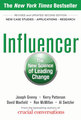
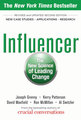
What’s New in the Second Edition of Influencer?
New subtitle
Updated statistics, facts, and figures
New research and case studies from organizations like KIPP, Menlo Innovations, Fundación Paraguaya, and others
Skill applications gleaned from six years of Influencer Training
"Act Like An Influencer" stories: twenty-five vignette examples of real influencers
New focus on the three keys of influence: 1) Focus and measure, 2) Find vital behaviors, and 3) Engage all Six Sources of Influence
Now available in paperback, hardcover, and e-book
Win a copy of the new edition. Watch, comment, and share our video of author Joseph Grenny discussing the power of the influence model to change behavior at our local TEDX event.
We’ll select twenty-five people to receive a FREE copy of the brand new second edition. You’ll receive one entry in our drawing for every action you take (watching, commenting, and sharing).
Enjoy!
Related posts:
Special Announcement: Meet the UnAccountables—Introducing the New Crucial Accountability Companion Course
Influencer Institute: Introducing the Influencer Institute—And a Call to Action!
Special Announcement: Introducing the NEW Crucial Conversations!
Stacy Nelson
.
Blog
.
<span class='date ' tip=''><i class='icon-time'></i> Sep 10, 2015 07:28am</span>
|
|
ABOUT THE AUTHOR
Al Switzler is coauthor of four New York Times bestsellers, Change Anything, Crucial Conversations, Crucial Confrontations, and Influencer.
READ MORE
Dear Crucial Skills,
How do I deal with passive-aggressive behaviors like someone agreeing to do a task then "forgetting" to do it, dragging his or her feet, or deliberately doing it incorrectly so he or she won’t be asked to do it again?
Tired of Passive Agreement
Dear Tired,
If you live or work with or near other people, at some point other people will let you down—they’ll miss a deadline, fall short of a standard, or just do something wrong. So your question about dealing with this behavior is universal. I’ll offer a few suggestions that are more generic and then get specifically to the challenge you face.
1. Speak up. Some people hope that if they are patient, the problem will go away, even if the problem is reoccurring. They hope that time will cure the issue. While people are waiting and not speaking up, their silence is generally interpreted as acceptance or agreement.
My first bit of advice is to speak up. It might be that the task or assignment is harder than it need be. Speaking up can send a message that the task is important and that you want to make sure nothing gets in the way.
2. Speak up while keeping it safe. The key components of safety are Mutual Purpose and Mutual Respect. Remember to avoid jumping to conclusions or losing your cool. This step requires that you avoid showing on your face or by your tone of voice that you have held court in your head in advance and found the person guilty.
You want to convey that you’ve observed a gap and that you want to figure out what’s going on. The way you stated your question causes me to remind everyone to give the other person the benefit of the doubt before speaking up. Think: "Could this situation be more complicated than I assume?"
3. Speak up about the right topic. This step focuses on your specific problem. In Crucial Confrontations, we teach CPR, which stands for content, pattern, and relationship. CPR is a strategy to help you find the right issue. Talk about content if this is the first occurrence. For example, "JC, you agreed to have the report in by Tuesday at 2:00 p.m. and I didn’t receive it until Wednesday at noon. What happened?" The first and second times can be accidents, so you should talk about the content—the specific issue or behavior.
By the third time, the issue or behavior has become a pattern and you should address this pattern. For example, "JC, the last three weeks you’ve turned in the Tuesday report on Wednesday. What’s going on?" When JC says that the computer broke down yesterday, you can say, "I’m interested in what happened this time, but I’m more interested in the pattern of missing the deadline three weeks in a row." This allows you to then diagnose the motivation and ability issues that can get in the way and close the conversation by reaffirming the commitment to deliver the report. Follow up by asking if there are any other reasons why JC could not get the report in by 2:00 p.m. on Tuesday. Excellent performance begins with clear expectations.
And now to relationship. In your case, you need to have a relationship discussion. It might sound like this. "JC, you’ve committed to turn in your report by Tuesday at 2:00 p.m. each week and you’ve missed this deadline three out of five times. We’ve had several discussions and you’ve told me there was nothing getting in the way of you doing this. I’m now thinking that I can’t trust that when you make a commitment you will keep it. I’m not sure why this is happening, and it is certainly affecting our working relationship."
This is the time to discuss the possibility that JC is forgetting, dragging his feet, or simply trying to get the task reassigned. Based on JC’s response, you may have to start progressive discipline. And for those who are thinking that this is not quick or severe enough, I chose a topic that I thought could allow a bit of patience. Other performance gaps would require quicker, tougher responses.
Over the years, we’ve coached people in situations that lingered and festered. When we asked, "Have you spoken up?" they respond "Of course." "About what?" we ask. The answers too frequently reveal that they spoke up about the easy not the hard, about the simple not the complex, about the content not the pattern or relationship.
When you speak up about the right topic, you send a message that the task is important, that you are interested in finding any barriers that make it more difficult than it needs to be, and that it is so important that you’ll make sure the task will be completed. Sometimes, a relationship conversation will focus on the fact that you have to hold these conversations so frequently and you need to see high performance without repeated conversations.
In summary, make sure you do the first two steps, and then always talk about the right topic. When you do, you are more likely to find a lasting solution.
I wish you the best,Al
Related posts:
Holding People Accountable
Holding Clients Accountable
Holding a "Charmer" Accountable
Stacy Nelson
.
Blog
.
<span class='date ' tip=''><i class='icon-time'></i> Sep 10, 2015 07:28am</span>
|
|
Last week, we announced the release of the second edition of Influencer: The New Science of Leading Change. For a sneak peak of the book, download the first chapter now.
This new edition includes:
New subtitle
Updated statistics, facts, and figures
New research and case studies from organizations like KIPP, Menlo Innovations, Fundación Paraguaya, and others
Skill applications gleaned from six years of Influencer Training
"Act Like An Influencer" stories: twenty-five vignette examples of real influencers
New focus on the three keys of influence: 1) Focus and measure, 2) Find vital behaviors, and 3) Engage all Six Sources of Influence
Now available in paperback, hardcover, and e-book
WIN A COPY: Enter our drawing to win one of twenty-five copies of Influencer by watching Joseph Grenny discuss the principles of influence at our local TEDX event. To enter, watch the video, leave a comment, and share with others. (One entry per action taken. Winners will be selected and announced June 5.)
Related posts:
Special Announcement: Introducing the Second Edition of our Bestselling Book, Influencer: The New Science of Leading Change
August Newsletter Drawing Winner!
Influencer Institute: Introducing the Influencer Institute—And a Call to Action!
Stacy Nelson
.
Blog
.
<span class='date ' tip=''><i class='icon-time'></i> Sep 10, 2015 07:28am</span>
|
|
ABOUT THE AUTHOR
Joseph Grenny is coauthor of four New York Times bestsellers, Change Anything, Crucial Conversations, Crucial Confrontations, and Influencer.
READ MORE
Dear Crucial Skills,
How does one escape the addictions of pornography, drugs, alcohol, etc? I’ve been told that even if I’m able to finally get to the point of remission, I’ll always be an addict and never completely escape. It’s a hopeless message, but I sense truth in this and fear I’ll have to fight it the rest of my life.
Do you have any advice that can help me in my lifelong battle against addiction?
Signed,
Struggling
Dear Struggling,
I have great news for you. While in some cases there might (and I stress MIGHT) be some element of truth to the statement, "I’ll always be an addict"—that statement doesn’t mean what you think it means.
The implication of "always an addict" in your note is "I’ll have to fight the rest of my life." That’s the part I can immediately reassure you is absolutely not true, but hang on for a moment and let me get to that point in its time.
First, I want to be clear that my coauthors and I are not addiction experts. We study human behavior, so we have opinions about the state of research on issues like addiction recovery. That is not our specialty nor do I have training in addiction recovery. With that said, I will share some opinions on your question.
• Will you always be at risk of returning to your addiction? There’s a good chance you won’t. Many people with addictions recover in a way that never affects them again. One of the most dramatic evidences of this point is a major study funded by the U.S. Government in 1971 as tens of thousands of heroin-addicted soldiers were returning from Vietnam. Military officials were terrified that a healthcare crisis would ensue as their systems would have been overloaded with those suffering the effects of addiction. But the crisis never happened. Well over 80 percent of those returning, who were classified as seriously addicted, discontinued drug use after coming home—forever.
• How long does it take? I’ll answer this briefly but will refer you to the chapter on addiction recovery in our book Change Anything: The New Science of Personal Success for a fuller description. Our work shows that habits change when all six of the sources of influence that shape our habits change. Period.
Now, that process can take a while, but understanding those sources of influence helps you recognize that there are discrete actions you can take to move the process along and to understand what work remains. This also explains why so many of the returning soldiers changed so quickly. All of these sources of influence were organized in a way that promoted addiction when they lived in Vietnam. When they returned, for many of them, all six sources changed. So they did, too.
• If you’re one of the 20 percent rather than the 80 percent, does that mean a lifetime of struggle? Absolutely not. Even those who continue to feel vulnerable to relapse will tell you that year by year, maintaining the life patterns that keep them "sober" (I use that term generically) become not just easier, but pleasurable.
Here’s the good news I promised you. Please read these sentences over and over and over: The way you feel today about your addictive behaviors can feel entirely different just a few months from now. You can literally come to hate what you currently love. You can—and will—come to find loathsome those things that seem irresistible today.
Let me elaborate on this last, and most important, point. Our emotions often lie to us. When we experience an emotion (let’s say I’m feeling angry at my daughter) it comes with two embedded lies—it feels true, and it feels permanent. It feels true in the sense that I have a profound conviction that I am totally right and she is totally wrong. My emotion is my evidence that I am right. All of us have had the experience of feeling that way, then getting a little more information and perspective, and having the emotion pivot 180 degrees. We feel remorse, or empathy, or love—whereas seconds earlier we couldn’t have imagined feeling different. Similarly, the emotions feel permanent. We believe the way we feel about something is how we will always feel.
For example, I cannot imagine not craving a cigarette. Or being stimulated by pornography. Or getting out of control at the sight of chocolate. Or losing my temper when criticized. Yet, when you talk with those who have realigned the sources of influence in their life, they’ll often use words like "disgusted" when they think about those behaviors today.
But don’t trust these other people. Test this proposition against your own experience. Have you ever felt even momentarily different about an addictive habit you struggle with? Have you had moments when you felt no temptation at all? In fact, you felt revulsion for the act? If so, you know already that change is possible. The challenge is working through the process of change until those temporary feelings become the norm.
If you want to see a powerful example of this shift, watch this video. It’s a fascinating experiment done by the Thai Ministry of Public Health. A young child approaches people who are smoking in public with a cigarette in her hand to ask them for a light. The smokers are horrified at the thought of this child picking up this habit. Every one of those approached began lecturing the child, citing compelling reasons the child shouldn’t smoke. After listening patiently for a moment, the child would hand them a card with a phone number for smoking cessation services, and ask, "Then why do you smoke?" Researchers observed the smokers after the child walked away. Almost every one of them dropped their cigarette. All retained the card with the phone number. Calls to the help line increased 40 percent on the day of the experiment.
Now, this doesn’t demonstrate permanent change, but it shows that feelings can change. That’s the point. In this case, it was temporary. But people who were feeling compelled to smoke moments earlier were suddenly disgusted at the thought and stopped.
You need not fear a lifetime of struggle. You may need to be conscious of maintaining the six sources of influence throughout your life, but you’ll want to do it. You’ll derive pleasure from the new life. Your feelings will change.
Just keep up the good work. The way you feel today is not the way you will feel a year from now.
Warmly,
Joseph
Related posts:
Change Anything: Overcoming Addiction-Part Two
Change Anything: Overcoming Addiction
Overcoming Career-Limiting Habits
Stacy Nelson
.
Blog
.
<span class='date ' tip=''><i class='icon-time'></i> Sep 10, 2015 07:27am</span>
|
|
Thank you to all those who entered our drawing to win one of twenty-five free copies of the second edition of Influencer by watching Joseph Grenny talk about the power of the Influencer model to change behavior at our local TED event.
If you missed it, click here to watch the powerful transformation story of Jane, a young girl who grew up in poverty in the slums of Nairobi, Kenya.
We had an overwhelming response, but the twenty-five lucky winners are:
Arthur Johnson Jr.
Chris Clark
Chris Klenk
Daniel Hiatt
Deborah Carcutt
Derek Applegate
Elaine Rose
Fidelia Herrera Roster
Paul Pstivthnkn
Kurt Ellis
Lynda Sowell
Lynette Vetsch
Mauricio Soto
Mnquaker
Nicolas A. Reynolds
Pat Hatcher
Patty Skerl
Randi Schmechel
Rick Kotter
Sharon Humphreys
Sue Burge Dahl
TJ Brensen
Travis Cunningham
Tyler Edmondson
Vicky Smith
If you won, please e-mail us at editor@vitalsmarts.com to claim your book.
Related posts:
Special Announcement: Influencer First Chapter Download
Special Announcement: Introducing the Second Edition of our Bestselling Book, Influencer: The New Science of Leading Change
Stacy Nelson
.
Blog
.
<span class='date ' tip=''><i class='icon-time'></i> Sep 10, 2015 07:27am</span>
|