Blogs
|
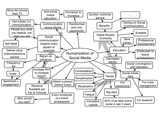
Amy Jo Martin spoke at ASTD’s TechKnowledge conference, telling us engagingly about humanizing social media to monetize it. In addition to useful ways to think about the power of social media, for better or worse, she portrayed some interesting ways to think about generating or saving revenue.
Clark
.
Blog
.
<span class='date ' tip=''><i class='icon-time'></i> Nov 22, 2015 05:44am</span>
|
|
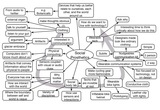
At ASTD’s TechKnowledge Conference, Kate Hartman talked about wearable computing, showing examples of her idiosyncratic projects connecting people to the world, each other, and themselves.
Clark
.
Blog
.
<span class='date ' tip=''><i class='icon-time'></i> Nov 22, 2015 05:44am</span>
|
|
This seems to be my year of making trouble, and one of the ways is talking about what L&D is and isn’t doing. As a consequence of the forthcoming book (no cover comps yet nor ability to preorder), I’ve had to put my thoughts together, and I’m giving the preliminary version next Thurs, February 6, at 11AM PT, 2PM ET as a webinar for ASTD.
The gist is that there are a number of changes L&D is not accommodating: changes in how business should be run, changes in understanding how we think and perform, and even our understanding of learning has advanced (at least beyond the point that most of our corporate approaches seem to recognize). Most L&D really seems stuck in the industrial age, and yet we’re in the information age.
And this just doesn’t make sense! We should be the most eager adopters of technology, staying on top of new developments and looking for their potential to support our organizations. We should be leading the charge in being learning organizations: following the business precepts of experimenting regularly, failing fast, and reflecting on the outcomes. Yet that doesn’t reflect what the we’re seeing.
To move forward, we need to do more. To address business needs, we need to consider performance support and social networks. In fact, I argue that these should be our first line of defense, and courses should only be used when a significant skill shift is required. We should be leveraging technology more effectively, looking at semantics and content architectures as well as mobile and contextual opportunities. And we need to be getting strategic about how we’re helping the organization and evaluating not just efficiency but our effectiveness and impact.
This is just the start of a rolling series of activities trying to inject a sense of urgency into L&D (change management step 1). While this will be covered in print, in sessions starting with last week’s TK14, and continuing through Learning Solutions and ICE, here’s a chance to get a headstart. Look for a followup somewhere around April. Hope you’ll join us!
Clark
.
Blog
.
<span class='date ' tip=''><i class='icon-time'></i> Nov 22, 2015 05:44am</span>
|
|
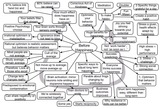
Shawn Achor gave a rapidfire, amusing, and engaging presentation about the benefits of happiness and ways to cultivate it.
Clark
.
Blog
.
<span class='date ' tip=''><i class='icon-time'></i> Nov 22, 2015 05:43am</span>
|
|
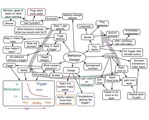
BJ Fogg gave a lively and focused presentation. Seen him before, but great to renew, and there were further extensions. Very worthwhile!
Clark
.
Blog
.
<span class='date ' tip=''><i class='icon-time'></i> Nov 22, 2015 05:43am</span>
|
|
Jill Bolte Taylor gave a rapid fire overview of our cognitive anatomy and insights about how we act and why. Most importantly, she gave us a powerful message about how we can choose who and how we can be.
Clark
.
Blog
.
<span class='date ' tip=''><i class='icon-time'></i> Nov 22, 2015 05:43am</span>
|
|
In addition to my keynote and session at last week’s Immersive Learning University event, I was on a panel with Eric Bernstein, Andy Peterson, & Will Thalheimer. As we riffed about Immersive Learning, I chimed in with my usual claim about the value of exaggeration, and Will challenged me, which led to an interesting discussion and (in my mind) this resolution.
So, I talk about exaggeration as a great tool in learning design. That is, we too often are reigned in to the mundane, and I think whether it’s taking it a little bit more extreme or jumping off into a fantasy setting (which are similar, really), we bring the learning experience closer to the emotion of the performance environment (when it matters).
Will challenged me about the need for transfer, and that the closer the learning experience is to the performance environment, the better the transfer. Which has been demonstrated empirically. Eric (if memory serves) also raised the issue of alignment to the learning goals, and that you can’t overproduce if you lose sight of the original cognitive skills (we also talked about when such experiences matter, and I believe it’s when you need to develop cognitive skills).
And they’re both right, although I subsequently pointed out that when the transfer goal is farther, e.g. the specific context can vary substantially, exaggeration of the situation may facilitate transfer. Ideally, you would have practice across contexts spanning the application space, but that might not be feasible if we’re high up on the line going from training to education.
And of course, keeping the key decisions at the forefront is critical. The story setting can be altered around those decisions, but the key triggers for making those decisions and the consequences must map to reality, and the exaggeration has to be constrained to elements that aren’t core to the learning. Which should be minimized.
Which gets back to my point about the emotional side. We want to create a plausible setting, but one that’s also motivating. That happens by embedding the decisions in a setting that’s somewhat ‘larger than life’, where we’re emotionally engaged in ways consonant with the ones we will be when we’re performing.
Knowing what rules to break, and when, here comes down to knowing what is key to the learning and what is key to the engagement, and where they differ. Make sense?
Clark
.
Blog
.
<span class='date ' tip=''><i class='icon-time'></i> Nov 22, 2015 05:43am</span>
|
|
In Smarter Than We Think, Clive Thompson makes the case that not only is our technology not making us stupider, but that we have been using external support for our cognition from our earliest days. Moreover, this is a good thing. Well, if we do so consciously and with good intent.
He starts by telling the story of how - as our chess competitions have moved from man against man, through man against computer, to man & computer against man & computer - the quality of play has fundamentally changed and improved. He ultimately recites how the outcomes of the combination of man and machine produce fundamentally new insights.
He goes on to cover a wide variety of phenomena. These include augmenting our imperfect memory, the benefits of thinking out loud, the gains from understanding different media properties, the changes when information is to hand, the opportunities unleashed by crowd-sourcing, the implications for education, and the changes when you have continual connection to others. This is not presented as an unvarnished panacea, but the potential and real problems are covered.
The story is ripely illustrated with many stories culled from many interviews with people well-known and obscure, but all with important perspectives. We hear of impacts both personal, national, and societal. This is a relatively new book, and while we don’t hear of Edward Snowden or Bradley Manning, their shadows fall on the material. On the other hand we hear of triumphs for individuals and movements.
I have argued before about how we can, and should, augment our pattern-matching capability with the perfect memory and complex calculation that digital technology provides, and separately how social extends our cognition. Thompson takes this further, integrating the two, extending the story to media and networked capabilities. A good extension and a worthwhile read.
Clark
.
Blog
.
<span class='date ' tip=''><i class='icon-time'></i> Nov 22, 2015 05:42am</span>
|
|
In talking with my ITA colleagues yesterday, we were discussing the necessity of going into the office, or not. And it seemed that there were times it made sense, and times it didn’t.
What doesn’t make sense is trying to do work in an office. If you need to think, having random conversations and interruptions happen gets in the way. Yes, you need colleagues and resources ‘to hand’, but that’s available digitally and distally.
Being together makes sense, it seemed to us, when you either are meeting for the first time (e.g. with clients), or want creative friction. You can interact virtually for planned work, but it helps to interact F2F when getting to know one another, and when you’re looking for serendipitous interactions. Jay Cross, in his landmark Informal Learning book, talked about how offices were being designed to have the mail room and coffee in the same place, to facilitate those interactions. If conversations are the engine of business, having the opportunity for their occurrence is useful.
This seems the opposite of most visions of work: work away from the office, interact in the office, instead of the reverse. So, is this the flipped office?
Clark
.
Blog
.
<span class='date ' tip=''><i class='icon-time'></i> Nov 22, 2015 05:42am</span>
|
|
I’ve been watching the Olympics, at least select bits (tho’ I’m an Olympics widower; the full panoply is being watched in the house). And I enjoy seeing some of the things that I can relate to, but I realize that the commentators make a big difference.
The distinction seems to come down to a fundamental difference (aside from the ones that drill into uncomfortable zones with a zeal that seems to be a wee bit inhuman): the ones who describe what’s happening versus those who explain. Let me explain.
Description isn’t a bad thing, so when I watch (American) football, a guilty pleasure, the play-by-play commentator tends to describe the action, helping to ascertain what’s happened in case it’s confounded by intervening people, bad camera angles, interruptions, what have you. Similarly, I’ve been listening to Olympic commentators describe the action in case I have missed it. And that’s helpful.
But in football, the color commentator (often a player or coach), interprets or explains what happened, and interprets it. Similarly, the good commentary on Olympics has someone explain not just what happened (X just made a spectacular run), but why (Y was absorbing the forces better, minimizing the elements that would detract from speed). And this is really important.
I have a former mentor, colleague, and friend who is now part of an organization that enhances sports broadcasts with additional information; it’s a form of augmented reality showing things that started with first down lines in football but now includes things like wind and tracking information in the America’s cup. Similarly, I have loved the overlays of one person’s performance against another. The point is providing insight into the context, and more importantly the thinking behind the performance.
The relevance I’m seeing is that showing the underlying concepts help inform the exceptional performance, help educate about the nuances, and help support comprehension. This relates so much to what we need to be doing in business. Working and learning out loud is so important to transfer skills across the organization. Showing the thinking helps spread the understanding. Whether it’s breaking from the pack in snow cross, or closing deals, having the thinking annotated is essential for spreading learning.
Whether it’s a retrospective by the performer or expert commentary, explaining, not just describing, is important. Does my explanation make sense? :)
Clark
.
Blog
.
<span class='date ' tip=''><i class='icon-time'></i> Nov 22, 2015 05:42am</span>
|