Blogs
|
In an post this past spring, I opined that we do have to change. One obvious related question is what that change would look like. What would an effective L&D unit be doing, and what would the employee/manager/exec experience be? This is a longer topic, but here’re some initial thoughts that I really would welcome your thoughts on.
I see employees experiencing less ‘training’. As I’ve said, effective training is expensive when done properly, and should be used only when significant skill shifts are needed. It should only be for proprietary approaches, otherwise you should use others’ materials. And it only is for upskilling new employees (and only when needed), or when a significant change is happening.
I’d expect to see more performance support, easily accessible via user-centric portals and search and delivered when and where needed. Similarly social would play a much more central role, arguably our first recourse. Employees would be tightly coupled to their work teams, and more loosely coupled to their communities of practice. Teams would be diverse and flexible, and group work would be the norm.
Resources would be sometimes created, sometimes crowd-sourced within (or without) the organization, and sometimes curated. Much curation would happen by individual in communities monitoring the larger network, individuals in teams bringing in relevant elements from their communities, and sharing back reflections and outcomes that inform the community while communities would share back to the larger network. This is the vision of the Coherent Organization.
Managers would be playing a leadership and mentoring & coaching role rather than a directive role. They’d be looking to share the vision of goals and rationale, and then supporting performance aligned towards this goal. Executives would be aligning manager visions with organizational goals, monitoring performance, and facilitating infrastructure to support effective communication and cooperation, and well as establishing and maintaining a learning organization culture.
The L&D unit would need to be monitoring the effectiveness of communication and collaboration, management, and leadership, as well as experimenting with new tools to support the work. The L&D unit becomes responsible for the learning to learn skills, the learning and performance tools, and the corporate culture.
If organizations are to successfully couple optimal execution with continual innovation, particularly in times of increasing change and decreasing resources, the mechanisms for success transcend training. Providing support when needed, and leveraging the power of people will be key. Does this make sense? Next step: how do you get there?
#itashare
Clark
.
Blog
.
<span class='date ' tip=''><i class='icon-time'></i> Nov 22, 2015 05:52am</span>
|
|
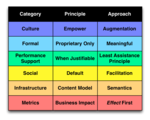
Last week, I talked about what L&D could (and should) look like. In thinking about how to move folks forwards, I’m working on looking at various ways to characterize the different elements, and what various levels of profession should be. One of my first stabs is trying to get at the necessary core principles, and the associated approach to be taken. Here’s the thinking:
We start with the culture of the organization. What the culture should be doing is empowering individuals, providing them with support for learning. And that is not to provide all the answers, but to support people discovering the answer. The goal is to not only address optimal execution, but increasingly to address continual innovation, which comes from cooperation and collaboration. The goal is to augment their existing capabilities with appropriate skills and tools to focus on accomplishing the work to hand. And not reintroducing things that already exist or can be found elsewhere.
That means that formal learning really should be focused on proprietary activities. Don’t design training on commercial tools, that exists. Save the effort to do a real course for those things that are fixed for long enough and specific to your organization. And make it meaningful: contexts that the user gets, skills that the user recognizes are needed, and that will make a real impact on the business. Done properly, with sufficient practice, it will take time and money: formal learning should be expensive, so use those precious resources where and when it really should be applied.
Performance support is more likely to add value in the moment, helping augment our limited memory and working memory capacity. When people need to be focused on the task, designing or curating resources to be used in the moment is a more cost-effective option, though again to be used appropriately. If things are changing too fast, or the situation’s unique, there are better options. And when you are developing or sourcing support, realize that less is more. Look to be minimalist, and your performers (and the bottom line) will thank you.
If things are changing too fast, or the situation’s new and unique (which will be happening more often), the network is likely to be your best resource and likely should be your first. The role here is to make sure that the network is available and vibrant. Facilitation of dialog, and skills, will make this solution the most powerful one in a company that intends to thrive.
The infrastructure, beyond the usual integration of tools, needs to take another level down, and start treating content as an asset that drives outcomes. The steps that matter are to get detailed about the content structures, the model, underneath, and the associated governance. At the end, it requires a focus on semantics, what labels we have and how we define and describe content to move forward into personalization and contextualization.
Finally, we need to measure what we’re doing, and we have to stop doing it on efficiencies. How much it costs us per seat hour doesn’t matter if that time in the seat isn’t achieving anything. We need to be measuring real business effects: are we increasing sales, decreasing costs or errors, solving problems faster, decreasing time to market, increasing customer satisfaction, the list goes on. Then, and only then, should we be worrying about efficiencies. Yes, we should be smart about our investments, but all the efficiency in the world about doing something inane is just kind of silly.
So, does this make sense? Any tuning or clarification needed? Feedback welcome.
Clark
.
Blog
.
<span class='date ' tip=''><i class='icon-time'></i> Nov 22, 2015 05:51am</span>
|
|
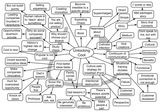
Jeremy Gutsche opened DevLearn with a very animated presentation about how to unlock innovation and communicate killer messages. Entertaining and informative, he made a specific point to link his messages to eLearning. A nice start to the conference.
Clark
.
Blog
.
<span class='date ' tip=''><i class='icon-time'></i> Nov 22, 2015 05:51am</span>
|
|
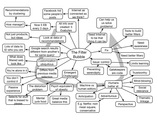
Eli Pariser gave a very thoughtful and thought-provoking talk about the ‘below the surface’ action of filters on the Internet. He made very astute points about the potential dangers of this, and opportunities to remedy these ills. Very worthwhile!
Clark
.
Blog
.
<span class='date ' tip=''><i class='icon-time'></i> Nov 22, 2015 05:51am</span>
|
|
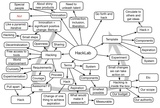
Jason and Joe led a lively session inspiring us to innovate through small hacks. Their very pragmatic process is approachable and practical. A great closing to DevLearn.
Clark
.
Blog
.
<span class='date ' tip=''><i class='icon-time'></i> Nov 22, 2015 05:51am</span>
|
|
Richard Clark presented the research on media and learning, highlighting the 30 years of debate. He started talking about the importance of evidence, and summarized a variety of points of view and research, with a focus on John Sweller’s Cognitive Load Theory and Dick Mayer’s multimedia work. He finished with a potshot at constructivism.
Clark
.
Blog
.
<span class='date ' tip=''><i class='icon-time'></i> Nov 22, 2015 05:51am</span>
|
|
Yesterday (as I post this), the legendary Tom Reeves capped a great session at #AECT (Association for Educational Communications and Technology). The session started with a passionate rationale by Dr. Ali Carr-Chellman about why we should worry about boys and school. Frankly, we’re not connecting school to their lives! She was followed by Dr. David Wiley, who explained how his passion for Open Educational Resources wasn’t just ethical, but practical. Dr. Tom Reeves presented a story which serendipitously integrated the two previous sessions into a coherent whole.
Tom was presenting the case for educational design research (aka design-based research). By analogy to Atul Gawande’s work, and an example about the rapid uptake of anesthesia and slow uptake of antiseptics, Tom made the case how adoptions of innovations depend on factors of relevance to audiences, ease of use by practitioners, and time-frames of results.
His point was that doing some educational research is doable, fruitful, but has little impact. His desire, instead, was to have impact and do the hard yards to achieve it. Design research works by focusing on meaningful outcomes, going deep to figure it out, and reflecting on theory as an outcome. This is in opposition to research on small points that can easily be conducted, generates significant results, but doesn’t get applied.
I have to say that I’ve been a fan of this approach since reading about it (and have been practicing it even before it had a label), but it’s nice to have this respected figure across decades of research help point the way. We can, and should, be following his example. If we’re not shooting to have an impact, what are we doing? It’s not the easy path, but it’s the right one. If you really care, you should be going this way. If you don’t, why are you here?
Clark
.
Blog
.
<span class='date ' tip=''><i class='icon-time'></i> Nov 22, 2015 05:50am</span>
|
|
Howard Rheingold gave a fast-paced and inspiring talk on social network skills. With great examples and deep insight, he brought home powerful lessons on the power of people. His takeaways provided valuable lessons for individuals, schools, organizations, and society.
Clark
.
Blog
.
<span class='date ' tip=''><i class='icon-time'></i> Nov 22, 2015 05:50am</span>
|
|
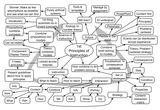
David Merrill talked about his first principles of instruction, leading the way through the development of his thinking. I admit that his steps from strategy to problem-solving were a little elusive, but I was pleased to see that he has come around to problem-centered learning, and design by prototyping and refinement. His take home in the Q&A was to have more examples and put problems first. Always a pleasure to hear him.
Clark
.
Blog
.
<span class='date ' tip=''><i class='icon-time'></i> Nov 22, 2015 05:50am</span>
|
|
I have only recently upgraded to a phone with any meaningful voice capabilities, an iPhone with Siri in my particular case. And I really hadn’t put it to the test, but that changed this past weekend. I had a long solo drive home and time to think.
When I headed out, I had some logistical details, so I asked Siri to call home. This I’d done before. Then, finding out m’lady was out and about, I decided to see if I could text by voice as well (which my brother assures me is how he always does it on his Android device). Sure enough, I could send text messages.
I’d deliberately set my mind around focusing on my current project and taking some ideas further. And, indeed, I had a revelation. What could I do? Could I take a note? Why, yes, I can. However, Siri stopped too early, so I tried speaking quicker. Which has it’s own problems, but I achieved a useful reminder.
Then I thought of a further text message. Remembering the last message, I spoke quickly, and this time Siri munged two words together. ("Call when free" became "Call Winfrey", and I didn’t think Oprah would take my call). This time I had to try again, and pause more between my words. At least it didn’t end too quickly. (Wish she’d ask me, if I cancel, whether I want to try again.)
And, then I decided I’d write a blog post about my thoughts, and I wanted a reminder (there’ve been times in the past when I had a good topic, but by the time I got back I couldn’t remember what it was). By experimentation, I found that I could indeed also make a Reminder (aka ‘ToDo’). So I made one for that post (coming soon), and one to write this (see, it works!). I only wish Siri could diagram for me too, or at least drive so I can do the diagramming ;).
Two take home lessons:
For one, experiment! One of the ways I got on top of mobile was by trying everything I could to see how I could use mobile to make me more effective. As the lotteries would have it, you have to be in it to win it. (Social media is where I usually make this statement.)
For another, taking time for reflection is powerful, particularly if you seed yourself a goal. I turned off the radio to make sure I wasn’t distracted, and the miles flew by while I worked on my topic.
Coming in my next post, my revelation.
Clark
.
Blog
.
<span class='date ' tip=''><i class='icon-time'></i> Nov 22, 2015 05:50am</span>
|