Blogs
|
As preface, I used to teach interface design. My passion was still learning technology (and has been since I saw the connection as an undergraduate and designed my own major), but there’re strong links between the two fields in terms of design for humans. My PhD advisor was a guru of interface design and the thought was "any student of his should be able to teach interface design". And so it turned out. So interface design continues to be an interest of mine, and I recognize the importance. More so on mobile, where there are limitations on interface real estate, so more cleverness may be required.
Stephen Hoober, who I had the pleasure of sharing a stage with at an eLearning Guild conference, is a notable UI design expert with a speciality in mobile. He had previously conducted a research project examining how people actually hold their phones, as opposed to anecdotes. The Guild’s Research Director, Patti Schank, obviously thought this interesting enough to extend, because they’ve jointly published the results of the initial report and subsequent research into tablets as well. And the results are important.
The biggest result, for me, is that people tend to use phones while standing and walking, and tablets while sitting. While you can hold a tablet with two hands and type, it’s hard. The point is to design for supported use with a tablet, but for handheld use with a phone. Which actually does imply different design principles.
I note that I still believe tablets to be mobile, as they can be used naturally while standing and walking, as opposed to laptops. Though you can support them, you don’t have to. (I’m not going to let the fact that there are special harnesses you can buy to hold tablets while you stand, for applications like medical facilities dissuade me, my mind’s made up so don’t confuse me :)
The report goes into more details, about just how people hold it in their hands (one handed w/ thumb, one hand holding, one hand touching, two hands with two thumbs, etc), and the proportion of each. This has impact on where on the screen you put information and interaction elements.
Another point is the importance of the center for information and the periphery for interaction, yet users are more accurate at the center, so you need to make your periphery targets larger and easier to hit. Seemingly obvious, but somehow obviousness doesn’t seem to hold in too much of design!
There is a wealth of other recommendations scattered throughout the report, with specifics for phones, small and large tablets, etc, as well as major takeaways. For example the implication from the fact that tablets are often supported means that more consideration of font size is needed than you’d expect!
The report is freely available on the Guild site in the Research Library (under the Content>Research menu). Just in time for mLearnCon!
Clark
.
Blog
.
<span class='date ' tip=''><i class='icon-time'></i> Nov 22, 2015 05:37am</span>
|
|
Towards Maturity is a UK-based but global initiative looking at organizations use of technology for learning. While not as well known in the US, they’ve been conducting research benchmarking on what organizations are doing and trying to provide guidance as well. I even put their model as an appendix in the forthcoming book on reforming L&D. So I was intrigued to see the new report they have just released.
The report, a survey of 2000 folks in a variety of positions in organizations, asks what they think about elearning, in a variety of ways. The report covers a variety of aspects of how people learn: when, where, how, and their opinion of elearning. The report is done in an appealing infographic-like style as well.
What intrigued me was the last section: are L&D teams tuned into the learner voice. The results are indicative. This section juxtaposes what the report heard from learners versus what L&D has reported in a previous study. Picking out just a few:
88% of staff like self-paced learning, but only 23% of L&D folks believe that learners have the necessary confidence
84% are willing to share with social media, but only 18% of L&D believe their staff know how
43% agree that mobile content is useful (or essential), but only 15% of L&D encourage mlearning
This is indicative of a big disconnect between L&D and the people they serve. This is why we need the revolution! There’s lots more interesting stuff in this report, so I strongly recommend you check it out.
Clark
.
Blog
.
<span class='date ' tip=''><i class='icon-time'></i> Nov 22, 2015 05:36am</span>
|
|
In a conversation, a colleague mentioned using social tools to minimize friction, and the thought struck me wrong. In thinking further, I realized that there were different notions of friction that needed to be teased out. So here’s where my thinking went.
I argue that what organizations need is creative friction. I have previously suggested that conversations are the engine of business. These are the discussions where ideas are sparked, and decisions are made. These are also the tools used to negotiate a new and shared understanding that is richer and better than it was before.
There are also unproductive conversations, e.g. meetings where we have status updates that are more effectively done offline, and jockeying for various sorts of recognition. These are reflections of bad processes and worse culture. There’s a mistaken view that brainstorming doesn’t work; it works well if you know the important elements that make it work, but if you follow misunderstood processes, it can not produce the optimal outcome. Similarly, if the culture is misaligned, it might be unsafe to share, or folks might be too busy competing.
However, it is when people are constructively interacting - not just pointing to useful resources or answering questions, but working together on a joint project - is when you are getting the important creative friction. Not that it’s bad when people point to useful resources or answer questions, that makes things more efficient. When folks come with different ideas, though, and jointly create a new insight, a new idea, a new product or process, that is when you’re providing the sparks necessary to help organizations succeed. Not all of them will be good, but if they’re new, some subset will likely be good.
If people aren’t sharing what they learn and discover, you might miss the new, or it might not really be new but have been previously discovered and not leveraged. That’s why you should work, and learn, out loud.
The issue then in friction is removing unproductive friction. If people have to be co-located to have these conversations, or don’t have tools to express their understandings and share their thoughts around each other’s work is when you unproductive barriers. I’m a fan of collaborative documents that support annotation and track contributions. Here we can share our ideas, and quickly converge on the elements of disagreement and resolve them. It may need to have periods of synchronous conversation as well as asynchronous work (we did this when creating the Manifesto).
So it seems to me that having the right culture, tools, and skills is the key to optimizing the innovative outcomes that will drive sustainability for organizations. Now how about some creative inputs to refine and improve this?
(And, at a meta-level, it was a conversation that triggered this deeper thought, just the type of outcome we want to facilitate!)
Clark
.
Blog
.
<span class='date ' tip=''><i class='icon-time'></i> Nov 22, 2015 05:36am</span>
|
|
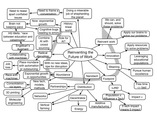
Neil Jacobstein gave the keynote for the special Future of Talent event sponsored by SAP and hosted by the Churchill Club. In a wide ranging and inspiring talk, Neil covered how new technologies, models, and methods provide opportunities to transcend our problems and create a world worth living in.
Clark
.
Blog
.
<span class='date ' tip=''><i class='icon-time'></i> Nov 22, 2015 05:36am</span>
|
|
Finally! Revolutionize Learning & Development (Performance and Innovation Strategy for the Information Age) is now shipping, (and has been available on Kindle for a couple of weeks), so at last you should be able to get your mitts on it if you’re so inclined. And, if you’re at all involved in trying to make your organization successful, I will immodestly suggest you might want to be so inclined.
Just as background, it documents my claim that organizational L&D isn’t doing what it could and should be doing, and what it is doing, it is doing badly. Then it lays out elements that should be considered, what it would look like if it were going well, and how you might get there. While the exact strategy for any one organization will be dependent on where they are and the nature of the business, there are some frameworks to help you apply those to your business. The goal is to move to Performance & Development, coupling optimal execution with continual innovation.
If you’re curious but not yet ready to dig in, let me mention a couple of things:
there’s a free sample available
I was interviewed by GameOn Learning’s Bryan Austin about the topic (shorter and more focused)
I was also interviewed by Rick Zanotti of Relate (longer and more wide-ranging)
And, if you’re going to be at ASTD’s International Conference in DC next week, I will be there and:
presenting about the issues on Monday the 5th of May at 4:30 PM in room 146B (session M313)
signing copies right after (5:30 PM) in the ASTD book store
holding an author chat on Wednesday May 7th at 9:45 AM also at the ASTD Bookstore
So, check it out, and see if it makes sense to you. Or you can just go ahead and get it. I hope to see you in DC, and welcome your feedback!
Clark
.
Blog
.
<span class='date ' tip=''><i class='icon-time'></i> Nov 22, 2015 05:36am</span>
|
|
A number of the Change Agents Worldwide resonated with an image of the 50 reasons not to change at work that was overlaid on an image of Doug Engelbart. The point, of course, is that all these reasons not to change provide a significant barrier to success. We decided that we’d line up and start a blog carnival with each of us addressing one. I decided to address number 45:
45. We’re doing all right as it is.
First, do you have evidence for that, or are you in denial? It’s easy to not want to change because it’ll be hard, so it’s easier to say that things are OK. It is particularly easy if you aren’t really checking! L&D, for instance, has been notoriously bad about seeing whether their interventions are actually achieving any impact (around 3% reporting that they actually go to level 4 on Kirkpatrick’s scale).
If you are checking, what are your benchmarks? Are you measuring just execution, or are you including innovation? Because, as I’ve said before, optimal execution is only going to let you survive, to thrive you’ll need continual innovation. If you’re doing what your strategy says, are you looking out for disruptive forces, and creating your own? You should be checking to see if you’re striking that balance of being able agile enough as well as productive enough.
Finally, is "all right" really good enough? Shouldn’t we be shooting for the best, not just good enough? Do you think your competitors are sitting complacent? We really should be looking for every edge. That doesn’t come from believing we’re doing all right. We should be looking for continual improvement.
Yes, it’s harder to not believe we’re doing all right as it is, but your curiosity should be driving you forward regardless. Your organization, if it isn’t continually learning, is declining. Are you really doing all right? If you’re definition of ‘all right’ is that you are continually curious and moving forward with experimentation, then I reckon so.
Clark
.
Blog
.
<span class='date ' tip=''><i class='icon-time'></i> Nov 22, 2015 05:35am</span>
|
|
I had the good fortune to be invited to the Future of Work event that was held here in Silicon Valley two weeks ago, and there were four breakouts, one of which was on learning and knowledge management. You can guess which one I was on (though tempted by the leadership and culture one; there was overlap).
Within that breakout the activity was to pick four topics and further break out. The issue was meeting workplace needs given the changing nature of work, and I suggested that perhaps the biggest need was to focus on skills that held true across domain, so called meta-cognitive skills, and learning to learn (a total surprise, right?). That was one that people were interested in, so that’s what we discussed.
We broke down learning into some component elements. We talked about how your beliefs about learning (your epistemological stance) mattered, as well as your intention to learn, and how effective you were at learning alone and with others. It also matters how well you use tools and external representations, as well as your persistence.
What emerged was that learning skills shouldn’t be taken for granted. And consequently, one of the attendees suggested that perhaps along with IQ and EQ, we should be looking at people’s LQ or learning quotient. I just saw an advertisement that said EQ (they called it EI Emotional Intelligence, probably to avoid trademark infringement) was better than IQ because you can improve your EQ scores. However, the evidence suggests you can improve your LQ scores too.
A decade ago now, Jay Cross and I were pushing the meta-learning lab, and I still think Jay was right claiming that meta-learning might be your best investment. So, are you aware of how you learn? Have you improved how you learn? Can you help others learn more effectively? I believe the answer is yes, and we not only can, but should.
Clark
.
Blog
.
<span class='date ' tip=''><i class='icon-time'></i> Nov 22, 2015 05:35am</span>
|
|
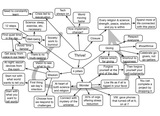
Arianna Huffington kicked off ASTD’s international conference with a very engaging presentation covering the four pillars to thrive. Alternately funny and wise, it was a great start.
Clark
.
Blog
.
<span class='date ' tip=''><i class='icon-time'></i> Nov 22, 2015 05:35am</span>
|
|
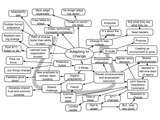
General Stan McChrystal gave an inspiring and insightful talk about adapting to change, based upon his experience.
Clark
.
Blog
.
<span class='date ' tip=''><i class='icon-time'></i> Nov 22, 2015 05:35am</span>
|
|
On Tuesday, with a big presentation, the American Society for Training & Development announced a rebranding. The new name is the Association for Talent Development, going from ASTD to ATD. And while this is a necessary move, I think it wasn’t the best change they could’ve made.
ASTD needed the change, for two reasons. For one, ASTD has membership in, and runs events, around the world. There may be other orgs (e.g. CSTD for Canada), but the 800 lb gorilla is ASTD. Second, training, while still a large proportion of what ASTD does (rightly or wrongly), is increasingly being joined by other approaches such as coaching and mentoring.
The first reason resonates, but I have a problem with the second. To put it another way, I believe that the change to Association makes sense, but Talent Development doesn’t. As I stated in Revolutionize Learning & Development, I believe that the necessary direction for organizations is to couple optimal performance with continual innovation. What’s required from Learning & Development, then, is to support all manners of performance and develop continual innovation.
What’s involved is not only to support training when it needs to be ‘in the head’, but using performance support when we can. And we need to develop and facilitate organizational innovation. The latter means not only developing individual (and group) ability to interact constructively, but to facilitate useful interactions of all sorts.
And here’s the rub. I see Talent Development as developing people through training, mentoring, and coaching, but I see the potential role for the folks in what now is termed L&D to be not only the development of people’s ability, but their ability to perform, even if it isn’t developing the person. That is, using performance support when it makes sense should be part of the unit’s responsibility, even when it doesn’t develop the person. Similarly, I see facilitating constructive interaction (curating resources, removing barriers to interaction and supporting tool use, etc), whether it develops people or not, as a vital role.
That’s the reason I chose to suggest, in the book, that the unit should be renamed Performance & Development; supporting both optimal execution and continual innovation in all relevant ways. The opportunity is to be the strategic organizational resource to ensure that all the intellectual resources of the organization are contributing.
And that is the reason I have a problem with Talent Development. To me, Talent Development is focused only on developing people instead of facilitating overall organization performance. And I think that’s falling short of the opportunity, and the need. Don’t get me wrong, I laud that ASTD made a change, and I think Talent Development is a good thing. Yet I think that our role can and should be more. I wish they’d thought a little broader, and covered all of the potential contributions. So, maybe, Association of Performance & Development or APD. Regardless, it’s a dynamic organization that offers a lot. I just wonder who’s going to fill the gaps.
Clark
.
Blog
.
<span class='date ' tip=''><i class='icon-time'></i> Nov 22, 2015 05:35am</span>
|