Blogs
|
Time for the monthly gamification roundup: our favorite gamification stories from the past month.
Why Making Predictions Makes Your Outlook Better
I’d like to start with an article that was published in lifehacker.com. At first sight, this may not look like what we’re usually interested in here at GamEffective, as it doesn’t deal with enterprise gamification software, or with software at all for that matter. Even though, I found this article fascinating since in my eyes it highlights what is so powerful about gamification. In short, and without too many spoilers, the article discusses the mechanisms of playfulness in our brains and how we can activate these mechanisms and harness them towards the goals that we want to achieve. It shows how making predictions (of any kind, from how many red cars on the way home to how many sales closed during a working day) just lights up the brain and makes us more engaged. It’s a great read that combines valuable and practical tips, information about neuropsychology and a fresh look at how being playful allows us to enjoy life and work so much more. The article is part of Jane McGonigal’s new book, SuperBetter. You can find the article here.
Habit Formation & Mobile Apps
Next, we’re moving from playfulness to habit formation. Gilad Bechar writes in Venturebeat about how getting users to use your mobile app involves the creation of new habits, and what the best way to do that is. While most of us may think of the smartphone like a bad habit that we want to kick, mobile app marketers want users to get a habit of using their app: otherwise the app is likely to be deleted. Bechar notes that to make something a habit, a good way to keep people engaged is to insert gamification mechanics that will retain the users during the time it takes until your app becomes part of their routine. Otherwise, many app developers get frustrated when all their hard work results in a resounding "meh" from the appstore audiences. If you’re an app developer, it’s well worth your time to dive into this article.
Innovation Games
Ania Rodriguez wrote a great piece at Entrepreneur.com about how her company is creating ‘innovation games’ - games that allow all employees in the company to exchange ideas and impact the company they’re working at. The games have names like ‘sacred cows’ and ‘bad idea’, and they deal with issues such as getting away from constricting and limiting patterns of thought, or having the freedom to play around with ideas the would be considered terrible, just to get the creative juices flowing. There are also games for prioritizing what to work on and for raising the level of motivation in the company. If you’re heading an organization, or deal with HR on a daily basis, this is a great read to open your mind to a new way of tackling some pressing problems that we all encounter at the workplace, this is a great read. You can also read our post on gamification for innovation here.
Even Ninja Monkeys Like to Play
Lastly, there’s a new book out by Andrzej Marczewski, called ‘Even Ninja Monkeys Like to Play: Gamification, Game Thinking & Motivational Design’. In the book, Marczewski goes through the different theories on which gamification is built, and also surveys practical advice for building gamified solutions. If you’re just at the beginning of your gamification path, this is a great way to get in to the thick of things and achieve a fundamental understanding of gamification.
The GameWorks Blog
.
Blog
.
<span class='date ' tip=''><i class='icon-time'></i> Dec 04, 2015 07:05am</span>
|
|
The human brain is unbelievably complex, but sometimes we’re able to find simple "hacks" that can really improve our lives. Jane McGonigal wrote about a hack like this a few weeks ago in Lifehacker.com (it’s an excerpt from her excellent book, SuperBetter). Apparently, attempting to make a prediction about your day is one of the most reliable ways to activate the part of our brain which is responsible for rewards. McGonigal says these predictions can be anything, from how many emails you’ll get in the next hour, to how many red cars you’ll see on the road. Every prediction we make increases the level of dopamine in our brains, and dopamine is the neurochemical responsible for happiness, as well as motivation, learning and desire.
The reason for this is that every time that you make a prediction, two possible rewarding outcomes are available to you - either you’re right, in which case you’ll receive a dopamine boost, or you’re wrong, in which case you’ll have learned new information about why you were wrong, and since your brain loves learning this also rewards you with a dopamine boost. You can think of it as a kind of a neurological win-win situation.
Betting is attempting to predict
Betting is actually always an attempt to predict the future, even if you’re just using your gut to create these predictions. When you pick a horse to win a race, you’re predicting that this horse will be the one to finish first. Many times, it is a very lousy prediction, since we have absolutely no information to rely on, but still it is a form of prediction. This is also a possible explanation to why we enjoy betting so much, and can even become addicted to it. The rush of dopamine to the brain after every hit or miss, gives us a pleasurable experience that we desire to recreate, again and again.
So how can we use this to enhance employee performance?
When we became aware of all the literature on how prediction and attempting to foresee the future can improve well-being, we had a feeling that there must be a way that we could utilize this in the workplace to enhance employee performance. We started experimenting with very simple betting experiences on our enterprise gamification platform. Essentially, what we did was that we set a mechanism that encouraged employees to predict how they would perform. If your "bet" (actually this is a wager) is successful, you receive double the amount of points that you were supposed to receive for that task.
The results of this mini-experiment were astonishing. We found that allowing employees to predict how they would perform in comparison to their KPIs made them substantially more engaged. In fact, the "betting" feature became one of the most popular features at the GamEffective customer where we first implemented this.
So why does betting on performance work in a gamification environment?
In the time that has passed, we think we understand why this happens:
Commitment: Attempting to predict your own performance makes you commit to a certain level of performance.
Autonomy: the level of predicted performance is set solely by the employee herself, so the motivation to uphold the prediction is intrinsic, which is the most powerful and sustainable motivator. It is also willfully chosen by the employee.
Rewards: An attempt at prediction allows you to reap the benefits of your own performance. In other words, if you are able to uphold the KPI’s that you declared you would, you are awarded for this.
Reflection: During this process, employees find themselves reflecting on their performance at work, strategizing on how to make the most accurate prediction, and planning out their work load. These are all things that make them much more engaged.
In order for the betting/wager game mechanic to not be abused, the system is programmed so that an employee can only bet on their own performance twice a week. This means that employees have to strategize further and think when the best time in the week is for them to use this betting mechanic.
We are always looking for new ways to improve both performance and the well-being of employees. We’ve found that allowing employees to attempt to predict how they themselves will perform is beneficial both to how they feel at the workplace and to the performance of the organization as a whole. Learn more by scheduling 1-on-1 time with our gamification experts.
The GameWorks Blog
.
Blog
.
<span class='date ' tip=''><i class='icon-time'></i> Dec 04, 2015 07:05am</span>
|
|
We are all familiar with the famous rule - ‘it takes 21 days to form a new habit’. If you can just stick to those 21 days, resist the temptation or keep up the effort (in accordance with the habit that you’re trying to form), you’ll be fine. Well… apparently you won’t. And this is actually a good thing.
I said "at least!"
It turns out that even the guy who coined this famous rule didn’t actually say that it took 21 days to form a new habit, but that it took at least 21 days. Maxwell Maltz was a plastic surgeon who noticed that it took his patients a minimum of 21 days to get used to their new physical transformation. He published a book where he stated this fact but always mentioned that this was the minimal amount of time required, and not an objective and absolute time span where people always adjust to a new reality. Somehow along the years he’s been systematically quoted wrongly, which is how we wound up with the famous 21 day rule.
Psychological research from recent years actually points to quite a different reality. Philippa Lally from University College London, arrived at two fascinating findings. Firstly, it was found that on average, it takes 66 days for something to become a habit. Moreover, this changed vastly from person to person and from habit to habit, so that the shortest period of time to form a habit was 18 days and the longest was 254 days (!). Secondly, the researchers trumped the idea that habit formation is an ‘all or nothing’ situation. In other words, if you miss one day of your routine, this doesn’t mean that you’re now doomed to giving up on this habit altogether.
Habit formation at the workplace
It’s interesting to look at our work-lives as a set of habits that we perform daily. When wanting to improve performance at the workplace, this allows us a novel way to approach change management, or the implementation of new processes. Instead of having stressful goals or quotas that we need to reach, we can approach the question of getting better at work as something constructive that has to do with how we can learn to improve. This is relevant in so many areas of work: transitioning employees to new tasks and responsibilities, organizational change management, onboarding processes, and many more. Habits also come in to play in the way that your contact center employees handle their calls or in the way that your salesforce handle their deals. These are all habits and norms that can be taught and enhanced. This is becoming more and more common, as Adi Ben Nesher from Accenture told us in his interview a few weeks ago.
Gamification and habit formation
Using gamification isn’t new, it’s actually been used by lots of organizations and companies for a while now. One of the best examples is Fitbit. Fitbit basically gamifies your fitness for you and helps you manage your diet, your exercise routine and anything else that has to do with your physical well-being. The app allows you to track all the different parameters that effect the state of your body - what you’ve eaten, how active you’ve been, how you’re resting and sleeping, etc. These "activity trackers" track many different metrics at once, which enables the system to remind us and coach us according to our own specific performance. The app also sends you reminders and notifications about different goals that you set for yourself and encourages you to fulfill those goals. The beauty of it all is that this is done through a game-like experience. So there are game-like indications of how many of your goals you have completed and gauges that indicate how you’re doing in comparison to what you set out to do. Competition is also available by sharing your progress with your friends and seeing how you rank on different leaderboards.
This is just one example of how gamified solutions are being used by different companies to help their users achieve their goals. We even dedicated a whole post to this subject a while back, so you can read more about it here.
Communication, reminders, and habits
Along the same line of the habit forming apps, communicating reminders to your employees about how you would like them to behave is a great way of forming encouraging desired habits at your organization. In a post we wrote a few weeks ago we explained how different methods could really assist in the adoption of gamification and in the formation of new habits. These could include creating teasers for upcoming campaigns or competitions that are set to begin in the near future, giving positive feedback for good performance, or simply reminding people of the rules of the game.
…
Forming the right habits is a great way to preserve a high level of performance at the workplace, and gamification is a great tool on the road to forming these correct habits. This is becoming more and more pervasive in different industries and organizations but the idea is always the same - Give employees a way to state clear goals, an easy and fun way to know how they are doing, and a system that helps them keep on the track towards toe goals that they set for themselves, and your organization will be on the healthy road towards great work habits.
The GameWorks Blog
.
Blog
.
<span class='date ' tip=''><i class='icon-time'></i> Dec 04, 2015 07:04am</span>
|
|
I recently came across an interesting article by researchers from the RMIT University in Australia. The researchers were interested in creating a taxonomy of the enterprise gamification industry. They were interested in understanding how the market understood gamification solutions and in investigating the claim of high failure rates of gamification projects (Gartner 2012 - see what we wrote about that here). in order to identify probable causes and potential solutions. Finally, the researchers felt that as part of the information systems sector, where taxonomies are prevalent, gamification was in need of a taxonomy in order for it to be able to integrate with other similar software in the enterprise.
The researchers came to some really interesting insights. I’ll go over them briefly here, but it’s worth reading the actual article here, to get in to the finer details.
Primary purposes of gamification software in the enterprise
The researchers found 17 different purposes for gamification software:
education;
entertainment;
innovation;
staff productivity;
sales and marketing;
PR/promotions;
recruitment;
operational process efficiency;
training and skill development;
problem solving;
motivation and morale;
build community;
customer loyalty;
events;
safety and compliance;
social or community good;
information and awareness raising.
In a later analysis the researchers aggregated these purposes into the six following categories and represented their portion of solutions:
Customer loyalty 18%
Marketing, sales and promotion 16%
Education, training, and recruitment 18%
Innovation and problem solving 19%
Community good or development 12%
staff morale, motivation and productivity 15%
The researchers mention that this relatively even spread of purposes shows that businesses and organizations are experimenting with enterprise gamification across a broad range of business areas.
Target audiences for enterprise gamification
These were the target audiences that the researchers found:
Internal staff;
Customers, clients or patients;
Suppliers;
Industry or community specific;
General market or public
The general market or public consists of 37% of the target audience, while external customers, clients or patients are responsible for 33%. These two major target audiences are followed by internal staff (19%), industry or community (9%), and suppliers (1%).
Technology approaches
A total of eight technology strategies were identified: digital game; digital simulation; vendor platform (API or plugin); custom platforms or operating systems; simple modification products; significant modification products; playful experience with no or low levels of technology; playful experience with high levels of technology.
The researchers found that the largest sub category is platforms, which forms 46% of the market and is equally divided between vendor solutions (23%) and self-built systems (23%). Other sub categories include digital games (19%), simulations (6%), playful experiences (8%) and product or service feature modifications (20%).
Types of gameplay and key game mechanics in enterprise gamification
A total of 12 common core gameplay types were identified: territory acquisition; social; prediction; spatial navigation; survival; destruction; building; collection; chasing or evading; racing; trading; puzzle or problem-solving prediction; spatial navigation; survival; destruction; building; collection; chasing or evading; racing; trading; puzzle or problem-solving.
Collection of points or other items to build scores was the most prevalent form of gameplay (57%). Other less common but important forms of gameplay were prediction (6%), survival (5%) puzzle or problem solving (10%), and social/role play (3%).
10 key game mechanics were identified: status, success, recognition; achievements (badges, trophies); points; leaderboards; social (friend, connect, chat); progression; experiences; narrative; missions and quests; currency, rewards (real or virtual).
Game mechanics were fairly evenly spread according to the researches. Points consisted of 43% of the mechanics, badges and trophies were used 52% of the time. These two major uses were followed by currency and rewards (35%) and missions and quests (29%).
The GameWorks Blog
.
Blog
.
<span class='date ' tip=''><i class='icon-time'></i> Dec 04, 2015 07:04am</span>
|
|
When the option of using gamification for workforce engagement became "hot", most industry pundits explained gamification along generational lines.
The generational argument goes like this:
Employees are disengaged
The Y generation is even more disengaged, having grown up alongside technology and gaming (and having grown up with a strong sense of entitlement)
While other generations can be engaged through their acceptance of hierarchies, focus on competition (or anything else, for that matter), generation Ys (aka Millennials) are unique in their need for "digital" engagement
Therefore, gamification works well for Generation Y.
But in reality workforces are a cross-generational affair - mixing Gen Xers, Millennials and even Baby Boomers. That’s why I often hear a question that makes a lot of sense given the frame of mind described above: "will gamification work to engage all my employees or just work on my Gen Y staff?". The question is legitimate, but the discussion that frames gamification along generational lines is confusing and not correct.
The short answer is that gamification works across all generations. This article explains how and why.
Another worry we hear is that non-Gen-Y staff will be alienated or unlikely to engage with gamification. That too is an untrue assumption, as you’ll see below.
A brief generation overview
Today’s workforce contains three generations:
Baby Boomers
Generation X; and
Generation Y (also known as Millennials).
Baby Boomers (born between the mid- 1940s and the mid-1960s): are typically described as being optimistic, idealistic, and inner-directed. Many of them are early technology adopters; others do not even possess a mobile phone. Most of the workforce from this generstion are now in their 50s or 60s.
Generation X (born between the early/mid-1960s and the early 1980s): are typically described as adaptable and technologically competent. They have grown up through a period of extraordinary technological progress, and keep themselves upgraded and trained on technology so that they can remain employable.
Generation Y (Millenials) were born after the early 1980s. They are typically viewed as optimistic, smart and cooperative and have grown up with technology all of their lives. They are quick to make use of new technology and are considered as having a higher willingness to work within rules compared to the two previous generations. Does this mean that they are more likely to be engaged by games at work? That they are the generation where the gap between work and play will become non-existent?
Is gamification a way to engage generations that grew up on gaming?
The response to these questions is multi-layered, but let us begin by stating that gamification isn’t a game. As we will see in the research discussed below, framing gamification as a "game" can result in confusion, since gamification is about using game mechanics (from the exotic "bet on your performance", through completion mechanisms, on to points, badges and leader boards), but all in a NON-GAME context- the context of work.
So, in reality, gamification is the art of analyzing the elements of fun, interactivity and reward that make gaming so addictive and working out how to apply those same principles to non-game environments.
The internal definition we use here, at GamEffective is "using game elements to drive behavior, engagement: communicate, feedback and coach to performance". We’re more fascinated by thinking of gamification as a sort of fitness tracker for work than by thinking of people playing games at work, since gamification isn’t a game layer on top of work. It is game elements - that aren’t a game - to make work better and to drive employees’ emotional engagement.
Just as an aside, some industry pundits argue that just like generational differences may result in different engagement levels with gamification, other argue that males and females play differently and therefore will react differently to gamification. This post is an example of this argument.
I must say I disagree, since game mechanics need to adapt to the company’s employees and their modes of engagement, by checking this early in the process of implementing a gamification solution (see here for an infographic of the process). Additionally, women are known "gamers". Actually, 52% of gamers are women, but the industry behaves as if it doesn’t know it.
Proving the opposite - KPMG shows that all generations are engaged by gamification
Luckily, we have a report by KPMG, which used a gamified tool to improve staff awareness of KPMG’s service capabilities. The challenge was a classic one for gamification: KPMG Australia had over 5,000 staff working across 150 different service offerings in Australia, and it wanted to ensure that employees were aware of the many service capabilities the organization had, so they could connect them to KPMG clients. In short - this was an up-sell or cross-sell opportunity that could be realized through training/learning.
But KPMG discovered that current tools and resources (whether digitally available on the Intranet or actual paper-based materials) were not engaging enough. Other methods of engaging employees with the service offering did not make sense from an economic or labor perspective.
That’s why KPMG opted to try gamification (before you read more, you can see the report here. The results were a success - a 21% knowledge increase)
They decided to check gamification. Consultants that they are, they set goals, one of which was that the gamification effort: appeal to all employees, regardless of gender or seniority. Voila! We have an answer - we can tell whether gamification work well across a workforce made of generations, hierarchy or gender.
The game was a Q&A game about the firm’s capabilities, and good answers were translated into a faster progression of the employee’s avatar in a race.
One of the fears KPMG initially had was that junior employees - more likely to have had gaming experiences and obviously part of generation Y - would be the only ones to log into the learning game and play it. Actually, usage was spread across roles and divisions.
While junior users were more likely to login post the first game announcement (but not by much) the more senior employees were more likely to become power users (i.e. reaching higher levels in the game). The report writers conclude that "more mature individuals can be more responsive to gamification experiences than their younger peers" - the exact opposite of conventional wisdom. Interestingly enough, solving the "retention" problem observed by KPMG (the fact that younger users logged in but didn’t stay long enough to become power users) can be easily addressed by using notification mechanisms, reminding them, through emails and in-app notifications, of the need to login and re-engage with the game.
In addition, 80% of employees, when surveyed, felt that "playing games" was a legitimate tool for training - deflecting the fear that employees may find the use of games offensive or inappropriate.
As to the youngest users in the gamification pilot - they were the most likely to log in and try to game but also the most likely to "dropout" of the game? Why - some of them responded that they expected it to be like a game and it wasn’t. This is an important take-away. While the gamification project may fall under the gamification definition, perhaps using the term "game" for communications can backfire - the expectations of real games are totally different, thinking of intricately narrated and produced games.
Another result was that "not only did a person’s gaming status have a negligible impact on their participation, it also didn’t influence the level of improvement in their awareness or level of enjoyment of the game".
KPMG conclude the report by noting that "gamification techniques can be used to improve the awareness of a topic that people may otherwise not be particularly excited about". We’ll add that it works across all generations.
The GameWorks Blog
.
Blog
.
<span class='date ' tip=''><i class='icon-time'></i> Dec 04, 2015 07:03am</span>
|
|
It’s that time of the year again: the time to look back at the year that ended; the time to predict where the next year is going. This thought exercise is especially fascinating as I write these words, since 2015 was a heck of a year for HR technology, and employee gamification specifically. I believe this rapid evolution will continue in 2016, mightily impacting organizational culture, HR and gamification. My main point is that we are moving away from SUBJECTIVE EVALUATION of employees to OBJECTIVE AND PROACTIVE DEVELOPMENT OF EMPLOYEES.
Here are 5 key HR trends in 2015 that prove this, and my guess-estimates at to where these are taking us in 2016:
1.The death of the performance review
During 2015 both Deloitte and Accenture announced they will be doing away with the performance review. A story that ran in the Harvard Business Review discussed this too. What was once the gold standard for HR management and evaluation - rating all employees on a bell curve once a year and adjusting their salaries, status and future - suddenly became an incredible waste of time.
Why? To put it plainly, performance reviews consume too much time and resources and provide too little value. Performance reviews are important, of course, but maybe not as a once-a-year process that refers to targets that were set too long ago (i.e. last year). Additionally, some organizations felt the need to depart from the rank-and-yank culture - it was cited as a source of stress. Employees perceive ranking as threatening and not as a positive process.
Most importantly, perhaps, is the fact that performance reviews are focused on the past. What if the same energies were directed at future performance? What if future performance could be directed based on realistic short term goals? What if employee evaluation (=the performance review) was replaced by employee development (=real-time tracking and coaching, relative to clear short-term objectives and goals)?
As a side note, an additional issue with performance reviews is that despite their creation through a lengthy structured and documented process, the results end up highly subjective. Researchers concluded that "most of what is being measured by the ratings is the unique rating tendencies of the rater. Thus ratings reveal more about the rater than they do about the rate."
2. 2015 was the year of the OKR
OKR stands for "Objectives and Key Results". It is a way to define and track objectives in the workplace, and was pioneered at Intel, and is used today by Google, Linkedin, Twitter and others.
In 2015, OKRs became all the rage as a management method, with articles titled "This is the internal grading system Google uses for its employees - and you should use it too". In general, Objectives are ambitious, while Key Results are what make the objective achievable, quantifiable and objectively gradeable. Many systems have various degrees of transparency, where employees can see each other’s objectives and key results, aligning employees with corporate objectives too. More interestingly, the world of OKR was productized by companies like BetterWorks, which strive to make goals open, transparent and aligned. In many ways these methods mean that the death of the performance review is replaced by a system which shows employees where they and others are in real-time, defining work goals objectively and tracking their achievement in a fair and transparent way. All this isn’t for some idealistic view of transparency or fairness - it’s to make work better for employees and for the company. Focusing on shorter-term OKRs also make the evaluation of work more development-oriented and future focused, rather than being evulation-centric.
3. The Internet of Things is Moving into the Workplace
The Internet of Things isn’t only about your refrigerator being empty or full, or predicting your food cravings. The Internet of Things - as a concept - is also about knowing what people do by tracking their work badges, smartphones and more. For today’s workforce, the most relevant metaphor is thinking of tracking their performance at work as an activity tracker at work. Again, similarly to the OKR approach described below, tracking in real time provides real time feedback to the employee about how they are doing and can be a strong motivator, encouraging employees to reflect on their work performance.
4. The geeks have arrived: people analytics
This subtitle is based on Josh Bersin’s article. Its main point is that HR is increasingly reliant on analytics to understand workforce performance. Bersin says that the fuzzy HR department is changing, with analytics and data science, and that businesses are getting serious about it. After years of theoretically discussing the application of hard analytics to HR, businesses are actually beginning to do it. Yet this isn’t Taylorism alone, since tracking employee performance or predicting it is again not about evaluation but rather about development, by focusing on how employees can improve their performance.
5. The largest generation in the workforce is millennials
In 2015, Millennials have become the largest generation in the workforce, and by 2020 they will form 50% of the global workforce. So what does the emergence of Millennials in the workforce mean? It doesn’t mean that we need video games at work. In fact, using lame video games at work can even backfire, with gamers disappointed by the lower quality of the game. But what Millennials do mean is that the needs of a generation that expects transparency and is more digital than any generation that preceded it should be taken into account in terms of workplace design and culture.
Millennials are generally considered to be less comfortable with rigid corporate hierarchies. They expect information to be widely shared, and not kept in silos. They expect to rapidly go up the ranks at work, and get constant feedback. In other words, they are looking for a culture and workstyle that is different than the worlds that baby boomers and gen x feel comfortable in. Yet, all these characteristics can be addressed by employers. The transparency inherent in the IoT in the workplace, or the OKR method can work well for them, as well as the feeling that their boss sees they are doing well and commends them for it. If getting tracked or measured at work helps them get better, see what their goals are and results in social and managerial recognition, together with clear communication of corporate goals, they can love that.
In this respect, for Millennials feedback is a killer app. For a generation that may prefer digital communication to a face to face conversation, getting that feedback digitally - through gamification, recognition, OKR systems - may be just what they need.
Gamification in 2016?
What does all of the above mean for gamification? Enterprise gamification was all hype in 2012, but the practice of using game elements to engage employees seems to be coming of age in 2015 and in 2016. We’ve seen a lot of interest in gamification in the past year, from companies looking to drive performance and motivation to others recognizing the strength of gamification when it comes to e-learning and onboarding. The understanding of gamification has become deeper, with books like Jane McGonigal’s SuperBetter, and an industry reflecting about the meaning behind Gartner’s 2012 prediction that 80% of gamification projects will fail.
Enterprise gamification can drive the communication of corporate goals and objectives, show objectives and key results to employees, track performance in real time and coach it. Feedback is the killer app for Millennials, but it also does wonders for other generations in the workforce. Using gamification like an activity tracker for work may well be the defining factor of workforce software in 2016.
The GameWorks Blog
.
Blog
.
<span class='date ' tip=''><i class='icon-time'></i> Dec 04, 2015 07:02am</span>
|
|
What if I Just Make the Font Smaller?
If you’ve ever caught yourself thinking similar thoughts in order to jam more content onto the screen of your e-learning course, there should have been alarm bells going off in your head. Unfortunately we’ve all succumbed to pressure to add more content even though it may detract from the learning outcome. Make sure to use visual storyboards to help you literally see what will be on each screen.
This is a common problem that I see in e-learning development - the urge to continually add "just another explanatory paragraph" into a module or onto a screen. It’s easy to add a lot of words into an outline in a Word doc, but trying to cram a lot of content onto an e-learning screen not only causes design issues, it creates learning barriers. Visual storyboards help people realize in the early stages of development what is and is not possible or more importantly, useful. Best of all, you get to see these things BEFORE the course goes into production.
Storyboarding is an often overlooked, powerful development step that should be utilized whenever possible in e-learning production. I have seen many types of storyboards from clients over the years; Excel spreadsheets, Word documents, paper outlines and even audio recordings. I have found that the best type of storyboard is one that is visual; that graphically shows what will be on the screen at all times and indicates how screens relate to each other navigationally. PowerPoint and Keynote seem to be the most common and best tools for this task. As a best practice, include on each slide the background graphic of the course at real dimensions, this way you will really know what will actually fit on the screen and be readable.
Placing photos, text, video and graphic placeholders and temporary navigation allows you and your team to see final screen mock-ups while in the early stages of development, saving you time, money and re-work due to information overload on screen.
Benefits of Visual Storyboarding
Pictorially depicts the entire learning module from beginning to end; providing a big picture look at the module.
At a granular level, it allows everyone on the team to actually ‘see’ each page and judge its readability and clarity of message
Helps to better understand placement of all elements within your course and how objects relate to each other
Aids in figuring out navigation, interaction and feedback sequences for each screen and its content.
Serves as a visually clear consensus document for all stakeholders to review and sign off on, helping to avoid surprises down the road.
Is a helpful communication tool to programmers/authors by demonstrating interactive activities, such as when a pop-up occurs, when a quiz is introduced or when some kind of supporting audio or video clips should be played.
If you find yourself asking; "What if I just make the font size smaller?" or, "Can’t you just put that in a scrolling text box?" Don’t succumb! Let narration, graphics and images speak for you; use text only when necessary. Use white space to your advantage, and keep your screens clean, organized, and interesting. Retention and interest will improve as well as your learners’ attitude toward the course.
Ron Trilling
.
Blog
.
<span class='date ' tip=''><i class='icon-time'></i> Dec 04, 2015 06:13am</span>
|
|
Let's go to London... for the New Year celebrations! London celebrated the New Year 2014 with one of the world’s most dazzling firework displays ever. The 'London Eye' ferris wheel was the focus for much of the pyrotechnics, which lit up the entire capital. Big Ben was illuminated against the night skyin one of the most spectacular fireworks displays ever. Watch the video!"Hell is paved with good intentions." Samuel Johnson "New Year’s Day: Now is the accepted time to make your regular annual good resolutions. Next week you can begin paving hell with them as usual."Mark Twain "Good resolutions are simply checks that men draw on a bank where they have no account."Oscar Wilde "For last year’s words belong to last year’s languageAnd next year’s words await another voice.And to make an end is to make a beginning." TS Eliot What about you? Do you think it's important to start the new year with some good intentions?What are your resolutions for the new year?Some advice and some wish for you... Now it's up to you!
Roberta Martino
.
Blog
.
<span class='date ' tip=''><i class='icon-time'></i> Dec 04, 2015 06:12am</span>
|
|
I have just tried Versal to prepare an interactive lesson about the UK.With Versal you can create interactive online learning experiences (from full courses to short lessons or homework assignments) to share with your students. It could be great for a flipped lesson. You can add text, links, images and videos; you can create slide shows, quizzes, diagrams, maps and timelines. This is my example.
Roberta Martino
.
Blog
.
<span class='date ' tip=''><i class='icon-time'></i> Dec 04, 2015 06:12am</span>
|
|
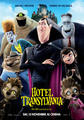
Hotel Transylvania is a 2012 American 3D computer animated fantasy comedy film.It tells the story of count Dracula, the owner of the Hotel Transylvania where only monsters can go. On the occasion of the 118th birthday of his daughter Mavis, Dracula invites some monsters for a party, but the hotel is unexpectedly visited by a "human" young boy, Jonathan. Dracula must protect Mavis from falling in love with him.Hotel Transylvania 2 was released in 2015 and the story takes place seven years later. The hotel is now open to human guests, too. In the meanwhile, count Dracula had a grandson who is not a pure-blood vampire… Hotel Transylvania - Trailer"The Zing" songHotel Transylvania soundtrack Let' s meet the main charactersI made this Piktochart poster for youSTUDENTS' TASKAnswer the following questions after watching the filmDid you enjoy the film? Why/why not?Which is your favourite character? Why?What is your favourite scene? Why?Would you like to be Jonathan? Would you like to have an experience like his own?What would you do if you were Mavis, would you always obey your overprotective father or would you try to win more freedom?
Roberta Martino
.
Blog
.
<span class='date ' tip=''><i class='icon-time'></i> Dec 04, 2015 06:12am</span>
|