Blogs
|
The Gamification 2013, the First International Conference on Gameful Design, Research, and Applicationswas a three-day, dual-track conference that took place in the University of Waterloo (October, 2-4). Education and Serious Games were some of the conference topics:"This conference is the first of its kind and we will use this opportunity to unite the burgeoning area of gamification with the best approaches from professional user experience and game designers. Our program is a blend of academic research and experimental applications with industry and non-profit examples, procedures, best practices, goals and results. It gives an idea of what all is now possible in the field of gamification. Our topics range from using citizen science games for motivation to best practices of exergames and classroom gamification. Not to forget the necessary discussion of the overlap between serious games and gamification". In this conference gamification is defined as the use of "... game design in systems that primarily support non-game tasks to make them more fun, engaging, and motivating. With this motivational power of games comes great responsibility to go beyond using playful badges and point systems to truly tap into the intrinsic motivation of users".The conference proceedings are available. Here are some of the papers related to gamification of education:Full Papers: Competition as an Element of Gamification for Learning: an Exploratory Longitudinal Investigation; Improving Participation and Learning with Gamification; The Design and Evaluation of a Classroom Exergame; Driven to drive: Designing gamification for a learner logbook smartphone application; Gamification and Serious Game Approaches for Introductory Computer Science Tablet Software.Short Papers:Gamifying Behaviour that Leads to Learning; Improving Student Creativity with Gamification and Virtual Worlds.
Education & eLearning Blog
.
Blog
.
<span class='date ' tip=''><i class='icon-time'></i> Dec 04, 2015 07:51am</span>
|
|
Another gamification book, authored by Karl Kapp will be available by mid November: The Gamification of Learning and Instruction Fieldbook: Ideas into Practice. It follows the other Kapp's book on gamification, published in 2012: The Gamification of Learning and Instruction: Game-based Methods and Strategies for Training and Education (see this post).Following Karl Kapp's earlier book The Gamification of Learning and Instruction, this Fieldbook provides a step-by-step approach to implementing the concepts from the Gamification book with examples, tips, tricks, and worksheets to help a learning professional or faculty member put the ideas into practice. The Online Workbook, designed largely for students using the original book as a textbook, includes quizzes, worksheets and fill-in-the-blank areas that will help a student to better understand the ideas, concepts and elements of incorporating gamification into learning.Is is allready possible to preorder the book at Amazon (paperback). Kindle edition is available.
Education & eLearning Blog
.
Blog
.
<span class='date ' tip=''><i class='icon-time'></i> Dec 04, 2015 07:51am</span>
|
|
(received by email from gamification-research@googlegroups.com)Gamification for Information Retrieval (GamifIR’14) Workshop, held in conjunction with ECIR 2014
, Amsterdam, Netherlands
13 April 2014Gamification is the application of game mechanics, such as leader boards, badges or achievement points, in non-gaming environments with the aim to increase user engagement, data quality or cost effectiveness. A core aspect of gamification solutions is to infuse intrinsic motivations to participate by leveraging people’s natural desires for achievement and competition. While gamification, on the one hand, is emerging as the next big thing in industry, e.g., an effective way to generate business, on the other hand, it is also becoming a major research area. However, its adoption in Information Retrieval (IR) is still in its infancy, despite the wide ranging IR tasks that may benefit from gamification techniques. These include the manual annotation of documents for IR evaluation, the participation in user studies to study interactive IR challenges, or the shift from single-user search to social search, just to mention a few.This workshop focuses on the challenges and opportunities that gamification can present for the IR community. The workshop aims to bring together researchers and practitioners from a wide range of areas including game design, information retrieval, human-computer interaction, computer games, and natural language processing.Call for papers: deadline 5 February 2014Keynote by Prof. Richard Bartle, known for his 1996 Player Types model (see this post)Topics include but are not limited to: Gamification approaches in a variety of information-seeking contextsUser engagement and motivational factors of gamificationPlayer types, contests, cooperative gamesChallenges and opportunities of applying gamification in IRGamification design and game mechanicsGame based work and crowdsourcingApplications and prototypesEvaluation of gamification techniques
Education & eLearning Blog
.
Blog
.
<span class='date ' tip=''><i class='icon-time'></i> Dec 04, 2015 07:51am</span>
|
|
My paper (see this post) A Social Gamification Framework for a K-6 Learning Platform published at Computers in Human Behavior, in March 2013, (co-authored with Rebeca Díaz Redondo e Ana Fernández Vilas), has been cited in other publications. The paper presents the "main features of a social gamification framework to be applied in an existent K-6 social learning environment". This social learning environment is schoooools.com (see also this post on schoooools' blog - in portuguese).Last year, it was referenced in Gamifying Learning Experiences: Pratical Implications and Outcomes, published at Computers & Education (vol. 63, April 2013): "Recently Simões, Díaz & Fernández (2013) presented a social gamification framework for http://schoooools.com, a social learning environment, which "aims to assist educators and schools with a set of powerful and engaging educational tools to improve students’ motivation and learning outcomes". Another reference in 2013 was in Reimagining Leaderboards: Towards Gamifying Competency Models through Social Game Mechanics, publicado nos proceedings da Gamification 2013 - First International Conference on Gameful Design, Research, and Applications: "Simões, Redondo and Vilas developed a social gamification framework for educational systems that was implemented for a series of elementary schools in Portugal [15]. Game elements were drawn directly from social games; for example, peer appraisal, including the use of a "like" button, giving and sharing rewards, and teamwork-based goals." Today, in Zac Fitz-Walter's Gamification Weekly (Issue 33 - 31st January, 2014), I found two other references. One was in Gamification - supported Exploration and Practicing for Automotive User Interfaces and Vehicle Functions: "When analyzing current examples of gamified learning environ-ments(Muntean 2011; Simões et al. 2013), the use of game elements does not directly optimize the learning efficacy, but has mainly an impact on the learners’ motivation (Domínguez et al. 2013)". The other was in Memoirs of a Teacher-Gamer: Educational Games (in Reading Matters, Volume 14, Spring 2014, pp 8 - 13): "Unlike the game based learning I have focused on so far, gamification is a recent term introduced to the educational gaming community. Recent studies suggest educators begin looking at the experience of school as a game by integrating general features of popular games to enhance motivation (Apostol, Zaharescu, & Alexe, 2013; Simões, Redondo, & Vilas, 2013)".Well, someone is reading the paper which is gratifying ...
Education & eLearning Blog
.
Blog
.
<span class='date ' tip=''><i class='icon-time'></i> Dec 04, 2015 07:50am</span>
|
|
My fourth contribution to Gamifeye: Recap: Gamification in Education in 2013. This post highlights some of the most important things around the research on gamification of education that happened in 2013.Again, many thanks to Sam Geuter, the man behind Gamifeye.See the other contributions:Post em Gamifeye: "Education and Training: From Game-Based Learning to Gamification (October, 2012); Post em Gamifeye: "How Gamification Can Drive Behavioural Change" (November, 2012); Post em Gamifeye: Four Approaches to Collecting Data in Gamified Systems (February, 2013).
Education & eLearning Blog
.
Blog
.
<span class='date ' tip=''><i class='icon-time'></i> Dec 04, 2015 07:50am</span>
|
|
Call for submissions to Computers in Human Behavior - Special Issue on Gamification: Gameful Design, Research, and Applications.Following the conference on Gamification 2013: Gameful Design, Research, and Applications (see the conference videos here), the conference organizers and editors of this special issue invite researchers to submit contributions on all aspects of gamification to this special issue of Computers in Human Behavior. See this other post, with a link to the Proceedings of Gamification 2013.Gamification uses game design to make a system that primarily supports non-game tasks more fun, engaging, and motivating. We invite a wide variety of high-quality research papers into our special issue. We seek to understand the research necessary for increasingly effective implementation of,gamification in business, health, education andmentertainment. We welcome substantial research studies of gamification successes and failures, unanswered questions about gamification, gamification metrics and processes, methods of gamification commercialization and more.This special issue aims gamification researchers interested in - but not limited to - the following fields:Game DesignHuman-Computer InteractionPsychologyComputer Science and InformaticsGame StudiesEducationUser Experience and Interaction DesignSocial Sciences and Humanities (e.g., digital humanities,communication research, sociology)Special Issue Editors:Lennart Nacke, University of Ontario Institute of TechnologySebastian Deterding, Rochester Institute of TechnologyKevin Harrigan, University of WaterlooNeil Randall, University of WaterlooImportant dates:May 30, 2014: Submission deadlineAugust 30, 2014: Notification back to authorsApril, 2015: Planned date of publication
Education & eLearning Blog
.
Blog
.
<span class='date ' tip=''><i class='icon-time'></i> Dec 04, 2015 07:50am</span>
|
|
This is the first post regarding the origin and evolution of gamification, the concept broadly defined as "the use of game elements in non-game contexts". I invite others to contribute (with comments to the post) if something is missing and to correct what may be wrong or incomplete.The OriginThe concept behind what become known as gamification in recent years was already known almost one hundred years ago. Nelson (2012) argue that the origins of gamification are in the early to mid 20th century in Soviet Union, like "a way to motivate workers without relying on capitalist-style monetary incentives". Workers and factories could compete with each other to increase production, using points and other game-like elements. Later, in american management, on the transition from the 20th to the 21st century, the strategy of turning the workplace into a more playful setting reappeared. In 1984, Coonradt (2007) published the first edition of his book The Game of Work. Coonradt, known as the "grandfather of gamification", applied game principles in business contexts, dealing with employee motivation. His principles to motivate people include frequent feedback, clear goals and personal choice, features that can be found in games. These American and Soviet approaches, as precursors of gamification, gave rise to o sub-genre of the concept, the "gamification of work" (or playbour). Even before Coonradt's work, loyalty programs, like frequent flyer programs in airline companies (Kumar and Herger, 2013), where travelers gain miles (i.e. points) that can be exchanged for some benefit, and other marketing campaigns already incorporate some game features.In other contexts, similarities with game elements can be found in the use of icons or symbols to express achievements, as insignias on military uniforms or insignias used on youth organizations like the Scouts (Silvers, 2011; Werbach and Hunter, 2012). These icons and symbols have their digital counterpart in video games’ badges (Rosewell, 2012). As the Scout can collect badges and display them on their uniform, digital badges can be used to display individual skills, abilities and accomplishments since a software system provides the adequate infrastructure.In the Information and Communication Technologies (ICT) context, Deterding et al. (2011) note that, in the 1980s, in Human-Computer Interaction (HCI), the design of user interfaces already benefited from the knowledge of different design practices, namely game design. Playfulness, as a desirable user experience or mode of interaction, gained the attention of multiple HCI researchers. As Deterding et al. refer, game elements were long used in HCI, as game controllers used as input devices or graphic engines and authoring tools of video games used in non-ludic contexts.Game-Based Learning (GBL) and the Serious Games movement contribute to the spread of the concept, revealing that games could be useful in non-ludic contexts instead of just being used for fun and amusement. Gamification, connects to concepts related to HCI and to game studies, as serious games, pervasive games, alternate reality games, or playful design ( Deterding et al.). References:Nelson, M. (2012). Soviet and american precursors to the gamification of work. In Lugmayr, A., editor, MindTrek, pages 23-26. ACM.Coonradt, C. (2007). The Game of Work: How to Enjoy Work as Much as Play. Gibbs Smith.Kumar, J. and Herger, M. (2013). Gamification at Work: Designing Engaging Business Software. Aarhus, Denmark,. The Interaction Design Foundation.Silvers, A. (2011). On education, badges and scouting [web log message].Werbach, K. and Hunter, D. (2012). For the Win: How Game Thinking Can Revolutionize Your Business. Wharton Digital Press.Rosewell, J. (2012). A speculation on the possible use of badges for learning at the uk open university. In EADTU Annual Conference: The Role Of Open And Flexible Education In European Higher Education Systems For 2020: New Models, New Markets, New Media. Deterding, S., Dixon, D., Khaled, R., and Nacke, L. (2011). From game design elements to gamefulness: Defining "gamification". In Proceedings of the 15th International Academic MindTrek Conference: Envisioning Future Media Environments, MindTrek ’11, pages 9-15, New York, NY, USA. ACM.
Education & eLearning Blog
.
Blog
.
<span class='date ' tip=''><i class='icon-time'></i> Dec 04, 2015 07:49am</span>
|
|
This is the second post regarding the origin and evolution of gamification, following A Brief History of Gamification: Part I - The Origin. I invite others to contribute (with comments to the post) if something is missing and to correct what may be wrong or incomplete.The NameAbout the concept’s name, several authors claim that the term gamification, a neologism, was created in 2002 (Marczewski, 2012; Penenberg, 2013), or 2003 (Werbach and Hunter, 2012), or 2004 (Rughinis 2013) by Nick Pelling, a British programmer and video game designer. In fact, according to this alleged author, the word was created in 2002 (Pelling, 2011) and became public in 2003 in Pelling’s company website. By then, he intended to apply his gamification ideas to electronic devices. Others claim the term’s authorship for themselves at even earlier dates: "a trend I call gameification, which I first identified in the early eighties" (Burrus and Mann, 2012). Other sources indicate that the term was invented by Tim Chang from Norwest Venture Partners at an undefined date.In digital media and according to Huotari and Hamari (2012), the term, written as gameification, was mentioned for the first time in 2008 in a blog post (Terrill, 2008). Werbach and Hunter (2012) note also that it was only in 2010 that the term was widely adopted. In fact, the term only started to be searched in Google on August, 2010 (Duggan and Shoup, 2013; Zichermann and Linder, 2013).Before the term gamification came into widespread use on digital media, the underlying concept was also known as funware, a term proposed by Gabe Zichermann. Similar terms were associated with the concept like fun at work, serious games or games with a purpose (Rughinis, 2013), although these last two terms are in fact related with different concepts. Landers and Callan (2011) also use the term gameification, applying it in learning contexts. Besides all of these alternative terms, the word gamification prevailed even not being consensual.The concept is seen by many as misleading and difficult to define (Anderson and Rainie, 2012; Raczkowski, 2013) and as Robertson (2010) claims "is the wrong word for the right idea". Although game design is central to the concept of gamification, some game designers do not agree neither with the word nor with the concept (e.g. Bogost, 2011a). As long as the word became popular, criticism of gamification also made presence in digital media. Some game designers point that gamification is just a meaningless buzzword. Depreciative terms like exploitationware (Bogost, 2011b) or pointsification as proposed by Robertson, shows that both the word and the concept are not consensual.See also:A Brief History of Gamification: Part I - The OriginA brief history of gamification, by Zac Fitz-WalterWho coined the term gamification? References:Anderson, A. and Rainie, L. (2012). The future of gamification. Technical report, Pew Research Center’s Internet and American Life Project. Duggan, C. and Shoup, K. (2013). Business Gamification for Dummies. John Wiley and Sons, Inc. Burrus, D. and Mann, J. (2012). Gameification: Accelerating learning with technolog Bogost, I. (2011a). Gamification is bullshit Bogost, I. (2011b). Persuasive games: Exploitationware Huotari, K. and Hamari, J. (2012). Defining gamification: A service marketing per- spective. In Proceeding of the 16th International Academic MindTrek Conference, MindTrek ’12, pages 17-22, New York, NY, USA. ACM. Landers, R. and Callan, R. (2011). Casual social games as serious games: The psychology of gamification in undergraduate education and employee training. Serious Games and Edutainment Applications. Marczewski, A. (2012). Gamification: A Simple Introduction. Marczewski, A. Pelling, N. (2011). The (short) prehistory of "gamification"Penenberg, A. (2013). Play at Work: How Games Inspire Breakthrough Thinking. Piatkus. Robertson, M. (2010). Can’t play, won’t play Raczkowski, F. (2013). It’s all fun and games... a history of ideas concerning gamification. In Proceedings of DiGRA 2013: DeFragging Game Studies. Rughinis, R. (2013). Gamification for productive interaction reading and working with the gamification debate in education. In Proceedings of the Information Systems and Technologies (CISTI), 8th Iberian Conference on Information Systems and Technologies. Terrill, B. (2008). My coverage of lobby of the social gaming summit Werbach, K. and Hunter, D. (2012). For the Win: How Game Thinking Can Revolutionize Your Business. Wharton Digital Press. Zichermann, G. and Linder, J. (2013). The Gamification Revolution. McGraw-Hill Education.
Education & eLearning Blog
.
Blog
.
<span class='date ' tip=''><i class='icon-time'></i> Dec 04, 2015 07:49am</span>
|
|
The third part of The Brief History of Gamification is here, following A Brief History of Gamification: Part I - The Origin and A Brief History of Gamification: Part II - The Name. I invite others to contribute (with comments to the post) if something is missing and to correct what may be wrong or incomplete.This third post is about the definition of the concept that became known as gamification. There are probably as many definitions for gamification as people writing about it. Gamification definitions have been proposed since the word appeared in 2010. Some of them were listed previously in this blog in a post where 23 definitions were listed. Those definitions were found in web logs, technical reports and academic papers. Some of them are redundant or very similar to each other. Here are some of those definitions and a few more recent ones:"The notion that gaming mechanics can be applied to routine activities" (Johnson et al., 2014); "The use of game mechanics and rewards in non-game setting to increase user engagement and drive desired user behaviors" (Duggan and Shoup, 2013); "Implementing design concepts from games, loyalty programs, and behavior economics to drive user engagement" (Zichermann and Linder, 2013); "The use of game elements and game-design techniques in non-game contexts" (Werbach and Hunter, 2012); "The application of game metaphors to real life tasks to influence behaviour, improve motivation and enhance engagement" (Marczewski, 2012); "Using game techniques to make activities more engaging and fun" (Kim, 2011); "The use of game attributes to drive game-like player behavior in a non-game
context" (Wu, 2011); "Taking game mechanics and applying to other web properties to increase engagement" (Terrill, 2008);
Other definitions from the academia are: "Incorporating game elements into a non-gaming software application to increase user experience and engagement" (Domínguez et al., 2013); "A form of service packaging where a core service is enhanced by a rules-based service system that provides feedback and interaction mechanisms to the user with an aim to facilitate and support the users’ overall value creation" (Huotari and Hamari, 2011); "The use of game mechanics, dynamics, and frameworks to promote desired behaviors" (Lee and Hammer, 2011);"The use of game design elements in non-game contexts" (Deterding et al., 2011). This shows that there is no consensus for a single and widely accepted definition for gamification (Werbach and Hunter, 2012). The first known definition in an academic paper is the one from Huotari and Hamari. In spite of all these different proposals, the definition that is more often found in academic papers is the one from Deterding et al. (2011). This definition is now widely used as the academic definition for the concept of gamification.The definition from Domínguez et al. refers to non-gaming educative contexts. To conclude, some more definitions regardind education and training contexts: "The adition of elements commonly associated with games (e.g. game mechanics) to an educational or training program in order to make the learning process more engaging" (Landers and Callan, 2011); "Using game-based mechanics, aesthetics and game thinking to engage people, motivate action, promote learning, and solve problems" (Kapp, 2012); "Simple gameplay to support productive interaction for expected types of learners and instructors" (Rughinis, 2013); See also:A Brief History of Gamification: Part I - The OriginA Brief History of Gamification: Part II - The Name References: Deterding, S., Dixon, D., Khaled, R., and Nacke, L. (2011). From game design elements to gamefulness: Defining "gamification". In Proceedings of the 15th International Academic MindTrek Conference: Envisioning Future Media Environments, MindTrek ’11, pages 9-15, New York, NY, USA. ACM. Domínguez, A., Saenz-de Navarrete, J., de Marcos, L., Fernández-Sanz, L., Pagés, C., and Martínez-Herráiz, J. (2013). Gamifying learning experiences: Practical implications and outcomes. Computers and Education, 63(0):380-392. Duggan, C. and Shoup, K. (2013). Business Gamification for Dummies. John Wiley and Sons, Inc. Johnson, L., Adams Becker, S., Estrada, V., and Freeman, A. (2014). NMC Horizon Report: 2014 Higher Education Edition. Technical report, Austin, Texas: The New Media Consortium. Kapp, K. (2012). The Gamification of Learning and Instruction: Game-based Methods and Strategies for Training and Education. Pfeiffer. Kim, A. (2011). Smart gamification: Designing the player journey [video].Huotari, K. and Hamari, J. (2011). Gamification: from the perspective of service marketing. In Proc. CHI 2011 Workshop Gamification. Landers, R. and Callan, R. (2011). Casual social games as serious games: The psychology of gamification in undergraduate education and employee training. Serious Games and Edutainment Applications.Lee, J. and Hammer, J. (2011). Gamification in education: What, how, why bother? Academic Exchange Quarterly, 15(2):2.Marczewski, A. (2012). Gamification: A Simple Introduction. Marczewski, A.Rughinis, R. (2013). Gamification for productive interaction reading and working with the gamification debate in education. In Proceedings of the Information Systems and Technologies (CISTI), 8th Iberian Conference on Information Systems and Technologies.Terrill, B. (2008). My coverage of lobby of the social gaming summit Werbach, K. and Hunter, D. (2012). For the Win: How Game Thinking Can Revolutionize Your Business. Wharton Digital Press. Wu, M. (2011). What is gamification, really? [web log message] Zichermann, G. and Linder, J. (2013). The Gamification Revolution. McGraw-Hill Education.
Education & eLearning Blog
.
Blog
.
<span class='date ' tip=''><i class='icon-time'></i> Dec 04, 2015 07:48am</span>
|
|
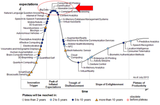
This is the fourth post on The Brief History of Gamification, following Part I - The Origin, Part II - The Name and Part III - The Definitions. I invite others to contribute (with comments to the post) if something is missing and to correct what may be wrong or incomplete.Since the first uses of the word gamification in late 2010, the concept quickly spread. That is due, in great part, to some popular video presentations, even if some of them do not use the word gamification. These video presentations, some at the TED Conferences, highlighted the importance of game thinking, with perspectives from game designers like Tom Chatfield, Jane McGonigal and Jessie Schell (all in 2010) or perspectives from digital marketing professionals, like Gabe Zichermann (in 2011).In 2011, the word gamification was part of the Oxford University Press short list for the word of the year. In the same year, Jane McGonigal published Reality is Broken: Why Games Make Us Better and How They Can Change the World, a book about how features from video games could be used in different contexts making a contribution to a better citizenship and to a better world. Although McGonigal, a game designer, never mentioned the word gamification, the concept was present and inspired several other gamification’s developers and researchers. Many software applications, digital services, campaigns, products and communication strategies released in 2011 and after were inspired by this gamification movement.Gartner added gamification to its "hype cycle for emergent technologies" in 2011, pointing for a period of 5 to 10 years for mainstream adoption. Gartner uses hype cycles to track technology adoption: after the "peak of inflated expectations" period, technologies will fall into the "trough of disillusionment". Then, they will start evolving to the "slope of enlightenment" and some of them will reach the "plateau of productivity". By 2013, gamification was at the "peak of inflated expectations". Gamification became a buzzword in the business world and a popular term in digital media.Also with an increasing number of scholars and professionals becoming interested in the concept, along with the general public, the online learning platform Coursera launched in August 2012, a MOOC on gamification, lectured by Kevin Werbach, an Associate Professor from the University of Pennsylvania. The course had more than 80.000 registered students with further editions in 2013 (with 66.000 students) and January 2014 (with 70.000 registrations). After the first edition of the course, Werbach co-authored the book For the Win: How Game Thinking Can Revolutionize Your Business.Since 2011, a large number of web log posts were released covering gamification related themes. These first references to gamification were very informal and debated the advantages or drawbacks of the concept and look for examples within web applications. Books on gamification were also published (e.g. Gamification by Design, Gamification at Work: Designing Engaging Business Software, Loyalty 3.0: How to Revolutionize Customer and Employee Engagement with Big Data and Gamification). Most of them approach the concept with a business or enterprise view and others cover specific areas of application, like education and training (The Gamification of Learning and Instruction: Game-based Methods and Strategies for Training and Education; The Gamification of Learning and Instruction Fieldbook: Ideas into Pratice). Gamified applications, gamification platforms and a large number of academic papers on gamification also became part of the gamification movement, but that is for future posts.The concept behind gamification long precedes the emergence of the term although its spread was only possible when the digital games industry has matured and after a generation of gamers was fully active in their working lives. The proliferation of digital media, social networks and other popular Web 2.0 applications have also created the environment that helped the dissemination of a movement that, despite all the criticism, became known as gamification.This nice infographic (first published here) shows some of the important milestones on the short but rich history of gamification:See also:A Brief History of Gamification: Part I - The OriginA Brief History of Gamification: Part II - The NameA Brief History of Gamification: Part III - The Definitions
Education & eLearning Blog
.
Blog
.
<span class='date ' tip=''><i class='icon-time'></i> Dec 04, 2015 07:47am</span>
|