Blogs
|
This is not exactly history (yet) but the discussion about the recent proposal for a gamification definition proposed by Brian Burke, a research analyst at Gartner, brings new issues that will help to understand the concept of gamification and, therefore, will probably be part of its history.This is what Brian Burke and Gartner propose:Gamification is "the use of game mechanics and experience design to digitally engage and motivate people to achieve their goals"They care to explain in detail the components of their proposal:Game mechanics describes the use of elements such as points, badges and leaderboards that are common to many games. Experience design describes the journey players take with elements such as game play, play space and story line. Gamification is a method to digitally engage, rather than personally engage, meaning that players interact with computers, smartphones, wearable monitors or other digital devices, rather than engaging with a person. The goal of gamification is to motivate people to change behaviors or develop skills, or to drive innovation. Gamification focuses on enabling players to achieve their goals. When organizational goals are aligned with player goals, the organization achieves its goals as a consequence of players achieving their goals.Concerning game elements, not much to say. The examples given are the usual game elements found in gamified applications. Calling them game mechanics or game elements is another issue. I prefer the term "game elements". "Mechanics", in my view, are related to the rules that govern the use of the elements, how are they related and how they can motivate people to achieve their goals.Experience design is, to my knowledge, a new term in the gamification universe. I believe it is related to the player journey (see this post). In the explanation there is a connection to play, which is a central component in gamification.A major issue concerning the definition, that raises most of the discussion, is about "digitally engage". In this definition, gamification can only be applied in a digital context. That is not the view of many gamification researchers and practitioners (or gamification gurus). In fact, the concept can be used in any context, digital or non-digital. Digital technologies can help by providing the platforms to assist the implementation of the concept in a non-digital context, but that is not mandatory. See this post about the different application contexts of gamification.The last part of the definition, motivate people to achieve their goals, is interesting since it focus on the players (the people with goals to be achieved) and not on the organizational goals (that must be aligned with the players' goals). But, in many situations, the target users of a gamified application, may not have such clear goals. In these cases, the gamified application tries to change the players behaviors, to achieve certain goals, that are useful for them but that they are not aware of (or concerned about). Therefore, the goals are set by the organization, and the gamified application tries to motivate the players to reach those goals, that must be clear for the players and that must be, ultimately, the players' own goals. This is particular relevant in educational contexts.To summarize, this new definition and the discussion about it shows that there is still work to be done to clarify what is meant by gamification. It is now clear that is not the same of games or serious games or simulations or game-based learning (as it was initially confused). But the Burke/Gartner definition reveals that we must look deeper into the contexts where gamification can be applied and to the tools that can be used.The most common definition, and widely used in the academia, is still "the use of game design elements in non-game contexts". Simple and straightforward. My own definition adds a second part:the use of game design elements in non-game contexts, to drive game like engagement in order to promote desired behaviours.It points to the goals of gamification, an engagement like the one people experience with games, as a way to promote some desired behaviors in the target users of the gamified application (that can be digital or non-digital). Concerning the discussion about the Burke/Gartner definition, see this posts and discussionsGartner Redefines Gamification: What Do You Think?A response to Gartner’s new definition of gamificationWhat gamification is to me - My definition Gartner is Soooooo Wrong about Gamification…How #Gartner got Gamification WrongThis is the fifth post of the series A Brief History of Gamification. See also,A Brief History of Gamification: Part I - The OriginA Brief History of Gamification: Part II - The NameA Brief History of Gamification: Part III - The DefinitionsA Brief History of Gamification: Part IV - The Evolution
Education & eLearning Blog
.
Blog
.
<span class='date ' tip=''><i class='icon-time'></i> Dec 04, 2015 07:46am</span>
|
|
Professor Kevin Werbach released a video with some statistics for the 2014 edition of his Coursera Gamification MOOC that ended in April. These courses were already mentioned before in this blog (A Brief History of Gamification: Part IV - The Evolution):Also with an increasing number of scholars and professionals becoming interested in the concept, along with the general public, the online learning platform Coursera launched in August 2012, a MOOC on gamification, lectured by Kevin Werbach, an Associate Professor from the University of Pennsylvania. The course had more than 80.000 registered students with further editions in 2013 (with 66.000 students) and January 2014 (with 78.000 registrations). After the first edition of the course, Werbach co-authored the book For the Win: How Game Thinking Can Revolutionize Your Business.The video seems to be only available for those who registered in the course. Here are some of the main statistics:A big number of registrations but only a small percentage actually concluded the courses successfully. Still, a great number (around 4500 students).And the final remarks:"Gamification is still a new field and MOOCs are still a new form of learning."
Education & eLearning Blog
.
Blog
.
<span class='date ' tip=''><i class='icon-time'></i> Dec 04, 2015 07:46am</span>
|
|
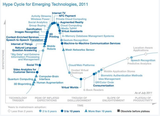
Since gamification, as a new buzzword and a popular term in digital media, hit the mainstream, several advisory and research companies, consulting firms and others start to draw some forecasts about the future of gamification. Most of them use the concept in marketing and enterprise perspective and state how gamification will impact business.GartnerGartner, an information technology research and advisory company, stated thatIn 2014 most companies will have at least one gamified application. In 2014, a gamified service for consumer goods marketing and customer retention will become as important as Facebook, eBay or Amazon, and more than 70% of Global 2000 organizations will have at least one gamified application. By 2014, 80% of current gamified applications will fail to meet business objectives primarily due to poor design; By 2015, more than 50 percent of organizations that manage innovation processes will gamify those processes (in Gartner Gamification Report 2011);In 2015, 70% of the world’s largest enterprises will be using gamification (in Gartner Gamification Report 2011). Since 2011, Gartner added gamification to its "hype cycle for emergent technologies", pointing for a period of 5 to 10 years for mainstream adoption. Before 2011, gamification was not yet part of the cycle (see the 2010 Hype Cycle).Gartner uses hype cycles to track technology adoption: after the "peak of inflated expectaions" pe- riod, technologies will fall into the "trough of disillusionment". Then, they will start evolving to the "slope of enlightenment" and some of them will reach the "plateau of productivity". By 2013, gamification was at the "peak of inflated expectations". "We think it is still on track (...) In our 2013 Hype Cycle for Emerging Technologies, we place gamification at the ‘Peak of Inflated Expectations’. We continue to believe it will move into the ‘Trough of Disillusionment’ in 2014." (Brian Burke, Gartner's research vice president).M2 ResearchIn 2011, M2 forecast that the gamification market would reach $242 million by the end of 2012 and that he global market for gamification apps and services will grow to $2.8 billion by 2016.Deutsche BankDeutsche Bank predicts the market size of gamification to $4.2-5.3 billion within the enterprise space only (source).Markets and MarketsM&M, a market research company and consulting firm, predicted that the gamification market is estimated to grow from $ 421.3 million in 2013 to $5.502 billion in 2018. IEEEThe IEEE - Institute of Electrical and Electronics Engineers, said last February, that their members anticipate that 85 percent of our lives will have an integrated concept of gaming in the next six years. While video games are seen mainly for their entertainment value in today’s society, industries like healthcare, business and education will be integrating gaming elements into standard tasks and activities, making us all gamers (source).They did not say how they get this insight from their members.Pew Research Center and Elon UniversityA May 2012 Pew Research Center and Elon University survey of more than 1,000 Internet experts and users showed that they were about evenly split on gamification’s future: 53% believed it would become widespread with some limits, while 42% said it would not transform into a larger trend except in specific situations (source). The experts answered the question: Will the use of gamification, game mechanics, feedback loops, and rewards to spur interaction and boost engagement, buy-in, loyalty, fun, and/or learning continue to gain ground and be implemented in many new ways in people’s digital lives between now and 2020? (source) Other predictions for 2014:No longer just hype, gamification will emerge as a powerful engagement tool to increase customer loyalty and conversions. Major global corporations from Oracle to American Express are already diving head first into gamification, with Oracle gamifying their annual Open World conference in late 2013, and American Express betting big on gamification for customer engagement and employee compliance. Businesses are understanding that gamification is much more than "PBL" points-badges-leaderboards, and instead a powerful program which requires nurturing over time to continue increasing relevant and high-value user behavior, and ultimately long-term engagement (source).Concerning education and e-learning, there are also some forecasts: Gamification is all set to pick up speed in 2014. The concepts of Game-based Learning (GBL) and Gamification will gain acceptance as valid learning strategies.The report The Future of Gamification from the Pew Research Center and Elon University also stated that some scholars and educators, too, have become interested in harnessing the potential of gaming mechanics and sensibilities as tools for advancing learning. A "serious gaming" movement has arisen to apply gaming techniques to such realms as military and corporate and first-responder training programs, civilization and environmental ecology simulations, K-12 educational programs on subjects like math and history and the sciences, news events and public policy campaigns, problem-solving strategies in the natural sciences, and even physical exercise programs. The Horizon Report 2014 - Higher Education Edition points to a two to three years time-to-adoption horizon for the adoption of gamification in the higher education field: While a growing number of educational institutions and programs are experimenting with game-play, there has also been increased attention surrounding gamification — the integration of gaming elements, mechanics, and frameworks into non-game situations and scenarios. Businesses have embraced gamification as a way to design incentive programs that engage employees through rewards, leader boards, and badges, often with a mobile component. Although more nascent than in military or industry settings, the gamification of education is gaining support among educators who recognize that effectively designed games can stimulate large gains in productivity and creativity among learners."Accurate or not, these predictions brought new highlights for gamification that become a new trend, not only in business, but in many other areas, like education and training. We are in the middle of 2014. Let's wait and see if the 2014 forecasts are accurate.To end, some stats from 2013.This is the sixth post of the series A Brief History of Gamification. See also,A Brief History of Gamification: Part I - The OriginA Brief History of Gamification: Part II - The NameA Brief History of Gamification: Part III - The DefinitionsA Brief History of Gamification: Part IV - The Evolution A Brief History of Gamification: Part V - The Definitions (Again)Comments are welcomed!
Education & eLearning Blog
.
Blog
.
<span class='date ' tip=''><i class='icon-time'></i> Dec 04, 2015 07:45am</span>
|
|
A video with a definition for gamification, the origin of gamification and some predictions by Karl Kapp (published in this post). The definition is applied to learning and instruction and is based on the same ideas of the latest Karl Kapp's book on the subject (see this other post). The differences between gamification, learning games and simulations are also presented.The video includes also Kapp's notions of structural gamification and content gamification:Structural gamification: the application of game elements to propel a learner through content with no alterations or changes to that content, only the structure around the content. Content gamification: the application of game elements, game mechanics and game thinking to alter content to make the content more game like. See also these posts about the history of gamification:A Brief History of Gamification: Part I - The OriginA Brief History of Gamification: Part II - The NameA Brief History of Gamification: Part III - The DefinitionsA Brief History of Gamification: Part IV - The Evolution A Brief History of Gamification: Part V - The Definitions (Again)A Brief History of Gamification: Part VI - The Predictions
Education & eLearning Blog
.
Blog
.
<span class='date ' tip=''><i class='icon-time'></i> Dec 04, 2015 07:45am</span>
|
|
The debate about what the definition for gamification should be is far from being over. After the definition from Brian Burke and Gartner (see A Brief History of Gamification: Part V - The Definitions (Again) ), more definitions saw the light of day:Andrzej Marczewski publish in his blog the post Defining gamification - what do people really think? where he presents an "average definition" for gamification: creating more game-like experiences in non game contexts. He points that this definition "does not include anything about why or how, just what it is". His proposal results from an average of a list of other definitions (some from gamification gurus), looking at the most common concepts present. He concludes by saying "we are all trying to make more engaging experiences for people using ideas that games have been using forever".A different approach is proposed by Rajat Paharia, the founder of Bunchball, in A New Day for Gamification, or Is It? For him, gamification is motivating people through data. He comments on Burke's definition stressing that it could be enhanced with less emphasis on game language, avoiding the use of terms like "players". For Paharia, gamification is not about games and not about play. He even quotes Brian Burke about gamification not being about fun. In short, Rajat Paharia's view of gamification is very enterprise and business related and gamification is more than that. Finally, and recently, Kevin Werbach, the man behind the well-known MOOC on gamification, has a paper ((Re)Defining Gamification: A Process Approach) discussing and explaining his new definition: the process of making activities more game-like. The main change here is the notion of gamification as a process. In Werbach's view, his definition "creates a better fit between academic and practitioner perspectives". Most definitions rely on the use of game elements, in what he calls the elemental definitions, Using game elements in non-game contexts is not the same as transforming that context into something more game-like. To do that, a process is needed. The process can transform the activities to be more or less game-like. Therefore, the frontier between gamified and non-gamified settings is wider. He points that in education, the fact that a point system is used (the grades), it is not possible to say that school activities (e.g. examinations) are gamified. At least, it means that education is a good non-game context that can be gamified as others mentioned (e.g. Lee and Hammer's Gamification in Education: What, How, Why Bother?). Werbach's definition is also aligned with the "average" definition from Marczewski.Could the new Kevin Werbach's definition replace the widely used definition from Deterding et al., the use of game design elements in non-game contexts?Some final remarks about what is gamification:It is not the same as games, but it is about games. If it is not about games, why call it gamification in the first place? If it is about games, the users of gamified applications can be called players, to highlight the idea, but this is probably not very important.Is is not clearly just about digital engagement. Is is about engagement, regardless of the medium, with a digital or non-digital approach. But digital tools can be very helpful. It is not about play, but it must feel as play, and it must be fun (how to define fun, anyway?). The importance of fun is the reason of the concept's name, the fun part of games, that lead to gamification.Data plays a central role in a gamification process because it drives the relation between the gamified application and the players. Again, digital tools can be very helpful.And it has a clear purpose: motivate people to change their behaviors and feelings about something that is not a game and is perceived as boring, unchallenging or without value. Making the thing (some activity in a non-game context) more game-like, by using what games have that can be used outside games, can engage people and motivate them to act properly regarding the thing's objectives.All these definitions make their contributions: Burke with the focus on motivation and engagement as the purpose of gamification, Paharia with the focus on data and Werbach and Marczewski with the focus on the process of creating game-like experiences.See also these other posts about the history of gamification:A Brief History of Gamification: Part I - The OriginA Brief History of Gamification: Part II - The NameA Brief History of Gamification: Part III - The DefinitionsA Brief History of Gamification: Part IV - The Evolution A Brief History of Gamification: Part V - The Definitions (Again)A Brief History of Gamification: Part VI - The Predictions
Education & eLearning Blog
.
Blog
.
<span class='date ' tip=''><i class='icon-time'></i> Dec 04, 2015 07:44am</span>
|
|
Slides of the lecture held in June 18, 2014, in a session of student projects presentation of the course Computer Games Development of the MSc in Informatics and Computing Engineering, Faculty of Engineering, University of Porto. Palestra MIEIC Junho 2014 from Jorge Simões
Education & eLearning Blog
.
Blog
.
<span class='date ' tip=''><i class='icon-time'></i> Dec 04, 2015 07:44am</span>
|
|
A message sent by Sebastian Deterding to the Gamification Research Network:The Gamification Lab and the Hybrid Publishing Lab of Leuphana University just released a nice Creative Commons-licensed edited collection of contributions that are "Rethinking Gamification". The PDF is freely available online, the print version will follow soon.AboutGamification marks a major change to everyday life. It describes the permeation of economic, political, and social contexts by game-elements such as awards, rule structures, and interfaces that are inspired by video games. Sometimes the term is reduced to the implementation of points, badges, and leaderboards as incentives and motivations to be productive. Sometimes it is envisioned as a universal remedy to deeply transform society toward more humane and playful ends. Despite its use by corporations to manage brand communities and personnel, however, gamification is more than just a marketing buzzword. States are beginning to use it as a new tool for governing populations more effectively. It promises to fix what is wrong with reality by making every single one of us fitter, happier, and healthier. Indeed, it seems like all of society is up for being transformed into one massive game.The contributions in this book offer a candid assessment of the gamification hype. They trace back the historical roots of the phenomenon and explore novel design practices and methods. They critically discuss its social implications and even present artistic tactics for resistance. It is time to rethink gamification!ContentsIntroductionResetting BehaviourNiklas Schrape: Gamification and GovernmentalityPaolo Ruffino: From Engagement to Life, or: How to Do Things with Gamification?Maxwell Foxman: How to Win Foursquare: Body and Space in a Gamified WorldJoost Raessens: The Ludification of CultureReplaying HistoryMathias Fuchs: Predigital Precursors of GamificationFelix Raczkowski: Making Points the Point: Towards a History of Ideas of GamificationReframing ContextFabrizio Poltronieri: Communicology, Apparatus, and Post-History: Vilém Flusser’s Concepts Applied to Videogames and GamificationThibault Philippette: Gamification: Rethinking ‘Playing the Game’ with Jacques HenriotGabriele Ferri: To Play Against: Describing Competition in GamificationReclaiming OppositionDaphne Dragona: Counter-Gamification: Emerging Tactics and Practices Against the Rule of NumbersMatthew Tiessen: Gamed Agencies: Affectively Modulating our Screen and App-Driven Digital FuturesRemodelling DesignSonia Fizek: Why Fun Matters: In Search of Emergent Playful ExperiencesScott Nicholson: Exploring the Endgame of GamificationSebastian Deterding: Eudaimonic Design, or: Six Invitations to Rethink Gamification
Education & eLearning Blog
.
Blog
.
<span class='date ' tip=''><i class='icon-time'></i> Dec 04, 2015 07:44am</span>
|
|
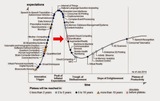
Gartner recently released their 2014 Hype Cycle for emerging technologies. Gamification is mentioned, as in the previous editions of 2013, 2012 and 2011 (gamification was not in the 2010 edition). Gamification in the 2014 Gartner Hype CycleSee A Brief History of Gamification: Part VI- The Predictions, to watch the evolution of gamification in the hype cycle since 2011.Evolution of Gamification in the Gartner Hype CycleAs expected, gamification is now on the "Through of Disillusionment", with a prediction to reach the "Plateau of Productivity" in two to five years. As Mario Herger puts, this is not a "bad thing":Here [the "Through of Disillusionment"] we have realized that it is ‘just a technology’ with good qualities which has promising opportunities but turned out not the be the solution for everything. Technologies in this state are often regarded with a lot of criticism (‘’see, told you that it wouldn’t work") until the real proper application is found and it fights its way back up the slope of enlightenment onwards to a plateau of productivity.So, gamification seems to be on its journey to become an effective technology. It is expected that in two years it might be in the "Slope of Enlightenment".See also Gartner Hype Cycle: Gamification and Big Data in 2012 and 2013.
Education & eLearning Blog
.
Blog
.
<span class='date ' tip=''><i class='icon-time'></i> Dec 04, 2015 07:43am</span>
|
|
It has been a while since the last post ...Returning back to the main theme of the latest posts, gamification, here is a field with high potential to apply the concept of gamification: driving, from the driving lessons to the behaviors of licensed drivers.Who will care about this? Obviously, those concerned with driving teaching, the driving schools, and also insurance companies. This is where concepts like UBI (Usage-based Insurance) or PAYD (Pay as You Drive) can cross paths with gamification. As found in Wikipedia, "gamification of the data encourages good driver behavior by comparison with other drivers". And there is already a platform to do this: Himex. And some insurance companies are using it.This platform needs additional hardware in the vehicle to gather data about drivers' behaviors. Then, by applying gamification techniques, the platform can give the driver (the player) feedback about how she or he is driving by looking to the journeys made in a virtual map.The video below is a presentation of the Himex UBI Platform:The aproach to gather the players data (using external devices) is one the four approaches to monitor and collect the data in a gamified system (see this older post):Using some external device: in this kind of gamified systems, a smartphone or another specific device or gadget is used to keep track of what the player is does in a given activity context. The device synchronizes with a website to upload the collected data and the player is rewarded with the usual points and badges, compare with other players or share achievements with friends. The best cited example of this kind of systems is Nike+. By using a smartphone, a specific watch, an iPod or other Nike devices, players can track sports activities like running. Similar examples, using their own devices, are Fitbit and Zamzee, the last one targeting a younger audience. Another interesting and funny example is HAPPIfork, an electronic fork that monitors eating habits.
Education & eLearning Blog
.
Blog
.
<span class='date ' tip=''><i class='icon-time'></i> Dec 04, 2015 07:43am</span>
|
|
Gamification: Where We StandKarl Kapp recently made a status report on the implementation of gamification in the end of 2014, looking particularly at the education and training field. The forecasts pointing to a much more massive adoption of this concept did not actually occur. This, however, is not surprising if we consider the gamification route in the Gartner Hype Cycle (see Gartner Hype Cycle 2014: Gamification on the Through of Disillusionment).Kapp also points to the different perspectives of the concept that still exist. There are many definitions for gamification and that goes for a long time (see A Brief History of Gamification: Part VII - The Definitions (Again and Again)). Also, terms like "game mechanics" and "game elements" need to be clarified.What is "Fun"?One key issue in Kapp’s post is the notion of "fun" and how it could be related to learning. Fun is part of games and, therefore, a concept to be addressed by gamification designers. But, how to use "fun" in gamified learning contexts? And, what is to be "fun", after all?Watch the video below:Publicação de Enduro Bikes - Moto Enduro.Is this fun? To watch, for most people, certainly. How about riding those motorbikes? For me it would be a disaster. I do not know how to ride a motorbike, and surely it would not be fun for me to try to do what the guys on the video are doing. But for them, it must have been fun. They have the proper skills; they can face the challenge, control what they are doing and have an immediate perception of how they are performing.The concept of fun varies from person to person. Something considered fun for some can be seen as dangerous and frightening for others. An activity can only be fun if it the person sees it as motivating and it involves a degree of difficulty compatible with the person’s capabilities.Fun and FlowA person, who performs a particular activity with a high degree of involvement and commitment, implies that the person will feel pleasure doing the activity. Feeling pleasure, produces a wellness sensation that causes the activity to become fun, with the activity not necessarily seen as such or as containing some entertainment component.This balance between the capabilities of the person and the challenges posed by the activity, also forcing a full concentration on the task execution, is the main ingredient of Mihaly Csikszentmihalyi’s concept of flow. "Flow" is the key to fully enjoy what we do and to achieve a full life.The fun that arises from a flow state is what Nicole Lazzaro calls "hard fun" (see The 4 Keys 2 Fun). Raph Koster, who wrote the Theory of Fun for Game Design, also states that "when there's flow, players usually say afterwards, 'that was a lot of fun'". But he also points "there can be flow that isn´t fun". Again, the notion of fun is dubious. For Koster, "fun is about learning in a context where there is no pressure, and that is why games matter". "No pressure" means that players are allowed to fail without penalty, and they can try again and again until they succeed. Games offer a safe place to fail and, in each try, players can learn something more.The 4 Keys 2 FunFun and GamificationGamification designers should not primarily design things to be fun, but to be deeply engaging and meaningful. A proper balance between a person’s skills and the challenge they face, an immediate feedback on how they are doing, a sense of control and autonomy about how to achieve the goals are what is needed to reach a flow state. If the flow state is reached, the activity will be fun for the person performing it.Concerning gamification design, fun must be seen, mainly, as a consequence of the process rather than a design requisite. This does not mean that a user interface should not be pleasant and nice with the proper aesthetics.Kapp advises to "position gamification as a method of engagement, not as a way to have 'fun'", but remembers that "if 'fun' sneaks in, all the better".Learning, Fun and GamificationFor learning to be fun, we do not need to teach with cartoons or funny videos. We have to make learning meaningful and engaging and let the students reach, as close as possible, a flow state. Then, learning will become fun.On how to apply gamification, Kapp in his report asks the right question: "one of the things gamification is doing in the learning arena is forcing us to ask the question, 'When learning occurs within a game (and it can), what elements of the game and in what situation does that learning occur?'"Games can teach us how to keep players engaged. Games are made of several design elements and work according to specific techniques. Gamification purpose is to find out which of these elements and techniques should be used and how they should be used in non-game contexts. The final goal is to get people feel the deep levels of engagement experienced in games by approaching a flow state.
Education & eLearning Blog
.
Blog
.
<span class='date ' tip=''><i class='icon-time'></i> Dec 04, 2015 07:42am</span>
|