Blogs
|
In this digital age where so many online and real life stimuli compete for our attention, there is a need to define and focus on what will engage our learners in a consistent and meaningful way in immersive E-Learning. What we need to do is to metaphorically speaking, "start a fire" in online education. When you consider the characteristics of a fire, you can see how this might apply to immersive E-Learning. Consider these points:People are drawn to fire. When they look at it, it engages their attention for long periods of time without any external motivation being applied.People looking at a fire often lose track of time; it consumes their interestThe fire initiates more than just the intellect but also the emotions, imagination and creative impulses of a person. Within the fire, our mind sees and interprets which allows our imagination to flowThe fire may also stimulate the necessary physiological conditions that lend themselves to personal introspection."How does this relate to building irresistible engagement? "In order to answer this question, we need to be fully aware of the problem that exists with 21st century learners today.The Problem of Learning in Both the Corporate and Formal Education EnvironmentsWe are all products of our education. Whether you are a CEO of a Fortune 500 company or an esteemed university professor of an ivy league university, it is our life long education that has shaped us to what we are today and continues to direct the way that we think about things today that make up our personal and professional life. Throughout our educational lives, we have placed our trust in those who have structured our learning and put forth a vision of learning to guide those who were the designers. However, during this time of trust, perhaps we forgot to ask an important question, best expressed by the Latin phrase:"Quis custodiet ipsos custodes?"Even in this 21st century, who is watching the guardians of education? We are products of education systems that formalized regimentation, conformity, and standards that the guardians of education said were important to healthy citizenship and would benefit all people. Yet, after several centuries, we still have illiterate masses in many countries, poverty, illness, wars and gross socio-economic disparities. "If education was to be the great equalizer, what went wrong?"Educators and Trainers: The ParadoxEducators and trainers are some of the most intelligent and gifted people tasked with empowering the educational growth of learners but the simple truth is that educational and corporate organizations have grossly ignored or squandered the intellectual capital of these individuals. Instead of nurturing their talents, they have sought to control, micro-manage and task their time in such a way that these talents can not grow and like a healthy plant encircled by weeds, they wither and uncritically comply with their directives. How many L&D departments have been financially neutered as a result of a lack of vision?Credit: www.pinterest.comSir Kenneth Robinson is correct in stating that public education has systematically downplayed the importance of creativity to an enriched education and now that our societies are seeking to foster innovation both in the corporate world and formal education, we are faced with generations who have been systematically conditioned to keep buried any creative impulses unless called upon to be creative. This uncritical adherence to the dictates of the overseers of education has resulted in a generation that struggles to think for themselves without direction. This uncritical obedience was dramatically demonstrated in an experiment by a Yale Psychologist, Stanley Milgram in July 1961.Credit: www.wallpaper222.comBuilding Irresistible Engagement in the Age of Distraction: Starting the FireRecognizing what we are up against, we need to build a fire of change in E-Learning both in the corporate and formal education environment. We have to be honest with each other and admit that the frameworks for our thinking about education need to change because they are not working and we are squandering a valuable resource that is found in this generation and in the coming generation. These generations are disconnecting from their education because they recognize that nothing of substance has changed in the vision and purpose of education. We need to take the responsibility of starting that fire of change and that begins with all of us who are professionals in this area going out of our way to put the word out and seek to develop collaborative networks based on a new vision and purpose of education.So, to do my part, if you think that the points I am making are valid and should be discussed, share them globally using whatever social media at your disposal. Put a link to this blog on your website to spread the word. Conversations can't happen unless there is more than one person taking part in the conversation. Next...Specifics on how to create and nurture the fire of irresistible engagement for learners
Ken Turner
.
Blog
.
<span class='date ' tip=''><i class='icon-time'></i> Dec 06, 2015 12:08am</span>
|
|
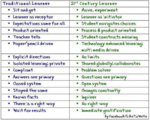
Most organizations, if asked, will state that they do have a learning culture within their organization. With affirmations such as these there are some important questions that should be asked which requires honest organizational introspection:"Given the fact that we live in an age of information and learning, what does an effective learning culture look like? Do we have a learning culture within our organization that is in sync with the global digital economy or are we still doing things the way that we have always done things?"To answer such questions, we need to look at the differences between traditional learners of the past and 21st century learners. The employees who will help a 21st century business organization flourish are ones who have grown up with the internet and all the tools it offers. It is these employees who will seek harmony in the ways that they learn within a business organization with the natural ways that they pursue informal learning in their everyday lives. The following simple chart gives the comparison, keeping in mind that the characteristics described are true for both formal learning organizations and business organizations seeking to establish an effective learning culture. Credit: www.educatorstechnology.com Traditional Learning Culture Within Business OrganizationsTraining within business organizations have followed a template approach for many years. Some characteristics of this approach would be:Training sessions for employees carried out by a trainer or a small group of trainers using a standard presentation approach.Standard training approach imparted information for the purpose of upgrading employee knowledge and skills in regards to company products and services that was individualized according to the role of the employee.With the introduction of MicroSoft Office, PowerPoint was often used to present needed information. Employees were expected to take notes, ask questions and then use what was learned in their respective roles within the organization.Motivation to employee compliance used the "carrot or the stick" approachLater, with the introduction of multimedia and interactive technology, employees were allowed limited participation in training by "clicking on screen buttons to move to the next self-guiding slide".If you look closely at these characteristics and the comparison chart above you will notice that it fits a type of learner who was required in a different age. It is not the type of learner or employee who is going to be useful to a 21st century, connected business organization that wants to innovate and compete in the global market place.Transforming the Learning Culture in a Business Organization Credit: www.LinkedIn.comTransforming a dated learning culture to one that is in sync with the nature of 21st century learners or employees means that the hierarchical organizational structure needs some revision. The learning culture needs to be something that all members of the organization are intimately involved in from the CEO to the lower levels in the chain of command. If a goal is to have employees contribute in meaningful ways to company innovation, then there needs to be structures in place that nurture collaboration, problem solving, employee initiated innovative ideas and as much communication laterally as vertically in the chain of command.It also means a re-definition of traditional roles within an organization so that they are more in sync with the demands of a global digital economy that moves at a much greater rate than in the past."What, specifically, needs to be added and what would the new roles encompass?"One point that should not be underestimated is the growing importance of an organization's ROI to the effectiveness of the learning culture that anchors it. This is an age of multi-level learning with global access to knowledge that is growing exponentially. We can no longer maintain the stataus quo and expect to survive. Next... Adding more specifics to the new pattern for learning cultures and also application to formal higher learning organizations..
Ken Turner
.
Blog
.
<span class='date ' tip=''><i class='icon-time'></i> Dec 06, 2015 12:07am</span>
|
|
Building an effective learning culture is not about the tools! It is about a revolutionary change in purpose and perspective. It is about coming to the realization that your business organization or higher learning organization is terribly out of sync with the realities unfolding in a connected global economy and world. It is about being proactive in a rapidly changing world. Your customers of past years have changed and your new prospects are even more different in their needs and ways of looking at things than customers in the last decade."Don't panic, but you do need to take the first steps to being a proactive rather than a reactive organization where learning is part of the business mindset. Where employees pursue their learning because they see it as in the best interests of their organization and their own growth.This is part of what creates a sense of community or family within an organization"Credit: jbasslearning.comWhat Should Be the Characteristics of a Learning Organization in the 21st Century?Leadership: The number of articles and books that deal with leadership are almost as numerous as sand at a beach. I remember one particular book that I found fascinating was titled: "The Organization of the Future(1997)" which was a collection of writings by "thought leaders" of the time compiled by the Drucker Foundation. The section titles give you a good idea of the primary drive of the book. Some were:Part I- Shaping Tomorrow's OrganizationsPart IV--Working and Organizing in a Wired WorldPart V: Leading People in the Organization of the FutureIn the time they were writing, the Internet was just coming into the mainstream and business leaders were being encouraged to develop a new vision that would include the utilization of this new frontier that was opening up. Some paid attention, some did not. When you combine the need to change the learning culture of business with what Peter Senge states in his even earlier book titled: "The Fifth Discipline: The Art and Practice of the Learning Organization(1990)", a common thread emerges."Business leaders need to be proactive not reactive to the changes occurring outside the walls of their organization. They need to be aware of the transformations occurring in the global economy and based upon that, come up with a shared vision that recognizes that we are living in an age of information and learning."Those who are led by the business leaders need to see a natural fit between the world that they live in daily and the work place. If that perception is not there then the employees will experience a disconnect between what business expects of them and what their clients and customers expect of them.Role Re-Definition: It is vision that directs everything else in a business organization. It is the vision that encapsulates core values that an organization considers important. One of the effects of a change in vision is the need to re-examine the nature of the roles of those who are intimately connected to the learning culture of the organization. This is an element of what we would term "organizational design".Instructional Designer: The ID needs to use design thinking to design irresistibly engaging learning experiences for learners that goes beyond the typical "tell them what they need to know and pray that they follow through" approaches of the past. Reflecting on the advancing research on how people learn, the design of learning experiences should take into consideration the following elements and understandings:Learners become more engaged in their learning when they have the opportunity to collaborate with other learners on relevant, problem based real world problems as seen within the context of the organization's interests. Unlike in the past where collaboration was largely restricted between the trainer as the "sage on the stage" and the learners in the training session within the local walls, through the effective use of blended E-Learning collaboration should be between learners within the organization networks where a learner is Spokane is teamed up with a learner in Washington, a learner in Rio de Janeiro and a learner in Montreal, Canada. In a connected, collaborating learning culture within an organization, there are no walls. This can be designed into the learning experience. Kill the meaningless "point and click interactivity" that treat learners as simpletons! Too many E-Learning experiences in the past have had learners proceed through a series of point and click exercises comparable to rats in a Skinnerian maze. Thoughtful engagement means taking the learners on a journey where they use their creativity, initiative, talents and intelligence to collaborate and solve meaningful tasks and receive useful feedback on the decisions they are making. This is also the cradle in which innovation can be nurtured.This too can be designed into the learning experience. The trainer in this scenario is the "guide on the side and co-learner in the experience". This is the type of learning that provides deep and sustainable understanding where the learner does not need to be externally motivated to apply new skillsets and understandings in their roles. Instead, what is created is an overwhelming intrinsic drive to follow through.Accessibility to the learning culture for collaboration should be available from any digital device no matter where the learner is 24/7. This is the greatest potential of Micro-Learning and Mobile Learning. Learning should be personalized to the needs of the learner. This is where instructional designers need to collaborate with HR departments and IT departments so that learners have stress free access on their terms.One question for you to consider:"For many organizations in the past, the SME has been an essential person or group of persons relied upon for content for training. If our goal is to encourage learners within an organization to take control of their learning in the best interests of the organization and their own growth and to learn how to learn in a connected online environment, where does the SME fit in or does he or she fit in?" Next... A new role---LPE--Learning Principles Expert
Ken Turner
.
Blog
.
<span class='date ' tip=''><i class='icon-time'></i> Dec 06, 2015 12:06am</span>
|
|
In the previous post I suggested that in order to have an effective learning culture, we first would have to acknowledge that the following ideas are valid:We live in an age in which learning, innovation and the creation of new knowledge and skillsets are goals which globally connected businesses should align themselves with in order to prosper and grow.Credit: David Blake, CEO (Degreed) E-Learning and the new technologies are not simply "plug and play" elements into an established business culture which hasn't changed in decades. The context for the above mentioned goals needs to be examined in the light of the changing realities of the global economy. "The world does not cater to you; you must adapt and cater to new clients, new markets and a new breed of employees!" Jack Welch, a well known thought leader, expresses this idea more succinctly when he states: "...When the rate of change outside an organization is greater than the change inside, the end is near..." The traditional roles of those intimately connected to the learning within an organization must also adapt and change in the light of the new reality that having an effective learning culture matters and has an impact on the ROI for an organization. I mentioned in the previous post how the role of the instructional designer would change and I will describe a new role, the Learning Principles Expert, in Part III of this post. The Business Case for An Effective Learning CultureCredit: www.entrepreneur.com A question to think about is this:"Why do people work at a company such as Google?"When the new generation of employees were surveyed as to what they consider the most compelling reasons to work at Google, the most overwhelming choice made was to learn. Although salary and benefits were important, these were not the first choices. We could ask a similar question about working for Apple. Steve Jobs was a demanding but prolific visionary. Within the Apple organization, the learning culture was extremely important. The importance of the learning culture had a demonstrable impact on Apple's recruiting practices.Out of Steve Job's vision came a very crucial realization that became a force in the Apple organization which simply put is this:"An effective learning culture is a primary driver for innovation!"When you consider how much organizations struggle with the idea of innovation to the point of detesting the very term, perhaps our problem is that we have neglected to develop the most important driver, that being an effective learning culture. It also brings to mind another very sobering question for organizations, given the Google and Apple experience, that they need to ask:"Do we have the kind of learning culture that attracts top talent?" If your answer to this question is no, then the follow up questions are:"Why not?? What is holding us back??Some will say that they still have reservations. In Part II & III of this post, I will continue with why such actions to re-design the learning culture makes sense, identify continuing barriers and suggest how the use of a new role, the Learning Principles Expert (Guru?), will help revitalize not only the learning culture but also foster innovative thinking on the part of engaged employees...
Ken Turner
.
Blog
.
<span class='date ' tip=''><i class='icon-time'></i> Dec 06, 2015 12:06am</span>
|
|
In the previous post I suggested that we could learn much about an effective learning culture by looking at large corporations that are doing it such as Apple and Google. The objection that is offered about basing a business case for effective learning cultures on the example of Apple and Google might go something like this:"Wait a minute! It is unreasonable to use Google and Apple as examples since they represent the exceptions and not the state of the majority. Basing a major business decision on such a small sample does not make sound business sense, despite how good their ROI has been over the years. Besides what about our organization which is a medium size business? We are not at the top of the Fortune 500 index! "Credit: www.businesstech.co.za Perhaps, a sampling of the opinions of other leaders would help clarify the case even further.Tom Glocer, former CEO of Thomson Reuters makes the business case for implementing an effective learning culture when he states:"The best employees are the curious employees and those that want life-long learning. They want to know how things work. Stimulate that curiosity and desire for learning within your employees and you will open doors for innovation.."Again returning to the business case of Google Inc., Glocer states:"..The dedication the company shows to investing in the individual is often valued higher than compensation..."David Westin, former President of ABC News states: "In a world of constant change, you need to have people learning what is new and what is available, just to achieve mission..."With regards to the state of a learning culture, Lori Figueiredo, an innovator and entrepreneur puts it succinctly when she states: "At the end of the day, learning is not about bums on seats. It's part of a process to achieve a wider purpose."Bottom Line---You don't argue with success; you learn from it and you adapt to excel and survive.Credit: www.bersin.wordpress.comRe-Writing the DNA of a Learning Culture--Facing the Barriers The choice of the term "DNA" in the title is deliberate and I believe, appropriate. When you consider that a business is in fact a living organism, then like any other organism there are a fundamental core set of instructions from which everything else in the business organization flows. This DNA code is what makes up what we would term the corporate"culture". This also means that the learning culture of a business organization is defined and controlled by the coding of the business culture itself. Any change that needs to happen with regards to innovation and the learning culture has to be approached first at this level. However, also coded into the DNA of a corporate culture are mindsets that were appropriate in their time but have now gone beyond their "best before dates" and are now impediments to any form of effective learning culture taking root and also the possibility of innovative thinking becoming a systemic, natural mindset for the growth of a 21st century organization.Mark Cuban, shark tank star and owner of the Dallas Mavericks points to a problem with some big companies which is that they have lost their ability to be "audacious companies". The mindset required to be an audacious company is described as being bold, courageous and even heroic on one hand but on the other hand are defiant, presumptuous, irreverent, cocky and sometimes disrespectful.Credit: www.entrepreneur.comWhat is being suggested here is a counter-cultural mindset and perspective. Too many companies suffer from what may be termed as "short -termism" which suggests that big companies are not adept at monetising ideas because they're so focused on delivering short-term performance to meet shareholder demands. Effective learning is not just for the employees and officers of an organization. There is a responsibility to educate the stakeholders. It is a reason that systemic innovation rarely takes hold and a reason why the learning culture is not properly supported and refined within an organization. This is why a re-write of the DNA of a learning culture within an organization is necessary. This is only one of a number of barriers.Next.... Part III--Other barriers and the role of the Learning principles Expert(Guru?)
Ken Turner
.
Blog
.
<span class='date ' tip=''><i class='icon-time'></i> Dec 06, 2015 12:05am</span>
|
|
In the last post, it was suggested that even though the design of an effective learning culture within a business organization has been demonstrated by example to be good for the long term prospects of an organization in an age of learning and innovation, there are still barriers to following through on what needs to be done that originate with the nature of today's business culture. A point that I made is that an effective learning culture is a driver for systemic innovation within an organization. In a very good post by Moe Glenner posted in LinkedIn titled: "Can Big Tech Regain Its Innovation Mojo", Moe suggests that there has been a shift in thinking towards not doing innovation within the company but instead, purchasing innovation. This approach to innovation in the long term is counter productive and represents one of the strategic challenges for a business looking to compete effectively in a globally networked economy. Henry Doss, an expert on innovation and its relationship to leadership, in an article for Forbes(Jan. 2015) titled: "Why Big Business Fails At Innovation" labelled this approach as "Herding" and describes it in the following as:"When businesses outsource innovation and limit themselves to the purchase of innovative output from suppliers, they inevitably position themselves in the "me too" category. If there is a truly innovative product, strategy, market positioning or management paradigm out there to be bought and sold, then of course everyone is in the market for it. And inevitably, this competition to buy the newest innovation leads to purchase herding behaviour, with everyone leaping into the market place to "buy innovation".This consumerism mindset which is part of the industrial age of thinking about things takes us away from being creators of new knowledge and skillsets and back into the past with all of its assumptions which are really out of place in the digital economy.Credit: Robin TeiglandIf we maintain this type of mindset then creating an effective learning culture is irrelevant because the business culture maintains the approach of "doing things the way that we have always done things".With respect to L&D , there is a tug of war going on between the traditionalist perspective for business culture vs the new and evolving perspective that sees the need for developing an effective learning culture. In another very effective LinkedIn post by learning strategist, Deirdre Jensen titled: "The L&D World is Splitting in Two", she details the nature of this struggle. I fall into the new camp and will suggest a new role that business organizations should consider in their attempts to transform their culture to one in tune with 21st century realities.Re-Writing the DNA of the Corporate Learning Culture: The Learning Principles ExpertWhat I am going to suggest is changes to the learning culture in an incremental but discerning manner, starting with the creation of a new role tiled the Learning Principles Expert. This is predicated on the understanding that the roles of those who are intimately involved with the learning culture need reformation.Rationale: We live in an age of learning where knowledge is growing at an exponential rate across many disciplines, many of which have direct impact on the business interests of organizations on a global scale. In this age, the creation of global networks that will enable business to collaborate across international borders are becoming an essential as we see the establishment of trading blocs such as the Trans Pacific Trading Partnership which is a trade agreement among twelve Pacific Rim countries concerning a variety of matters of economic policy, about which agreement was reached on 5 October 2015 after 7 years of negotiations. The pattern for these networks is already in play. The ability of employees within an organization to be effective real world problem solvers and online collaborators is becoming a 21st century essential. The use of effective "blended online learning" by employees needs to become more and more an essential in the recruitment of talented staff.Credit: www.skyprep.com Organizational Fit: A great idea, not my own, that has been suggested by others is the establishment of a "Guru" line within the organizational structure with its own separate line for advancement and funding. One of the problems of merely placing it within L&D is the inevitable budget struggle. For the Learning Principles Expert, this is the approach that I would suggest.What are the responsibilities of a Learning Principles Expert? This will be the focus of my next post...[If you feel that the ideas presented in this post should be broadcast further a field to promote open discussion and hopefully, inspire great ideas, then please use social media to pass this on or put a link to this blog for reference by others within your organization!]
Ken Turner
.
Blog
.
<span class='date ' tip=''><i class='icon-time'></i> Dec 06, 2015 12:04am</span>
|
|
Perhaps a good analogy of what we hope to accomplish would be the biological process of a metamorphosis that occurs in the life cycle of a monarch butterfly.Credit: www.divinesoul.jpSome of the similarities that we can note are:Like the Monarch butterfly, business is a living organism that proceeds through stages of change in its life-cycleAt the larva stage, changes in a business may just involve tweaks or enhancements that are not readily noteworthy while the vision, mission and service remain largely unchanged. Outside appearance, much like varieties of larvae, seem similar with the idea of "branding" being the distinguishing mark.Movement to the next stage of change, as in the case of the monarch butterfly, always involves struggle against institutional inertia.Movement to the next stage is also impacted by outside forces which may cause an organization to reach a plateau or to even cease operation and disappear as would be the case of a predator impacting the Monarch butterfly at one of its vulnerable stages.When the monarch butterfly fulfills its final transformation, its opportunities to escape its former constraints and reach out to the greater world increases. What awaits business organizations that transform their learning cultures to their ultimate conclusion is a greater, more adaptive and more in sync connection with the expanding opportunities in a digitally connected collaborative world.A Stage in the Transformation of a Business Learning Culture: The Learning Principles Expert The obvious questions to ask in regards to this position are: "What will the responsibilities be of someone in such a role?""Who will such a person report to?""What kind of organization resources would be needed to support such a role?" Some proposed responsibilities for such a person might be:Creating and Tracking Learning Profiles for Employees: If we accept the idea that in an information and learning age, we need to have employees always learning in order to support informed organizational goals then it makes sense that we use every opportunity to encourage and empower the learning activities of our employees. Both formal and informal learning are important and should be harnessed to the benefit of organizational goals. This would also help the organization obtain clear data on the intellectual and creative talent that exists within their staff. This is especially important in giving direction towards the goal of encouraging innovative thinking as a natural mindset in the work place.Collaborate with the Instructional Designer: A person in this role should be an expert on current adult learning principles as well as someone who is knowledgeable of the many ways on how adults use technology, such as social media, in their learning. This person should be an experienced educator with a sound understanding of effective pedagogical principles and also new and innovative pedagogical principles. The reason for this prerequisite is that in order to create an effective learning culture, you need a person who has the skillsets to create irresistibly engaging learning experiences in collaboration with the instructional designer.Design Learning Networks Connecting the Greater Global Business Network: One of the new and evolving initiatives that will prove very important to the survival of business organizations is called "open innovation". In order to make innovation more cost effective and overcome the "herding" mistake mentioned in the previous post this is a path that should be explored. An example of this type of thinking is the "open source software movement" that has resulted in very powerful and useful software applications without the huge capital required in the development and testing that is often seen in large software companies. The same type of thinking could be used as one path to innovation. You could maintain it as proprietary within a large organization or create temporary partnerships with other organizations within your particular business sector.Design Forums for Employee Innovative Idea Presentation and Testing: If we truly want to see employees engaged in collaborating on real world problems germane to organization interests then forums need to be designed where employees and their collaborative groups can present such ideas to a diversified but expert forum for exploration. Employees need to know that they are making meaningful contributions in helping the organization succeed. They need to feel that they are stakeholders in their future and that of the organization.One of the vehicles for accomplishing the above is to put into place effective blended learning practices. A Learning Principles Expert could lead the way in such an endeavour. The purpose of the above suggestions is to provoke some introspection and discussion. It is not all inclusive but it is a step to cause thoughtful engagement in the cause of transforming the learning culture so that an organization can adapt to the changing world outside its walls. Credit: www.pinterest.com Next... a consideration of the next two questions mentioned above
Ken Turner
.
Blog
.
<span class='date ' tip=''><i class='icon-time'></i> Dec 06, 2015 12:04am</span>
|
|
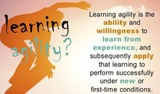
Two important questions to consider in the transformation of the business learning culture are:Who will the Learning Principles Expert answer to in regards to their responsibilities?What company resources will be necessary in supporting the transformation?In dealing with the first question we have to ask ourselves a question of clarification which is:"What should the profile of the person who oversees the needed transformation look like?" As I mentioned in a previous post, the number of books, articles and other forms of communication dealing with leadership skills are almost as numerous as grains of sand at a beach. The question to consider is what qualities need to come into the spotlight when you are talking about changing a learning culture. How does this scenario impact what we should see in a profile of someone who oversees the Learning Principles Expert? In general, the leadership competencies we should see when we are considering our goal of learning culture transformation might include the following:tech literatecollaborativevisionaryconfident and courageousresilientoutward facingsystems thinkerenergeticGiven the above, one quality that should be added is whether or not the individual has a high degree of "learning agility".Credit: www.learninglive.beWhy is this an important for leaders?Credit: www.ajoconnor.comWhat would this look like in observable terms?Credit: www.thecareercafe.co.ukWe have to keep in mind that such an individual acts more like a "human bridge" between the Learning Principles Expert and his or her collaborative team and upper management to whom he or she has to be able to translate and defend the efforts being made, act as a mediator, and at times be a staunch advocate on behalf of the collaborative group tasked with modifying the learning culture. What kind of resources would be needed to support the transformation of the learning culture? This is where it gets really interesting and cost efficient for business organizations because it takes advantage of the online world and blended learning potential in ways that promote "open innovation". More about this in the next post ..[Remember to feel free in sharing these posts on social media if you deem them good for promoting discussion]
Ken Turner
.
Blog
.
<span class='date ' tip=''><i class='icon-time'></i> Dec 06, 2015 12:03am</span>
|
|
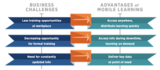
In the quest to transform a business organization's learning culture, it is important to consider the resources necessary to support such a challenge. To guide us in this quest, it is essential to be very much aware of how learners in this connected age use technology as a means to pursue individualized learning. The recent movement towards developing mobile learning where a learner can use any device anywhere there is high speed Internet access, 24/7 is becoming an important factor not only in formal learning but also in informal learning. In some major cities such as New York, plans are in place to develop Wanfi in which no matter where you are in the city, you have access to the web. The concept of "wifi hotspots" will soon become a curious artifact of this age.Credit: www.allencomm.comThe Formal and Informal Learning EnvironmentsIdeally, a learning culture should include a formal and informal learning component in order to be complete. In the formal learning environment, the use of a blended E-Learning approach would produce the best results. In such an approach the following characteristics would be evident:The Learning Principles Expert in collaboration with the Instructional Designer would focus on designing irresistibly engaging learning experiences in which the learners play active interactive roles.The use of problem based scenarios and simulations in an online environment would be used where collaboration among learners in the assigned tasks is a key skillset that would be developed and assessed.The role of the trainer would be as the "guide or mentor on the side" rather than the "sage on the stage". The trainer could take on an interactive role within the scenario or simulation where he or she helps guide by interacting with learners by asking them important questions during different points in the simulation or scenario. The purpose of the questions is to help the collaborative group clarify their decision making.Immediate and credible feedback is received by the learners. It is the experiential element of this approach that leads to a deeper, sustainable level of understanding.An important upgrading in IT resources is needed in order to transform the learning culture into a learning culture that is able to support both formal and informal learning. There are many companies that attempt to do effective blended and virtual E-Learning with network structures that are out of date. The Learning Portal One of the purposes of the learning portal is to promote collaboration and innovation by connecting with designed network structures beyond the walls of the organization. In order to do this globally, we can break learning portals into collections of networks or hubs that service a given area of the globe. The diagram below is an example of a collection of collaborative networks that serve as a template to conceptualize what a learning portal might look like. The arrows represent the pathways for collaboration among networks. Each of the networks have a specific function important to the development of the learning culture for an organization. The reason for the development of such hubs is to overcome the problem of asynchronous access for the purpose of collaboration. So what this means is that a group of employees could login to the learning hub which would then connect them to the network that they wish to collaborate in.This particular learning hub would represent one of six defined areas of the globe. These structures I have described before but with the advancement of technology since that time, we now have the capability to develop them. Within each of the network structures, interaction can take place in an immersive environment or a variation of it. An example of a regional learning hub is shown below:A description of the function of each of these networks in relation to the learning culture for an organization will be in my next post.[If you consider the above posting worth sharing for the purpose of thoughtful discussion, please feel free to share it on Twitter, Facebook...etc.]
Ken Turner
.
Blog
.
<span class='date ' tip=''><i class='icon-time'></i> Dec 06, 2015 12:03am</span>
|
|
The last post described how the Learning Portal was a gateway to one of 6 global hubs. The following diagram is an example of what a learner might see upon entering the Learning Portal. As I mentioned before, how immersive you want to make the experience is up to the organization. It is prudent to remember a couple points in this regard:Creation of effective immersive functional networks is not as difficult as it once was. We now have the necessary tools to design the immersive environment and they can be quite cost effective. The development of WebVR is just the beginning.If we have learned anything from the experience of Second Life VR it is that learning experiences that appeal to as many of the senses as possible and are social in nature tend to result in better engagement and deeper, sustainable learning for the learners. We can not defeat the idea that Man is a social animal but we can harness its potential. A Modifiable Rendition of a Learning PortalCredit: www.on24.com Naturally, the pathways could be modified to suit our interests but it does give you the concept in mind. The Learning Hub itself acts as the core of the central nervous system and could also be a stopping off point for those going and returning to the other networks.Functions of Connecting Networks In looking at the functions of these connected global networks, there are two points worth repeating:Business organizations are very much like living organisms. Like living organisms, balance and symmetry in the functions of its parts is necessary in order for it to remain vibrant and healthy.In an age of information and learning, the sector of education and the sector of business have a necessary digital symbiotic relationship that under the the previous industrial economy was not there.The Business and Innovation Council--The Path to Collaborative Open Innovation NetworksOne of the confounding barriers to innovation becoming systemic within a business organization is being able to devote enough organizational resources to it so that it becomes a natural company mindset and actually develops into a core value for the organization which like other core values the organization is unwilling to compromise on. There is great inequity among business organizations due to the ability of an organization to marshal enough resources in relation to the organization's size. As a result many organizations fall into the trap of "herding" mentioned in the previous post where an organization becomes merely a purchaser of innovation but never a creator of it. This maintains the industrial economy mindset in a world where it does not fit. The question then becomes:"Is there another potential solution that will restore some equity to organizations that are trying to re-shape their learning culture and establish innovative thinking as a core value?"The functions of the Business and Innovation Council Network are principally :Provide a forum for businesses to encourage new and innovative ideas by employees to be brought forward where they can be discussed openly with an understanding that proprietary concerns need to be addressed.Explore and nurture the development of Collaborative Open Innovation Networks as an alternative to what is presently available.What is a "Collaborative Open Innovation Network and what are its charactertistics"? Manos Giannadakis (2014) describes the characteristics of COIN's very effectively in the following Slideshare from Dec. 2014: Collaborative Innovation Networks from Manos Giannadakis Another important collaborative characteristic of this type of network is that it would be designed in such a way that it could collaborate with other councils in other global learning portals to share common problems and seek appropriate solutions that will keep innovation moving forward. It could also help coordinate business opportunities to help developing nations within a specific family of nations develop E-Learning access that is more in line with that of developing nations. The form that this could take could range from establishing appropriate infrastructure to the creation of targeted MOOCS to address educational needs specific to a particular region.Next---The importance of Cross-Disciplinary Research and Mentor Networks to business organizations
Ken Turner
.
Blog
.
<span class='date ' tip=''><i class='icon-time'></i> Dec 06, 2015 12:02am</span>
|