Blogs
|
Gareth Price's blog post was featuredWhen Wearables Can Talk to Each Other: Happiness Is an Open-Source ProjectAs a digital marketing agency, Ready Set Rocket likes to keep its finger on the pulse of new technologies. Recently, we’ve started experimenting with wearable technologies, a market we find very promising, but prone to a certain kind of feverish hype and techno-utopianism. Products are announced to great fanfare that record a certain metric or data point, but forgetting to answer the question of how recording all that data will benefit or help an end user. Devices that fail to fulfill real needs end up quickly relegated to a dusty shelf after the initial novelty wears off.In a world where consumers demand and even expect technology that can connect to other devices, wearables just aren’t ready for their close-up. The majority of these products comprise what are basically self-contained empires: Google Glass doesn’t talk to the FitBit, for example. To achieve a future where wearables truly benefit people’s lives, they need to talk to each other. What’s more, the data they are capable of producing needs to be more accessible to end-users and other devices.To further these efforts, we advocate for wearable makers to open up their devices and to focus on how devices will improve people’s happiness and satisfaction.One of the areas we see as most closely tied to how technology will revolutionize the science of individual happiness is Brain Computer Interface (BCI) technology. BCI technology employs electrodes to read a person’s brainwaves, and to see how certain thoughts trigger certain actions or emotions, a process known as biofeedback. Right now, BCI devices are rather clunky and awkward—think of a helmet full of electrodes—but over time, they will evolve into more unobtrusive headbands that people can slip on very simply. BCI devices combined with software to monitor emotional states will give us a stronger idea of someone’s true reaction to a product or service. Unlike traditional focus group testing, where responses are highly subjective and filtered through conscious filters, BCI technology elicits one’s subconscious response. Marketers can then compare the responsesBCI devices combined with software to monitor emotional states will give us a stronger idea of someone’s true reaction to a product or service. Unlike traditional focus group testing, where responses are highly subjective and filtered through conscious filters, BCI technology elicits one’s subconscious response. Marketers can then compare the responses to multiple variations of content, product elements or services to discover patterns of responses. This way, they can advise brands on creating products offering the best possible consumer experiences.Although BCI technology is potentially capable of providing unique insight into a range of human emotions, both positive and negative, right now we’re interested in measuring what we call the Happiness Quotient. This is how wearable technology, especially in the form of the headsets and other devices that read BCI data, might contribute to helping brands and creators to develop products and experiences that increase individual happiness and satisfaction.One way we can do this is by using BCI technology to measure and create responses that are readily definable as specific emotions, from happiness, sadness and anger, to engagement and focus. At the moment, this is difficult. We can read brainwave frequency and amplitude modulation to show us certain responses to specific stimuli, but the algorithms that can pull together these groups of responses to indicate a specific emotion are primitive.Speech recognition technology offers a good analogy for understanding this problem. While it has existed in some form since the 1950s, it’s only recently become useful in a general purpose way. It has always required extensive, strong training to recognize a particular voice. Current generations of speech recognition, for example Apple’s Siri, or voice-activated call-center technology, has improved on this, with a greater capability to understand different voices than in previous generations. It took years of researchers collecting thousands of voices repeating certain words over and over, however, for this to happen.To create better products and services, we need similar amounts of data on emotional inference. Just as with speech recognition, we need to put BCI-enabled headsets onto a large number of research participants, gauge their response to a stimulus, and use that to calibrate a model that can be applied to everyone. But in order to create the algorithms that will tell us that this product or element makes this person happy, or this person bored, we need to gather a large amount of this information, ideally in a quick timeframe.This is where the open source element comes into play. If we can offer access to the data BCI devices generate to everyone, it will make it that much easier and quicker to create algorithms defining specific types of emotions. Makers of BCI-enabled wearables can aid in this by allowing users to easily access to the data they collect on emotional responses. They can also make it possible for consumers themselves to engage in training these algorithms by allowing them to transmit (in a private, protected manner) their own data back to the manufacturer for research purposes.Some manufacturers of headsets have developed proprietary algorithms that have begun to infer some emotions. Unfortunately, they have kept this information proprietary. Yet they could also benefit from open source BCI technology. These proprietary algorithms are trained with data from only a small number of focus group participants. With access to data from other sources, they could greatly improve the accuracy of those algorithms.There are efforts underway to manufacture open-source BCI devices. One organization making promising headway in this is OpenBCI, a non-profit that designs affordable open source BCI-enabled technology. It has developed a circuit board that is compatible with any type of electrode, and can be used to sample electrical brain activity (EEG), muscle activity (EMG), heart rate (EKG), and other parameters. It is compatible with any type of electrode and is supported by a growing open-source framework of signal processing applications. In essence, it allows users to build their own BCI-capable headsets.Through allowing individuals to measure and better understand their emotions, BCI technology is the key to a potential revolution in the science of individual happiness. By opening up devices, data and source code, device manufacturers will tap into a growing ecosystem that will result in a wide range of as-yet unimagined applications for their devices that will fulfill real human needs.By allowing open access to devices and data, marketers like Ready Set Rocket will be able to harness it to help create products and services with our clients that will improve people’s satisfaction and happiness. It’s that Happiness Quotient—an element no one should overlook in the rush to crown the next big thing.Gareth Price is Technology Director at Ready Set Rocket.See More
Jeff Fissel
.
Blog
.
<span class='date ' tip=''><i class='icon-time'></i> Jul 14, 2015 08:41am</span>
|
|
Guest Post by Scott Edinger
I’m delighted to host this guest post from a former colleague and thought leader, Scott Edinger. He and co-author Laurie Sain launch their book, The Hidden Leader: Discover and Develop Greatness Within Your Company, this week. It’s a practical, actionable guide for anyone who is interested in enhancing their own effectiveness or building leadership capacity within an organization. The article that follows gives you a flavor for how The Hidden Leader may help you!
If you are a leader in any capacity whatsoever, odds are that you have heard, or perhaps even been told that you should be more inspiring. When I co-authored the book The Inspiring Leader, we studied the ability to inspire and motivate others and found that it was the most influential leadership trait promoting employee engagement. Additionally, when subordinates were asked what characteristic they most wanted from their managers, it was to be more inspiring. But who has the time?
The secret is not to create additive work in your efforts to inspire others. Rather, take small steps to change your approach to doing the work you must already. So as you try to be more inspiring to those you work with try the following.
Be an exemplar of the behaviors you wish to see in others. If you want to instill greater collaboration in your business, be a role model of doing so and visibly demonstrate your cooperative efforts with others. Discuss it in meetings. Celebrate team success. Recognize collaboration efforts elsewhere. Behaviors of key leaders tend to proliferate. Make sure you are proliferating good ones by getting out in front and displaying the traits you want to see flourish in your organization. You know this, right? People will do as you—and other key leaders do. This takes virtually no extra time.
Connect on a human level and use emotions to your favor. One of my clients is a manufacturer of major commercial equipment. In a meeting with their senior managers we discussed that while they build machines, they build those machines through people. We don’t operate like machines and because of that we need to connect with those around us as people. Not as a job function to be completed or a task to be accomplished, but as people with feelings, goals, and individual needs. For some leaders a good place to start is simply using some good manners (something I find all too often lacking). For others, understanding a person’s point of view and what is important to them, is a powerful means to further develop someone’s engagement in your team. You are already interacting with the people you want to inspire so take a few precious minutes to change the tone and tenor of the conversation.
Prioritize innovation over problem solving. The best leaders I work with are constantly seeking to raise the bar. When presented with challenges, they use them as a chance to innovate and try something completely different and creative. My avatar for innovation is Antanas Mockus, the former Mayor of Bogotá Colombia. When confronted with major traffic problems in Bogotá, he didn’t go the conventional problem-solving route of more police, harsher fines, or typical traffic problem solving approaches. He hired 420 mimes to mock people misbehaving at intersections throughout the city. Fatalities and accidents decreased due to his very creative approach. As an aside, this is not permission to go mock your employees. That’s not the point here. You are already spending this time trying to solve problems so thinking creatively doesn’t have to take more time. But it does require you to be intentional about it and create an environment where it is safe to express new ideas.
Stop emailing and do more live communicating. Sure, email is a form of communication, but it is one-dimensional. Personal interaction is best when you need to communicate matters of strategic importance, engage in discussions about alternatives, or topics that are nuanced and can’t be sufficiently addressed using the forum of email. I’ve heard suggestions that when an email thread has been commented on three times and an issue is still lingering that email is no longer an effective medium to resolve the issue. If you are not in the same location, pick up the phone. Walk down the hall. Use a videoconference. Anything that brings additional dimensions to your communication with others. Don’t kid yourself about email being efficient. Just because you send an email doesn’t mean something is done. Try adding up the collective wasted time on extending decisions, discussions, and deliberations on email. In fact, I’ll go as far as to say this will save you time.
Develop the skills of someone else. Nothing inspires loyalty like helping someone improve. This rarely occurs as an HR or talent development initiative as a means to develop bench strength. This happens most effectively when a leader highlights the growth and learning of people on their team. In one of my first jobs I worked for a manager who prioritized my development with training, coaching, and investing in my growth as a professional. Twenty years later he still inspires me when I speak with him. Helping others to grow and coaching to improve performance almost always drives loyalty, increases engagement, and ultimately improves performance. This will take you more time. But it doesn’t have to be a lot. In fact, if you focus on developing others in the context of the work you are doing through modeling, planning, and debriefing, you will accomplish two things at once.
None of these are particularly onerous time commitments. Pick one or two of these areas of focus and work on them. Here’s the trick. It is tough to become an inspiring leader with one action per week that you remember to check off at 4:45 pm on Friday afternoon. You need to create simple and demonstrative actions daily, even multiple times daily to develop a habit with impact. In most cases, it is not about creating additive work. Rather, it is finding ways to integrate new behaviors in the work you are already doing. Surely you can spare ten minutes a day, right?
Scott Edinger is co-author of the new book The Hidden Leader. As founder of Edinger Consulting Group, Scott has worked with leaders in nearly every industry sector, helping them formulate and implement growth strategies, increase revenue and profit, develop leadership capacity, drive employee engagement, and attract and retain talent.
The post Be More Inspiring In Just Ten Minutes Per Day appeared first on Julie Winkle Giulioni.
Julie Winkle Giulioni
.
Blog
.
<span class='date ' tip=''><i class='icon-time'></i> Jul 14, 2015 08:40am</span>
|
|
Barry Fischer's blog post was featuredData Shows Why Utilities Worldwide Should Pay Attention to the March 20 Solar EclipseThe world’s most sun-powered nation is about to encounter an unusual complication: the moon.When a solar eclipse sweeps across Europe on the morning of March 20th, the moon’s passage in front of the sun will cast a sudden and giant shadow across Germany — a country whose reliance on solar energy is, by international standards, astronomical.Although Germany is no bigger than the state of Montana, it boasts more than a quarter of all the solar electric capacity installed on earth. Its 1.4 million solar energy systems produce nearly 7 percent of the nation’s electricity. (In the US, solar provides about 0.5 percent.) And during the sunniest hours of the year, photovoltaic systems have satisfied up to half of Germany’s power demand.That raises an interesting question: when the moon blocks up to three-fourths of the sun shining on Germany later this month, how will electric utilities and the power grid respond?To shed some light on the problem, we cracked open Opower’s energy data storehouse — the world’s largest, spanning more than 55 million households worldwide. Our findings highlight the fascinating challenges of a solar-powered energy future, and how new technology and innovative utility strategies will be essential to the operation of next-generation power grids.Energy Data From a Recent Solar Eclipse in AmericaIn October 2014, we caught a glimpse of how an eclipse can affect a region that’s teeming with solar panels: the Western United States.The Western US comprises several of the top solar states in America, and its sun-fueled energy portfolio continues to expand briskly - across large-scale solar arrays as well as customer rooftops.So when a partial eclipse obstructed 30 to 50 percent of the sun on the afternoon of October 23rd, the western power grid felt it. Utility-generated solar electricity production plunged between 1:45 and 4:30pm, before returning to a typical late-afternoon pattern.During an eclipse over the western US on October 23rd, 2014, utility-generated solar power production plunged (1:45-4:30pm), before returning to a typical late-afternoon pattern (Source: CA ISO)Rooftop solar systems responded similarly. Electric usage data from a sample of 5,000 solar homes in Opower’s database shows that their shipment of excess power to the grid — indicated by negative electricity usage in the chart below — rapidly contracted during the eclipse. Solar customers exported 41 percent less electricity than usual between 1:45 and 4:30pm.Looking at the same data from a different angle, you clearly see the steep drop-off in electricity supply: solar homes’ export of power to the grid declined markedly faster than usual.How did the sudden drop-off in solar production affect the region’s power grid? In short, it required utilities and grid operators to fill in the gap.The electric system relies on exact second-by-second balancing of demand and supply. To prevent grid instability and blackouts, sudden decreases in solar power (or any kind of power source) must be compensated by changes elsewhere in the system, like turning on other power plants, reducing electric demand, or discharging energy stored in batteries.That’s precisely what happened in the western US. At the peak of the October 23rd eclipse, which took more than a 1,000-megawatt bite out of solar power supply, the region’s primary grid operator responded by dispatching an unusually large increase in thermal (likely gas-fired) electricity generation.But what would happen if we were to raise the stakes, beyond our western US example? What if we tripled the amount of solar panels installed and doubled the severity of the eclipse?For an answer, we look to Germany.What to Expect in GermanyBetween 9:30am and noon on March 20th, Germany’s 1.4 million solar power systems are in for a wild ride.In the span of 75 minutes, the moon will go from occluding 1 percent of the sun’s glow to 73 percent. Solar production will fall, and fall fast — up to 2.7 times faster than it normally ever does, according to an analysis by the University of Applied Sciences in Berlin. The effect is similar to turning off a medium-sized power plant in Germany every minute — for a full hour.The reverse is also true. As the moon recedes from blocking 73 percent of the sun to blocking none of it, solar power output could skyrocket by as much as 18 gigawatts in just over an hour — up to 3.5 times faster than usual. (Note that in the Western US case study, this kind of rebound in solar production was largely immaterial, since the eclipse ended near sunset.)That said, there’s also a chance that the eclipse’s slingshot effect will be less severe than the chart above suggests. The ultimate outcome depends on cloud cover. If clouds are already blocking the morning sun, for instance, the eclipse will cause solar power production to dip from an already low level to a somewhat lower level than that, and then inch back up again.While Germany’s eclipse is perfectly predictable, the weather on March 20th is not. That means utilities and grid operators have to prepare for the most extreme impact and the most dramatic ups and downs in solar power production.How will they do it?As in the Western US, managing the impact of the German eclipse will hinge on real-time flexibility in power grid operations. Fortunately, that’s something Germany is good at, as evidenced by its impressive reliability in operating a grid that gets 17 percent of its electricity from solar and wind.When the eclipse hits and solar power supply starts to tumble, German energy providers and grid operators can respond with a combination of strategies — such as releasing energy stored behind hydroelectric dams, turning on quick-start natural gas power plants, or importing electricity from neighboring countries.To complement those tactics, utilities could also modulate power demand — by encouraging their customers to avoid or delay electricity usage during the first half of the eclipse. This approach would resemble one that several American utilities deployed with Opower last summer to shave power demand by up to 5 percent.Reciprocal strategies could be used when solar power quickly rebounds during the second half of the eclipse. Energy providers could store excess energy behind hydroelectric dams, ramp down gas power plants, export electricity to other countries, or help customers shift their electricity demand toward that time window.Given the German power sector’s strong record of grid reliability and their strategic flexibility planning for March 20th, the country will likely navigate the day’s unique operational challenges without a hitch.But in a future brimming with more solar power, one has to ask: could the situation posed by Germany’s solar eclipse become the norm, rather than the exception?Foreshadowing the Future of Utilities and the GridThe upcoming eclipse over Germany’s solar panels provides a sneak peek at a fascinating challenge facing tomorrow’s electric grid.Namely, how can utilities and grid operators achieve the large-scale flexibility required to embrace an energy resource that, by its nature, rapidly turns on and off — whether predictably due to eclipses and sunrises/sunsets, or unpredictably due to clouds and weather?The challenge Germany confronts on March 20th may actually become a daily occurrence within 15 years, according to a presentation by one of the country’s largest electric transmission operators. Assuming the German government achieves its target of 66 gigawatts of solar capacity, a clear-sky sunrise in 2030 could drive an increase in solar power supply as steep as the rebound phase of 2015’s eclipse.During sunrises in 2030, the scale of Germany’s solar installations could drive an increase in power supply as steep as the rebound phase of 2015’s eclipse (Source: Ecofys and 50hertz).Grid authorities are facing a similar future in renewable energy powerhouses like California, which is striving toward 33 percent renewable electricity by 2020. One oft-cited statewide scenario suggests that at sunset during some parts of the year, the sudden drop in solar power will necessitate an extremely brisk ramp-up of non-solar resources (labeled "net load" in the chart below) to compensate for the sun’s departure and, simultaneously, to meet the evening’s high electric demand.The "duck chart" suggests that flexible, non-solar energy resources will increasingly be called upon to compensate for the sudden drop in solar power when the sun goes down (Source: CA ISO).As the electricity produced by renewables like solar and wind continues to grow, the grid will inevitably see larger swings in power production. That’s why flexibility measures like fast-ramping power plants, adjustments to customer energy behavior, dynamic power pricing, energy storage, and a range of other strategies represent a critical dimension of the power grid’s evolution to meet the needs of the 21st century.As far as upcoming eclipses go, it’s not just Germany that will get to showcase the flexibility of its electric system. America’s increasingly sun-fueled grid will be forced to adapt to the moon’s shadow for multiple hours in 2017, 2023, and 2024.It will require ingenuity, but if we can put a man on the moon, innovative utilities will find ways to deal with the moon’s shadow. By doing so, they’ll be taking one small step toward creating the electric system of the future.Barry Fischer is the Head Writer/Editor at Opower.----------Special thanks to: John B Lee (graphics) and Casey Davis-Van AttaData Privacy: All data analyzed here are anonymous and treated in strict adherence to Opower’s Data Principles.Author’s note: The analysis and commentary presented above solely reflect the views of the author(s) and do not reflect the views of Opower’s utility partners.Methodology and Technical Notes: Utility service points analyzed are located within a common area of the western United States bounded by a 200-mile radius. Usage statistics are per-household averages based on 15-minute-interval electricity consumption data measured on October 23rd, 2014.Solar households (n=5,240) are defined as residential utility customers who possess an onsite renewable energy system that is bi-directionally interconnected with the electric grid, and that exported power to the grid on the day of the partial solar eclipse.Projected electricity usage and exports are modeled using a quadratic polynomial function, to represent a baseline pattern under typical, non-eclipse conditions. The function corresponds to a trend line that symmetrically connects pre-eclipse negative usage values (9:00 am - 1:45pm) with the eclipse day’s terminal negative usage value (4:30 pm) - thereby constructing an approximation of baseline values for the eclipse period itself.We portray Germany’s eclipse scenario as a tripling of solar panels relative to the western US. This portrayal is based on data from the Solar Energy Industries Association, suggesting that cumulative installed solar electric capacity across California, Arizona, Nevada, Colorado, and New Mexico is approximately 12 gigawatts. Germany’s installed photovoltaic capacity is estimated to be greater than 38 gigawatts.We compare the German eclipse’s first-half impact to turning off a medium-sized power plant in Germany every minute for a full hour. This comparison is based on the prediction that, given clear skies, the reduction in solar output in the first 60-75 minutes of eclipse will be between 6,000 and 11,300 megawatts. Towards the lower end, this represents a change of ~100 megawatts per minute; the average size of a natural gas ("Erdgas") power plant in Germany is also ~100 megawatts.See More
Jeff Fissel
.
Blog
.
<span class='date ' tip=''><i class='icon-time'></i> Jul 14, 2015 08:39am</span>
|
|
For decades, leadership development has been a significant focus of businesses worldwide. Billions of dollars and millions of hours have been invested in a wide range of activities to build the capacity and effectiveness of those charged with guiding and directing organizations and the people within them.
But today, many organizations are implementing a small change in semantics that could lead to big changes in terms of their leadership development efforts. They’re dropping the ‘ship’ and focusing on leader development instead.
What difference can the absence of four letters in a word make? A lot.
Leadership development in many organizations is a function, a set of processes and activities aimed at turning out cadre after cadre of ready, willing and able individuals who’ll keep the business running. It’s a well-oiled machine that operates on metrics and margins. It generally espouses a global set of competencies or capacities that all leaders must learn and master - all in service of the needs of the business.
Leader development, on the other hand, is personal. The focus is not on building organizational capability by generating what some might interpret as an undifferentiated pool of talent; rather, it’s about growing the individual in unique ways that complement their strengths, talents, and interests. It also targets key areas for improvement that will support the leader as well as the business.
Transitioning from leadership to leader development shifts the focus ever so slightly to the individual and in so doing creates a dynamic tension - even an obligation - to the leader investing his or her time in development. It allows - even encourages - those charged with growing talent within an organization to focus on the needs of a talent pool of one (the individual) rather than a broader population and to craft tailored plans and solutions for each unique leader.
A human resources director recently summed up this sentiment: "When I used to think about leadership development, I came at it from the perspective of the needs of the organization. Don’t get me wrong. I’m still focused on the business. But when I think about leader development, people’s faces pop into my mind. You can’t help but approach the work differently when it feels that personal."
The shift from leadership to leader development infuses additional humanity into the process. And this humanity elevates the importance of - and generates more opportunities for - a focus on the soft skills (which, let’s face it, are the hard ones anyway). Trust, communication, and empathy take on greater significance when the focus is on the leader versus the broader capacity.
Putting the object of development at the center of the equation clearly benefits the leader; but it also benefits the organization. Buy-in, accountability, and commitment - they all grow. Individuals can sense the shift. They appreciate the genuine attention to their development needs. And they have more skin in the game as a result.
So, as organizations struggle to elevate engagement, build motivation and commitment, and compete in today’s hyper-competitive environment, perhaps a small semantics change should be considered. Perhaps it’s time to jump ‘ship’ on leadership development… and set sail in the direction of leader development instead.
The post Should the ‘Ship’ Sail on Leadership Development? appeared first on Julie Winkle Giulioni.
Julie Winkle Giulioni
.
Blog
.
<span class='date ' tip=''><i class='icon-time'></i> Jul 14, 2015 08:39am</span>
|
|
Rich Waidmann posted a blog postFive Ways to Rid Your Company of Office JerksThere are a lot of things that impact a business - technology, location, economy, workforce, etc. But have you ever stopped to think of how the different factors of your workforce, such as personality, play a role in your company’s success or failure? Well, maybe it’s time you do.Recent research reveals that more than half (55 percent) of today’s IT professionals admit to having been bullied by a colleague. This number highlights the fact that the conversation of bullying and jerk-like behavior needs to extend beyond the schoolyard - and into the office. And not just to establish a more pleasant workplace, but a more successful one as well. Those same professionals report the ways in which their department is impacted by poor behavior:Low employee morale: 59 percentEmployees take on a "lone wolf" mentality and prefer to work alone: 42 percentDecreased product quality: 40 percentInability to get work done: 34 percentDespite these statistics, 57 percent of companies lack a zero-tolerance "office jerk" culture. But, with more and more competition for the best talent - coupled with the need to remain competitive (both from a hiring and business perspective), it’s time to rid the workplace of office jerks altogether. Here are five steps to doing so:1. Support and promote positive relationships. The research shows that providing an environment that supports positive relationships among colleagues leads to the highest job satisfaction (43 percent) followed by office locations (27 percent), the culture (15 percent) and investment in employees (11 percent).2. Create a "water cooler" culture. There is a real value and significance to having a social work environment. If you don’t have a water cooler, don’t worry; the research shows you don’t have to: • 77 percent report the socializing takes place at people’s desks • 40 percent around the coffee maker • 27 percent in the conference room • 23 percent outside the office (e.g., at a bar, restaurant, etc.) • 14 percent around the actual water cooler3. Implement a formal culture. Create a binding "contract" and have every employee sign it. This should go along with a set of guiding principles within your employee handbook that outlines your company’s values, including behavior - and expectations around it.4. Have a process (and implement it). If someone is guilty of exercising behavior that doesn’t align with those company values, it’s important to address it immediately. If there are employees that are chronic abusers—regardless of their title or importance—then it’s critical that they be asked to leave the organization.5. Join the movement. As the ‘The Jerk-Free Company’ since 1996, we are taking the next step - creating a "No Jerks Allowed" movement to get other companies to take the "jerk-free" pledge. We’ve launched a new website dedicated to the movement (www.nojerksallowed.com) with videos, blog posts, content and anecdotes. Consider it a resource as you look to rid your workplace of jerks.The research shows that taking a stance against bad behavior, like bullying, can lead to improved employee morale and increased job satisfaction. Are you ready to stand up - and say no - to jerks?Rich Waidmann is the founder of Connectria.See More
Jeff Fissel
.
Blog
.
<span class='date ' tip=''><i class='icon-time'></i> Jul 14, 2015 08:39am</span>
|
|
This year will go down in my professional life as "The Year I Met my Online Personal Learning Network and Lived to Tell the Tale (Ad Nauseum)".
On average, every month I have met at least two people from my wider personal learning network whose connections I made through Twitter, LinkedIn or Yammer. I would get an email, direct message or a request to ‘have a coffee and chat’ with someone because they have a great experience to share, a story to tell or simply, they are want to learn what’s happening in our industry.
Of course, the most unforgettable experience was meeting my wider network in London in August this year which escalated our Twitter relationship to a whole new different level.
Usually these meetings are over a cup of coffee or lunch, away from our respective workplaces and in a social or informal environment. In the case of the London tweet up it was a lunch at a brewery followed by drinks at a nearby bar.
A highlight of my recent trip to the UK was meeting Colin Steed, Lesley Price and Jane Hart in person (who I was in awe with to say the least).
If it’s a chance to get out of the office, get some fresh air and meet someone new in your line of work, what’s not to like?
But this got me thinking what have we actually achieved from meeting face-to-face after our online connection?
If I had to explain the benefit to my boss, how would I explain the value of a network?
Before this year, I did not know @LearnKotch however, after meeting on Twitter, we realised that we had much to share and learn from each other. Coming from similar backgrounds, we connected in not only our work but culturally. From this meetup, we organised tours of our respective workplaces and got to meet each other’s work teams. Our online learning content development team met his team and together, in a warm boardroom on a Friday morning in July, we shared our success, stories and frustrations with our respective work. We shared tips and techniques of online courseware design and development and learned the challenges that go with working in different organisations and business clients.
This meeting culminated with an arrangement to share particular online course content that would have saved our organisation time, money and resources rather than designing from scratch.
Secondly, I met Jasmine Mahlki through Twitter. She explained that her organisation was considering implementing Yammer and wondered if I had any networks whom she could speak to. Our organisation has used this social networking tool for some years already and I had the perfect person in mind. With a quick phone call to him, he was only to happy to help out and provide any advice for Jasmine.
These are just two of my stories on the value of learning networks that directly impacted my role - and they follow a pattern.
The first was the online connection itself through social media. The second was the follow-up with a face-to-face conversation and then a third was an actual collaboration or shared project, task or action that resulted in some benefit and support.
The result of these three actions changed the relationship to one of mutual respect, trust, equality and collaboration.
A true peer-to-peer learning network.
So with these in mind since my return from the UK, I had been thinking about creating a ‘space’ where people who meet online can meet face-to-face in a social, informal setting away from work where they can freely converse on things that are important to them - much like what I did with my PLN when I met with them in person.
A ‘space’ where there were no formalities, no structure or agendas (because frankly, let’s face it, we get this at work and it does our head in) but just conversations because the actions and the stories will naturally evolve out of these dependent on the people taking part.
Last week I participated in two tweet chats. The first one was the Educational Technology MOOC #etmooc which was a catch-up for those who had completed this cMOOC. The chat revolved around questions of what people were doing in their lives post ETMOOC and how they have implemented the educational technology tools they learned into their work. The second chat was the weekly Learn Chat #lrnchat on Friday morning. The topic of this chat was related to communities.
Paul Signorelli (@trainersleaders) had been in both of these discussions and he posted a link to the Wikipedia article on Third Places, a concept by Ray Oldeburg from his book, The Great Good Place.
Wikipedia says, "Oldenburg calls one’s "first place" the home and those that one lives with. The "second place" is the workplace — where people may actually spend most of their time. Third places, then, are "anchors" of community life and facilitate and foster broader, more creative interaction. All societies already have informal meeting places; what is new in modern times is the intentionality of seeking them out as vital to current societal needs."
This is when the jigsaw puzzle fell into place. I had my ‘space’ and I had my name. It was exactly what I was trying to define in my own head and it came from someone who was in my Personal Learning Network from San Francisco. He also wrote about it in his blog post, When Communities of Learning Discuss Community - and Produce Results.
The results were immediate. I knew exactly what I had to do and how to do it because Paul had given me that piece of the puzzle that was missing from my jigsaw puzzle carton. He may as well have been in the same room and handed me the piece and said, "Helen, I do believe that THIS is what you’re looking for".
YES!
In the next hour, I set up a Meet Up group called Third Place - a place for Melbourne based learning professionals in all industries to converse and network in a social, informal environment such as cafes, library, pubs or restaurants.
In the first week of going live, we had 27 people sign up many of whom I hadn’t connected previously but who may have read my blog or Twitter posts. Others had an interest in learning and wanted to connect with others in the field for networking.
Our first event will be held in a couple of weeks at the atrium in the Royal Melbourne Hotel for after work drinks. It will be an opportunity to meet some new faces in the one place and establish new networks and friendships with people in our line of work. From there, we’ll play it by ear but the intention is to spread the events with morning, afternoon meetups in cafes as well as breakfasts and lunches.
Whoever rocks up will be warmly welcomed and the beginning of a wonderful network and friendships will unfold.
I can’t wait. Care to join me?Filed under: Development, ETMOOC, Uncategorized, Work Narration, XPLRPLN Tagged: 2013, etmooc, Lrnchat, October, October 2013, personal learning network, PLN, Third Place
Helen Blunden
.
Blog
.
<span class='date ' tip=''><i class='icon-time'></i> Jul 14, 2015 08:39am</span>
|
|
Guest Post by Dr. Stacy Feiner
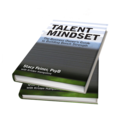
I’m delighted to celebrate the launch of Talent Mindset with this guest post by Dr. Stacy Feiner. In her just-released book, Stacy provides a step-by-step process for acquiring, developing and deploying people within any organization. It’s no-nonsense, in-the-trenches advice that will help any leader make the most of his or her most valuable asset, talent.
Here are important questions to ask yourself:
How is training being delivered at your organization?
How are your people learning?
What tools are you providing to facilitate engaged mindshare?
I find so often that business owners are locked into the belief that you don’t need to develop someone you hired to do a job. In other words, if someone needs to be developed, they’re not right for the job.
On the other hand, owners know that people need to develop on the job to grow, but they don’t know how to tell the difference between someone with high potential or someone who is just tapped out.
Most training professionals acknowledge collaborative activities are critical for workplace learning, and when typical corporate training is deployed, workers tend to get frustrated and "check out." The old way of training doesn’t produce the type of worker needed to succeed in today’s networked society. That is, someone who is collaborative, who creates value, fulfills personal and company goals, is flexible and forward thinking.
There is a movement that is changing the way we work, the meaning we give to work and what we should expect from our careers. There’s a radical paradigm shift that is altering the formal, rote training we applied during the Industrial Age into a network-based mindset that emphasizes knowledge and connection, and that really works for today’s Information Age.
In a Strategic Talent Management framework, Training is an enterprise-wide campaign that sets the tone for your expectations of employees’ performance. It is the foundation upon which you will eventually build Performance Management and Leadership Development.
Training is also a Recruiting tool that attracts valuable players who desire a learning environment where employers invest in their success, and support their growth.
When we change the way training is formatted and delivered, we empower the people in our companies to engage, collaborate, think strategically and deploy their talents for the purpose of reaching the organization’s goals.
What do you think? How is training changing in your organization? How should it?
This is an excerpt from Talent Mindset (available on Amazon). Learn more at stacyfeiner.com or follow Stacy on Twitter @stacyfeiner.
The post Training: The New School appeared first on Julie Winkle Giulioni.
Julie Winkle Giulioni
.
Blog
.
<span class='date ' tip=''><i class='icon-time'></i> Jul 14, 2015 08:39am</span>
|
|
Jeff Brown's blog post was featuredHow to Stop Credit-Muling Theft and Cell Phone Fraud Dead in Its TracksSmartphone fraud has turned into a cash-cow for criminals who are developing increasingly simplistic ways of scamming mobile carriers. And while street theft dubbed "Apple Picking" is one thing, a more sophisticated crime is also at hand.In the U.S., popular carriers like AT&T and Verizon often subsidize the phone to encourage customers into multi-year contracts. The device that normally costs $700 is sold for $200 upfront and the rest is rolled into the monthly fee. This is where fraudsters are taking advantage, and where mobile carriers are starting to fight back.The all-too-common operation called credit-muling works like this: Middlemen are dispatched to multiple points of sale, offering the homeless and others on the street $100 to buy a smartphone on their behalf, using fraudulent customer data. The hired-help buys a number of phones using fake credentials for about $200 each, with obviously no plans to follow-through on paying the two-year contract.Then, the middle-men turn around and sell these brand new phones for what they’re worth - roughly $700 - often overseas.Fraudsters also execute similar schemes online. Five cyber criminals buy five smartphones from the same carrier at the exact same time, using the exact same fraudulent credentials. By the time the information is processed and flagged, it could be 24-48 hours later.The multi-billion dollar smartphone market is turning the tables, however, using customer analytics to put an end to this type of fraud in real time. Some national carriers are now implementing a unique big data toolset to run a customer’s credentials at the point of sale, causing any number of red flags to appear before the person ever sees the new phone. By assessing applicant information during point-of-sale transactions to reject fraudulent smartphone purchases from occurring, carriers can beat these criminals at their own game.Using these point-of-sale analytics could yield literally astronomical savings for the telecommunications industry. These customer analytics detect 99.9 percent of credit-mulers seeking to scam the system. Given that carriers can lose anywhere between $400 and $1,500 per fraudulent application, eliminating this activity altogether clearly adds up.To learn more about credit-mule schemes, read this informative WIRED article.Jeff Brown is a Product Manager at Infogix.See More
Jeff Fissel
.
Blog
.
<span class='date ' tip=''><i class='icon-time'></i> Jul 14, 2015 08:39am</span>
|
|
I think I found my new cMOOC hit.
After Educational Technology MOOC #etmooc, I searched high and low for a connectivist MOOC that could give me the same ‘highs’ as I had experienced with this one. I was looking for a MOOC where I could apply what I learned to my work immediately, but also one where I looked forward to checking in the Google + community to see what everyone else is talking about and doing - and make a new friend or three.
The MOOC is called Exploring Personal Learning Networks and it was created by the team @JeffMerrell and @KGS_Scott Kimberly Scott who are also part of Masters Program Learning & Organisational Change at North Western University.
When I first saw the cMOOC advertised in Jeff’s tweet, I immediately registered in the Google+ Community as this was a topic of great interest for me in particularly, how organisations could encourage their staff to broaden their own enterprise learning networks or external learning networks for their own professional and personal development.
I saw an opportunity for me to bring the concept to life within our own organisation using the social networking tools we have available. I saw it part of our future strategy for Learning and Development professionals to have their own networks and then to promote, encourage and support others within the organisation to find their own in their line of work.
I don’t have the answer for how I can do this practically, but my instincts tell me that if I’ve had such a wonderful experience connecting, networking and learning from my own global network through social media - and with some of them, actually collaborating on projects - then Personal and Enterprise Learning Networks have merit and worthy to explore further.
Maybe it’s an untapped area of opportunity for organisations?
I just need to be able to define the benefit and value in hard tangible financial terms to my senior managers who may see this as just an excuse to socialise online. But lucky for me, one of the tasks we have to do is to come up with a pitch to sell the concept of PLNs to our organisation.
In the first week, we were encouraged to do two things:
Set goals that we wanted to achieve with our PLN
Try something new
What are my goals?
A survey was uploaded onto the Google community and we were encouraged to submit our goals into this survey which collated the data. The results are quite interesting - and you can see it here.
What really piqued my curiosity is that in the question "Which competencies are you focussed on developing" many of the responses were on confronting direct reports and conflict management. My instant reaction was huh?
Lucky this result was balanced out by personal learning and innovation management as I was beginning to think that everyone was going to have the same issue I was having - namely, how do we explain and demonstrate the value of PLNs to our managers and stakeholders without being ready for some robust debate, discussion and maybe an argument?
My goals were mainly related to the following:
Continue to broaden and increase my personal learning network
Develop professionally and personally
Establish a freelance consulting business in the long term
A short term goal that had been brewing in my mind recently and which I wrote a recent blog post titled, Third Place in Company and Conversation: A Place Where My PLN Gathers was to establish a Meet Up group of Melbourne based Learning and Development professionals in all industries who are on Twitter or social media. I established Third Place and we will have our first after-work social introductory drinks next Thursday night at the Royal Melbourne Hotel (if anyone is interested in coming along - see the website to join and and get details!)
I’m excited with Third Place because not only will I meet my extended Melbourne based PLN in person, but I will also create ‘assets’ or responses to weekly activities for the Exploring Personal Learning Networks MOOC using these people too (if they want to get involved).
Although it’s still an idea mulling around in my head, I’m thinking about creating a video montage of real people talking about how a PLN helped them in their role to state the case for PLN and advocate their role in an organisation.
Real people, real stories…that’s the pitch.
Try Something New
@AlisonSeaman tweeted a question asking if anyone had used the application Shadow Puppet.
Naturally, as a sucker for a new app, I downloaded it and played with it and immediately saw that I could have so many uses for it. It’s a simple app that you record your voice to your photos and create an instant slideshow that you can share across Facebook, Twitter or email.
I loved it so much that I decided that I created an introduction for the PLN and here it is…
The feedback for this was quite positive and I think it inspired others to download the app and try it out for themselves.
(Just between you and me, I have used this app to create a slideshow for an internal job I’m applying for. I’ll have more details in this blog soon but I put the finishing touches to it this morning).
Finally, I knew that this MOOC was the right one for me with regards to the buzz and excitement around a group of people who were meeting again in other parts of the internet in other chats….
Looking forward to Week 2!
Read the Story & See the Conversations:
Week 1 Storify of Twitter Chat on Exploring Personal Learning Networks
Interactive Twitter map that shows me being a bit of a chatterbox
Filed under: Development, XPLRPLN Tagged: 2013, Exploring Personal Learning Networks, MOOC, October, October 2013, PLN, XPLRPLN
Helen Blunden
.
Blog
.
<span class='date ' tip=''><i class='icon-time'></i> Jul 14, 2015 08:39am</span>
|
|
Jeff Corbin's blog post was featuredWhat the Developer Community Should Think About Slack and Box.comIn reading The Wall Street Journal and The New York Times last week, I couldn't help but take note of the fact that in the same day, companies involved in the early days of The Mobile and App Revolution (i.e. Slack and Box) were highlighted for their leadership position in the messaging/collaboration (Slack) and file storage (Box) space. Trying to take a 25,000 foot view of what these companies represent in the context of mobile B2B, I couldn't help but think that while they have hit on important opportunities, the big picture of what is taking place is getting lost. Just like the Internet bubble craze of the late 1990s, companies like Slack and Box are receiving billion dollar valuation credit just because they are riding the equivalent of the ".com" wave. In light of what history has demonstrated, one should question whether this is well deserved? I believe the answer is yes and no.Slack, more than Box has hit on something important - and that is an alternative to email. Box, that has been around since 2005, also is providing something of value with respect to file storage in the cloud. However, this is quickly becoming commoditized. I don’t want to dismiss what these companies do for a living. However, I believe they are taking a myopic and short-sighted view of the real opportunity underlying mobile technology, especially when it comes to its use in business. And this is getting lost in the hype of billion dollar valuations.Companies like Slack and Box should serve as inspiration for the developer community to think big about the opportunity that will present itself as mobile technology evolves and becomes the primary computing device in business. However, even as they take advantage of their current notoriety, they should not be considered the be-all, end-all when it comes to new technological solutions and our work as developers. They represent only a sliver of the big picture. Consider this analogy: AOL’s email service in the late 1990's revolutionized how we communicated at home and work; however it was Microsoft’s bigger vision for use of the Internet and solutions in the workplace that gave rise to Office and Outlook that essentially rendered AOL’s email service obsolete.As we know, history repeats itself. And here we are again. At APPrise Mobile, companies like Slack and Box motivate us to think bigger recognizing that as mobile technology evolves, so too will the need to develop more holistic and encompassing solutions that serve the need of our primary customers - corporate and internal communications, investor relations and human resource professionals. At the same time, just like in the case of AOL email and Microsoft Outlook, they force us to realize that this is just the beginning of the Mobile and App Revolution and the technology solution that will ultimately prevail and set the standard is yet to be determined.Jeff Corbin is founder and CEO of APPrise Mobile.See More
Jeff Fissel
.
Blog
.
<span class='date ' tip=''><i class='icon-time'></i> Jul 14, 2015 08:39am</span>
|