Blogs
|
James Avery posted a blog postHow the Ad Industry Failed GigaomWhile media companies fail all the time, Gigaom’s sudden collapse comes as a shock to many because of their extensive funding and dedication to building a relationship with their readers. They’d raised $22 million from VCs, and had over 6 million monthly visitors.But what really made Gigaom stand out was their refusal to fall into the usual trappings of online advertising: pages overloaded with animated, obnoxious ads. They did offer up some inventory to advertisers, but the bulk of their revenue (some 85 percent) came from selling tickets to conferences and access to research. It was a brave move in an industry dominated by ad dollars.In retrospect, their strategy didn’t work. According to an anonymous staffer, Gigaom simply "ran out of money".One problem was that their non-ad based revenue model alone couldn’t sustain the organization. Their research packages made up 60 percent of their revenue, and by accepting VC money, Gigaom management became beholden to their investors, who assumed that research could scale at "hypergrowth" levels. This never panned out.So how can a publisher that aims to respect the experience of their readers make enough to sustain themselves from advertising?The problem with advertising isn’t that it sucks, even though it often does. The problem is that current models of advertising aren’t always the best for publishers.Some of the more clickbaity sites (you know who they are) rely on the numbers game— selling more placements on more pages to eke out more revenue from miserable CPMs while aggravating more users. This model was exactly what Gigaom tried to avoid when they introduced their research and conference offerings.But the most effective advertising aligns with why users visit a site. It creates a complementary experience rather than a distracting experience, and Gigaom had (and still has) potential for introducing this sort of advertising into their revenue model.In an ideal world, every ad would be relevant to users, completely native to the experience of using the site, and lucrative for the publisher. We aren’t there yet.Every publisher that fails like Gigaom is ultimately a failure of the ad tech industry. We have let value become separated from advertising revenue, and established media outlets going under is what happens when we do that. The number of partners extracting value in the middle of the pipeline doesn't leave enough for publishers who create unique, engaging content.So collectively, we shut down Gigaom. Our first wrongdoing was when we kept pouring ad dollars into banner units that barely pay publishers. We created a model that encourages fraudulent and near fraudulent sites, bloating the amount of inventory and driving payouts lower and lower.The banner ads that are effective today derive their value from first or third party data, supplying relevant ads to their audiences. But while a publisher might serve a high CPM campaign, they aren’t getting that money. They are just "dumb supply", serving on behalf on the middlemen.And then we failed to offer a meaningful alternative to the banner race to the bottom. No brand, agency or vendor created an advertising solution for Gigaom that kept it afloat. The responsibility for building revenue always rests with publishers, but when the tech doesn’t exist, there isn’t much a publisher can do other than create their own.But today the tech does exist for experimentation, and publishers like Gigaom can create new opportunities by listening to their readers to understand why they stick with their site— an insight that needs to go beyond pageviews and CPMs.In Gigaom’s case, readers flocked to their in-depth reporting in the tech field. This made the site a bad use case for numbers game ads, but perfect for native units. Sponsored content would have been a possibility, as would sponsored links for particular brands or topics.The hopeful thing about digital advertising is that it’s a constantly evolving product: if one unit doesn’t perform to expectations, you can always introduce and sell another. It takes creativity and a deep understanding of your audience.We don’t know all the reasons why Gigaom ran out of money, so it wouldn’t be right to speculate. But we do know that they were a beloved publisher with a devoted audience, and we know that the ad industry had an opportunity to step up to the plate.There’s still a chance that Gigaom might be resurrected under new leadership. Perhaps we will get another shot at this, but if not we should take it as a lesson that we need to help publishers be rewarded for quality, or this won’t be the last great publisher we see die.James Avery is founder and CEO of Adzerk.See More
Jeff Fissel
.
Blog
.
<span class='date ' tip=''><i class='icon-time'></i> Jul 14, 2015 08:48am</span>
|
|
Be honest. If you had a gas or water leak, you’d fix it. If an investment was draining your portfolio, you’d sell. So, why are so many smart leaders willing to accept "discretionary effort" as an inevitable feature of — and drain on — business today? Why do we allow employee energy — a precious natural resource — to routinely be wasted?
Condoned sub-optimization
Discretionary effort is the difference between the effort an employee is capable of bringing to a job or task and the effort actually required to just get by. According to Impact Achievement Group research, "The average American employee feels that the effort a person has to give in order to keep his or her paycheck is about 70% of what they feel they could be giving."
Leadership IQ research indicates that 72% of employees polled admit they aren’t giving their best effort. And, in the same study, 77% of their managers agreed.
There’s clearly a disconnect between what employees are capable of and what many actually do. So organizations respond with a variety of initiatives, programs, and training designed to tap into that differential. Leaders learn and work valiantly to apply strategies and skills to cultivate greater effort from employees. But this approach is limited and time-intensive. As a result, we let about 30% untapped potential go down the drain.
Like draining the ocean with a teaspoon
The work of individual leaders with their employees to tap discretionary effort is admirable, but it’s also a lot like trying to drain the ocean with a teaspoon. Perhaps it’s time to allow a more holistic, systemic approach to replace the time-consuming, ad hoc activities undertaken by busy managers and leaders.
Instead of trying to coax the latent skills and energy out of employees, activate unapplied capability or go through the machinations of engagement, involvement, and interest (in an effort to tap discretionary effort), perhaps it’s time to approach the challenge differently. Time to change what’s required to "just get by" to close the discretionary effort gap.
What if we raised expectations to better align with actual capacity?
What if excellence was the standard?
What if one’s best effort was required to "just get by"?
What if we eliminate the whole idea of discretionary effort by making 100% (or darn close to it) the performance goal?
Not as harsh as it sounds.
Expecting people to activate and realize their full effort every day has the potential to drive productivity, innovation, and results beyond most other improvement initiatives — but only when organizations commit to five key priorities.
There must be no discretionary or untapped effort by the organization when it comes to recruiting, hiring, and retention. A team of highly skilled and capable individuals will inspire, support, and drive each other toward higher levels of effort.
Sustained high levels of effort require training, retraining and training again to keep skills sharp. Enable people with the information, knowledge, and capability they need to do their jobs with ease. This is the only way that bringing forth their best 40-60-80 hours each week is sustainable.
Supply the equipment, tools, and resources to support excellence. Failing to do this shows up in study after study as one of the greatest frustrations to employees. And not having what is needed to perform at the highest levels becomes permission to back off. This creates the untapped potential that is discretionary effort.
Organizations that demand optimal effort and performance must be willing to share the rewards. While money may not be the top motivator for most employees, inequity is definitely among the most powerful de-motivators for most of us. Compensation that’s transparent and aligned to the results delivered enables sustained best effort.
Work-life balance. The kind of environment characterized by everyone working at 100% effort is more intense than then normal 9-5 grind and requires the organization to honor and encourage principles of work-life balance. Intense effort demands intense rest. Employees must be able to escape their jobs, turn off their cellphones, and have time to rejuvenate and replenish the energy invested in their work.
Given the performance pressures most organizations experience, the time might just be right to de-emphasize the tactics of involvement and engagement, and begin considering a broader strategy to drive results by taking discretionary effort out of the equation.
What about you? What could your organization do with another 30% effort by employees? What other support is required to really close the discretionary effort gap?
This post originally appeared at SmartBlog on Leadership.
Image courtesy of Mister GC at FreeDigitalPhotos.net.
The post Closing the "discretionary effort" gap appeared first on Julie Winkle Giulioni.
Julie Winkle Giulioni
.
Blog
.
<span class='date ' tip=''><i class='icon-time'></i> Jul 14, 2015 08:48am</span>
|
|
James Norman's blog post was featured5 Ways Medical Dramas Will Differ If We Embrace a Wellness Model for HealthcareA lot of medical programs on TV in recent years have been fairly heavily reliant on repeating very specific ‘tropes’: significant, recurring themes and events that drive the plot along in convenient, interesting or dramatic ways. From the sudden and violent heart attack interrupting discussion between key protagonists, through to the unidentifiable, amnesiac A&E victim, through to the patient coming in with inexplicable symptoms, Dr Gregory House, Dr Fairhead, Dr McDreamy, Dr Dorian, Dr Ross & beyond have been confronted with these and many other scenarios dozens of times over the years.In the UK, real-world medical institutions are changing: fairly fundamental transformation is needed to sustain the NHS as an institution for universal healthcare, free at the point of need. This is down to a growing funding gap, as funds needed to support the NHS outstrip those available to the tune of £34bn by 2021. The changes the NHS will have to undergo will have a big impact on our TV drama output…Many of the changes in the NHS will center on shifting the system from one that is primarily set up for treating people after they get sick to one that prevents them from getting ill in the first place. Key to enabling this ‘wellness’ model of healthcare delivery is the use of data analytics and modern technology, including the use of much vaunted ‘wearables’ and connected ehealth technology.Whilst this would make medical dramas potentially less exciting, it would create billions in efficiencies, as a new report from EMC and Volterra partners found earlier this year. We thought unpicking some of the popular medical drama plot devices might be a good way of exploring the implications of this change on our future television programming.The dramatic heart attack: Suddenly, at a point when it interrupts a deep and meaningful chat between the key medical protagonists in the midst of a lovers’ tiff, a patient noisily and surprisingly has a heart attack behind them, drawing everyone’s attention. In the wellness model, the obviously ‘at risk’ patient, who is overweight and in his late 40s, is fitted with an activity monitor that measures his pulse. Erratic readings at low activity levels trigger a warning on his smartphone months before a cardiac event, and he’s able to get a (far cheaper and safer) non-emergency bypass operation and/or is prescribed medication that keeps his blood flowing uninterrupted. The lovers have to keep quarreling…The John Doe: The NHS has an almost complete inability to consume and share patient information, and of course we don’t carry identity cards. So when someone turns up, unidentifiable, with no medical history, they become that much harder to treat, and cue… "I wonder what his/her story is…," especially if it’s a particularly dreamy, mysterious or tragic person in John/Jane Doe’s bed. These wistful stories might end with proper data sharing between healthcare services, and increasingly cheap genetic mapping, making it easier to identify people, or at least make it easier to recommend treatment pathways.The misdiagnosis / trial by error drug treatment: A favourite of Dr House, whenever symptoms present that he doesn’t recognize, he throws a variety of disparate, dangerous and experimental drug treatments at them and sees what fits. Indeed, £1.2bn is currently spent in the UK to treat cancer, but with poor recording of treatment outcomes, we don’t know how much of this is wasted. And 6% of hospital admissions come as a result of adverse reactions to drugs, so the use of biomedical informatics could have a direct impact on patient outcomes.In a world where drug treatments are delivered in response to set symptoms, and patient outcomes are assessed and recorded, people who present with symptoms can be cross-correlated with anonymous data sets of people with similar genotypes, lifestyles, histories, allowing drugs to be recommended that fit the symptoms and patient history. You get better quicker, have fewer misdiagnoses (IT’S NOT LUPUS), and House… well he’d probably have fewer malpractice suits put his way.The interruption by coughing: Another convenient mechanism for disrupting interpersonal moments in medical drama is a bout of bloody coughing, caused by chronic pulmonary diseases of some kind, sometimes even resulting in an unexpected death. In the UK, an audit found that 90% of asthma deaths are preventable, but due to misdiagnosis, errors in drug prescription, lack of risk profiling and poor patient monitoring has led to this higher-than-necessary mortality rate. Again, these would be significantly reduced in a world with stratified healthcare and joined up information sharing, before you even start to consider tele-monitoring of at-risk patients using wearable technology. £126 million of efficiency benefits could be found each year by improving care management for COPD sufferers.The heroic sufferer: Often a doctor or nurse who has themselves been caught ill carries on as long as possible, ignoring the symptoms of whatever’s plaguing them until they pass out / bleed out / etc. Then ambulance sirens wail and poignant, tense moments ensue as their survival is thrown into doubt (especially if they’re on ER). £840m a year could be saved in reducing A&E admissions, and key to this is reducing re-admissions (of which there are currently more than 600,000 a year, according to the Department of Health). Again, connected e-health and wearables monitoring on at-risk patients, for example those who have been discharged following surgery, could substantially reduce the likelihood of these critical moments. Doubtless, however, this plot device will remain in force, as wearable tech will do little to curb the ‘heroic’ (or idiotic) tendencies of people that act against medical (and wearable) advice!So, the wellness model will deliver billions in efficiencies and sustain the future of universal healthcare in the UK… but it will force our TV drama writers to work a little bit harder at coming up with creative ways of capturing our attention.James Norman is the Healthcare Business Development Director at EMC UK&I.See More
Jeff Fissel
.
Blog
.
<span class='date ' tip=''><i class='icon-time'></i> Jul 14, 2015 08:48am</span>
|
|
Guest Post by Scott Eblin
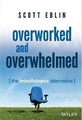
This week’s guest post comes from Scott Eblin, author of the new bestselling Overworked and Overwhelmed. Scott’s message resonates with everyone in the workplace and his latest book offers research-based strategies designed to bring greater mindfulness to life.
One of the things I know for sure about leadership is that leaders control the weather. If you’ve ever worked in a setting where the first question everyone asks each other in the morning is "What kind of mood is he (or she) in today?" then you know the truth of that statement. The answer to that first thing in the morning question determines the kind of day everyone has ahead of them and, consequently, the quality of the work that gets done. If the leader is sunny and bright, then it’s going to be a good day; if the leader is stormy and cloudy then everyone better buckle up and prepare for a bumpy ride.
I thought a lot about leaders and the weather as I was writing my new book, Overworked and Overwhelmed: The Mindfulness Alternative. Because of the ever increasing expectations of the do more with less, 24/7 connectivity environment they’re operating in, more and more leaders feel overworked and overwhelmed. That feeling leads to bumpy weather and, according to my company’s research, comes through in low performance on key leadership behaviors such as:
pacing themselves,
taking time to define or redefine what needs to be done,
giving others their full presence and attention and
understanding the impact of their comments and actions on their team’s morale and productivity.
With all of the demands on their time and attention, what should leaders do differently? I’m confident that working harder isn’t the answer. In a 2013 study, the Center for Creative Leadership found that the average smart phone enabled executive, manager or professional is connected to their work 72 hours a week. There are only 168 hours in a week, so if the leader is spending 72 of them on work and let’s say eight hours a day (56 hours a week) on sleeping, eating and bathing, that only leaves 40 hours a week to do everything else they need or want to do. Working harder is only going to exacerbate the chronic state of fight or flight that many leaders find themselves in these days.
The alternative for the overworked and overwhelmed leader is to take a more mindful approach to work and life. We hear and read a lot about mindfulness these days, so let me spend a minute talking about what it is and isn’t for the average person. It isn’t spending hours a day meditating like a Buddhist monk. That’s great, of course, but most of us don’t have the time or patience for that.
My working definition of mindfulness is that it’s doing simple things that make us more aware of what’s going on around us and inside us and then being intentional about what we’re going to do - or not do - next.
The good news is that there are some easy to do mindful routines that leaders can follow that will definitely make a difference for them, their teams and in the results they achieve. Those routines and a plan for following through on them is what I share in Overworked and Overwhelmed.
We’ve all heard of the fight or flight response, but few of us have heard of the rest and digest response. Think of fight or flight, which is controlled by your body’s sympathetic nervous system, as the gas pedal that helps you get things done - especially in crisis situations. Think of rest and digest, which is controlled by your body’s parasympathetic nervous system, as the brakes which keep you from spinning out of control and ending up in a big, hairy crash. Just like you’d never drive a car and only use the gas pedal, you shouldn’t live your life without using the brakes.
The good news is that even a few moments of routines like breathing deeply from your belly, getting up from your desk to stretch for a few minutes or taking ten minutes to go for a walk can activate your rest and digest response and get you out of the chronic state of fight or flight that creates stormy weather for you and your team. Being mindful - aware and intentional - about when you’re overusing the gas pedal and when you need to apply the brakes can create a leadership climate that enables you and your team to get great results.
There is a mindfulness alternative to feeling overworked and overwhelmed. It starts with learning simple ways to get off the gas pedal and use the brakes. That’s how mindful leaders get results and that’s what I teach them how to do in Overworked and Overwhelmed: The Mindfulness Alternative.
Scott Eblin is the co-founder and president of The Eblin Group, a professional development firm committed to helping executives and managers improve their leadership presence by being fully present. As an executive coach, speaker and author, Scott works with senior and rising leaders in some of the world’s best known and regarded organizations. Scott is the author of two books. Business Book Review described his first book, The Next Level: What Insiders Know About Executive Success as a "fascinating read" that "is full of potentially career-saving advice." New York Times best selling author Marshall Goldsmith says Scott’s newest book Overworked and Overwhelmed: The Mindfulness Alternative "will fundamentally change how you live each day."
The post How Mindful Leaders Get Results appeared first on Julie Winkle Giulioni.
Julie Winkle Giulioni
.
Blog
.
<span class='date ' tip=''><i class='icon-time'></i> Jul 14, 2015 08:48am</span>
|
|
Colin Duff's blog post was featuredHow to Get Your Employees Innovating Like Tech SuperstarsThe business press is buzzing with stories about tech. Companies who are leveraging employee-driven innovation schemes to great effect. The latest, Adobe Kickbox, looks like something special and conveniently they have open sourced it, so any organisation can deploy it.Kickbox starts with a two day course on early stage innovation, which any manager from any function can apply to attend. Then the real fun starts with the issuing of a red box - as according to Adobe making the "innovation process ‘a physical thing' makes it concrete and real" - which is full of goodies to enable individuals to pursue their idea and circumvent the usual corporate blockers. Goodies include: a Starbucks gift-card, instructions and materials (templates, checklists and a self-gating six stage process to get to proof of concepts) and a $1,000 prepaid credit card to spend at their discretion with no need for receipts.Three things make Kickbox standout from other employee-led innovation processes. Firstly, the level of empowerment given to individuals is much higher. In addition to the $1,000, there are "no managers, no committees [and] no rules." They have also banished deadlines, commitments and judgement in appraisals. (Participants do need to convince a committee at the end of stage six, at which point they get a blue box and the potential to secure substantive investment). Secondly, the process requires employees to adopt an entrepreneurial approach by doing things quickly and cheaply. Thirdly, it’s intrinsically scalable. As Mark Randall (the VP who created it) says, ‘Kickbox is playing the law of large numbers, most ideas are expected to fail. But gems will emerge that wouldn’t through traditional processes… and Adobe only needs 1 out of 1,000 ideas to work to be very successful.’Whilst fundamentally the process is fantastic, many aspects are impractical for normal companies (i.e. the non tech elite) and especially retailers. Firstly, most will balk at the high failure rate (even if it will ultimately deliver more blockbusters). Of the thousand boxes Adobe have issued, so far only sixty employees completed the first six stages; only twenty three have secured investment; and none have led to blockbusters yet. Secondly, the process is designed with digital ideas (i.e. software related) which can best tested through website front of mind, so it’s less useful for retailers who sell physical products. Thirdly, it was developed to be used by top talent, and frankly it is asking a lot of your average middle manager. Finally, good luck getting approval for the $1,000 discretionary cards.However, by making a couple of adaptions retailers can effectively deploy Kickbox and greatly increase the idea success rate:1. Assign everyone an innovation coach: Whilst Kickbox espouses the value of giving employees the freedom to ‘be the CEO of their idea,’ even the best CEOs use coaches (as do software developers in the form of scrum-masters). The best coaches are seasoned innovators who can provide advice and help overcome inevitable roadblocks; especially the really tough ones in the physical world. For example on a recent employee-led innovation project I ran for an alcohol company, despite their valiant efforts, participants struggled find bars who were willing to let them run live experiments with customers. Whilst others within the business had relationships with bar owners, they were reluctant to share them outside of the formal bureaucratic channels. So, I simply commissioned a specialist recruiter - with lots of experience and contacts doing this sort of thing - and one phone call, a few hundred dollars and six days later we had four bars in place. Similarly, on another project for a supermarket (focused on food), employees were struggling to test sales due to arduous food safety and supply chain issues. To get around these we dry tested new concepts by putting empty packaging on their shelves and recorded how many consumers picked them up. The moral of both stories is that many things that are straightforward for experienced innovators can be a nightmare for regular employees, hence the necessity of a coach. (Coaches are also the ideal person to sign off project expenses if your company’s finance team can’t live with self-certification).2. Impose some structure: Adobe may be okay without having any timescales for delivery, but most retailers are not. And if Kickbox doesn’t deliver results quickly, cynical myopic managers will often prevail in killing it. So, at least initially, consider turbo charging the process by providing dedicated time for employees to work on it with fixed deadlines for completing stages. On another employee-driven innovation project I was involved with, at another retailer, we gave employees two weeks to complete each stage, with half a day’s assigned work time, before forcing them to on the next one or quit their project (none quit). Whilst this meant some of the prototypes were a little scrappier than would have been ideal it had a galvanising effect on everyone involved; as any innovator will tell building momentum on projects is one of the biggest determinants of success.Now go forth and start your employee-driven innovation revolution!Colin Duff is a Senior Innovation Manager at Argos. You can follow Colin on Twitter @Colinpduff.See More
Jeff Fissel
.
Blog
.
<span class='date ' tip=''><i class='icon-time'></i> Jul 14, 2015 08:48am</span>
|
|
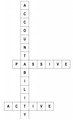
My daughter is taking an Advanced Placement English Language course this year. That may be why the November 2014 article in The Atlantic Magazine, "Passive Resistance," captured my attention. The author, Steven Pinker, explores the role and value of the passive tense. (Or, expressed in the passive tense: The role and value of the passive tense are explored by author, Steven Pinker.)
Despite a generation of English teachers imploring us to use the active voice, it’s frequently not our go-to communication strategy in business. And The Atlantic article explains why, describing the ‘passive’s ability to hide the doer.’ That’s right… hide the doer.
Think about some of the recent communication in your organization.
Our sales targets weren’t met last month.
Service has slipped.
The market’s reception isn’t what we expected.
Forecasts were off.
And the list goes on. We pass along a litany of passive tense messages daily. So, aside from disappointing a lot of English teachers, what’s the problem with this communication pattern? A lot. Words have power. And the absence of words can rob power. Taking the ‘doer’ out of the spotlight undermines responsibility and accountability… and has implications for motivation, performance and results.
"Our sales targets weren’t met last month" may be a kinder, gentler way of sharing lackluster results; but, if meeting sales targets is important, it’s a completely ineffectual way to express the message. The lack of clarity about who’s responsible for sales inhibits ownership. And ownership is essential for making the changes necessary to beat targets next month.
"The market’s reception isn’t what we expected" softens the truth that "we miscalculated our company’s value." This shift from passive to active goes beyond mere words; it shifts energy and allows people to move past being bystanders and victims to being active players able to affect change.
"Forecasts were off" certainly places no blame and allows everyone to maintain self-esteem. But so does "we really blew our forecasts"; and this active tense triggers committed, competent individuals to want to do something about it.
In organizations, we put tremendous energy into the construction of buildings, business plans, systems and processes. To optimize these investments, (the construction of our sentences requires similar energy) we must now put some energy into the construction of our sentences.
The post The Simple Connection Between High School English and Accountability appeared first on Julie Winkle Giulioni.
Julie Winkle Giulioni
.
Blog
.
<span class='date ' tip=''><i class='icon-time'></i> Jul 14, 2015 08:48am</span>
|
|
Bradley Matthews posted a blog postDisproving Myths About Digital Wealth ManagementTechnology has transformed traditional financial-advisory models, creating an urgent demand for investment firms to revise their customer acquisition, engagement, and retention strategies. The new dynamics of digital consumer trends in all sectors of Retail suggest that investment firms who fail to adapt to this ongoing digital-paradigm shift are bound to suffer a rapid extinction.In the era of smart phones, tablets, ubiquitous web access, e-commerce, social media, virtual reality, and mobile payments, twenty-first-century retail investors are increasingly looking for online solutions to their wealth-management needs. The following post will bring clarity to some of the most common misconceptions about wealth management in the digital age.Myth No. 1: Digital-Investment Solutions Are Only for MillennialsMedia and consulting firms promote the fallacy that demand for digital-wealth management solutions only comes from Millennials—those born sometime between the 1980s and early 2000s. But at Trizic, our review of the data indicates that the demand for digital-wealth management services represents a growing customer interest that transcends generations.This insight is substantiated by our ongoing contact with retail investors and financial advisors, as well as analyses of industry reports and data points. For example, we know that The 2014 World Wealth Report by Cap Gemini and RBC Wealth Management states that 56.7% of investors across all age segments already conduct most or all of their wealth-management business digitally. Over the next five years, 64.3% of respondents expect the bulk of their financial advisory needs to be managed online, with that number surging to 82.5% for investors below the age of 40.The stereotype of investors favoring face-to-face contact with financial advisors is becoming obsolete, with the report’s finding that participants favored web-based interactions over direct-advisor contact in the "informational" and "transactional" aspects of the client-advisor relationship. This is further supported by a recent Fidelity survey that found that 87% of Gen X and Gen Y investors felt technology enhanced their relationships with their financial advisors.Myth No. 2: Wealthy Clients Are Less Interested in Digital SolutionsWhile it’s true that digital-investment advisory solutions are growing in popularity among investors, regardless of age, another myth prevails: digital-wealth management is only for mass-affluent clients.Well, that’s partially true. Mass-affluent consumers are increasingly drawn to web-based investment solutions; however, all of the aforementioned data points are from surveys consisting exclusively of high net-worth individuals! That’s right: investors, young and old, regardless of their net worth, are increasingly adopting these next-generation platforms as well.Forward-thinking wealth management firms should consider how digital solutions can capture and engage tech-savvy clients of all ages and backgrounds, across a spectrum of net-worth clientele.Consumers all over the world are actively searching for digital solutions to simplify their lives—this includes wealth management, too. No wealth management, brokerage, or advisory firm can afford to neglect consumers’ shifting demand for digital convenience.Brad Matthews is founder and Chief Executive Officer of Trizic.See More
Jeff Fissel
.
Blog
.
<span class='date ' tip=''><i class='icon-time'></i> Jul 14, 2015 08:47am</span>
|
|
You’ve seen the research. Read the reports. Talked to leaders and employees alike. You know that despite our quantifiable understanding of the bottom-line impact of employee engagement, it continues to elude most organizations.
The reason engagement is such a sought-after commodity is because it’s a powerful contributor to a cycle that every business wants and needs for long-term success. Here’s how it works:
Engagement unlocks discretionary effort. It creates the conditions that encourage individuals to volunteer more of themselves, their time, their creativity, and their talents to the organization. Discretionary effort at its core is a choice people make to ‘go the extra mile,’ a choice based in large part on their level of engagement.
Then, discretionary effort plays out in innumerable ways. Greater attention to the needs of customers. Improved sales and service. Innovations and improvements. Productivity and efficiency. Bottom-line results.
But it doesn’t stop there. Once you start this ‘engagement ring,’ the cycle can naturally perpetuate itself. Because the thing about employee engagement is that much of what it produces also feeds it.
Depending upon the study, key drivers of engagement include such factors as career opportunities, recognition, performance management, pride in working for the company, organizational reputation, and relationship with one’s immediate supervisor.
These items are inputs to engagement… but they are also frequently the outputs as well. For instance, when an employee is highly engaged in his or her work, and invests discretionary effort to drive extraordinary results:
Career opportunities may be more likely to follow. These career opportunities encourage greater engagement and the ring continues.
He or she is likely to receive recognition for their work. This recognition encourages greater engagement and the ring continues.
The organization will excel, instilling pride. This pride encourages greater engagement and the ring continues.
The process can naturally perpetuate itself… but only once you get an employee into the engagement ring. The good news is that there are countless ways to begin this positive cycle - that also serve the business:
Tap into the talents people want to use
Demonstrate appreciation
Ask for input
Highlight successes
Offer opportunities to learn and grow
Provide honest, meaningful feedback
As leaders, one of the most strategic investments of time and energy may be in taking the actions required to get employees in the engagement ring… because once they get in, they’ll become part of this cycle that can nourish and sustain itself while delivering unbeatable business results.
So, what about you? Are you in the engagement ring? How do you help others in?
This post originally appeared at Lead Change Group.
Image: Liz Price
The post The "Engagement Ring" appeared first on Julie Winkle Giulioni.
Julie Winkle Giulioni
.
Blog
.
<span class='date ' tip=''><i class='icon-time'></i> Jul 14, 2015 08:47am</span>
|
|
Rick Delgado's blog post was featuredThe Brilliance Behind the Clinton Email ScandalAfter the discovery of massive, sophisticated, state sponsored cyberattacks like Red October and Inception-Cloud Atlas, the fact is pretty well established that the intertwining of political intrigue and cybersecurity is de rigueur in the twenty-teens, so it would be a bit out of fashion for the usual circus of issues surrounding the next presidential election to break from the trending pattern. And who would understand both the circus, and the issues better than the former Secretary of State, and former First Lady, Hillary Clinton?Two weeks ago the AP reported that during her tenure as Secretary of State, Mrs. Clinton conducted all her email correspondences through a private domain, Clintonemail.com, that was hosted on her own private server located in the Chappaqua, New York home she and her husband, the former president, share.Since that news broke, criticism of Mrs. Clinton’s conduct has taken three forms. First is the fact that the private mail server was outside, and directly in violation of the federal government’s transparency and record keeping rules. But those rules are, for the most part considered guidelines for best practices, and not the same thing as formal regulation.Second are worries that an unofficial server - housed outside the sophisticated state department network - was potentially more vulnerable to advanced security threats from state sponsored hackers. While these worries may be valid (after all, one could suppose that such a network would have far less sophisticated network monitoring safeguards in place,) a non-official email address of this type would be off the public radar, and therefore less likely to be identified as a potential information source in FOIA requests or even by terrorist hackers. Chris Soghoian, the lead technologist for the ACLU, disagrees. As Andy Greenberg recently wrote, Soghoian believes that although "the American people didn’t know about this, it’s almost certain that foreign intelligence agencies did, just as the NSA knows which Indian and Spanish officials use Gmail and Yahoo accounts."The third theme in the spectrum of criticism raises concerns for what this scandal might mean for Hillary’s bid for the 2016 Democratic presidential nomination and what it might mean for the climatic conditions of the election in general. But the fact that the real Clinton family brilliance lies in their adeptness for spinning juicy stories to their advantage might mean Hillary could actually stand to sway some swing voters her way.Mrs. Clinton’s decision to use a private server (physically secured under lock, key, and Secret Services guards but outside the federal security fence) may have been harmless, but it certainly raises eyebrows, and rightfully so. After all, what innocuous motives would have driven a high-ranking politician to eschew the State’s cloud computing-based, secure email server in favor of a home-brewed option (requiring vastly more effort to set up and monitor?) After all, Gawker’s J.K. Trotter at Gawker reported very convincing evidence that the private server and especially its contents were deliberately kept out of the hands of state department overseers.Notwithstanding her perfectly practical and downright grandmother-ish reasons, like the ones she gave the press, stating that it was a convenient solution to limit the number of mobile devices she needed to carry on a daily basis down to one, it is not difficult to speculate that the move held dark political underpinnings, like those suggested by Trotter. After piecing together valid inquiries into the possibility that Mrs. Clinton’s motives may have been focused, at least in part, around skirting FOIA requests from journalists, Trotter ultimately concluded that the private server enabled the likely 2016 Democratic presidential candidate to completely, and unrecoverably wipe away any correspondences she sent or received during her tenure as Secretary of State, that she didn’t want publicized sometime down the road. It appears that Hillary's "Aw, shucks" routine is simple a cover for a shrewd cloak and dagger move, and a brilliantly executed one at that.The public may never know exactly what information Clinton has transmitted using this private account, but her strategic if potentially nefarious use of private server technology was nothing short of brilliant from a political standpoint. While the public may find Mrs. Clinton’s secrecy just as troubling as the mainstream media finds the issue juicy and reportable, what the discovery of Clinton’s private server doesn’t spell, for her at least, is any kind of scandal worth losing sleep over. She won’t lose voters over it.Rick Delgado is a technology commentator and freelance journalist.See More
Jeff Fissel
.
Blog
.
<span class='date ' tip=''><i class='icon-time'></i> Jul 14, 2015 08:47am</span>
|
|
Most workers don’t aspire to leadership roles.
That’s the key finding of a study conducted earlier this year by CareerBuilder and Harris Poll. Based upon the responses of more the 3500 workers across the United States, only about one-third (34%) aspire to leadership positions.
This is interesting data for organizations and leaders everywhere.
First, it might settle the nerves of managers and supervisors because it confirms that not every employee is looking to rise up through the ranks. My research with Beverly Kaye found that one of the key reasons managers don’t engage in career conversations with their employees is fear. Fear that everyone will want a promotion. Fear that they can’t deliver on those expectations. Fear of the disappointment and disengagement that will ensue when these two conditions collide. But the good news is that two out of three employees aren’t coveting the manager’s - or any other leaders’ - job.
At the same time, this data is also unsettling because it demonstrates a fundamental challenge with the way organizations are structured. Unfortunately some of that 66% of employees who are disinterested in leadership positions will pursue them anyway. That’s because in too many organizations, ‘up’ is the only way to develop. So those without a genuine appetite to lead will chase down promotions because it’s their only chance to grow.
So, what’s an organization to do? Plenty!
Distinguish between the 34% and 66%. Ensuring job satisfaction, engagement and, ultimately, results demands that you understand employees, their motivations, and their aspirations.
Work with those who possess an authentic desire to lead, finding ways to cultivate these skills and talents - even before opportunities for promotion open up. Leadership isn’t reserved for certain levels. It’s a state of mind and a set of skills that can be practiced regardless of role.
Don’t assume that just because people don’t aspire to leadership, they’re happy where they are. Many aren’t. Many of your 66% are bored, going through the motions, and not contributing to their greatest capacity. Figure out what interests them, where their passions lie, and what they would like to accomplish. Then work collaboratively to help facilitate opportunities for development and growth in their current roles.
Find ways to reward employees for deepening their knowledge and skills… without changing roles. (Let’s be honest, many of the 66% are pursuing leadership because it comes with a pay bump.)
Consider treating leadership as a discipline rather than a level. What if advancing to leadership was a lateral rather than vertical move? What if it didn’t come with an automatic raise? What if people moved into leadership because they really wanted to do that kind of work?
Information like that generated in the CareerBuilder study can be a powerful tool for organizations to look differently at leadership, who wants it, and why. It also helps organizations produce better results by ensuring that 100% of employees are doing the work they want to do most.
Image: © Dpvue | Dreamstime.com - Individual Fish Success Winner Outsider Boss Photo
The post To Lead or Not to Lead: Most Employees Say "Not"… but Many Go For It Anyway appeared first on Julie Winkle Giulioni.
Julie Winkle Giulioni
.
Blog
.
<span class='date ' tip=''><i class='icon-time'></i> Jul 14, 2015 08:46am</span>
|