Blogs
|
My book, Coming Alive: The Journey to Reengage Your Life and Career, has been announced as recommended reading by C-Suite Book Club. It’s an honor to be included and endorsed by this group, known to be a book club for c-suite leaders and business executives.http://bit.ly/ComingAliveAtCSuite
Learn more about my book by visiting their website and read my guest blog post there.
Ruth Ross
.
Blog
.
<span class='date ' tip=''><i class='icon-time'></i> Jul 14, 2015 09:12am</span>
|
|
Technology and the explosion of communication it’s enabled has transformed nearly every industry, discipline, and field. Leadership is no exception. Today, leaders everywhere can engage in focused and effective development with a quick mouse click. Famous authors and less-known (but equally insightful and inspiring) online thought leaders offer wisdom that’s used by millions daily to enhance their effectivity, motivate their followers, and drive business results.
The breadth and variety of how this occurs speaks to the flexibility of the technology, the power of social media, and the creativity of those using both. Each week, I’m inspired and enriched by:
Blogs: The breadth of topics covered, depth of expertise, and quality of writing of today’s leadership blogs is awe-inspiring. No manager or supervisor is more than a few keystrokes away from the wisdom and information they need to become more effective. Leadership bloggers are ranked by various organizations… but a couple of my favorites are Jesse Lyn Stoner, Jennifer Miller, and Dan Rockwell.
Tweetchats: Who would think that leaders could develop through 140 character messages? But they can…and they do. Tweetchats are a fast-paced online ‘conversation’ during which participants answer questions and exchange perspectives via tweet messages. These sessions are typically intense and information-rich, and can be deeply moving. If you haven’t experienced a tweetchat, get started with the ‘gold standard’, Lolly Daskal any Tuesday evening.
Carnivals: Technology can facilitate collaboration; and this is vividly evident each month as countless carnivals go live. A carnival aggregates posts from various bloggers, generally focused around a topic. The Carnival of HR, Leadership Development Carnival curated by Dan McCarthy, and Karin Hurt’s Frontline Festival are a few of my favorites. They concentrate a variety of takes on a given subject for easy scanning or a deeper reading.
Summaries: Wally Bock is a gifted author, writing coach, and blogger who takes the time each week to identify five excellent posts from independent business blogs. This sort of pre-digestion of the overwhelming volume of content that’s available is a valuable service for busy leaders everywhere.
These vehicles consistently offer the high-quality, easy-to-access content that busy leaders need. But they do something more. The bloggers, aggregators, and carnival organizers also model best-in-class leadership behaviors. They are respectful. They’re honest and candid, expressing the truth as they see it but also facilitating a constructive discussion of other points of view. They reach out constantly to others. They genuinely care about, collaborate with, and actively support others. In short, they embody the lessons they communicate, acting as powerful examples to aspiring leaders everywhere.
So if you’ve got a minute and a mouse, you have access to a virtually unlimited library of information and tools to become a better leader!
What about you? Which are your favorite online leadership resources?
Image: Liz Price
The post Leading Online and Socially appeared first on Julie Winkle Giulioni.
Julie Winkle Giulioni
.
Blog
.
<span class='date ' tip=''><i class='icon-time'></i> Jul 14, 2015 09:11am</span>
|
|
James Bottomley posted a blog postMythBusters: Containers EditionContainers present a number of benefits, due to their versatility and just-enough virtualization. Between this and their novelty in the enterprise sector - containers are what everyone is talking about. However, because this rogue technology is new to the enterprise, it has perpetuated quite a few myths recently.Putting aside the novelty and the hyper - there are five in particular that we can debunk.Containers are not Reliable enough to Support Mission-Critical Workloads It’s hard to understand where this myth comes from. Hosting service providers have been using the technology to lower operational costs and increase efficiency with virtual private servers (VPSs) for over a decade. VPSs are used to provide companies with web and other services like processing credit card transactions. All of which are incredibly mission critical for a business.Containers are not Secure While still a myth, this one has a few likely origins. First and foremost, VPS hosting environments were initially largely developed out of the Linux mainstream. Security was not of critical importance in the first Linux containers, so the there’s a perception problem with modern containers. In the past three years - Parallels, Google and a host of other companies have been working on pushing all the necessary security technologies upstream. As a result, today’s upstream kernel has enough security technology to make containers highly secure and isolated. The other origin for the containers security myth is based on the granular property of the technology. You can set up a fully-secure, fully-isolated operating system container - but you can also set up a very porous one. There can be good reasons for doing the latter, but it’s not always done on purpose. And with most computer systems, security relies on following best practices. These aren't always obvious or followed by people new to containersRunning Containers inside Virtual Machines adds Efficiency The belief here is generally that you can overcome the first and second myths by running containers inside virtual machines. While you can do this, you won’t actually add efficiency since you lose the density and elasticity of the container system - arguably the two biggest benefits of the technology. When you run containers in a virtual machine, the final properties are dependent on the hypervisor, which supports less density and is inelastic. Additionally, you add a second layer of virtualization technology, creating more physical and management overhead and three separate technology layers to manage.Anything a Container can do, a Hypervisor can Do In the abstract, this is true because they’re both computing environments. But thinking practically, if you give hypervisors and containers similar density and elasticity, you strip down the guest and host of a hypervisor to a point where they become mere shells of themselves. And even after doing this, you still don’t have the granular and just-enough virtualization properties of containers. It’s a bit like beating a square peg in to a round hole; with a big enough hammer you can do it, but it may not be the best way of achieving the desired outcome.A Container is a Container With all of the hype lately about containers, it’s not surprising that there’s a lot of misinformation being communicated about the technology. Perhaps the best example is how often we hear the phrase: "Docker containers". The truth is - Docker itself is not a container. It is making strides in helping the technology reach a broader audience, but Docker is actually an application packaging and transport system. It relies on the just-enough virtualization properties of containers to function. This confusion often feeds the four myths we referred to above, and can help skew the containers perception problem.There you have it, five common myths debunked. Now there will always be people willing to compromise on density, elasticity and granularity to ensure that hypervisors are used for specific workloads. However, there are a growing number of use cases that call for mixed environments. And while both technologies have their place, myths aside, containers are making strides to unseat hypervisors as the dominant virtualization technology because they can go places, and do things, that hypervisors just never could. That’s the truth.James Bottomley is CTO of Server Virtualization at Parallels. Read more: http://insights.wired.com/profiles/blogs/what-is-all-the-container-hype?xg_source=activity#ixzz3SslsCGV2 Follow us: @Wiredinsights on Twitter | InnovationInsights on FacebookSee More
Jeff Fissel
.
Blog
.
<span class='date ' tip=''><i class='icon-time'></i> Jul 14, 2015 09:11am</span>
|
|
Maybe I’m naïve, but I don’t believe that employees consciously show up the first day on a new job and say "I don’t care if I am engaged or not, I just need to collect a paycheck." Okay, so there are some people who ultimately end up feeling that way and have chosen to emotionally quit while still physically sitting in their chair at work but that’s not usually how the journey begins.
We start off by wanting not just to date, but also to get married to our company’s mission, vision and purpose. We all desire to feel highly connected with what we do. Engagement is what motivates people not only to feel dedicated to their job and their life, but also to feel rewarded by what they do and how they do it. It pushes people to look at things differently and go above and beyond, not because they have to, but because they want to.
Engagement is buying in, going all in, and remaining within and contributing to the passion and mission of our company. It’s what separates the striving companies from the thriving ones, the happy folks from the unhappy ones, the smiles from the frowns, and the success stories from the shattered dreams. The end of the journey should be to find an environment where you can thrive, not just survive day-to-day.
Engaged employees have 3 main characteristics in how they show up and behave at work. They are:
Collaborative
Creative
Loyal
They look forward to working with others for the good of the organization and are filled with ideas about how to make it even better. They are aligned with what their company stands for and are fully committed to making them successful.
As with any long road trip, things can happen along the way to derail the journey. You might run out of gas, come upon a detour or unknowingly hit a pothole that leaves you with a flat tire. These are all analogies for falling into disengagement on the job, no matter the reason why.
How can someone tell if their employee (or themselves) have indeed hit that proverbial pothole in the road? Here are my 7 warning signs to look out for on your ‘dashboard’ of engagement.
An ‘I don’t care’ attitude
More frequent episodes of lateness, leaving early or calling in sick
Productivity declines along with quality
Frequent mood swings
Isolating themselves from others
Lack of creativity
Lethargic, low energy
One doesn’t need to have all 7 of these warning signs to show up to signify disengagement. As with any kind of dashboard warning sign on a car, even one light can signify a problem that needs to be checked out. The key is to do proactive maintenance to ensure that the journey ahead will be a smooth one. Baring that, then quickly recognizing the potential problems and taking steps to fix what’s not working is the best way to get back on the road to engagement.
Today’s high tech cars all have dashboard systems that are designed to quickly diagnose a problem and let the driver know something is amiss before it becomes too big a problem to handle. It’s too bad we don’t have those same sensors in the workplace so it’s up to our managers to know the warning signs to look out for before it’s too late and the journey ends badly for all involved.
If you are wondering what’s going on with you or someone that works for you and want to do some diagnostics before the problem gets too out of hand, just shoot me an email at ruth@rsquaredresources.com and I will be happy to send you my Invisibility Index™ tool to help you identify if disengagement has set in.
Ruth Ross
.
Blog
.
<span class='date ' tip=''><i class='icon-time'></i> Jul 14, 2015 09:11am</span>
|
|
This is the first of a two-part series on a topic that’s near and dear to leaders everywhere… but one that may have become overly complex and burdensome. In this first installment, I’ll provide a simple roadmap for ensuring coaching success and I’ll begin to deconstruct the process. Next week, I’ll complete the model and explore its varied uses.
Coaching may be a leader’s most powerful and useful skill. Whether focused on bridging a performance gap, elevating the level of contribution possible, or pursuing career goals, coaches help others make change - change that profoundly affects the individual and the organization as a whole.
But, with countless workshops, webinars, and certifications, have we complicated the process to the point where busy managers may sense that it’s too hard and feel less inclined to engage with employees in this transformative experience? Perhaps it’s time to strip coaching back to its simplest, most essential core and offer an easy-to-remember process for supporting others to make the change they desire.
Demystifying Coaching
Coaching is the process of helping others understand where they are, where they want to be, and how they want to bridge the gap. It’s just that simple… and just that challenging. Coaching is not about getting people from point A to B… it’s about helping them recognize the chasm and supporting them in choosing how to span it. Fundamentally, coaching comes down to supporting the direction and means of the other person’s choice.
And coaches can do this with the help of a simple, easy-to-remember model:
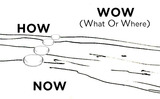
WoW - The ‘what’ or ‘where’ of the desired future state
Now - The current state
How - The steps for bridging the gap
WoW (What or Where)
The best and most effective coaching conversations begin with the WoW - what the person wants and where he or she might want to go. Starting by defining the future state and looking out at the goal or destination is essential because:
It lays a clear and compelling foundation for the conversation.
Brain research confirms that talking about goals, dreams, and aspirations activates the parts of the brain that enable us to think creatively.
This constructive future focus releases chemicals that literally let us see more possibilities.
Beginning the coaching conversation where many leaders naturally do - focusing on where the coachee is today, what’s got to change, how to fix problems - shuts down the brain’s ability to function optimally.
"Talking about your positive goals and dreams activates brain centers that open you up to new possibilities. But if you change the conversation to what you should do to fix yourself, it closes you down."
- Richard Boyatzis
(as quoted by Daniel Goleman in
The Hidden Driver of Excellence)
So, effective coaching involves:
Getting people thinking and talking about that positive future… and envisioning themselves in it.
Helping them really wallow in that, anticipating what it will feel, look, and smell like.
Guiding people to connect to their WoW emotionally.
This sort of emotional connection to the goal is key to supporting and sustaining the motivation required to make real and sustained change.
Prompts that can help guide others to the WoW include:
Describe your goal in as much detail and as vividly as you can.
How exactly do you want it to be?
How will you be different when that happens?
How will it feel when this becomes a reality?
What else will you be able to do then?
The phrase Stephen Covey coined, ‘start with the end in mind,’ applies here. The future is the foundation of effective coaching. Once the WoW is established and firmly entrenched, it’s time to move on to the Now.
Check in next week for that. But, in the meantime, what about you? How to you help others get in touch with the future they envision?
Image: www.dreamstime.com
The post Coaching: Made Easy - Part 1 appeared first on Julie Winkle Giulioni.
Julie Winkle Giulioni
.
Blog
.
<span class='date ' tip=''><i class='icon-time'></i> Jul 14, 2015 09:10am</span>
|
|
While it probably doesn’t feel like it in many parts of the world, there’s no denying that the calendar has turned the page to April and spring really has arrived. My friends in the Northeast are rolling their eyes at me right now as the vestiges of this horrible, never-ending winter are just starting to melt, literally!
What would you say if I told you that the weather can have an affect on how engaged you or your employees are? During the winter season, there are a number of people who suffer from Seasonal Affective Disorder (SAD), and yes it is a real affliction. Its symptoms can mimic that of depression, which also are very similar to those seen in people who are disengaged. SAD is in fact a subtype of depression and happens to people when they don’t get enough sunlight. Some of the symptoms of people who suffer from this are:
Irritability
Tiredness or low energy
Problems getting along with others
Oversleeping
Having difficulty concentrating
When people suffer from low engagement, they exhibit a number of the same symptoms as those listed above, in addition to isolating themselves from others, mood swings, low productivity, lack of creativity and an ‘I don’t care’ attitude. If you see the warning signs, either in yourself or in others you manage, here are some of my favorite ways to spring-clean your way to engagement.
Put a ‘spring’ in your step and take a walk
There’s nothing better than getting out of the workplace and breathing in the (hopefully) warm air. Don’t order lunch in, go out and get it. Conduct a meeting while walking outside. You will be less distracted by the phone or your computer, and more able to connect to that person on a one-to-one basis. There’s also a great benefit when it comes to weight loss if you walk a lot!
Clean out your workspace
My father used to love to say that ‘a sign of a sick mind is a clean desk’. While I might have believed that when I was younger, as I spent more time in the workplace I came to realize that clutter was just a way for me to get out my frustrations. Looking back, I can see now that when I was really passionate and engaged in my work, I kept a much more organized and clean office. I wanted to be able to come in and easily find what I needed to get started on the work. When I wasn’t as engaged, my inbox would overflow with things that didn’t seem to have a home and I spent more time moving paper around then actually doing something with it. Making a conscious effort to clean up your workspace is a great way to get rid of those things that aren’t that important and put the engaging stuff front and center.
Plant some seeds and let them grow
Engaged employees ignite growth; disengaged employees extinguish the spark. When you are passionate and committed to what you are doing, you usually aren’t okay with the status quo. It’s a time to be creative and innovative and see what can happen. Change doesn’t happen overnight but sometimes just planting one new seed is all it takes to reengage your spirit. It’s about making some small changes and then nurturing them along to create an environment in which you can do your best work.
Exercise your mind
Get out of your comfort zone and do something new. Take a class. It doesn’t have to just be related to work. It can be personal in nature. Start writing more, be it a blog post, a journal entry, an article for a trade publication or just a plain old business memo. It’s a great way to clear out the cobwebs in your brain. Read more. Try some challenging puzzles. Whatever it is, do something new (or reengage an old habit), to exercise your brain.
Reconnect, both with yourself and with others
My secret sauce for engagement is all about going back to basics, which is simply connecting with someone. That can be your boss or a loved one, a friend or a colleague, a spiritual advisor or a teacher. In our fast-paced, tech driven lives we’ve unfortunately forgotten the fine art of simply connecting with another human being. It’s all about creating an environment where great conversations can take place. It’s about asking the right questions, and then listening, both to what is being said but also what is left unsaid. It’s paying attention to what you heard, but also what you saw when connecting.
Spring is a great time to look forward with hopes and dreams of a bountiful garden of abundance. Don’t waste time stuck in the winter doldrums of disengagement, but rather look at this as the season of full bloom, and get out there and engage.
Ruth Ross
.
Blog
.
<span class='date ' tip=''><i class='icon-time'></i> Jul 14, 2015 09:09am</span>
|
|
John Winsor's blog post was featuredGetting Your Car Stolen in Mexico and Other Fun Stories About DisruptionMy car was stolen in Mexico. It’s a crazy story but I learned some good lessons about disruption, innovation and dealing with the unexpected.A week ago I was on my way to my favorite surf spot, which is about a 20-minute drive from my house in Mexico. During the drive, I decided to catch up on a few calls. One call was with Jon Balck, the president of our agency. We were talking about disruption and whether it was good or bad. After a good conversation, we agreed it’s neither good nor bad. It’s like a glass of water. You can look at it as half full or half empty. Innovation is the thing that you decide to do to overcome the disruption.What I didn’t know at that time, was that the next few hours would unfold a new lesson around disruption that centered on a stolen car. My car. Here’s what I learned.1. It pays to be nice. As I hung up the phone with Jon, I walked onto the beach and put my phone and my car keys into my bag. The beach was empty and there were only two other surfers out - a couple from Victor, Idaho. We had a really nice chat before they got out of the water and headed up the trail.The waves were small so I only caught a few more. When I got out of the water, I saw that my bag was gone. It’s happened before but not in quite a while. I ran up the trail to catch my new friends, thinking I’d need a ride back home only to find my car was gone as well. Jen and her husband were great and gave me a ride to another friend’s house.2. Build your network before you need your network. I’ve built a pretty big network in our little town of folks so when I got to my friend’s house, he lent me his car. Then he got on the phone with some folks he knew, and I did the same. Another good friend had a friend in the police department. Everyone was alerted about my missing car.3. Create alternatives. Your first path isn’t always the best. We drove around looking for the car with no luck but a few hours later someone found it and reported it. By the time we arrived at the location the car was spotted, it had been impounded. Now, the work began. There are lots of ways to recover a stolen car. Some take a long time and some are much faster.4. Patience. Government and corporate bureaucracies are the same. They want all of the i’s dotted and t’s crossed. Getting mad that things aren’t going as planned doesn’t help the process.The next 24 hours was taken up by negotiating with a few different departments to get them to agree to release my car.5. Focus on your goal. There are always several paths to get you to achieve your goal.In 36 hours I had my car back with a lot of help from a lot of folks. There was some stuff missing. I didn’t get my phone back.Overall, it was an incredibly positive experience. I learned a lot about the Mexican justice system and got to know a lot of folks much better.And in the end, I learned an important lesson that can be applied to the practice of disruption. Disruption is going to happen to all of us, both professionally and personally. What counts is how you react to it and what you do to overcome it.John Winsor is founder and CEO of the open advertising agency Victors & Spoils, as well as the Chief Innovation Officer of the ad holding company Havas.See More
Jeff Fissel
.
Blog
.
<span class='date ' tip=''><i class='icon-time'></i> Jul 14, 2015 09:09am</span>
|
|
Engagement doesn’t happen without ownership and hard work. It can’t just fall on the shoulders of one person, but rather requires equal but different contributions from senior leaders, managers and employees alike. That’s how you can create the magic of an engaged and committed workforce. While everyone needs to be responsible for engagement, I’d like to focus today on the critical role that one of these three groups needs to take on to create an engaged workforce, and that’s managers.
But before we dive into the 5 Must Do’s, we need to answer an important question, why are managers like an accordion? Think about it this way, in order to make sweet music (aka engagement) come out of that cumbersome instrument, both sides need to be embraced in perfect harmony. The left keyboard on the accordion stands for top management, handing down a mandate to produce more, in a faster timeframe, all the while keeping resources flat or even reduced. The right keyboard stands for employees who require more of management’s time, energy and support. Each side relies on the other for that sweet music to be made.
Therein lies the lasting conundrum. How are managers supposed to keep both of these sides playing in harmony, creating in-tune music together that results in higher engagement, increased productivity, customer satisfaction and increased revenue? Managers can’t play a harmonious tune if even one person on their team is disengaged. It’s like trying to play a song on a piano missing a key. In today’s tough business environment, managers can’t afford to have a team working for them that is not fully engaged. Even worse, if your manager is operating on a low battery, then how can you expect him or her to charge and reengage others?
Managers have my greatest respect as they play an enormously important role in the journey toward reaching full engagement. Here are my 5 Manager Must Do Tips to create an engaged workforce.
1. Managers are the catalyst for linking people to work
People want and need to feel emotionally connected to their work and the workplace environment. Their direct manager is the conduit to making that tight connection. If the connection is frayed, the rope linking them together will break.
2. A good manager makes people feel valued
How hard is it to show people that they are appreciated for the work they do? It doesn’t take much to convey that they are valued through a word or gesture of thanks. A surefire technique to make someone feel less valued is to micromanage him or her.
3. Instill trust through transparency
Similar to what is expected of senior leadership, line managers should uphold the company’s commitment to transparency by being honest and forthright with their employees. You don’t want to be the one to start the water cooler chatter by creating an environment of secrecy and closed-door conversations.
4. Give employees the tools and processes they need to be effective in their jobs
How many of us can remember starting a new job and not even having a computer or access to the company’s systems on day one or two or three? I know I can. There is nothing worse than being expected to perform a task for which you have no training or tools to accomplish your goals.
5. Paint an exciting picture for the future of what could be and should be, regardless of what is.
Like an exciting journey, it all starts with a roadmap that may involve some detours along the way. But, regardless of the obstacles that prevent themselves, managers should always have an ultimate goal in sight and navigate their employees there.
I believe so strongly in the critical role that front-line managers have in an organization, particularly around the quest for high engagement that I am thrilled to announce that we have created a half-day managers workshop called Coming Alive: Creating An Engaged Workforce, set to debut in May. For more details on the program shoot me an email at ruth@rsquaredresources.com or give me a call at 415-308-3344.
Ruth Ross
.
Blog
.
<span class='date ' tip=''><i class='icon-time'></i> Jul 14, 2015 09:09am</span>
|
|
This is the second of a two-part series on a topic that’s near and dear to leaders everywhere… but one that may have become overly complex and burdensome. In the first installment published last week, I provided a simple roadmap for ensuring coaching success and began to deconstruct the process. Here I’ll complete the model and explore its varied uses.
Coaching - the process of helping others understand where they are, where they want to be, and how they want to bridge the gap - is a leader’s most powerful skill or tool. But, as humans frequently do, we’ve complicated something that is fundamentally very simple.
Coaching effectiveness can be greatly enhanced by following this straightforward conversational model:
WoW - The ‘what’ or ‘where’ of the desired future state
Now - The current state
How - The steps for bridging the gap
Starting with the other person’s vision of the future has been scientifically proven to activate the brain centers that promote creative thinking. It’s a hopeful, optimistic, and productive way to lay a foundation for change.
And with that foundation laid, the coachee is ready to confront the Now.
NOW
Developing clarity about the current state - how things are today - helps others understand where the journey to WoW begins. A realistic snapshot of how things are now is the counter-balance that will drive action.
Coaches can support others in making change by helping them develop an appreciation of the ABCs*:
Abilities & skills - Understanding both their strengths and opportunities for improvement
Blind spots - Patterns, trends, and behaviors that might not be obvious to the individual
Conditions that are currently in play, holding them in place
It’s important to remember that individuals may be limited in terms of their insights around these ABCs. Even the most self-aware people understand that they’re not completely objective. They know that the ‘reality’ others experience of them may be very different from the intentions they act upon.
And this is where coaches can make their biggest and most frequent mistake. They stop asking questions and move into expert telling mode. Certainly there are times when coaches have information that they’ll want to share with the people whom they coach. But, it’s rarely helpful to do the work for others by pre-digesting the insights and defining their current state. This robs others of the chance to deepen their ability to reflect and generate self-awareness.
So, effective coaches keep their focus on questions like these (rather than providing answers themselves):
What’s your experience today?
What do you think you’re particularly good at?
What do others count on your for?
What do you struggle with?
When coachees don’t have answers, they may need to gather information from others.
Placing responsibility for gathering feedback where it belongs - with the person being coached - teaches a valuable, lifelong skill set and builds buy-in for the information that surfaces. It expands networks and builds the bridges and support they’ll need as they make the desired changes.
HOW
With a clear, compelling, and emotionally enticing picture of the future and clarity about the present, it’s the perfect time for the coach to instigate conversations that get people to start moving toward bridging the gap. Making significant change generally requires a plan, specific steps, and some accountability in term of deadlines or timeframes. Otherwise, the best intentions can be obscured by the other more urgent priorities.
Most people - even those who are new to the workforce - have at least some ideas for bridging the gap between where they want to be and where they currently are. And coaches can mine that with questions like:
What steps do you need to take?
What skills must you develop?
Whose support will you need?
How will you measure your success?
By when will that happen?
These questions get others thinking very concretely about the How… and gently guide them toward an action plan that will bridge the gap.
Coaching is a key leadership responsibility; it’s also a tool to drive remarkable individual and organizational results. And while there are nuances and next level skills that can enhance a coach’s effectiveness, at its core, coaching is fairly simple. Just help others get in touch with their WOW (what or where), NOW, and HOW… and you’ll be on your way to POWerful results.
What about you? What makes a difference during your coaching conversations?
* Beverly Kaye & Julie Winkle Giulioni, Help Them Grow or Watch Them Go: Career Conversations Employees Want
Image: Liz Price
The post Coaching: Made Easy - Part 2 appeared first on Julie Winkle Giulioni.
Julie Winkle Giulioni
.
Blog
.
<span class='date ' tip=''><i class='icon-time'></i> Jul 14, 2015 09:09am</span>
|
|
Michael Ni's blog post was featuredThe Services Economy’s Playbook Is Changing: New Ways to Find and Retain CustomersThe proliferation of online services, from SaaS, to Information Services, eBooks and even Legal Services, has become so pervasive that users don’t give a second thought, even as they consume these innovations. Whether it is listening to an Internet radio, virtually hailing a car service, deploying security as a service or accessing affordable legal advice online, the global playing field is now driven by services - otherwise known as the New Services Economy.The rules of the New Services Economy are here to stay, and they are rewriting the playbook. As new plays make their way onto the field, it is imperative that companies more actively manage their customer relationships in order to be successful on game day. Similar to how EA Sport’s Madden NFL lets players pick and choose their lineup, today’s New Services Economy allows consumers to drop businesses with the flick of a finger. Customers are now being engaged with across multiple platforms, and businesses need to be able to adjust their game plan to go beyond marketing growing points to interact and service customers on their terms.While navigating this new playing field may seem intimidating, Avangate has developed a New Services Economy Playbook to give today’s companies a competitive edge and ensure that they’re always on their customers’ active roster:1. Call an Audible on Customer OptionsGiven the fact that most are unfamiliar with the new services being offered, coupled with the sheer number of online services available, potential buyers often hesitate to commit to a purchase decision. To combat this, companies should employ try-before-you-buy options and add-on features that get their products off the bench and onto the playing field. The freemium model, which offers the option to test drive a service before purchasing or upgrading, is fundamental to attracting and retaining customers. With more than 60 percent of Americans admitting they would consider a paid service only if they had the option to test it as a free service first, offering these features becomes crucial to succeeding in the New Services Economy. Companies like Netflix and Hulu have perfected the art of freemium models and add-on options. With Netflix, users have the option to sign up for a 30-day free trial and test out their services before having to commit to purchasing an ongoing subscription. Running option plays also provides customers with the freedom to adjust their free trials and subscriptions to their personal preferences.2. The Best Offense Starts Local and Blitzes GlobalWith online and direct payments fundamental to serving their customers, more companies are exposed to the limitations of traditional payment processors. Very quickly, they need to consider a more integrated commerce strategy. Payment processors are pros at what they do, but when it comes to going global, they don’t quite make the starting lineup. Going international requires companies to truly understand how local customers buy and how to best manage their on-going payments. Practice by creating consistent, targeted customer interactions and streamlining recurring payments across payment types, even before going global. Once ready to sell internationally, companies need to have a business infrastructure in place that can easily conform to new country regulatory environments. Anyone can accept credit cards, but the ability to complete a transaction and accept local payment methods in the way that local buyers prefer is critical to succeeding in new markets and significantly lifting revenue. Having access to new intermediaries like local affiliates, who have local insight and the ability to drive regional buyer demand, provide both a great way to quickly penetrate, as well as dominate highly local markets.Be aggressive when taking an organization global, and always make sure that your company has the right backend in place to support its international growth.3. Game-Winning Plays Need The Support TeamWhen preparing for a big game, players "get in the zone," and commit to putting their best foot forward - from initial kick off to the very last pass. Despite this game day mindset, 61 percent of Americans identify customer support as the biggest missing feature from their online service providers. In the New Services Economy, where services are delivered daily, it is no longer enough for online businesses to score a touchdown and then leave their customers to fend for themselves. Companies need to be present throughout their customers’ entire purchasing journey, from initial purchase to using and growing with add-ons, through to retention… or risk facing defeat.With so many services now offered on a "pay-as-you-go" basis, buyers are in more control than ever before, and their expectations of how online services should be sold and delivered to them are changing. They are not only expecting to be able to service themselves any time of the day, they expect to reach customer service with ease and have their issues resolved quickly and efficiently, often as an extension of what they started themselves on self-service channels. Convenience is paramount, and when users have an exceptional customer service experience, they are more likely to make repeat purchases and even endorse the service. Being present and responsive to customers and their needs is often just as important as the service itself.Succeeding in the New Services EconomyThe power to grow smart and keep customers engaged and satisfied is crucial to the long-term success of a company. Commerce, the ability to interact and exchange value with the customer at every touch point, has become much more than just a transaction and accepting credit cards, especially when companies are expanding internationally. By rethinking commerce and realizing the need to run new plays to grow and retain customers, any business can expand into new markets and compete in the big leagues.Michael Ni is Chief Marketing Officer/Senior Vice President Marketing and Products at Avangate.See More
Jeff Fissel
.
Blog
.
<span class='date ' tip=''><i class='icon-time'></i> Jul 14, 2015 09:09am</span>
|