Blogs
|
Haider Nazar's blog post was featuredThe Participation Economy and the Fourth Phase of RetirementToday, we are in the midst of a financial technology revolution. It is dramatically changing the way we pay at the register, how we interact with our bank, and our opportunities to secure credit. But one of the most exciting changes is upending how Americans save for retirement and generate long-term wealth.Historically, I view retirement planning as having experienced three great innovations or phases. I recognize that there are many other factors at play here, but for purposes of this column I have simplified each to make a point.The first was the advent of social security. The prospect of a government controlled program mandating your savings over the course of a career and then managing payments to you in retirement still serves as a safety net and primary retirement plan for millions of people. However, growing expenses and declining revenue have called into question the long-term solvency of the program. A Summary of the 2014 Annual Reports on the status of social security and Medicare predicts that social security reserves will be depleted by the 2030s and will only be able to pay partial benefits to recipients thereafter.The second was the growth and popularity of company funded pension plans. American workers could count on years of hard work paying off in a generous pension plan that paid for retirement alongside social security. However, beginning in the 1980s, workers saw an abrupt decline in these employer-funded plans. The number of defined benefit plans fell from 38 percent of workers in 1980 to 20 percent by 2008 (BLS, 2008). And that number continues to steadily decline today.The third act was the rise of 401k and self-funded retirement plans through an employer. Between those same years of 1980 and 2008, these defined contribution plans grew from just 8 percent to 31 percent of working Americans (BLS, 2008). This rise in popularity corresponded to growing fears around the viability of social security and the drop in employer sponsored pension plans.From a young age then, most of us have had this retirement formula drilled into our heads - invest early, invest often, use a 401k and IRA. We trusted that this formula would sustain us through our Golden Years. But the sad truth is that even this path to retirement and creating wealth is no doubt broken.The Great Recession proved that market volatility could snatch away 401k gains just as an entire generation of workers were entering retirement. Further, the mounting evidence of high fees and the impact to a 401k account are making younger investors cautious.According to the Department of Labor, even a 1 percent difference in fees and expenses can reduce an account balance at retirement by 28 percent. In their example, $25,000 invested in a 401k with a .5 percent fee will grow to $227,000 over a 35-year horizon. That same amount in an account with a 1.5% fee will net only $163,000.So where does that leave Americans planning for retirement? I would argue on the cusp of something even more exciting - the dawn of the fourth phase of retirement planning. What I call the Participation Economy.From the earliest incarnations of eTrade to a shift to ETF investing and the advent of P2P and crowdfinance, the democratization of wealth creation has begun. Investment advice and vehicles that used to be reserved only for the wealthiest are now being cracked open and made available to the rest of us. The result will be a brave new world where financial advisors will either embrace alternative investment vehicles or be disintermediated like travel agents and taxi cab drivers before them.This access is allowing individuals to participate by lending money to their neighbors, crowdsource funds for businesses and new ideas, and unlock new asset classes. Crowd finance is the most exciting trend in this new Participation Economy. It enables individuals to diversify beyond small return P2P loans available through companies like Lending Club or startup investments on sites like Kickstarter, and instead access one of the most proven and highest returning asset classes available to investors - real estate. An investor in New Jersey can take part in a condo development project in San Diego through an online connection that delivers fully vetted deals, local market experts, and secure investment tools for much greater returns.Now with the launch of these online real estate marketplaces and platforms, investors can take control of a higher performing and more diversified investment portfolio for retirement. Instead of placing all their eggs in a fee-based 401k, they can fund an ETF, put money to work on Prosper or Lending Club, and begin funding online real estate deals to grow a larger, more stable and higher returning overall retirement portfolio.Taken in sum, the Participation Economy fundamentally changes the way we build a better future for ourselves and for generations to follow.Haider Nazar is CEO of LendZoan.See More
Jeff Fissel
.
Blog
.
<span class='date ' tip=''><i class='icon-time'></i> Jul 14, 2015 09:18am</span>
|
|
When I was in my 20s, a friend of mine challenged me to go a week without visiting the mall. (We really only had one in the small city in which I lived at the time.) I couldn’t do it. In those golden days, a large enclosed mall was truly the center of shopping. They contained nearly every type of store (though few in the US had supermarkets, a staple of early malls in Canada and other countries). But they were a weather proof hangout; I almost always ran into someone I knew at the mall. But with the rise of big box stores and the return-with-a-vengeance of strip malls in the 1990s, followed by the rise of online shopping in the past decade, coupled with the remaining scars of a few recessions and a heck of a lot of overbuilding in-between, many malls aren’t what they used to be. Some are dead or in hospice care, as noted by the DeadMalls.com website. Others are discovering life beyond retail, as noted in How About Gardening or Golfing at the Mall? reported by Stephanie Clifford in the New York Times (http://www.nytimes.com/2012/02/06/business/making-over-the-mall-in-rough-economic-times.html?ref=general&src=me&pagewanted=all).
Saul Carliner
.
Blog
.
<span class='date ' tip=''><i class='icon-time'></i> Jul 14, 2015 09:18am</span>
|
|
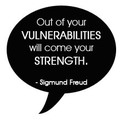
In a world where perfection and strength are highly valued, we’ve lost our appreciation for vulnerability and the gifts it offers.
Last week I had the pleasure of judging a student competition. More than one hundred high schoolers taking part in a Youth and Government program presented mock legislative bills they’d prepared with the goal of selecting the best few to pursue and refine as they readied themselves for a statewide convention.
The students approached the podium, one after the other… funny, smart, insightful, compelling, and prepared. It was an impressive display.
Then one 15-year-old stepped up and for the first 30 seconds (of her 90 total to speak) she was comfortable, authentic, and powerful in her delivery. Then something happened. She lost her place or her train of thought and stopped. Impressively, she took a deep breath, gathered herself, and continued on…. for a few more seconds. And it happened again. It was clear that she was holding back considerable emotion and I fully expected her to leave the stage. Yet again, she gathered herself together, abandoned her notes, looked right at the audience and continued on until her time was up.
At which point, she promptly sat down and began to cry. Was she disappointed? Embarrassed? Humiliated? Who knows. But she was vulnerable. And she immediately experienced the benefits of that vulnerability. She enjoyed tremendous empathy and kindness on the part of her peers who provided pats, hugs, and verbal encouragement. She also earned the respect of everyone in the audience. Afterward (in private) she received a volume of very supportive feedback that far exceeded what other students received. She was the clear winner of the night, regardless of the nature of the bill and despite some delivery challenges.
This reminds me of some research I’d done years ago while developing customer service training. Apparently loyalty is greater when a customer experiences a well-recovered service failure than when service is simply delivered without a problem.
Imperfection is a part of life. The opportunity - and the gift - lies in responding to it authentically and allowing ourselves to be vulnerable. These moments of vulnerability offer powerful opportunities for support, connection, and growth.
What about you? How has vulnerability served you?
Image: Liz Price
The post The Value of Vulnerability appeared first on Julie Winkle Giulioni.
Julie Winkle Giulioni
.
Blog
.
<span class='date ' tip=''><i class='icon-time'></i> Jul 14, 2015 09:18am</span>
|
|
New Hire Scorecards at Discover Financial Services, recently published in Training Magazine online and co-written by my student Alexis Belair and I, describes how Discover Financial Services (the Discover card people) developed a series of scorecards, reports that visually report the progress of their new hire training programs. Written with the close cooperation of Jon Kaplan, a training director at Discover, and Doug Anderson, manager of this project, this case study not only describes the report, but also describes the challenges, costs, and development resources needed to prepare these reports. Read the entire case at http://www.trainingmag.com/article/case-study-new-hire-scorecards-discover-financial-services.
Saul Carliner
.
Blog
.
<span class='date ' tip=''><i class='icon-time'></i> Jul 14, 2015 09:18am</span>
|
|
Megan Berry's blog post was featuredHacking Diversity: How the Culture You Set Drives Who You HireLeaders in the technology industry are talking about trying to hire more women, yet issues like a prevalent "bro-culture" are causing women to "leave in droves." Too many people hear this and think that the problem is not them. However, to drive change, leaders at technology companies need to step up and be part of the solution.Here are five recommendations for technology startups -- from Silicon Valley to Silicon Alley -- to keep in mind when creating a culture that welcomes women and diversity.Silence Is an EndorsementAs a manager, you see just the tip of the iceberg of team interactions, but you also set the bar for what’s acceptable and even rewarded within your company overall. While you might not join in a sexist joke, not commenting on the joke or stopping it is, in fact, an endorsement. This is a reality that often goes overlooked. Managers who immediately speak up when they see inappropriate behavior can make a difference in changing a culture.Watch Out for 'Bro-Toxic' CultureThe devil is in the details when it comes to company culture. This is why countless startups spend money on beers, lunches, off-sites and ping pong tables to build camaraderie and morale. With this in mind you must watch out for the small pieces of your culture that cause unintentional exclusion of women from team interactions - everything from men only drinking sessions, to only sending a woman to get coffee for the meeting, to who’s invited to the senior level brainstorm or speaks at your all hands meeting. These passive cues show what a company values. Try having a sign-up sheet where each member of a team is responsible for getting the coffee or having a public rotation for which department heads speak at a meeting. These are things you can do to be a proactive part of the solution.Start on Day OneMake hiring a diverse team a priority from the beginning. It only gets harder to hire a diverse staff as the company grows and many leaders find themselves in a self-perpetuating cycle. When prospective employees research your company, meet the team and are introduced to your culture, they will recognize a predominantly male workforce and that may make them uncomfortable or dissuade them from applying, reinforcing your lack of diversity. Changing a culture is infinitely harder than starting it out right, so pay attention to who is highlighted on your website and what words you use to describe your ideal candidate in your job descriptions.Don’t Shoot the MessengerWomen in tech -- just like everyone else -- are working long hours and focused on how to help their companies succeed. They would much rather be a thought of as a person in the technology industry and not worry about being thought of as a "woman." It’s not easy to speak up and often, it comes back to hurt the person that does. So if someone in your company speaks up about an issue, listen to them very carefully and appreciate that they valued your input and trusted you enough to come forward with their concerns.Keep Talking About the IssueI have been fortunate to work with the team at Lerer Hippeau Ventures (a RebelMouse investor) to address the gender issue. Instead of shying away from tech’s diversity issue, they have decided to keep talking about it. The group has dedicated an enormous amount of time to bringing in more women founders in their portfolio and better diversity in all the companies they work with. It doesn’t mean they’ve solved the problem (as an industry, we’re far from that) but their effort goes a long way.This is an industry-wide issue that won’t go away in a day, but if more companies push to change their culture from the inside, we can start to run this around. Start-ups must face the issue head-on and hold themselves to the highest standards when hiring new talent and building their culture.Megan Berry is Head of Community and Social Product at RebelMouse. See More
Jeff Fissel
.
Blog
.
<span class='date ' tip=''><i class='icon-time'></i> Jul 14, 2015 09:18am</span>
|
|
The holiday season is upon us again. A chance to spend quality time with family and friends. A chance to punctuate key relationships with specially-selected gifts. A chance to end the quarter/year strong. But also, a chance to become completely overwhelmed and enjoy none of it!
And that’s because too frequently we get swept up in the frenzy and hypnotized by the advertising and hype, unconsciously playing out old scripts that are no longer relevant today. So, this holiday season, take control. Be more deliberate. Choreograph a sense of ease that will shine more beautifully than the brightest twinkle lights. Intentionally SHAPE the quality of this holiday season with these five sanity-saving strategies.
Shorten the season. My inner retailer comes out this time of year… as I want to put up the Christmas tree before the Thanksgiving gravy even cools. But, it’s hard to sustain holiday cheer for that long. So, compress it. You get to choose the timeline… not Macy’s. Start later. Stop earlier. Take a break in between. But savor the concentration.
Hit the pause button for just 60 seconds and do nothing more than activate your senses. Take in the smells, the sights, the textures and more with 100% of your attention for just one minute… and discover how refreshed you’ll return to your previously scheduled life.
Adopt a ‘less is more’ mentality. Find ways to trim back your expectations… of yourself, of others, of the magnificence of the gifts you give. Whittle down the list to just those individuals for whom gift giving is genuinely joyful. Bake only the cookies you really enjoy. Consciously wringing greater enjoyment from fewer activities can completely change the holiday dynamic.
Pen your own holiday poem. As silly as it sounds, capturing highlights of your year (or your life) in rhyming verses quickly becomes a ‘flow’ activity. You realize the multiple benefits of personal engagement and reflection… and you have something pretty entertaining to share with family and friends.
Exchange experiences. Let’s be honest. Does your friend really need a motorized grill cleaner… or anything else for that matter? Stop the madness… and the senseless shopping. Negotiate with friends and family to share experiences rather than items. A special dinner out. A trip to a theme park. An early morning hike. For the ultimate holiday ‘two-fer’, schedule something that all parties will enjoy and not only will you have exchanged a gift (that won’t be returned), but you’ll have experienced that quality time that the holiday season is all about.
So, what about you? What do you do to take control of the holiday madness and shape a more conscious experience for yourself and those around you? How could greater consciousness during the holidays support you throughout the rest of the year?
The post SHAPE the Holiday Season for Greater Satisfaction appeared first on Julie Winkle Giulioni.
Julie Winkle Giulioni
.
Blog
.
<span class='date ' tip=''><i class='icon-time'></i> Jul 14, 2015 09:18am</span>
|
|
Why Don’t We Read About Architecture? asks Allison Arieff in a recent blog post for the New York Times.Among the many reasons she suggests (including the difficulty of bloggers about architecture to think critically with the pressure of posting as many as 5 entries per week) is language:"Writing about architecture is like mangling language, and far too often the experience of reading architectural writing feels about as pleasurable as tooth extraction."She elaborates on the ways that critics make their work unbearable to read. Although Arieff focuses on the challenges of writing architectural criticism in a way that compels the general public, I’m reminded of the many ways that academics in my own disciplines make their research and theory inaccessible to the practicing professionals whose work the researchers want to influence. Check out Arieff’s post at: http://opinionator.blogs.nytimes.com/2012/03/02/why-dont-we-read-about-architecture/?hp.
Saul Carliner
.
Blog
.
<span class='date ' tip=''><i class='icon-time'></i> Jul 14, 2015 09:18am</span>
|
|
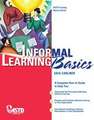
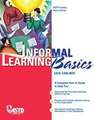
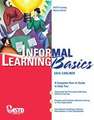
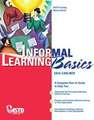
Informal Learning Basics, my newest book from ASTD Press, should hit bookshelves at the end of May. This book, which explores one of the hottest topics in training today, describes how training and development and other Human Resources professionals can better harness informal learning. By some accounts, informal learning—in which learners define some combination of the process, location, purpose, and content of learning and may or may not be conscious that learning occurred—provides as much as 70 percent of all learning in the workplace with little or no involvement of training and development professionals. So readers have realistic expectations and plans for the application of informal learning in the workplace, the book first describes how informal learning works and identifies how to use it effectively at key touch points in the life cycle of a job. Then, to help readers harness the power of informal learning, this book describes how readers can support 22 specific types of group and individual informal learning, how social, enterprise and other instructional technologies can assist in those efforts, and how to evaluate informal learning. Each chapter includes exercises that help readers apply the concepts presented in the book and worksheets that readers can use when planning informal learning efforts in their organizations.Keep checking this blog for updates on the publication.
Saul Carliner
.
Blog
.
<span class='date ' tip=''><i class='icon-time'></i> Jul 14, 2015 09:17am</span>
|
|
Chris Knight's blog post was featuredGigaOm Shutdown Is a Sad Reminder That the Media Business Is ToughI have known and worked with Om Malik, founder of Gigaom, since his days as a staff writer at Red Herring, the once-thick print magazine covering tech innovation that flourished during the dot-com boom days. And continued working with Malik and editorial colleagues at Business 2.0, one of my all-time favorite tech business magazines that shut down in 2007.The Business 2.0 networking parties were "da bomb," and in a small way made up for me missing out on most of the The Industry Standard’s rooftop parties (where all the Internet movers and shakers mingled) when I was a junior account executive for Julie and Lerry at Wilson McHenry Co. in the late 1990’s.Gigaom was a passion project for Malik, who wrote last night on his personal site:"Business, much like life, is not a movie and not everyone gets to have a story book ending… I might have left Gigaom, the company, over a year ago, but Gigaom, the idea still lives in my heart. Goodnight sweetheart, I still love you!"I remember the early, ebullient days of Gigaom - back in 2007, when Malik and team hosted its Pier Screenings events along the Embarcadero. The gatherings were an AB FAB blast, and one of our co-founders’ proudest moments was winning a Citizen Journalism Award for a self-produced piece on the world-famous San Francisco Gay PRIDE event earlier that summer. Judge Craig Newmark (founder of Craigslist) compared Celso Dulay to Jon Stewart of The Daily Show, and Kara Swisher of WSJ and Re/code fame gushed that this was a new style of first-person journalism being born.The media industry is a very tough business today. It reminds me of my summers growing up on my family’s cotton farm in Brownsville, Texas. There was so much work and care that went into blossoming and harvesting the white fluffy cotton in the late summer and fall. And while cotton filled a real need for people, as does journalism, falling prices and competition from larger, corporate farms made it very difficult to survive and thrive.Unfortunately, the main revenue source for media companies in the form of traditional advertising has been gutted during the last decade. With the move to mobile formats, publishers make as little as 10 percent (according to some media industry pundits) compared to the same content in print format 10 years ago.And now, with the democratized power of social media, there’s a very low cost of entry into becoming your own mini media powerhouse. Just like everyone taking photos w/ fancy software filters now diminishes the demand and price for professional photographers.So, it’s with sadness that we bid adieu to Gigaom, its talented staff, and Malik’s dream.Goodnight, sweetheart. We still love you.Chris Knight is founder and creative director at Divino Group, a brand marketing and PR consultancy based in San Francisco.See More
Jeff Fissel
.
Blog
.
<span class='date ' tip=''><i class='icon-time'></i> Jul 14, 2015 09:17am</span>
|
|
Can I just rant for a moment?
Have you ever noticed how asking for feedback sometimes invites frivolous, nonsensical, and insignificant information? Do some people believe that ‘I don’t have anything to offer’ is not an acceptable response? Why do they feel compelled to fill the dead air with something/anything?
I’ve encountered a couple of situations recently that bring this problem into clear focus.
A mid-level manager solicited feedback from her team on a variety of leadership competencies as part of her professional development. The analysis report was confusing, so I was asked to come in and gain a better understanding of the situation. Interviews with her staff revealed that two individuals over-emphasized issues that they admitted were not important because they "figured that’s what the questionnaire was looking for."
A client shared very significant feedback that would have changed the direction and outcomes of a high-stakes project. When a meeting was requested to explore his perspective and revise the plan, he replied, "I’m really swamped. Just never mind. I’m good with what you originally submitted."
A request for feedback is not an envelope that must be filled with something/anything just to get it off your desk. A request for feedback is:
An invitation to engage in an important dialogue… one that you can decline if you’re not available or have nothing to offer.
A sacred trust… an opening from someone who values your opinion and is making him/herself vulnerable in the process.
A moment in time when you can make a significant difference - to a person, process, or project.
The opportunity to offer feedback in support of others is serious business. So to make sure that your feedback is focused rather than frivolous, ask yourself the following questions.
How hard am I having to work to come up with an answer?
If you are racking your brain and struggling to respond, you may not have any feedback to share. Going back in time, dredging up unrelated examples, trying to connect dots where they don’t exist does not generate meaningful or actionable feedback. So, just forget it.
How important is it?
You can likely find something to say in response to any feedback request, but what difference will it make? So, the person’s voice is a bit high… or if he or she uses a different process to get to the same results. If you can’t come up with a ‘so what’, it’s likely not worth passing along. So, just forget it.
How much am I willing to invest in helping the person address it?
This is key. Important, relevant feedback is significant enough that you should be willing to provide additional information, context, or support so that the person requesting it can take action. If it’s not worth it to you to make that investment, that might be an indicator that it doesn’t warrant sharing. So, just forget it.
Feedback requests aren’t obligations that require you to go through the motions and check the boxes. They are an honor bestowed upon you by someone who believes that you have something to offer. If you do, pass your feedback along generously. If not, just forget it.
What about you? How cavalier are you with your feedback? How do you keep it real and valuable?
The post Forgetting Frivolous Feedback appeared first on Julie Winkle Giulioni.
Julie Winkle Giulioni
.
Blog
.
<span class='date ' tip=''><i class='icon-time'></i> Jul 14, 2015 09:17am</span>
|