Blogs
|
The post What We Talked About Last Month appeared first on The Training Doctor.
Nanette Miner
.
Blog
.
<span class='date ' tip=''><i class='icon-time'></i> Jul 14, 2015 09:43am</span>
|
|
Organizations have displayed an increased interest in blended learning, which takes the best of all training methodologies from the perspectives of demographics, economics, and instruction.
Demographics
For the most part, the demographic factors affect learning in the workplace and concern the population of learners. Especially in today’s globally diverse work environments, organizations need to make adjustments for multiple languages, various time zones, multiple generations, and cultural differences. While the content of the learning program may be the same (basic selling skills, for example), the design or delivery may have to be altered to accommodate varying demographics of the audience.
Economics
Often, training delivery options are dictated by the economics involved. For example, classroom based training will require travel expenses, maintaining or renting classroom space, and the printing and reproduction of materials. Computer based training options are more economical in many ways; however, they require their own set of economic decisions such as adequate server space, the hosting of a web site, and secure access and record keeping.
Instruction
The design of the actual instruction can vary greatly based on things such as individual learning styles, how immediate the need is for the training, or what access learners have to instructional methodologies. Do they have individual computer workstations? Are they able to leave their jobs to attend a 4 hour or 8 hour training class?
Want to learn more? Order your own copy here !
The post Blended Learning Uses the Best of all Training Methodologies appeared first on The Training Doctor.
Nanette Miner
.
Blog
.
<span class='date ' tip=''><i class='icon-time'></i> Jul 14, 2015 09:42am</span>
|
|
Back in June 2010, I wrote a post to this blog in which I summarized a new book on K-12 mathematics teaching by a former Stanford colleague of mine, Prof Jo Boaler. At the time, though I had met Jo a few times, I did not really know her; rather I was just one of many mathematical educators who simply admired her work, some of which she described in the book What's Math Got To Do With It?, parts of which were the primary focus of my post.Not long after my post appeared, Jo returned to Stanford from the UK, and over time we got to know each other better. When I formed my mathematics educational technology company BrainQuake in 2012, I asked her to be a founding member of its Board of Academic Advisors, all of whom are listed here. When she was putting the final touches to the new edition of her book, just published, she asked me to write a cover-quote, which I was pleased to do.I say all of this by way of disclosure.* For my primary aim in writing this month’s column is to persuade you to read (or re-read) my earlier post, and ideally Jo’s book. The research findings she describes in the book highlight the lasting damage done to generations of K-12 students (and possibly consequent damage to the US economy when that generation of students enters the workforce) by continuing adherence to a classroom mathematics pedagogy that portrays math as a rule-based process of answer-getting, rather than a creative enterprise of understanding and problem solving.The woefully ill-informed "debate" about the benefits of the US Common Core State Mathematics Standards that has been fostered in between the appearances of the two editions of Boaler’s book, make her message even more important than it was when the first edition came out in 2009. While CCSS opponents espouse opinions, Boaler presents evidence - lots of it - that supports the approach to K-12 mathematics learning the CCSS promotes.If you want to see more of Prof Boaler’s efforts to improve K-12 mathematics education, see her teachers’ resource site YouCubed, or sign up for her online course How to Learn Math: for Teachers and Parents, which starts on June 16.Also, check out her latest post in The Hechinger Report where she presents some recent data about the problems caused by a lot of old-style rule-memorization math instruction.* NOTE: Prof Boaler’s Stanford research team also recently completed a small pilot study of BrainQuake’s mathematics learning (free-) app Wuzzit Trouble, first reported by education technology journalist Jordan Shapiro in an April 27, 2015 article in Forbes Magazine. (Prof Boaler is an academic advisor to BrainQuake but does so as a volunteer, and has no financial stake in the company.)
Original author: Mathematical Association of America
Michelle Maldonado
.
Blog
.
<span class='date ' tip=''><i class='icon-time'></i> Jul 14, 2015 09:40am</span>
|
|
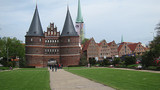
Uta and I are staying in the oldest building in Lubeck, a powerhouse in the days of the Hanseatic League. The hotel Anno 1216 was named for the year of its construction.
White asparagus
Original linkOriginal author: Jay Cross
Michelle Maldonado
.
Blog
.
<span class='date ' tip=''><i class='icon-time'></i> Jul 14, 2015 09:39am</span>
|
|
Original linkOriginal author: Jay Cross
Michelle Maldonado
.
Blog
.
<span class='date ' tip=''><i class='icon-time'></i> Jul 14, 2015 09:39am</span>
|
|
For satisfaction, experiences trump possessions.
Savoring past experiences is a matter of remembering them, and it so happens that I’ve been studying memory as part of the research for my book. Benedict Carey’s How We Learn says that our brains record everything. Not that you can recall them, but all your experiences are in there. You just can’t reach them.
At lunch today, Uta recalled having asparagus Bismarck at a delightful lunch in Como forty years ago. What was the name of that long-closed restaurant? I don’t recall. But I do remember that I ate the guinea fowl, bresaola in Italian. We were the only party in the little restaurant except for the chef’s wine merchant, who kindly gave us a bottle of wine to imbibe with lunch. The wine was a Dolcetto d’Alba; it was a delight, not at all sweet. I’m still blanking on the name of the restaurant but I remember its stiff white table cloths. I’ve reclaimed a memory that had gone underground for decades — and added to the bank of experiences that make for a happy life.
What if you could always remember more of your experiences so you could enjoy them after the fact?
You can. You don’t have to forget so many experiences if you revisit them — because reflection keeps memories alive. A good routine for reinforcing memory is to review and reflect half an hour after learning something, reflect again the next day, again in a week, and again at month-end. Return visits require less and less time; a brief recall charges up the neuron connections memories are made of.
In my case, the reinforcement comes from posting photos on Flickr. I just cropped and tweaked today’s photographs. Then I checked to make sure I’d uploaded them properly to Flickr. I may add a description or two. In a few weeks, I’ll look back at the photos to savor the high points of the vacation. I expect I retain more memories than someone who doesn’t stop to reflect.
I wouldn’t be likely to forget staying in an 11th century castle overlooking the Rhine without the photos, but with them, I’ll remember the colors and the nuances of the experience.
Oversimplifying the way memory works in the extreme, the hippocampus stores a map to the interconnected neurons that make a particular memory. If the map is destroyed, the memory vanishes. Neurologists had trauma victims recall their bad memories. Then they injected them with drugs that block protein synthesis, i.e. the ability to form memories. Their brains couldn’t create revised maps to where the memories were stored. They couldn’t replace the maps with updated versions. Astoundingly, the memories vanished entirely!
Wouldn’t it be wonderful if science could find a way for us to restore the neuron maps to memories of good experiences that we’ve forgotten? I’ve forgotten thousands of wonderful experiences and it would be a delight to get them back.
Original linkOriginal author: Jay Cross
Michelle Maldonado
.
Blog
.
<span class='date ' tip=''><i class='icon-time'></i> Jul 14, 2015 09:39am</span>
|
|
After being laid off from
my full-time job two weeks ago and reluctantly enrolled in what I term The White Box Club, I found myself wading through waves of phone calls, text messages, and emails from friends and family expressing their words of wisdom, love, and support. People I didn't even know were sending messages of hope and encouragement through social media. The outpouring of support was amazing.Then this past Friday—exactly
two weeks after that shocking and unexpected event—my inbox was empty. Hardly an email, phone call, or text
message. It suddenly felt like the whole event had never occurred. Until I remembered that it had.So what just happened?
The moment I told my Mom about this unexpected condition, she recalled the time when our home was lost to a fire back
in 2002. "There was such an outpouring of support for quite a while. But
then there was a day when it all came to a screeching halt. Another note for
the time frame, but also another twinge of the heart."I was reminded that every life event has a process—a beginning and an end—and so do the people touched by it. When others near to us are swept into the emotional waves of a personal life event, they, too, become a part of it... for a short time. But then they return to their own lives. They come, they love, they leave.So if other people can move on so quickly, why can’t I? How come I can’t just process the sadness
and disappointment and get over it? Because it happened to
me.Other people process faster because empathy can only take you so far. Even when we extend support to others, we will naturally have an inherent need to nurture ourselves. And when the event happens to us, our own process will always be different from
anyone else—especially since we're the ones who are most affected. And that’s okay.As a life coach, I encourage my clients to receive—and not be afraid to ask for—support from their friends and family when facing tough times. I also teach them to rely on themselves for encouragement. Learning to becoming your own coach can serve you for the rest of your life.Starting to reflect upon the lessons I'm learning during this layoff process is, yet again, another opportunity to me to learn how to coach myself—another chance to "drink another cup of my own coffee." Whereas the encouragement came from others during the past two weeks, it now needs to come from
me. My friends and family reminded me how important my gifts are to the world, and now
I need to remind myself.If I believe that every life event has a process, then this, too, shall pass. Sometimes in the most difficult times, the glimmer of hope becomes the light at the end of the tunnel.My challenges this week?To allow myself to keep processing, and be very kind to myself as I do
Keep bringing clarity to
these moments
Acknowledge all of my thoughts, feelings, and intuitive "nudges"
Continue to practice patience and trust the process
Keep focusing on
internal and external alignment
Throughout this process of grieving: anger, confusion, sadness, and acceptance, I will stay true to myself and my integrity. And while my hands are staying busy doing logical things (arranging finances, networking, searching for new opportunities), my heart will continue healing and my next opportunity will, indeed, come into alignment with me.To Our Better Balance,Michael Thomas SunnarborgMichael
Thomas Sunnarborg is an educator, best-selling author, and certified
life coach. His passion is to help people reclaim their power of choice
and find better balance in their work, relationships, and life. You can
follow Michael on Facebook and Twitter, or find out more at michaelsunnarborg.comNeed some inspiration? Pick up a copy of 21 Days, Steps & Keys,
or one of the other books in the balance series, and start off 2015 by
finding better balance in your career, relationships, and life. Liked this post? Then please comment or share it with others!Photo courtesy of me :o)
Original linkOriginal author: Michael
Michelle Maldonado
.
Blog
.
<span class='date ' tip=''><i class='icon-time'></i> Jul 14, 2015 09:39am</span>
|
|
By Ray Jimenez, PhD
Chief Learning Architect
Vignettes Learning
www.vignetteslearning.com
Small bites content is small, standalone, useful and accessible. More importantly, it is learning content needed instantly for a micro task or activity at work.
The size of small bites content is defined by the way learners consume content. Most likely, this takes place while they're on the job and trying to complete a task.
"My Tasks Now" mode is a diagnostic process. Learners and workers are trying to analyze the requirements, problems and opportunities surrounding their tasks. When the learners are faced with the tasks, they ask diagnostic questions (Schank, 2011).
1. What's the outcome?
2. What do I know about this?
3. How should I proceed?
4. How would I know it is done right?
By asking these, learners are calculating in their minds what the content is, how much there is and when and where to get it. Finally, how should they apply the content? Depending on the learners' experience and the complexity of the tasks, they may already have the skills and knowledge needed to apply to the tasks at hand.
On the other hand, if you have some less confident learners who want to learn more, they proceed to think through their experiences and/or try to recall prior experiences and knowledge. In this instance small bites content becomes invaluable. To be of maximum use, small bites content must contain diagnostic headers and footers.
What are diagnostic headers and footers? They are elements of the small bites content that address the four diagnostic questions. They trigger the automatic, instant and unconscious mental skills that aid people to survive, cope and succeed in everyday life. Essentially, these are self-efficacy requirements of learning (Bandura, 1986).
Diagnostic headers (before the content)
1. What's the outcome?
2. What do I know about this?
3. How should I proceed?
Diagnostic footers (after the content)
4. How will I know if it's done right?
Michelle Maldonado
.
Blog
.
<span class='date ' tip=''><i class='icon-time'></i> Jul 14, 2015 09:39am</span>
|
|
The last two days, the GPS in our rental car has taken us on to obscure farm roads and "the long way around" time after time. We don’t know whether we should take advice from the GPS’s calm English voice or say to hell with it and follow the signs. We’ve traveled farm roads so narrow that we had to stop to let cars come the other way. The GPS will tell us it’s planning another route because of traffic conditions and then take us directly into roadblocks and construction projects. I fear it’s possessed.
Distances are so short in Europe compared to the United States. We left Lindau, the German island on Lake Constance, at 11:30 this morning. Fifteen minutes later, we were whizzing through Austria. And fifteen minutes after that we were in Switzerland, headed to Appenzell, our destination for a 1:00 lunch.
Asparagus is still on the menu even though we’re at the southern tip of Germany. Everyplace seems to have a Spargelkarte, a special asparagus menu. A Spargelkarte typically offers asparagus soup, a pound of asparagus with hollendaise or butter, asparagus with a schnitzel or perhaps a fish filet or ham. Uta never tires of the stuff. A few stalks is about all I can handle at one sitting.
Tomorrow we’re headed to Schwangau, home of crazy Kind Ludwig II’s castles. It’s schmaltzy and I’ve visited three or four times before, but I can’t resist something that looks so damned cool. Ludwig may have been nuts, but he left behind beautiful, iconic symbols.
Original linkOriginal author: Jay Cross
Michelle Maldonado
.
Blog
.
<span class='date ' tip=''><i class='icon-time'></i> Jul 14, 2015 09:38am</span>
|
|
Your Workscape is everything in your organization except the training department. It’s where work is done and where people hone the skills they need to add value. It’s the biggest frame of the big picture. It’s relationships and culture and secret sauce. It’s the organization as organism. To prosper, you need to nurture it, plant seeds, pamper the ground. It’s your job to help the system thrive.
Learning Ecosystem, Learning Ecology, and Learnscape mean the same thing as Workscape. I don’t use the word learn with executives, who inevitably think back to the awfulness of school and close their ears. "Let’s talk about performance."
The Workscape is a systems-eye view of the workplace. Everything is connected. Rather than try to control nature, we do what it takes to keep the environment thriving.
In the same vein, I talk about Working Smarter instead of informal learning, social learning, and so forth. Some people denigrate informal learning but nobody’s against Working Smarter.
Your organization already has a workscape where people are learning to work smarter. That’s where all the informal and social learning we hear about is taking place. The problem is that the learning processes are haphazard, often a paving of the cow paths. Many employees and stakeholders miss out—and stumble. Most companies’ systems fail to get the job done. Our Workscape ecologies are entering a do-or-die phase like global warming. Management is demanding that the workforce be more effective. "What got us here will not get us there." We must nurture the Workscape or face corporate meltdown.
Global warming signals in Workscapes
We hear that if "it ain’t broke, don’t fix it," yet most corporate learning and development is broken. 77% of the senior managers surveyed by the Corporate Leadership Council reported they were dissatisfied with L&D. 76% said L&D was not critical to business outcomes. Only 14% would recommend working with L&D. Clark Quinn’s recent book, Revolutionizing Learning and Development, slams L&D, which should be named Performance and Development, for seriously underperforming.
Time is speeding up. More happens in a day than your grandmother experienced in a week. Keeping sharp and up to date is now a continuing part of everyone’s job. Corporate learning must expand from focusing on the classroom, which provides at best 10% of learning, to the entire organization where learning while doing is the rule. Training a novice may lead to productivity gains in the future. Helping an experienced person impacts the bottom line immediately. Little wonder that the training department is underperforming: they only touch a minority of employees, most of them newcomers.
As many as four out of five large multinationals report they are undergoing a digital transformation. It goes by many names, from Enterprise 2.0 to Radical Management or simply Going Paperless. Altimeter Group defines digital transformation as: "the realignment of, or new investment in, technology and business models to more effectively engage digital customers at every touchpoint in the customer experience lifecycle."* The digital transformation of workplace learning involves moving from the limited training department to the holistic Workscape framework view of the world.
The input may be establishing social learning networks; the output is improvement in the business overall.
Scope of the habitat
Put on your ecologist hat. Let’s examine the diversity of species among those people in your Workscape drawing paychecks:
Novices and newbies have been the main focus of training. This includes new hire on-boarding and provision of basic and technical skills (we’re all novices at something). This minority uses a disproportionate share of the training department’s resources and mindshare.
Experienced producers bring home the bacon yet training departments overlook them. Training departments have single-shot solutions: courses. Courses are rarely appropriate for experienced workers. Many old hands will not tolerate them nor learn from them if they do. They know that experience is a better teacher. Tuning the learning environment to make systemic changes for this underserved population has fantastic upside potential, perhaps enough to get CLOs a real seat at table in the C-Suite.
Top performers are the 20% of the team that generate 80% of the results. A 1% improvement at this level makes waves. This species needs special handling, sometimes including personal service.
Compliance is a red herring that people point to when discussing how deep "training" goes into the organization. However, compliance is not learning. Sure, it’s required, but no body’s expecting much performance improvement in the area, particularly in its present primitive form.
Alumni are an overlooked opportunity in many organizations. IBM invested in keeping former IBMers abreast of what was going on back at Big Blue. The alumni connected over social media and saw demos in Second Life. The result? An on-going flow of leads from true-believers and those who contract with IBM.
Subspecies. L&D has traditionally focused on the needs of employees on the payroll exclusively, disregarding the fact that partners, customers, subcontractors, temps, service agencies, outsourcers, suppliers, and others are equally part of the value chain. Take the Workscape view. Let’s go up to a balcony overlooking a model of your business. Look at the flow of business. You can see that the product is only as good as the weakest link in the chain. Think carefully about who you want to be co-learning with.
The Workscape should address the needs of learners throughout the extended enterprise.
Theoretically, your Workscape — the realm where you’ll be wielding your influence on performance and learning — could stretch way beyond your firewall to include nearly everyone the organization interacts with. Imagine how much cooperation will improve if they all read from the same page.
Reading the temperature
The climate for Workscapes is changing, forcing a re-think of how things are connected.
Decision-making is migrating from institution to individual, from training to pull learning, and shifts "power to the people." This is how digital transformation works: digital democracy first. Digital citizens exploit connections and take power. Making the shift is an enormous change management task.
Informal, experiential work is three times more effective than formal, top-down training. Experiential earning is migrating into the workflow at a very fast rate. Spread the footprint of the Workscape to the optimal size.
Workscapes are complex and unpredictable, in perpetual beta. Experiments are cheap. Plant lots (hundreds, thousands) of Workscape experiments and nurture those that catch on. Watch out for monoculture (using only one solution) and the echo effect (making judgments from a narrow spectrum of reality).
Nurturing the Workscape requires competencies such as business problem analysis, collaboration experts, community managers, and moxie. I foresee learning process SWAT teams attacking connection gaps. You don’t have these people on board now.
Forget about the traditional way you’ve trained people. Unlearn your assumptions about courses and top-down learning. Break with the present by looking ahead five years. Start with a blank piece of paper. Take a Workscape perspective. Assess the organizational benefits of:
embedding learning in work, covering a much larger audience
setting up learning as a continuous activity, not an event
leveraging self-sustaining processes instead of one-time courses
pinpointing high-return activities such as manager coaching
embracing social and experiential learning
changing the learning philosophy from push to pull
employing business metrics to gauge success
canvasing the organization for opportunities instead of waiting for requests
focusing on overall business outcomes
building self-sufficient teams
extending the Workscape to cover partners, customers, and outsourced services
making learning a driver with business impact
The learning conservationist toolkit
L&D’s collaboration experts and SWAT teams are digital MacGyvers who weave techniques like these into Workscapes:
Make Management responsible for development
Issue stretch assignments to grow staff
Mentors, coaching
Action learning
Personal Learning Network
Collaboration and cooperation
Friends and colleagues provide answers
Peer learning
Performance support
Job aids, bookmarks,
FAQs, aggregation, curation
Access to information
Wiki, inhouse YouTube, internet
Self-study catalog, portals
Enterprise social network
Activity stream keeps one up to date
Platform for conversation
Opportunity to share knowledge
Communities of Practice
Professional growth
Knowledge repository
Create knowledge
Blogs
Individual publishing (Learn out loud!)
Follow thinking of others
Social learning
Make conversation easy
Collaboration
Mobile
DIY
Performance feedback
Is it working? How can we do better?
Microlearning
Learning in tiny bites
Instead of taking requests, the traditional role of training departments, learning conservationists actively seek out opportunities where learning will have the most impact.
One group of L&D special agents posted this set of beliefs to explain how it worked to its internal clients:
We are open and transparent.
We narrate our work. Need to share.
We support continuous learning, not events.
We value conversation as a learning vehicle.
We drink our own champagne (or mimosas).
Business success is our bottom line.
We are not a training organization.
We value time for self-development and reflection.
We establish business metrics for every engagement and report back publicly on outcomes.
Changing the physical environment can improve learning.
The staff will use any tool available to improve learning, right down to moving the furniture. A computer manufacturer discovered that its chip designers learned from overhearing conversations among their peers. They replaced a cube farm with comfortable sofas, rolling white boards, and espresso machines — and watched the production of innovative ideas skyrocket.
Environmental impact report
In a 2011 book, A New Culture of Learning, Douglas Thomas and John Seely Brown described the kind of learning necessary in this new environment as "whitewater learning"—the ability to acquire useful knowledge and skills while at the same time practicing them in an environment that is constantly evolving and presenting new challenges. They argue that our learning environments need to match the speed and degree of change happening in the world around us.**
The emancipation of both nature and the human imagination depends first on the capacity to ‘unsay’ the world and, second, on the ability to image it differently so that wonder might be brought into appearance.***
Over a hundred CLOs told us what they were currently doing was insufficient to prepare them to deal with the future needs of the business. Obviously it’s time to do something different.
One way to accelerate people’s development is to optimize learning by looking at the organization as an organic, unpredictable, complex system. It’s time to fix the big picture by working on the level of the Workscape.
________________
*Digital transformation by any other name, Jason Bloomberg in Forbes
**Aspen Institute, The Learning Ecosystem
*** James Corner, "Ecology and Landscape as Agents of Creativity," in Ecological design and planning, George F. Thompson and Frederick R. Steiner, editors, (New York: John Wiley, 1997), p.99. quoted in Design Education and Innovation Ecotones by Ann Pendleton-Julian
________________
Research funded by Litmos
Original linkOriginal author: Jay Cross
Michelle Maldonado
.
Blog
.
<span class='date ' tip=''><i class='icon-time'></i> Jul 14, 2015 09:38am</span>
|