Blogs
|
We asked some of the world’s top design schools to share their favorite books. Here’s what they recommend for your summer reading list.
Source: 35 Books Every Designer Should Read
My Favorites:
Visual Notes for Architects and Designers (Norman Crowe and Paul Laseau)
Learn how sketching like an architect can sharpen your thinking (and make for some awesome Moleskines).
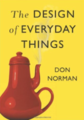
The Design of Everyday Things (Don Norman)
An industry classic explaining how to design products for real human use.
Nick Floro
.
Blog
.
<span class='date ' tip=''><i class='icon-time'></i> Jul 14, 2015 09:44am</span>
|
|
Fancy headsets can cost between $200 and $500. But if you have a smartphone, some extra time and an empty pizza box, you can make your own.
Source: Want A Taste Of Virtual Reality? Step One: Find Some Cardboard
Nick Floro
.
Blog
.
<span class='date ' tip=''><i class='icon-time'></i> Jul 14, 2015 09:44am</span>
|
|
By Halelly Azulay, TalentGrow LLC
Your current leader population wants to grow and needs to continue to improve their leadership competencies. You have Baby Boomer leaders set to retire but many of those ‘on the bench’ to succeed them are not quite promotion-ready. Millennials are chomping at the bit for ongoing leadership development opportunities.
You need to create ‘bench strength’ in the form of a pool of ready-to-lead talent.
Does this sound familiar? Don’t despair. Hope awaits…
When we deploy a wide variety of development methods to get our leaders to the next level, everyone benefits. It is not merely a training issue, either. It’s bigger than that. Here are three ideas to help you approach leadership development in a broad, and inclusive way that doesn’t require developing coursework or having people attend classes!
Rotation/stretch assignments
A job rotation means that the leader is temporarily assigned to a different job, usually laterally, in another role in the same organization, for an agreed-upon period of time. A stretch assignment is a task or project that these leaders perform usually within their current role but beyond their job description that challenges and broadens (stretches) their current skills and capabilities.
In leadership workshops or seminars, leaders are usually isolated and focused on learning outside the context of their workday. But when they are strategically working in a job rotation or stretch assignment with a developmental lens, leaders learn new skills in the context of their daily work experience and apply their lessons immediately, continually.
These kinds of assignments, when coupled with specific development goals, are a rich growth opportunity that yields many benefits to the leader as learner. They are a wonderful platform for leadership development that is readily available and completely scalable to the specifics of the leader, team, and organization.
Volunteering in a leadership role
How can your future and current leaders practice new leadership skills on-the-job without any downside for your organization whatsoever? By practicing on someone else’s turf as a volunteer.
Volunteer jobs in leadership positions provide a great opportunity for leaders to ‘get their feet wet’, try new approaches, and practice skills they haven’t yet mastered. And they do this all away from work where their mistakes don’t affect your organization directly or cause any hardship.
There are endless leadership positions in non-profit and community-based organizations that need volunteers to serve their constituents. Leaders can craft a development strategy for leveraging a volunteer job for their own learning and growth, then deploy the plan and bring back the newly developed skills back to your organization.
It’s a win-win-win.
Mentor/protégé
Do your current or high potential future leaders have a mentor? And, are they mentoring someone themselves?
Lots of employers already have, or are considering adding, a mentoring program. Often, we view these opportunities as intended to benefit the newest members of the workforce. Yet, the potential developmental benefits of mentoring and being mentored can be equally valuable to those in leadership positions.
When in the role of protégé (aka mentee), leaders can gain insights from those who are a few steps ahead of them on a similar leadership journey. Even the most experienced and successful executive coaches have an executive coach of their own.
Leaders of all levels should also keep their skills sharp by getting a mentor. These leader mentors create value for their protégés, but don’t they also grow their own skills as a result of mentoring others? Yes! For example, they may develop patience or empathy, or gain a new perspective on organizational challenges and trends, or enhance their coaching skills while playing the role of a mentor. These new skills can then be leveraged back on the job. This is leadership development at its best. There is dual-value delivered to the organization as a result of both parties developing.
Developing leaders is an ongoing challenge many organizations face, and by expanding the idea of "development" to include non-training-related methods, we can all benefit richly. Whether by completing a stretch or rotational assignment, volunteering in a leadership capacity, mentoring or being mentored, current and future leaders can grow their skills, stretch outside their comfort zone, and bring the benefits of their expanded skillsets to their organization without ever stepping foot in a leadership development workshop.
Look for these and many more non-training employee development ideas in Halelly’s book, Employee Development on a Shoestring published by ATD Press.
About Halelly Azulay, TalentGrow LLC
Halelly Azulay is an author, speaker, facilitator, and leadership development strategist, as well as an expert in communication skills and emotional intelligence. She is the founder of TalentGrow LLC.
a consulting company that develops leaders and teams experiencing explosive growth. TalentGrow specializes in people leadership skills, which include communication skills, teambuilding, coaching and emotional intelligence. TalentGrow works with all organizational levels, including C-level leaders, frontline managers and individuals.
Halelly is the author of two books, Employee Development on a Shoestring and Strengths Can Help You Lead a More
Fulfilling Life .
She also hosts The TalentGrow Show http://www.talentgrow.com/podcast
a leadership development podcast. She brings 20 years of professional experience in workplace learning and leadership development to her work with corporate, government, nonprofit, and academic organizations.
The post Guest Blog: 3 Ideas for Leadership Development Outside the Classroom appeared first on The Training Doctor.
Nanette Miner
.
Blog
.
<span class='date ' tip=''><i class='icon-time'></i> Jul 14, 2015 09:44am</span>
|
|
Everyone who comes to Google comes with a learning hat and a teaching hat - they have to teach as much as they learn, says Suzanne Martin, head of global people development, brand and marketing at Google, referring to the company’s g2g (Googler to Googler) program that puts employees in teaching roles.
Source: HR Magazine, May 2015
The post Quotable: Suzanne Martin appeared first on The Training Doctor.
Nanette Miner
.
Blog
.
<span class='date ' tip=''><i class='icon-time'></i> Jul 14, 2015 09:44am</span>
|
|
In an article in SHRM’s HR Magazine in the month of May 2015, an interview with the VP of Organizational Development and Chief Talent Officer at Hospira, Inc., Pamela Puryear, revealed an interesting approach to learning and development: employee-teams can apply for a grant from the Training Department to meet a learning and development need in their business unit.
The post Training: Free? Money Maker? Or Gift of the organization? appeared first on The Training Doctor.
Nanette Miner
.
Blog
.
<span class='date ' tip=''><i class='icon-time'></i> Jul 14, 2015 09:44am</span>
|
|
Research now tells us that what makes a group truly intelligent and innovative is the combination of different ages, skills, disciplines, and working and thinking styles that members bring to the table. Scott E Page, professor and director of the center of the Study of Complex Systems at the University of Michigan has demonstrated that groups displaying a range of perspectives and skill levels outperform like-minded experts. He concludes that "progress depends as much on our collective differences as it does on our individual IQ scores."
Source: Institute for the Future for the University of Phoenix Research Instituted and Scott E Page, "The Difference," published by Princeton Press
The post Collective Differences equal Better Learning Outcomes appeared first on The Training Doctor.
Nanette Miner
.
Blog
.
<span class='date ' tip=''><i class='icon-time'></i> Jul 14, 2015 09:44am</span>
|
|
Online learning is "consistent with where we are going with employers and teams." Employers need people who are self-motivated and who can work independently and collaborate online with colleagues, including critiquing each other’s work - exactly the skills that online learning builds.
Lora Reed, Assistant Professor, Ashford University Forbes School of Business as quoted in HR Magazine, May 2015
The post Quotable: Lora Reed appeared first on The Training Doctor.
Nanette Miner
.
Blog
.
<span class='date ' tip=''><i class='icon-time'></i> Jul 14, 2015 09:43am</span>
|
|
Heard around the water cooler: Place-based learning to identify learning that is classroom-based or face-to-face.
The post Are you going to that place-based class? appeared first on The Training Doctor.
Nanette Miner
.
Blog
.
<span class='date ' tip=''><i class='icon-time'></i> Jul 14, 2015 09:43am</span>
|
|
Millennials will account for close to 50 percent of the workforce within the next five years. Corporate learning leaders need to be the champion for making professional development an organizational priority. We need to be taking educational benefits out of the last page of the employee handbook and shining a spotlight on it. In the next five to 10 years it’s going to be a key differentiator for employers who do it well.
Jay Titus, EdAssist
Excerpted from: http://www.clomedia.com/blogs/1-ask-a-gen-y/post/6303-millennials-will-work-for-knowledge
The post Quotable: Jay Titus appeared first on The Training Doctor.
Nanette Miner
.
Blog
.
<span class='date ' tip=''><i class='icon-time'></i> Jul 14, 2015 09:43am</span>
|
|
One of the wonderful things about Adobe Connect is the fact that the pods make it so malleable… one of the maddening things about Adobe Connect is trying to get all those pods in place easily and at the right time.
One option: Create a layout for your activity instead. Say, for example, your activity is for participants to respond to the question How Do You Create the Perfect Impression on a New Client? What do you do before, during and after the sales call? and you have a separate chat pod for each response (before, during, after). Rather than try to move the pods in to the participant viewing area quickly and neatly, use a separate layout where they are already set up. Then, with one click, you can move the whole group to the layout.
* From the menu bar, click Layout > Create New Layout
* Then choose to create a blank layout (you will have to bring in every pod you want in this layout) or duplicate an existing layout (if you know you want video, attendee list and chat, you might want to duplicate the standard ‘sharing’ layout)
* Give the layout a name so you can easily find it in the list of layouts on the right of your screen (using our example above, we’d probably call this layout Before, During, After)
* Click OK. Populate the room with whatever pods you need (again, using our example, we’d need 3 chat pods)
* Now, when that time in the course arrives, simply click on the Before, During, After layout thumbnail and voila! your three chat pods are at the ready and participants can begin their activity much more quickly.
The post Adobe Connect Tip - for easier classroom management appeared first on The Training Doctor.
Nanette Miner
.
Blog
.
<span class='date ' tip=''><i class='icon-time'></i> Jul 14, 2015 09:43am</span>
|