Blogs
|
In our quest to build an open platform for anyone to create and share courses, we are especially drawn to ideas that offer instructors new levels of freedom and flexibility.
Today, we’re releasing our first major feature since launch: course embedding. It’s the freedom to publish your course on your website or blog.
Course embedding has been on the Versal roadmap since very early in our development. And as we suspected, it has also been the top request since launch - by a landslide. So today we’re very excited to test this new feature, and are especially interested to hear your experiences as you give it a try.
What is course embedding?
It’s an easy way to add your course directly to your website or blog. Much like with embedded videos, people who take your course never leave your website. They access the course right in the embedded course player.
How hard is it to embed a Versal course?
Simply copy a short snippet of code from your course’s overview page (click the </> icon) and paste it into your website or blog’s HTML code. Your course is now live wherever you’ve embedded it.
Wait, does this mean you have to be a coder to embed a course? No, absolutely not. If you can copy-and-paste text, you can embed a Versal course.
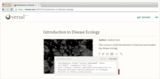
To make it easy, we’ve created this short course below (coincidentally, embedded here in our own blog using the same feature) with step-by-step instructions for many of the most common places on the web, including:
Your own website
Tumblr
Self-hosted WordPress.org blogs
Blogger
Wix
SquareSpace
How to Embed a Versal Course on Versal.com
Course embedding is also a new way for people to share your courses with their own audiences. Let’s say you create a course to teach Conversational Spanish, and embed it on your own blog. One of your readers also writes a blog with travel tips. She can also embed your course in her own site and share it with her readers.*
Can courses go viral? Courses are a very different experience than a 50-second cat video, but it’s always possible. If you embed a course into your blog or website, post a link on our Facebook page and we’ll feature our favorites.
A few quick tips:
The embedded course player is 750 pixels wide. If you embed a course on your website, make sure you allocate the appropriate space. If you are embedding your course on a blog, we recommend single column-width templates or themes with extra white space around the columns.
When you open the embed code window (by clicking on the </> symbol), you have two size choices: 750×527 and 750×1000. The difference? The second offers your learners more vertical space for reading.
As the first version of the embedded course player, you may encounter a few glitches. For example, in some cases when you’re using Safari, the course may not fully load correctly in the frame. If you refresh your page, it should load properly. If you come across any bugs or glitches, please drop us a note at help@versal.com or here.
We’re looking forward to seeing your courses appear all over the web. And keep the ideas and feedback coming (email us, or find us on Facebook and Twitter). Our beta has been an incredible learning experience, and we’ve been humbled by your support and grateful for your enthusiasm. Stay tuned for more updates coming soon…
*Note…we’re sensitive to the fact that you may want to post a course on your own blog, but not have it posted elsewhere. This is an early version, and like all of our other beta features, we’ll be continually refining and enhancing it. We do expect to offer instructors the option to turn off course embedding in the future. For now, if you do not want your course to be embedded by anyone else, we recommend inviting people to directly take your course or sharing links with people you trust.
Christopher Poseley
.
Blog
.
<span class='date ' tip=''><i class='icon-time'></i> Jul 14, 2015 12:49pm</span>
|
|
Recently, I’ve been seeing a lot of posts come through eLearning Learning that provide eLearning templates or toolkits or other kinds of interesting resources. Here are 20 of them: e-Learning Methodology Toolkit: templates to design and manage your e-learning projects Free downloadable storyboard templates Amazing eLearning Flash Template Bundle Storyboard Templates and Resources How to Create a Visual Design for Your E-Learning Scenario Here’s a Free PowerPoint Template & How I Made It Here’s How I Built That PowerPoint E-Learning Template Free Storyboarding templates Storyboards for eLearning Social Media in Learning: Handbook and Toolkit Easy ways to create your elearning templates Really Fast Storyboarding for e-Learning Projects Build Branched E-Learning Scenarios in Three Simple Steps Creating Flash Templates for eLearning eLearning Flash templates These PowerPoint Experts Can Make You a Star Fun Sign Generator Storyboard Templates in Instructional Designing Storyboard for Elearning ( Self Paced , WBT , CBT ) Change Your Presentation Template to an E-Learning Template Of course the best place to find these and to continue to find them is through eLearning Learning and using the appropriate keywords such as: templates, toolkits, resources, tutorial, examples, guide, etc. And the list would be even better with help - see Curator Editor Research Opportunities on eLearning Learning. eLearning Technology
Subscribe to the Best of eLearning Learning for updates from this blog and other eLearning blogs.
Tony Karrer
.
Blog
.
<span class='date ' tip=''><i class='icon-time'></i> Jul 14, 2015 12:49pm</span>
|
|
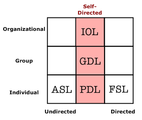
One of my most popular posts each year is my list of predictions. In fact, my 12 eLearning Predictions for 2009, was most popular post for 2009 (see 2009 Top Posts and Topics) and it came up pretty high in the recent Top 125 eLearning Posts of 2009. I will definitely be coming out with my 2010 predictions. In fact, I’ll be doing a virtual presentation around it as well. Of course, the problem with predictions, especially written predictions, is that you can look back and see how you did at the end of the year. So this post is my chance to go back to the predictions I made at the start of 2009 and see how I did. #1 - "Self-Directed Learning" Increases Due to economic pressures, companies are going to reduce training budgets to a point where it doesn't make sense to create content on marginal topics. Instead, we will call this "self-directed learning" and will do our best to support the workforce to learn it on their own with minimal guidance and support. The first half of the prediction - budgets being reduced was on the mark. But the reality was more than that as I explored in posts like Business of Learning and Models for Learning Questions. They point to an environment of: Decreased L&D budgets (see ) Faster pace Increased workforce mobility Shorter job tenure Increased job fragmentation - fewer numbers in any one role Constant increase in complexity Greater concept work Need for faster proficiency Changing expectations for learning which leads straight to the need to do more with less, respond more quickly, etc. So, it’s a far richer problem than indicated by my prediction. The second half of the prediction "self directed learning" got less attention during the year than I anticipated, but it was there and certainly was a big part of the discussion around social and informal learning. The specific term had some recent great discussion by Jane Hart and Harold Jarche in the posts Social media and self-directed learning, Using social media for different types of learning that included the following diagram: Grade: B #2 - eLearning 2.0 Grows - But Creating "eLearning 2.0 Strategy" Fails One of the better, cheap support mechanisms for self-directed learning are web 2.0 tools. As such, eLearning 2.0 will show continued growth. We will especially see a rapid growth in the use of wikis for content presentation. There will also be growth in discussions and social networks for collaborative learning. At the same time, organizations who try to create big eLearning 2.0 Strategies will move much slower than organizations who adopt easy to use tools and make tactical use of these tools. Corollary: if you have SharePoint installed, you will be using SharePoint a lot more this year. As I discussed in my look at what I learned during 2009, I’ve found that the term eLearning 2.0 has fallen a bit out of favor and instead we are discussing these as social and informal learning. Certainly the Hottest Topics in eLearning for 2009 were social and informal learning. So, I think the first part about growth of wikis, discussions, social networks for collaborative learning is right on the mark. As far as companies who focus on creating strategies around eLearning 2.0 moving slower - I think I’m right on the money around that. Yes, I have found myself involved in helping organizations look at their eLearning Strategy that includes a broad mix of solutions including eLearning 2.0. And I think defining this is needed and valuable. But if that’s the only thing you are doing and something that has to come before you begin to do tactical solutions, then I think it’s fair to say you are moving more slowly. Unfortunately, I used the term "fails" which is not really the case. Companies are moving more slowly, but not really failing at it. So, on what otherwise would be an "A", I’ve had to mark myself down. My thinking has definitely evolved around this in 2009. Particularly, I’ve decided to always be a "Jack" … if you don’t know what that means or what it means about selling social learning then you should look at: Selling Learning Communities - Not Everyone Will or Wants a Group Hug. Grade: B #3 - Increase in Consumer/Education Social Learning Solutions will Increase Pressure for Social Learning Solutions in Corporate Learning Sorry, I couldn't figure out a shorter way to say this. 2008 was an interesting year that saw a myriad of new start-ups offering content through interesting new avenues. Social learning solutions like social homework help provided by Cramster; CampusBug, Grockit, TutorVista, EduFire, English Cafe, and the list goes on and on. What will happen to about 20% of the workplace learning professionals is that some VP/C level in your company will have their teenager or college age kid use one of these services and tell them about it. They will they proceed to wonder why you aren't doing something similar. Certainly there’s tons of buzz around lots of consumer social learning solutions. Here are just a few of the many web 2.0 / social learning companies being discussed in 2009: Consumer, K-12 and higher ed are all relatively hot investment spaces. Has this translated into corporate awareness and demand? I’ve heard from a lot of learning professionals at all levels where the VP/C Level who are asking about and expecting solutions that have these kinds of aspects. But they also are expecting great content to be built - and the expectation is that it should be done fast, cheap and good. Part of this, that wasn’t well captured in my prediction, is that a lot of these solutions aim at providing Free content. This has a dramatic impact on the Business of Learning and perceptions around value and cost. Overall, while there has been some awareness and demand, probably not to the level I anticipated. Grade: C #4 - Quick Wins & Toolkits With the tough economy, everyone will be looking for quick wins. How can you improve performance quickly and at low cost? The answer for many organizations will be less training and more performance support in the form of toolkits. Teach me less about communication and give me more templates for important, tough communication points. Off-the-shelf content companies will be moving to meet this need by emphasizing quick wins through resources. The buzz is definitely increasing around this. During 2009 we saw things like Using Toolkits to Aggregate Learning Resources, where BJ Schone tells us: I’ve recently seen a trend (ok, maybe it’s just new to me) where training departments create toolkits for employees in order to aggregate learning resources for a particular topic or project. Essentially, the toolkit is a web page containing a ton of great information, links, etc. This way you can send learners to a "one-stop-shop" to get the info they need. And I just posted about recent growth of eLearning Templates. Grade: A- #5 - Virtual Classroom Tipping Point Based on a few different conversations and experiences, I believe that we've reached a point where virtual classroom training is no longer seen as inherently inferior and a lower value. Some training will still be preferred face to face such as when team building or in-person soft skills are important, but 2009 will be the year when we realize that we should be justifying any in-person training. Price points for virtual classroom training will begin to be virtually the same as for the same in-person classes. Corollary: transition to virtual means greater demand for help on effective virtual classroom training and for people who are good at creation effective remote experiences. I believe this is very much proving itself out. And on the corollary - I was reminded throughout the year (Learning from Others in the Room, Narrowing Gap between Face-to-Face and Online Presentations) that I need to put myself in a continuous learning mode to get better at virtual meetings, collaboration, presentations, etc. We even made the Big Question one month: New Presenter and Learner Skills and Methods. Grade: A #6 - Greater Domination by Leading Tool Vendors - Captivate, Articulate, Lectora, Camtasia Captivate 4 is going to be a great tool. Articulate has a great tool set. Lectora is great at packaging. Camtasia is good at screencasting. It's going to be tough for me-too tools to push out these players in the corporate market. In some settings, free authoring tools may do better, but they probably won't get much traction in workplace training. I’m looking for the numbers on this, but I believe it’s true based on anecdotal evidence. Does anyone know or have the numbers? Grade: ??? #7 -Niche Tools Emerge and Get Traction in Niches So the caveat to the above statement about the big players getting bigger is that I believe we will see more and more niche tools get traction. We've seen some traction by the game show type tools such as those by LearningWare. We may also see use of Flash Quiz Tools, polls, survey tools or something like Harbinger Knowledge's Team Pod. These things can create fun interactions that easily fit into a course built with one of the above tools. They also fit into a wiki page. It's also interesting to see effort's like Articulate's Community Interactions - which is essentially the ability to add specialized interactions including new types of interactions from the developer community. While there are some definite challenges facing New Learning Solutions, I believe that we are seeing some real innovation. The LearnTrends Innovation Award Winners 2009 had several very interesting niche tools highlighted. And we are beginning (three years later) to hear more and more about Add-ins & Mashups to build richer experiences. At DevLearn, I saw a demo of twitter being embedded inside Captivate as the basis of a social learning experience. Grade: B #8 - More Wiki Pages - Same Authored Minutes - Less Classroom Minutes I pretty much already said this, but I might as well mention it again. The above trends around eLearning 2.0, self-directed learning, quick wins and toolkits all suggest that more web pages - authored via wikis - will be the name of the game in 2009. The goal of lower cost will continue the transition from classroom to courseware which will keep the total number of authored minutes about the same, even with the move of content from courses to web pages. Again, I searched for numbers that would tell me this, but I don’t have them. My sense is that it’s true, but I’ve seen some numbers that suggest that classes and courseware are going strong as well. Grade: ???? #9 - Knowledge Worker Skills Topic growing rapidly, problem getting recognized, more and more people offering workshops and solutions to address this I realized in 2007 that there's a very important Knowledge Worker Skill Gap emerging. In 2008, I felt compelled to launch Work Literacy, and help help people and organizations upgrade skills like Leveraging Networks, Network Feedback, Finding Expertise, Using Social Media to Find Answers to Questions, Learning through Conversation and searching, scanning, etc. 2009 is going to be a big year for this issue. The fact that this is one of the general sessions at ASTD TechKnowledge is interesting way to start 2009. We are now offering a Work Literacy Skills Workshop. This is going to get more and more attention this year. Especially as employers move more towards self-directed learning. While I had a chance to be involved in lots of discussions, found many people similarly concerned about this issue, I must say that most workplace learning professionals and most organizations don’t really have this on their radar. I still feel like it’s a big issue. Information overload, distraction, need to work effectively in networks and parts of virtual teams, etc. are all coming up as important. But the recognition of the larger issue is still not there. Grade: D #10 - Mobile Learning Niche Growth Last year I said mobile learning would be well below where people were expecting. While I still think this will be a relatively small percentage of activity, this year, I expect to be a year in which mobile becomes more common. I believe that we will see continued increase in the percentage of people walking around with mobile web access. This will offer increased interesting opportunities such as: Real-time Polls - We are just beginning to see tools like Poll Everywhere that allow mobile polling. That way an audience sitting at an in-person conference will have some of the capabilities that they do online. (Did I mention the move towards virtual classroom?) Job aids / quick reference - about 30% of you are going to be asked to make sure your content is viewable on an iPhone. Podcasts / Vidcasts targeting mobile professionals (ex. sales people) Sales challenge scoreboard - For some mobile professionals, specific types of content such as sales challenges will be delivered through mobile solutions. At the same time, the wild enthusiasm for mobile learning that was present in 2007 and died down a bit in 2008, will remain somewhat subdued. And we won't see much adoption as the central vehicle for learning content delivery. I feel pretty good reading this prediction. Certainly, we are seeing more smart use of mobile learning solutions. Some organizations are making big use of it. And we are seeing more content getting delivered on mobile devices. That said, for most workplace learning professionals, this is not a day-to-day issue. Grade: A #11 - Micro Virtual Conferences The move towards acceptance of virtual classroom means that there will slowly begin to be acceptance of virtual conferences. Conferences this year will also do this because their other alternative is to be canceled from lack of people able to pay for travel. But because we are all going to be maxed out, expected to do 10% more work with 10% less people, we won't have time to go for several days. Instead, we will see the creation of things that are in between a full virtual conference and something that's a few sessions. These things will be more targeted and deeper. Many of them will be from ad hoc sources, such as George, Jay and myself. Certainly there’s been a lot of this happening this year. LearnTrends had a bunch of these. And I’m finding myself getting involved in more and more virtual sessions, conferences, etc. However, I’m not seeing as much of this being adopted by others. I believe that’s still a matter of time. Grade: B #12 - Data Driven With the economic situation, there will be greater demand for results and thus more interest in data-driven performance solutions. Certainly there’s greater demand for results. Not sure that’s translated into data-driven performance solutions. Grade: F eLearning Technology
Subscribe to the Best of eLearning Learning for updates from this blog and other eLearning blogs.
Tony Karrer
.
Blog
.
<span class='date ' tip=''><i class='icon-time'></i> Jul 14, 2015 12:49pm</span>
|
|
Today we couldn’t be more pleased to announce our first Versal Foundation grants (press release).
Out of all of the applications submitted to date, three courses exemplified our mission to inspire the creation of innovative online courses with the potential to improve people’s lives:
How to Create and Use Free, Clean Energy - a course that will explain the physics principles of clean solar and wind energy, and provide a practical how-to guide for their simple capture, storage and use. It will demonstrate how communities can embrace free energy to heat water and even how to make a battery. (Jianing Han, visiting assistant professor of physics at Hollins University)
The concept of transformative education fostered by the Versal Foundation is really powerful when you stop and think about it," said Jianing Han, visiting assistant professor of physics at Hollins University. "This idea that online learning has the very real potential to transform and make the world a better place, it’s not just a dream. It’s happening, and I’m really proud to be a part of it.
Empowering Underprivileged Girls in Academic and Career Development - a course for middle school girls in underserved communities to explore and identify their academic career interests, with a particular focus on STEM careers. Featuring video interviews of a diverse array of inspiring women leaders created by local non-profit CareerGirls.org, this course will help girls learn about career options they may not have considered. The lessons will provide insight into other topics related to academic and career success, including what it means to be a leader, overcoming obstacles and the importance of lifelong learning. Lessons will draw on Common Core standards of literacy and critical thinking. (Lisa Tenorio, tech industry veteran and educator)
Girls in underserved communities don’t always have access to role models and information about career and academic planning. Yet today most do have access to the Internet," said Lisa Tenorio, the grant awardee for a Empowering Underprivileged Girls in Academic and Career Development. "This grant will help me develop the materials and exercises to best teach the skills to inspire a bright future for girls, especially in STEM fields. And Versal’s course creator will make it easy to create and publish a fun, interesting and interactive course. I’m excited to get started.
Basic Biology for Everyone - a highly interactive course that will use images, video, quizzes, expressions, and references to engage middle school and high school students in a five-part basic biology course focusing on the subject’s key ideas and core disciplinary knowledge as identified by the Next Generation Science Standards. (Joshua Rosenberg, a doctoral student at Michigan State University; Frank Jones, Southern Regional Director for Wikipedia’s education outreach program; and Aaron Rosenberg, dual masters student at the University of Connecticut)
A learner-centered approach is missing from many educational resources," Joshua Rosenberg, a doctoral student at Michigan State University who received a grant for his course Basic Biology for Everyone. "When teaching teens, for example, the challenge is identifying ways to take advantage of and engage students’ interests. An interactive, online Versal course in science will inspire them roll up their sleeves. And we’re not just talking about teens in the developed world. Internet access is growing exponentially. We’re building a course that will be forever free and available to anyone in the world who finds it valuable.
Congratulations to these very deserving education innovators! A special thanks to our panel of judges.
The Versal Foundation grant program is continuing to accept applications. Additional grants from $1,000 to $25,000 will be considered in two categories:
Transformative Education: courses with a profound potential for improving people’s lives. Individuals, not-for-profits and NGOs with domain expertise are encouraged to apply.
Foundational Education: courses covering basic literacy, arithmetic, science and related topics. In a nutshell, core knowledge that should be readily available to every single person on the planet.
To apply, visit the Versal Foundation website at versal.org.
Last but not least, we have one more piece of news for the day: moments ago the Consumer Electronics Association named Versal a CES Innovations Design and Engineering Honoree!* And we were awarded in two categories - "Tech for a Better World" (which is amazing because it validates our values) and "Software and Mobile Apps" (also amazing, because the competition is so high). Congratulations to our entire team for all of their hard work and effort over the past year since we started this amazing journey.
*The CES Innovations Design and Engineering Award is based upon descriptive materials submitted to the judges.
Christopher Poseley
.
Blog
.
<span class='date ' tip=''><i class='icon-time'></i> Jul 14, 2015 12:49pm</span>
|
|
I had previously written about Low Cost LMS and Rapid Learning Management Systems, but I receive an inquiry from someone who had a very constrained budget and wanted to build an eLearning Portal. Some details of what they want / need: The portal we need to develop should be able to handle online registration, producing letters of offer, payment gateway, producing letters of acceptance, producing student cards, downloading syllabi, downloading study guides, processing purchasing orders that trigger the distribution of the textbooks by the Publishers’ office to students, communication between mentors and students, organizing forums, notice board, chat rooms, uploading e-Lectures, downloading topic questions, downloading assignments and coursework, posting answers to mentors, mentors grading the students’ work and posting marks, issuing tutorial time-table, posting final exam dates and posting exam results, transcript issuance and degree issuance and graduation. Because of their very limited budget, I suggested they dive into more depth looking at open source LMS products. To help get that started, I looked at eLearning Learning and found some pretty good sources around LMS / Open Source and Learning Management System / Open Source. Open Source life, LMSs beyond Moodle- Learning Rocks, December 18, 2008 The Right Way To Go About Open Source LMS- Upside Learning Blog, October 23, 2009 The Corporate Moodle: A Tipping Point?- Learning Visions, June 26, 2009 Concerning Open Source, LMSs and SCORM: Correcting Some Common Misconceptions- The E-Learning Curve, October 19, 2009 To open source or not?- Learning Conversations, December 30, 2008 Open Source LMS Comparison- The Learned Man, April 27, 2007 Open Source vs Commercial LMS- Learning Next, April 18, 2007 ZaidLearn: Any Free Hosted CMS or LMS? (Yes, Obama Says!)- ZaidLearn, May 16, 2009 Sakai 3 Development Process- Experiencing eLearning, June 9, 2009 How Big is Moodle?- MinuteBio, June 12, 2009 Moodle!- The Learned Man, April 28, 2007 Rapid Learning Management Systems- eLearning Technology, October 20, 2009 A first look at Sakai 3- Clive on Learning, October 16, 2009 Gartner: E-learning Market Pushing Toward Open Source, June 7, 2008 Open source for learning costs less, January 12, 2009 LMS Selection, July 24, 2009 Blackboard vs. Moodle, May 7, 2009 Assessing PLE/LMS systems | nmc, November 11, 2008 Moving to Moodle: Reflections Two Years Later (EDUCAUSE Quarterly) | EDUCAUSE CONNECT, December 29, 2008 eLearning Technology
Subscribe to the Best of eLearning Learning for updates from this blog and other eLearning blogs.
Tony Karrer
.
Blog
.
<span class='date ' tip=''><i class='icon-time'></i> Jul 14, 2015 12:49pm</span>
|
|
Almost instantly after we launched, many of you got in touch to let us know how much you love using Versal in schools and in companies. Most of the requests asked a similar question: "Is there a way to create a single account to manage the efforts of everyone on my team?"
Today, the answer is yes. An early beta of the new Versal for Teams is now available. And while we’ll always offer a free plan as the base tier, as a special thanks for your help with our beta test all accounts will receive the first 30-days free! Sign up by December 31st.
Whether your team is creating educational courses in a K-12 or university setting or developing corporate HR or product training courses, Versal for Teams is a simple, convenient way to manage authors and courses from a central administrative dashboard. Add new members of your team, review course progress and more.
While convenience is the core promise of Versal for Teams, we’ve also added in several features to take your Versal courses to a new level. First is learner success monitoring. This feature is in the very early stages, and currently shows how many students have started your course and how far along they’ve progressed. Stay tuned…we have more insights to help you understand the success of your course coming soon.
Versal for Teams offers an advanced way to embed your course in a website. For institutions and companies, this is especially valuable since it’s always preferable to send your learners directly to your own site instead of somewhere random on the web. While Versal has offered course embedding for some time (and will continue to offer it for all courses), with Versal for Teams you can expand beyond the standard embed window and create a full-player on your website.
We’ve been honored to work with three amazing organizations to test Versal for Teams. Neo Technology, makers of the world’s leading graph database Neo4j; Typesafe, provider of the world’s first Reactive platform and the company behind Play Framework, Akka and Scala; and ITMO University, Russia’s foremost information and optical technology school.
"We needed a way to teach our users how to get the most out of our product, and Versal for Teams was the perfect solution," said Adam Frankl, VP of Marketing and Training at Neo Technology. "Helping developers get up to speed on graph databases quickly is essential to our business. With Versal, we were able to create an interactive online course from our existing training classes, and the new administrative features gave us the tools to track adoption and generate qualified leads. Having such an effective teaching tool at our disposal is immeasurably valuable to both our users and to us. There’s nothing else like it."
"We help developers build Reactive applications, and our technologies are cutting-edge," said Sushila Sahay, VP of Customer Operations at Typesafe. "It’s imperative that we take the time to create educational materials for developers to get them up and running quickly. Programming is interactive, so it’s great to have an alternative to video presentations. Versal gave us the ability to create a fantastic course, and the tools to manage it in-house. I recommend it for anyone looking to create education materials."
As an early beta tester, you may experience a few hiccups, so please pardon our dust and please drop us a line at support@versal.com if you stumble across an issue.
The Versal for Teams base plan is free. For teams offering more than three courses, 100 expected learners, or for higher-bandwidth courses, pricing starts at $250/month. Read more details in our press release or visit https://versal.com/versalforteams.
Quick tip…once you’ve signed up, if you leave your dashboard the best way to get back in is via the direct url from your confirmation email. Keep this handy for now, and very soon we’ll be adding shortcuts for your convenience. Thank you for your patience!
Christopher Poseley
.
Blog
.
<span class='date ' tip=''><i class='icon-time'></i> Jul 14, 2015 12:49pm</span>
|
|
The EduBlog Awards are happening again this year. I’m happy to say there were several nominations for this blog and for LearnTrends. There are a lot of great nominees in all of the categories. If you’ve found value from this blog and/or LearnTrends, please click on the links below and vote for them in their categories. It’s a nice way to support the sources you use. eLearning Technology was nominated in two categories: Best eLearning / Corporate Education Blog 2009 Best Resource Sharing Blog 2009 LearnTrends was nominated for: Best Educational Use of Audio Best Educational Use of a Social Networking Service I also appreciated that several people nominated eLearning Learning for various categories. It didn’t get put on the short list in any of the categories, but I do want to thank people who nominated it. Ajaan Rob Best educational use of a social networking service http://www.elearninglearning.com Nicole Fougere Best group blog: eLearning Learning Gina Minks Best group blog eLearning Learning aggregates several different education blogs, and provides a way to navigate by blog or keyword. It also shows whats popular in the eLearning community at any given time. (Full disclosure: this blog is aggregated there) Renee Robbins Best resource sharing blog: eLearning Learning (another brainchild of Tony Karrer and just a wealth of information) Shelly Terrell Best elearning blog- Elearning Learning has each of my favorite elearning blogs in one spot. And if you are in the mood for lots of great blogs and blog posts: Top 99 Workplace eLearning Blogs 15 More Workplace eLearning Blogs Top 125 Workplace eLearning Posts of 2009 Hot Topics in eLearning for 2009 eLearning Technology
Subscribe to the Best of eLearning Learning for updates from this blog and other eLearning blogs.
Tony Karrer
.
Blog
.
<span class='date ' tip=''><i class='icon-time'></i> Jul 14, 2015 12:49pm</span>
|
|
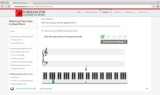
With over 22 million views of his videos on YouTube, Andrew Furmanczyk is fulfilling his dream of teaching the world how to play piano - free. Today, Andrew launches his first interactive Versal course, Matching Piano Keys to Music. It’s a fantastic way to master the basics of playing the piano and learn through interactive gadgets.
I first discovered Andrew almost a year ago. One night I found myself sitting at home staring at a digital piano that had somehow ended up in my living room. I wanted to learn how to play, but between work, the gym and sleep, I really didn’t have the time to commit to a local piano tutor.
A quick search on YouTube surfaced a video called How to Play Piano. With over 9 million views (at the time), I figured I’d give it a try.
I was hooked, and soon made it through the first five lessons. Andrew was approachable, funny, and very talented at teaching me the basics, even though I was more than 2,000 miles away. But every now and then I hit a snag. Because there was no way to interact with his lessons or get any feedback, I couldn’t always figure out what I was doing wrong.
A few months later, when we were nearing the launch of Versal, I reached out to Andrew to see if he might have an interest in creating a more interactive style of course. He instantly understood the challenges I’d experienced. He talked about how powerful video is for showing students the ropes, but also how hands on experience and feedback - especially with music - is essential. And very hard to do over the Internet.
Andrew was very interested in exploring new interactive ways of teaching, especially if he could use many of the videos he’s already created. So we invited him to work with us and explore ways to create a new and engaging experience for his students.
While Versal’s course creator has many interactive gadgets for anyone to use, we decided that Andrew’s course also deserved something special. And since we’re testing our third-party developer SDK (to launch in the first half of this year), it was the perfect opportunity to pair Andrew with a developer and see what unfolded.
Soon we paired Andrew with Cyril Silverman, a Javascript developer from Seattle. The two created a very fun interactive piano - a gadget where students can play along directly in the course and get instant feedback on their success.
"Versal’s vision is powerful, and I’m really excited to be a part it," said Andrew. "The interactive gadgets were all customizable, which made it easy for me to take my videos and add context to create a complete course. YouTube is an amazing platform for video, and I believe Versal will become the de facto platform for amazing courses."
Everyone here at Versal is not only excited to see Andrew’s course go live today, but we’re inspired by his story. Formerly a concert pianist, Andrew suffered from heart problems and related tendonitis, and was eventually forced to give up performing. But instead of giving up his love of music, Andrew was determined to put his talents to good use, and find new ways to offer anyone a chance to learn how to play piano.
It’s a mission we’re honored to support. As for me, my piano has been gathering a little dust since Versal keeps me so busy, but I did have a chance to preview Andrew’s new course over the weekend, and I’m back at the keyboard. Who knew learning could be this fun?
So go check it out…
Christopher Poseley
.
Blog
.
<span class='date ' tip=''><i class='icon-time'></i> Jul 14, 2015 12:48pm</span>
|
|
It’s always fun at the end of the year to go back and take a look at what you’ve been working on, what you’ve learned during the year. I’ve been doing this the past few years. And as part of this, I’ve been taking advantage of: 2009 Predictions How Did I Do?, 2009 Top Posts and Topics, Top 125 Workplace eLearning Posts of 2009 and just running through my blog posts for the year. Knowledge Work Skills / Work Literacy Having realized in 2007 that there's a very important Knowledge Worker Skill Gap, I felt the need in 2008 to find ways to help knowledge workers and organizations build skills like Leveraging Networks, Network Feedback, Finding Expertise, Using Social Media to Find Answers to Questions, Learning through Conversation and searching, scanning, etc. In June 2008, Work Literacy Launched. 2009 has continued that effort. I’m convinced that we are all struggling to have our Work Skills Keep Up. And many of my 2009 Top Posts and Topics are related to exactly this. Tool Set 2009 LinkedIn Guide for Knowledge Workers Top-Down Strategy Better Memory Information Radar Processing Pages with Links Networks and Learning Communities Network Skills Twitter as Personal Work and Learning Tool Search Browser Short Cuts Work Literacy Workshop Collaboration Tools Remote Collaboration Also, a lot of my presentations have been about exactly these things. When I look at my particular skills, methods and tools for 2009 and compare them to 2008, I would say that it’s mostly a question of degree of use and certainly my use of Twitter has grown. See also: Twitter Conference Ideas and Twitter and Webinars. I will say that adopting TweetDeck on both my desktop and my iPhone has made it a much better tool for me. Online Sessions / Conferences / Discussions => Now Visible Networking I’ve seen during 2009 a real growth in the ability to spark up interesting discussions as online sessions. During the year, I’ve had fantastic conversations through LearnTrends around SharePoint, Examples and Tour of Different Kinds of eLearning, Social Learning, and the Business of Learning. Each of these allowed me to fast forward my learning and share knowledge effectively. However, during 2009, I had a bit of an aha moment. It came during a presentation when I said: It's a much better use of my time to use LinkedIn to spark a conversation than it is to go to networking events. I realized that a lot of the networking that I had done in person in the past could move online and actually be a much more effective use of time. And a lot of that networking could be public. So, why not look to make this more explicit and effective? I started calling this Visible Networking. This is still relatively new as a name, but it’s something that I’ve been doing for a few years now. Naming it allows me to better understand it and move it forward. If you think about it, Twitter, Blog Comments, etc. are all forms of visible networking. Instead of networking in private, make it a visible conversation online so that everyone can benefit. And it can turn into great things like: Discussion Forums for Knowledge Sharing at Capital City Bank. eLearning 2.0 Morphing Into Social Learning and Informal Learning In the post, Hot Topics in eLearning for 2009, the top two hottest topics across all the eLearning Learning blogs were Twitter and various forms of social/informal learning, especially as it relates to the use of technology to support this. eLearning 2.0 was considered a hot term in 2007 and 2008, but not in 2009. For me, it was still one of my top terms, but I’ve found myself discussing things in other ways as well. I think as we’ve moved past the idea that this stuff has impact, we’ve begun to discuss it in a different way. I don’t actually think using the terms "social learning" or "informal learning" is the right way to go about selling this stuff either. Instead, during 2009, I’ve decided to always be a "Jack" … if you don’t know what that means or what it means about selling social learning then you should look at: Selling Learning Communities - Not Everyone Will or Wants a Group Hug. It’s something I’ve said in a lot of presentations - you pick a specific, smart target and it’s a "no duh" decision. Now I have a better way to say it. Thanks Jack! Using Topic Hubs to Speed My Learning In 2008, I launched eLearning Learning. It basically takes what people in the world of eLearning are already doing and turns it into a resource that helps surface the best stuff. It was great to help me better keep track of what was going on in a world that I know pretty well. In 2009, I realized that this same approach is even more valuable for areas where I want to learn more as I described in Learning, Extended Brain and Topic Hubs. So, I have been heavily leveraging the system and working with partners who are gurus in a space to fast forward my learning on diverse topics such as: Community and Networks, Mobile Learning, Nonprofit Marketing, Nonprofit Technology, HR Technology, B2B Marketing, and Professional Speaking. There’s something really interesting going on here that I’ve not quite figured out. It’s very powerful stuff and an important extension to my PWLE. I’m a little surprised that I didn’t get more response to Curator Editor Research Opportunities on eLearning Learning but it may be that other people learn in a very different way. Slow Dramatic Shifts in the Business of Learning I really think we are going through some pretty dramatic shifts as described in the Business of Learning and covered more in posts such as Update on Future of Business of Learning, New Learning Solutions, Marginalized, and Free. There’s always going to be a need for certain kinds of training and traditional learning. But the economic realities and environment suggests a pretty dramatic shift going on here. It’s going to cause us to think about models in very different ways such as how Intuit has Outsourced Training to Customers. Learning Event? Work Event? There was a really great case study by HP during one of the Learn Trends sessions that described how they took marketing professionals from across the organization, taught them some basics about Web 2.0 tools, and then helped them engage in conversation around what it means to HP. This was hosted by the learning organization, but it looked more like a research, innovation project than a learning event. The outcomes really weren’t known at the start. The goal was to actually define some meaningful results for the business. Grow My Virtual Meeting, Collaboration Skills I was reminded during 2009, that I need to be in a continuous learning mode around building my skills for effective virtual meetings, collaboration, presentations, etc. Several of my posts during the year were around this such as Learning from Others in the Room, Narrowing Gap between Face-to-Face and Online Presentations, Presentation Backchannel Multitasking, Twitter Conference Ideas. Final Aha Moments Need for more eLearning Portal Integration. There’s bias around Profile Photos and an Email Address Bias. eLearning Technology
Subscribe to the Best of eLearning Learning for updates from this blog and other eLearning blogs.
Tony Karrer
.
Blog
.
<span class='date ' tip=''><i class='icon-time'></i> Jul 14, 2015 12:48pm</span>
|
|
I mentioned in my post 2009 Predictions How Did I Do? that we are seeing more and more about Add-ins & Mashups as a means to build richer learning experiences. I particularly cited a DevLearn demo of twitter being embedded inside Captivate as the basis of a social learning experience. They’ve posted on the Adobe Captivate blog - Collaborative learning using Captivate and Twitter. You can run a demo (18 mins) to see it in action. The basic idea is that students will be able to have a social learning experience utilizing twitter as a messaging systems within a Captivate course. eLearning Technology
Subscribe to the Best of eLearning Learning for updates from this blog and other eLearning blogs.
Tony Karrer
.
Blog
.
<span class='date ' tip=''><i class='icon-time'></i> Jul 14, 2015 12:48pm</span>
|