Blogs
|
Interesting post by Dan Pontefract where he provides definitions of some different "2.0" definitions and the HR & Organizational impacts. It's worth taking a look at some of these: Enterprise 2.0 Definition (via Andrew McAfee): the use of emergent social software platforms within companies, or between companies and their partners or customers HR & Org Implication: Enterprise 2.0 is the use of Web 2.0 concepts in an organization; thus, failure to drive its introduction may result in redundant platforms/processes & confused employees Learning 2.0 Definition: the shift from a predominantly formal instructor-led/eLearning model to one that encompasses formal, informal and social learning methodologies HR & Org Implication: organizational culture can evolve via a strong learning ecosystem; to continue with antiquated ‘spray and pray’ formal only training models is akin to GM’s 2011 automobile lineup being full of SUV’s Work 2.0 Definition: the shift from a 9-5 workday to a flexible workweek inclusive of work location (ie. home, shared workspace, coffee shops, etc.) HR & Org Implication: the performance of an individual should be measured not on when they are in the office or present in their cubicle; rather, on the end result and its merits for the organization itself (whenever the deliverables are accomplished) While people may not like the "2.0" terms, I believe there's merit to using them if only to indicate the substantial impact that these things will have on organizations and particularly on Learning and Development. The theme of LearnTrends 2009 is a term I call Convergence. It's really about the fact that learning and development leaders have an opportunity to embrace 2.0. This means: providing solutions beyond traditional training / courses working closely with other parts of the organization including Enterprise 2.0, Knowledge Management, Corporate Library, OD, IT and, of course, the business getting smart about a whole lot of new kinds of solutions looking outside the firewall for solutions And all of this comes in an ever more challenging world: The Business of Learning faces real pressure and we are expected to do more with less. We need to provide value to concept workers who are the highest value people in the organization and are in a continuous learning mode - it's part of their work. But concept workers don't get as much value in traditional learning solutions. These workers direct their own learning. Learning and Development is likely not producing much content that will be useful to their day-to-day work except by building core skills. Thus, we must look to provide value in the long tail of learning. The nature and value of content production is changing. There's a ton more content available both inside and outside the organization and some of it is free learning There's much greater accessibility of experts inside and outside the organization and ways to engage with them. When I described eLearning 2.0 back in February 2006, I focused on the technology aspects. But there's so much more to all of this picture. I'm not sure if Convergence quite captures it, but … These are truly interesting times. eLearning Technology
Subscribe to the Best of eLearning Learning for updates from this blog and other eLearning blogs.
Tony Karrer
.
Blog
.
<span class='date ' tip=''><i class='icon-time'></i> Jul 14, 2015 12:59pm</span>
|
|
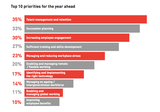
We just saw an interesting post at JM Consulting’s site titled, "What’s Really Keeping HRDs Awake at Night?" https://www.jmconsulting.uk.com/whats-really-keeping-hrds-awake-at-night/ The author does a pretty good job of asking questions and identifying the concerns, as illustrated with the nifty graph we’ve reproduced. The article does not offer many solutions, and that’s what we want to suggest. So, here are some ideas for solving the top 8 issues identified in the survey results cited in the article: Talent Management & Retention The paradox many organizations face related to talent retention is neatly summarized by a joke. CFO: What happens if we spend all of this money training these employees and they leave? CEO: What if we don’t and they stay? If highly skilled employees are so valuable and hard to find, doesn’t it make sense to train as many of them in-house as possible? After all, you don’t have to recruit current employees. If you’ve hired well (for character, capacity to learn and grow and attitude), then your current employees ought to be the single best and most cost-effective source for highly skilled, highly sought after skills you need. The trick - you have to invest in actually training and developing them. Succession Planning The importance of managers, front-line managers in particular, cannot be overstated. Once again, this is an area where organizations face the choice of developing home-grown talent or hiring from the outside. Truthfully, a blend of both approaches probably makes the most strategic sense, but developing internal talent takes a commitment to the future. That means developing and deploying an employee development program that helps you find and promote the best available talent. Employee Engagement In the annual Gallup report on the State of the American Workplace, Gallup tells us about the percentage of American workers who are engaged, disengaged and actively disengaged at work. It’s easy to read the report and get discouraged. But, the great news in the report are the findings that front-line mangers can have an immediate impact on the levels of engagement across entire organizations. So we’ve never had so much data proving the value and impact of manager training as we do today. But, we continue to see disconnects between the clear positive impact of manager training and organizations’ commitment to delivering the kind of training their managers need. See this excellent report published by Harvard Business Review for more information: Frontline Managers: Are they Given the Leadership Tools to Succeed? Sufficient Training and Skills Development This is the least complex of the issues. Just do it. Employee training and development produces a myriad of benefits from increases in employee productivity to customer loyalty. The fact that respondents to a broad market survey site the LACK of training as problem in today’s world is mystifying. What it points out is an inability on the part of many professionals to make effective business cases to their senior leadership for making an investment that yields such obvious benefits. Managing and Reducing Workplace Stress There are so many reasons HR professionals might be stressed that it’s virtually impossible to pinpoint any single dominant cause. However, providing employees guidance and direction on career development, stress and time management can provide needed and helpful coping strategies to help. Enabling and Managing Remote Employees The virtual workforce isn’t a fiction or something "other" companies do. If you have employees that travel, connect to e-mail from off-site locations like a hotel, home or use a smart phone or tablet for work related purposes, you have a virtual workforce on some level. So it’s not whether you have virtual employees. The better question is how are you facilitating their success? Just like every other employee, virtual employees require immediate, on-demand access to the resources they need to answer the questions they are asking every day at work. It doesn’t matter if the question relates to a new product or in preparation for a meeting. Do you provide the learning and training resources necessary for every day success in this work world? Identifying and Implementing the Right Technology The challenges we face facilitating the success of virtual employees lead directly to technology solutions. As the HR and L&D professions evolve, the need for ever higher levels of technology literacy grows on a continuous basis. We must embrace technology enabled learning to meet the needs of each and every employee. So learning management systems, online training, enterprise social learning are all tools we must know about and be able to use effectively to solve the training and performance improvement problems our employees face. Managing and Aging/Intergenerational Workforce The facts are pouring in about the rates at which Boomers are retiring. The Federal Office of Personnel Management estimates that between 2006 and 2011, 290,000 Boomers retired. Boomers aren’t getting younger, and many of them aren’t going anywhere soon. So, what do we do? We are free to ignore the problem. After all, Boomers ARE retiring, so at least that part of the issue will go away eventually . . . . But that doesn’t seem like a very smart solution. That means we have to face the challenge and manage the problem differently. Once again, quality training provides the first steps for managers, and every single stakeholder. Managers need the tools to solve problems and communicate to every member of their teams. Team members need the skills to deal with the diversity of today’s workplace. And lastly, we need tools to capture the collective wisdom of this aging workforce, organize it so everyone can access it and it’s not lost the minute our Boomers retire. CONCLUSION Training. Employee training has never been so pivotal to solving the problems that confront us every day. It’s not the total solution, but providing our employees and managers the skills they need for success helps retain talent, find talent, prepare talent, and engage talent. We just have to learn to make strong business cases for employee training by turning our attention to these business challenges and the bottom-line benefits to our businesses as we solve them. Looking for online training for your employees? Sign-up for a free trial here ! We provide our clients with thousands of video and eLearning courses. Whether you’re targeting leadership development, new manager and supervisor training, project management, communication, computer skills, compliance or safety, we pretty much have something for everyone. So, try out some courses…have your employees try out some courses. Just fill out the short form to the right and start a free 30-day, no risk, no obligation trial! Check out the BizLibrary Collection! --> -->
Chris Osborn
.
Blog
.
<span class='date ' tip=''><i class='icon-time'></i> Jul 14, 2015 12:59pm</span>
|
|
Are people noticing this? It seems that face-to-face and online presenting are becoming more similar. Some aspects: Wireless access is becoming more common in places where presentations occur. If you are a conference organizer and you don't arrange for wireless, be prepared for some negative comments. See Better Conferences. A larger percentage of the audience these days brings a laptop to presentations and it seems that the factor of Laptop Distraction is quieting down. If your audience is already on a laptop and connected wirelessly, then you can use techniques such as Twitter Conference Ideas with twitter as a back-channel or twitter to post links to the audience. You can get the audience to provide thoughts and suggestions just like chat online. In fact, this is on of my favorite things about online presentations (see Examples of eLearning 2.0 for how great the audience input can be). But now you can somewhat do this at Face-to-Face presentations. It used to be that your online audience was distracted. Now your face-to-face audience may seem distracted as well. I had a recent presentation at a large corporation. 75% of the audience had a laptop. Some percentage of that audience was taking notes and chatting on Yammer. Some percentage was reading email. Hard to tell which was which. The last bullet is probably the biggest change here. I'm used to presenting in-person where the audience is highly engaged, taking notes, etc. It was a bit different for me to see an audience looking at their laptops that much. I've talked about this in Online Conferences and In-Person Conferences and made the comment that: In-person conferences have an advantage of getting more attention from the attendees. That's still probably true as there's a higher commitment level, but the gap is narrowing. Clive as points to this in Multitasking is now every presenter’s problem. What struck me is how the gap is narrowing between face-to-face and online events. You could usually rely on a fully attentive audience face-to-face while bemoaning the ease with which multitasking occurs online. The reality is that the same phenomenon is now occurring in each setting. What's interesting here is that it used to be that you could count on your in-person audience to be singletasking (is that a word?) and paying attention. Now, they are going to be multitasking just like your online audience. I've always said that one of the wonderful things about face-to-face presentations is that you can see your audience and get immediate reaction based on their faces. But what about when they are looking at their laptop? If anything it's worse than online. When you present online and the chat channel is active but on-topic, you feel you are doing good. When you are in-person and everyone is looking at their laptop, it doesn't feel good. Hmmm… One last thought … I recently presented to a group of professional speakers about the use of social media. There was quite a bit of discussion around Face-to-Face vs. Online Conferences. I'm still of the opinion that Face to Face Still Matters. However, because of the dramatically different characteristics of Online Conferences and In-Person Conferences and because of the narrowing gap between face-to-face and online presentations - we will see a shift towards more online conferences such as LearnTrends 2009.Update: Since this comment block is too small for such big questions, I've decided to make this the Big Question on ASTD for October 2009. You can find the question here:New Presenter and Learner Skills and MethodsFeel free to comment here as well, but I'm hoping we will attract a few longer entries there. eLearning Technology
Subscribe to the Best of eLearning Learning for updates from this blog and other eLearning blogs.
Tony Karrer
.
Blog
.
<span class='date ' tip=''><i class='icon-time'></i> Jul 14, 2015 12:59pm</span>
|
|
View and download the webinar slides. View the webinar recording. Looking for online training for your high potentials? Sign-up for a free trial here ! We provide our clients with thousands of video and eLearning courses. Whether you’re targeting leadership development, new manager and supervisor training, project management, communication, computer skills, compliance or safety, we pretty much have something for everyone. So, try out some courses…have your employees try out some courses. Just fill out the short form to the right and start a free 30-day, no risk, no obligation trial! Check out the BizLibrary Collection! --> -->
Chris Osborn
.
Blog
.
<span class='date ' tip=''><i class='icon-time'></i> Jul 14, 2015 12:59pm</span>
|
|
We’ve all been reading about the generation "wars" in the workplace for quite some time now. For many of us, it’s more of a "silent" non-shooting sort of affair as we slowly, but very surely, succumb to the inevitability of time and numbers. They outnumber us, and it’s getting worse. It’s sort of like that transition as parents going from two children to three. With two kids, you and your spouse or partner could always have a pair of hands one each of them. It was, at least on those terms, a fair fight. The third one changed everything. They had us. They outnumbered us, and we couldn’t do anything about it except adopt new strategies to cope. The workplace is starting to feel just about like that for many of us who count ourselves as "Boomers." We know about time. Trust us. We KNOW. We also "get" the whole numbers game, because we are watching the whole thing play out as more and more bright, talented really smart young people join our organizations every day. The problem for many of us, is that we are trying to sort out exactly what strategies we need to adopt in order to effectively cope with all of this. So, as a younger Boomer (demographers describe me as Generation Jones, and I’ll take whatever I can), who leads an entire team of Millennial aged colleagues, I’ve failed, I’ve succeeded, and I’m coping. Here are a few tips from the front lines: It isn’t about you anymore. WOW. How’s that for some cold water in the face. We are the ultimate "me" generation, right? But if we are going to lead young, talented teams, then we have to give up on anything about our teams being about us. It’s all about them - the team. We really must get our heads and hearts wrapped around defining ourselves and our careers differently, and that’s a big change. We do not have to be defined solely by our careers. When you picture a "workaholic" the employee that comes to mind is almost always a Boomer. We work. We’ve always worked. For men of my generation, we defined our entire selves by WHAT WE DID for a living. Well, at least many of us did that. The great news is that we don’t have to do this anymore. I find this liberating. It’s scary. It can be intimidating. It can be weird to get used to thinking about ourselves differently, but we are free to do so. We can be writers AND marketing professionals. We can pursue passions involving more than just our work, and we can free ourselves to be more present in the moment - every moment. Live in the present. Millennial employees are wonderful. Really. Are they easy? No. Do they make me shake my head sometimes? Yes. Do I understand them all of the time? No. But they are bright, motivated, energetic, driven, and they are usually hard-wired to succeed - now. That really helps keep me grounded in what we are all doing, and it forces me to be really "present" when I am working with them. Encourage and teach, don’t frustrate and tell. Okay, that sounds like one of those leadership platitudes I hate so much. But here’s what I mean. Most people work very well when they know how they stand. So provide encouragement when appropriate. I entered the work world when hearing from the boss was the LAST thing an employee wanted. Millennial employees WANT to hear from us. It took me time to learn that, but I work hard to interact in some meaningful with my employees every day. I try to make sure they know I value their contributions, and I do my best to get out of their way so they don’t feel micromanaged and frustrated. Find a way to improve your EQ. I am not particularly high in emotional intelligence. I try. I’ve improved. But I am a work in progress, and I will likely always be a work in progress. But that’s a valuable lesson I HAVE learned. EQ can be improved, and it’s important. We generally get better at it with maturity (thankfully!), but there are many facets of this complex set of skills we can all learn and improve. Millennials are not any more or less needy than other employees. I don’t care what some of the "pop" literature says. Leading them isn’t easy, but leading isn’t easy in any set of circumstances. Millennials expect to be valued for their skills and contributions, and working to understand them by improving OUR EQ helps immeasurably. Remember my first tip? It’s about them.
Chris Osborn
.
Blog
.
<span class='date ' tip=''><i class='icon-time'></i> Jul 14, 2015 12:59pm</span>
|
|
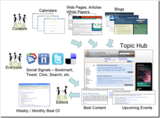
eLearning Learning continues to improve, but I'm hoping to find people who want to work with me to make it even better. How eLearning Learning Works I've described all the elements of eLearning Learning before, but never in that much detail. I've pulled together the following diagram to hopefully help explain it a bit better. Curators Topic Hubs like eLearning Learning start from a group of Curators deciding what content should go in. We currently have several different groups of Curators. Calendar Curators - they find free eLearning webinars that will be of interest to people interested in eLearning. They add these into a calendar that then gets pulled into the topic hub. I've announced a couple of the people who are contributing this way: Second Calendar Curator Joins to Help with List of Free Webinars, and Brandon Hall Free Webinars Added. Blog Curator - right now this is me. I try to find the best blogs that will flow into the topic hub. See 15 More Workplace eLearning Blogs and Top 99 Workplace eLearning Blogs for a bit more detail on this. For now, I plan to continue in this role. Content Curators - we allow people to manually mark pages that should be included. The content should be like an article on a topic related to eLearning. As these pages are marked, they flow across into the topic hub. Combined this forms the body of content that the topic hub aggregates and organizes. Everyone and Social Signals The second very important group is Everyone. We don't divulge all the details of how this works, but basically we are looking for social signals that indicate that someone thinks this content is good stuff. I've discussed some details of this in Social Filtering. The gist is that as everyone interacts with the content by: Interacting on the Topic Hub Viewing content Social Bookmarking Tweeting Linking Searching We obtain signals that indicate Valuable Content. See also An Aha Moment - del.icio.us as Indicator of Valuable Content - Importantly My Content. Eventually, we will get more sophisticated and treat some people as being more important, but for right now, everyone is treated the same as they interact within the network. We will definitely get more social signals over time. And as more bloggers add the widget to their blog, we should be able to get more information that helps bring their best stuff to the top. Topic Hub The topic hub brings together content that its told about by the Curators, organizes it based on keywords that act a bit like tags, and uses social signals to figure out the best stuff. This all sounds pretty simple, but there's some real complexity to managing all that's going on in a scalable way. But rather than focusing on that, I think the key is some key decisions we've made around Aggregation: Centralized content or distributed content. Do they pull all the content into the central site or leave it distributed on the original source? Organization and Access - how do they organize the content. Human tagging? Automated? How do you access it? Editorial Distribution - Single person, small group or widely distributed control of what comes in and what is best? For Browse My Stuff and eLearning Learning, I've made some very specific choices about how we approach aggregation. We believe strongly that this is part of a distributed network of content and people. The goal is to help people find good, relevant content. But to make sure that they ultimately arrive at the source of that content. Our content is organized around keywords that act a little like automatic tags. This is not perfect, and we hope to improve it over time. Still we believe this does help people find relevant content. We allow for distributed curators and editors. I'd like to see more of this. Hence this post. Editors Each week I generate a Best Of post that uses the social signals to tell me what the best content is for that time period. This results in posts such as: LearnTrends - Sound - Best of eLearning Learning Design - Knowing Doing Gap - Best of eLearning Learning Camtasia - LMS - LCMS - Best of eLearning Learning August 2009 These posts are sent via email to people who have subscribed to the Best Of. I won't rehash the discussion in Subscribed to Best of eLearning Learning - but just let me say that I believe this is a really valuable subscription that everyone should subscribe to if they are interested in eLearning. Certainly, the Best Of can and will improve. I've received feedback on these posts that they are much better when there's a bit more editorial to them. Today I saw this post: Best of Tony Karrer’s E-learning. Sophie has added editorial to my Best Of post. I'm hoping that I can maybe get other people to produce Best Of with additional editorial. There are lots of other opportunity for editors. The Top 100 Learning Game Resources by Upside Learning is a human edited (think editor) that came from a process where the person went around collecting web pages and articles on games and simulations. They then used the Best Of capabilities within the system to pull back out the top items. This is the approach I used to create: 100 eLearning Articles and White Papers which is a fairly popular item on my blog. Opportunities to Get Involved If you've read this post in detail, then you probably noticed that there are several places where you can get involved in eLearning Learning: Calendar Curator: Look for events that will be of interest to the audience and add them into a calendar. Content Curator: Look for interesting content or as you see interesting content bookmark it into eLearning Learning. Best Of Editor: Help with posts about what's the best stuff for the week, month, etc. Research Curator/Editor: Pick a topic you want to research. Find good content and bookmark it to be included. Then edit a Best Of post with all the good stuff you found. I want to really highlight the last kind of involvement. If you are about to research just about any topic, this is a great way to do it. While not related to eLearning, you can see me doing it to learn about professional speaking with posts like: Speaker Introduction Rehearsing for an Upcoming Presentation Contact me by Leaving a Comment or by email: akarrer@techempower.com if you are interested in any of these opportunities. eLearning Technology
Subscribe to the Best of eLearning Learning for updates from this blog and other eLearning blogs.
Tony Karrer
.
Blog
.
<span class='date ' tip=''><i class='icon-time'></i> Jul 14, 2015 12:59pm</span>
|
|
View and download the webinar slides. View the webinar recording. Looking for online employee training for soft skills and emotional intelligence? Sign-up for a free trial here ! We provide our clients with thousands of video and eLearning courses. Whether you’re targeting leadership development, new manager and supervisor training, project management, communication, computer skills, compliance or safety, we pretty much have something for everyone. So, try out some courses…have your employees try out some courses. Just fill out the short form to the right and start a free 30-day, no risk, no obligation trial! Check out the BizLibrary Collection! --> -->
Chris Osborn
.
Blog
.
<span class='date ' tip=''><i class='icon-time'></i> Jul 14, 2015 12:59pm</span>
|
|
As way of background for this month's big question - <Insert link to Big Question>, I went to eLearning Learning and looked up Multitasking. Found some great posts. But the basic gist is that Multitasking Generally is Bad for Work and Learning Clive Shepherd - A challenge to the multitask assumption tells us: According to work conducted at Stanford University and reported by Constance Holden in ScienceNOW Daily News under the heading Multitasking muddles the mind, "cognitive performance declines when people try to pay attention to many media channels at once." Clifford Nass, co-author of the study, claims "the study has a disturbing implication in an age when more and more people are simultaneously working on a computer, listening to music, surfing the Web, texting, or talking on the phone. Access to more information tools is not necessarily making people more efficient in their intellectual chores." Also disconcerting, he notes, is that "people who chronically multitask believe they're good at it." Will Thalheimer - Younger Generation NOT Good at Multitasking Either! Read this great article in the Monitor on Psychology by Rebecca A. Clay. It says: People in general are not good at multitasking. Young people are no better than their elders at multitasking. Multitasking actually takes longer. It is NOT a time saver. Learning done while multitasking is shallower learning, leading not to deep understanding (and flexible mental models) but only to an ability to regurgitate rote information. George Siemens - Multitasking A report on multitasking (via Mark Bullen) states "heavy media multitaskers performed worse on a test of task-switching ability, likely due to reduced ability to filter out interference from the irrelevant task set". BBC provides more commentary. Ray Jimenez - Over-rated - The Myth of Multitasking Christine Rosen writes on The Myth of Multitasking,, on the different studies debunking the idea that we learn best by multi-tasking. "Discussing his research on National Public Radio recently, Poldrack warned, "We have to be aware that there is a cost to the way that our society is changing, that humans are not built to work this way. We’re really built to focus. And when we sort of force ourselves to multitask, we’re driving ourselves to perhaps be less efficient in the long run even though it sometimes feels like we’re being more efficient." Doodling and Note Taking is Good Lars Hyland - Doodling, multitasking and memory doodling doesn't detract from concentration. On the contrary, a slightly distracting secondary task may actually improve concentration during the performance of dull tasks that would otherwise cause a mind to wander. I did a cursory summary of note taking and found that most research suggests that effective note taking practices with appropriate summarizing generally results in greater retention. I didn't find a really good summary of this, so would appreciate any pointers that provides a pretty good summary. eLearning Technology
Subscribe to the Best of eLearning Learning for updates from this blog and other eLearning blogs.
Tony Karrer
.
Blog
.
<span class='date ' tip=''><i class='icon-time'></i> Jul 14, 2015 12:58pm</span>
|
|
How many reports and surveys are we going to see that regurgitate the same tired data from the same sources? As learning development professionals, what is our first and foremost challenge? If we relied upon the never-ending stream of reports and research about the "state of the industry", we would be tempted to say the following: Spend "X dollars" per employee per year on training Get employees to spend "X" hours per year in our formal training programs See employees complete "X courses" in the next 12 months Great. And this old school approach to the "state of the industry" is exactly why the industry is in its current state. We need a new "state" that is much more employee focused. That’s why we are running this survey. We want to know, "Where are the employees in all of this?" Employee training, if it’s to be truly effective and actually yield business benefits must put employees first. Part of the problem is a stunning lack of data from the employee perspective. And it’s because nobody from a broad, industry perspective is out here talking to employees about what they want and what they need. We are about to change that. Here is a survey we are launching aimed at EMPLOYEES asking them questions comparing their employer provided programs (if such programs exist) to the types of content and technology access employees prefer. http://www.surveygizmo.com/s3/2103941/Employee-Perspectives-on-Company-Provided-Training If you are a consumer of employer sponsored training, we’d love to hear what you have to say! We think this is the first of several surveys we will sponsor. We hope you take the 2-3 minutes this one requires to help us establish a baseline of information, and stay tuned! We will release the results around September 1 st !
Chris Osborn
.
Blog
.
<span class='date ' tip=''><i class='icon-time'></i> Jul 14, 2015 12:58pm</span>
|
|
View and download the webinar slides. Access the webinar recording at SHRM.org Looking for online training for your new managers and supervisors? Sign-up for a free trial here ! We provide our clients with thousands of video and eLearning courses. Whether you’re targeting leadership development, new manager and supervisor training, project management, communication, computer skills, compliance or safety, we pretty much have something for everyone. So, try out some courses…have your employees try out some courses. Just fill out the short form to the right and start a free 30-day, no risk, no obligation trial! Check out the BizLibrary Collection! --> -->
Chris Osborn
.
Blog
.
<span class='date ' tip=''><i class='icon-time'></i> Jul 14, 2015 12:58pm</span>
|