Blogs
|
Some think that grammar reviews are only useful when taking a developmental writing, or the required set of first-year composition courses. In reality, grammar and syntax reviews are valuable across the board, and all college and university students can benefit from ongoing writing reinforcement. So,whether you are writing a term paper about hospice care, or an analysis of the current economic
Susan Smith Nash
.
Blog
.
<span class='date ' tip=''><i class='icon-time'></i> Jul 16, 2015 10:13am</span>
|
|
Accreditation visits, self-studies, competition, and the changing world (and technology) make it necessary to update your online courses every 2 or 3 years, at the very minimum. In some cases, you’ll need to tune them up every year, depending on the kinds of changes in the course content, the academic field, your accrediting bodies, or the legal environment. When do you update? How extreme does
Susan Smith Nash
.
Blog
.
<span class='date ' tip=''><i class='icon-time'></i> Jul 16, 2015 10:12am</span>
|
|
"You had a stroke," said the ER doctor last Tuesday, as she looked straight into my eyes with an expression mixed with surprise and concern.At that moment, everything around me seemed to disappear -- the doctor, the nurse by her side, the hospital room I was in, even the sounds in the distant background. I felt as if I was alone and very small in an empty, dark, and quiet space. The moments after I heard my diagnosis were strange and uncomfortable. I hope to never experience that feeling again.Six days later, I am feeling well and immensely grateful for recovering virtually unscathed. I'm not one who believes my life is guided by a predetermined plan, but I do believe life is the greatest teacher there is. So, as I transition back into my daily activities, I am reflecting deeply on what I can learn from this experience and use it to impact my life in positive ways.Past Experiences Shape Our Behaviors When I was released from the hospital, my husband and I sat down to talk about what had happened. He asked me, "How did you know? I probably would have ignored the symptoms you had." This question has sat with me now for several days. The answer to that question is quite simple and it makes me think differently about my students and the faculty I work with. Each human filters external stimuli through her or his past experiences. These experiences deeply shape our behaviors.The Event Six hours before the doctor informed me that I had a stroke, I was running on my treadmill. About ten minutes to my activity, my left arm and hand went numb and heavy. While most 43 year-olds may not take this incident seriously right away, I immediately reacted with concern. It was a holiday, my husband was out of town for the day and I was home alone with my two boys, ages 12 and 14. I knew if these symptoms were stroke-related, they may progress and I instantly began to prepare for this scenario.My Reaction Being the tech geek I am, my first reaction was to document the event on video with my smartphone -- thinking if something more happened to me, the video would be important data for the doctors. Then I went downstairs and informed my boys of what was happening, trying to stress (without scaring them) that it was only my hand and arm so they would be clear how things started if I lost more motor function. I called the advice nurse who connected me with an ER doctor. The ER doctor felt quite certain I had a pinched nerve, but encouraged me to come in for testing just in case. My Past Experiences Nine years ago, I had a large aneurysm in my aorta that prompted a 5-hour open heart surgery to replace the root of my aorta and my aortic valve. The valve that I received is a mechanical St. Jude valve. I take warfarin every day to protect myself from blood clots -- the body's natural defense to a foreign object.Since my surgery nine years ago, I have lived in a continuous state of heightened awareness about my body. I react to each twitch, each pain, each irregular heart beat wondering if it is something to be concerned about. I often report symptoms that turn out to be nothing. So, when my arm went numb and heavy, it was natural for me to jump into gear, but I also expected the tests I would have that day would turn up negative. I was wrong. Why This Matters As a teacher and an instructional technologist, I create experiences for my students and colleagues. These experiences are intended to challenge, provoke, and initiate the process of learning. I frequently think about how the learning preferences and differences of my students and the faculty whom I work with are impacted by the design of the online experiences I create. I am also aware of the tremendous value the diverse experiences of learners bring to an online class and strive to create an environment that depends on the sharing of these experiences to cultivate meaningful connections between individuals, as well as make learning relevant. Yet, I don't spend a lot of time thinking about how a person's past experiences inform how she or he reacts to particular external stimuli.When I was a child, for example, I was introduced to computers and networking at a very early age. My father was a research scientist at IBM and he was the first person in our neighborhood to have a computer at home in the early 80s that was connected to a mainframe. My earliest memory of my dad's computer was anchored in relationships, not high technology. I have a memory of my dad calling me into his home office and saying, "Look at the screen. What do you see?" I peered at the large black display screen and read emerald green courier font that said, "Hi, Jake. This is ____." I can't remember the person's name right now but it was one of my dad's colleagues writing to him from his own home office. I can remember feeling dazzled, amazed, and totally overwhelmed by the thought of another human communicating with my dad in real-time -- from a completely different physical location.Positive experiences like this one, which anchor technology in human connectivity have shaped my attitudes about technology. Not everyone brings these types of positive experiences to the table in an online classroom or in an online teaching preparation program. This lesson is important, as it highlights one thread in the complex web of human behavior. Understanding how and why people respond to situations as they do is a skill that is very necessary today in education, as technology continues to play a bigger role and hold new possibilities each year.How Smartphones Can Help Humanize an Experience Last Tuesday, I had very little control of my left hand. My pinky and ring finger were virtually useless. I already shared how I used my smartphone to document the event on video. As the day continued, I found myself unwilling to put my phone down, even though it was tricky to use it with a single hand.I used my phone to take photographs of my various environments -- the CAT scan machine, the cardiac bubble test, my breakfast tray, my view from the ER bed. Those photographs grew more important to me as I returned home. I can't put my finger on why exactly, but they are precious reminders of the day that I frequently look back on. I know some of you may find that odd, but I find the images to be important reminders for me as I move back into my routine. I want to remember this event. I want it to stay vivid in my mind, so I continue to live each day with gratitude. I do not want to forget it -- and that is what happens over time without photographic documentation.I used my phone to stay in continuous contact with my husband during the day and my sisters. I sent a text message after each test result was shared. I asked my sister to contact my other sister and my parents after I learned I had a stroke. At one point in the day, a nurse was taking my blood pressure and said, "Put your phone away and just relax." I turned my phone off and felt more anxious than ever. That phone allowed me to have my family with me. But the nurse clearly did not see it the same way as I.Finally, I used the voice-to-text feature built into my smartphone to enable me to communicate without the need to type. This was tremendously valuable to me while my left hand was not functioning well.Why This Matters I imagine many educators may find it difficult to value a smartphone as a vehicle for enabling human relations, documenting personal experiences, and supporting the diverse needs of users. But that's precisely how I view them and this experience has reinforced that value for me. Being sensitive to your environment and placing a priority on interactions with humans around you is an essential characteristic for living in a mobile, digital society. But there were plenty of medical professionals who poke me, prodded me, even placed me inside of machines in the hospital without interacting with me at all.As I watch my two boys grow into teenagers with smartphones in tow, I can understand that their phones mean something very important to them. Their phones are very much a life line. They have friendships with individuals via text, Instagram, Snapchat, Kik, and Vine do not have the same depth in-person. They communicate with people from away -- past friends that have moved, friends that are not local, and, yes, and superstar soccer players and golfers. They document everything meaningful to them in photographs and share them with their network of friends. The role a smartphone plays in the development of relationships and human memory takes me back to my childhood memory of my dad's computer. Yet, today, we hold this potential to connect and share in the palm of our hands. As educators, how can we not embrace smartphones as powerful communication and learning tools?Finally, as an educator who designs online learning environments, I have a refreshed perspective about the value of voice technologies. I am a long-time user and advocate of VoiceThread, as I've discovered many powerful findings about how it impacts learning, the development of online community, and empowers students to become more proficient verbal communicators. And now I see the value of voice-to-text communications, as well. I think about dyslexic students and how this emerging technology opens new opportunities for demonstrating their knowledge and participating with peers in text-discussion -- with the challenges of writing greatly diminished.I do not ever wish to have another stroke. But I'm grateful for what I've learned from this experience.
Michelle Pacansky-Brock
.
Blog
.
<span class='date ' tip=''><i class='icon-time'></i> Jul 16, 2015 10:12am</span>
|
|
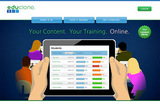
Finding new ways to engage students and create engaging e-learning experiences is a continual challenge. Welcome to an interview with Breanne Hull, Educlone. The Educlone learning platform features an interface designed for rapid development of distance learning (elearning /mlearning) which uses a drag-and-drop approach.1. What is your name and relationship to elearning? My name is Breanne Hull
Susan Smith Nash
.
Blog
.
<span class='date ' tip=''><i class='icon-time'></i> Jul 16, 2015 10:11am</span>
|
|
Today, I was part of an exciting conference call with the Online Learning Consortium (formerly Sloan-C) and VoiceThread. The two organizations have established an exciting partnership for the 8th Annual Emerging Technologies for Online Learning (ET4Online) Symposium 2015!The partnership will connect face-to-face ET4Online Discovery Session presenters with virtual conference attendees (and beyond). Simply by uploading a PDF of one's Powerpoint or Keynote presentation into VoiceThread and recording personalized voice comments to expand upon each slide, each Discovery Session presenter will also create an asynchronous voice conversation about their session topic. VoiceThreads are interactive, providing an opportunity for virtual attendees to view and ask questions on any slide in a VoiceThread.But that's not all ... each ET4Online 2015 Discovery Session presenter will also receive:A complimentary 1-year Higher Ed Single Instructor license. This is a $99 value. Wow!The opportunity to be part of a cutting-edge VoiceThread feature (not even released yet!) that will facilitate the curation of a group of VoiceThreads in an embeddable content frame. The Call for Proposals for ET4Online 2015 closes December 1, 2014.Submit your proposal now to pursue this exciting opportunity! VoiceThread Resources:What's a VoiceThread? (1-minute video)How to create a VoiceThread (2-minute video)
Michelle Pacansky-Brock
.
Blog
.
<span class='date ' tip=''><i class='icon-time'></i> Jul 16, 2015 10:10am</span>
|
|
Today, January 2, is National Science Fiction Day. It occurs on January 2, the day Isaac Asimov reported as his birthday.What will you do to celebrate Science Fiction Day?2011 was a year in which science fiction and science "fact" (the scientifically observable world of phenomena replete with multiple working hypotheses) seemed to converge. So, I thought I'd take a moment to contemplate a few of
Susan Smith Nash
.
Blog
.
<span class='date ' tip=''><i class='icon-time'></i> Jul 16, 2015 10:10am</span>
|
|
Chances are, if you're teaching an online course, out of 20 students, two or three have been a victim of Intimate Partner Violence (IPV) at least one time in their lives. Actually, that's a conservative estimate, given that 3 out of 10 women and 1 out of 10 men in the United States has been victim of rape, physical violence, and/or stalking (CDC, 2012), and that's not even getting into the issue
Susan Smith Nash
.
Blog
.
<span class='date ' tip=''><i class='icon-time'></i> Jul 16, 2015 10:09am</span>
|
|
The deadline to submit your proposal for the OLC Emerging Technologies for Online Learning Symposium (April 22-24, 2015 in Dallas) is December 1st!This year's OLC (formerly Sloan-C) Emerging Technologies for Online Learning Symposium, a joint symposium with MERLOT, offers you the option to select from a variety of presentation formats and six different tracks. When you submit to a track, you will have the option to:Be a chef in the Technology Test Kitchen (submit to the Technology Test Kitchen Track be considered as an ET4Online Chef!). What is this, you ask? View this 1 1/2 minute video:Present an interactive workshop (of 90 or 120 minutes). Workshops are included in the standard program (no extra fee for participants).Present a 50-minute information session.Share an Electronic Discovery Session. This year, all Discovery Session presenters will receive a complimentary 1-year license to VoiceThread (a $99 value!), in exchange for sharing your session online with our virtual attendees in the form of a VoiceThread. More details here.Don't miss out! #ET4Online has it going on!Click here for full details!
Michelle Pacansky-Brock
.
Blog
.
<span class='date ' tip=''><i class='icon-time'></i> Jul 16, 2015 10:09am</span>
|
|
As elearning and mlearning move into new forms of delivery, and the appearance, capabilities, and the functionality of the interfaces (including learning management systems (LMSs) evolve, it's useful to take a look at how instructional designers, technologists, and administrators are considering the impact of the interface when developing and teaching online courses. Welcome to an interview with
Susan Smith Nash
.
Blog
.
<span class='date ' tip=''><i class='icon-time'></i> Jul 16, 2015 10:09am</span>
|
|
This post reflects on his struggles and the ways convoluted higher ed processes can derail students trying to earn a degree. It also provides some general information about the public higher education system in California and tips for transferring. I hope this information will be helpful to many.The Many Values of Community CollegesThe public higher education system in California is immense. And the complexities involved with moving between institutions are too. In CA, there are 112 community colleges (CCCs) that serve more than 2 million students. On the four-year side, the California State University (CSU) system includes 23 campuses and the University of California (UC) has 10 institutions.The CCC system enrolls 24% of the nation's CC students. I'm an advocate and supporter of community colleges. In the 1960s, my father left his impoverished family of fifteen siblings on the east coast and became a resident of California to enroll at Porterville Community College, which was then free to CA residents. He then transferred to San Jose State University (part of the CSU system) and completed his Master's degree and then moved to Iowa State to complete his Ph.D. The opportunity provided to my father through California community college and the CA Master Plan for Higher Education improved his and my economic and social status. It also produced a healthy stream of educated workers in California, creating a fertile soil for transforming CA into a nexus of innovation. While CCCs are no longer free, they are still an incredible financial value. They provide the same lower division coursework that 4-year institutions provide and usually do so in a smaller class environment with instructors whose primary responsibility is to teach, as opposed to research. I plan to have my two boys attend a community college after high school. They are fully aware of this and they understand why. My boys will spend two years at a CC to explore and figure out what they love to do (assuming they don't figure it out before then). They will transfer to a 4-year institution and complete their undergraduate degree there. I have also taught in the CCC system, as both a full-time and part-time faculty, for twelve years.Our family plan will, of course, save my husband and I thousands of dollars too. Student loan debt in the U.S. has now topped $1 trillion. If a student completes a 4-year degree within 4 years in the CA public higher education system and the first two years of transferable, lower-division coursework is completed at a community college, the savings is roughly $10,000 if the student transfers and graduates from a CSU and more than $20,000 if the student moves on to a UC. That plan seems simple and worth it in many ways, doesn't it? And many families/students follow it with success. Each year, according to the Community College League of California, roughly 60,000 students transfer from a community college in California to a CSU or UC. And 28% of UC graduates and 55% of CSU grads started their higher education journey at a CCC.The Student Experience As we consider this data and the critical role community colleges play in the college completion process, let's also consider the student experience. My nephew is in the midst of transferring from a CCC to a CSU. He, and most college students, do not view their higher ed experience through a bird's eye view of institutional organizations. I know I didn't when I was in college. It took me a long time before I even understood how CCCs, CSUs, and UCs were different and had the potential to function as an interconnected system. Nonetheless, my nephew has learned that navigating the transfer process is no simple feat. He completed some of his course work at one community college in CA and then moved to a nearby city and began attending a separate community college, where he completed his lower division coursework. Both colleges are "feeder schools" for the 4-year institution to which he is transferring. A counselor at the second college provided him with list of courses he needed to complete to be ready to transfer. He completed all of the courses on the list. However, one of the courses, a math class, was completed at the first community college. He learned late in the game that the university only accepts that math course from the second community college and not the first. As a community college instructor, this did not surprise me. But I certainly saw it through a new lens -- and realized how this convoluted system messes with students' lives and finances.What did surprise me was the plan his counselor suggested he follow to remedy the problem. The counselor suggested he enroll in an out-of-state university and complete the math course online. The online course from the out-of-state institution would articulate to his university of choice and he could then officially transfer.He accepted the counselor's suggestion, as it would not require him to travel hours to the nearest community college at which the math class is offered (with full articulation). He could also pick up additional hours at work, while completing his class online. So, now he is paying out-of-state tuition to complete a single online math class to enable him to transfer from a California Community College to a California State University.This situation reveals how online classes can improve a student's chances for succeeding with their educational goals. It also reveals the tremendous need for CA's CCCs to continue to be leaders in the online learning space, but also to create fully online lower division pathways for students with the ability to enroll easily in these classes, as opposed to needing to register at each individual college. This plan is in motion and our students in California, as well as our state, will benefit from it greatly.Next, I asked my nephew how the online class has been (as the semester was coming to a close). "Rough," he replied. He shared that math is difficult for him and he has feels that he learns best in a face-to-face setting. I asked him if the instructor was present in the online class. He said, "No. In fact, when I emailed her for help, she gave me a phone number for a support center." I asked him if he experienced interaction with his online peers in the class. He said, "No. I just read the book and completed assignments in a Pearson website."That's unacceptable and demonstrates that, while he is completing the required course to be able to transfer, his learning is suffering due to a poor quality learning experience. How will this impact his success in his future math classes? How does this impact his confidence as a human and as a student? How does this reflect on the general attitudes about online learning? All of these questions, and more, are critical to the future of higher education and often get lost.Transfer TipsResearch shows that 1 in 10 students who transfer from a CC lose credits because they are not transferable. This extends the duration of the degree, as the courses must be repeated, and wastes time and money (albeit, these courses may provide value in other ways!). If you know a student planning to transfer from a community college to a 4-year institution, here are some resources to help improve the experience.If the institutions are located in CA, become acquainted with Assist.org. It provides up-to-date information about which courses at your CC transfer to the your 4-year institution of choice. CaliforniaColleges.edu also provides a comprehensive set of resources to guide students from high school through the completion of a 4-year degree.Create a mobile toolkit. More and more startups are forming around the goal of improving the student transfer process. Transfer Bootcamp (founded by a former community college student) is designed to improve a student's organization and awareness of the transfer process. ImFirst is an app designed to support, guide and celebrate first generation college students through graduation. Become familiar the Western Undergraduate Exchange (WUE) program if you live in a western state (Alaska, Arizona, California, Colorado, Hawaii, Idaho, Montana, Nevada, New Mexico, N. Dakota, Oregon, S. Dakota, Utah, Washington and Wyoming). This program provides residents of these states an opportunity to apply for a significantly reduced out-of-state tuition rate.Use the tools the counselors use. The site, CCC Transfer, is developed and used by counselors throughout the CCC system to assist students with the transfer process. It is packed with great resources!Please share your own tips and experiences about transferring from a community college to a 4-year university in a comment.
Michelle Pacansky-Brock
.
Blog
.
<span class='date ' tip=''><i class='icon-time'></i> Jul 16, 2015 10:09am</span>
|