Blogs
|
Designing Digitally, Inc. has been selected by BestWebDesignAgencies.com as a top 10 development company for September, 2014. "It is great to see our organization being recognized for the dedication we have to our clients and our commitment to developing the highest quality online learning experiences," says Andrew Hughes, President of Designing Digitally, Inc., regarding the award. "We are looking to finish out 2014 strong and take it to the next level in 2015. It is encouraging to know people recognize our hard work and see our developments as something to behold."
Looking for an award winning E-Learning development company? Look no further. Contact us today to learn more about how your organization can thrive with online learning.
Andrew Hughes
.
Blog
.
<span class='date ' tip=''><i class='icon-time'></i> Jul 16, 2015 04:49pm</span>
|
|
One of the more frequent questions we receive at Designing Digitally, Inc. is about the potential of scenario based E-Learning in business. In our opinion, it is a fantastic opportunity for corporations of all sizes to reduce training costs, increase productivity and engage employees. Not only is scenario based E-Learning a good way to increase knowledge retention and motivation, but also a way to reduce risk and cost to your organization. Imagine being able to train your employess in a safe, risk free environment, while receiving virtual on the job training.
There are numerous benefits of E-Learning in general, but below we have highlighted some key aspects of what scenario based E-Learning accomplishes:
A Strong Motivator for Students
Scenario based learning is a great way to get your learners motivated and engaged in their training. Reason being, students have the opportunity of becoming fully engaged as they solve real-life problems they will eventually face in the workplace. By forcing learners to use critical thinking skills along with the knowledge that’s shared in each tutorial, it creates a fully immersive environment.
Increased Learning Retention
Likewise, it has been long regarded within the business community that on-the-job training is the most efficient way to educate employees. When the job requires workers to deal with complex scenarios with high profit margins at stake (like in our Sales Mobilizer project), the same knowledge can be achieved through scenario-based E-Learning in a fraction of the time. Applied learning is also implemented to reinforce prior tutorials.
Realism without the Risk
Then again, scenario-based E-Learning is also an excellent choice for dangerous professions or in an area where the training is costly. By removing the life-threatening elements that can accompany even a simple mistake, it allows students to feel much more comfortable in making decisions that are normally reserved for veteran employees. Additionally, there is an excellent opportunity for new employees to learn critical skills in a safe environment.
Ongoing Training Options
Scenario-based training is also an excellent way for companies to provide performance support and ongoing training. New information can easily be added at any time, plus it can be made available on a number of different digital devices as well. This means that a single software solution can serve multiple purposes for both short and long term educational goals.
Extremely Cost Effective Training
Although the upfront cost of scenario-based training may seem daunting, the resulting increase in knowledge retention and additional productivity is well worth it. With the ability to train employees in much less time, workers are able to begin producing faster after their initial hire date and begin to generate revenue. It also eliminates numerous other costs (training materials, on-site instructors, travel, etc.) and provides metrics that can identify weaknesses in the training material. Since the E-Learning modules can be developed to be accessible from numerous devices, it also allows your team to access information on the go or at home in their personal time.
The end result of scenario based learning is highly knowledgeable, motivated employees that are much more prepared for the task at hand. For more information about this or any of other custom training solutions that are available from Designing Digitally, Inc., please do not hesitate to contact us through our website or by phone. Our staff is always more than happy to answer any questions you may have.
Andrew Hughes
.
Blog
.
<span class='date ' tip=''><i class='icon-time'></i> Jul 16, 2015 04:49pm</span>
|
|
In 2005, Carpe Diem High School in Yuma, Arizona opened as a public charter to test out a new learning concept on grades 6-12. Carpe Diem is a blended learning school that aims to leverage technology, as well as instructor led training, to get students excited about learning and excelling in education.
Within five years of program launch, Carpe Diem boasted some of the highest math and reading scores in the nation. While this was not technically the first instance of blended learning in a classroom setting, the program proved the learning model was sound.
What is Blended Learning?
Blended learning is an educational tool that combines traditional classroom instruction with online technologies to enhance the learning experience. There are numerous ways for businesses to implement this concept into their curriculum with varying levels of interaction between the student and the instructor. Some blended learning solutions and programs deliver 100% virtual learning with an on-site instructor available to answer questions, while others simply use digital mediums within the classroom to augment learning. There are also numerous levels in-between, such as-
Rotational Learning- Over the course of a semester, students alternate between traditional and online classrooms to gain a broader exposure of the subject matter.
Flex Learning- While students receive most of their instruction over an online platform, they can also opt to receive one on one or group instruction as needed.
Self-Blended Learning- Students receive traditional, in-house training with the option of accessing online courses for additional exposure.
The Benefits of Blended Learning
Proponents of blended learning are quick to point out that in almost every study, both knowledge retention and test results increase exponentially among students. Reason being, blended learning gives learners the opportunity to explore and absorb information in a variety of mediums and styles. Also, with an increasing number of millennials entering the workforce who have been "plugged in" their entire life, blended learning makes sense. Allowing learners to explore information on their own, as well as interacting with an instructor, gives way to an environment that caters to the needs of today’s audience.
Additionally, blended learning tends to increase student interest. By making the learning opportunities fun and engaging, it takes away much of the pressure that some students feel inside traditional classrooms. Also, to aid in curriculum/program molding for success; Learning Management Systems give instructors access to a tremendous amount of metrics to track progress levels and make changes when necessary. Students can even give direct feedback in real time, especially since an instructor is present.
Blended Learning in Business
Corporations are quickly realizing the immense possibilities of blended learning within the workplace as well. Instead of focusing just on a traditional classroom setting, businesses are able to train employees within the workplace on very flexible schedules. Employees can also be granted access to complete portions of the training on their own time as well, which leads to numerous time and cost-saving benefits for everyone involved. More importantly, the learning retention increases dramatically because the employees are much more engaged.
At Designing Digitally, Inc., our learning solutions can be designed to complement your current training programs. By working with your facilitator, we are able to develop world-class learning tools that accelerate the learning process and keep employees motivated. Feel free to contact us for a no-obligation quote on meeting your exact training needs.
Andrew Hughes
.
Blog
.
<span class='date ' tip=''><i class='icon-time'></i> Jul 16, 2015 04:48pm</span>
|
|
With the rapid advancement of technology over the past decade, mainstream education has travelled from the classroom to the computer, and now to our smartphones. Mobile E-Learning has the potential to completely revolutionize performance support within the workplace, but it also comes with unique challenges for developers who are trying to stay ahead of the technological curve. Here are four things to consider when exploring mobile learning applications:
A Simplified Smartphone Interface
One of the biggest problems in Mobile Learning today is the "one size fits all" mentality. Not every element converts properly for every device. For example, when the user has to simulate mouse-clicks on a smartphone and the buttons are shrunk down to the size of a pinhead, the learning incentive is completely lost. If you can’t "click" the right button, how are you supposed to work through the module?
Additionally, remember that mobile devices do not allow button rollovers. Since these elements definitely have their place when displayed on PC screens, design solutions specifically for the user’s preferred digital device.
Delivering Bite-Sized Lesson Plans
Since your learners can use a mobile learning application practically anywhere, it helps to keep the lesson plans short and easily completed within a short time frame. Even with larger, more complex topics, break the information down into bite-sized sections that can be completed at the user’s leisure. Your audience is more likely to feel compelled to complete a 5 minute section than a 30 minute course.
Develop for Mobile First
A recent study by market research firm IDC predicted that by the year 2015, the Internet will be accessed primarily by smartphones. A Duke University professor also shared his findings that younger generations rely on their mobile devices more than any other platform to access learning material, and dozens of similar studies have reached the same conclusion. The future of E-Learning will only continue to favor mobile in a greater capacity, something to keep in mind when looking into E-Learning for your organization.
A Streamlined Learning Experience
To foster engagement, mobile E-learning applications must be enjoyable, with a balance between fun and education. The strongest educational experiences come from titles that can quickly create engagement and hold the student’s attention. While gamification elements certainly add value, the overall feel has to remain focused on the learning experience. Just because your learning is flashy and visually appealing, doesn’t guarantee success. Keep the learning objectives in mind and ensure your project works to meet those objectives.
At Designing Digitally, Inc., we take great pride in creating customized E-learning solutions for our clients. To learn about our mobile E-learning solutions or to receive a free quote, feel free to contact us or by calling us directly at 866-316-9126.
Andrew Hughes
.
Blog
.
<span class='date ' tip=''><i class='icon-time'></i> Jul 16, 2015 04:48pm</span>
|
|
For decades, the ultimate training goal in any educator’s mind was to find a way to connect to their students and create an atmosphere where learning was simplified. The Bring Your Own Device (BYOD) revolution allows employers and educators to meet both of these criteria, all the while saving money in the process. Since users are usually a lot more comfortable with their own digital devices than ones issued by their employer, there is also a convenience factor involved that could potentially speed up the learning process.
Catering to the Needs of Your Audience
One of the largest benefits from the Bring Your Own Device movement is that students have complete control over their learning environment. People have a personal attachment to their digital devices these days, and they're quick to reach for them whenever they have a spare moment. By providing learning material that can be accessed from any device, at any time, students have a lot more freedom when it comes to seeking company information.
Additionally, the sheer amount of content that can be made available to employees is staggering. Instead of carrying around big workbooks full of company policies and regulations, this same information can be accessed in a fraction of the time. Since the user is already familiar with the device as well and likely prefers it over the office PC, this is only one of the reasons why employees prefer a BYOD training environment.
The Nuances of Developing for Multiple Devices
Of course, Bring Your Own Device also presents a distinct number of challenges. Technology advances in hardware are changing at a lightning fast pace, so there simply is not an accurate way to predict a user's preferences two, three or five years from now. Meaning; the newest learning solutions have to be fully adaptive to any platform with considerations given to screen size, internet availability and numerous other factors. Security is also a potential issue when employees use their own personal devices.
Because of the need for responsive layouts across a wide range of devices, the actual learning content needs to be delivered in small, quickly downloadable segments with mobile devices in mind. This keeps compatibility issues to a minimum and ensures material can display properly on a four inch smartphone screen, a 27 inch monitor or anything in-between. The content could also be available through a company website, and in some cases a downloadable app (on both Android and iOS) could be a good solution as well. That way, poor bandwidth does not have to play a factor in the actual learning potential.
Getting the Most Out of Numerous Devices
At Designing Digitally, Inc., we have fully embraced Bring Your Own Device because it is a win-win for everyone involved. The cost savings alone is making BYOD increasingly difficult to ignore. By allowing users access to learning materials on whichever device they prefer, your training modules will no longer be limited to the office laptop or tablet…which can often get left behind.
For more information, please call us at 866-316-9126 or visit our website. We will happily provide a free quote and explain our development process for a BYOD organization.
Andrew Hughes
.
Blog
.
<span class='date ' tip=''><i class='icon-time'></i> Jul 16, 2015 04:48pm</span>
|
|
The evaluation of a corporate training program is an integral aspect to understanding its overall effectiveness. Using different approaches to observe and measure how well your corporate training program is doing will allow you to ensure you have not wasted both time and money. In some cases, you may discover your training program is lackluster and does not provide a good return on investment. On the other hand, you may see the training model you have implemented is effective and your employees are responding to it well. In this post we will go over some of the main challenges of the evaluation process as well as tips to help you determine what the best approaches are to evaluate training.
Challenges Faced
One difficulty companies find when the time comes to evaluate training is they do not take the time to analyze what their training needs really are. It is virtually impossible to assess how well a training program is doing if you do not know exactly what your goals are. We know your goal is to train your employees, but what specifically do you want them to walk away with? In order to combat this problem, sit down and do a training-needs analysis so you can discover skill gaps and other issues related to your objective.
Another issue facing companies is measuring knowledge retention and skills learned. This is why it is crucial to incorporate a ‘learning level’ into your evaluation approach. In dividing the evaluation process into different levels, you will be able to more accurately measure what your employees have learned and if they have reached your desired level of learning. For instance, do your learners just need to comprehend the information or be able to apply the knowledge to a specific task?
Also, is the content and delivery method relevant and engaging with your audience? If your corporate training is directed towards a younger audience, chances are, a presentation style session may not be the best delivery method. Without taking the time to really delve in to the details of your training, you may overlook the question, "is my delivery method the most effective way to reach my audience?"
Methods
There are many different approaches to training evaluation; however, there are certain approaches that provide more insight than others. Goal-based models tend to be extremely effective because they allow you to objectively look at the effectiveness and impact of your training program. These are a few functions of goal-based evaluation:
Reaction - This is an integral part of the evaluation process because it measures precisely how your employees have reacted to the training. Your employees should feel like they have gained knowledge or skills from the training. By measuring reaction you can see how your audience is responding to the training, which in turn gives you the necessary information to make adjustments if need be.
Learning and Behavior - This step of your training evaluation allows you to measure what your employees have learned and how their behaviors have changed. You should have a list of learning objectives you expect to be met by your employees, which will be the starting point for determining how well they are being accomplished. Knowing whether or not your employees are actually learning what you intend will help you see where you need to make adjustments in your training programs. You can do this by either visually recognizing the change has occurred, or by way of post assessment, to name a couple.
Bottom line - Once you have completed the evaluation you can then analyze the end results and determine whether the training model is helping your employees and business overall. If the results show that your employees are in fact learning what you intended, responding positively and retaining the information, this should mean that you are seeing a good ROI and that your initial objectives for the program have been met. Also, by benchmarking statistics and figures before and after training, you can get an idea of how effective your corporate training is. For instance, tracking sales figures before your training and comparing that data to figures following training roll out.
Corporate training evaluation is not an easy task. By outlining your intended learning objectives before the training takes place and analyzing what your actual goals are, you are setting yourself up for success. During the evaluation it is crucial to communicate well with your team and measure their reactions, behavior, and how well they have retained the information in question. Also, benchmarking important figures to track performance before and after training. To learn more about evaluating your corporate training, or to discuss an evaluation of your current training, contact us.
Andrew Hughes
.
Blog
.
<span class='date ' tip=''><i class='icon-time'></i> Jul 16, 2015 04:47pm</span>
|
|
Designing Digitally, Inc. has partnered with NASA's Goddard Space Flight Center to develop Gamified E-Learning experiences. The E-Learning modules embrace gamification to make learning how to write requirements engaging, educational, and entertaining.
"Working with Goddard Space Flight Center on this project is something we are excited about here at Designing Digitally," says Andrew Hughes, President of Designing Digitally, Inc. "We look forward to working with the innovative people at NASA to educate and increase knowledge retention through gamification and serious games. This will be an exciting adventure and foresee a great collaboration for the remainder of 2014 and 2015."
See the full article discussing the partnership between E-Learning developer DDINC and NASA on Marketwired.
Andrew Hughes
.
Blog
.
<span class='date ' tip=''><i class='icon-time'></i> Jul 16, 2015 04:47pm</span>
|
|
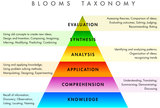
Blooms Taxonomy was developed in 1956 and was used to help classify the difficulty associated with questions asked during assessments, ultimately being transformed into a "system" for classifying various learning outcomes. But how do serious games tie in with Blooms Taxonomy?
A Quick Overview of Bloom’s Taxonomy
In simple terms, the Blooms Taxonomy model is based around the idea that learning can be divided into three main areas - learning that is generating a skill, learning that is developing attitudes, and finally, learning that is transferring knowledge. These are referred to as "domains", and more complicated "languages" can be used to capture each of these areas. They include:
Cognitive Domain
Attitude Domain
Skills Domain
Okay, so what about the "Taxonomy" part? Well, this isn’t too complicated either. It basically means the classification of something. To explain further, the Bloom’s model suggests that each individual learning type has a series of learning levels that should be considered when providing a serious game platform for learners.
A Quick Overview of Serious Games
A "Serious Game" is basically a game that is designed for the primary purpose of teaching rather than entertaining. The "Serious" adjective used in its name refers to the various industries that take advantage of them include the corporate industry, scientific community, and even education system.
One of the main characteristics that separates a serious game from a regular game is that it is designed for a real-world problem. Serious games can be entertaining, but they are there to educate learners. Now that you understand both Bloom’s Taxonomy and serious games, let’s take a look at how they can be tied together to create the ultimate real-world learning experience.
Choosing the Complexity of the Game
As a general rule of thumb, the amount of complexity associated with a serious game will be directly correlated with the level of learning that you desire. For instance, if you simply wanted the learner to increase their knowledge and memorize the material then you could take advantage of the Taxonomy’s first level of learning - knowledge.
The learner would be required to recite specific facts and terminology, as well as understand various theories and structures associated with the subject. But if you wanted to take your serious game one step further then you could use the comprehension level of learning.
This would essentially require the serious game player to understand the facts and information being given by comparing, translating, and interpreting it. In the serious game itself, you could have the learner compare different aspects of what they learned.
Creating Different Types of Serious Games
Creating a serious game that only requires basic recall is quite easy to accomplish. However, if you are creating a serious game that requires the learner to come up with much more complex conclusions based on what they learned then your instructional design will need to be altered. Bloom’s taxonomy and serious games tie in together quite well if you understand the level of learning that you require for your learners. For more information on how to determine the best solution for your learners contact us today.
Andrew Hughes
.
Blog
.
<span class='date ' tip=''><i class='icon-time'></i> Jul 16, 2015 04:46pm</span>
|
|
The use of badges is an especially important element because they serve as a reward system within a development, and badges are often one of the most highly visible concepts. Not only do badges serve as a method of rewarding users, but as a way to motivate. Below, we will discuss the importance of badges in gamification and some important aspects.
So, Why Use Badges at All?
Whether we are talking about the last 100 years of Boy Scouts of America or a hardcore 21st century gamer, badges have been used successfully to inspire. By definition, a badge is a symbol of honor or achievement, and the mere possibility of recognition creates a lot of motivation. In fact, status is more important to most than rewards.
There is also a company benefit from badges as well. By making them an award for numerous performance achievements (completing a tutorial, logging in on consecutive days, a high score, etc.), employers can easily track how employees are embracing the technology. Also, badges serve as a great indicator of progress.
Deciding on Types of Badges
When implementing gamification and badges into a development it is important to ensure they are meaningful achievements that hold value with the user. While the occasional surprise badge can be useful in increasing pleasure, the user must feel there are clearly defined rewards for meeting specific objectives. A few other things incorporated into badges are-
Visually appealing design/layouts
Numerous challenge levels
Special recognition for difficult tasks
Proper display/access of badges
A complement to other gamification concepts
Relevance to learning objectives
It is also important to offer several elite badges that only a select number of participants will be able to achieve over time. Not only does this guarantee that there will always be challenges left to strive for, but it also serves as serious bragging rights around the office. Used in the right context, it can become highly motivational. As mentioned earlier, status is a great motivator.
How Badges Affect Learners
When implemented properly, badges can become a very powerful tool in the learning process. Badges provide the user a set of goals to strive for within an E-Learning development, plus it helps tie in numerous other gamification elements. Perhaps even more importantly, society has almost a universal desire to achieve recognition and badges have become a tangible means for validation.
Badges are a great way to engage and inspire your learners. In addition, badges can be used to track learner progress throughout a module or gamified learning experience. Please feel free to give us a call at 866-316-9126 for additional information on how to make your corporate E-Learning vision become a reality. Or, contact us through our website.
Andrew Hughes
.
Blog
.
<span class='date ' tip=''><i class='icon-time'></i> Jul 16, 2015 04:45pm</span>
|
|
So you have decided to convert your current training to web-based training, that’s great! Your goal is to increase engagement and knowledge retention in your learners; a pretty straight forward goal. But who are your learners? Your employees, right? It might not be that simple.
Below are 4 key considerations when analyzing your audience for web-based training.
Seniority in the Organization
Who are you looking to train? Who is the target of your training? Again, this may seem obvious; your employees, but not all employees are the same. If your web-based training is covering new hire materials, these learners are likely different than, say, those in a new product training class or refresher course. They are new to the organization and likely less hip to your policies, jargon, and procedures.
Technical Abilities
Let’s face it, we all know someone whose technical abilities are less than stellar. This is an issue some may face in the workplace as well. If your learners have varying levels of familiarity with computers or technology, you must keep this in mind when having your web-based training developed. Using an interface loaded with buttons and actions may not be the best route to take if your learners are less skilled with the technology, even if the interface/tools seem to be practical or necessary.
Hardware and Software Availability
Another key consideration is what hardware and software are available to your learners. For example, if your web-based training has voice over audio; does your learner have the hardware to hear the audio? If your training has Flash based animations; does your audience have the necessary software on their device? Also, will your learners be using mobile devices as well as computers, or one or the other?
Learning Environment
So, where is your audience participating in your web-based training? Something to consider. Is your training taking place in a classroom style, blended learning environment? Or will they be engaging in training at their desk? These are areas of attention when developing web-based training for your target audience.
For instance, does your audience have limited time on or access to a computer? Is the working environment loud or distracting? A good understanding of these obstacles help gain a more clear view of who your audience is and how to best engage them in your training.
Level in the organization, technical abilities, hardware and software availability, and the learning environment all play a part in analyzing who your true audience is and how to engage them. At Designing Digitally, Inc. we perform a Training Needs Analysis before every project to determine who your learners are and how to most effectively convey your information. To learn more, contact us!
Andrew Hughes
.
Blog
.
<span class='date ' tip=''><i class='icon-time'></i> Jul 16, 2015 04:44pm</span>
|