Blogs
|
The last post ended with a question whose purpose was to get you to think about the potential of cross disciplinary learning with the focus on the need to recognize that when confronted with real world problems in the 21st century, we need to stop thinking in terms of the compartmentalization of disciplines and start thinking in terms of the collaboration of disciplines in applying their specific skill sets to a common real world problem. From a business perspective, it is the application of the best intellectual assets in a collaborative arena to a common problem which, as NASA, discovered was the best way to go.Credit: www.solutionrevolutionbook.comOne thing that I need to make clear is that when I suggested S.T.E.M. or S.T.E.A.M. as the configuration, I am not suggesting that these are the only configurations for cross disciplinary learning. What I was suggesting is that we need to do away with the strict compartmentalization of subjects in education and move towards "clustering of subjects" in such a way that the skill sets will complement each other when applied to real world issues. As Finland is starting to do, arranging topics set into a thematic framework can help establish the important habits of the mind, such as collaboration, very early in the education life of learners. I also believe that it is absolutely crucial that the basic literacies be woven and reinforced into the foundation of whichever configuration that is used.Another potential configurations might be: H.E.M.G (History-Language-Mathematics-Geography). This configuration might not be used at the primary level but might be an invaluable approach in the study of current conflicts in the world. The nature of the real world problems highlighted within the thematic structures determine which configuration would be most useful. This is arrived at through a collaborative effortRole of the Educator?Obviously, the role of the educator changes. The often used saying, reaching the status of a clichee, is: "No longer the sage on the stage but the guide on the side!"The educator is the individual who organizes effective learning experiences and develops mentor contacts on the web that students will use as complementary resources in a blended learning context. What About Technology and Online Education?Imagine, using LEGO MindStorms to design the next Martian rover and having a NASA scientist as a mentor, an M.I.T. robotics scientist to help with the programming and the design.( S.T.E.M)! This is the potential for education through the creation of professional online mentor networks.Middle and Senior GradesThe essentials of effective collaboration using problem based learning principles should be well grounded by the time students reach middle grades. It is at this level that I believe that another crucial habit of the mind should be introduced and nurtured in its development. I am referring to the trait of divergent thinking. Real innovation is dependent upon the ability of learners to see the possibility of more than one solution to a problem than just one.One of the lessons that I have learned regarding the traits of middle school pre-teens and teens, is that they can be notoriously innovative when they feel the need to beat "the system". It is at this point that I think it would be good to channel their innovative tendencies to things that benefit humanity instead of frustrating it. One of the areas that requires the greatest of caution is teaching young people the coding languages of computers. It is unwise to do this in a moral vacuum.Credit: www.triz-journal.comThese are just a few ideas that I think that Finland education should consider. We will have to wait and see how their plans come to fruition.Next.......Bringing the elements of the blueprint together..
Ken Turner
.
Blog
.
<span class='date ' tip=''><i class='icon-time'></i> Jul 16, 2015 08:15pm</span>
|
|
As has been mentioned in past posts, there are certain habits of the mind that need to be introduced and nurtured with respect to this generation of E-Learners. In doing this we are able to help E-Learners eliminate bad habits of the past that they have acquired from not only being part of the old industrial model of education but also from being connected to the web for all of their lives. These old habits are counter-productive to a vision that sees the developing role of educators and learners as agents of change within a rapidly changing world.Art Costa and Bena Kallick (2008) introduced us to 16 habits of the mind which encapsulated the type of cognitive habits that the learners of the 21st century and beyond need in order to become agents of change who create new knowledge and skill sets favourable to innovation.One such habit of the mind that needs to be introduced and nurtured is what I call "thoughtful engagement". Thoughtful engagement is demonstrated when a student produces evidence that shows he or she has not only read what is required in order to complete a learning task but has also included thoughtful reasoning supported by evidence based upon other sources of information that they voluntarily include to support their lines of reasoning.This skill is one that we often attributed to "good academic students" but we no longer have the luxury of being able to depend on a minority of students. The simple truth is that all students are capable of developing this habit of the mind that is quickly becoming an essential of 21st century critical thinking.The obvious question that needs to be asked is:"If all of our students are capable of developing this habit of the mind, then why haven't they demonstrated this in the past?The answer to this question centers on our purpose for education and the nature of engagement. We can identify a number of past barriers to students developing this habit of the mind:The purpose of education was to instill conformity to a particular mould that we expected all students to fit into. Only a minority were re-routed to become agents of change and usually only those who belonged to the upper class levels of an industrial oriented society. The minority who were to be agents of change were expected to only make changes that would continue to strengthen the industrial model. Learners were expected to simply remember and then regurgitate in an uncritical fashion all that was required to ensure conformity to the "one size fits all " mould. Protocols in assessment were set up to support this mindset.With the advance of technology and the Internet coupled with the industrial model being used, the "cut and paste" generation was born. With the availability of vast knowledge resources on the Internet and the lack of change in pedagogy to fit a new digital world, students when confronted with the same old subject based projects simply used cut and paste to complete assigned work. Also, the online world attitude picked up by learners was that the Internet was free and therefore recognizing anyone owning knowledge was a non-starter for learners. To compromise, learners in a new digital education world were true to the industrial model and their role by simply "cutting and pasting" information from the Internet in order to complete assignment requests. To give legitimacy to their work, they cited their sources according to prescribed protocols. However, the question that needs to be asked is at what cost?"Where was "thoughtful engagement" with the learning experience for the learner?"Given the stated purpose of education, "thoughtful engagement" was not really required. Yes, you did have to understand what you were reading but you were not really expected to create new knowledge or skill sets.In the 21st century, we need learners who will be creators of new knowledge and skill sets if we are ever going to be able to tackle the problems that the present and future societies face and will face. Innovation will not occur without students having a habit of the mind called "thoughtful engagement". It must become so natural to them that it is like breathing. It is also a warning to instructional designers that pedagogy can not be a static construct but must be thoroughly adaptive and able to use what technology has to offer to meet the needs of thoughtfully engaged and dynamic digital learners.
Ken Turner
.
Blog
.
<span class='date ' tip=''><i class='icon-time'></i> Jul 16, 2015 08:14pm</span>
|
|
If we consider it an important goal that learners be able to solve real world issues effectively, then equipping them with the right skill sets for this age needs to be an imperative. Yet, as we see the media reports of the many problems being faced by our societies in the 21st century, problems that we have been told repeatedly will have solutions, we can't help but wonder why we seem to be so impotent in addressing them effectively.I am going to suggest to you that part of our problem lies in the way that we have been educated and how we are continuing to be educated.When we think back to our own experiences as students under the old industrial model of education, we can make a number of observations of that experience in hindsight:Everything that we were required to do to meet the requirements for each level of our education was planned out for us. Our times spent in the classroom and out of the classroom were calculated to the minute.We were carefully supervised and this included where we were to go on the Internet, what we were to do when we got there and when we had to return. If by accident (tongue firmly planted in cheek;)), we clicked on a link that we were not supposed to do, we were shepherded like sheep back to where the instructor wanted us to be.Actual instruction on how to learn in an online environment was not systematically taught to learners from one grade level to the next. Instructors were acting in the role of the "sage on the stage" instead of the "guide on the side". As a result of this, many assumptions were made about the web skills of digital natives that were not realized in practice. Unfortunately, this was more a comment on the naivety of the instructors than that of the students.Growth of the Internet and the 21st Century LearnerWith the industrial model of education still firmly in place in education, the Internet grew exponentially. As a result of this growth every individual who had access to the Internet now had a voice that could be heard by millions of others.Credit: www.onlineprofitmagazine.comIn the past, one of the common creeds in a free society was that "everyone has a right to their opinion on issues". I would suggest that given the needs of 21st century societies and the freedom that the Internet allows for self expression that in regards to learners we need to change this creed to read: "everyone has a right and responsibility to hold a critically informed opinion".The old industrial model of education produced a mindset pattern that followed a way of dealing with real world problems that doesn't fit with the realities or goals of a digital world. The pattern in simple terms and in the order of priority looks like the following:BODY----->EMOTIONS(or AFFECTIONS)------> WILL-------> MINDIf you keep in mind that one of the primary purposes of the old industrial model of education was to create life long consumers, you can see in the various media how much effort is devoted to the acquiring of things that satisfy body and emotions. Many social issues appeal first to wants and emotions to obtain commitment to a cause BEFORE those being appealed to have the necessary critical skill sets to properly assess the validity of the cause being put forth. In the 21st century, this pattern needs to be turned upside down so that it looks like the following:MIND-----> WILL------> EMOTIONS(or AFFECTIONS)-----> BODYBefore we engage learners to commit to causes or problems, we need to encourage and nurture the use of critical thinking skills in the analysis and possible solutions to an issue. Once all sides to an issue have been looked at in regards to all the evidence and assessed as to validity, we are then in a position to take a stand that we can defend. It is at the level of the will, that we commit to change, creativity and innovation. Emotion enters in when we communicate our stand with the intent of thoughtfully engaging others. Our emotion is then not shallow display but one based upon having thoughtfully engaged with the issue.Habit of the Mind: "Practiced Discernment"In order to change this mindset, to engage the mind first in online learning we need to introduce and nurture a mindset that I describe as "practiced discernment". Discernment may be defined as:"The ability to obtain sharp perceptions. It involves going past the mere perception of something and making nuanced judgments about its qualities or properties".You will notice that in its title there is the implication that this is a skill set that needs deliberate and continual practice.The online environment creates the challenge of separating white noise from valid, enriching substance that adds value to knowledge and innovation. The librarians in a digital world know a great deal about this challenge.Credit: www.QuoteHD.comMore about the characteristics of this habit of the mind called "practiced discernment" in the next posting.....
Ken Turner
.
Blog
.
<span class='date ' tip=''><i class='icon-time'></i> Jul 16, 2015 08:14pm</span>
|
|
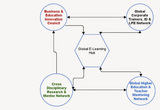
Throughout our journey into the changing nature of E-Learning, many aspects have been looked at with the view on the future path of E-Learning. Topics such as the problems associated with the continuing entrenchment of the Industrial Model of education with its supporting purposes in global education systems to re-imagining how we go about the process of assessing learning. Ideas on how the roles of instructional designers, educators, corporate trainers, administrators, innovators and subject matter experts need to change in order to harmonize with the demands of a digital age and the changing needs of learners.Credit: www.cxotoday.comWe can no longer just discuss ideas without thinking about coordinating the ideas from a blueprint to a model of application. In this post and the ones that follow, steps will be suggested that need to be taken if we are move forward in the evolution of E-Learning."The conversations need to go viral and be coordinated across the globe by all those who have a vested interest in learners becoming creators of new knowledge and skill sets that will help societies tackle real world issues in meaningful and sustaining ways." A culture of innovation will remain just a "buzz phrase" if bold but necessary steps are not taken within a global context. So, the purpose of the following steps is to challenge instructional designers, educators at all levels, corporate trainers, administrators, edupreneurs, innovators, CEO's and subject matter experts to promote conversations within their spheres of influence. The steps will provoke what I would term "healthy controversy" because we all need to face the truth and do some careful introspection as to barriers that exist in our own professional practices and confront them by imagining better paths.Building the Future of E-Learning : Establishment of Global E-Learning PortalsAs mentioned above, there is a growing need to coordinate or harmonize E-Learning efforts simply due to the fact that every day more and more E-Learning offering organizations both private and public are coming on stream all over the world without any unifying vision of what E-Learning should look like for the future of our societies and how the needs of learners can be addressed using available resources in the most efficient manner. This feeling of the lack of direction has prompted some to at least suggest a first step as was outlined in a posted "Manifesto of E-Learning".Credit: www.globalnetworkingshow.comWhat I am going to suggest is a concept of creating six "global e-learning portals" which would be constructed to serve the needs for E-Learning across the globe. Each E-Learning portal would serve the E-Learning needs of a designated family of countries. Each portal would be made up of the following elements:Global E-Learning HubBusiness and Education Innovation CouncilCross Disciplinary Research and Mentor NetworkGlobal Corporate Trainers, Instructional Designers and Learning Principle Expert NetworkGlobal Higher Education and Teacher Mentoring NetworkThe actual description of these elements I will detail in later posts but what is of great importance are the collaborative relationships that will be established among these elements and between different portals.What I have suggested above should prompt a number of questions in the reader's mind such as:What criteria would be used for creating the portals and choosing which countries should belong to each family of countries?What happens with countries who are just in the early stages of E-Learning and still face challenges with regards to infrastructure? (I think that what I will propose for this challenge will surprise you;) )Where does corporate culture fit into this proposed portal development and in what ways?How will this help create a culture of innovation that is global in context?In the next post, I will explain the elements of the portals and their relationship to each other. I will also touch on the need to seek an unified vision for E-Learning and a re-imagined purpose for educating 21st century students now and in the coming future.
Ken Turner
.
Blog
.
<span class='date ' tip=''><i class='icon-time'></i> Jul 16, 2015 08:10pm</span>
|
|
In the last post I suggested to you that there is a growing need to take prudent steps to try to bring order and direction to E-Learning. Given that a growing number of organizations offering E-Learning are coming on stream each day, the continuing exponential growth of technology use and the desire in both the business sector and education sector for the development of a culture of innovation, we are reaching a "critical mass". At this point we will either continue down a path using a fragmented vision for E-Learning or we will create a new path with the goal of establishing a global consensus with regards to a shared, unified vision, agreed upon but adaptive standards of practice and a global collaboration of all stakeholders in their roles to make valued contributions to the realization of a vision that they all agree with. As the business community should recognize, the education of learners to become creators of new knowledge and skillsets translates into employees who have the right skillsets to grow innovation within their communities.These are the conversations that need to go viral and they must culminate in the building of collaborative relationships.Credit: www.trutower.comSix Global E-Learning PortalsWhat I am about to suggest comes with a number of disclaimers:This is conceptual and its purpose is to get you to become involved in useful conversations as you consider the possibilities. It is not my intent to suggest that these are THE configurations and the only ones to consider. These concepts are the product of my thoughtful engagement with E-Learning.The titling of these portals again are open to revision but I think you will also discern my thinking behind their choice.The composition of the families of countries are again not something that I intend to dictate but I would welcome the thoughts of others as to other pertinent criteria to be considered in the choice of participants in each global E-Learning portal.Portal #1: The Northern Hemisphere Pacific PortalPortal #2: The Southern Hemisphere Pacific PortalPortal #3: The Northern Hemisphere Atlantic PortalPortal #4: The Southern Hemisphere Atlantic PortalPortal #5: The Mediterranean & Central EU PortalPortal #6: The Indian Ocean & Middle East PortalWith respect to the first four portals, the equator is a determining factor. Also, I am not so naive as to not recognize that the selection of which countries belong to what E-Learning portal will require cultural, political, historical,and economical relationships among them to be considered. This requires the great desire to really try to understand the world from each others point of view and be comfortable enough to discuss it to develop strong ties in developing a unified vision for E-Learning.Credit: www.entrepreneur.comThe Elements of the Global E-Learning PortalsThe following diagram is roughly designed to explain the collaborative relationships between the elements:I have been told by my colleagues that it is wise to chunk information for learners and so I will follow their advice and post the continuing description of each of these elements in my next post......
Ken Turner
.
Blog
.
<span class='date ' tip=''><i class='icon-time'></i> Jul 16, 2015 08:09pm</span>
|
|
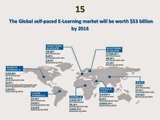
The diagram that I posted in the previous post was designed by me to visually illustrate not only the parts that I think should make up each portal but also the collaborative relationships that should exist.The focal point in each portal is what I would call a Global E-Learning Hub.Global E-Learning Hub: As the name implies, this is the main focal point for the portal. Within each portal there are two types of countries within the context of online learning. There are countries who have a well developed infrastructure that supports high speed Internet access and already have a high percentage of their population that not only have access but use the Internet as a regular part of their daily lives and then there are countries that are at various stages of developing the needed infrastructure and only the professional disciplines use the Internet on a regular basis." How do we overcome inequity in order to make E-Learning accessible to greater percentages of have not countries?"I would approach this question from two points. First, I would draw your attention to the analogy of the mentor/ apprentice construct of the trade guilds of the 13th -17th century . The mentor or master craftsman had skillsets that were predicated on striving for excellent quality in their craft. The same is true of those countries today who have learned what the pitfalls of establishing appropriate infrastructure for Internet access are and also for developing effective E-Learning programs and know, through experience, how to streamline and customize the process. The apprentice would be mentored by the mentor until they would reach the stage of being what is called a journeyman. Applying this construct to the countries in various stages of development for the purpose of E-Learning, we could see an important mentoring relationship develop. For this reason, I would suggest that each Global E-Learning Hub would be established in countries that are advanced in their establishment of infrastructure and E-Learning development. Those countries within the portal that are in various stages of development, I would label as "protege nations" and they would come under the direct mentoring of the established nations when it comes to E-Learning.The second point I would approach this from is a business perspective. Obviously, there is cost in every development that we attempt that requires innovative approaches. "What is the role of the corporate community and what ROI and other benefits can be expected from such a plan?"Any 21st century business hoping to continue to grow in the area of education and especially online education has every right to ask about the potential of a return on their investment in online education. Based on economic predictions, the following would needed to be seriously considered.Credit: www.etutorworld.comCredit: www.dazeinfo.comWhat we can discern from the above data is that from a business perspective, we can see where the areas of predicted growth in Internet use and E-Learning will be in the future if we are able to bring order and form to E-Learning within a global context. From a business perspective, there are many opportunities to lead in innovation rather than follow when there is a unified vision and purpose to what we are trying to accomplish.Next.... What exactly is the function of a Global E-Learning Hub?
Ken Turner
.
Blog
.
<span class='date ' tip=''><i class='icon-time'></i> Jul 16, 2015 08:09pm</span>
|
|
One of the key elements to the development of effective Global E-Learning Hubs is that their guiding purpose should be to develop purposeful networked relationships with all the stakeholders who desire to make the learning experiences of today's learners and tomorrow's learners a true reflection of what "life-long learning" was meant to be for all people regardless of their station in life. With that in mind, the following are the characteristics that I would envision such a hub should have and I am open to suggestions:Learning Community: In order to promote "life-long learning" for all people who are part of the family of countries of a specific portal, the E-Learning Hub should be the place where people can receive guidance in developing a individualized learning plan that fits their future goals as citizens of their respective countries. This is where they will be able to feel connected to other people from their family of countries socially, emotionally, spiritually and intellectually. It is a place where regardless of your station in life, you enjoy equity with all other learners because you are guided by one vision. This is also the place that when they log in, they may access the learning experiences that are required in order to satisfy the needs of their individualized learning plans. Easy access to open collaboration with others in this learning hub will help promote community. Professional Collaboration and Innovation Community: The Global E-Learning Hub is also the place where professional instructional designers, innovators, educators, trainers get together to design learning experiences for learners. It is here that cross disciplinary learning is a guiding force in the design of learning experience. The work that is prototyped is then shared with two networks: (a) Global Corporate Trainers, ID and LPE Networks and (b) Cross Disciplinary Research and mentor Networks. The purpose of this sharing is to have the work discussed within the framework of current global business needs and the needs of the scientific disciplines. Recommendations for change and innovation may then be made to the respective networks and/ re-thinking of the prototype efforts. (More will be detailed about these networks in followup posts.)Student-Mentor Relationships: This is the place where students are linked up with the Cross Disciplinary Research and Mentor Network. As students progress through their individualized learning plan, a learning profile that details their goals and progress is continually updated and detailed. The student is requested to give permission for their profiles to be made available to this network. A mentor from the scientific/arts disciplines is matched up with the student based upon the student's goals and also the talents and aptitudes of the student. The purpose is for the mentor to develop a guiding relationship with the student to make sure that the student's efforts lead to growth. The mentor will also be part of an assessment team who evaluate students' efforts in their courses, offering a voice from the point of view of their respective disciplines.Credit: www.buildforsearch.comMark Zuckerberg has the mission right. In E-Learning, we not only have to take this mission on but go much further in the goal of bringing order and form to a noble enterprise such as life-long learning.Next..... Looking at the the other collaborative networks that should have a relationship with the Global E-Learning Hub
Ken Turner
.
Blog
.
<span class='date ' tip=''><i class='icon-time'></i> Jul 16, 2015 08:09pm</span>
|
|
It would be a gross understatement to say that the global corporate community has a stake in promoting and nurturing the seeds of innovation within their organizations. The daunting question that they face is:" How do we institute innovation within our business organization without disrupting what we already have established and is showing a good ROI within our given market? We don't want to lose clients or market share."The important understanding is to avoid the extreme positions on the issue. At one end is the position that we do not try to innovate and we remain doing what we always have done.This approach of pretending that innovation is not a path to follow is one of the reasons that companies such as Kodak are no longer with us. On the other hand, there is no doubt that "full on" innovation on a large scale is disruptive for a company that could place a company in just as a precarious position as Kodak was in except for a different reason.Credit: www. frankdiana.wordpress.com The disruption due to innovation will not be reserved to one sector alone but will be similar to dropping a stone in a large pond. The ripples act on objects in that pond to create a chain reaction so that one reacting event then triggers other events which in turn become stimuli for new events.Within a business organization, a vision is needed to deal with the seismic changes that will impact a business. The way to do this is to be proactive instead of reactive.An 80/20 SolutionIn order to avoid taking extreme positions on innovation, one suggested approach is a 80/20 solution. This means that 80% of the business efforts goes towards maintaining and growing the services and products that are the strengths of the business's brand. The 20% is a part of the company that is created and devoted to creating conditions and protocols needed for innovation to grow and become a natural business thought pattern for the company. This means that the use of blended learning for its employees as a means of creating collaborative, problem solving and innovative thinking becomes the goal. In establishing such a focus, designated resources and funding should be planned for.Credit: www.blogs.forrester.comTo achieve useful collaboration where innovative ideas can flourish, there must be a forum where groups can present such ideas where decision makers hear and discuss the possibilities. I refer you back to the case of Kodak and why it faltered as described in the Forbes(2012) article. The following quote is worth noting:"...Historically, Kodak was built on a culture of innovation and change. It’s the type of culture that’s full of passionate innovators, already naturally in tune to the urgency surrounding changes in the market and technology. It’s these people - those excited about new ideas within your own organization - who keep your company moving ahead instead of falling behind. One key to avoiding complacency is to ensure these innovators have a voice with enough volume to be heard (and listened to) at the top..." (Forbes, 5/02/2012)The Global Business and Education Innovation CouncilIn order for a business to create that 20% devotion to innovation that engages employees in putting forth innovative ideas, I am suggesting that the creation of a council made up of business leaders who are decision makers in their respective sectors is worth considering. The functions of such a council could be:Provide a forum for businesses to encourage new and innovative ideas by employees to be brought forward where they could be discussed openly with an understanding that proprietary concerns would need to be addressed.Coordinate business opportunities to help developing nations within a specific family of nations develop E-Learning access that is more in line with that of developed nations. The form that this could take could range from establishing appropriate infrastructure to the creation of targeted MOOCS to address educational needs specific to a particular region.Collaborate with other councils in other portals to share common problems and seek appropriate solutions that will keep innovation moving forward. Remember! This is not an option !!Credit: www.amyrouse.net Businesses have some soul searching to do in a digital age and some questions that every business should consider are:Does the present business environment foster the development of innovation in a systemic way, starting with the engagement of employees in innovative thinking? If not then why not?Are there protocols in place that enable employees to become engaged and to collaborate in producing innovative ideas?Are the training events designed in such a way as to take into account the principles of learning for the employee? Are personalized learning profiles kept?Is there a Learning Principles Expert on staff who works with the trainer and instructional designer to create irresistibly engaging learning experiences?Do engaged and innovative thinking employees have a forum in which they can "pitch" innovative ideas freely without fear of penalty? Next.......More about the Cross Disciplinary Research and Mentor Network
Ken Turner
.
Blog
.
<span class='date ' tip=''><i class='icon-time'></i> Jul 16, 2015 08:09pm</span>
|
|
Detecting and Solving Real World ProblemsCredit: www.a2ru.org Cross disciplinary learning is an approach to learning that suggests that when we need to find and solve real world problems, that no single set of skills will enable us to detect, analyze and solve problems in the 21st century.Paul Jeffrey (2003) in an article titled: "Smoothing the Waters: Observations on the Process of Cross Disciplinary Research Collaboration" very aptly stated:"...A central motivation for research funders to support studies that consider the contributions of more than one disciplinary field is the fact that real world problems do not come in disciplinary-shaped boxes. Indeed, national research policies lay increasing emphasis on problem oriented research, which requires the crossing of disciplinary boundaries..."PISA (Program for International Student Assessment) recognizes that the world has changed and that the compartmentalization of subjects that was a product of the industrial model of education no longer fits and the globally focused organization, OECD (Organization for Economic Co-operation and Development), supports this position.Credit: www.pisa.oecd.orgIn 2003, PISA recognized that the world was changing and that the way that learners needed to solve real world problems also had to change and take on a cross disciplinary format.Credit: www.pisa.oecd.orgIn its progression it is worthwhile to point out that the emphasis in 2015 is collaborative problem solving that not only involves the use of a computer but involves collaboration with other students, using cross disciplinary skill sets that are drawn from the scientific and arts disciplines. The country of Finland, as stated in an earlier post, performs very well in the PISA standings and now has taken the step of moving away from the traditional compartmentalization of subjects in favour of a cross disciplinary approach.Cross Disciplinary Research and Learning: The ChallengeOne of the points that Jeffrey makes in his article is that for many disciplines, when it comes to collaboration, "they still need to learn how to play well with others in the sandbox"!If we expect learners in the 21st century to become creators of new knowledge and skill sets that will feed innovation, we need the disciplines to develop the necessary parameters for the collaboration among themselves that is required in order to advance cross disciplinary learning. They need to lead by example and put aside the barriers of the past.This is not only something that educators want to happen. Business has stated very clearly that what they want in the way of the primary quality in future employees is that they are problem finders and then problem solvers. They want employees to be able to analyze a situation, detect potential problems and then arrive at preemptive solutions. In a digital age, learners can not be problem finders unless they have the skill sets necessary that when used together give a complete picture of the situation as it exists. This requires more than one perspective to contribute valuable data. No student can have problem changing expertise in all disciplines which means that they need to be able to access those that do.The Cross Disciplinary Research and Mentor NetworkIf we accept the growing importance of cross disciplinary learning then how do we nurture it as a way of thinking for solving real world problems for 21st century students and those who will follow them? In the Global Learning Portal, the establishment of a cross disciplinary research and mentor network is a first step in encouraging and addressing this mindset.Next........ The nature of the Cross Disciplinary Research and Mentor Network and a return to the Mount Everest example
Ken Turner
.
Blog
.
<span class='date ' tip=''><i class='icon-time'></i> Jul 16, 2015 08:08pm</span>
|
|
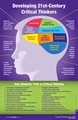
If we accept the idea that more and more disciplines are become less and less compartmentalized and are moving towards more cross disciplinary approaches with open collaboration, then the question that we need to ask:"What must we do to help learners transition from the compartmentalized thinking about knowledge that has been the driving force in their education under the old model of education to a new way of cross disciplinary thinking?Perhaps an even more telling question that should also be asked is:"How do we as educators, corporate trainers, instructional designers and even CEO's, make the transition ourselves in our professional practices?"Credit: www.london-nerc-dtp.orgCross Disciplinary Skill Sets Needed If our goal is to teach students how to solve real world problems in effective and collaborative ways, we need to address the question as to what skill sets does a cross disciplinary learner need to develop and nurture in order to accomplish the goal. Certainly the following key cognitive skills are standard requirements:Intellectual Curiosity Reasoning Problem Solving However, these skills were also standard requirements under the past way of thinking. What changes?Intellectual Curiosity: It is not enough to be able to engage in scholarly inquiry and dialogue, learners must also be able to determine while working on the web who has the most credible voice to speak for the discipline in question. Engaging in dialogue with anyone who calls them self a "guru" without using thoughtful discernment is like walking into a minefield and hoping the mines are where the experts think they are.Learners need to have access to professional forums and need to learn to listen to conversations. They need to be willing to probe and test what is being said.In the Cross Disciplinary Research and Mentor Network, the professionals making up the network would have a responsibility of providing such a forum and making it intellectually accessible to learners. Reasoning: It is a basic requirement that learners have the skill of being able to consider the arguments and conclusions of others as well as being able to construct well-reasoned arguments. However, in the support of this skill, they also need to be able to determine what online databases and other sources of information will yield the most reliable and authentic data. They need to be able to collaborate with peers and professionals in order to produce compelling and defensible solutions to problems that they are tasked with.In the Cross Disciplinary Research and Mentor Network, learners would have a forum to present arguments dealing with problems they are tasked with and would expect to be challenged by the professionals there. Learners would need the skill to collaboratively re-think arguments when evidence gives warrant to it.Problem Solving: Problem solving is the very heart of what we are trying to accomplish with learners from a cross disciplinary perspective. Under this new way of thinking, certain skills are paramount: Students need to be able to analyze a real world problem and determine what skill sets are required in order to get the most accurate picture of the problem.Credit: www.content.dodea.edu2. Students need to be able to collaborate with others both peers and professionals in creative ways. Divergent thinking skills would be encouraged in arriving at multiple solutions to a real world problem. This skill was a trait that the old model of education said was only possessed by a few people. Recent cognitive neuroscience research now has shown that the "Right Brain-Left Brain" theory was wrong.Credit: www.imustafapolat.wordpress.comThe mentor network becomes instrumental in nurturing learners and encouraging them to thinking outside the box as a standard way of approaching real world problems.The Cross Disciplinary Research and Mentor Network:Other ResponsibilitiesSome of the responsibilities of this network have been mentioned above. Some other important roles that these professionals could play are:Work with educators, corporate trainers, instructional designers and game designers in the design of irresistibly engaging learning experiences that would then be provided to the Global Learning Hub.Collaborate with educators, corporate trainers, instructional designers and game designers in the design of assessment tools and also take part in the assessment of the learner's efforts from the perspective of their discipline. This would involve them in providing ongoing feedback to the learner and especially to mentor-learner groups.Willing to identify students with the right aptitudes and skills for their specific discipline and set up mentor matches.The transition for both learners who will become the creators of new knowledge and skill sets will take time and in order for this to happen, we need to look at real world problems in new ways.Next... Revisiting an example of a real world problem but this time from a cross disciplinary approach.
Ken Turner
.
Blog
.
<span class='date ' tip=''><i class='icon-time'></i> Jul 16, 2015 08:08pm</span>
|