Blogs
|
When we think of resourceful people, we tend to look to the past, picturing our parents and grandparents building rich lives with what little they had at hand. But resourcefulness has become an important quality once again, something we need to instill in younger generations. With so many luxuries in...The post The Ultimate Lesson: Teaching Your Students to Be Resourceful appeared first on InformED.
Alltop
.
Blog
.
<span class='date ' tip=''><i class='icon-time'></i> Jul 19, 2015 12:34pm</span>
|
|
The moment I received my college diploma, I knew I was going to enter the workforce remembering at best a third of what I’d learned. Nearly everthing I’d read or heard about Existentialism, British Imperialism, and Japanese wood block prints would slip from my memory and flutter away with every...The post Why Straight-A Students Haven’t Learned As Much As You Think appeared first on InformED.
Alltop
.
Blog
.
<span class='date ' tip=''><i class='icon-time'></i> Jul 19, 2015 12:34pm</span>
|
|
Multiple choice and true or false questions have their uses, but higher order questions take learning to the next level. Rather than giving simple one word responses, your learners must think abstractly and search their knowledge banks to arrive at the correct conclusion. In this article, I’ll delve into the basics of higher order questions, as well as the various types you can use in your online course. Finally, I’ll give you 4 tips on how to properly integrate them into your eLearning experience.
This post was first published on eLearning Industry.
Alltop
.
Blog
.
<span class='date ' tip=''><i class='icon-time'></i> Jul 19, 2015 10:34am</span>
|
|
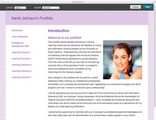
With the recent upgrade to Blackboard Learn 9.1 April 2014 release at Northern Illinois University, we enabled the Blackboard Portfolio tool, designed to help students maintain documentation of their education, samples of their work, and evidence of their skills. ePortfolios, such as the Blackboard Portfolio, contain an organized collection of artifacts (for example, assignments, photos, video) as evidence of accomplishments.
To help students and faculty get a better feel for the layout options as well as media elements that can be included in a Blackboard Portfolio, I created the following sample Blackboard Portfolios to demonstrate the layout and organizational options available:
Sample Layout 1: Left Vertical Navigation
View portfolio using layout 1
Sample Layout 2: Right Vertical Navigation
View portfolio using layout 2
Sample Layout 3: Right Navigation Navigation Box
View portfolio using layout 3
Sample Layout 4: Top Horizontal Navigation
View portfolio using layout 4
The layouts shown above all use the same default color scheme, which can be customized in any layout to a wide variety of color palettes.
Here are a few additional screenshots shared by Blackboard showing a few additional sample portfolios.
More Blackboard Portfolio Resources
The NIU Faculty Development and Instructional Design Center is developing a comprehensive set of documentation, guides, and tutorials for faculty and students in their use of the Blackboard Portfolio tool. Visit niu.edu/blackboard/students/portfolios for more info.
Has your institutional implemented the Blackboard Portfolio tool? Leave a comment and let’s connect.
Jason Rhode
.
Blog
.
<span class='date ' tip=''><i class='icon-time'></i> Jul 19, 2015 08:06am</span>
|
|
You will be well served by making a habit of drafting a rough scheme of the course before starting any actual work on it. This draft should outline the main pages of the course, and will aid you all the way throughout the course creation. eLearning professionals call such drafts "storyboards" and use them extensively. Let’s take a closer look at what storyboards are, and how you can use them to start building better courses in a more efficient manner.
This post was first published on eLearning Industry.
Alltop
.
Blog
.
<span class='date ' tip=''><i class='icon-time'></i> Jul 19, 2015 07:34am</span>
|
|
It’s time to reimagine everything about what you believed education to be. 300 schools and universities joined us for the launch of the Digital Education Show. This year will see double that figure packed into the Keynote Theatre in Hall 1 at the Dubai World Trade Centre.
This post was first published on eLearning Industry.
Alltop
.
Blog
.
<span class='date ' tip=''><i class='icon-time'></i> Jul 19, 2015 07:34am</span>
|
|
Follow on Twitter as @4OnlineLearningPatricia Pedraza-Nafziger, BellaOnline's Distance Learning Editor reports, "There are a variety of learning theories that exist today. Each conceptual framework is based on the emotional, cognitive, and environmental influences on how a particular group of individuals may understand and learn."Photo: FreeDigitalPhotos.netFeminist learning theory places women's issues and those related to gender at the center of educational discussions. Topics surrounding politics, social relationships, inequality in the workplace, and philosophies are all main points of interest. However, technology has had a direct effect on changes in learning theories, particularly for women. Women have the desire to learn and grow, so much so that the number of female college students in the United States exceeds the number of male students. Women have also surpassed men in the number of bachelor’s degrees earned, and their achievements in master’s and professional degrees are not too far behind. However, the types of institutions women earn their degrees vary considerably from those of men. Elite colleges tend to have a higher number of males than females enrolled. One reason for this is that women have a propensity to enroll in lower-status schools that offer part-time attendance programs, which may better accommodate their lifestyles. Their demand for convenience and flexibility also flows into career aspirations, to fulfill both family and professional responsibilities in the most efficient and convenient ways possible.Read more... Source: BellaOnline
Alltop
.
Blog
.
<span class='date ' tip=''><i class='icon-time'></i> Jul 19, 2015 07:34am</span>
|
|
"The Department of Basic Education (DBE), under the leadership of Minister Angie Motshekga is committed to strengthening the quality and participation of Mathematics education in all schools across the country." continues AllAfrica.com. Photo: FreeDigitalPhotos.netIt is not acceptable for any public ordinary high school not to offer Mathematics to learners. In a democratic South Africa much has been done to transform the education system, we are at a point where almost all schools offer mathematics, and great strides have been made to reintroduce Mathematics in the Further Education and Training (FET) Phase (Grade 10, 11 and 12). The DBE is committed to supporting all schools in this endeavour.As part of the strategy to increase learner participation and performance in the MST, the DBE developed the Mathematics, Science and Technology (MST) Sector Plan pronouncing national and provincial targets. The targets are a deliberate move by the DBE to increase the number of learners taking Mathematics in order to meet the National Development Plan (NDP) targets of increasing the number of learners eligible for bachelors programme with Mathematics and Science to 450 000 by 2030. Setting of targets revealed that there were schools in the country that had dropped the offering of Mathematics in preference to Mathematical Literacy. The Audit conducted identified 353 of such schools. These schools were not offering Mathematics in Grades 10-12. In verifying these numbers, the analysis of the 2013 DBE EMIS data confirmed that the number was not 353 but 227. The reasons for the differences in numbers were that some of the schools had been merged as part of the rationalisation process.The Minister issued a directive actioned by the Acting Director General, that all public ordinary schools had to offer at least one Mathematics class from grade 10. Through the various interventions of the DBE the number of schools not offering mathematics has already been drastically reduced, with many of the schools already as early as 2015 reintroducing mathematics. The DBE is working closely with the remaining schools to ensure that they are able to implement the directive come 2016.A Plan has been developed for monitoring and support Curriculum Coverage (2015-2019):Schools which are being supported, offering Mathematics in Grade 10 for the first time will receive special support.Trained teachers will also be supported on-site and guidance will also be provided in their classrooms, in addition to scheduled, pre-training diagnostic assessment and remedial, group training sessions, including post-training impact assessments of teachers and learners.Read more... Source: AllAfrica.com
Alltop
.
Blog
.
<span class='date ' tip=''><i class='icon-time'></i> Jul 19, 2015 06:34am</span>
|
|
Follow on Twitter as @drdouggreen Dr. Doug Green, former teacher of chemistry, physics, and computer science writes in a guest post via Starr Sackstein, teaches writing and journalism in New York City, "The only way to close achievement gaps is to slow down the fast learners."Compared to other disciplines, mathematics has a much smaller number of concepts to learn. As a result, the students with high math ability are often needlessly held back. They also run the risk of boredom during math classes.At the other end, students with poor math skills get dragged on to new concepts before they master current lessons. Since much of math is hierarchical in nature, not mastering early lessons can make later lessons impossible to comprehend. This is less of an issue in other content areas.While other lessons often rely on background knowledge from previous lessons, students who don't master previous lessons can still appreciate new material to some degree.The one-size-fits-all single pace approach that many teachers still use is, therefore, more of a problem in math class than elsewhere. By the time middle school rolls around, most schools sort students into advanced and regular math classes. This is done so that the top students can take some variation of algebra in eighth grade for which they receive high school credit.It allows those that wish to take four more years of math during their high school career for a total of five credits. The final credit is usually some variation of calculus that may include an Advanced Placement class, at the end of which is the national AP exam in May. Catching the Calculus TrainStudents who take calculus in high school are well positioned to major in engineering or physical science in college. Students who miss the eighth grade algebra train most likely won't be able to take calculus their senior year, and will be at a huge disadvantage if they want to pursue engineering or physical science. This so-called train actually leaves the station for most students at the beginning of seventh grade. In order to take what amounts to math 9 in eighth grade, teachers have to cram math 7 and math 8 into the seventh grade year. This requires schools to identify candidates for the advanced math program near the end of sixth grade. In my case, my school gave some standardized tests to sixth graders. As fate would have it, I was absent for these tests. Rather than ask the teacher if I was advanced math material, I was dumped into the seventh grade section that was one notch above the class that contained students with major cognitive issues. This meant that I couldn't take calculus my senior year, but that didn't stop me from majoring in chemistry. During my calculus I class in my freshman college year, the teacher asked the class if they had calculus in high school. As I looked around I noticed that I was one of only two students who didn't raise his hand. Ouch! I struggled, of course, but managed to graduate none the less. My lack of calculus in high school, however, affected not only my math grades but grades in physics and physical chemistry. This meant that my career options did not include a PhD in chemistry. I decided to pick up a masters in education and go into teaching. I guess I can't complain as I have enjoyed a great deal of success as an educator...Top Math Students Seldom Go Into TeachingStudents who are good at math have a lot of options. As a result, few of them go into teaching. Since the US educates more teachers than it needs, education is often seen as an easy major on most campuses. This is just the opposite of Finland where you need to be in the top 10% to be accepted in a teacher preparation program and they only prepares as many teachers as they need. People who major in elementary education tend to have even lower math skills and the teacher prep programs do little to address this. If you are wondering why the Common Core math results seem to be stuck at low levels, keep in mind that a few days of staff development will not turn teachers with poor or average math skills into math whizzes. The other big problem in the math area shows up when students head off to college. This shows up to the greatest degree at the community college level. Community colleges tend to be open enrollment so anyone who wants to go and finds the money can enroll. Since these colleges know that their incoming students aren't all of the blue chip variety, they make them take placement tests in language arts and math. When I asked the math chair at my local community college how students do on the placement test, he told me that two thirds don't pass. This means that they have to take what amounts to high school math in college for which the have to pay but they don't receive college credit. Many of these same students also flunk the language arts test. What this means is that these students have very little chance of picking up a two-year degree in two years. Studies I have seen indicate that my local college is typical of other two-year schools in the US in this regard.Read more...Source: Education Week (blog)
Alltop
.
Blog
.
<span class='date ' tip=''><i class='icon-time'></i> Jul 19, 2015 05:34am</span>
|
|
This week I combined two Articulate challenges to make one conversational icebreaker. Read more...
Jack Van Nice
.
Blog
.
<span class='date ' tip=''><i class='icon-time'></i> Jul 18, 2015 10:33pm</span>
|