Blogs
|
If you’ve followed this blog long enough, you’ll remember that I’m no big fan of stock images. No, I don’t hate them - in fact I use them quite often. That being said, I think there’s significant disadvantages to stock photos - my primary gripe with them being the fact that they’re so inauthentic. People just aren’t as pretty as they look in stock images, except of course you lot that’s reading this post. And then again, they don’t strike cheesy poses. Most importantly, stock image models are so far removed from the real world that the credibility a real colleague’s photo brings just doesn’t come through with a stock photo. In my presentations and learning programs I’m using more and more of my own photography and I can imagine this could be a really useful thing for other elearning designers too.Over the next few weeks I’m going to do a few posts on basic photography that’ll help you take high quality photographs for your learning materials. Of course, I don’t proclaim to be an expert and well it’s going to take far more than my posts to be a really good photographer. I’m sure though that learning about the art and science of photography will help you develop the craft in case you have an interest for it. In today’s blogpost, I’ll show you how to select a new camera - after all, that’s a prerequisite to awesome photographs!The best camera is the one you already havePhotography geeks can keep going on and on about the best equipment. Is the A77 the best DSLR ever? Or is it the monstrous 46 megapixel Sigma SD1? Well no one cares. I for one don’t have the budget to buy the best gear on the planet. And then again the deal with photography is this - your existing equipment is good until you run up a limit. So if you have a point and shoot and you need more creative control on your images then you perhaps should get a prosumer camera. On the other hand if you’re looking for lightning fast response then you may have to choose a DSLR. Often you may be already shooting with a DSLR and you need to capture a small object with all its details. You may then need to upgrade to a macro lens. All this said, if you have to always remember - if you don’t see a problem with the results you’re getting, your existing equipment is just good enough. I am however going to tell about the different types of cameras in the market so if you did have to purchase a new one you can make an informed decision.Equipment GeekeryI like to look at cameras in three different categories. Let’s take a look at each of these:Point and shoot cameras: Compact and pocketable in size, these are the cameras that a lot of us have. I have one too. They take decent pictures and are meant for exactly what the category is called - point and shoot. Your cellphone cameras also fall under this category. Most people will say that these cameras aren’t meant for serious photography, but hey - look at these photographs from the iPhone 4! For a lot of photography, a little pocket device is adequate. The downside of these cameras of course is that they aren’t really versatile for various purposes and because of their small imaging sensors, the image quality often isn’t as good as you’d like it to be.Prosumer cameras: Prosumer cameras are a little more advanced than compacts. They essentially have similar or slightly larger sensors and theoretically are capable of producing better images. More importantly, some of these cameras allow you to shoot in the camera’s native format a.k.a RAW which gives you a lot more control to tweak your images after the fact. This apart they’re equipped with more versatile glass that can zoom into far away objects or often shoot really wide landscapes.Digital Single Lens Reflex cameras (SLRs): SLR cameras start to go into the realm of serious photography. The ability to shoot at rapid pace, to choose from a wide range of lenses and accessories and to be able to come up with high quality, tack sharp images is something a lot of photography enthusiasts prefer. Amongst DSLRs there are full frame cameras that are fitted with image sensors of the same size as good old 35 mm film. This means that if you were to put any lens on top of these cameras, your picture would be similar and true to the 35 mm film format. These large sensors help you reproduce vivid colour and detail and well that makes these cameras quite costly - anywhere between $2000 and $8000. There are also what we call crop or APS-C format cameras which have smaller sensors than the full frames and produce a cropped image in comparision to those big guns. They’re still pretty good and I own two of those. You can get your hands on one of these for as little as $450. There are also newer variants such as the mirrorless micro-four-thirds cameras and the single lens translucent (SLT) cameras. I’ll leave it to you to find out about those.If you’re looking to buy a camera for your elearning photography, I suggest you go for a DSLR. I’m a Canonista and I strongly recommend the EOS 600D as your first camera. I’m pretty sure Nikon produces good cameras too - I just don’t know about them. The advantages of the DSLR are aplently. The fact that there’s only one moving mirror which projects to an optical viewfinder, you have a WYSIWYG experience with photography. Plus you can keep adding equipment to the base system as you want to expand your photography repertoire.Beware of the mythsIf you’re buying a prosumer camera or a point and shoot, do remember that there’s a scam in the market. I call it the megapixel and optical zoom scam. You can guess what I’m referring to. Manufacturers, regardless of whether they’re well meaning or not, need to have some way to keep selling you new models of their devices which don’t necessarily add much value beyond what you already have. Don’t believe me? Check out the story of stuff. Now with cameras, technology doesn’t really change by much each month. Yet there are new models in the market every month. The one way that camera manufacturers can lure you into buying something new is by providing you a quantitative metric to evaluate your purchase. The easiest one is the megapixel count.Now remember I told you that point and shoot cameras and prosumers have very small sensors in comparison to DSLRs? Think about it. Pixels are finally dots on your final image. To reproduce these dots as they appeared in real life, you need to lay out several mini-sensors on your sensor area. Therefore as you’ll notice from the diagram above, while a DSLR sensor area has these mini sensors laid out quite comfortably, the point and shoot has them fighting for space. The more megapixels you pack into a point and shoot, the more mini sensors you need. The more mini sensors you pack in, the more squished they will be. The more squished they are, the more they’ll interfere with each other and produce poor images. So if you’re picking up a new point and shoot camera or for that matter any other camera, be mindful that more megapixels doesn’t always translate to better pictures. For all you care, you’re likely to get better pictures from a camera with a lower megapixel count!The other scam that camera companies run is that of optical zoom. Remember those numbers you saw at the store - 4x, 10x, 15x? Does a 15x camera lens have a better zoom reach than a 4x camera lens? Not really. X here signifies the ratio between the highest focal length of the camera lens, to its lowest focal length. So a camera that goes from 20mm to 300mm is a 15x lens. Now let me tell you that several wildlife photographers use the following professional lenses for super long reach:100mm-400mm; just 4x200mm-400mm; just 2x400mm, 600mm, 800mm primes which are just 1x!As you can see the x value is nothing but a hoax to make you buy a new camera and doesn’t really mean anything without knowing the focal length of the lens on the camera. Also remember that it takes great engineering to build lenses that operate at various focal lengths. This is the reason that most professional lenses are either primes or 2x or 4x. A camera lens that operates at a focal length multipliers of 15x, 18x and 30x is surely cutting corners with image quality.There’s perhaps heaps more technicalities to know about with photography. In my next post, I’ll try to clarify some of the technical jargon you’ll hear thrown around in the space. After that we’ll start getting our hands dirty with some neat stuff. Deal? See you next week then.Camera image credits: Individual manufacturers. Title photo credit: FOTOCROMO© Sumeet Moghe
Sumeet Moghe
.
Blog
.
<span class='date ' tip=''><i class='icon-time'></i> Jul 20, 2015 10:24am</span>
|
|
Over at StrategyFocusedHR, Ron Thomas put together, just recently, a rather interesting and intriguing blog post, under the suggestive heading "Once Upon a Time: Remember When We Could Tell a Story Without Slides?", that I can certainly recommend everyone reading through it, specially, if you are a public speaker, and, more importantly, if you like storytelling with a business purpose. But perhaps even much more highly recommended if you feel that slides have taken over your public speaking world and, eventually, they may have become the "crutches" for your narrative. It’s a rather thought provoking read, because, in a way, it’s going to help you challenge the way you use slides for your public speaking gigs to the point where he questions whether we should be using them rather heavily, or, instead, use them as a simple guide, but no more.
I guess at this point in time, we are all sensing what he really means and we probably have got an affirmative answer to his reflections; the fact that, whether we like it or not, we pretty much rely on telling stories by using PowerPoint presentations. And perhaps we shouldn’t. At least, we shouldn’t depend on them as much as we do nowadays. Ron is essentially launching a call for action to stop relying so much on slides and instead focus on sharing some good stories to get your messages across.
I can see his point. In fact, I have probably abused myself that Death by PowerPoint a few times already, far too many, perhaps, that I would care to remember, as I have blogged about in the past, but if there is anything that I have learned in the last 6 months or so, after having been a (keynote) speaker in multiple events, is that sooner rather than later, even you, the public speaker, will burn out from PowerPoint Overload and eventually tune out. And that’s exactly the stage that I am at at the moment. And so far, although I didn’t expect it this soon, I am enjoying it quite a bit!
More than anything because, as Ron mentions on his blog post, it’s allowed me to discover a new facet as to why I’m enjoying it so much more doing all of this public speaking at various different events that I never thought I would be able to experience again anymore. Probably because of how much automation and industrialisation we have incorporated into the overall process altogether when we do presentations that we hardly leave any room, nor space, for something that we are all, human beings, really good at: telling good stories.
That’s why, back in May, I reflected on my Google Plus profile on a new experiment that I thought would be worth while going for to explore how much further along I could bring forward my own creativity when doing presentations, so knowing how buzzing my travelling schedule would be for the following couple of months I thought it would be the perfect ground to take on that new experiment: go and present in a number of various different public events without using any slides, and just delivering my speech trying to capture my main points of interest for the audience in the shape of stories, and see how far creativity would take me along without any of those "crutches for my narrative" (i.e. Slides).
Little did I know that what eventually turned out to be quite an interesting experiment it developed into something I didn’t expect at all, to the point where it managed to break up my addiction of using slides as a way of protecting my self, my overall presence, my messages, my stories. And it was something so relatively simple, yet so powerful, that it blew off my mind when I realised about it, just as much as it does today: A new learning experience (in real time).
Indeed, there is a lot to be learned on How To Do Everything Wrong In A Presentation, as Mitch Joel would say, but there is a whole lot more to learn from doing a presentation just right and that only starts, as far as I am concerned, and based on plenty of recent experience, on how well you engage your audience. Because in most cases we don’t. I mean, how many times have we been attending a masterly presentation from a speaker only to find out that he / she has run out of time and we, the audience, don’t have a chance to engage, ask questions, share our key learnings, perhaps our very own stories, AND interact? Far too often, I would admit, and I would be guilty as charged, because I have suffered from that myself far too many times, far too often even, as a speaker. Till May 2012.
That’s when I decided that the main reason why I was running out of time in the vast majority of cases was because my stories, my narrative, were solely based on the visual aids that I was making use of, and perhaps that’s the reason why it took that long to deliver them. Yes, I do know and fully realise that relying too heavily on your slides is not a good thing, not even a healthy one, but we have to admit that we all pretty much overdo it time and time again. So the last couple months of running this experiment of not using slides in public speaking events have taught me a couple of things:
1. Not doing slides for your presentation is Ok. No-one is going to complain about it, and if anything, they would love you for it. That’s how far we have gone into PowerPoint Overload so far… What really matters is your message, your narrative, your stories, even your own charisma as an individual; basically, what you would want the audience to walk away with when you are done, and what method you use for that it won’t matter much, as long as you deliver.
2. Once you engage with your audience it’s adrenaline you just can’t ignore anymore. This was the major takeaway for me for the last few events that I have participated in, including the very last one I hosted, a full day summer course at the University of Pablo de Olavide, in Carmona, Seville, on "La Empresa y La Administración Pública en la Era de Las Redes Sociales" where I, finally, came to realise what I enjoy the most from public speaking. Not being in front of the audience, not being on stage, not enjoying that public flair, but, essentially, and that’s the kicker, learning from your audience. Because in most cases they are much smarter than whatever you could be.
That’s exactly right! That’s the new drug that I have gotten so used to in recent times that I can no longer neglect it, nor ignore it. That’s why whenever I am on my way to provide another speech I hardly ever look into putting together slides, but more I try to find out as much as I possibly can what the audience would be like, to then tame my messages, stories and narrative through plenty of scripting, mindmapping and reflection in order to meet their needs. Yes, I know it takes a whole lot more time, effort and energy, but it is totally worth it every penny you spend on such preparations. Basically, I decided that I would want to, on purpose, learn from the audience, just as much as they can possibly do from me, if not even more! Eventually, those presentations have turned themselves upside down from that masterly delivery of a speech, into something that’s just so rewarding that I can certainly encourage everyone to go and experience: open true dialogue. Utterly refreshing and incredibly reenergising.
Once upon a time, as Ron would say, I used to remember what it was like doing a presentation with slides… Nowadays, though, I prefer to be there on stage, actively learning from the audience, engaging in meaningful dialogue, sharing some terrific stories that I am sure you would all agree with me that we all have deep inside ourselves, after all, we are all born natural storytellers, and eventually finish up the presentation much more energised than when I started it in the first place. Why? Well, because right there, in the audience, there is always going to be that great leader, or leaders, who "throughout history had the power to move people by telling stories. Success is won by creating compelling stories that have the power to move people". And it looks like I have decided a couple of months back to be moved by people, as my main method of learning as a public speaker to the point that whenever I go and speak at a public event it’s no longer the audience privileged to have the presence of the speaker, but more the speaker is the privileged one to have the unique opportunity of learning from the audience through those interactions that usually happen before, during and after the session.
And that’s how I feel, and I may well be way beyond my call of duty, that we need to transform conference events and public speaking events to become truly social events where we all do what we know we can do best: share our knowledge, tell our stories, collaborate with one another, learn from each other through conversations, storytelling, open dialogue. Not sure what you would think, but I sense it’s time to re-define the way we engage as speakers with our corresponding audience(s). I think it’s time we ditch for good our masterly slides and, instead, we put to the test our masterly skills on listening, engaging, and interacting with those who we share a common passion with in the first place. And keep up with the learning curve…
After a long, much anticipated, last, I am way all up for that … and you?
Luis Suarez
.
Blog
.
<span class='date ' tip=''><i class='icon-time'></i> Jul 20, 2015 10:24am</span>
|
|
Between the last post and today, I had a great time at Thattekad - one of India's finest bird sanctuaries down south. I can't say it was the best photography tour - grey weather, rain and dark clouds never make for a good mix. I did have a fascinating birding trip, having spotted 110+ bird species during those three days. Along the way, I got some good photographs but not too many to be frank. I'm hinging my photography fortunes on the next few trips this winter - hopefully my luck will come good somewhere. Coming to the topic of today's blogpost, you may remember that in my last blogpost I'd explained how to choose a new camera for yourself. In today's blogpost I'll follow that up with what I consider the most crucial part of photography - exposure. Simply put, exposure indicates the total amount of light that your camera receives during the time that you record a photograph. When your picture is optimally exposed, you get a great picture. In photography parlance, an underexposed image is usually dark and conversely an overexposed image is usually too bright and white. Well, not all the time - but we'll come to that later. Let's first look at the three different parameters that actually affect the exposure on your image.ApertureAperture on your camera lens indicates how wide your lens is open when receiving light. The wider open your lens, the more light it can take in - the narrower the opening, the lesser the light. Simple? Your camera indicates your aperture setting using what we call an f-stop. The confusing thing to remember though is that the larger the number, the narrower the aperture. This is because we express aperture as a fraction of the focal length. f/1.8 therefore is wider than f/5.6. Now why would you like to control aperture? Firstly of course, a wider aperture gives you more light for your frame which is always a good thing. That aside, adjusting your aperture gives you the opportunity to play with the depth of field on your picture. Depth of field refers to the depth of the picture after which the camera blurs out the details. Remember seeing those pretty portraits where the background is a beautiful blur? This is a result of playing with the aperture. So here's the trick - a wide aperture will usually result in a shallow depth of field. A narrow aperture on the other hand will capture a large part of the image in a sharp fashion. So for portraits you can go with wide aperture. With landscapes and interiors you could go with a narrow aperture. Take a look at the above pictures for reference.Shutter SpeedShutter speed refers to the amount of time a camera's shutter is open when you capture an image. Think of a tap and a glass to fill. If you opened the tap fully your glass will fill in a jiffy. On the other hand if you just let the tap drip a drop at a time, it'll take you much longer to fill the glass. This is the relationship between aperture and shutter speed when it comes to aperture. If your tap of light is fully open you can go with a fast shutter speed. If your tap of light is down to just a drip you'll need a longer shutter speed to fill your glass of light. Simple?Here's why you may want to control your shutter speed. When you shoot at a high shutter speed you freeze action in that split second. When you shoot at a lower shutter speed you get the opportunity to capture details in the poorly lit scene or capture motion using creative blurs - like the silky smooth waterfall in the above picture. The above pictures will help you see how shutter speed can help you capture different kinds of photographs.ISO or Sensor SensitivityWhat if your tap was down to a drip and you still wanted to fill your glass quickly? You'd have to cut some corners right? You could potentially fill the glass with sand such that it takes only short amount of time to fill the glass! Yes, yes you make the water dirty - but you do fill the glass, don't you. This is how ISO works as balancing factor for exposure. ISO defines how sensitive your imaging sensor is to available light. So ISO 100 indicates low sensitivity while ISO 6400 indicates very high sensitivity. Where could adjusting the ISO come in handy? Think about a situation where you're shooting a cityscape at night - handheld. If you shoot at low ISO, you'll need a very slow shutter speed. Here's the catch - slow shutter speeds introduce blur because very few people can keep their hands steady for more than 1/60th of a second! In such a situation, if you shoot at ISO 100 you just won't get a sharp picture. On the other hand you can go with a sensitivity of ISO 800 and you'll most likely get a sharp picture.Now here's the other catch - remember the sand in the glass? The higher the ISO, the lower the quality of your image. In the film days you'd notice this in the form of what they called film grain and in the digital world you see it in the form of image noise. So the bottom line is this - a high ISO is the arrow in your photography quiver which you want to use only if absolutely necessary.How do you control Aperture, Shutter Speed and ISO?While most serious cameras have a manual mode where you control everything, it's usually not the best idea unless you're shooting in a very controlled, studio type setting. You're best off controlling either Aperture or Shutter speed and letting the camera control the other. If you're using a DSLR, then you'll perhaps know the modes to control these as Aperture priority (A on Nikon, Av on Canon) and Shutter priority (S on Nikon, Tv on Canon). All you need to do is pick the parameter you want to control, select the ISO you're willing to live with and let the camera help you along from that point.What mode do I shoot on? Well as most photojournalists would say, "Aperture priority, f/9 and stay there!". Well not quite - I select modes based on the need of the photograph, but for the most part I shoot in Aperture priority since that allows me to control how much of the picture stays sharp and how much blur I need. A Photo Case Study - Ceylon FrogmouthsFor the last year or so, I've been waiting to see the Ceylon Frogmouths. These birds are some of most elusive species to spot in the wild. In fact, I was looking up Wikipedia and found that from the Batrachostomus genus only bird that they have photographs for, are the Ceylon Frogmouths. These birds have excellent camouflage. They're hardly 23 cm in size and they choose their homes in dark, thickly forested, leafy areas. Since they look like dry leaves and branches they completely blend in. You could be a meter from them and still not be able to see them. The reason why we can actually find them in some spots of India is particularly because some birders know their roosting spots and end up guiding folks like me. Now to this photograph - the tropical forest was very dark. We were struggling to see the frogmouths with naked eyes - through the camera it was even tougher. I proceeded to shoot at the widest aperture my camera offered. However at f/5.6, the shutter speed of 5 seconds was just unmanageable with a big lens, handheld. I kept upping the ISO until I reached a shutter speed of 1/30th of a second and then pressed the shutter. At an ISO of 6400, the picture isn't as sharp or as high quality as I'd like it to be, but I want to think it was the sharpest I could have got in that environment. I could have perhaps gone to ISO 12800, but that would have brought down the picture quality even further. In any case I hope this adventure of a photograph helps you see how ISO, shutter speed and aperture play together to help create the right image.I hope today's blogpost gives you a basic sense of exposure for your photographs. I am mindful that I'm not focussing on elearning-only situations with my examples and that's deliberately so. I'm guessing that if you can use your camera effectively in a life situation, the ability to do so for elearning will come automatically. In the next blogpost, I'll touch upon some simple tips related to colour and format choices in photography. Stay tuned until then - cheers! Is there other stuff you'd like me cover on this blog? Let me know by dropping your comments on this post.© Sumeet Moghe
Sumeet Moghe
.
Blog
.
<span class='date ' tip=''><i class='icon-time'></i> Jul 20, 2015 10:24am</span>
|
|
If you have been reading this blog for a while now, you would know how one of my favourite terms / concepts around Social Business that I have grown to become rather fond of over time, to the point where not only do I talk about it on a regular basis, but I also wear it extensively, is that one of Wirearchy ("Redarquía" in Spanish, for those who may be wondering…), that my good friend Jon Husband coined a few years back and that, still today, in 2012, is now more accurate than ever. In case you may not have heard about that concept just yet, allow me to offer over here Jon’s description of it, as an introduction of what the workplace of the future will be all about… starting today: networks and communities, vs. traditional hierarchies and rigid structures, getting work done.
Indeed, as Jon himself wrote over 13 years ago: "In an increasingly interconnected world, a new organising principle is emerging…"
"Wirearchy is a dynamic two-way flow of power and authority based on:
Knowledge
Trust
Credibility
A focus on results
enabled by interconnected people and technology"
I am not sure what you would think, but those are some very powerful messages that surely have got enough traction to provoke a change of our mindsets and a shift of habits of how we have conducted business over the last 40 to 50 years, towards a working environment based on merit, trust, confidence, honesty, values, openness, transparency, authenticity, agile, reputation, effectiveness, efficiency, learning, empathy, etc. etc. A shift that, if you notice, has got very little to do with technology, specially, social networking tools, since they are just that, enablers to help you achieve certain tasks and eventually it’s all about that cultural mayhem that happens when ideas take over hierarchies.
Fascinating stuff, if you come to think about how wirearchy is slowly, but steadily, challenging AND changing the way we do work, questioning even whether we do eventually need managers after all or, perhaps, we should start embracing the move towards nurturing and cultivating the next generation of Leaders, as I have recently blogged about over at "Social Business - Where Bosses and Managers Become Servant Leaders", who will master wirearchy vs. hierarchy alone. And this is where ideas kick in…
But instead of me explaining how critical and paramount ideas, and sharing of ideas, is in this whole concept of Wirearchy, as an integral part of Social Business, I’m going to take the liberty of pointing you folks to a video clip that I bumped into from a recent tweet from Vala Afshar, that will be worth your time watching it through altogether:
Steve Jobs talks about managing people [video] youtu.be/f60dheI4ARg @allthingsd #leadership #management
— Vala Afshar (@ValaAfshar) July 23, 2012
Indeed, in a little bit over two minutes, here’s a rather short, sharp, but superb interview snippet with Steve Jobs (Yes, I, too, miss him more than whatever I ever thought I would!!) where he shares that absolutely inspiring epiphany of how ideas will keep fighting the hierarchy till they eventually overcome it to establish a new status quo of how organizations get work done in the 21st century and how, inevitably, we no longer even have a choice, regardless of what some other groups out there may be stating as otherwise. If not, judge for yourselves, here’s the embedded code from the interview, so you can play it right away:
Yes, I know and do fully realise how Steve doesn’t mention the concept of Wirearchy per se, but after you watch it you will see how close he gets to it when he explains fully a good number of its key concepts: like collaboration, like startup mentality (Disruptive not only bottom up, but top down alike, too!), like teamwork, like trust in those who you work with to deliver their part, like autonomy, like intrapreneurship, like problem solving, like lowering the centre of gravity and decision power, like, essentially, that wirearchy that runs through the veins and the DNA of any business as part of that soft and hard tissue that makes a whole unit: The Brand. The People. No longer a hierarchy on its own, because as Steve himself quotes, "You have to be run by ideas, not hierarchy" and that’s probably as essential as it would get for all of those businesses out there currently embarking on that so-called journey of becoming a Socially Integrated Enterprise, i.e. a successful Social Business.
Who would have thought that one of the most perceived risk averse companies towards the whole concept of Living Social has been driving such social business transformation deep at its roots for themselves and for a good few years already without relying too much on social technologies to make it work? I am not sure what you would think, but I bet that from here onwards we are going to start questioning, and rightly so!, the status quo of how much hierarchy should be trumping ideas overall to the point of drowning them altogether vs. giving them a fair chance, through Wirearchy, to keep up a good fight and help redefine the workplace of the future according to how work gets done nowadays… through networks and communities, of course. Where else?
Luis Suarez
.
Blog
.
<span class='date ' tip=''><i class='icon-time'></i> Jul 20, 2015 10:24am</span>
|
|
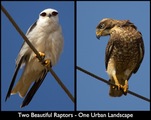
I've always thought of this blog as just a place to air my thoughts. Turns out it's a bit more than just that. I'm sure some of you've noticed my absolute laziness in posting to the blog in the last couple of months. While there are reasons for it, I also feel really grateful about the number of people that emailed or DM'd me on Twitter admonishing me for my laziness. I guess, this blog does mean a little more than a place for me to ramble. So let's see if I can turn over a new leaf and do a bit of a reboot on this site. For starters, let me get back on my weekly posting schedule - and if nothing I'll do my best to post a short update. Today is unlikely to be short though.This past month I was on a 1000km door-to-door drive from Bangalore to Pune. On the way, I was able to photograph two beautiful raptors - a black shouldered kite and a white-eyed buzzard. Note this - I wasn't on a photography trip and most people won't be looking for photography opportunities on Indian highways. All said and done though, the opportunities did present themselves and I have some decent photos to show for. Photography is quite like that - readiness is a big strength. They say that luck is when preparation meets opportunity and this couldn't be truer for photography. If you want great photographs you need to have a camera with you. If your camera is always at home, you'll miss a lot of photo worthy moments. And mind you, it doesn't always need to be your entire camera kit. Even a phone camera is often a great tool to have for photo-journalism. Just remember to carry it with you; so when the momen presents itself, you're always ready. As an elearning developer or an instructional designer, you'll perhaps notice a lot of photo-worthy moments in the office that are worth preserving. I can't tell you how many candid photographs that I've randomly taken in the office came out to be useful in presentations, courses and in-person training sessions.In today's otherwise short blogpost I want to discuss shooting in RAW vs shooting in JPEG. This is quite a subject of debate amongst photographers and I'd like to present my perspective on the issue. Of course, you can choose to disagree and that's the joy of talking about photography. So let's begin.If you own a decent camera, you need to shoot in RAW(Click for a larger image)Take a look at the before and after on this picture. Remember that not every photo opportunity will give you brilliant light in the right direction, with a very cooperative subject. This barn owl is my neighbour. I see the family every evening when I'm out for a run with my dog. The big problem though, is they're owls - they're nocturnal. In particular, I've never seen this family during the day or even in the twilight hours. I only see them at times when the light is poor. Now what should I do if I see this owl come and sit in the light of the street lamp, on a fairly good perch? Not take the shot? So well, I took the shot but as you can see, it wasn't much to write home about. Thankfully I was shooting in RAW. Before I tell you what I did, let me tell you what a RAW file is.RAW formats are your digital negativesDid any people you knew from the film generation have a deep interest in photography? You might remember the days of the 30mm, 36 shot film. If you remember, you'd get a film negative at the start of the development process. After that it was a lot of magic in the darkroom. People would then play with different chemicals and techniques to enhance the default negative image to produce masterpieces like the ones the great Henri Cartier Bresson created. Now granted, that Bresson himself wasn't great at cropping and processing film - he generally outsourced the activity to give himself more time to shoot. That being said, all his shots did actually go through a post process. The problem with the digital era is the fact that you can produce pictures for sharing right out of your camera - the JPEG format. That's a problem because you aren't really giving your pictures the tender loving care that they need - the little extra zing before you actually share. So what's wrong with a JPEG - after all, you can use Photoshop to enhance your JPEGs and even tools like iPhoto and Picasa give you some tools out of the box. The problem is that the JPEG file is just a snapshot of a moment in time - nothing more, nothing less. It doesn't capture any information about the light available for you to be able to make changes to the exposure of the scene or the colours without actually deteriorating the quality of your image. So each change that you make from the time that you start editing your JPEG file results in some loss in quality.On the other hand, the RAW file is an information heavy format. It's a proprietary format that changes from manufacturer to manufacturer. In addition to the snapshot that the JPEG also captures, the RAW file captures a lot of information about the light in the scene. While the camera does a little bit of work on your JPEG file by increasing the saturation and vibrance and adding a little bit of sharpness to your shot, the RAW file usually looks pretty drab out of the box. However, you get the opportunity to make a number of tweaks to the vibrance, saturation, sharpness and exposure of the scene without dramatically reducing the quality of the shot. Nice huh? Do remember though that all this flexibility comes at a cost. RAW files are pretty huge and fill up your memory cards and hard-drives quite fast! A few minutes of loveThat's all your images need really. Take a look at the above video. It takes me less than four minutes to rescue what you could call a hopeless picture to start with. Most pictures aren't going to be such a hopeless job and all you're going to need is few little tweaks that don't take away the detail in your image. RAW files help you do just that. Over the next few weeks I'm going to try and give you a bit of a build up to my talks at the Learning Solutions Conference 2012. I'm still undecided on the exact stuff I want to put up on the blog, so let me play it by ear for now. But let's see how this goes - keep reading and thanks for the encouragement.© Sumeet Moghe
Sumeet Moghe
.
Blog
.
<span class='date ' tip=''><i class='icon-time'></i> Jul 20, 2015 10:24am</span>
|
|
If there is one topic out there in the field of Social Business that has been bugging me for a long while, as perhaps one of my strongest pet peeves ever, way even before we first started using the concepts of Social Business and Enterprise 2.0, that would be the one on Employee Engagement. More than anything else, because all along I have always felt that employee engagement is a myth. A huge one, actually! It’s a one way lane that has been imposed over us by the business world as perhaps the Holy Grail of social networking. Essentially, the main reason why the corporate world is looking into social networks as the next big thing, because there seems to be this notion that social networking empowers knowledge workers to be more engaged, therefore happier, more motivated and committed, resulting in happy employees delighting happy customers. How wrong!! My goodness! Why have we let employee engagement take over the entire conversation in the Social space, when it doesn’t even exist in the first place?!?
Yes, indeed, you are reading it right. Employee Engagement, as we know it, does not exist. It never has. It never will (Well, maybe … Read further on to see what I mean with maybe…). But the most worrying thing is that it will never become a reality unless we shift gears with regards to our mindsets in jumping forward on to what it would really mean nonetheless: a dual-lane highway of engagement between knowledge workers and their employers. And, for certain, we are not there yet, not even close! And here is why …
Like I have just mentioned above, there has been some extensive and rather comprehensive coverage around the topic of Employee Engagement all over the place that I have been lucky enough to follow up over the course of time and build a pretty good research index of good quality reading materials that would keep you all busy going through for a while. You would have to excuse me this time around for including all of these various links to those articles, blog posts, reflections, analysis, dissertations and whatever else on the topic on this blog entry, but, like I said, it’s been one of my pet peeves for a good few years and if you go through all of those research articles you would probably be capable of venturing why I’m stating out loud that fact that Employee Engagement does not exist. I am including them all over here, so that it would give me a chance, over time, to cover some of the various different articles more in depth. A little bit like my own personal knowledges sharing system on engagement. So, no, don’t worry, this is not that odd article where I’m going to bash against Social Business, or Enterprise 2.0 or Engagement for that matter. I’m seeing it more as a touch with reality, i.e. a touch with what is really happening out there, in the hope that we would have a good chance to revert the tide and get things back on track on what Employee Engagement should be all about, and towards the end of this article I’ll be hinting what’s the ultimate goal of that so-called concept of (employee) engagement.
But before we do that, let’s go and cover some of the ugly bits. Let’s talk about how an employee’s work life can be utterly destroyed in no time or find out further what are some of the main reasons as to why knowledge workers keep quitting their jobs, even in today’s tough environment where we are facing an unprecedented econoclypse and where you would expect that those knowledge workers would stick around with their jobs, because they would need to. The reality is that they aren’t. It gets even uglier when you get to read stunning blog posts like this recent one from Matt Monge under the rather provocative heading of "Stop the madness" where you will be able to find golden gems like this one:
"[…] Unless you’re ready to commit to the sort of change your employees are clamoring and longing for, just stop. If you’re not really, truly prepared to invest the emotional and mental energy into cultivating an engaged workplace, then don’t even pay it lip service […]"
See? That’s one of the many many reasons why Employee Engagement does not exist. Mainly, because knowledge workers would eventually give out their emotional and mental energy to re-engage themselves into the workplace, if given the chance to so, but when the second half of the equation needs to kick in, that is, when employers need to do their fair bit of walking through that dual-lane highway to meet those employees there is a huge lack of emotional and mental energy from their side that comes up with a rather insurmountable drawback: cynicism from knowledge workers. And before you realise it you end up having one of the largest issues we keep facing today in the corporate world: disengaged employees, utterly demotivated, rather cynical and skeptical AND fully loaded with a voice using all of these social networking tools to keep up with the dialogue that employers never cared to listen to in the first place. And then it still surprises folks when business keep blocking the use of these social networking tools…
And what you eventually thought would help you address some business problems all of sudden it’s turned out to be *the* biggest problem you ever thought you would never be facing again: talent wars. Talent wars, here they come! Here you have them snapping away your best talent into those other businesses that have shown how caring, nurturing and cultivating an engaged workforce is one of the key essential traits to become a successful social business. WOW!! Can you see the spiral effect, downhill, from employee engagement done wrong? Well, it’s happening. Yesterday, today, and tomorrow! And this is exactly what I mean with all of us needing to make a quantum leap within our mindsets and start shifting gears towards embracing a change that we would no longer be able to stop: if you do care for your employees, if you would want to empower and treasure happy workers, you would need to earn that merit, their merit, and work your way through it just as much as they do for you.
If not, be ready to face little facts like that one that claims that only 29% of employees are truly engaged (Yes, not even 30% of your employee workforce is engaged, right now!, at work for what they do today!). Under the title "The Facts on Engagement" Mark Toth highlights beautifully the 6 E’s of Engagement: Envision, Empathise, Enhance, Empower, Evaluate and Encourage as perhaps that magic formula that you could make it work to revert the change, and I am thinking that we would probably be much better off as well if we would start addressing, AND fixing!!, some of the various different reasons why Mark himself mentioned employees are ready to quit their jobs, and see whether those 6 E’s would eventually be able to make the cut. To name those reasons briefly:
"Limited career opportunities
Lack of respect
Money
Lack of interesting / challenging job duties
Lack of leadership
Bad work hours
Unavoidable reasons
Bad employee relations
Favouritism
Lack of recognition"
I bet you would be thinking by now that those 6 E’s would probably be able to address the vast majority of those reasons, although I am finding it incredibly fascinating how both intrinsic AND extrinsic motivators come up really high on that list altogether. I mean, who would have thought that limited career opportunities, lack of respect, and money would be ranking amongst the first, don’t you think? I know what you are now thinking though, yes, but extrinsic motivators, as Dan Pink described beautifully on "The surprising science of motivation" no longer make the cut with regards to keeping your employees engaged. You would need to focus on intrinsic movitators as well. Hummm, it looks like that’s no longer the case, if Money comes up 3rd as the main reason why employees quit their jobs today, don’t you think? Plenty of food for thought on that one in today’s financial turmoil that surely is helping everyone focus more on Maslow’s Hiearchy of Needs, specially, the primary ones, than anything else. And understandably. Very much so.
So, we are back at square one, that is, employee engagement, or the lack of, seeing how employers keep failing to deliver on that emotional and mental energy, probably because at this stage most of them are thinking that employees are just happy to have a job, giving today’s circumstances. Well, how wrong again! Remember, talent wars? They are coming, and fast! In fact, it’s going to be one of the biggest issues we are going to face in the business world in the next 20 years where, according to some statistics, only in the US, every second there would be a single knowledge worker turning 60. Every single second for the next 19 years! Imagine for other older countries what that ratio would be like. Where is all of that knowledge and expertise going to go if you are not capable of retaining your younger talent as your mature knowledge workers start retiring in the next couple of years? See? This is the main reason and biggest issue why most companies are talking about employee engagement as a way to retain their talent, but why they also keep failing to deliver, because they aren’t capable of coming through to meet the needs of that social contract.
We are starting to witness though how a good number of companies are offering various different perks that fall outside of the usual kinds of benefits you would expect, and I am certain we are going to continue seeing plenty of those in the rise as a growing trend, if they would want to keep attracting younger talent to be that new blood for that existing business; the challenge still remains though on how to sustain that engaged employee over the course of the years without being forced to seeing them let go, because you could no longer commit further to them. Right now, there isn’t a single indication out there for how businesses would be able to keep up with it in the long run… Till you meet up Issac Getz, who, just recently, gave one of the most inspiring, thought-provoking and mind-boggling TEDxTalks that I can remember at TEDxESCP under the incredibly refreshing title of "Liberate your company!".
The presentation lasts for a little bit over 14 minutes and, I tell you, it’s worth while every single second of it. It’s short, sharp, witty, humorous, insightful, unprecedented and a completely new and refreshing manner of looking into how employee engagement could be made a reality. Yes, that good! Here is the embedded code you can watch it right away:
In that short speech, Isaac comes up to state the purest definition of what I would consider a true knowledge (Web) worker nowadays: every employee [who] is free and responsible to take any actions he / she decides are the best for the company. WOW!! Can you imagine that? That’s probably the final frontier for employee engagement right there: total freedom for the knowledge workforce to act accordingly for what would be of mutual benefit for the company AND for the employee him/herself. It just cannot get better than that, I am sure.
Well, it does … because further on into his presentation Isaac gets to introduce the topic of how you eventually get to build such companies where that freedom rules over everything else. He builds up further into it by talking first about the % of engaged employees in those organizations that he researched over the course of 5 years and to him that number is a whooping 27% (He calls them the roosters!). Then there would be an alarming 59% of *not* engaged employees (What he calls tired dogs) to then develop even further into a more alarming % of the knowledge workforce: 14% of *actively* disengaged employees (He calls this bunch the foxes). But things were never like that from the beginning, so what happened? Where did things go wrong for that 73% of disengaged employees to take over the corporate world? And most importantly, what can we do to liberate every company from them?
That’s essentially what Isaac gets to develop towards the second part of the presentation; to him, it’s all down to liberating your company in three easy steps:
Intrinsic Equality: take the initiative, because you are competent and trustworthy enough to get the job done effectively.
Personal Growth: build an environment where knowledge workers can learn to become better at what they do.
Self-direction: build an environment for it where you trust your employees to do what they know best. Excel.
Now, I am not going to spoil all the fun from his pitch while he gets to describe each and everyone of those simple steps towards liberating your company, instead, I would strongly encourage you all to have a look for yourself into the video clip, sit back, relax, and prepare yourself to be WOWed big time. Because I am sure you will!
At this point in time, you would probably agree with me that we still have got a lot of ground to cover to realise that golden dream of Employee Engagement. At this point in time, you would probably also consider that employee engagement still is a myth, even today, and that we would have to do plenty of really hard work, from both sides, employees and employers alike!, to turn the tide upside down and start moving things forward slowly, but steadily. The good thing is that we are not starting from scratch. We already have got some great examples from businesses out there that are truly pointing us all in the right direction towards realising that dream of keeping their employees engaged, motivated, focused, recognised and appreciated, amongst several other things. And right now, at this very moment, one of my all time favourite leading examples is that one from Lenovo, that earlier on in the week were in the news, although not as big as I thought they would!!, when they finally got rid of one of the biggest, most negative, demeaning and demotivating influences of ill gamification in today’s corporate world: bonuses for executives.
That’s right, earlier on this week, Lenovo announced how the company’s CEO, Yang Yuanqing, spread the wealth of his $3 million bonus to 10,000 lower level employees as a token of gratitude for their hard work and engagement shown so far this year. Goodness! Talking about intrinsic (AND extrinsic!) equality, personal growth and self-direction! It probably cannot get better than that as far as employee engagement is concerned and as far as I know that would be, to me, the new standard under which I would consider true employee engagement for any business. Anything else would be, most probably, a waste of time, resources and energy, like it’s been over the last few decades, if you come to think and ponder about today’s % of disengaged knowledge workers in the current market.
I wonder which other companies would be going up next, showing us, and demonstrating it at the same time, what employee engagement is all about and how we need to move away from engaging employees to engaging networks and communities alike, so that instead of fighting against one another, like it is happening today, we eventually grow up into helping each other at becoming better at what we already do. From the individual to the collective, from hoarding and protecting your knowledge and position to caring, sharing, and demonstrating empathy and respect for those who have been working really hard on liberating whichever company through their own engaged employees.
That’s the new standard for employee engagement. The fight worth while battling for. The one and only worth it. Forget about the rest.
Luis Suarez
.
Blog
.
<span class='date ' tip=''><i class='icon-time'></i> Jul 20, 2015 10:24am</span>
|
|
For a good few weeks I had on my pending to-do list that action item of watching, I was told, one of of the most inspiring and thought-provoking TED Talks in recent times that would certainly not leave you indifferent for a long while. Yes, I was advised that it was that good. And I must admit that, after having just finished going through it in its entirety, having noticed as well how it’s been all over the place in the social streams out there, I wasn’t disappointed at all, on the contrary. Mind-boggling would fall short by far in describing how good it is. I would even go one step further and state that the Hippie 2.0 movement is alive and kicking. And I am, for sure, very grateful about that! More than anything else because of a single key concept that permeates throughout the TED Talk and which I have been advocating for a long while as one of the biggest advantages of making use of social technologies, whether for work or for personal use: Openness.
Indeed, I am talking about the recent TED Talk from Don Tapscott under the suggestive title "Four Principles for the Open World", which lasts for nearly 18 minutes, and which talks quite a bit around some of the major key themes from social networking for business that have become some of my favourite topics as of late in the realm of Social Business: Openness and Collaboration in new, more powerful ways.
Indeed, in that rather inspirational presentation Don brings up lots of wonderful insights and powerful messages around digital natives and digital immigrants, and our growing sense of no fear of technology which will certainly help inspire a good number of open interactions that perhaps in the recent past were not taking place. Now, I never bought personally into the whole argument behind digital natives and immigrants since I have always thought it was all about working styles and how you, as a business, could help accommodate accordingly, for those various different generations getting work done. Together. As a network, or as a community, interacting and collaborating with one another. But nevertheless his perspective is quite an interesting one, for sure!
What’s really fascinating though about Don’s TED Talk is how, over the course of nearly 18 minutes, he gets to talk about 4 core principles from social networking for business that would resonate, quite strongly, not only within the business world, but also within each and everyone of our societies, within each and everyone of us as human beings, and this is essentially what makes this presentation just delightful, but equally inspiring.
Don’t worry, once again, I am not going to spoil the fun and share with you folks a summary of what Don talked about throughout that time. I would rather encourage you all though to go through it and watch it, but you probably will need to be ready to experience shivers going through up your spine, because I can surely guarantee you that you will have plenty of them! So without much further ado, here’s the embedded code of the Talk so you can start watching it right away:
Not too bad for a Friday afternoon, don’t you think? Actually, not too bad for whatever time in the week you go ahead and watch through it. Absolutely brilliant stuff, to say the least! Now, as you can see from his pitch he gets to talk about 4 different core principles that are influencing rather strongly, not only the business world, but also our societies for that matter. And if there is anything that I have enjoyed the most from watching the video clip is the fact that, right there, you probably have got some of the most compelling reasons as to why we have passed, a long time ago, the point of no-return with regards to social technologies and how they are impacting the world.
Thus I thought that to close off this blog post I would focus on quoting those 4 key principles and what I learned about them, as I watched Don go through his presentation. Basically, my own take as I feel you may be wondering what I think about each of those key principles, specially, in the context of Hippie 2.0, right? Now, the funny thing is that if you have been reading this blog for a while you would notice how this is not the first time that I have talked about each and everyone of those principles, so it would be interesting to see how Don’s pitch has changed my overall perception of those key themes. Let’s go! Let’s do it!
Here they are … The Four Princples for the Open World:
Collaboration: Essentially, we are consciously evolving into a new business world, as well as a society, where there are no longer any boundaries in / throughout organizations, where the firewall (Even our very own personal one!) is soon going to become extinct and where hiding behind it is going to continue being frown upon as you would have something to hide, therefore not becoming trustworthy enough, which we all know of is not good for business.
Talent is no longer inside of your organisation, but also outside, and, in fact, ALL OVER the place! So why neglect it or ignore it any longer when we are all starting to understand how the most powerful component of collaboration is that concept of co-creation? With your customers, clients, business partners, even with your own competitors. Remember? Social media, and social technologies for that matter, are all about social production where the main benefit is no longer on creating private value alone, but on creating a public one that will benefit everyone as part of that entire ecosystem. That’s why collaboration, specially, virtual collaboration through social networking tools is becoming so critical nowadays in a world that’s now more distributed and virtual than ever before. Still think your organisation could live by without breathing a collaborative corporate culture? Hummm, I don’t think so. Maybe 10 years ago that was possible, but definitely not today. And, most definitely, not tomorrow!
Transparency: This is a big one. A huge one, actually. Indeed, as Don mentioned institutions and organisations are getting naked, whether they like it or not. It’s no longer about providing good value and good products, but about having core values. Values that the entire organisation can live by every single day. Values that, without them, you won’t be able to build trust. And we all know how critical trust is in today’s day and age where without it we can no longer get work done. Do you still work the closest with people who you do not trust much? … I doubt it. And rightly so!
I truly loved a particular quote that Don mentioned on this part of his speech and which are true words to live by in the Era of Transparency: "Sunlight is the best disinfectant, and we need a lot of sunlight on this troubled world" (Somehow, it reminded me of wearing sunscreen, basically, be prepared before you go naked remembering who you are, what you do, what core business values you have and live them. Walk the talk…)
Sharing: This is probably one of the toughest to comply with, embrace and live through principles that Don talked about. Specially, in the business world. He basically talked about giving up on your (business) assets, your intellectual property. Think beyond the personal private business benefit into the more general, public one. The social good. Indeed, the original definition for Social Business. Failure to do so will represent a massive problem and a huge challenge not just for that business, but also for the overall humanity. And his account of what’s happening with the music industry as one of the worst examples of not being open to sharing, along with the pharmaceutical industry, are just mind-blowing, not only because of the impact upon themselves, but because of the overall impact in our society, specially, in the latter case, where, if they would want to survive themselves, and all of us, for that matter, they would need to share their assets in the commons before it is too late, looking out for that social good, which in this case would relate to giving up those assets for the well being of humanity. Some pretty serious stuff that would unfold in 12 months, according to Don. 12 months and the clock is ticking …
Empowerment: And, finally, one of my favourite principles: Empowerment, which, in a certain way, would be pretty much related as well to Engagement, which has been one of my preferred topics to talk about lately, specially, after my last blog post on the topic. Don comments how both knowledge and intelligence are power, and how as they start to become more distributed thanks to the extensive use of social networking tools, (Yes, where "knowledge shared is power") it will bring up something that it still amazes me that we are in 2012 and we don’t see enough of it all over the place: Freedom. And in all senses of the word. Very powerful messages in here from him for sure on how networks and communities, the good old wirearchy we are all already pretty familiar with, will be driving the emergence of that freedom in everything that we do, collaborate on, share across and participate in. Essentially, help us redefine not only how we do business, how we get work done, but also how we live as a society. Yes, I know what’s going through your mind at the moment as you read through these words… Hippie 2.0 overload!! Oh, yes, I know! I love it, too! And about time, don’t you think?
From there onwards, Don takes us all towards the end of an amazing presentation with a delightful and very beautiful trip down the memory lane of us, human beings, as a culture, as a civilization, and over the course of centuries by stating what openness meant for all of us in each of the various different stages, and which we may have forgotten already: The Agrarian Age, the Industrial Age, and what he calls the Age of Networked Intelligence. The latter being of vast promise. The new power of the Commons, the one for which we no longer can see the point of no return. The one from which we just can’t go back, nor get off the train. Far too immersed on it.
And this is the point when beauty and an unprecedented sense of wonderment got on stage, because right then Don talked about the whole concept of "There is Leadership, but not one leader" as he showed the absolutely stunning example of immense flocks of starlings, up in Scotland, preparing to roost at dusk, which is probably one of the most beautiful reminders of the true power of nature that we have got the privilege to witness and enjoy every single day that goes by:
Yes, indeed, there is leadership, but not one leader. Nowadays, more than ever, there is a strong, growing, real sense of interdependence, amongst all of us, whether doing work together, or whether we all are part of a single unique society, us, human beings, where we are also finally coming to terms with a key message that we just cannot ignore anymore in today’s financial econoclypse: "Business can’t succeed in a world that’s failing"… Think about the kids of today, i.e. your kids, and think where you would want them to be tomorrow. Couldn’t we create some kind of collective intelligence, that we share together, creating that global awareness and consciousness that would help build a much better, sustainable, generous, respectful, caring, transparent, collaborative, sharing and empowered world for them? Think of it, what will be the legacy we will leave them with that they will talk about in say 30 to 50 years from now? Today’s world, or tomorrow’s networked, interconnected, brilliant future?
Our choice to make. Not theirs.
Luis Suarez
.
Blog
.
<span class='date ' tip=''><i class='icon-time'></i> Jul 20, 2015 10:24am</span>
|
|
If you've owned a prosumer camera or a DSLR/ SLT, you may have seen the histogram display on your camera. It may have even left you confused. One of the more ignored tools in your arsenal, the histogram is a great diagnostic for your image. Taken step further, it's also a pretty awesome guide to post process your image. In today's post I'll explain this really useful graph to you. Don't worry - you don't need to be a scientist to understand this. It's quite simple.So what's a histogram really?In simple terms the histogram displays the distribution of blacks, whites and middle greys in your picture. The key mnemonic to read a histogram is this 'dark to light, from left to right'. The left half of the histogram shows the distribution of shadows and the right half displays the distribution of highlights. The x axis of this graph starts from a pure black and goes on until a pure white. Everything in between is a shade of grey. Not all histograms look like a bell curve as you see in the above picture, but what you should try and ensure is that you don't have too much of pure whites or pure blacks in your image. Why is that? That's because the textures and play of light in real life ensures that situations in which you see a pure black or pure white are unusual. The situation when you have a lot of whites (also called 'highlights clipping') indicates that you may have over exposed your image. As a corollary, if you have too many blacks (shadow clipping) that may mean you've underexposed your image. Makes sense? There are situations when you'll have both shadow and highlight clipping. These are very tricky. Usually this happens in awful lighting situations where you perhaps need to underexpose to overcome the highlight clipping and use artificial lighting to bring out the detail in shadows. Unfortunately these situations are difficult to post process as well. This is one of the reasons it is a good idea to get the right exposure out of camera. Here's a video explaining the concept visually. Post processing - Creating a high key or low key photoOne of the great things about a histogram is that it tells you exactly what you need to do to give your image a professional pop. The easiest thing you can do is move the middle grey slide in Photoshop (any other tool will give you a similar interface) to either darken the shadows or lighten the highlights further. If you move your slider too far to the right, you'll get a low key image (eg: here) and of you move it far left, you get a high key image (eg: here).Post processing - Improving tonal range using LevelsOne of the most useful images you'll see on Photoshop is the Levels tool. Before you understand how to use it you need to understand histograms - which you already do to a great extent. The key to a good image is that it should ideally have a range of greys in the shadows and highlights with no pure whites or blacks but almost every other shade. So, the wider your histogram, the more contrast in your picture. Now you will also have a lot of contrast if you had a lot of highlights and shadow clipping, but this will mean that you'll get a very black and white image! So you need to avoid that one.In a lot of photographs you may be able to go with some amount of shadow clipping because extremely dark places usually will show up as pure blacks. In rare circumstances - and remember they are rare - you might be able to live with some highlights clipping too. But for the most part, the levels tool should be able to help you modify your histogram and shift the white point and black point inwards. By doing this, you're effectively spreading your original histogram over the entire tonal range from white to black, thereby increasing the contrast. Take a look at this video to see how you can create a nice, pleasing, contrasty image with the levels tool. It really helps add a professional pop to your image. And by the way, you should be able to use similar tools on any other post processing package.So, try this tool as the basic post processing on your images and also as an in camera diagnostic for your exposure. You'll notice that being able to read the histogram is a really useful skill. Hope you enjoyed today's blogpost. More to come in the next one.© Sumeet Moghe
Sumeet Moghe
.
Blog
.
<span class='date ' tip=''><i class='icon-time'></i> Jul 20, 2015 10:24am</span>
|
|
You may have noticed how over the course of the last couple of weeks I haven’t been much active on the external social networking tools out there that I usually hang out at, such as Twitter, Google Plus or LinkedIn. There are a couple of reasons for that, but one in particular is the one that’s impacting me the most at the moment, since I’m still being affected by it and there is no easy solution to it. And the way things are looking up it seems that it’s going to be like that for a few more years to come. Personally, I am doing just fine. At least, for now. So those folks who may be wondering whether I’m ok, yes, I am. Thanks much for the recent concerns shown upon out there through various social channels. It’s very much appreciated. However, the trouble is that really close friends of mine are starting to suffer, in the first person, and pretty dramatically, the various different consequences from the financial econoclypse we have been experiencing over the last 4 years over here in Spain resulting, eventually, in yours truly not engaging in social networks as much as I used to as the focus has moved elsewhere altogether.
Mind you, the following blog entry is not meant to be negative around the world of social computing and social networking for business (#socbiz), since both my enthusiasm and social evangelism efforts are still intact, just as much as it is an open, out loud reflection of what I have been seeing and noticing over the last few months on the state of social networks out there and how they are consistently detaching ourselves from reality. Our day to day reality. And that’s exactly why over the course of the last weeks I have been reflecting, once more, on what role all of these social technologies should be really playing on how I interact both online and offline. But let’s see first some of the reasons that have triggered, in my mind, the title of this article under "The Fallacy of Social Networking" and see how far off I am. Or I think I am. Like I said, this post is not meant to be negative nor indicative of my lack of enthusiasm around social networking; it’s more a wake-up call from reality which I guess I was very much due to go through at some point in time… And it all happened only last week.
Traditional Hierarchies inside Social Networks - Not So Much an Oxymoron Anymore
Somehow I am worryingly starting to show not so much interest in seeing how everyone keeps proclaiming consistently how social networking tools are taking the business world by storm changing the way we work, as well as our societies in the way we live in, to then be confronted with realities like the ones expressed on this absolutely stunning interview with Manuel Castells or this other rather interesting and fascinating reflection from Vincenç Navarro on the real issues at stake with how the world is being currently run. Seriously, if you would want to find out who is rescuing whom from today’s financial turmoils, as an example, that article is an absolute must-read one. It won’t leave you indifferent either!
Now, I do realise that both links I mentioned above are in Spanish, so you would probably have to rather have them translated or polish your Spanish skills, but I just couldn’t help thinking about Manuel’s reflections on what’s really happening in today’s world to explain why that financial econoclypse may well not be what we think it is. If you still think that social networking has got anything to do with it all, you would have to think about it, once again! It’s on another level altogether.
On that interview, just to give you a glimpse of what it is all about, he gets to talk about power, about the real power. Not the authoritarian one, but the power of the mind, which gets organised by communication networks, our social networks, stating, quite clearly that, whoever controls communication, controls the mind, and therefore controls the power, which reminds me of the recent speech by the always thought provoking John Hagel at the Social Business Forum earlier on this year in Milan, on the challenge for all of us knowledge workers to fight that well known maxim of "Information is power" and the reluctance from those who have got the information to release that power, specially, in the management and executive layers all the way to the top. So we are starting to see how a good number of hierarchies in social networks are emerging where there are two different types of social interactions: knowledge workers interacting with one another and executives and top managers doing the same, but in a meaningful way just amongst themselves, clearly demonstrating how they are still clinging to their long time standing command-and-control mentality of not releasing that information, therefore, that power, because of fear they may get displaced along the way with the democratisation social networks have been enjoying all along. Talking about that much needed shift on Leadership, don’t you think?
Manuel’s interview would also be a must-watch one if you would want to find out plenty more about the #15M or #Ocuppy movements and what they would mean for all of us in the long term, coming pretty close to a reflection that I shared in the recent blog post "Four Principles for the Open World by Don Tapscott" under this quote: "there is leadership, but not one leader". Truly fascinating learning how both physical and virtual social networks will be changing and shaping up our perceptions of the role of politics in our society as a result of Netizens 2.0 taking over the online conversations AND the offline actions. His account of the current political system, including the voting system, within Spain and the USA, is incredibly thought provoking on its own! And something that in most cases those folks very much pro-democracy would find shocking, if not too disturbing to watch altogether.
To finish off with that brief summary of Manuel’s interview, and moving way beyond disturbing to describe what he talks about, would be his dissertation of the financial turmoil we are currently going through, what provoked it, how did we end up where we are today 4 years later and which affects, quite clearly, the ill-doings from the finance sector where somehow it looks like there hasn’t been much about both ethics and morale, never mind responsibility, even from the political parties and government(s) in place that are supposed to represent us at the same time, and whose main aim, apparently, according to Manuel, is just to keep their own jobs, so that they can continue doing their business due to their own shortage of skills, wit and talent to go into the private sector. WOW!!! I’m currently using lots of patience while I am writing down these thoughts to try to contain the rage, but I must confess it’s quite tough on its own, given what you will learn from his insights through the second part of the interview.
And this is where things will get very very interesting from there onwards, because he gets to talk about the role of the Internet on how it manages to provide us all with a window of opportunity to be in the know, to find out what’s really happening, to share our information and knowledge across with others, so that we can smarten up in building our very own opinions through massive critical thinking exercises, because we are no longer getting it through traditional mainstream news media thanks to the censorship from both governments and financial institutions… Does it sound all too familiar in other countries? This is probably as good as it gets when you put it in perspective of what a whole bunch of various different governmental entities have been doing over the course of the years to try to put a circle around the Internet and how we use it. Define it whichever way you would want to and you will be right on!
Yes, I know what you are thinking … Once again, here is my Hippie 2.0 hat coming out once again hehe and I guess this time around I won’t be taming it down too well. Rather eye-opening that interview from Manual Castells on this aspect, for sure! Specially, how he describes in a very inspirational manner one of the activities that we seem to be very good at in the world of the Internet: build an Information Mosaic around us through critical thinking, i.e. checking various different news sources, our social networks, our tippers, etc. etc. so that we can form for ourselves much better, and more educated opinions altogether. All of that thanks to that fight of keeping the freedom of the Internet as that: our freedom. And, yes, there is hope at the end of the tunnel: rebuild democracy with people right at the centre of it!
With a Little Help of Friends
Now, that reflection I have just shared above has helped me tremendously to see things in a little bit better perspective, specially, after what I have been witnessing in the last couple of years See? I even finished it up with a positive, moving forward, flavour that we are at the point of no return, past beyond the tipping point of how the Internet is defining who we are as a society, and what purpose, meaning and focus we bring on to the table with it. I guess that’s what blogging / writing does to you. And I am grateful. I am sure by now you are sensing what’s the second reason why I haven’t been much active in the social networking spaces out there in the last couple of weeks, right? More than anything else, because all along I have felt it’s just far too important to ignore it, nor neglect it and I am hoping folks out there who were expecting from me to live social as if nothing happened would understand why I took the decision I did and take some time off to prioritize where I wanted to place my efforts and energy. That second reason, indeed, is that the vast majority of the time that I used to dedicate to external social networks is now dedicated to help those local friends, my offline social networks, any which way I can to get them back on track with their personal specific circumstances, whether financial, family or whatever else related, and that means we have got to get a few things sorted out.
Now, things are looking up already, thank goodness!, and I would probably say that they are all back in good shape after a couple of rough months with the odd scare here and there, but I must confess that helping them out has been quite an eye-opening experience to help me redefine, at the same time, my overall presence on virtual social networks versus my physical / offline networks: instead of spending plenty of time reading through the typical mumbo jumbo me, me, me and how great I am with my social networking insights for business and whatever else that we are all exposed to, I have decided to ditch those loud speakers blasting out their own marketing messages who add very little into the mix and focus much deeper, instead, just on what I feel I can do with my ¢2: help others in need where I possibly can. Life is just too short to have to spend a large chunk of it listening to those social media experts and gurus, or whatever other fancy term that’s used nowadays, who just want to get into your wallet without asking for anything in return. And then, after they get it, they walk away for their next victim…
It’s thanks to those interactions with my offline social networks when things were getting tougher and dire that one realises how it is now probably a good time to find that purpose, meaning and focus on social business networking for work or for personal use. And that’s just what I have done in the last couple of days. I have gone into my Big Three social networking sites, specially, Twitter and Google Plus, and have moved those gurus into groups and lists away from my main timeline, in an exercise to do some social networking hygiene, reduce the growing noise ratio and incorporate back into the mix the signals I would want to keep inspiring me to do what I do on a daily basis. And so far it’s been quite a refreshing exercise to witness much closer how absorbing it can get following up with what you know, over time, is not going to bring you much business value, or purpose altogether.
I am sure there will be plenty of folks out there who would realise I may have unfollowed them in either of those networks. It’s nothing personal. I’m hoping that I will be able to bring you back into my social timelines some time soon, but for now I am sensing that the value I used to get from your social insights is no longer as worth as I thought it would be today. So it’s time for me to put them all in quarantine for a little bit, i.e. Twitter Lists and specific Google Plus Circles, to re-evaluate whether I would want to keep up with the interactions or, instead, move on. Feel free to do the same with yours truly. Like I said, it’s nothing personal and I totally understand if you no longer feel I am providing you the business value in our interactions that we once used to have. Perhaps that’s also part of this critical thinking exercise from yours truly to re-evaluate for myself how I keep using these social networking tools to participate in conversations, adding my ¢2 and whatever else. Social just for the sake of social is now dead. Social for the sake of just showing you are out there and want to be noticed is also dead. At least, for me. I had a great time, but it’s time now for me to move on…
Probably after the summer I will follow-up with another blog entry detailing what the experience has been so far, but one thing for sure that I can tell you right now, is how liberating it’s been to move away from that noise, along with the technology hiccups of catching with that volume of interactions and instead focus on those areas where I feel I can truly help with my knowledge, expertise, know-how, and whatever else. In the offline social networking world, just as much as the online one.
Social Networking Sites Need to Grow Up into the 21st Century. Thank you very much
Finally, one last reflection to go through… Thanks for sticking around this far. It’s greatly appreciated! Now, I have just mentioned how incredibly tiring it was trying to catch up with the technical issues, hiccups and additional hurdles of keeping up with various social networking sites, and their own technical specifications, where the simple sheer volume of interactions details how ugly things are turning around at the moment, provoking an effect I’m not sure I would want to put up much with anymore: spend the whole day in social networks, just because they feel we have got all of the time of the world to spend it inside each and everyone of them! No, thanks! That doesn’t quite work like that, I am afraid.
I am not sure what you would think but I am beginning to wonder whether Social networking sites are starting to behave in exactly pretty much the same fashion that Instant Messaging clients and IM protocols behaved like over 10 years ago and from which we are still recovering today: IM protocols still don’t talk to each other, fragmenting the networks, the interactions, the conversations. It looks like social networking sites don’t do that either, for that matter, and they are not going to get started now if we look closer into what we are seeing with Twitter, LinkedIn, Instagram, Facebook or even Google Plus themselves. Walled gardens are the new black, apparently. And the funny part is that for those folks who may want to spend their time whole day long hopping from walled garden to walled garden it may well be a good, fun activity. However, I am not sure I would want to walk away that thin line of investing far too much effort, energy, and time in a social networking site that could disappear tomorrow or be acquired, to then be terminated the day after, like we keep seeing in recent times… So much for interoperability of federated, open standard social networks, eh?
Where did we go wrong? What happened to us? Do we need to show and demonstrate those external social networking sites, once and for all!, what’s been the number #1 factor of their own success? That is, their end-user base making the most of the social technologies, whether developers or early adopters or mainstream end-users to get the job done? Because if that’s the case, I’m more than ready to remind each and everyone of them to remember what’s the single one must-have requirement for those social networking sites to not only flourish, but also to persist over the course of time: end-users sharing their data, their time and their effort for free (Remember we all are the product) over an extended period of time…
Thank goodness, we still have got blogging. Perhaps the purest form of federated social networking out there on the Social Web today that we still have got available to each and everyone of us. A social software tool that’s matured quite nicely over the course of the last 18 years and that I am really excited to see it coming back (Despite what some studies have shown recently) into the Social Web scene and rather strong as you can see from a whole bunch of rather prolific bloggers sharing their insights as to how we are coming back to basics with it all.
Perhaps it’s the time for us to show and demonstrate all of those social networking sites out there that there is a life outside of their world and immediate reach of influence. Perhaps it’s now a good time to confirm with each and everyone of them whether we could live without them for an extended period of time, or not, just resorting to blogging to share your thoughts and insights out there with an audience eager to keep learning, just as much as we all are. After all, what are you going to do when all of those social networking sites that you spend several hours per day disappear into thin air, where are you going to go to then? Yes, where are you going to go the day when Twitter, Facebook, LinkedIn, Google Plus, Slideshare, Tumblr, etc. etc. are all gone, because you know that’s going to happen at some point in time, right? Here’s the only one certainty that I have grown to learn and treasure over the course of time and which has caught me big time in the last couple of weeks: your own personal / business blog will always be there, no matter what.
After all, your own blog will always remain your personal voice, your own opinion, your critical thinking, your brain, your personal and inner reflection time, unbiased; in short, your own personal knowledge sharing and learning system or whatever else out there on the Social Web that you would want it to be in the first place, like it has over the last 18 years and counting … And, whether they like it or not, they can never take that away from you. Not today. Not tomorrow. Not ever.
Luis Suarez
.
Blog
.
<span class='date ' tip=''><i class='icon-time'></i> Jul 20, 2015 10:23am</span>
|
|
Yesterday Anvitha, a young schoolgirl and an avid birdwatcher reached out for help to rescue a black kite from what could have been a slow and painful death. I'll let you take a look at the two messages - one with her call for help and one with how she actually managed to gather people and eventually rescue the bird. First messageHi, just now while coming from school I saw a black Kite that was caught by a thread in a tree. What can be done to help it? The tree is quite high to climb and to cut the thread. Is there something I can do as my house is quite close to my school?Second messageI went to that area where I saw the bird. The bird was still struggling. I asked help from my aunt who was near by and one of my teacher. We thought of climbing the tree and cutting the thread but the tree was too thin and long to climb. We took a stick to remove the string but the stick was short. Seeing us trying to help the bird many neighbors came and one of them brought a long stick and thread. We joined the 2 sticks. One of the bike riders seeing us stopped by and helped us. He was tall and so he stood on a long chair and tried removing the thread. We were holding a blanket to catch the bird if it falls down. The thread was cut and the bird fell on the ground. It hopped a few times and then flew away. At first it flew in the ground level and then was able to fly high. It was a memorable movement for me. I was happy to see the over whelming response from the neighbors. Many actually saw it but thought it was dead. After carefully seeing those innocent eyes blinking they came helping :). One of the things what I saw was - at first when i saw the kite while coming home, many black kites were trying to push the bird. Did they do that to help the bird? Children are capable of wonderful things. Uncorrupted by our desire to compete, win, think way too far into the future - children are capable of demonstrating maturity, given half a chance. Anvitha herself is a passionate nature lover. Her knowledge of birds can put an adult like me to shame. Did this happen as a consequence of her school curriculum? I doubt it. Did it happen due to the right context and her own passion - I suspect so. Education needs to give children credit for the fact that they can choose their own paths. So should schools be more about creating context than imparting knowledge? Is knowledge really scarce in this world? If so, then how does Anvitha know so much about birds? Can you really bind down a kid's human ability to create, think, dream, be sensitive to curriculum alone? What role do parents play? These are important questions.Kids don't surprise us - we just haven't given them a chance"Learning between grown ups and kids should be reciprocal. The reality, unfortunately, is a little different, and it has a lot to do with trust, or a lack of it." - Adora SvitakWe often term kids as doing something 'beyond their years'. I believe that to be a truly discriminatory way of thinking. Yes, kids do need guidance. Yes they do need exposure and context setting. From that point on though, it's really about letting passion and the human desire to learn and create to set in. I love the fact that young Tom Suarez (above) got the opportunity to set up an App club in his school. That even if programming iOS apps wasn't part of curriculum his parents and school gave him the opportunity to pursue his passion. At 12 years old, he's a developer that's looking to expand his skills to program on both the iOS and Android platform. We have adults here who'd die for that opportunity. I'd really love for schools to give children this ability to try, fail, learn, succeed than to confine them to the realms of curriculum. For what it's worth, we adults have perhaps more to learn from them than we give them credit for.© Sumeet Moghe
Sumeet Moghe
.
Blog
.
<span class='date ' tip=''><i class='icon-time'></i> Jul 20, 2015 10:22am</span>
|