



Blogs
|
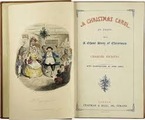
Every year at Christmas time I talk about A Christmas Carol in my classes for many different reasons. It is a wonderful Christmas tale and it allows to study some aspects of British literature, as well. We usually watch the last Disney movie and we read some excerpts from the book.This year I thought of a flipped lesson. Students have to gather information and do some research about the tale before watching the movie or reading the book. Then, they will discuss the topics concerning the novella, the author and the Victorian Era in their classroom. As a teacher, I will just provide the learning material, suggest the websites to surf outside the classroom and guide my students to apply their knowledge during class activities.As usual, I prepared a lesson with the help of some digital tools. I created a mindmap with Cacoo and I made it interactive with Thinglink.If you move the cursor over the image below, some icons will appear. Click on them to open the links. You will find some information about Charles Dickens, the main characters of his novella and some fun activities.The following is a deepening on the Victorian Era for more advanced students. I prepared this mindmap with Popplet. You will find some videos, links and a PowerPoint presentation. Click on the following symbol on the image to enlarge:Inside the classroom the students will discuss what they have learned outside the classroom. They will actively and interactively apply their knowledge.Some ideas for class discussion:What are the moral lessons in this story?Describe how Scrooge changes during the night of Christmas Eve.Would a visit from the three spirits of the tale impact your life? How?How would you describe the Victorian Era?Can we see any typical aspects of the Victorian Age in the novella? What is Dickens' position towards the social problems of his era?
Roberta Martino
.
Blog
.
<span class='date ' tip=''><i class='icon-time'></i> Jul 21, 2015 07:06am</span>
|
|
Who among us has never peeked the horoscope? Whether we believe it or not, at the beginning of a new year we always have a look at the astrological predictions.In this lesson you will reflect on yourself, you will improve your personality adjectives vocabulary and you will revise English grammar about making predictions.What's your astrological sign?Star signsThe Western ZodiacThe Chineese ZodiacThe Chineese Horoscope:http://www.tolearnenglish.com/exercises/exercise-english-2/exercise-english-43375.php Zodiac SignsA list of personality adjectives:http://www.englishlanguageterminology.org/parts-of-speech/personality-adjectives.htmPositive and negative personalty adjectives for each star sign:http://esl.about.com/od/vocabularyadvanced/ig/Zodiac-Personality.--Ho/STUDENTS' TASKWhat's your personality like? Describe some positive and some negative traits of you character. Is your zodiac sign description right in your opinion?Which animal are you in the Chineese horoscope? Describe your personality according to this horoscope.What will your future be like?2015 Horoscope:http://astrology.horoscope.com/horoscope/year/2015-horoscope.aspxMaking predictions:http://www.grammaring.com/future-simple-for-predictionsFuture tenses:http://esl.fis.edu/grammar/rules/future.htmTalking about probability:http://www.english-at-home.com/speaking/talking-about-probability-in-english/STUDENTS' TASKWhat does you horoscope say about the 2015? What do you think will happen next year? Talk about your expectations, predictions and resolutions for the new year.Some worksheets and printables for teachers:http://busyteacher.org/classroom_activities-vocabulary/horoscopeszodiac_signs-worksheets/http://www.eslprintables.com/vocabulary_worksheets/describing_people/zodiac_signs/
Roberta Martino
.
Blog
.
<span class='date ' tip=''><i class='icon-time'></i> Jul 21, 2015 07:06am</span>
|
|
"If we bear all this suffering and if there are still Jews left, when it is over, then Jews, instead of being doomed, will be held up as an example." Anne FrankJanuary 27th is the International Holocaust Remembrance Day On 27 January 1945, Auschwitz-Birkenau, the largest Nazi death camp, was liberated by the Soviet troops during World War II.What is World War II?http://history.parkfieldict.co.uk/world-war-ii/why-did-world-war-ii-startLearn more about the Remembrance Day at the following websites:The United Nations site:http://www.un.org/en/holocaustremembrance/ The Unesco site:http://www.unesco.org/new/en/unesco/events/prizes-and-celebrations/celebrations/international-days/commemoration-in-memory-of-the-victims-of-the-holocaust/Over one million children under the age of sixteen died in the Holocaust...Children of the Holocaust Click on the images below to open my Blendspace lessons about the Holocaust children and Anne Frank. Anne Frank - A graphic biography Anne Frank Anne Frank - the only known videoSTUDENTS' TASKClick on the image below and surf the links.Read and listen to some excerpts from Anne's diary, then take a quiz."Monsters exist, but they are too few in number to be truly dangerous. More dangerous are the common men, the functionaries ready to believe and to act without asking questions."Primo Levi
Roberta Martino
.
Blog
.
<span class='date ' tip=''><i class='icon-time'></i> Jul 21, 2015 07:06am</span>
|
|
February, 14th is Saint Valentine' s Day! On this day cards, flowers and gifts are exchanged between loved ones.But do you know where this festival comes from? Are you ready to say or write something special to the people you care about?Clicking on the following Thinglink image (that I previously created with Cacoo), you will find some useful activities to get prepared for that day.You can read some information and watch some videos about St. Valentine' s Day origins You can learn some useful vocabulary and play a vocabulary gameYou can listen to some hints on how to make a perfect Valentine' s giftYou can learn to write a great Valentine' s cardYou can learn some love poems for your boyfriend or girlfriend (but also for a member of your family or a friend)You can read some love poems written by the greatest British and American poetsYou can have fun by taking some quizzes!Now it' s up to you! Show your love to the people you care about!
Roberta Martino
.
Blog
.
<span class='date ' tip=''><i class='icon-time'></i> Jul 21, 2015 07:06am</span>
|
|
It's carnival time!Surf the following websites and have your own (virtual) pancakes race! First of all let' s take a look at some Carnival glossary: http://www.carnivalarts.org.uk/Portals/0/Carnival%20Glossary.pdfNow let's see UK carnivals by region:http://www.carnivalarts.org.uk/Carnivals/UKCarnivalsbyregion.aspxCarnival festival culminates on Shrove Tuesday. Shrove Tuesday, is the day before Ash Wednesday and the start of Lent. 'Shrove' derives from an old English word 'shrive', meaning 'confess all sins'. In the UK it is also called Pancake Day because on this day people traditionally eat pancakes.Surf the following site for more information about Shrove Tuesday in the UK:http://www.timeanddate.com/holidays/uk/shrove-tuesday Pancake day in London:http://www.timeout.com/london/things-to-do/pancake-day-in-londonBasic Pancake recipes:http://www.bordbia.ie/aboutfood/recipes/eggs/pages/basicpancakes.aspxSome videos:Pancake DayThe great pancake raceWEBQUESTYour own pancakes race...Click on my Thinglink image below (I made the mindmap with Spiderscribe), follow the route, open the Word documents, answer the questions about the websites you have just visited... and win the pancakes race!
Roberta Martino
.
Blog
.
<span class='date ' tip=''><i class='icon-time'></i> Jul 21, 2015 07:05am</span>
|
|
A different Webquest for St. Patrick' s Day!For this webquest I am going to use QR codes! My students will have to use their own device (smartphone or tablet) in the classroom (BYOD) to get all the information they need and answer the questions!Goals:Talking about cultural aspects of a festival in a fun wayFacilitating students' engagementEnsuring aesy access to selected information and materialAllowing students to aquire digital skillsAnticipatory Set and Instructions:For this webquest I have created some QR (Quick Response) codes. They are two-dimensional barcodes that can be read using tablets or smartphones. You need a camera and a QR code reader on your device to read them (there are many free apps available). These codes link directly to websites, videos and more.Of course if you want to create your own QR codes you also need a QR code generator (there are many of them for free online, as well).For my webquest, I have used the "QR stuff code generator" (online on my pc) and I have asked my students to download the "QR code reader" free app (for Android) on their mobile devices. It's very easy and quick!Classroom activity:On St. Patrick' s Day I am printing the QR codes and I am putting them on the walls of my classroom (you can also use more than one room or a different location). I am going to divide the students into teams, they will have to answer some questions (to get points) after having read the information and watched the video.I have prepared a Google form with all the questions and of course it is available with a QR code, as well! The team with the most points will win. Follow-up:After our classroom activity, students will have to write a report, make a poster or a presentation to sum up all the information about St. Patrick' s Day.If you don't want to create your own QR codes but you like this activity, you can use mine, just print them or show them on your pc or your Interactive Whiteboard of your classroom. All the students have to do is use their mobile' s camera to open the links and get the information through the QR codes.ST PATRICK' S WEBQUEST1) St. Patrick' s Day origins2) Sacred sites linked to St. Patrick3) Watch the video4) What is a Leprechaun?5) St. Patrick' s poemsChoose a poem and memorize it!And now open the form, answer the questions and click on "send"!You will get 1 point for each correct answer and 5 points for the poem!
Roberta Martino
.
Blog
.
<span class='date ' tip=''><i class='icon-time'></i> Jul 21, 2015 07:05am</span>
|
|
Knowing how to write a letter is a very important skill (at school, in business, for general personal relationships).I have created two simple Glogster interactive posters to show formal and informal letter layouts. By moving your cursor over the images, some links will appear. Click on them to get more information.You will learn:the structure of a letterthe difference between a formal and an informal stylethe conventions of formal letter writingInformal letterFormal letterSome useful resources about letter writing:http://www.letterwritingguide.com/http://www.bbc.co.uk/skillswise/topic/writing-a-letterhttp://www.usingenglish.com/resources/letter-writing.phphttp://www.studyenglishtoday.net/business-letter-parts.htmlhttp://esl.about.com/od/businessenglishwriting/a/Formal-Letter-Structure.htmhttp://www.usingenglish.com/resources/letter-writing.phpSome exercises:http://www.tolearnenglish.com/english_lessons/writing-letters-exercises
Roberta Martino
.
Blog
.
<span class='date ' tip=''><i class='icon-time'></i> Jul 21, 2015 07:04am</span>
|
|
To talk about the Environment to my students, this time I have created a simple Emaze online presentation. Emaze is a very interesting web tool, you can select a pre-designed template (or make your own slides from scratch) and easily create your presentation (slideshow, video and even a 3D presentation) by adding text, images, charts and videos. You can also save the presentation to view it offline.This work is just a starting point to talk about many topics related to the environment. Students will learn:the meaning of the word environmentto consider that we belong to a global community which shares resourcesto become more responsible and care about the planet Earthto think critically about the impact of people on their planetto take some real actions for the environmentto understand the importance of reducing, reusing, recyclingClick on the image below and watch the presentation:Let's save our planet!
Roberta Martino
.
Blog
.
<span class='date ' tip=''><i class='icon-time'></i> Jul 21, 2015 07:04am</span>
|
|
Martin Luther King Jr. was the most important representative of the American Civil Rights Movement, which fought for equal rights for all. He used nonviolent resistanceagainst segregation laws. He truly believed that "all men are created equal" as he said in the famous speech he delivered during the march on Washinghton on August, 28 1963. King received the Nobel Peace Prize in 1964. He was assassinated in Memphis, Tennessee, on April, 4 1968 when he was just 39 years old. Move the cursor on the image below and some links will appear. Open them to get some information about M. L. King.STUDENTS' TASKRead the above information and watch the videos about M. L. King, then use Projeqt to prepare a presentation. You can add documents, links, images and videos.You can see an example of a Projeqt presentation of mine at the following link: https://projeqt.com/robertamartino/the-ant-and-the-grasshopper/aesops-life/g
Roberta Martino
.
Blog
.
<span class='date ' tip=''><i class='icon-time'></i> Jul 21, 2015 07:04am</span>
|
|
I have been a blogger for nearly two years. I use my educational blog The Travelling Teachers almost every day in my classes and my students are asked to use it at home.I have already written on this blog about the advantages of blogging in the classrom and I propose again my Popplet mind-map about it below.Click on the image to open itAfter two years I can say that my students are more engaged than before, they are enthusiastic about using my blog both at home and in the classroom. Blogs support writing, reading, listening and even speaking skills. In the classroom (blended learning) we read some posts, translate them and comment on them. We watch some videos, listen to some songs or surf the Net through the suggested links. At home students can enter their reflections on posted questions, publish their own questions and share opinions. They are sometimes asked to study a particular topic on the blog at home and relate to the classmates and to the teacher about it in the classroom. (flipped learning).By blogging, we also reach some important goals concerning technology. Students exercise their digital citizenship and understand some ethical, cultural, and societal issues related to technology; they also learn to use some technology tools to increase their productivity and creativity; they improve their knowledge of other disciplines through the foreign language (CLIL); they use the English language both within and beyond the school and, in the end, they start becoming life-long learners by using the foreign language for personal enjoyment and enrichment. But I realised that something was missing... Students did not willingly leave their comments on the posts. An educational blog should improve the students' way of expressing themselves. In fact being published, by leaving their comments, should be an incentive for many students. Even the most shy students should feel empowered and motivated by expressing themselves better in a written discussion than in front of a class.But, when asked to leave their comments on the posts or to answer some questions in a written form, my students felt intimidated. Absurdly, they preferred writing them on their exercise-book because they were afraid of my blog visibility (my students are young learners, unaccostumed to social networks and impractical in using social forums).How to solve this problem? I really wanted my students to write more. I decided to create a students blog to make the learners more active, more self-confident and more and centered on their own learning process.I created this image with Cacoo.The Michelangelo English Club was born, on an experimental basis, a month ago.It is meant to be a blog for the students of my classes, it will contain all their projects, works, reports and researches. The posts will entirely be written by the students. Learners will gradually feel more confident in writing posts and leaving comments because this blog will be their own, they will feel "at home".Of course we will continue to use my blog, as well. The "teacher blog" and the "students blog" will be closely related and... we will see what happens!
Roberta Martino
.
Blog
.
<span class='date ' tip=''><i class='icon-time'></i> Jul 21, 2015 07:04am</span>
|






.jpg?1506533231)

.jpg?1506533228)
.jpg?1506533227)
.jpg?1506533226)

