Blogs
|
May, 21 is World Day for Cultural Diversity. Let' s see some activities we can do to celebrate this day.First of all, you can surf the following sites to get more information about this celebration.UN website:http://www.un.org/en/events/culturaldiversityday/index.shtmlUNESCO site:http://www.unesco.org/new/en/unesco/events/prizes-and-celebrations/celebrations/international-days/world-day-for-cultural-diversity-for-dialogue-and-development/Do one thing for Diversity and Inclusion:http://www.unaoc.org/what-we-do/campaigns/do-one-thing-for-diversity-and-inclusion/A video from Unesco 1) Let's start talking about multicultural BritainWhile studying English language, we study British culture, as well. We know that Britain is a multicultural society. Let's see why.Have a look at this interesting short immigration timeline by BBC:http://news.bbc.co.uk/hi/english/static/in_depth/uk/2002/race/short_history_of_immigration.stm#1800sMulticultural Britain by LoescherMulticultural London by Jonsie ReidAfter watching the above videos, answer the questions:What's the famous market near the London Bridge station? Why is it one of the most popular London markets? What can you find there?Where is Brick Lane? What is it locally known as? Why?Is there a "Chinatown" in London as in New York?At the end of the first video some Londoners are interviewed. What do they say about living in a multicultural city?Take a look at the above immigration timeline by BBC. The text ends with these words"Fifty years after the start of mass immigration to the UK, questions are still being asked about whether or not the UK can become a multi-ethnic society at ease with itself - or whether there is still a long road to be travelled." What does it mean? Which are the pros and cons of a multicultural society in your opinion?2) And now let's talk about a great man who fought for the rights of black people M. L. King's speech "I have a dream" For the whole speech (with audio, hyperlinks and notes):http://www.americanrhetoric.com/speeches/mlkihaveadream.htmWatch the video and read the above speech text, then answer the following questions:When and where was this famous speech held?Who is the "great American" who signed the Emancipation Proclamation? What do you know about him?What is the Declaration of Independence?What does M. L. King mean when he says: "Let us not seek to satisfy our thirst for freedom by drinking from the cup of bitterness and hatred."?What does M. L. King dream?M. L. King biography:http://www.bbc.co.uk/history/people/martin_luther_king.shtmlRead the above biography and answer the questions:What is Rosa Parks famous for?After her death King became a leading figure in organizing an event. What did he do?What did M. L. King establish in 1957?How many people attended the Lincoln Memorial during the famous "I have a dream" speech?Which prize was King awarded in 1964?3) Let's try to define stereotypes... with some humour!Answer these questions, first:What are stereotypes? Do you think you stereotype people?Have you ever been victim of prejudice?Which are some typical stereotypes about your country?Do these stereotypes annoy you or do you laugh at them?Now click on this post (from The Travelling Teachers) about some typical British and Italian stereotypes ... and have fun!http://thetravellingteachers.blogspot.it/2013/09/stereotypes-and-prejudice-travelteaches.html4) And now some videos and songs for young learnersA song for young learners to encourage friendship and inclusionWhat does it mean to be global?Intercultural Communication AdventureAn interesting website about multicultural music. A lot of songs (music and lyrics) about diversity and differences:http://www.songsforteaching.com/diversitymulticulturalism.htm
Roberta Martino
.
Blog
.
<span class='date ' tip=''><i class='icon-time'></i> Jul 21, 2015 07:13am</span>
|
|
170 years ago the first Morse code message was sent on an experimental telegraph line from Washington to Baltimore.The following is a Morse Code message: .... . .-.. .-.. --- / . ...- . .-. -.-- -... --- -.. -.--(Guess what I wrote!)The history of Telegraphy:http://inventors.about.com/od/tstartinventions/a/telegraph.htmThe first Morse code message:http://www.historyofinformation.com/expanded.php?id=551Samuel Morse:http://www.samuelmorse.net/The history of Morse CodeTry to write your own Morse code message with the Morse code translator!http://morsecode.scphillips.com/jtranslator.html"This mode of instantaneous communication must inevitably become an instrument of immense power" Morse, 1838"Of all the marvelous achievements of modern science the electric telegraph is transcendentally the greatest and most serviceable to mankind … The whole earth will be belted with the electric current, palpitating with human thoughts and emotions … How potent a power, then, is the telegraphic destined to become in the civilization of the world! This binds together by a vital cord all the nations of the earth. It is impossible that old prejudices and hostilities should longer exist, while such an instrument has been created for an exchange of thought between all the nations of the earth."Charles F. Briggs and Augustus Maverick, "The Story of the Telegraph", 1858How communication has changed in timeLet's see how communication changed through the ages. Have a look at the following infographics.Click on the images or on the links below each image to enlarge:http://dailyinfographic.com/the-evolution-of-communication-infographic/communicationhttp://blog.voxox.com/blog/bid/302283/Infographic-The-Evolution-of-Communicationhttp://techow.net/2012/04/02/how-communication-has-evolved-over-the-ages-infographic/Also technology in school has changed over time!http://elearninginfographics.com/timeline-of-educational-technology-in-schools-infographic/http://elearninginfographics.com/classroom-technology-evolution-infographic/Watch the following two videos about how technology is changing in education.Students' taskAfter reading all the information and watching the videos about the communication evolution, write a report about your impressions. Has the way children study changed for the better?Do you use technology in your school?Do you think studying with computers, iPads or mobiles can be more productive?Do you enjoy using new digital tools? Why?What are the pros and cons about using technology in the classroom?Of course you can't use paper and pen for your report...Choose one of these tools and have fun!https://www.blendspace.com/ (to collect your web resources)https://www.thinglink.com/ (if you want to add any links to an image)http://popplet.com/ (for your mindmaps)http://piktochart.com/ (to make your own infographic)http://www.storyjumper.com/ (to create your e-book)
Roberta Martino
.
Blog
.
<span class='date ' tip=''><i class='icon-time'></i> Jul 21, 2015 07:13am</span>
|
|
School is almost over... We've been working hard and we are going to enjoy some well-deserved rest!Let's think about the school year just spent together.What have I learned?Did I enjoy my lessons and my teachers?Did I have fun with my school mates?Which are the most memorable moments?What would I like to say to my teachers and friends now?What am I doing next summer?How will the next school year be?This year we have been learning a lot of grammar.... but we've been trying to use new technology, as well. Let's try to put the things together! You can choose one of the following activities which allow you to prepare your report or tell your story using images, photos and videos!Students' activitiesLet's divide our activities into three parts: past, present and future. PASTMake a presentation or en e-book about the topics or the events you liked the most using one of the following tools: (for infographics and posters)PiktochartThinglinkGlogster(for presentations using images)PicLitCapzles(for e-books)StoryjumperRevise and use the Past Simple and the Present Perfect.PRESENTImagine you are the teacher for one day. Choose one topic and prepare your lesson selecting your web sources on:Blendspaceor prepare a presentation using:Haiku DeckPowtoonRevise and use the Present Simple and the Present Continuous.FUTUREThis school year is over and the summer holidays are about to begin! Where are you going on holidays? What would you like to do? Which places would you like to see? Which class or new school are you attending next year? How do you imagine it? Use the foolowing tools to tell us about your future plans or expectations:(for your presentation)Prezi(to tell about your journey)Tour BuilderRevise and use the Future Forms (Will; Present Continuous; To be going to). Enjoy your holidays and always...
Roberta Martino
.
Blog
.
<span class='date ' tip=''><i class='icon-time'></i> Jul 21, 2015 07:13am</span>
|
|
Aesop was an ancient Greek fabulist. He is presumed to have been born in 620 B.C. Unfortunately not much is certain about his life but some agree that June, 4th was his birthday. It's an opportunity for us to talk about fables. Aesop's fables's characters are animals, often with a humorous twist, and his tales always have a moral and a lesson to teach.If you want to read, watch or listen to Aesop's fables click on the following links: Aesop's fables summaries:http://englishmicrodot.blogspot.it/p/aesops-fables-adapted-for-esl.html#AF1Youtube cartoons about Aesop's fables with subtitles:https://www.youtube.com/show/aesopsfablesanimatedstoriesinenglishAesops's fables audio files with a printable transcript:http://www.bbc.co.uk/learning/schoolradio/subjects/english/aesops_fablesSOME TASKS FOR YOU1) WEBQUESTNow click on the image below to open my Blendspace lesson and, after reading all the information, write a report about Aesop, his most famous fables and morals.2) MY OWN FABLEThe following is a Padlet board I made for you. There are 5 simple steps to create your own fable. Click on the image below to open the board, then click on each step to open a link.Then, make a presentation with Projeqt (you can pin your presentation's URL on my Padlet board!). Click on the link below to open my short example.
Roberta Martino
.
Blog
.
<span class='date ' tip=''><i class='icon-time'></i> Jul 21, 2015 07:12am</span>
|
|
We can believe that aliens exist or not, it is a very fascinating and intriguing topic anyway!June and July are UFO months! First of all, the famous Roswell UFO incident took place in the U.S. in June or July 1947. Moreover, July 2nd is the official World UFO Day (in the past also June 24th was celebrated as the UFO Day, until the World UFO Day Organization declared July 2nd to be the official UFO Day).As usual, this is just an opportunity for us to have a different kind of lesson... and this time the topic will be full of mystery!LET'S LEARN A LITTLE MORE ABOUT UFOSUFO means Unidentified Flying Object, that is any unexplained moving object flying in the sky.Ufo sightings have been reported since ancient times...The first Ufo sightings:http://www.theastralworld.com/aliens-ufos/first-ufo-sightings.phpList of reported Ufo sightings from antiquity to the 21st century. you can even select a list by location:http://en.wikipedia.org/wiki/List_of_reported_UFO_sightingsCave painting, Sego Canyon, Utah - estimated up to 5.5000 B.C.Medieval painting Egyptian hieroglyphicsACTIVITIES AND GAMES FOR KIDSLet's have some fun with our young learners!Esl printables:http://www.eslprintables.com/reading_worksheets/reading_comprehension/ufos/Alien printables, mazes, puzzles and coloring pages for younger learners:http://www.printactivities.com/Theme-Printables/Alien-Printables.htmlFunny aliens games for young kids:http://www.wartgames.com/themes/science/UFOs.htmlSpace crafts for kids:http://www.craftjr.com/space-crafts-for-kids/THE SOLAR SYSTEMTalking about Ufos could also be an opportunity to discuss about the universe or the environmental problems (see my previous post about an aliens' message from the space).Space and the solar system:http://simpleesl.com/english-worksheets-activities-games-outer-space/Games about the solar system:http://www.eslgamesplus.com/space-solar-system/MOVIESThere are plenty of movies about Ufos and aliens. Students woul be so happy to watch some of them!List of films featuring extraterrestrials:http://en.wikipedia.org/wiki/List_of_films_featuring_extraterrestrialsSpace alien movies for kids:http://www.screenjunkies.com/movies/genres-movies/family-friendly/space-alien-movies-for-kids/Aliens movies for teens:https://www.commonsensemedia.org/lists/alien-movies-for-tweens-and-teensMY OWN ALIENS STORYOk, we have just learned something about Ufos. Now it's time to write a story!Click on my Thinglink image below and then click again on each link. You will get some more information about aliens. Choose your type of flying saucer and your alien's specie, read about abductions and crop circles... and invent your story!
Roberta Martino
.
Blog
.
<span class='date ' tip=''><i class='icon-time'></i> Jul 21, 2015 07:11am</span>
|
|
Talking about food and recipes can help ESL learners improve their: food related vocabularyoral skills (brainstorming, discussion, giving instructions)written skills (describing and giving instructions)knowledge of different cultures (learning foreign recipes, food and traditions)healthy habitsRECIPES VOCABULARY AND ACTIVITIESHere's a great site with exercises and activities about cooking and kitchens:http://www2.issbc.org/janis-esl/subtopicrecipes.htmlSome printables:http://www.eslprintables.com/vocabulary_worksheets/food/recipes/Cooking worksheets:http://busyteacher.org/classroom_activities-vocabulary/food_and_drinks/cooking-worksheets/Vocabulary about cooking:http://englishwilleasy.com/english-through-pictures/food/food-preparation-recipes/http://www.vocabulary.cl/Lists/Cooking-Instructions.htmStudents' taskPrepare a mindmap about cooking vocabulary using a mindmapping tool.BRITISH RECIPESSome British recipes:http://www.bbcgoodfood.com/recipes/collection/britishhttp://www.britainexpress.com/articles/Food/index.htmRecipes and meals (breakfast, lunch, dinner):http://www.bbc.co.uk/food/cuisines/britishBritish and Irish festive cooking:http://britishfood.about.com/od/festivecooking/Cuisines by country:http://www.foodbycountry.com/http://www.epicurious.com/articlesguides/blogs/80dishesStudents' taskChoose one recipe and prepare it at home. The next day show your classmates how you prepared it (or make a video!).HEALTHY RECIPESRecipe calculator to calculate the nutritional information of a recipe:http://recipes.sparkpeople.com/recipe-calculator.aspHealthy recipes:http://uktv.co.uk/food/homepage/sid/6037Healthy food to prevent heart disease (British Heart Foundation):http://www.bhf.org.uk/heart-health/prevention/healthy-eating.aspxStudents' taskWhat do you do to keep yourself fit? Describe your diet and your habits using a presentation tool.You have a lot of information about food and cooking, now. You are ready to create...your digital magazine! With Glossi you can publish your own magazine with text, images, links or videos. It's very simple, have a look at my short example:Click on the image to openStudents' taskCreate your own web magazine with Glossi! Write your articles, add images and videos and have fun!
Roberta Martino
.
Blog
.
<span class='date ' tip=''><i class='icon-time'></i> Jul 21, 2015 07:10am</span>
|
|
SOME RESOURCESFIFA official site:http://www.bbc.co.uk/worldservice/learningenglish/grammar/vocabulary/football.shtmlFuleco, Brazil 2014 mascot:http://en.mascot.fifa.com/The World Cup Stadiums 2014:http://www.telegraph.co.uk/sport/football/world-cup/10383648/World-Cup-stadiums-a-venue-guide-for-Brazil-2014.html HISTORY A brief history of the World Cup:http://content.time.com/time/photogallery/0,29307,1989102,00.html?xid=rss-photoessays&utm_source=feedburner&utm_medium=feed&utm_campaign=Feed:+time/photoessays+TIME:+Top+PhotoessaysSOME FOOTBALL VOCABULARY Football vocabulary:http://www.bbc.co.uk/worldservice/learningenglish/grammar/vocabulary/football.shtml FOOTBALL RULESThe rules of football:http://rulesoffootball.co.uk/ACTIVITIES AND PRINTABLESQuizzes and printable worksheets:http://www.esolcourses.com/topics/the-world-cup.htmlhttp://www.esolcourses.com/topics/football.htmlWorld Cup worksheets:http://www.eslprintables.com/Vocabulary_worksheets/Sports/World_Cup/INFORMATION ABOUT BRAZILBrazil:http://kids.nationalgeographic.com/explore/countries/brazil.htmlhttp://www.infoplease.com/country/brazil.htmlhttp://www.mapsofworld.com/brazil/information/fact.htmlYOUR TASKAnd now it's up to you! Let's make a digital sport magazine about the World Cup events. Last time I used Glossi (in my previous post about food and recipes), now I've tried Joomag.Here you can find a short example of our sport web magazine. You can write articles, add images, links or videos and keep us informed about the World Cup news! Click below to open my exampleBecome a digital journalist! Some advice for you:How to write a digital storyHow to wrtite a sports article
Roberta Martino
.
Blog
.
<span class='date ' tip=''><i class='icon-time'></i> Jul 21, 2015 07:10am</span>
|
|
Summer is usually holiday time and some of us are planning a journey. We often consult a map to decide which places we want to visit and to define our route. Using digital maps before, during and even after our journey, can be great fun! These are some free map tools that can make our trip more enjoyable and can also be very useful as summer tasks for our students!(If we are not planning a trip, just imagining where we would like to go in the future could be very amusing and stimulating.)BEFORE LEAVINGBefore leaving let's have a look at the time zones. With the Time Zone Converter map you can easily convert a time in one location to the time in another location just with one click. If you want to know how long your journey will take, you can use the Trip Calculator Map. Simply enter your average speed and start clicking. You can know how long your journey is and how long it will take to complete.Now, a very useful tool to compare different cultures.If you don't know exactly where to go, if you are wondering which country is right for you, try Ifitweremyhome.If we were not born in our country, what would our life be like? This tool is a gateway to understand life outside our country. You can compare living conditions in your own country to those of another. Some examples:http://www.ifitweremyhome.com/compare/GB/IThttp://www.ifitweremyhome.com/compare/IT/GBDURING YOUR JOURNEYMapskip is a very original tool. The world is a canvas for your own stories and photos. You start from a map, you click on the place you like, you add your mark and write your story about that place. You can tell your adventures adding your pictures, links or videos. It could be great to update your journey in real time!My example about the town where my school is located:http://www.mapskip.com/stories.php?story=6681AFTER YOUR JOURNEYTourbuilder is a fantastic tool! You have the whole world to put your stories on! It allows you to write your stories directly in the various countries of the world where they are set.You will need to install the Google Earth Plugin (it only takes a couple of minutes), if you haven't already.You can add your photos, videos or links to describe the places you visited.Tour Builder takes track of all your movements on the map and this is the final result. Watch my brief example about my Cambridge experience! Choose "enter Street View" on the map to watch 3D the places I saw!My example.https://tourbuilder.withgoogle.com/builder#play/ahJzfmd3ZWItdG91cmJ1aWxkZXJyEQsSBFRvdXIYgICA8KrmkggMThe following is a very good site suggesting some other mapping tools for schools:http://cooltoolsforschools.wikispaces.com/Mapping+ToolsSTUDENTS' TASKDescribe your real or imaginary journey using the above map tools. Write some information about the country you are going to visit, the time zones, the distances between a place and another and describe some cultural differences between this country and your own.Then, with Mapskip or Tour Builder add some pictures, videos or links to all your destinations.HAVE A NICE TRIP!
Roberta Martino
.
Blog
.
<span class='date ' tip=''><i class='icon-time'></i> Jul 21, 2015 07:09am</span>
|
|
Next July I am going to London with some of my students. I would like to give them some information before leaving. Here there are some activities, videos, tips and a final webquest!Top 10 Attractions of London A brief history of London:http://www.activityvillage.co.uk/a-brief-history-of-london If you want to investigate the British history further:http://www.bbc.co.uk/history/british/A virtual tourNow let's take a virtual tour of London! Click on the image above. You are on the London Eye and you have the whole city at your feet! Choose a place and click on it. You can take a virtual tour of each landmark and have all the information (clicking on "More Information") about its history. After visiting a place, click on "Back to London Eye" to go back in your capsule and choose another destination. Sometimes, while visiting a place, you will see the following button:It redirects you to the website of that specific sight. Click on it to have more information.The TubeWhile visiting London, you can't help taking the Tube! It's the easiest way to get around the town. Visit the following site to learn more about the London underground, there are some useful tips for the travellers:http://www.visitlondon.com/traveller-information/getting-around-london/london-tubeHow to use the London TubeThe London tube is the oldest underground in the world. It was opened in 1890. Let's practise to use the tube map! Click on the following image and look for your destinations: WEBQUESTNow you are ready to complete this simple questionnaire I prepared for you about London! Surf the sites I suggested above, watch the video you will find at the beginning of the webquest and answer the questions. Write your name and click on "send" at the end of the quiz. If your answers are right you are ready to leave!See some other posts of mine about London.London landmarks:http://thetravellingteachers.blogspot.it/2013/09/london-august-2013.htmlLondon museums:http://thetravellingteachers.blogspot.it/2014/05/international-museum-day-may-18.html
Roberta Martino
.
Blog
.
<span class='date ' tip=''><i class='icon-time'></i> Jul 21, 2015 07:09am</span>
|
|
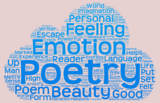
Today I would like to talk about poetry. Could it be useful in an EFL class? As usual, I try to imagine some activities that involve the use of different digital tools.What's poetry? At the following link you can find some great definitions (I made the above word cloud from some of these definitions using Tagul):http://poetinthecity.wordpress.com/2011/03/16/what-is-poetry-50-definitions-and-counting/Why study poetry in an ESL classroom? Poetry can help you reach many goals. Take a look at the following map I created with Cacoo:Click to enlarge my diagramSome links about the different kinds of poetryDifferent types of poetry:https://www.youngwriters.co.uk/glossary-poetry-typeshttp://www.poetryfoundation.org/learning/glossary-terms?category=forms-and-typesExamples of different types of poetry:http://examples.yourdictionary.com/types-of-poetry-examples.htmlForms of poetry:http://www.poeticterminology.net/index.htmWhat about writing a poem?Watch the videoWhere to begin? Have a look at this diagram I made with Cacoo.Click to enlarge my mapSome more tipsSome useful figures of speech:http://esl.about.com/cs/reading/a/blpoetry.htmTo find rhymes:http://www.rhymezone.com/Let's practise!Magnetic Poetry is a funny tool to write poems. You have to choose some words to create your masterpiece! Try it! Watch my example at the following link:http://play.magneticpoetry.com/poem/Original/kit/15415/?h=8444d213e9cd688d306fa98d2aa7ca79You could also make a poetry magazine where you could collect all your poems! Joomag is a great web tool.Have a look at my example by clicking on the picture below:"Poetry is when an emotion has found its thought and the thought has found words."Robert Frost
Roberta Martino
.
Blog
.
<span class='date ' tip=''><i class='icon-time'></i> Jul 21, 2015 07:09am</span>
|
.jpg?1506533292)







.jpg?1506533282)
.jpg?1506533281)