Blogs
|
Interview: David Yaskin, CEO and Founder of Starfish Retention Solutions, Inc.Learn about the Starfish enterprise student success and retention platform. We discuss Starfish CONNECT and Starfish EARLY ALERT, how they interface with the LMS and SIS, and how you can measure your return on investment.Podsafe music selection from MagnatuneConcerto No.1 in D Major (Spring) - First Movement by the American Baroque Orchestra. The full CD entitled "The Four Seasons by Vivaldi" is available at magnatune.comDuration: 26:49
Rods Pulse Podcast
.
Blog
.
<span class='date ' tip=''><i class='icon-time'></i> Jul 23, 2015 08:18am</span>
|
|
It's no secret that 2010 took a sudden left turn in July and became an annus horribilis for me. One thing after another went wrong. When it came to Christmas time, I decided to put it all behind me and focus on making the festive season as pleasant as possible under the rather trying circumstances, and address my life's crises from a fresh perspective in the new year. But the year had one last sting in its tail. My mother phoned me a few days after Christmas to tell me that my super-fit, ultra-marathon running uncle had had a massive heart attack while on the treadmill at the gym. While under sedation, he developed pneumonia. He only regained consciousness today. When I heard the news, I could only groan, "What next?"My uncle is one of two remaining influential male figures in my life who have been there from the very beginning. The other is also an uncle, but of the 'by marriage' sort. The two of them have known each other since they were teenagers and, during family Christmas holidays when I was growing up, they tended to forget that they were no longer in their teens, and got up to all manner of mischief. They loom large in my childhood mental photographs, and the thought of losing him makes me feel physically ill.Up until that phone call, I would have said that my most urgent desire for 2011 would be to secure a source of income. But suddenly it has become far more urgent that my uncle should recover. Completely. And run the Two Oceans again.Although we aren't much into New Year's resolutions as a family, we have adopted the practice of setting ourselves goals for the year ahead, which we share over our New Year's day lunch. At this point, we also reflect on the year that has passed, and I realised that some great things had happened during the year. With everything that had gone wrong, it had been all to easy to forget the things that had gone right. And all the many days that had been wonderfully ordinary and uneventful. All the days which had included little triumphs of the sort so often, so easily forgotten.So I decided to sign up for the 365 project (I hope that link works - the site is being a bit iffy. Let me know). Having a daily record of the year: the little moments, the big moments - will keep things in perspective should (God forbid) the wheels not reattach themselves, or fall off again.I don't have a wonderful camera, and I'm not a gifted photographer. But the project isn't just for those who can tick both those boxes.Perhaps you'd like to join me on this journey. Or perhaps you might like to start one of your own.
Karyn Romeis
.
Blog
.
<span class='date ' tip=''><i class='icon-time'></i> Jul 23, 2015 08:18am</span>
|
|
Interview: Dr. Mary Ann Gawelek, Provost, Seton Hill University on "An iPad2 for Everyone". This is a follow-up with Dr. Gawelek, who I interviewed back in September 2010 (RPP# 87) just as they were about to launch their trend setting iPad program. I asked:Why did you provide both iPads and Macbook Pros to students?Did you "flip" your classrooms?How is your faculty adjusting to this new paradigm?Did you save on printing costs?How about iBook Author or other e-textbook programs?What lessons did you learn?How do you gauge the success of the iPad program?Links to resources mentioned:Collect, organize, and share ideas on the iPadCorkulus Popplet Inkling - interactive textbooks for iPadBlackboard Mobile LearnTouchfire - iPad Screentop KeyboardRod's Delicious iPad BookmarksPodsafe music selection from Music Alley"Parsley, Sage, Rosemary and Thyme" performed by Jane Aubourg, a solo electric violinist using digital effectsDuration: 28:45
Rods Pulse Podcast
.
Blog
.
<span class='date ' tip=''><i class='icon-time'></i> Jul 23, 2015 08:18am</span>
|
|
Students often find it difficult to engage with reading and writing instruction and practice, particularly when large, intimidating texts are involved. This is the second in our series of insight blog posts, aimed at helping teachers to overcome this problem. Here are the Top 10 Tips for Writing, from teacher-trainer Olha Madylus.
Writing is the most difficult of the four language skills. In order to write well, students need to not only have mastery of grammar, a large bank of vocabulary, know how to structure texts, and be able to plan and edit their own writing - they also need to have ideas, opinions and imagination. They are also expected to write things they would never normally write in their own language, let alone in English. Little wonder that so many students don’t like writing and find it hard to see any progress in this skill.
Here are 10 tips to help you teach writing in the classroom.
Start small
Initially do short writing tasks in class. Writing even one good sentence is a great start. All too often, teachers ask students at low levels to produce long texts, which they have not been prepared for. Students will become confident with a step-by-step approach based on the success of mastering skills one by one.
Whatever the focus of the lesson, encourage students to produce their own sentences which incorporate the target language.
Provide good models and discuss what makes them good
Students need to see what they are aiming for. Ensure that lessons focusing on reading texts include a discussion on what makes it an effective text - why is a particular description good? Maybe because it uses vivid adjectives and builds up a picture that can easily be visualised by the reader. Remember: just reading a lot of texts is not enough - students have to notice how they work in order to then reproduce those skills.
Plan to develop different aspects of writing separately
There are so many different skills which students need to develop in order to become proficient writers in English, they cannot be developed simultaneously. So, plan tasks in class which develop these skills separately. Course books often have lots of writing tasks to develop grammatical accuracy, but what about other writing sub-skills? You could create a gapped text of a story with no adjectives and ask students to add powerful adjectives to see how they add colour and tone to the text i.e. using different adjectives could make it funny, serious or even frightening.
Note which writing sub-skills your students have problems with and create tasks to address these problems.
Brainstorm and input ideas
Before setting writing tasks, brainstorm in class. You can brainstorm ideas, vocabulary, appropriate grammar etc. Encourage students to record mind maps and to use this technique when they have to write independently or in an exam.
Often, a problem students have when writing is that they don’t have the background, experience or knowledge to write on that particular topic, even in their Mother tongue. Exploit the texts in your course book by asking students to underline ideas they find interesting and then use them later in their own writing. They should not be hampered by lack of general knowledge in a class that is aimed to develop their language skills.
Use videos from websites such as Youtube or texts from the internet, English language newspapers, or magazines to introduce the topic.
Provide a reason to write
All too often there is no real reason to write in class other than to have the teacher mark it! This is not very motivating for students.
Could the class create their own chat room or blog for sharing ideas about lessons, jokes, interests or news? What about getting students to write dialogues based on a unit topic, before recording them with sound effects?
Collaborative writing in class
By always setting writing for homework, students are left isolated with little support to develop writing skills. This means that writing rarely improves and students lose motivation and confidence. Do writing in class and ensure that students work together, sharing both their ideas, vocabulary and grammar knowledge.
Make it creative and fun
Writing doesn’t always have to take the form of examination-style texts like ‘Advantages and disadvantages of living in a city’, or ‘A letter of application for a job’.
Creative writing can encourage interesting and effective language use. For example, find interesting pictures of pairs or groups of people (e.g. famous paintings which can be found online) and ask students to imagine what they are thinking or saying to each other.
Writing poems is a great way to allow students to focus on quality of writing rather than worrying about quantity. (Have a look at Creative Poetry Writing by Jane Spiro, Resource Books for Teachers, Oxford University Press).
Include writing in every lesson
Plan to have at least some writing in every lesson, so that it becomes more natural and easier for your students to write in English.
You could create a graffiti wall in class and ask students at the end of each lesson to write on post-its / small pieces of paper the things they liked about it. They could even write requests for future lessons or a note of praise to a student they have noticed has worked particularly well that day. These can be put up on the wall and read by all the class, while you can mention any comments. Knowing that people will read your writing makes it more real and interesting.
Sometimes focus on accuracy and at other times on fluency
If students feel that when they write for you, you will focus on their mistakes, they may well lose sight of the message.
Plan writing tasks so that some just focus on fluency, encouraging students to express their ideas and what vocabulary they know. Why not have students write regular texts, emails or letters, telling you about things going on in their lives? Don’t correct these, but send back short replies that address the message of the text.
Mark positively
There is nothing more disheartening than getting back your writing covered in red pen, with a bad mark at the bottom and the comment ‘Try harder!’
Avoid using a red pen to highlight all the mistakes. Why not highlight everything the student has done well, so they know to keep doing that in the future and make them feel good about the effort they have put into the text. You can also be selective in marking mistakes: choose the three most common / serious errors and focus on those. But always mention the good points in the writing.
Remember how hard it is to write well even in your own language and that students need as much help as possible in developing this complex skill. Encourage and don’t over-correct to make writing a positive experience for students in class.
For more ideas on writing in class, see Writing by Tricia Hedge, Resource Books for Teachers, OUP.
Filed under: Teenagers Tagged: insight, Secondary, Teaching, Top 10 Tips, upper-secondary, Writing
Oxford University Press ELT blog
.
Blog
.
<span class='date ' tip=''><i class='icon-time'></i> Jul 23, 2015 08:18am</span>
|
|
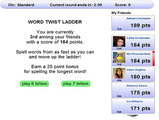
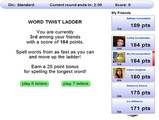
When I was 10 years old, I started at a new school. It was in a different province from my previous school, and therefore subject to a different local authority.All the new standard fours (grade sixes) gathered together. The three teachers had decided on their own method of splitting us up among themselves. They placed us in order of average percentage from the previous year's exams and then counted us off: 1, 2, 3, 1, 2, 3....All the 1s went with Mr W, all the 2s with Mr S, and all the 3s with Mr K. I didn't even know what an 'average' was. We didn't have those at my previous school. So I just opted to use my maths result (90%) and wound up in Mr W's class.In my previous school, we didn't have such things as 'class positions'. I had been in what would probably now be called the gifted and talented stream (in our school, it was called the 'achievement' class), and probably fared a solid middle of the range performance overall. But I'm guessing. Achievement stream teachers experienced a freedom to engage in personalised/differentiated teaching that today's teachers can probably only dream of. The only person who ever compared my performance to anyone else's in the class was my mother (long story).The new school was very much about competition.For the first term, we were seated in order of those 'average percentages' from the previous year. This put me about 3rd or 4th, I think. The child with the highest average sat front left from the teacher's perspective, with the second placed child next to her and so on, so that the front row contained the 6 highest performers from the previous year. The lowest achievers were placed in the back of the class, because they were deemed lazy.At the end of each term, we were tested on every subject (this was the norm in the South African education system in those days, so I tend to smile wryly when British parents complain that their children are over-tested with their four-times-in-twelve-years system). Each child's results were averaged out, and the great shuffle began. One term, I was placed 6th and so on the very edge of the first row, in imminent danger of moving back a row if I didn't look to myself. What pulled me down were my results in Afrikaans: a much higher level of fluency was required in the Eastern Cape than had been the case in Natal, and my proficiency wasn't up to the task (it soon was, though - my Afrikaans granny was mortified at my poor skills in the language, and addressed them forthwith).I can't tell you how stressed we were around exam time. Little poppets of 10 years old, getting into a right state about dropping down the order. And the teachers relished it. They felt it was good for us. The top three achievers in our class (whose names and faces I still remember as if it were yesterday) were in very close contention. Their stress levels were the highest. How Louise sobbed when she dropped into third place one term!Looking back now, I can't see how any of that benefited anyone, to be honest. And I wonder about the boys (because they were all boys) in the back row. The 'lazy' ones. Mark, Shaun, Tony... I wonder what they went on to do with their lives. I wonder if they continued to be 'lazy' and/or 'stupid'. I wonder if they opted out of the race at that point, or if it pushed their 'I'll show you' button.And, of course, the same thing was going on in Mr S's and Mr W's classes. So, when Louise was in third place in our class, she may well only have been in 4th or even 12th place over all. And as for how she might have fared across the whole city, district, province, country, world.....Who knows? Ours was such a tiny pond. But the competition was so fierce, it was all we focused on.Take, for example, the leader board on the game of Word Twist, as seen from my perspective:How smug might I feel to be so close to the top of the list? How hard did my oldest friend, Cathy (we've known each other since January 1974) work so that her name could sit above mine on that list? Does she sit at the top of her own leader board? Does Nathan (my daughter's boyfriend) sit at the top of his? Does he have other friends who have outperformed him? And how would we fare when compared against the global results? Will I ever manage to oust Nathan from top spot?Does it matter?No. Not really. It's a bit of harmless fun, and the competitive aspect serves as a prod.But I am an adult. I know that this is not Important. I know that, even if I trounce Nathan soundly, I will still feature nowhere on any global achievement list. I also know that, even if I did, it wouldn't change anything.But when I was 10 (and 11 and 12 and...), it mattered a lot. And nowhere near as much to me as it did to some of the kids who wanted to get into medical school or whose parents bribed them with rewards or threatened them punishment.I wish I could go back and find out what model that earlier school followed (if any) that resulted in a situation where none of us knew or cared where we featured in the class rankings. We only knew that we had done better or worse than the previous term, and that our results in maths were stronger or weaker than our results in art (or whatever). We knew who else in the class was gifted (or otherwise) in the subjects we excelled at, because of the points at which they got to spend time on self-directed projects.I know. Life is competitive. We compete for the interests of the object of our fancy, we compete for the job we apply for. But making a leader board out of learning?And don't tell me it doesn't happen any more. It does. Maybe not in your kids' school, or the school at which you teach, but it happens.
Karyn Romeis
.
Blog
.
<span class='date ' tip=''><i class='icon-time'></i> Jul 23, 2015 08:18am</span>
|
|
News from the PodosphereNew Podcasts App from Apple liberates audio and video podcasts from iTunes with a dedicated app for iOSIntegrating your Social MediaIFTTT (ifttt.com) - "If This Then That", a free service that allows your social media portfolio to inter-operate and save you time. For example, earn how to automatically Tweet each time you post to your blog.Other sites mentionedbit.lyblogger.comfacebook.comlinkedin.com pipes.yahoo.comping.fmtwitter.comPodsafe Music Selection from Magnatune"Run" from the new age piano album "Lines Build Walls" by Ehren StarksDuration: 14:38
Rods Pulse Podcast
.
Blog
.
<span class='date ' tip=''><i class='icon-time'></i> Jul 23, 2015 08:18am</span>
|
|
Prior to becoming an ELT Editor for Oxford University Press, Mexico, Lysette Taplin worked as an English language teacher and ELT author for a number of primary and secondary series. In this post she discusses the importance of learning a foreign language to foster linguistic and cultural diversity and the positive effects it has on the cognitive process.
International Mother Language Day has been celebrated every year since February 2000 to promote linguistic and cultural diversity and multilingualism. The importance of linguistic diversity and multilingualism in an increasingly globalized world is vital to achieve meaningful communication between nations and strengthen the unity and cohesion of societies. Today, there are around 7,000 languages in the world, and an increasing number of situations in which two or more languages co-exist and are indispensable in everyday communication. UNESCO’s decision to celebrate International Mother Language Day derives from the importance of linguistic diversity and the need to maintain and revive minority languages.
Through learning languages, even just by mastering a second language, we develop a fuller awareness of linguistic and cultural traditions (UNESCO, n.d.). And besides the obvious practical benefits learning a foreign language provides, it has been demonstrated to improve memory and brain power and delay the onset of Alzheimer’s and dementia.
Bilingualism, even when acquired in adulthood, can have a positive effect on the brain. Students who speak more than one language tend to outperform peers in math and reading (French Immersion School of Washington, n.d.; Anne Merritt, 2013), and are more adept at focusing on relevant information by ignoring irrelevant and misleading stimuli. This can be due to the fact that by learning another language, we have to switch back and forth between two distinct systems of rules, challenging the brain to recognize and work out meaning. For this reason, bilingual students learn to become critical thinkers and perform better at problem-solving tasks. The brain has also been likened to a muscle since it is said to function better with exercise. Language learners need to memorize rules and vocabulary and thus strengthen their cognitive muscles, making them better at memorizing lists and sequences (Anne Merritt, 2013).
Learning a second language can also develop mother tongue skills. Generally, not much attention is paid to the grammatical structures of our native tongue, but once we start to focus on the mechanics of a second language: grammar, conjugations and sentence structure, our awareness of our L1 improves. These transferable skills give bilingual students a greater insight into their mother tongue, thus making them more effective communicators as well as better writers.
Bilingualism’s effects also extend into later life. Recent studies have shown that bilingual patients were more resistant to the onset of dementia. On average, individuals with a proficiency in two or more languages developed dementia 4.5 years later than monolingual ones (Suvarna Alladi et al., 2013; Anne Merritt, 2013).
But aside from the positive effects on our cognitive process, learning a second language opens the door into a particular culture, broadening our understanding of a race and culture, and making us more appreciative of other perspectives. Once I started to learn a second language, I began to experience how learning about another culture, in my case Mexico, has enabled me to achieve a significantly more profound understanding and appreciation of my own. As a Brit living in Mexico, I feel a stronger connection to my heritage which I took for granted when living in England. Not only that, I now have access to an assortment of literature, movies and music in their original form, giving me the opportunity to view the world from different vantage points.
Learning a second language has been a truly rewarding experience, and has enabled me to build deep and meaningful relationships with people in foreign communities as well as becoming more flexible and creative in my ways of thinking. It has also opened up a whole world of opportunities when it comes to travel and I have been lucky enough to have had the chance to visit local indigenous communities where Spanish is not their first language. Without a doubt, bilingualism and multilingualism provide the possibility to bridge both the linguistic and cultural gap between countries as well as being a great asset to the cognitive process.
References
UNESCO, International Mother Language Day, 21 February 2012, (n.d.). Retrieved from: http://www.unesco.org/new/en/education/themes/strengthening-education-systems/languages-in-education/international-mother-language-day/
French Immersion School of Washington, (n.d.). Retrieved from: http://www.fisw.org/admission/BilingualBenefits.cfm; Anne Merritt, Why learn a foreign language? Benefits of bilingualism, 2013. Retrieved from: http://www.telegraph.co.uk/education/educationopinion/10126883/Why-learn-a-foreign-language-Benefits-of-bilingualism.html
Anne Merritt, Why learn a foreign language? Benefits of bilingualism, 2013. Retrieved from: http://www.telegraph.co.uk/education/educationopinion/10126883/Why-learn-a-foreign-language-Benefits-of-bilingualism.html
Suvarna Alladi, DM, Thomas H. Bak, MD, Vasanta Duggirala, PhD, Bapiraju Surampudi, PhD, Mekala Shailaja, MA, Anuj Kumar Shukla, MPhil, Jaydip Ray Chaudhuri, DM and Subhash Kaul, DM, Bilingualism delays age at onset of dementia, independent of education and immigration status, 2013. Retrieved from: http://www.neurology.org/content/early/2013/11/06/01.wnl.0000436620.33155.a4.abstract; Anne Merritt, Why learn a foreign language? Benefits of bilingualism, 2013. Retrieved from: http://www.telegraph.co.uk/education/educationopinion/10126883/Why-learn-a-foreign-language-Benefits-of-bilingualism.htmlFiled under: Adults / Young Adults, Teenagers, Young Learners Tagged: Alzheimer's, Bilingualism, brain power, Critical thinking, dementia, linguistic and cultural diversity, Memory, Mother language day, Multilingualism
Oxford University Press ELT blog
.
Blog
.
<span class='date ' tip=''><i class='icon-time'></i> Jul 23, 2015 08:18am</span>
|
|
Blackboard Corporate Keynote Wrap-UpBlackboard CEO, Michael Chasen, opened the corporate keynote and announced...Project XP: xpLor - XP stands for "cross-platform" and Lor stands for "learning object repository". Finally a way for faculty content experts to share and consume modular learning objects.Ray Henderson, CTO and President of Academic Platforms, discussed recent advances and the future roadmap for Learn ConnectTxt - new 2-Way SMS Platform Bb Learn Service Pack 8 - improved global navigation, assessment insight, item analysis, and more Bb Analytics for Learn - new dashboards for improved decision makingBb Collaborate v12 - improves Learn integration, including grade book, and mobile deliveryBb Social - social learning coming in the fall for FREE with Community moduleKatie Blot, President of Global Services Division, presented new professional services aimed at expanding program and course development, marketing, and student lifecycle support. Kayvon Beykpour, General Manager of Blackboard Mobile showcased new capabilities in Blackboard Mobile Learn and Mobile CentralMobile Central maps now include augmented realityMobile Learn now includes mobile assessmentsUsage and analytics are now availablePush notifications for studentsPodsafe Music Selection from MagnatuneConcerto No. 2 in G Minor (Summer) by the American Baroque Orchestra. The full CD "The Four Seasons by Vivaldi" is available at magnatune.com
Rods Pulse Podcast
.
Blog
.
<span class='date ' tip=''><i class='icon-time'></i> Jul 23, 2015 08:17am</span>
|
|
If you're a regular reader, and you have an ounce of insight into human character, you will have surmised that I am going through a rather discouraging period, right now. And being who I am, my lows can get pretty low...after all, my highs are somewhat stellar.Knowing this about myself, I have had to learn over the years to take myself in hand, to put myself in the path of waves of inspiration, instead of wallowing in the Slough of Despond, as I am often tempted to do.Sadly, one can learn some rather hard lessons about people when the going gets tough. Where one expects to find a 'Barnabus' (an encourager), one sometimes finds an accuser, or a lecturer... which is no help at all, you can take my word on this! Sometimes, even the Barnabuses have a grace period: when the solutions they have suggested, or the advice they have given, or the succour they have offered yields no change, they move on, unable to bring themselves to stick around for the long haul when things don't turn out as they expect.One of the places I can usually find something to lift me, is TED talks. Yesterday, I was reminded of this one by Benjamin Zander, and I have been immersing myself in Zanderness ever since. I have been tracking down everything of his that I can find. I find myself affirmed in the passion with which I approach my life. I am compelled to acknowledge that the heart on a sleeve must inevitably take more knocks than the guarded heart. But I remember that I do not do what I do because of what it will or won't mean to my own heart, but because, as Zander puts it in this and other clips:Our job is to awaken possibility in other people. Who are you being that your people's eyes aren't shining?We are about contribution. That's what our job is. It's not about impressing people.The voice that says "No," is actually not very interesting.In contribution, there is no 'better' and that is all.Zander says on his website:The best review I ever got was not from a music critic, but from my father. He was 94 years old at the time and completely blind. He attended a Master Class I gave in London and sat there in his wheelchair for about three hours. When it was over, I went to speak with him. He lifted up his finger in his characteristic way and said, "I see that you are actually a member of the healing profession." It seemed to me the highest accolade.I agree. These are the accolades that I long for. And - bless all your lovely hearts - I get a few that bear some resemblance. The tragic reality is that I can't take the good will and the encouragement that so bouys me to the bank. But, at a time when I find myself inclined, out of desperation, to make compromises in order to pay the mortgage, Zander reminds me that I am already doing my job. Like so many of the other worthwhile jobs I do (wife, mother, local community member), it doesn't come with a salary cheque. But, also like those other jobs, perhaps it can co-exist alongside one that does. Let's hope so, because I am simply not designed to lead a two-buttock existence!This is the man who gives all his students an A at the start of the year, on the condition that they write him a letter as if from the end of the year, that begins "I got an A because...." describing the person they could and would become if only their enxiety and the little voices that say "No" didn't get in the way. How's that for a radical and empowering approach?There is just so much I could say about Benjamin Zander, but you have access via your search engine to all the very same materials I have watched and read over the past 48 hours, and, because you're in a different space from me, perhaps you might find inspiration in bits I didn't even notice. But I encourage you to carve out a little moment of Zander-immersion for yourself today - especially if you're a discouraged member of the learning profession.Let me know how that goes...
Karyn Romeis
.
Blog
.
<span class='date ' tip=''><i class='icon-time'></i> Jul 23, 2015 08:17am</span>
|
|
Fancy livening up your classroom with some ready-made video activities? This is the second of a series of four blog posts in which Keith Harding and Rachel Appleby share ideas for using the stunning new International Express video material.
Each unit of the course features a video directly related to the unit topic. Here, Rachel explores the clip from Pre-Intermediate Unit 10 - Selexyz bookstore, which focuses on using ‘will’ to talk about the future, Zero Conditional and 1st Conditional.
Before you watch
Discussion in pairs
Before I play video in class, I find it useful to do plenty of lead-in activities to the topic. For example, you could start by giving students the following to discuss in pairs.
Do you ever shop online? What do you buy?
What are the benefits of shopping in real shops?
Do you buy books or music online, or in shops?
Do you think book and music shops will continue to exist in the future? Why? Why not?
Describe your favourite bookshop. Explain why you like it.
Check key vocabulary
Tell the students they are going to watch a video about a special bookshop in an historic building. Before watching the video, check they understand, and can pronounce, the following words. You’ll find the answers at the end of this blog post.
retailer, branch, archive, fiction, structure, design
Number work
Focus on the following numbers from the video. You could dictate them, or put them on the board.
10%; 8%; 15; 13; 500; 1794*
First, check students know how to say them, and then ask them to guess what each number could refer to. You’ll find the answers at the end of this blog post.
* NB: This is a date, so it is pronounced "17-94"
While you watch
More number work
Ask students to choose three of the numbers from above, and to listen, as they watch, for what they refer to. Tell them also to listen to compare their discussions from the beginning with what they hear.
More vocabulary work
Do this exercise before watching the video again. Students work in groups of 3 or 4. Put the following words on the board, on cards (one set per group), or on a handout. Ask the students to try to remember what they referred to in the video. If they are not sure of the meaning of any words, they should check first in their group.
ancient
architecture
archive
atmosphere
branch
browse
ceiling
consumer
customer
design
experience
fiction
interior
non-fiction
relaxing
retailer
stained-glass window
structure
Give the students 5 minutes. You could give them dictionaries to check the meaning and pronunciation - in particular, word stress.
Next, play the video again. While they are watching, the students should:
a) put the words in the order in which they hear them
b) check what each refers to
At the end, ask them to compare their ideas in their groups, and discuss any they found difficult. Which words are usually associated with a bookshop or with a church?
After you watch
A special shop, building or place
Ask students to think about a favourite or special shop, building, or place they would recommend to the others. Give them time to take notes and plan what they will say. Encourage them to use words from exercise 5 above. They should include:
a) why they like it
b) why it’s special
c) where it is
d) the best time to go
When they are ready, ask them to stand up and mingle with the other students. They should take it in turns to tell each other about their special place for approximately one minute. They should speak to at least three different people.
Ask them to sit down with a different partner, and compare what they heard. Which place would they most like to visit? Why? Are any of the places more interesting than their own? Why?
Guess the word
At the start of the next lesson, give each student one word, on a card, from exercise 5 above. They should stand up and mingle, and explain or define their word to someone else, to elicit the word. In turn, they should listen to their partner’s explanation, and try to guess their word. They should then swap words, and mingle to find another partner.
I hope you enjoy trying out some of these activities in class! You can also find more on the video worksheet that comes with the International Express Teacher’s Resource Book DVD. All the worksheets are available for free here.
In the next part of this series, Keith Harding explores the Mercedes-Benz Museum, from the Intermediate level. Look out for it next week.
Answers
Ex. 2
retailer (n) /ˈriːteɪlə(r) / - a person or business that sells goods to the public
branch (n) / brɑːntʃ / - a local office or shop/store belonging to a large company or organization
archive (n) / ˈɑːkaɪv / - a place where historical documents are stored
fiction (n) / ˈfɪkʃn / - a type of literature that describes imaginary people and events, not real ones
structure (n) / ˈstrʌktʃə(r) / - a thing that is made of several parts, especially a building
design (n) / dɪˈzaɪn/- the general arrangement of the different parts of something that is made, e.g. of a building
Ex. 3
10% - the percentage of online shopping out of all consumer spending
8% - the increase in one year of internet sales
15 - the number of Selexyz shops in Holland
13 - the century when the church was built
500 - the number of years it was a church
1794 - the date when Napoleon took the church
Ex. 5
Numbers refer to the order each word appears in the video
ancient 10
archive 6
architecture 17
atmosphere 8
branch 4
browse 14
ceiling 11
consumer 1
customer 2
design 13
experience 18
fiction 15
interior 12
non-fiction 16
relaxing 7
retailer 3
stained-glass window 9Filed under: Adults / Young Adults, Multimedia & Digital Tagged: Adult Learners, Bringing Online Video into the Classroom, EdTech, EFL, ESL, International Express
Oxford University Press ELT blog
.
Blog
.
<span class='date ' tip=''><i class='icon-time'></i> Jul 23, 2015 08:17am</span>
|