Blogs
|
I recently started a cookery blog, the reasons for which are explained on the blog itself, should you be interested. Obviously cooking is about cooking and learning is about learning. So it's easy to keep the two blogs separate. Unlike with my two Twitter accounts (one professional, one personal), I am unlikely to find myself double posting something in both places.However, a friend of mine recently asked me to post recipes that would be possible for her to make with her children. This prompted a post on my cookery blog - the first non-recipe post - that would almost do just as well on this one. In fact, I have almost certainly mentioned some of its content here before.The core of the matter is that, when my children were little, they used to act up in the supermarket during the weekly shop. Yup. Just like anyone else's. And I hit on this idea to keep them from getting bored. Each week, each child was given a £5 budget to buy the ingredients for a meal for the family. They then had to make this meal one evening. They were allowed to ask for as much assistance and advice as they liked, and I handled anything hot or sharp, under their direction.When talking to parents about cooking with kids, I always remind them of two things:There will be mess. Lots of mess. Accept that and deal with it...afterwardsThey won't do things as quickly or as well as you could. Get over it. Don't be tempted to take over from them. They will learn far more from doing it imperfectly themselves than from watching you do it brilliantly.And you know, this is true of just about any learning experience, regardless of the age of the learner. The first time around is almost inevitably going to be messy. If the goal of the experience is only a nicely turned out whatever-it-is, then the mentor/teacher/guide/manager/whoever is going to want desperately to step in and make it pretty, make it right.But I'd suggest that's a short-sighted goal.Next time, you want the learner to be able to do more on his/her own, surely? You want to be able to step gradually backwards until the point comes when you can quietly step out of the picture altogether on that particular recipe/task and know that it will be done as it should, with the added personal flair of the individual who now owns the task.And let's notice, too, that I didn't take my kids to a different room two days before and talk them through how the dish was going to be prepared. I didn't even demonstrate it for them. We did it together. In real time. And some of the results were disastrous. But that's okay... because we all learnt as much from them as we did from the successful meals. Maybe more. Probably more.Some of the disasters cost us money. That is inevitable. But the £5 budget wasn't for the meal. It was for engaging my kids. It was for providing them with the opportunity to achieve something. To do something that was a real contribution to the day to day business of the family. And it was cheap at the price.The sense of accomplishment each child had as the family sat down to a meal he had prepared, was priceless. And, of course, they had to explain to Dad exactly how it had been done, because, of course, he was desperate to know. And, of course, Mom's contribution was talked down and their own was talked up. Which is as it should be.Learning isn't something that happens in a classroom. It is something that - like life - happens while we're making other plans. All. The. Time.But we have to prepared for the mess. We have to be prepared for imperfection the first few times.We have to get over ourselves.We also have to realise that it isn't enough to just speak a thing and expect it to have results. On which note, I'd like to steer you towards this post by the Goldsmiths.
Karyn Romeis
.
Blog
.
<span class='date ' tip=''><i class='icon-time'></i> Jul 23, 2015 08:14am</span>
|
|
Students often find it difficult to engage with reading and writing instruction and practice, particularly when large, intimidating texts are involved. This is the second in our series of insight blog posts, aimed at helping teachers to overcome this problem. Here are the Top 10 Tips for Using Literature (Part 1), from teacher-trainer Edmund Dudley.
For many English teachers, love of the language and love of English literature go hand in hand. But is it the same for our students? Sadly, most teenage learners of English do not seem too excited about the topic of literature, associating it with dusty texts and tedious book reviews. In this article, we will look at some tips for using literature in simple and motivating ways in the EFL classroom.
Do judge a book by its cover!
Having a large collection of graded readers, short stories or novellas in your classroom is a great way to make literature available to your students, but in itself it does not guarantee that students will be fighting to get their hands on the titles. Many of them may not even take the trouble to look at the books. That is the first thing to tackle. Design simple quizzes that get students to make predictions about a book’s content based on the cover.
Example: The Lost World by Sir Arthur Conan Doyle
The book tells the story of a scientist who discovers that some dinosaurs are still alive and living in…
a) Africa
b) Asia
c) South America
(Oxford Dominoes / Literature Insight, Insight Pre-Intermediate p.92)
In these activities, the students do not have to read anything - in fact they do not even have to open the book. You can, of course, get them to look through the book quickly to find the answer. In any case, by asking them to make a prediction we can focus their attention on the books available and, with luck, generate some interest in reading.
Make the most of blurbs
The blurb is the text on the back cover of a book. It provides key background information and a summary of the plot. Activities that get students working with blurbs can be an effective way to continue the process of generating interest in titles and encouraging students to get the books in their hands - even if they do not actually open them up.
Again, remember that a successful classroom activity about literature does not have to involve forcing your students to read books in class. Activities such as reading blurbs and matching them to titles help the students to practise language while also tempting them to look closer at the titles available in your class library.
Work with short extracts
Sometimes, less is more. Resist the temptation to give reluctant students long passages to read - there is actually a lot that you can do with a short extract. One simple activity is to show students a single line from a story they have not read and get them to use their imagination to make sense of the gaps in meaning. For example, you could take this line from The Railway Children:
"Tell him the things are for Peter, the boy who was sorry about the coal, then he will understand."
The Railway Children by Edith Nesbit
(Oxford Dominoes / Literature Insight, Insight Pre-Intermediate p.90)
Who is Peter? What things does he need? Why? What happened with the coal? And who ‘will understand’? Students have not read the book, so they have no way of knowing the answers to these questions. Instead, encourage them to think creatively. In class, get students working in small groups to come up with imaginative answers to the questions. Once you have listened to all the suggestions, the students are likely to be curious about the actual answers contained in the story.
Reading for pleasure? Make sure it’s not too difficult
Be aware of the language level when selecting a text. It is important to make sure that the texts we use are at an appropriate level and that the activities connected to the text are as engaging as possible. When it comes to reading for pleasure - also known as ‘extensive reading’ - we should make sure that the language level of the texts we use is below the level the students are actually at. That way, they will be able to read faster and also focus on the story without having to stop at regular intervals in order to look up the meaning of new words in a dictionary. By contrast, if the texts we use contain too many new words or structures then the experience of reading them stops being pleasurable and begins to resemble hard work.
Analysing language? Make the challenge enjoyable
The activity of analysing language can be made more engaging if we use extracts from literature to introduce the features of language we would like to focus on. For example, the following short extract from Alice’s Adventures in Wonderland contains two examples of antimetabole (the repetition of words in successive clauses, but in transposed order). Ask students to read the text and identify the two examples:
‘Then you must say what you mean,’ the March Hare said.
‘I do,’ Alice said quickly. ‘Well, I mean what I say. And that’s the same thing, you know.’
‘No it isn’t!’ said the Hatter. ‘Listen to this. I see what I eat means one thing, but I eat what I see means something very different.’
Alice’s Adventures in Wonderland by Lewis Carroll
(Oxford Dominoes / Literature Insight, Insight Pre-Intermediate p.87)
Ask students to explain the difference in meaning between say what you mean and mean what you say, and between see what you eat and eat what you see. They can provide a spoken explanation, put something down in writing, or even demonstrate the difference by drawing pictures. As a follow-up, collect further examples of antimetabole on the board or on a specially made poster, complete with illustrations.
Note that although in this lesson we are focusing students’ attention on the language and how it works, by the end of the class you might find yourself with some students who are suddenly more interested in finding out more about Alice…Filed under: Teenagers Tagged: insight, Literature, Reading, Secondary, Top 10 Tips, upper-secondary
Oxford University Press ELT blog
.
Blog
.
<span class='date ' tip=''><i class='icon-time'></i> Jul 23, 2015 08:14am</span>
|
|
Interview: David Small, Mobile Evangelist, Business Operations & Strategy at Blackboard Mobile.We discuss all the new developments at Blackboard's Mobile DivisionMosaic: replaces Mobile Central and gives clients more direct access to modify and create new modules for their institution's mobile appsBlackboard Mobile Learn: just released on 8/26, no more skeuomorphism"Polls by Blackboard": coming soon, an alternative to audience response systems, no more clickersPodsafe music selection from Music Alley"Don't Be Long: The Beatles v Elken", a mashup of George Harrison's "Blue Jay Way" by Elken, a 60's influenced band from Dublin, Ireland. Duration: 26:27
Rods Pulse Podcast
.
Blog
.
<span class='date ' tip=''><i class='icon-time'></i> Jul 23, 2015 08:13am</span>
|
|
Photo courtesy of Mike DelGaudio
Patsy Lightbown, Distinguished Professor Emeritus (Applied Linguistics), and Nina Spada, Professor (Second Language Education), and co-authors of the prize-winning book How Languages are Learned, look at how increasing teachers’ awareness of second language teaching research can support them in the classroom. Patsy will be presenting on this topic at IATEFL 2015 on Saturday 11th April.
As teachers, we base our instructional activities on many kinds of knowledge, including our own experience—not only as teachers but also as learners. Whether intentionally or not, we often teach as we taught last year (or five years ago) or as we were taught when we were students. And when we do try to teach in a different way, it may be because we were dissatisfied with our experiences—on either side of the teacher’s desk.
Research on second language teaching and learning is another source of knowledge that can help teachers shape their pedagogical practices. However, we have heard time and time again that teachers have limited knowledge of research findings, even some quite robust findings that have been replicated over many years. Teachers, quite understandably, cite a lack of time for locating and reading research that might be of value to them. Further, they often express a belief that published research is not relevant to their particular teaching situation. Some teachers express frustration at what they perceive as the overly technical or esoteric language of research reports. For these reasons and others, teachers may miss out on information that would help them in their work.
We are convinced of the importance of making research findings accessible and engaging for teachers. Here are some examples of the kinds of research findings that can inform teaching.
In content-based language teaching students may not learn the vocabulary and grammar that are present in the language they hear and read—even when they appear to learn the subject matter itself.
In well-designed group work, oral interaction allows students to learn from each other as well as from the teacher.
First language development, especially literacy, is an important foundation for second language learning.
Tests can be used to enhance learning, not just to assign marks.
Students need direct instruction on academic language even if they can already engage in informal conversation on familiar topics.
Learning to read involves both top down (e.g., understanding the context) and bottom up (e.g., being able to sound out a new word) processes.
An awareness of these and other research findings can be useful as teachers plan lessons and set goals with their students. In collaboration with a group of exceptional researchers with close links to classroom practice, we have developed a new series of books for teachers: Oxford Key Concepts for the Language Classroom, published by Oxford University Press. The series now has five completed volumes, with another in press and two more in development. Each book in the series reviews research on language learning and teaching in a particular domain, emphasizing studies with school-aged learners. Each volume includes Classroom Snapshots that illustrate real classroom events, Spotlight Studies that focus on research that has special importance for primary and secondary school teachers, and Activities that invite readers to extend their understanding by analysing examples of classroom interaction or samples of textbook language.Filed under: Applied Linguistics, IATEFL, Professional Development, Young Learners Tagged: First language, IATEFL, IATEFL 2015, Literacy, Nina Spada, Oxford Key Concepts for the Language Classroom, Patsy Lightbown, Research-informed practice
Oxford University Press ELT blog
.
Blog
.
<span class='date ' tip=''><i class='icon-time'></i> Jul 23, 2015 08:13am</span>
|
|
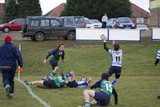
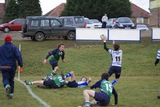
Yesterday afternoon, I spent a freezing hour and some change on the side of a very muddy rugby pitch watching my son's team take on the team with the worst reputation for dirty play in the league. It was a good, hard game which threatened to spill over into violence a few times but never quite did.I was struck by a few things about the learning involved in a psychomotor activity like playing a sport.There is unavoidably a fair amount of behaviourist learning that goes on. Twice a week the team practices for a couple of hours. Over and over and over again, they practice the drills. Pass this way, kick that way, tackle this way, lay the ball off that way. Again. No, not like that. Like this. Again. Better. Once more. Now you're getting it. Again.And last week, my son enjoyed the fruits of this kind of learning when he scored his first try. He was running down the left wing, following their outside centre (who is one of the most gifted young players I have ever seen). Alex had the ball and was running, whippet-like for the try line. My son was exactly where he should be. Alex got tackled. The ball popped up and my son picked it up beautifully and dotted the ball down for a try.Torv's perfect takeHe was in the right place at the right time and, thanks to the drills, he did the right thing. He told me afterwards how it 'all just came together'. He had been prepared for exactly this eventuality. He saw the point and the benefits of the drills and will work at them all the harder now.He believes.Yesterday, I was chatting on the side line to one of the coaches (the father of the prodigy, Alex), who pointed out that my son needed to develop his skills at 'looking for work'. I explained that he had come rather late to the game of rugby, and was still learning the ropes. The fact that he makes the team with gaps in his knowledge is testimony to the fact that he has a lot of raw talent, but it needs to be developed. The coach promised to help him in this area and offered to get his son on the case as well.Shortly thereafter, he stepped up to the line and yelled to my son, who was close by "Torv! Look for the inside ball." Torv looked for the inside ball. A little while later, he could see that the other team was preparing to kick the ball out to touch right where my son was standing on the left wing. In these situations, there is the possibility that the winger could hoick the ball out of the air and start a run for the try line. André yelled, "Torv! Get ready for the kick!" Torv got ready for the kick.Because he really wants to improve, and because he has high regard for the coaching he gets, Torv responded to this touchline guidance.And my face lit up like a beacon.All that coaching, all those drills? That's the 'just in case' learning that you have to have in place in a psychomotor situation. But those calls from the touch line? That's 'just in time'. That's embedded learning, that is. That's learning while doing.And it works.What a happy geek I was: on a Sunday afternoon, watching my 17 year old son and his friends demonstrating the outcomes of two different approaches to learning and taking a 20:15 victory in the process.
Karyn Romeis
.
Blog
.
<span class='date ' tip=''><i class='icon-time'></i> Jul 23, 2015 08:13am</span>
|
|
Interview: Dr. Kenneth E. Hartman, former President of Drexel University Online and now Senior Fellow at EduventuresWe discuss the future of Higher EducationTrendsGrowth of online learningOnline education is being commoditizedDemand for lower cost degreesSurvival of many institutions will be dependent onInnovative pedagogyOnline/Hybrid with proven outcomesControversies Changes to accreditation High discount ratesThe 3 year bachelor's degreeMOOCs Chasing international studentsBright SpotsInnovative young companies bringing new tools and delivery methodsNew modes of learning and computer-adaptive assessmentLinksThe 'No Wake Syndrome' by Kenneth E. Hartman (Inside Higher Ed, February 11, 2013)Podsafe Music from Magnatune"Something About Eve" by Falling You. Ethereal ambient new age music from magnatune.com.Duration: 33:48
Rods Pulse Podcast
.
Blog
.
<span class='date ' tip=''><i class='icon-time'></i> Jul 23, 2015 08:12am</span>
|
|
I recently had a rather public run-in with an old school friend. She had posted a photograph on Facebook of a mother and child behaving in a way that most of us would find socially inappropriate. But the exchange of comments on the photograph offended me far more than the subject matter of the photograph. The implication was that, as members of a different racial group, these people were in fact, subhuman, which explained the behaviour. I guess I realised that some people still held onto those archaic, offensive and unfounded views, but I was surprised to find them among relatively intelligent people. People I thought I knew. And stated publicly, to boot.I expressed my objection. My son asked me why I didn't just leave it and 'walk away', but what you tolerate, you endorse, I reckon. I have since walked away, but I simply had to make an opposing view heard first. I thought I was being the voice of something closer to reason, but I was advised by the old school friend that I was making a fool of myself, and indeed, much mockery of me ensued, including invitations to try to live with people who behaved in this way.Then we find ourselves dealing with outdated sexist remarks about female officials in sporting contests. The online discussions abound, ranging from shoulder shrugging, to outspoken objection from women to 'how can you judge an offside from the kitchen' (I kid you not).The original comments were actually rather laughable in the light of the fact that the English women's football team enjoys far greater success than their male counterparts. The women's rugby and cricket teams have also shown themselves to be forces to be reckoned with. When I posted a link on my Facebook page to the newspaper article linked to above, one Facebook friend mentioned his own objection to a current advertisement from Boots. The ad shows two women with streaming colds meeting in the street. They update each other on their incredibly hectic schedules and then one explains that she's just had to pop out and get some medicine for her husband who is in bed with a cold, poor thing. They part company on this note. Back to their superwoman routines. It seems this advert may have gone one step too far for male viewers, and I can't say I blame them.The campaign started a few years back with the theme tune 'Here Come the Girls' and it took a humorous look at the different approaches of the two genders to things like the office 'secret Santa' and Christmas party. Now that it has spread into life in general, and the men aren't being painted in a very flattering light. I guess Boots has identified that their customer demographic is overwhelmingly female and has decided to play to that.This is what has been called 'reverse discrimination' (which is in itself a discriminatory term, in my view). And it helps nobody's cause. Having been subjected to discrimination for so very long, one would hope that people would not subject others to treatment they found unpleasant. But it seems we have a long way to go before we acquire the sort of grace shown by Nelson Mandela on his release from prison and his appointment as President.I guess we're still off-side. We still have a lot to learn.
Karyn Romeis
.
Blog
.
<span class='date ' tip=''><i class='icon-time'></i> Jul 23, 2015 08:11am</span>
|
|
Students often find it difficult to engage with reading and writing instruction and practice, particularly when large, intimidating texts are involved. This is the third in our series of insight blog posts, aimed at helping teachers to overcome this problem. Following on from last week’s post, here are the Top 10 Tips for Using Literature (Part 2), from teacher-trainer Edmund Dudley.
Exploit audio and video
Using literature in class does not always have to involve reading. Exploiting adaptations of literary classics on DVD or listening to extracts from audio books can be more motivating than working with texts only, especially if your students have negative associations with reading as an activity.
Alternatively, consider combining text and video in the same activity. For example, choose a short extract (max 2 min) from the DVD version of a work of literature, making sure it contains no dialogue. Play it to the class and ask them to describe what is happening and what they think is going to happen next. Then provide a gapped text from the book which corresponds to the scene the students have just watched. See if they can fill the gaps with an appropriate word. In each case, there can be more than one acceptable answer for any one gap.
Get in the act
Experiment with different ways of responding to an extract, text or clip. For example, why not encourage students to perform a mini-drama or re-enactment of the scene you have been studying? Drama activities can be extremely motivating for students, especially if a variety of roles are made available which exploit the strengths and skills of different students. For example, not everyone has to be an actor; some students might prefer to work on the script, to design scenery illustrations, or to be the director.
You could even make a movie. These days, we do not need expensive camera equipment and the help of technicians in order to shoot film - many students have smartphones, which they can be encouraged to use in order to film performances. Upload the results to YouTube or a private data sharing site, and enjoy.
Encourage students to write creatively
Does this sound too ambitious an aim? Well, if we ask our students each to write an entire short story in English, then perhaps it might be. On the other hand, a simple activity like ‘Write the first line’ works extremely well in class as an initial creative-writing task. Here is how it works:
Show the students the cover of a book and elicit some information about its plot, perhaps by using quiz questions (see tip 1). Do not let students open the book. Ask everyone in the group to imagine how they think the story begins. Provide them each with a slip of paper and ask them to write ‘their’ opening sentence. Meanwhile, write the actual opening line on another slip of paper.
When the students are ready, collect all the slips of paper, mix them up and read them out one by one. Students vote for which opening sentence they think is the best. The most gratifying feature of this activity is that the ‘real’ first line is rarely the one that gets the most votes. In this way, students gain a lot of confidence, which can be further harnessed in subsequent creative-writing activities.
Get them talking
When we work with texts there is always a temptation to focus too much on comprehension; in extension activities, however, we need to make sure that we fire up students’ imagination as well. Design follow-up activities based on open-ended prompts. Aim to get students working together and give them plenty of scope to express their thoughts and opinions.
Try simple speaking activities which explore the possible opinions and motives of characters in the story you are looking at. Interviews, fishbowl debates and ‘empty chair’ activities can all motivate students to get involved and express their ideas, while also activating the language explored in the text. In the case of The Railway Children, for example (tip 3), the question ‘Was Peter right to steal the coal?’ could be the starting point for a whole-group follow-up speaking activity using one of these techniques.
Make the most of art, illustrations and drawings
The illustrations contained in graded readers can be shown to students before reading as a way of generating interest in what happens. Encourage students to make speculations based on the illustrations and, if several illustrations from the same book are being used, invite students to order them and explain the possible chain of events.
Alternatively, get the students to respond to a text by creating artwork and illustrations of their own. For example, ask students to listen to an extract from the audio version of a story and get them each to sketch what is being described. Or you could ask students to design a poster for a film-version of the book, based on a striking incident in the text they have been working with.
In conclusion
As we have seen, bringing literature into the EFL classroom does not necessarily mean dull and difficult lessons. Nor does it guarantee that students will be motivated and engaged. We need to choose texts, topics and tasks carefully, bearing in mind our students’ language level, needs and interests. Most of all, we should be careful about overdoing it: often the best way of raising interest in literature is leaving students wanting a little bit more.
We hope that you have enjoyed reading our series of Top 10 Tips.
To access the rest of the series or to find out more about insight, click here: https://elt.oup.com/feature/global/insight/Filed under: Teenagers Tagged: insight, Reading, Secondary, upper-secondary, Writing
Oxford University Press ELT blog
.
Blog
.
<span class='date ' tip=''><i class='icon-time'></i> Jul 23, 2015 08:10am</span>
|
|
Blackboard xpLor: Interview with Brad Koch, VP Product Management, Blackboard Learn.We discuss xpLor, Blackboard's first cross-platform learning object repositoryWe answer the questions:what is xpLor?how does it work?does it work with LMSs from other companies?is it for learning objects or complete courses?what's available to share in addition to Khan Academy content?how do features compare between xpLor and Bb LMS?why would anyone continue to develop courses in the Bb LMS?Northeast eLearning Consortium UnConference at USciencesPlease save the date of Monday, December 16, 2013 for the first Northeast E-Learning Consortium Un-Conference. The event will be hosted by the University of the Sciences, Philadelphia, PA. The event will also include the first Philadelphia stop on Blackboard's "Never Stop Learning Tour". Podsafe music selection from Ioda PromonetLaura Sullivan plays "Pachelbel For The Potomac" from "Pianoscapes For The Trails Of North America"Duration: 31:32
Rods Pulse Podcast
.
Blog
.
<span class='date ' tip=''><i class='icon-time'></i> Jul 23, 2015 08:10am</span>
|
|
I have a semi-official job to do in respect of the recent Learning Technologies conference in that I have to collate the Twitter stream and the various blog posts into some kind of coherent report. It is going to be a fairly immersive task and I realise that it will change my perception of the event. So I have decided to set down my own, utterly subjective view of things before that happens.As always, I noticed a significant disconnect between the conference upstairs and the exhibition downstairs. As someone put it during the post-event reflection yesterday evening: "the thought leaders are upstairs, looking at the future, while the vendors are downstairs, selling the past". Upstairs, people were saying 'content is a tyrant,' 'social is the way forward' and 'the LMS is dead', while downstairs, people were saying 'content is king' and (as Jane Bozarth put it) 'we've added social to our LMS'. Of course, the vendors will sell what the buyers want to buy. And the buyers don't know what they don't know, so they go with what they (think they) do know. Attending the free exhibition does not expose them to the messages coming out of the conference, which has a fairly significant price tag. I am increasingly convinced that we need to find a way to get the conference message to the exhibition attendees and will be putting some ideas forward to the organisers.There were two themes that came out of the conference for me, both of which aligned with where my own head has been for a while.Firstly, and fairly overwhelmingly, was the message that the value of failure has been hugely underestimated. We all know that we learn more from failure than from success. In fact, I paraphrased the key message of one speaker as 'the fear of failure is the enemy of success'. The problem is that L&D departments have been told that the whole point of us is that we are supposed to make sure that nobody fails. Ever. And when people do fail, we just know for a fact that it's going to be our fault, right? And some of us have only gone and believed this message. And so we've decided that we need to produce numbers to show what a difference we're making. And SCORM tracking to show that we did train them, but if they want to be stubborn/stupid/clumsy, well it's hardly our fault, now is it?If people are punished for failing, the fear of failing will prevent them from 'having a go', from being creative, from exploring alternatives. I overheard one person saying that within Virgin, people are rewarded for having ideas and making suggestions...whether they work or not. Now that sort of culture engenders creativity. When people aren't afraid of, of.... and you know what? This is where my vocabulary leaves me in the lurch. What is it that follows failure in a culture that doesn't tolerate it? Do you get fired? Do you get laughed at? Do you get passed over for promotion or a salary increase? Well, whatever it is, it is clear that it needs to stop. People need to be encouraged to be brave, to be creative, to use their own initiative. Because it is these attitudes that will bring the results.It is also these attitudes that are essential for an effective implementation of the other key theme, namely embedded learning. Increasingly, we are seeing people looking at ways to take the water to the horse, of putting the support where the people are. Mobile learning and social learning tools are part of the way that this can happen. They are the tools that help Joe Bloggs to go from the moment we call 'identifying a learning need' (and he calls 'oh hell, I can't remember how to do this') to finding a solution then and there, implementing it, and getting on with his life.Picking up on the contrast between our name for that moment and Joe's name for it, another, less strident theme for me was speaking the language of the business. L&D needs to be aligned to the organisational business goals and express itself in those terms to the SMT/board. Intead of going in there half cocked with words like social learning and connectivism and twitter and all that malarkey, further convincing the decision makers that we are from some other breed who have no strategic advice to offer, we need to be expressing ourselves in terms of performance indicators and increased productivity and improved efficiency and such.No doubt other bloggers will add their perceptions of both the conference and the exhibition, and I look forward to reading those. If you're one of them, please use the #lt11uk tag so that I can find yours.
Karyn Romeis
.
Blog
.
<span class='date ' tip=''><i class='icon-time'></i> Jul 23, 2015 08:10am</span>
|