Blogs
|
Robert McLarty, Head of Professional Development at OUP, gives a brief introduction to the European Profiling Grid (EPG) project to help improve the quality and effectiveness of language training.
I play golf in the most average way possible. I have been at the same level of golf since I left school around forty years ago. If I were learning English, my teacher would already have placed me right in the middle of the intermediate plateau. Luckily, golf is only a hobby so I don’t have to justify my level to anyone but myself.
Language teachers, on the other hand, have always found it hard to assess themselves. For a long time we have had the debate about native speakers as opposed to non-native speakers. Then there have been disputes as to whether knowledge of the language or ability to illustrate that knowledge and pass it on is the more important skill.
There are a number of initial teaching qualifications for language teachers, others for more experienced ones, and then a wide range of post-graduate qualifications. But how much do they improve the quality of someone’s teaching? Experience seems valued until the teacher has been somewhere too long; inexperience is valued because it is usually added to with zest and vigour. But there is always a question mark over the rookie teacher, despite the fact that they innovate without meaning to and often bring genuine passion to the classroom.
Within teaching establishments there is usually a wide range of teacher profiles with a completely individual mix of talents and qualities, strengths and occasional weaknesses. That is what’s so engaging about language teaching - but it also brings its own risk. Other professions can increase the value and the price of their service simply by having a linear progression of qualifications. This will never work for education. There are too many other factors to take into consideration.
So, when a school claims that their teaching staff is qualified and experienced, what does this mean? Does it necessarily add value? Why are they better than the competition or better than the new school, which is lowering its prices but offering the same level of service?
Image courtesy of EPG
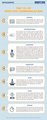
Against this backdrop, a very exciting project has been run by a group of institutions from across Europe who have developed the European Profiling Grid. This is a framework of competences for language teachers available as an online assessment tool. The same tool can be used by the teachers themselves, their trainers or their managers.
By plotting your level to a range of descriptors in four main areas, you arrive at a profile (often jagged) of your teaching as it is today. You are encouraged to assess your training and experience, including observed teaching, your teaching skills along with other life skills such as intercultural competence, your digital literacy, and your professionalism.
Discussing it with a group of managers, trainers and teachers at the recent IATEFL BESIG conference, a number of conclusions were drawn. There was consensus that it will be a useful tool for professional development in that it shows where a teacher needs further training; it will act as a good starting point for an appraisal conversation; it is a useful official document confirming a teacher’s competence at any given time, and; as a collection of records it will give an accurate profile of an institution’s professional knowhow and experience - very useful when bidding for new business or preparing for inspections.
The same discussion raised doubts about the lack of personal skills areas in the grid - communication, collaboration, charisma, creativity and so on - and it’s hoped that these will be addressed at some stage. It was also noted that schools could misuse the grid in a judgmental way, which might actually be damaging for a particular teacher.
As part of a professional development portfolio, however, the grid got a big welcome. In much the same way as the CEFR was greeted with caution and grew into a vital benchmarking system for language learners, I expect the EPG will be in common parlance in the teaching world within a short space of time.
The first iteration is now available on the EPG Project website. Try it out and submit feedback to the project team.Filed under: Professional Development Tagged: Education, EPG Project, European Profiling Grid, IATEFL BESIG, Language education, Oxford Teachers' Academy, Professional Development, Robert McLarty, Teacher Development, Teaching qualifications
Oxford University Press ELT blog
.
Blog
.
<span class='date ' tip=''><i class='icon-time'></i> Jul 23, 2015 10:09am</span>
|
|
There are many ways to create online content that delivers your message and can also generate income. In today’s LMScast Joshua Millage and Christopher Badgett talk about how to monetize a podcast by offering online courses. A previous LMScast episode in this series on monetization focused on blogging. Podcasting is another approach to consider.
Creating a podcast is quite an undertaking, and if you choose to employ this method understand that there is a lot of work involved, but there are also distinct advantages, one of which is personal appeal.
A blog features the written word of a writer but a podcast employs the spoken word of a host, and possibly also a video image of the person delivering the message. This provides an even deeper rapport with viewers, as voice and images of a person presenting your material psychologically establishes a greater level of trust in the information being presented. The host may also interview guests who are respected experts on a subject, and their influence validates the host’s credibility.
Everything you present in your podcast, including information shared by guests, can become the basis for an online course based upon the best ideas and information in your industry. One example is our affiliated Infusioncast podcast where we help people set up and optimize their Infusionsoft application as well as their website. Often people have difficulty grasping how the application and their website function together. Teaching these processes sets a foundation for creating a course as well as building an online community, and those become valuable resources that can be monetized.
All the content you bring together for your podcasts can be organized and placed into a system like lifterLMS to create courses and certifications, which can then be sold. The key is knowing what you can present for free and what should be monetized. The rubric for that is to structure your information into why, what, and how.
For example, John Lee Dumas produces a daily podcast called Podcasters’ Paradise. He shares information about successful podcasting that establishes him as a trusted advisor. His podcast creates interest in joining his community and accessing his resources. People are willing to pay for that support system and to learn the processes he uses to succeed. This same dynamic works with Joshua’s Infusioncast podcast and Infusioncast Confidential Facebook group. Bringing together the what and why of a subject area creates demand for the how.
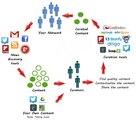
Information itself is vast and expansive, and as such can be overwhelming. Because of this, content curation as a process of gathering information and organizing it becomes a valuable function of blogging and podcasting. Curating information into the structure of an online course offering makes it even more accessible and, therefore, more valuable. Andrew Warner adds another level of value to his Mixergy podcast by interviewing guests for his free podcast, and then continuing those interviews to provide exclusive in depth tactical information in advanced courses for his Mixergy Premium paid subscribers.
If you are debating whether you want to pursue developing a blog or a podcast, consider that in creating a podcast you essentially create a blog as well, so you actually can do both. Podcasting will also build your multimedia skills and that will help you design much better online courses, especially with a WordPress LMS plugin like our lifterLMS.
Whatever you decide, remember that consistency in your presentations is basic to how to monetize a podcast, because without consistency in quality and frequency you will not build or maintain an audience, and certainly not paid subscribers.
Remember that you can post comments and also subscribe to our newsletter at LMSCast.com for updates, developments, and future episodes of LMScast. Thank you for joining us.
joshua millage: Hello, everyone. We’re back with another LMScast episode. I’m Joshua Millage and I’m joined with Christopher Badgett. Today we’re talking about how to monetize your podcast. This is in a series, I guess you could say, of monetization-type episodes. Monetizing a podcast is slightly different than monetizing a blog. Chris, what do you see as some of those differences?
chris badgett: In the last episode we talked about how to monetize a blog, and I’d definitely kick it off by also saying congratulations to anybody who’s gone to the effort of creating a podcast, which is a huge effort. We all know the power of content marketing. Creating a podcast is difficult and keeping that momentum. The big difference between that medium format from the written word and blogging, there’s a couple things going on. One is the host of the podcast. It tends to have an even higher level of trust with his audience, because either it’s a video podcast or audio podcast. You feel a more real human connection faster than reading the written word in most cases. Even with smaller audiences on a podcast, you tend to have even deeper rapport than somebody with a broader audience who writes frequently. That’s one big difference.
The other thing is podcasters are often interviewing other guests or experts in their field and stuff, so they tend to have a very big amount of influence but also play the role of researcher in the sense of collecting some of the best information and ideas in their industry, and so on, which is fertile ground for creating an online course.
joshua millage: I think one of the advantages that podcasters have is in the process of creating your podcast you are creating your course. A good example of that is with our other podcast, Infusioncast, I’m going through the process of explaining to people not only how to set up and optimize their Infusionsoft application, but at the same time set up and optimize their website. Because I will find that that always seems to be the gap. It doesn’t really matter what the business is, whether they’re selling info products or whether they’re a coach or a speaker, an author, or a brick and mortar, they have this disconnect between utilizing their website and Infusionsoft well.
Every single Monday, Tuesday, Wednesday, Thursday we go through this process of these are some things you should be doing this week. These are some things we should be doing next week. As I look at it, those are like modules. That’s my own unique format over there that we’re going through, but I’m really creating a course and a community that’s valuable that can be monetized.
I think what’s interesting is as I think about it six months from now really when I have that much content together is when I’m going to personally feel comfortable by going back and taking that and putting it into a system like lifterLMS and creating courses and certifications and things around that. Because I think that it would be valuable to say, "Hey, I was certified by the Infusioncast methodology," so that when those people go out, if they’re ICCs for instance, they have another badge to say they’ve been certified in another different way. It lends more social proof. Those are the advantages for putting all this in a system like lifterLMS.
The one that I’m not mentioning is the fact that I can now sell that information. People are going to be like, "Joshua, why would you sell or how could you even sell it, because you gave it all away for free on the podcast?" And they’re right. The thing that I’ve realized is that there is intrinsic value in structuring information. Having it all in an episode list is inherently less valuable than structuring it and putting it in a course. I want people to suspend their disbelief on that for a second, because it happens all the time.
You you mentioned John Lee Dumas. John Lee Dumas has an incredible program called Podcasters’ Paradise. It’s cheaper now, but I bought into it I paid two grand for it. That’s a lot of money. The fact of the matter is, I could have found all the things that I learned on YouTube videos and all over the web. I could have.
chris badgett: But I watched you become an efficient podcaster not just with one podcast but with two podcasts just like that. So that course rocketed you to what you wanted to do.
joshua millage: Yeah, that two grand was time saved, because I didn’t have to go scouring all the web for a way of doing things. I look at a guy, John Lee Dumas, who’s putting out a podcast every stinking day and go, "I want to know what he knows. I want to know the inside of that machine." I got to see the inside of that machine, and beyond that the community, which is what has really been helpful. There’s so many brilliant Paradisers. I need to be more active, but I’ve been pretty active in the Facebook group and that sort of thing. That community has inspired me, too. There’s the aspect of the content. What’s the saying? People come for the content but stay for the community? I think that’s the thing that has helped me with that. That goes to show you too with a podcast, Infusioncast, for instance, has about 2,000 unique listens every week. There’s a community there. Now I’m the process of taking the community that listens to me every week and getting them to engage with me somewhere else. Right now, Infusioncast Confidential, our Facebook group, is that. All of that to say is this is how you connect the dots in the podcast realm, bringing it together into a product that people would be willing to purchase.
chris badgett: Absolutely. I think another good word to really wrap your head around is curation or curating. When you create a podcast or you write a blog, you’re curating content. In the past the internet was all about, "oh wow, I have access to all this information." Now it’s about there’s too much information. We’re all overloaded. Let’s curate it, get the best of the best. You did that the first round with the podcast and now that you’ve curated it you can take it another step and curate it even more into an even more valuable online course.
Just for everybody listening, we talked about John Lee Dumas and Podcasters’ Paradise, his online course, but we’d like to also talk about Mixergy, which is a great podcast I’ve been listening to for years. It’s my free business education. Andrew Warner, who you know personally I believe, behind that. It’s an awesome podcast about the entrepreneurship, especially in the digital space. Andrew takes an interesting model with how he blends his podcasts with online education. Correct me if I’m wrong here, but I believe he has guests come on for an hour for free, and then maybe some of those guests, they stick around for another hour and teach something more in depth and tactical about the whatever they covered in the first part in the free episode. That goes into his membership site as the advanced training that the members pay a monthly for, which is called Mixergy Premium. Is that right?
joshua millage: It is right. That’s one of the ways. I don’t know. His format has changed a little bit now, but he has done that format before. People do come on for an interview that’s more of their story, and then they teach the tactics in the premium. He’s done such a good job in the last year really of organizing that. You can go on and click PR for instance, and there’s all these advanced courses on PR and that sort of thing. In my experience, and I will say this boldly, that I think if you want a business education and you make a point to listen to a Mixergy interview every day, in six months you will have more tactical, relevant business knowledge than you do if you went and got an MBA. That’s because I have an MBA, and I can speak directly to that. I think in the six months when I was recovering from an illness that I got in Asia … I won’t get into that story right now, but I was basically on my back for six months, and every day I listened to a minimum of one Mixergy interview. In that six month period from what I had learned, it landed me a job in Los Angeles at an ad agency, because I was able to pitch bloggers and I understood that world, because I had heard so many stories and I had learned really well. I had joined Mixergy Premium, and I had learned the tactics, too. I had the theoretical from the story side of it, and I had the tactical, like these are the things I can actually do, which is his methodology.
That’s another format, and I think what I admire.
chris badgett: There’s another rubric there I just want to give the listeners, which is I’ve heard it described this way: the free podcast contains the why and the what, but you’ve got to pay for the how to. It’s just a way to think about it if you’re thinking about how could I start a podcast and then build a course.
joshua millage: Absolutely.
chris badgett: The what’s free and the how, you’ve got to pay for that.
joshua millage: Absolutely. I think the thing with all of this that I want to end on is this isn’t for the faint of heart. It takes stamina. John Lee Dumas I see is now in the 800’s in terms of podcasts he’s put out. Andrew’s broken 1,000, which was awesome. That 1,000th interview was pretty cool the way he did that one. These guys have been doing this for a while, for a long time, so the people who are listening, make sure you have that long-term mindset. If you’re someone who just wants to build a course, our system, lifterLMS, is perfect for that, but I think it is enhanced when you start to do something with a commitment to consistency and putting out something.
We’ve talked about blogging in our last episode. We’re talking about podcasting in this one. Both of them, the reason that these methods are going to make you successful is you’re putting things out there, free things out there for people to get to know you. That makes them much more likely to buy your paid stuff. That’s something that’s really, really important. I think in a future episode we should definitely cover how to ask your audience what they would purchase, so you don’t build something that they wouldn’t want to purchase. That’s kind of in this and we’re not touching on that today, but the key is put something out there, market something, do something to get eyeballs on you so that you can make your course profitable. I think a lot of edupreneurs, as I would like to call them, are missing that. It’s key. It’s crucial if you actually want to make this a full-time thing.
chris badgett: Absolutely. I’ll just cap it off with one pro tip, and that is if I had to choose between doing a podcast or doing a blog as my free line of content, I would actually choose the podcast, for two reasons. The first reason is that like we do here with LMScast, this podcast, our conversation here gets transcribed and basically turned into a blog also, so you’re killing two birds with one stone.
joshua millage: Totally.
chris badgett: The other thing is as you go into an online course, an online education, whether you build your learning management system with lifterLMS or not, is once you’ve practiced podcasting, you’re getting good at audio. If you want to, you can make more money by selling a course that includes multimedia format. It’s not just the written word. It may contain some audio and some video. Starting a podcast is a great way to get comfortable and used to teaching either on camera or at least in the audio format.
joshua millage: Absolutely. There’s a lot of nuggets of knowledge and wisdom in this episode for everyone. I hope you enjoyed it, and please reach out to us at lmscast.com. We’d love to hear your thoughts and the comments on this episode, so talk to us there. Until next time, we’ll talk to you then.
The post How to Monetize a Podcast with Online Courses appeared first on LMScast.
Joshua Millage & Chris Badgett
.
Blog
.
<span class='date ' tip=''><i class='icon-time'></i> Jul 23, 2015 10:09am</span>
|
|
We are living in an era of information overload. So much content is shared online that curation is needed as a way to get value out of the information flood. Content curation is the process of shi…
Source: www.theedublogger.com
This explain in good detail about content curation; what it is and why we need to use it. I looking at teaching this to my 8th grade students as we method for them to "filter" through content as they create an online digital magazine.
See on Scoop.it - InformationCommunication (ICT)
Mr Kirsch's ICT Class Blog
.
Blog
.
<span class='date ' tip=''><i class='icon-time'></i> Jul 23, 2015 10:09am</span>
|
|
How is the ‘Can Do’ ethos of Headway linked to the aims of our students and the CEFR bands? Stacey Hughes will be exploring this question in the webinar: "Six Levels, Six Stages - in Sixty Minutes" on 28th November 2013 at 9:30 and 15:00 (GMT).
In the past, learning a language involved learning more about language than learning to do things with the language. What pedagogical issues does this shift in focus raise? How does it link to student expectations in the kinds of tasks we set for them?
The Common European Framework of Reference (CEFR) focuses on what students are able to do at different levels; in other words, what they are able to talk and write about and what they are able to understand from reading or listening. It is this focus on what learners can do with language - how they can effectively use language for communication - that Headway brings into its activities.
When aiming to help students achieve their learning goals, we also need to consider who our learners are and what are they learning English for. What kinds of activities and topics can course books utilize that will improve students’ ability to communicate effectively in a language? How can we extend this learning outside of the classroom?
These are some of the issues we will explore in the webinar. Using some of the CEFR level descriptors, we will identify language skills from six different level bands. We will also look at Headway’s approach to learning and see how it links to the practical application principles in these descriptors.
As teachers, we know that students gradually build up proficiency. However, students need frequent, reachable goals to see their progress. They also need to see the connection between what they are doing in a course and how it is useful for them in using the language. This webinar will show teachers how they can join the dots between activities in Headway with ‘Can Do’ objectives.
Register for the webinar now.
Filed under: Adults / Young Adults, Professional Development Tagged: Adult Learners, CEFR, Common European Framework of Reference for Languages, Headway, Headway Fourth edition, Language skills, Professional Development, Stacey Hughes, Webinar, Young Adults
Oxford University Press ELT blog
.
Blog
.
<span class='date ' tip=''><i class='icon-time'></i> Jul 23, 2015 10:09am</span>
|
|
In eLearning your number one goal is to help your audience fully understand the information they need to learn. Using a variety of media formats — including text, video, and audio — you can accommodate most individual learning styles. Plus you are offering greater worth, and therefore can charge a higher fee for your online courses. In today’s LMScast Joshua Millage and Christopher Badgett explain how to embed audio in your WordPress LMS. It’s actually easier than you might think.
There are several options for including audio in your course design. The simplest method is to use the existing media hosting capabilities that are built into WordPress. Just upload an mp3 with the "Add Media" button and you are done. In the past you had to install audio plugins for WordPress, and that is still an option if you need greater functionality. The Add Media function does have limitations depending on the scope of your presentation and size of your audience, but it is the most immediately available method.
If you have higher traffic you will need premium audio hosting to allow for greater capacity and capability. With premium hosting you also get content protection and marketing capabilities. There are many resources available to you depending on your requirements and some are not suitable for eLearning, so make sure you are paying only for what you actually need.
Libsyn is an established media hosting service that functions best as a podcasting host, but for eLearning you will be paying for services you don’t need and may have to work around. A newer provider that might be more appropriate is SoundCloud. Using this service requires some technical expertise, but it offers you more design capability. It even includes a comments capability that allows you to receive direct feedback from your students right on the waveform. It is currently geared more toward artists and musicians, but the platform is extremely flexible, which makes it perfect for online course design. It is also mobile enabled, which allows students to access your audio content wherever they are.
Mobile audio is a vital consideration for your course offerings as it allows students to take at least part of your content with them and listen while they do other things. As with SoundCloud, mobile capability should be available with your premium service. You can also just make mobile audio files of individual lessons available for download from a WordPress media library or from Dropbox. This allows access to course content when the listener is not connected to the internet.
Another advantage of audio content is that students have the option of listening in double or triple time; i.e. increasing playback speed so they can access the information in much less time, and thus stay engaged more easily.
Providing audio content is simple and direct, and knowing how to embed audio in your WordPress LMS allows you to employ that media option. It does not require expensive equipment or studio time. You can create audio files on a smartphone or computer using basic technology you already have in hand. The most important thing is to get started, and a WordPress learning management system plugin like our lifterLMS makes it easy to do just that.
As you design your online courses, remember that each student is an individual who learns in a unique way. Presenting your information with a variety of media helps you to reach each student and keep them engaged.
Remember that you can post comments and also subscribe to our newsletter at LMScast.com for updates, developments, and future episodes of LMScast. Thank you for joining us.
Joshua Millage: Hello, everyone. We’re back with another episode of LMScast. I’m Joshua Millage and I’m joined today with Christopher Badgett. Today we’re talking about how to embed audio in your WordPress LMS. This is something that I’ve been doing for a long time with our sister podcast, Infusioncast.
Chris, why is it important to use so many different forms of media? Let’s start there before we get into the tactic today.
Chris Badgett: There’s two primary reasons for that, and we’ve done a separate podcast episode about each of these. But real quickly they are number one: our main goal is always to focus on the learner learning. When they’re getting multimedia forms of content, whether that be text, video and audio, you’re adapting to different learning styles, so people really connect with the different formats. That’s a big reason.
The other reason is when you create that multimedia learning content you can also charge more money for it. It’s more valuable. There’s more perceived value in the marketplace. Those are the two main reasons.
Joshua Millage: That’s amazing. Let me take it into the tactic today, because I have been podcasting and using audio for a really long time, and there’s a lot of different options. I think for people to go and depending on what they’re trying to do and how much protection or how much freedom they want to have there’s a lot of different options.
I think first and foremost you can utilize your WordPress media hosting capabilities if you want. There’s some advantages and disadvantages. Advantages is you’re keeping everything in one spot. Do you happen to know off the top of your head any good audio player plugins? I personally don’t.
Chris Badgett: There’s a bunch of free ones that are on the WordPress repository. There’s one called zen-something I’ve used before. The interesting thing that’s happened lately with WordPress is you no longer need that stuff. You can get it if you want it because that audio plugin has a better design or whatever, but by default now when you click the Add Media button on WordPress, whether that’s a lesson or any post or page for that matter, if you upload an mp3 it will put in a nice responsive play button, the bar …
Joshua Millage: Oh really, so they have it built in.
Chris Badgett: It’s built in now.
Joshua Millage: Oh wow, that’s amazing.
Chris Badgett: But like you said, there are some constraints that come with if you go that route and you have a high traffic site, and also with WordPress media library itself and the type of hosting you’re on. I think by default you start out with a 64-megabyte upload limit. If your audio gets too big you’re going to run into that limit, which can be raised in some cases on your hosting account but you’re starting to get into where you should really be getting into premium audio hosting.
Joshua Millage: Absolutely, absolutely. I think that’s the next step would be premium audio hosting. There’s a lot of options for that nowadays, too. If you’re coming from a podcast angle, like you want to utilize content in your online course and you want to protect it but you also want to maybe utilize it as a marketing channel, there’s two main players in the podcast media hosting space. There is SoundCloud, which is kind of the new boy on the block, I guess you could say, and then there’s Libsyn.
Libsyn‘s been around for years. They’re pretty bulletproof. I like Libsyn for a lot of reasons. I don’t use Libsyn, but I like Libsyn. I think that if you’re pure podcasting, go Libsyn and then in your courses you actually might want to utilize something else. Because Libsyn’s geared towards giving you an RSS feed for syndication. You could utilize Libsyn, have a subchannel, and make all of that protected and embed that using their players, but you’re just going to be spending more money. So in this use case, I would say Libsyn’s probably not the best. If you’re pure podcasting, Libysn’s awesome.
Now if you want a hybrid of both, and actually the one that I utilize is SoundCloud, because SoundCloud allows for … and they’re not as advanced in the podcasting space as Libsyn so you need to be a little techy if you want to use it for podcasting, like you have to do some kind of hacky things to get it out there. But if you’re just utilizing it for an LMS purpose, it’s amazing. You would upload the audio. They have these beautiful HTML 5 audio players. They look gorgeous. One of the coolest features I think is that you can actually drop comments in along the wave form. You have this wave form that goes up and down, and as you’re talking, as you’re giving your lecture, if your lecture is at minute seven then someone could actually jump in and comment on minute seven. "Hey professor" or "Hey Chris, what did you actually mean by x, y and z?" That adds a social aspect that is pretty awesome. Then you could utilize that for podcasting also. You could keep some tracks private, some tracks public. You could have the public tracks go into your RSS feed.
If people are really interested in podcasting, I’m happy to make a video about podcasting as a mechanism for marketing for your LMS. That would be a really fun video and I could walk through the how-to of how that works. I think for the sake of this episode and to keep it concise, I would highly recommend SoundCloud as the number one pick for educational media hosting and embedding. It’s just really flexible. If someone were to access your site on their mobile device, they’d be able to play it no problem there. I know some people might be going "SoundCloud doesn’t have anything … if I go to the site it has nothing to do with LMS," and they’re right. It’s mainly geared towards musicians and artists right now, not even podcasters. But the platform is so dynamic that I think it works really, really well.
Chris Badgett: Absolutely. One of the other things that we run into is people with their WordPress learning management system, they want people to be able to take the courses on their phone when they’re offline. You can’t really do that without going into a native iPhone, Android app-type situation. What you can do is also offer an audio download on an individual lesson so there’s a download link so the person can download that audio file for that lesson and go for a run and listen to it, that sort of thing. They don’t have to be connected to the internet.
For that, I don’t know about SoundCloud, but in the past if it’s small enough I would put that audio file on my WordPress media library and create a download link. If it was bigger I would put it in the Dropbox in a public folder and have a download link so they could pull it down from Dropbox.
Joshua Millage: Yeah, that’s another great way to do things for sure. Chris, I think this is a really helpful episode. I think a lot of people are going to enjoy figuring out how to embed audio. I think it’s a little different than video. I think there’s some advantages and some disadvantages, but our recommendation is when you’re creating an online course to use all the different forms of media, because you don’t know exactly how your student is going to learn.
That is huge, huge, huge, and I think it’s really important to be considerate of how everyone learns. I’m an audio guy so I’m a little biased in this episode. I like audio and I like audio for the simple reason, and this is something that a lot of people don’t think about, I listen to things in double or triple time. I have conditioned myself to not be thrown off by the fact that when I do that people sound like chipmunks. Because that doesn’t matter I can get through so much more information. It’s like being in the Matrix scene where they put the jack in the back of the head. I feel like that’s what I’m doing when I listen to things in double or triple speed.
That’s something that people don’t consider. I would highly recommend putting audio out there for weirdos like me who listen to it in double time. I can get through your course faster. It keeps me engaged, and it just helps with my ADD. At the end of the day that’s why I’m doing it. Cool. Do you have any final thoughts for the audience here, Chris?
Chris Badgett: Sure. I would say if you’re just creating your first audio lesson or a full audio course, it’s important just not to get too wrapped in all of the fancy mics and equipment and stuff you can get. You can literally record your first audio lesson on your smartphone, on your iPhone, on your Android. All computers have some kind of audio recorder built into it like GarageBand on a Mac. I’m not sure what the Windows equivalent is, but it’s just one of those things where you just got to do it and then over time you’ll continue to make better and better quality audio. If you happen to be watching this video version of this podcast you’ll see Joshua in his sound room with his more advanced audio equipment, but just start. That’s the most important thing.
Joshua Millage: Yeah, absolutely. Awesome. All right, folks. We would love to hear your feedback on this. You can reach us over at LMScast.com and just click this episode, leave us a comment. We’d love to hear from you. Until next time, we’ll talk to you then.
The post How to Embed Audio in Your WordPress LMS appeared first on LMScast.
Joshua Millage & Chris Badgett
.
Blog
.
<span class='date ' tip=''><i class='icon-time'></i> Jul 23, 2015 10:08am</span>
|
|
Thanks to Craig Kemp for this blog post. Excellent tutorial on how to archive Twitter chats on @storify.
Source: mrkempnz.com
See on Scoop.it - InformationCommunication (ICT)
Mr Kirsch's ICT Class Blog
.
Blog
.
<span class='date ' tip=''><i class='icon-time'></i> Jul 23, 2015 10:08am</span>
|
|
Image courtesy of Jack Dorsey via Flickr
Ian Brookes is a freelance writer and editor based in Scotland. He has edited a number of dictionaries and has written books about spelling, writing, and punctuation. In this post, he looks at the anomaly of double consonants in certain English words.
The presence of doubled consonants in certain words can present a great challenge for students attempting to get to grips with English spelling. The sound of a word will often give an idea of whether a single letter or a double is required, but it is quite possible for two words to sound alike and yet for one to be spelt with a single consonant and one with a double. Why is there only one ‘b’ in habit but two in rabbit? Why should there not be a double ‘l’ in auxiliary when the letter is doubled in ancillary?
Examples like these might suggest that students will look in vain for any rational pattern. But, in fact, English spelling is not entirely arbitrary; it is just that the spellings of English words reflect the origins of the words rather than their sounds. Rabbit is spelt with a double ‘b’ because it comes from a Flemish word robbe; habit has one ‘b’ because it comes from a Latin word habitus. English has taken its vocabulary from a variety of languages, and each of these languages has its own spelling patterns. The presence of words from different languages side by side in modern English leads to some apparent inconsistencies in its spelling.
So, my first point is that any information you have about the origin of a word can be useful in determining its spelling. This information may come from thinking about the spellings of other words within the same word family: for example, if you can think of perennial and millennium as being members of the same word family as annual (they are all derived from a Latin word meaning ‘year’), you can be confident that these words will be spelt with a double ‘n’.
Some learners may even be able to apply knowledge of the language from which the words came into English. (This is why contestants in spelling-bee competitions sometimes ask for word origins before giving an answer.) Loan-words from Japanese or from Polynesian languages, for example, do not usually have doubled consonants, whereas words from Germanic languages are more likely to have them.
For most students, however, the origins of English words are even more obscure than their spellings. So a more practical strategy for remembering tricky spellings is to learn or make up a little phrase that acts as a reminder. I still remember how to spell necessary from being told that ‘it is necessary for a shirt to have one collar and two sleeves’ (so I think of it having one ‘c’ and two ‘s’s). Here are a few more memory guides along the same lines:
This accommodation has two double rooms and two singles (double ‘c’ and ‘m’, single ‘d’ and ‘t’).
A committee should have as many members as possible (double ‘c’ and double ‘t’).
The show was a success and they doubled their money (double ‘c’ and double ‘s’).
I find such devices to be a powerful learning tool. Not only that, but the model is entirely flexible, so that students can devise their own memory guides, using their own native languages and employing contexts that are meaningful to them, as a way of remembering tricky spellings.
What useful phrases have you taught to your students to help them remember tricky spellings? Share them in the comments below.Filed under: Dictionaries & Reference, Grammar & Vocabulary Tagged: Doubled consonants, English Language, English spelling, Etymology, Ian Brookes, Linguistics, OALD, OALD8, Oxford Advanced Learner's Dictionary, Spelling, Word origins
Oxford University Press ELT blog
.
Blog
.
<span class='date ' tip=''><i class='icon-time'></i> Jul 23, 2015 10:08am</span>
|
|
February 24, 2015
Following the post we shared here a few weeks ago featuring some useful resources to help teachers and educators master the art of presenting, somebody sent us this beautiful visual…
Source: www.educatorstechnology.com
Students please look at this infographic as a template for you to look at when you start to piece together your information.
See on Scoop.it - InformationCommunication (ICT)
Mr Kirsch's ICT Class Blog
.
Blog
.
<span class='date ' tip=''><i class='icon-time'></i> Jul 23, 2015 10:08am</span>
|
|
There has never been a better time to publish your book, because now you can do it online. And if you know how to monetize a book with online courses, you can realize unprecedented profits from it. In today’s LMScast with Joshua Millage and Christopher Badgett we discuss how publishing an eBook can be a great introduction to your online course offerings.
There are some compelling reasons to publish a book online. First, the conventional book format is simply difficult for a lot of people. Every individual learns differently, and book-based coursework prevents some students from assimilating the information they need. In digital format, however, a book can incorporate interactive media that makes information more understandable. It’s all about giving the end user whatever they need to succeed in your courses.
Another incentive is revenue potential. As an overview of the areas your course covers, an eBook can be an affordable introduction that demonstrates the value of your paid courses to potential students. Your course offerings are especially attractive if you provide a complete learning access path beyond the eBook, such as a free blog, a podcast, interactive courses sourced through a WordPress learning management system like lifterLMS, live events, mastermind groups, and coaching.
In previous discussions we have looked at monetizing podcasts and blogs, which are already online entities, but creating an eBook requires a break from traditional thinking. For digital consumption, content needs to be presented in quickly readable chunks, not long paragraphs that sit on top of each other in a visually intimidating mass like most printed textbooks. Making text content more readable and adding interactive support media makes your information far more accessible than ever before.
Students engage more with a book if it presents not only the why and what of the subject, but also the how. There is simply no better way to teach a subject than to get students to actively experience it rather than just read about it. An interactive format for your introductory eBook will also demonstrate the capabilities that your online courses offer by using examples of content already stored in your LMS so readers get a taste of the look and feel of your online classroom environment.
Most authors are more focused on their creativity or expertise in their field of study than on marketing an eBook. With an online format you can easily add a call to action, like a link to the course website or a direct purchase button. Without turning yourself into a salesperson you can effectively monetize your content with this simple device.
Online publishing provides extremely low overhead costs to write the book, publish it, promote it, and sell it while introducing your online courses. Because of this, you can afford to offer some free information and support that will make your paid courses far more appealing to potential students. Especially if your subject area is potentially intimidating for some students, offering introductory information in a variety of learning styles can help you reach those students, too.
If you have already written a book, then you have done the groundwork to expand into a full online course offering. And if you have already created your online course and are ready for students to pay to access it, then you can easily create an attractive introductory eBook synopsis. Either way, learning how to monetize a book with online courses is the most lucrative step you can take towards making your online courses successful.
Remember that you can post comments and also subscribe to our newsletter at LMScast.com for updates, developments, and future episodes of LMScast. Thank you for joining us.
joshua millage: Hello everyone. We’re back with another episode of LMScast. I’m Joshua Millage and this is Christopher Badgett. Today we’re talking about how to monetize a book and why every single author needs to be using an LMS system. Chris, the question goes to you. How do we monetize a book?
chris badgett: Awesome. We just did 2 episodes about how to monetize a blog, how to monetize a podcast. They’re all a little different based on the media format. How to monetize a book really starts with a conversation about why do that. There’s a couple of reasons. One is that a book is very largely text-based, maybe some images, but mostly text-based. We’re always a proponent of and fighting the battle for the end user, the end learner. Some people don’t do well with books.
We’ve seen a huge amount of people moving away from the written book to audible, to do audio books which you can take with you while you’re running and doing something else or driving in the car and so on. It’s just a way to really open up that content to people with different learning styles.
There’s a huge revenue potential for the author. Their raving fans that take the course are likely going to spend a lot more money for an online course, especially if it’s really full of all that multimedia type of content and also especially if the author includes something like some one on one time or group calls in there, inside the learning management system. Now that this product becomes super valuable, it’s not like a 99 cent eBook or a $25 hardback.
joshua millage: Right, yeah, that’s a great point. They can add a level of further explanation and teaching too, which is interesting. This is really exciting to me because I used to work with a lot of authors, and I think one of the first things that you can do when you’re thinking about monetizing your book, and this is a little more tactical, is chunking it down into focus areas. I think that a lot of authors do a great job of theoretically talking about whatever their subject matter is, but then they don’t go into the application side of it, like applied whatever it is, and helping people chunk things down into actionable steps. Would you agree with that?
chris badgett: Absolutely. A lot of books are about the why and the what, but not necessarily the how to and the action items. Mostly we’re talking about the non-fiction niche in that part of the bookstore.
joshua millage: Yeah, I think you’re right. The how is what people will really pay for. I think that’s the thing when you focus on that then you can create a really valuable course. The book actually then can become kind of a lead generation into your course. I’ve seen a lot of people do that. Actually, the direct marketing guys do it the most blatantly and probably the best at the end of almost every chapter. If you want more, head over to so and so and sign up for my, in their case, it’s usually a newsletter. That’s kind of the old school LMS. The paper newsletter and getting lessons and things every month. I’m reading a book by John Carlton, and it’s like every single chapter is a pitch for that.
chris badgett: To go to the website.
joshua millage: To go the website and to enter in your email to receive something for free, but you know what’s happening. They’re going to put you in a sales funnel, which I think is pretty cool. I think that a lot of people should look at their book as one of the ways to earn money and generate leads for the overall business.
I think a lot of authors don’t look at themselves as a business. They don’t look at their content, they look at themselves as an artist or an author and not someone who should be focused on the money. I think that, not that you should be 100% gung ho, like money, money, money, but as an author in this day and age, there’s never been a better time to monetize your knowledge and monetize your teaching and utilize systems that are really low overhead.
Like with lifterLMS, you buy that plug in for a hundred bucks, and you spin up a WordPress site. I bet you can get everything done for under 500 bucks and you could have a product that could generate thousands upon thousands of dollars of revenue depending on, there’s a lot of things I’m leaving out of that equation. You’ve got to be able to generate leads and things. But if you have a book going out there, that’s going to happen. If you have things in your book that say, "Hey come and take the course that has to do with this chapter," you’re going to have more leads than you know what to do with. I think that’s really important.
Then in the customer life cycle, after you do the lead generation work which the book can really work, then you’ve got to nurture them so you’re putting out content, free content, free lessons and things that converts them on to your paid program.
chris badgett: Absolutely. It might be a little overwhelming for a beginner, but this system is a really good medium to advanced skill stuff here is looking at your full sales funnel. Looking at what some people call the integrated products suite where you might have an eBook, a book, free blog, a podcast, online courses with your WordPress LMS, live events, mastermind groups, one on one coaching, group coaching. All these things can work together, if you are a subject matter expert, to really propel you forward.
joshua millage: Right. I would love to hear people’s thoughts on this subject and if they have started to monetize their book. What their experience has been like? I know a lot of authors that I’ve worked with in the past. They’re like, "I wrote the book. I thought everything would come together." It’s like, "No, the journey just started." There’s an elephant you have to eat, and you can eat it bite by bite. You can just chunk it down.
chris badgett: I’ve heard a lot of authors also say, "I didn’t write a book for the money." It’s getting harder and harder unless you have a runaway best seller to actually make decent income from publishing a book. What it does become is a big business card. You get exposure on Amazon.com and some of the other popular platforms.
joshua millage: Right. I think it’s a huge benefit. This is great man. This is kind of the book end, no pun intended, for the monetization episodes that we’ve done. Are there any closing thoughts that you have for the audience?
chris badgett: Yeah, I would just say if you have written a book, you’ve already done a lot of the hard work that online course entrepreneurs face in terms of doing research, getting organized, dividing things into chapters and subheadings and so on. You already have the raw building materials to create an online course. In many ways your job is much easier, it’s not about getting started, it’s about morphing it into an online course, chunking it out, adding value. You’re already ahead of the curve.
If you’re a book author and you’re thinking about creating an online course, in some ways you have it easier than people who are starting at the beginning with just creating an online course. I’m also going to say the opposite. If you are an online course creator and want to get into the book market to help get exposure for you and your brand and your subject matter expertise, go for it.
I actually challenged myself once to write a book in a weekend, self publish it. It was up on Amazon in 2 days. It’s called Outdoor Leadership Secrets. You can look it up. It’s totally possible to create a book fast. It’s totally possible to create an online course fast. It’s all about pulling the trigger and riding the bullet as we say. And not stumbling over yourself. Get out there, publish it, put it up there for sale. You can make it better as time goes on.
joshua millage: Yeah, that’s great. It’s really just getting over the fear and going for it. I love that Chris. Thank you all for listening to us. We love doing these episodes and I hope that you find this one valuable. You can head over to LMScast.com and leave us a comment. We want to have a conversation around these topics and see if we can help you further over there at the blog. Thank you so much for listening. We’ll talk to you next week.
The post How to Monetize a Book with Online Courses appeared first on LMScast.
Joshua Millage & Chris Badgett
.
Blog
.
<span class='date ' tip=''><i class='icon-time'></i> Jul 23, 2015 10:08am</span>
|
|
Karen Capel, an Academic Coordinator and teacher trainer, returns with another post for Coordinators and Directors of Study, sharing her tips for observing teachers in class.
Observing teachers on your staff on a regular basis is one of the essential tools to ensure the quality of the service you offer to students. As a result, it is of paramount importance to utilise class observation in a sensible yet effective way in order to achieve not only the expected results, but also the professional and personal growth of the members of your team. It helps them feel valued and creates athe sense of belonging necessary for each individual to work to the utmost of their abilities.
When one starts observing lessons, the focus tends to be on the technicalities that we believe are the key elements of a good lesson: having a clear objective; giving instructions and checking understanding; eliciting responses from students; classroom management strategies; use of materials; TTT and STT (Teacher Talking Time and Student Talking Time) to mention just a few. However, my experience proves that there are some other underlying elements which can mean the difference between a lesson being a success or a complete failure. For example, the rapport the teacher establishes with the students, which can result in better engagement with the planned activities, with students participating actively and therefore acquiring the target language easily.
Other aspects of equal importance include whether the contexts and activities chosen are appropriate for both the level and age of the students, and the balance of activities and interaction patterns used. These will enable the teacher to deliver a lesson which caters for all learning styles, gives all students the opportunity to express their ideas and clarify any issues which may arise, as well as practise and reflect on the target language.
What tends to be overlooked is being flexible enough to recognise opportunities to share knowledge with students. Often students come up with questions, raise doubts or even point out mistakes - which gives rise to opportunities to explain things more clearly, to share your knowledge - but often these opportunities are ignored by teachers due to a desire to focus on set objectives for the lesson. In these situations, taking the time to explain things further leads to further learning and students leave the classroom with the feeling of having had an enjoyable time while learning about the language in a memorable way.
The pace of the lesson is also crucial. Too fast and some students may not be able to follow. Too slow and the stronger students quickly get bored. Striking a balance between allowing enough time for students to understand and actually incorporate new language items and keeping a dynamic pace which prevents dullness is the key to a successful lesson. Furthermore, activities should be linked with one another so that students see them as meaningful - we as teachers set objectives according to what we want students to learn, but we need to create contexts and link tasks in such a way that students feel there is a purpose to them and they provide a natural progression of learning.
Time management is vital as well. I have seen lessons where teachers had clear objectives and were just about able to meet them through the use of appropriate teaching techniques - eliciting when necessary, giving precise instructions, etc. - but by the end of the lesson students had learnt very little. Why? Because the teacher did not make the most of the time available. And this is imperative, since most EFL students are in contact with the target language only during their lessons, this being their only chance to listen to and practise it.
The same happens with the balance of activities and skills dealt with, as every student needs to have the chance to practise their speaking skills in every single class, considering this may be the only time they do so during the week. How can one learn a language if not given possibilities to use it? That is why STT should also be maximised.
Needless to say, all of the aforementioned points are intertwined and, one way or another, related to the role of the teacher. The teacher must be the facilitator of the lesson, always showing interest in the students’ learning and therefore closely monitoring and following what each student is doing and the difficulties they may be facing . Nevertheless, it is worth pointing out that this should not be taken as spoon-feeding them, but as providing them with the necessary tools so as to gain autonomy and control over their own learning process.
It is achieving this seemless integration of facilitation and organisation which leads to a successful lesson, rather than merely applying solid teaching techniques.Filed under: Professional Development Tagged: Advice, Class observation, Classroom management, Coordinators, Directors of Study, Educators, Karen Capel, Lessons, Observation, Planning, Supervision, Tips
Oxford University Press ELT blog
.
Blog
.
<span class='date ' tip=''><i class='icon-time'></i> Jul 23, 2015 10:08am</span>
|