Blogs
|
Source: www.educatorstechnology.com
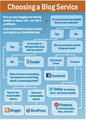
Excellent flowchart Med K. shared on his blog created by GCFLearnFree.com.
See on Scoop.it - Educational News and Web Tools
Mr Kirsch's ICT Class Blog
.
Blog
.
<span class='date ' tip=''><i class='icon-time'></i> Jul 23, 2015 10:31am</span>
|
|
How are you different from the others?
Your Unique Selling Proposition (or USP for short) is what makes you stand out from other trainers. Although USP contains the word selling, it is really about the reason why your customers pick you instead of the competition. Ideally, your USP is a strength that only you possess: an unfair advantage, so to speak, that your competitors cannot overcome. From your customers’ point of view, it is the answer to the question "Why should I buy a training from you?".
Suppose you are a business trainer specialized in establishing business relationships in China. You help out entrepreneurs who are looking to expand their businesses into China, or maybe off-shore their production there. For instance, you might be training them to recognize the importance of guanxi, or connections and relationships, in Chinese business.
Now, if you were a native speaker of Mandarin and all the other Chinese business relationship trainers only speak English, you would have an unfair advantage. You visit the country on a regular basis, read Chinese business papers and magazines and talk to lots of Chinese business people. You are uniquely qualified to explain the nuances of Chinese business etiquette. All other things being equal, your customers are more likely to pick you instead of your competitors. As long as you clearly state your USP in your marketing materials, of course.
So how do you come up with your own Unique Selling Proposition? If you are at least moderately successful, you probably already have a USP even if you don’t know it. You just need to find out what it is.
Discover Your USP
Find out what your USP is by asking your customers. Why did they choose you? Get on the phone and ask: "Why did you pick me as a trainer?". If a pattern begins to emerge, that’s probably your USP. They could be telling you: "All the others have some experience doing business in China, but I heard that you also actually speak Mandarin." Bingo! You’re the training expert in Chinese business relationships who speaks Mandarin.
But what if you don’t get a consistent answer? What if somebody tells you: "You happened to be the only trainer available." Or worse: "You were the cheapest." Competing on price cannot be a USP - by definition - because there will always be some upstart willing to undercut you be a few percent.
If you cannot identify your USP by querying your customers, you are in the same boat as a trainer who is just starting out, with no customers yet.
For Starters: Find and Validate Your USP
As a starting trainer, you cannot ask you existing customer base. Instead, try to identify your strengths by yourself. See if you have a marketable unfair advantage over other trainers. An unfair advantage could be a unique skill that nobody else in your market has. In the example mentioned above, speaking Mandarin Chinese is an unfair advantage turned into a USP.
But a USP need not necessarily be a unique skill. It can also be: offering your training in a new way. For instance, I know an IT trainer who realized that his competitors were all offering face-to-face training sessions in a traditional way. Given the topic of the training, computer skills, this is more than a bit odd: you can easily train computer skills through online training. This IT trainer started offering his services for a much lower price, which he could afford because he no longer needed to travel so much - his training sessions now took place online. But more importantly, his customers’ employees could do a large part of the training in their own time!
To identify a potential USP:
Make a list of all the potential benefits you as a trainer can offer through your training (e.g. comply with the law, increase work floor safety, increase productivity).
Compare the list with what your competitors are offering and scrap everything that your competitors are already listing.
For the remaining benefits, see what you are really good at as a trainer. Also, think about what you’re willing to offer. Don’t advertise flexible training hours if you’re not willing to work during vacations.
Once you have identified a few promising USPs, it’s time to validate these. This simply means: interview your potential customers to see which USP really resonates.
Making a USP Work for You
Your USP only works for you if customers actually recognize it. If your advertised USP is "Free post-training support" but your customers always call you because you’re available during vacations you know you should change your USP (anything ‘free’ is probably a bad USP anyway, because the ‘free’ part of it can be easily copied).
Another prerequisite for making your USP work, is that potential customers actually get to know it. This part is relatively easy - include it everywhere in your marketing:
website
brochures
email signature
facebook page
linkedin profile
twitter profile
business cards
even business conversations
As a matter of fact, if you are starting out as a trainer, you may even want to name your company (assuming you have one) after your USP - assuming you have carefully validated your USP of course.
The post Trainer, Kill Your Competition With a USP appeared first on TrainerTops Blog.
TrainerTops
.
Blog
.
<span class='date ' tip=''><i class='icon-time'></i> Jul 23, 2015 10:30am</span>
|
|
Finally! The Gamecodization project has its own website and domain:www.gamecodization.com
Adoni Sanz
.
Blog
.
<span class='date ' tip=''><i class='icon-time'></i> Jul 23, 2015 10:30am</span>
|
|
With the New Year come the New Year’s Resolutions. Maybe yours is going to the gym, learning a new language or even just relaxing more. Whatever your personal resolutions might be, there’s also a…
Source: www.business2community.com
See on Scoop.it - InformationCommunication (ICT)
Mr Kirsch's ICT Class Blog
.
Blog
.
<span class='date ' tip=''><i class='icon-time'></i> Jul 23, 2015 10:29am</span>
|
|
Do you want to increase the number of people who click through to your website by up to 150%? Follow this 5 minutes guide to get your picture next to Google search results for your online training site or company website. Let me show you what I mean:
On Google’s website, if somebody types in TrainerTops blog, or any other query which leads to this blog, my portrait shows up next to the search results. There’s at least one study that suggests this little gimmick improves click through rates by up to 150%.
Now, my own portrait won’t result in a 150% increase of course, but you are much better looking than I am, so why not give it a shot? I mean, even if it does not really increase your click throughs, at least your potential customers will recognize you. This is especially important for you as a trainer, since you always have to sell not just your training but yourself as well.
So, here’s how to include your picture in Google’s search results real quick: create a Google account if you don’t already have one; add a photo; find your Google Plus URL; paste the Google Plus URL into your website; paste your own site’s url into your Google Plus Profile.
Okay, that was maybe a bit too quick, but don’t worry, we’ll take this one step at a time.
Step 1: Add Your Picture to Your Google Account
If you don’t have a Google account yet, go to google.com and click on the "Sign in" button.
Use the Sign in button to create a new account (or sign in if you already have an account).
On the next screen, click on the "Create an account" link and follow Google’s instructions.
Now click the ‘Create account’ link
Pretty soon, you should be able to add your picture, by clicking on "Add a photo".
After you have filled out a form, you’ll get to see this screen where you can add your picture.
Step 2: Paste Your Google Plus URL into Your Website
First, look up your Google Plus URL. Proceed to Google.com, sign in and click on your your own picture in the top right corner. Then click the "View profile" button.
Click on your own portrait, then the View profile button.
Now, in the next screen, copy the url, minus the "/posts" part. Paste the copied url in Notepad or any other text editor.
Copy your Google Plus URL from the address bar of your browser.
The url should look something like this:
https://plus.google.com/u/0/102755877028915392448
It’s time to put this url in your website. There are two ways to do this:
Edit the "source code" of your site, i.e. the html code
Use your blog software or content management system to insert the url - I’ll use WordPress as an example
I’ll give you some more details for both methods shortly, but in both case you need to put the url into a so called "link" element:
<link rel="author" href="https://plus.google.com/106072584364901278079″/>
Just paste your own Google Plus url inside the quotation marks of the href to create your own link element:
<link rel="author" href="your url goes here"/>
Change the Source Code
If you have access to your site’s html code, you can paste the link element directly into the file that is responsible for your site’s header. This will typically be a file called ‘header.html’ or ‘header.php’ - but this may vary. If your site uses multiple html files containing a line with ‘<head>’ in it, you should add your link element in each of these files.
Insert the link element element directly beneath the line with the ‘<head>’ element. For example:
Paste the link element directly beneath the line with the tag ‘head’.
Once you have inserted your Google Plus URL, make sure that all changed html files are uploaded to your website.
Update the Header of Your WordPress Theme
If you are using software to edit your website, things should be slightly easier. Here, I’ll use the example of WordPress, which is blogging software.
Visit the /wp-admin/ section of your blog, then select Appearance > Editor. Now select the Header template of your theme.
Insert the link element right underneath the line with the <head> tag. Don’t forget to click the button ‘Update File’ when you’re done.
If you are using a cache plugin, such as WP Super Cache, do not forget to delete the cache.
Step 3: Tell Google Plus About Your Website
In the final step, we tell Google Plus about our website. Go to your Google profile (e.g. by clicking on your portrait) and select the "About" menu option. Then, under "Links", click the "Edit" link.
In the little window that pops up, select "Add custom link".
Under label, fill in the name of your site. For URL, type in the complete address of your website. Click the Save button and you’re done!
But I’m Not Seeing My Picture Anywhere!
Please keep in mind that your picture may not show up immediately in the search results. Google first has to crawl (re-index) your site again. If you don’t want to wait for this, you can ask Google to crawl your site right now. Here’s a guide to Ask Google to crawl a page or site. But even following this guide may not result in Google showing your picture immediately.
So, if you want to know if you did everything right, go to http://www.google.com/webmasters/tools/richsnippets and fill in the address (url) of your website. Hit the "Preview" button and you should see your own portrait.
The post 5 Minutes Guide to Get Your Picture Next to Google Results appeared first on TrainerTops Blog.
TrainerTops
.
Blog
.
<span class='date ' tip=''><i class='icon-time'></i> Jul 23, 2015 10:29am</span>
|
|
Is online training poised to make face-to-face training sessions obsolete? To answer that question, let’s take a look at two types of online training first: synchronous and asynchronous online training.
Asynchronous Online Training
During an asynchronous online training, the trainee and the trainer are not necessarily present at the same time. How is that even possible? Simple: think correspondence studies. Of course, a training is usually more engaging. It’s hard to imagine a training taking place ‘by correspondence’.
However, modern technology is (much) more engaging than correspondence could ever be. As a trainer using asynchronous online training, you have the option to create:
Adaptive tests: if the trainee does really well, have them automatically skip to the end fast. If, on the other hand, the trainee scores pretty bad, provide additional explanations and test again.
Integrated videos: in between tests, show instructional videos. This works especially well for behavioral training.
Reinforcements of the training long after the fact: send out emails, text messages or even mini training videos, to improve transfer of training to the work floor.
An additional huge benefit is peer to peer communication. Trainees nowadays have the option to lend their ear to peers, share their training experience and support each other through forums, email, and other online collaborative instruments.
Synchronous Online Training
In this type of online training, everybody’s present at the same time, just not in the same place. In a teleconference, teleseminar or webinar, the trainer not only ‘broadcasts’ the training, but also responds to questions or remarks at the spot. Of course, because everybody’s using a computer, things like live polls are an option as well.
Live online training usually entails having a video stream of the trainer or a computer screen (containing, for instance, a Powerpoint presentation). If recorded, the online training can be used for an indefinite time afterwards as well.
For very specific purposes, a live online training session may be extremely effective. For instance, it may be used to replace the traditional ‘language learning labs’, where the language trainer (usually a native speaker) listens in on the students practicing their pronunciation.
Adding Value to Face-to-Face Sessions Through Online Training
I think it’s clear that online training is not going to replace face-to-face training any time soon. The physical presence of the trainer is just too important.
However, online training can definitely add value before, during and after the face-to-face training.
Before
Before the face-to-face sessions, you might want to use asynchronous online training to:
Establish thresholds or prerequisites: "meet these requirements or you’re not allowed to do the training".
Gather data for "remedial" training: find out which skills the trainees are lacking beforehand, and adjust your training accordingly.
Introductions: have everyone post a little biographical information. Of course, this is no substitute for an actual introduction, but it does provide a little more background on everybody.
During
Use the online training software to count heads (presence list).
Broadcast the training to everybody who couldn’t be present physically and take questions online (synchronous online training).
Reduce the face-to-face training time: everybody’s already taken the theoretical part through online training, so there’s no need to reiterate that.
After
Use online training software, such as a Learning Management System (or LMS for short), to keep in touch with the trainees.
Have everybody evaluate the training, through an online evaluation.
If the subject of the training consists of very specific skills or knowledge, conduct tests online.
Automatically send out reminders of the topics of the training, maybe in the shape of scenarios or cases.
To conclude, I would say that trainers who ignore online training options are also ignoring an ever increasing demand of their customers. As the new generations take their place on the work floor, employees will increasingly expect to be supported by their electronic devices (not just computers, but also tablets and smartphones) while training.
The post Will Online Training Destroy Face-to-Face Sessions? appeared first on TrainerTops Blog.
TrainerTops
.
Blog
.
<span class='date ' tip=''><i class='icon-time'></i> Jul 23, 2015 10:29am</span>
|
|
Welcome to The Matrix. Which pill are you going to take?1. Teacher basic profiles: know your colleagues.The expert: he’s up-to-date all the time and knows great solutions for your tech problems. He also looks forward to sharing strategies with you. Stick to him, but don’t bother him too much with your doubts.The survivor: not an expert but he tries hard and know basic things as he’s realized about the importance of tech in school. Besides he doesn’t want to fall back as he sees his colleagues improving. Collaborate with him.The runner: doesn’t know much and doesn’t want to know. He escapes from any attempts from his school to get involved in tech projects, and he’ll even try to sabotage them. Bet you’ll find him criticizing the expert. Avoid him at all cost.10. New technologies must serve education, and not the other way aroundTechnology applied to Education has to be: easy, clean, straightforward and effective, among many other positive characteristics. Don’t even try to be a magician or a funambulist. If some tech solution imposes too many constraints then it’s badly designed, its interface is not good, or it hasn’t any pedagogic basis. Discard it.11. A good approach usually involves a combination of different tools.Some teachers love brands blindly. If they like something they just exclusively use it while they detract other things. Avoid it. Visualize edtech as a puzzle. Pieces won’t make the picture, but don’t force the assembling. 100. Pedagogy is the key, technology must just be subdued to it.Clear enough, isn’t it? Many can’t see as clearly.101. Aesthetics, the red ribbon.It’s demonstrated: humans are attracted by colorful things. We’re similar to bees flying about looking for flowers. A mediocre but beautiful resource can attract more people than a good but ugly one. So, look for the best mixture: good and beautiful (and cheap!).110. Beware of buzzwords.Don’t get mesmerized by buzzing things. A stupid thing goes on being just that, even if it’s supported by millions of people. Be critical, check their presence on the Internet (read my other article Tracking down buzzwords) and use your common sense (not so common nowadays).111. Don’t expect things to come out as you planned. Contingency plans are mandatory.WIFIs not functioning, viruses wiping computers out, password related problems, incompatibility affairs, students cheating on you… Have a plan B with some offline resources, or move to plan C and take out the scrolls.1000. Be open-minded, be skeptical, be all together.Being a tech fan teacher doesn’t mean you have to try everything. Give it a try to proven tools, and a fast try to the new ones. And, most important, keep the whole picture in mind.1001. Be up-to-date.In this new changing world the meaning of "stuck in the past" could be a matter of just 1 month. Being deranked from expert to newbie is easier than ever.1010. Socialize.Many people have already done what you want to go about. Ask them, check social networks, it’ll be faster than investigating on your own.1011. Track, measure, come to a conclusion and rearrange.Keep a record of your tools, their uses and results. Quantitative measures do help in the process. Isn’t that the famous quality control system?1100. Think about the future.Play the sage and forecast the future, Einstein style. Hidden realms of the mind suddenly overflow when they are excited....more to come.
Adoni Sanz
.
Blog
.
<span class='date ' tip=''><i class='icon-time'></i> Jul 23, 2015 10:29am</span>
|
|
If you are an independent professional trainer with an established clientele, you are in grave danger. The danger is called complacency. Now, that word might have a connotation of "laziness", but that’s not what I’m talking about. You probably work harder than most of your friends and relatives. And you get to send all the invoices, sweet!
But the thing is you could achieve even more if you left your local optimum. You see, you are standing on top of a hill. It provides a nice view of the scenery, but as long as you stay there, you will never reach that mountain peak that is on the horizon. To reach that mountain and scale it, keep reading. In this post I’ll share 5 strategies on how to explode your training business.
However, before we take a look at the 5 strategies, you need to recognize when you are at a local optimum. This may be sooner than you think, because nobody is able to deliver training 40 hours a week. You have to allocate time to acquiring new customers, doing the paperwork and actually preparing each new training.
Let’s put it in straightforward terms. If your income has plateaued in the past few years you are now standing on that hill, looking out longingly to the mountain in the distance. If you could not possibly do more without getting overworked and stressed out, you have reached a local optimum. This is actually quite an achievement. Many people quit and become employees long before that time.
But before we congratulate ourselves too much, let’s see how we can move on. Without much further ado, here are the 5 strategies.
1. Productize Your Training
Wait? What? Is that even a word, productize? Yep, and it means: turn (a part of) your training into a product. Some ideas, starting with a few low gain options, ending with real money makers:
Create mouse pads, mugs and leaflets which reinforce the core concepts of your training. You’re probably not going to able to actually sell these items, but they will be distributed among employees and continue to refer customers to you long after the training.
Write a white paper on your topics of expertise. Again, this will not directly make you any money, but it will establish you as an authority, making your marketing efforts easier.
Write an actual book. This may be the first product that will make you money independently, but it does take a significant amount of time to author a book. Odds are that you’ll just barely break even on this.
Sell training materials: in addition to the book, you create work sheets and training exercise materials. This is where the real money is. Other trainers will use your stuff to deliver their own training.
2. Delegate Or Outsource
To grow your business, you need to free up time. Delegate or outsource boring, repetitive, time consuming tasks. Not just bookkeeping, but also tasks like finding videos or images for your training sessions, putting together powerpoint slides or other training materials, and creating proposals.
Depending on your level of ambition, you can use the liberated time to deliver another training, which creates additional revenue. But really growing your business demands that you spend your time on creating products and selling these.
Now, delegating and outsourcing is a skill you need to learn. At first, if something goes wrong, you want to be able to finish the task yourself quickly. So, start with small, non-essential tasks. Maybe you need to find a video on Youtube to illustrate a training concept. That would be a perfect task for a virtual assistant (VA).
A virtual assistant is a professional assistant you interact with through the internet or the phone. They typically provide assistance in the field of administrative tasks or online research (such as finding a list of candidates for your Youtube video).
You can find virtual assistants anywhere, but some sites have specialized in offering virtual assistants. Here’s a short list:
ask sunday
Brickwork India
YourManInIndia
TasksEveryDay
If you decide to ‘hire’ a VA, insist on an assistant who’s English is excellent. Be prompt to ask for another assistant if you feel they are not being helpful. When assigning tasks, be very specific and provide examples of the results you’re looking for.
3. Hire Trainers
Hire starting trainers to execute less demanding training sessions. You are the expert, so you probably cannot hand over all of your training to another. But a significant chunk of the training might be about introductory level stuff that could easily be done by a new trainer.
So, see if you can split up a longer training into multiple sessions. On day one your hired trainer starts with the introductory level session. The other session you deliver yourself. If you training typically consists of three days, you have just saved one third of your time spent on delivering the actual training.
You can ease your way into hiring by starting out with freelance trainers. Tap into your network or use sites like linkedin.com (there a number of groups for trainers, some of them have job listings), elance.com and odesk.com to find freelance trainers.
Once you’re comfortable with having other trainers delivering part of your offering, I would recommend taking a look at payroll companies. A payroll firm deals with the administrative tasks normally associated with hiring somebody. In many countries, it’s also possible to have the payroll firm hire the trainer, legally speaking. The payroll firm will sent you an monthly invoice, which includes a small surplus charge of course.
So, the payroll firm is the legal employer while you’re the actual ‘boss’. This saves you a good deal of time otherwise spent on, well, doing the payroll. Be sure to find a really trustworthy payroll firm though. If they file for bankruptcy, in most countries you will be charged with the taxes the payroll firm normally would have paid, even though you have already paid them through the monthly invoices. In other words, check out the payroll firm and avoid paying your taxes twice.
4. Put Your Training Online
Create a stand alone online version of your training. Using software, such as a Learning Management System (LMS) you create an online version of your regular training.
Of course, an actual face-to-face training session can never be replaced by online training, but you can probably think of some parts of your training which could be delivered asynchronously (trainees are in different places, taking the training at different times).
You can go about this in various ways:
Create so-called scorm packages containing a single mini-training
Conduct the pre-training assessments online
Deliver the entire experience online: from assessments and the actual training to follow-up tests
You can also look at online training as a special case of productization. I’ve talked about both topics in separate posts as well, see productization and online training, so let’s skip to the next strategy.
5. Start a Franchise Or an Affiliate Program
Are you very successful with training methods you have developed and fine tuned yourself over the course of many years? Then think about starting a franchise training business or an affiliate program.
This strategy is the logical next step if you are already selling your own training materials to other trainers (as discussed under 1. Productize Your Training). In addition to using your materials, a franchisee also conducts business under your company’s name. Usually, they are only allowed to do this once they have followed some sort of certification training - for which they will have to pay a fee.
To keep things simple initially, you could also start with an affiliate program. In this case, other trainers resell your training - or training materials such as assessments - to their own customers.
Providing an affiliate program can be really successful if you are specialized in a one or at most a few closely related topics. Your name will provide credibility to all trainers working with your materials and training programs. Establishing credibility is worth a lot, especially for starters, so you should be able to sell your affiliate program with relative ease.
If trainers are actually using your business name, as they would under a franchise arrangement, you have to be pickier. You don’t want just anybody to use your name. Here’s what you absolutely need to have in place:
An overall "this is how we do it here" guide, describing your values and goals.
Manuals for each specific training.
As mentioned before, you should have a certification program in place: a "train the trainer" program.
Make sure that everything and everybody is kept up to date. Each expired certificate should be a signal for a franchisee to return to HQ and do a refresher.
A final word of advice: develop an entrepreneurial mind set. Try to seek out new opportunities for your growing your training business. Good luck with scaling that mountain!
The post 5 Strategies to Explode Your Training Business appeared first on TrainerTops Blog.
TrainerTops
.
Blog
.
<span class='date ' tip=''><i class='icon-time'></i> Jul 23, 2015 10:29am</span>
|
|
Teachers need to socialize and, more important, they have to share quality information. If we have to be present on all social networks, well… then we can go nuts. That’s why it’s important to know which networks to choose and what for. As a teacher I personally use these:Twitter: my favourite one. Rivers of knowledge flow unstoppably all day long. Check my account, I have a lot of Ed colleagues.Pininterest: love it! It’s like a collection of cheat sheets! It’s way useful to find resources (e.g, for flipping).Google+: I’m still forcing myself to check it on a regular basis, but some communities about education are starting to settle down, and its interface is very attractive, not to mention it’s directly indexed by Google.Facebook: I must confess I have a personal and a professional profile. With the second one I sometimes find useful information.LinkedIn: this is more suitable for professional promotion.Reddit: I don’t use it widely, but I must admit it’s a good place to curate information.I usually check my Twitter account through my mobile device. When I find something worth sharing I click on it to access its details and I long tap the screen to copy the text to the clipboard. Then I open Everypost, paste the clipboard and multishare it. Everypost is an application which lets you publish a message in multiple sites at once. Just enter the information of each account you possess when installing for the first time. Google+ might give you some troubles. Switch off Google’s security checks, and if problems persist change your account’s password. It works, I did it that way.Check out this video for the details:
Adoni Sanz
.
Blog
.
<span class='date ' tip=''><i class='icon-time'></i> Jul 23, 2015 10:29am</span>
|
|
How to Say ‘Thank You’ on #SocialMedia #infographic #pinterest #edchat #digcit http://t.co/lkrL0qu1Jr
— ICTPHMS (@ICTPHMS) January 18, 2015
Mr Kirsch's ICT Class Blog
.
Blog
.
<span class='date ' tip=''><i class='icon-time'></i> Jul 23, 2015 10:29am</span>
|