Blogs
|
Greetings! I’m Sara Vaca, independent consultant at EvalQuality.com and Creative Advisor of this blog. As mentioned before, I consider creativity a key competence in life, and in evaluation. How so? If there is anything clear regarding evaluation it is that there are no rules. No rules. It is a totally adaptive discipline that can be taught and learned, but new situations can demand at any moment new answers. That is why creativity (plus knowledge and experience, of course) becomes handy.
In my attempt to continue fostering our creative side and exercise it in case of needs, many things can be done. In this occasion, I collected some of my favorite quotes. I hope some of them inspire you and resonate with you:
"Creativity is as important as literacy"
Ken Robinson
"The chief enemy of creativity is good sense."
Pablo Picasso
"I never made one of my discoveries through the process of rational thinking"
Albert Einstein
"Others have seen what is and asked why. I have seen what could be and asked why not. "
Pablo Picasso, Pablo Picasso: Metamorphoses of the Human Form: Graphic Works, 1895-1972
"You can never solve a problem on the level on which it was created."
Albert Einstein
"You can’t use up creativity. The more you use, the more you have."
Maya Angelou
"Learn the rules like a pro, so you can break them like an artist."
Pablo Picasso
"The thing is to become a master and in your old age to acquire the courage to do what children did when they knew nothing."
Ernest Hemingway
"Absurdity and anti—absurdity are the two poles of creative energy."
Karl Lagerfeld
"Thoughts are like burning stars, and ideas, they flood, they stretch the universe."
Criss Jami, Killosophy
"When I am ….. completely myself, entirely alone… or during the night when I cannot sleep, it is on such occasions that my ideas flow best and most abundantly. Whence and how these ideas come I know not nor can I force them."
Wolfgang Amadeus Mozart
"If you’re not prepared to be wrong, you’ll never come up with anything original."
Ken Robinson, The Element: How Finding Your Passion Changes Everything
"Creativity arises from our ability to see things from many different angles."
Keri Smith, How to Be an Explorer of the World: Portable Life Museum
"Creativity is nothing but an intelligent imitation."
Sandeep Kakkar
"Creativity comes from applying things you learn in other fields to the field you work in."
Aaron Swartz
And my favorite of all times: "They didn’t know it was impossible so they did it".(Mark Twain).
Do you have favorite quotes? Share yours: sara.vaca@evalquality.com
Do you have questions, concerns, kudos, or content to extend this aea365 contribution? Please add them in the comments section for this post on the aea365 webpage so that we may enrich our community of practice. Would you like to submit an aea365 Tip? Please send a note of interest to aea365@eval.org . aea365 is sponsored by the American Evaluation Association and provides a Tip-a-Day by and for evaluators.
AEA365
.
Blog
.
<span class='date ' tip=''><i class='icon-time'></i> Jul 27, 2015 11:28am</span>
|
|
My name is Teresa McCoy and I work as an Assistant Director of University of Maryland Extension (UME) with responsibility for evaluation and assessment. Like many Extension colleagues, my evaluation department consisted of me until last year when I was able to hire an additional person. The two of us have responsibility across all program areas in our organization, and I am always looking for technologies that can help save time while adding quality to evaluation efforts.
This past year, I needed to conduct about 25 interviews. I was faced with hours of conversation that would have to be transcribed and analyzed without assistants to help.
Several people suggested, given that I’m at a university, to "Just hire an undergraduate student. It shouldn’t cost you very much that way." Well, I don’t know about you, but if I have spent countless hours preparing questions, designing a protocol, and contacting and scheduling interviews, I am not about to hand over transcription duties to the first student "off the street."
Football solved my problem. I know that’s hard to believe, but while I was at a Baltimore Ravens football game party with friends, I was chatting with an education policy analyst. She told me about TranscribeMe!™ and her good experiences with the company and the product.
Lesson Learned: Hot tips and rad resources often are found at unlikely places!
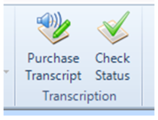
Lesson Learned: After some investigation, I found out that TranscribeMe!™ and NVivo™ have a business partnership. I was able to upload my audio recordings from within NVivo™ (after setting up my account) and the transcripts were then sent back to me and into my NVivo™ project file. In the media options, there is a "purchase transcript" option.
To clarify, you can use TranscribeMe!™ without having to use NVivo™. However, given that I was using NVivo™ for my coding, these two products made the initial work a lot easier and faster. I received some of the transcripts within 24 hours and almost all of them within 48. The transcript quality was excellent. And, as I am sure you’re wondering, the price was good (Price is negotiable depending on quantity of work, number of speakers, and other options.)
You can use the app on your smart phone to record. No special equipment needed.
Rad Resource: TranscribeMe!™ and NVivo™ partnership. TranscribeMe!™ at www.transcribeme.com
Rad Resource: Information from QSR about using NVivo and TranscribeMe!™ http://www.qsrinternational.com/products_nvivo_transcription-services.aspx
If you’re a football fan like me, now you have a great excuse to watch the games because you never know when you’ll find your new evaluation rad resource!
The American Evaluation Association is celebrating Extension Education Evaluation (EEE) TIG Week with our colleagues in the EEE AEA Topical Interest Group. The contributions all this week to aea365 come from our EEE TIG members. Do you have questions, concerns, kudos, or content to extend this aea365 contribution? Please add them in the comments section for this post on the aea365 webpage so that we may enrich our community of practice. Would you like to submit an aea365 Tip? Please send a note of interest to aea365@eval.org. aea365 is sponsored by the American Evaluation Association and provides a Tip-a-Day by and for evaluators.
AEA365
.
Blog
.
<span class='date ' tip=''><i class='icon-time'></i> Jul 27, 2015 11:28am</span>
|
|
Hi! I’m Mary Arnold, a professor and 4-H youth development specialist at Oregon State University, where I spend the majority of my time in the area of program evaluation, especially in capacity building efforts. This is my second time preparing a blog post for the EEE-TIG, and the invitation came at a great time, because I have been thinking pretty obsessively these days on how we can do a better job of building Extension program planning and evaluation capacity. One of the conundrums and persistent late night ponderings that continues to rattle around my mind is how we can do a better job articulating what is suppose to take place in programs. If we are clear on of what is supposed to happen in a program, then we also should be able to predict certain outcomes and understand exactly how those outcomes come to be. This notion of prediction is what underscores a program’s theory.
Because of the emphasis on program planning and that swept Extension in the early 2000s, most Extension educators are familiar with logic modeling. The good news is that many educators understand the concepts of inputs, outputs, and outcomes as a result, so the groundwork is in place to think more deliberately about a program’s theory. But at the same time, there is scant evidence that logic modeling has resulted in better program planning practices, or led to the achievement of stated outcomes in Extension programs. And there is even less evidence that logic models are developed based on theory.
Lesson Learned: Theory may be implied in logic models, but too often it is understated, assumed, or just hoped for. Program theory is what connects the components of a logic model and makes it run!
Hot Tip! Did you know that there are two important parts to program theory? The first is the program’s theory of change, which is the way in which the desired change comes about. The second is the program’s theory of action, which refers specifically to what actions need to happen, at what level of success, for the program to reach its intended outcomes.
Rad Resource! My favorite resource for understanding and developing a program theory of change and action is Purposeful program theory: Effective use of theories of change and logic models (Funnell & Rogers, 2011). This book has loads of great information and practical help on bringing logic models to life with program theory.
Rad Resource! If you are looking for specific theories that are useful for Extension programs, The University of Maryland Extension has a terrific short guide entitled Extension Education Theoretical Framework that outlines how several well-developed theories can be useful for Extension programming.
The American Evaluation Association is celebrating Extension Education Evaluation (EEE) TIG Week with our colleagues in the EEE AEA Topical Interest Group. The contributions all this week to aea365 come from our EEE TIG members. Do you have questions, concerns, kudos, or content to extend this aea365 contribution? Please add them in the comments section for this post on the aea365 webpage so that we may enrich our community of practice. Would you like to submit an aea365 Tip? Please send a note of interest to aea365@eval.org. aea365 is sponsored by the American Evaluation Association and provides a Tip-a-Day by and for evaluators.
AEA365
.
Blog
.
<span class='date ' tip=''><i class='icon-time'></i> Jul 27, 2015 11:28am</span>
|
|
I am Scott Chazdon, Evaluation and Research Specialist with the Extension Center for Community Vitality, University of Minnesota. I have gained skills in a process known as Ripple Effect Mapping (REM) to document impacts of Extension community development programs. REM sessions often spur important thinking, connections and work.
REM is a participatory group method that engages program and community stakeholders to retrospectively and visually map the chain of effects resulting from a program or complex collaboration. The REM process combines elements of Appreciative Inquiry, mind mapping, group interviewing, and qualitative data analysis. It is a powerful tool for documenting both the intended and unintended results of a program. It is also a way to engage and re-energize program participants and stakeholders around shared goals.
Rad Resource: A more in-depth introduction to REM is at University of Minnesota Extension feature article on REM - "Ripple effect mapping makes waves in the world of evaluation"
Lesson Learned: What started as a great method for evaluating community leadership programs morphed into a tool for a broad range of programs.
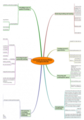
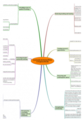
In Minnesota, an effort to document the impact of urban Master Gardeners working in the neighborhoods became a more inclusive and community-driven project that showcased the many different outcomes of the program that may have been overlooked. Here is a thumbnail graphic of the core section of the Ripple Effect Map from that project.
Rad Resource: You can find full-sized REM graphics at this site University of Minnesota Extension REM Blog
Lesson Learned: Recruiting the right number and mix of people is crucial in Ripple Effect Mapping. In terms of numbers, these are larger than focus groups, but if you go beyond 20 people you may not be able to include all voices in the process. I prefer groups of 12 to 20 people.
You can invite both direct participants and non-participant stakeholders. This non-participant group can include funders, local elected officials, other influential figures, or representatives of the media.
Lesson Learned: This mix of people creates an insider-outsider dynamic that sometimes leads to game-changing insights about efforts that have already happened, as well as efforts that could happen! That’s why Ripple Effect Mapping makes sense as a developmental evaluation tool.
Rad Resources: To find out more about REM and approaches that can be taken, as well as if might be a tool you can use, take a look at these two articles: 1) Journal of Extension — Using Ripple Effect Mapping to Evaluate Program Impact: Choosing or Combining the Methods That Work Best for You and 2) Journal of Extension — Ripple Effect Mapping: A "Radiant" Way to Capture Program Impacts
The American Evaluation Association is celebrating Extension Education Evaluation (EEE) TIG Week with our colleagues in the EEE AEA Topical Interest Group. The contributions all this week to aea365 come from our EEE TIG members. Do you have questions, concerns, kudos, or content to extend this aea365 contribution? Please add them in the comments section for this post on the aea365 webpage so that we may enrich our community of practice. Would you like to submit an aea365 Tip? Please send a note of interest to aea365@eval.org. aea365 is sponsored by the American Evaluation Association and provides a Tip-a-Day by and for evaluators.
AEA365
.
Blog
.
<span class='date ' tip=''><i class='icon-time'></i> Jul 27, 2015 11:27am</span>
|
|
Salutations from the Land of the Midnight Sun. My name is Alda Norris. I am an evaluation specialist for the University of Alaska Fairbanks Cooperative Extension Service and webmaster for the Alaska Evaluation Network.
There is a lot of activity packed into a single word when you say "evaluation" or "extension." Have you ever had someone stare at you blankly when you tell them your job title? My background is in the study of interpersonal communication, and I believe developing skills in providing effective comparisons will boost our ability to explain "what we do" to others.
Hot Tip: A three-step pattern I learned from speech class can be very helpful.
Define the term.
Give examples of what it is.
Give examples of what it is not.
Also, your audience will gain a deeper understanding if the examples you use are surprising. Here’s one from our state sport: Many people hear the term "sled dog" and think of a big fluffy Siberian Husky. However, many purebred Siberians are show dogs not used for mushing. Sled dogs are more commonly of a mixed heritage known as Alaskan Husky, and some are crossed with other breeds like Greyhound or Pointer!
Lesson Learned: Clients may make demands that seem unreasonable because they misunderstand the scope of your expertise or duties. Even worse, they may not seek you out at all because they don’t see a link between your title and what they need. If you’ve ever had someone think evaluation is "just handing out a survey" or extension is "just agriculture stuff" then you know what I mean! Take the time to do some awareness-raising with your target audience.
Hot Tip: Strip away the professional jargon and think about what words the public would use to describe you. Make sure those terms are included on your web page so that search engines will associate you with them. If you haven’t already, add an "About" or "FAQs" page that addresses what you do (and don’t) have to offer.
Rad Resources: Books like Eva the Evaluator are great for providing examples and comparisons of what jobs like "evaluator" entail. Maybe someone will write an Ali the Extension Agent book someday! Also, search the AEA365 archives for related discussions on the difference between evaluation and research, and how to use metaphors to extend understanding.
The American Evaluation Association is celebrating Extension Education Evaluation (EEE) TIG Week with our colleagues in the EEE AEA Topical Interest Group. The contributions all this week to aea365 come from our EEE TIG members. Do you have questions, concerns, kudos, or content to extend this aea365 contribution? Please add them in the comments section for this post on the aea365 webpage so that we may enrich our community of practice. Would you like to submit an aea365 Tip? Please send a note of interest to aea365@eval.org. aea365 is sponsored by the American Evaluation Association and provides a Tip-a-Day by and for evaluators.
AEA365
.
Blog
.
<span class='date ' tip=''><i class='icon-time'></i> Jul 27, 2015 11:27am</span>
|
|
My name is Brigitte Scott and I am the Evaluation and Research Specialist for the Military Families Learning Network (MFLN), which engages military family service professionals in high-quality, research-based professional development. The MFLN is part of the Department of Defense (DoD) - U.S. Department of Agriculture / National Institute for Food and Agriculture Partnership for Military Families (USDA/NIFA) and is also a part of eXtension—the online branch of America’s Cooperative Extension System (CES). Evaluation for the MFLN comes with a few challenges—leadership, PIs, and staff are spread out across the country; our cooperative funding agreement requires nimble and flexible programming (Hello, developmental evaluation!); and constituents in multiple institutions have different ways of communicating and varied reporting needs.
Lesson Learned: When I first began working with MFLN, I drew heavily on my background in qualitative methods, and all of my mixed methods reports took on a narrative form. However, the reports weren’t getting read. With competitive funding forever at stake in an era of sequestration, this had to change.
Enter data visualization. At AEA 2014, I took a two-day data viz workshop with Stephanie Evergreen. It was invaluable! My reports are still works in progress, but I know now they are being read. How? Folks are actually contacting me with questions! My reports are getting circulated at DoD, which has meant increased awareness of MFLN and a lot of kudos for our work. (It doesn’t hurt come budget time, either.) PIs and staff are utilizing the reports to discuss their progress against dynamic plans of work while focusing on the moving target of program innovation.
Hot tip: CES just celebrated its 100th birthday last year, but make sure your reports aren’t dinosaurs! Your reports—your efforts!—need to be seen and heard to be actionable. I like to think of CES as power to the people. If you agree with me, then give data viz a try to get your points across and support CES in making a difference in counties across the nation.
Hot tip: Data visualization isn’t all about Excel. Arrange key verbal points on a page with clean, clear data. Pull out a thread from a data story and expand it in a text box, or pick up qualitatively where your quantitative story said its piece.
Hot tip: Font and color matter. Use your organization’s visual identities in your reports to let readers know that your report concerns them and their work.
Rad resource: Check out AEA’s offerings on data visualization, including workshops, coffee breaks, and of course, the annual meeting data viz sessions. They really are amazing!
Rad resource: Stephanie’s workshops are a must, but so is her book. Check them both out!
The American Evaluation Association is celebrating Extension Education Evaluation (EEE) TIG Week with our colleagues in the EEE AEA Topical Interest Group. The contributions all this week to aea365 come from our EEE TIG members. Do you have questions, concerns, kudos, or content to extend this aea365 contribution? Please add them in the comments section for this post on the aea365 webpage so that we may enrich our community of practice. Would you like to submit an aea365 Tip? Please send a note of interest to aea365@eval.org. aea365 is sponsored by the American Evaluation Association and provides a Tip-a-Day by and for evaluators.
AEA365
.
Blog
.
<span class='date ' tip=''><i class='icon-time'></i> Jul 27, 2015 11:27am</span>
|
|
My name is Pam Larson Nippolt and I am a University of Minnesota Extension Evaluation and Research Specialist working with a team of program evaluators in 4-H youth development programs.
Lesson Learned: Monitoring enrollment data is often a data-related activity that falls under the umbrella of program management. Monitoring enrollment data enables program leaders to pay attention to some aspect of program implementation via inputs or outputs. What is monitored can be quite distinct, but it still can inform the focus of an evaluation or measurement of an outcome.
When planning with program teams, I use the example that monitoring is similar to setting a metronome while playing piano-it keeps a steady beat going to help the pianist stay in tempo. Evaluation, on the other hand, is the assessment the pianist and audience make about the music created.
Lesson Learned: Collecting, maintaining, and analyzing data for monitoring purposes are an investment of time and resources that can pay dividends for evaluation in the long run!
Enrollment databases, used in many large youth development programs, are excellent data sources for program monitoring, but are often overlooked. For example, in 4-H, program data (shown below) revealed that a region with the largest Metropolitan area (Central Region) enrolled more youth from farms and small towns than what had been believed to be the case.
This finding seemed to be counter-intuitive and led to further investigation of the data. We discovered that many youth living in the city and participating in the program were not in the enrollment database because of a particular enrollment practice.
Monitoring the enrollment data led to an awareness about the need to make the process more accessible for all youth and families. Program staff may not have identified the scale of this discrepancy without this type of monitoring.
Hot Tip: Get started by "whetting the appetite" of your program partners for data use with available data about the program and participants. Build appealing and visually engaging graphics to make the using the data rewarding to staff who don’t typically attend to data. Ask questions and listen to how they make sense of the data. This practice will reveal what can be monitored "right now" for team learning.
Rad Resource: Consider investing in making your enrollment database more usable and accessible to staff with trend and comparison features. Interfaces can be designed for your enrollment software that provide a dashboard with menus to track changes over program years and geographic comparisons. Think like an interface designer to create tools and reports that will help program staff love their data!
The American Evaluation Association is celebrating Extension Education Evaluation (EEE) TIG Week with our colleagues in the EEE AEA Topical Interest Group. The contributions all this week to aea365 come from our EEE TIG members. Do you have questions, concerns, kudos, or content to extend this aea365 contribution? Please add them in the comments section for this post on the aea365 webpage so that we may enrich our community of practice. Would you like to submit an aea365 Tip? Please send a note of interest to aea365@eval.org. aea365 is sponsored by the American Evaluation Association and provides a Tip-a-Day by and for evaluators.
AEA365
.
Blog
.
<span class='date ' tip=''><i class='icon-time'></i> Jul 27, 2015 11:27am</span>
|
|
I’m Sheila B. Robinson, aea365’s Lead Curator and sometimes Saturday contributor, and I’m thinking deeply this morning. Really deeply. About unanticipated outcomes. It’s fascinating when I think back on what seem like tiny, trivial moments in my life - a sentence spoken, a question asked, an action taken - that had profound impacts on my life and the person I became. This makes me think about what we choose to measure when we engage in evaluation. But it’s not just about me. Unanticipated outcomes have profound effects on many lives.
A friendship that develops in the workplace changes the trajectory of someone’s life. An otherwise unwelcome business in a neighborhood creates jobs and boosts the local economy. A drug originally developed to treat a relatively minor health condition is found to be effective for a much more dangerous one.
Lesson Learned: Unanticipated outcomes have been a consideration in program evaluation for almost as long as evaluation has been a field of inquiry. Marvin Alkin wrote about them as early as 1969: In considering what to measure,
…the evaluator may wish to point out the necessity for broadening the area of concern because of interrelated aspects of the … program, or to consider, as well, various areas of potential unanticipated outcomes. …There are evaluations necessary in providing information during the course of a program about the manner in which the program is functioning, en route objectives are being achieved, and what unanticipated outcomes are being produced. Such information can be of value in modifying the program (program improvement).
Michael Quinn Patton addresses them in his 2015 text, Qualitative Research and Evaluation Methods: Integrating Theory and Practice:
Image credit: Ripple Effect by sea turtle via Flickr
An important contribution of qualitative inquiry is to identify and understand unanticipated consequences, including how unanticipated outcomes intersect with targeted outcomes in program evaluation. This potential of qualitative fieldwork to uncover anticipated outcomes deserves emphasis and is another reason why qualitative studies have become more valued. Statistical studies of outcomes can only imagine what has been thought of, conceptualized, and operationalized in advance. The open and nature of qualitative inquiry, in contrast, is especially useful in capturing unanticipated outcomes. Indeed, one can only turn up side effects, ripple effects, emergent outcomes, and unanticipated impacts through open-ended fieldwork.
Hot Tip: The bottom line is, we may never truly know the reach of programs, interventions, or interactions, so it’s worth considering unanticipated outcomes when we design programs and evaluation plans. How can we prepare ourselves to recognize, document, and evaluate unanticipated outcomes?
Do you have questions, concerns, kudos, or content to extend this aea365 contribution? Please add them in the comments section for this post on the aea365 webpage so that we may enrich our community of practice. Would you like to submit an aea365 Tip? Please send a note of interest to aea365@eval.org . aea365 is sponsored by the American Evaluation Association and provides a Tip-a-Day by and for evaluators.
AEA365
.
Blog
.
<span class='date ' tip=''><i class='icon-time'></i> Jul 27, 2015 11:26am</span>
|
|
Bill Trochim and Arthur Blank here and we are delighted to introduce AEA’s newest Topical Interest Group (TIG) - the Translational Research Evaluation TIG - and this week’s theme.
So, let’s start with - what is "translational research" (TR) and why is it so important? There are lots of definitions of TR. We prefer a broad and encompassing definition along these lines "the systematic effort to move research from initial discovery to practice and ultimately to impacts on our lives." In biomedical research, some refer to TR as "bench-to-bedside" suggesting that it links basic laboratory work to the practice of clinical medicine. Others (like us) tend to describe TR more sweepingly as "innovation-to-impact", emphasizing the entire research-practice continuum from initial new ideas to their ultimate application and effect on society. In one sense, TR is very new, and one of the hottest topics in contemporary research. But, in another sense, it is as old as the research-practice distinction itself.
If research and practice were well integrated and functioning efficiently together, the emphasis on TR would be unnecessary. In most biomedical and applied social policy areas, research takes too long to influence practice; one well-known estimate is that it takes on average 17 years for a biomedical discovery to influence practice (and that is likely an underestimate). Some of this time is undoubtedly due to the inherent difficulties of translation. But there is considerable evidence to suggest that much of this time lapse may be due to other factors.
Lesson Learned: In many fields, the problems being studied are complex and require multidisciplinary and transdisciplinary approaches. But researchers have not been trained in collaborative and team science methods that might enhance such work. In many fields, researchers develop innovations without considering the world of practice, only to find out later that their ideas won’t work in the real world. Learning how to involve the practice community as integral participants throughout the research development process could help avoid such costly errors. In many instances, research and practice realms are poorly managed and full of inefficiencies. For instance, we know that the process of reviewing and starting a single biomedical clinical trial can take years and involve hundreds of steps (many of them unnecessary or duplicative). If we learned more about how to manage the research enterprise better - something like a "science of science" or a "science of science management" - we might see significant progress.
Rad Resources: This week you’ll be introduced to some of the members of our new TIG and to the kinds of issues we are addressing.
Rad Resources: The National Institute of Health’s Clinical and Translational Science Award program provides support to professionals engaging in this work. NIH also offers additional information about translational science in biomedicine.
The American Evaluation Association is celebrating Translational Research Evaluation (TRE) TIG week. All posts this week are contributed by members of the TRE Topical Interest Group. Do you have questions, concerns, kudos, or content to extend this aea365 contribution? Please add them in the comments section for this post on the aea365 webpage so that we may enrich our community of practice. Would you like to submit an aea365 Tip? Please send a note of interest to aea365@eval.org. aea365 is sponsored by the American Evaluation Association and provides a Tip-a-Day by and for evaluators.
AEA365
.
Blog
.
<span class='date ' tip=''><i class='icon-time'></i> Jul 27, 2015 11:26am</span>
|
|
We, Arthur Blank and Julie Rainwater, are pleased to introduce a new Translational Research Evaluation Special Interest Group (SIG). The SIG is part of the Association for Clinical and Translational Science (ACTS) and provides a forum for all aspects of evaluation related to clinical and translational science. The ACTS SIG recognizes organizations involved in translational science as diverse and their "evaluators" may not necessarily identify themselves as professionals in the field of evaluation. Thus, our membership includes administrators, faculty, clinicians, librarians, biomedical scientists, and other stakeholders in translational research and workforce development. The SIG, like its AEA partner TIG, offers its members the opportunity to share mutual interests, evaluation expertise, resources, and materials. Our work is closely coordinated with the AEA TIG and the diverse membership across both groups provides access to a valuable practice community that can share experiences and challenges.
We are off to a great start. The ACTS Translational Science 2015 meeting in Washington DC in April hosted a first-ever "evaluation" track sponsored by the SIG. Judging by the high attendance and lively discussion at the two evaluation-relevant panels, this track is likely to be a feature of subsequent annual meetings.
Lesson Learned: We walked away from this meeting with a few lessons to guide us moving forward. The first panel, "Classifying Publications along the Translational Science Spectrum: A Machine Learning Approach," provided an opportunity for us to learn state-of-the-art approaches for how Clinical and Translational Science Award (CTSA) organizations analyze publications to understand the progress of discoveries through the stages of translation to implementation. The second panel, "The Role of Evaluation in Translational Science Organizations," was a unique opportunity for us to hear what current leaders of the CTSA Domain Task Forces and NIH National Center for Advancing Translational Sciences (NCATS) representatives think about the evolving role of evaluation. The discussion about the future of CTSA evaluation was beneficial to all of us, including NCATS, as we consider how evaluation can help move the translational research enterprise in the right direction.
Over the next few months we will transition to new SIG leadership and start planning for the ACTS Translational Science 2016 conference. We are looking forward to building on the 2015 meeting, as well as the opportunity to gather at the AEA conference in November 2015. (See you in Chicago!)
Rad Resource: For those interested in joining the Association for Clinical and Translational Science (ACTS), as well as learning about the various activities those engaged in translational science are involved with visit the ACTS web site.
The American Evaluation Association is celebrating Translational Research Evaluation (TRE) TIG week. All posts this week are contributed by members of the TRE Topical Interest Group. Do you have questions, concerns, kudos, or content to extend this aea365 contribution? Please add them in the comments section for this post on the aea365 webpage so that we may enrich our community of practice. Would you like to submit an aea365 Tip? Please send a note of interest to aea365@eval.org. aea365 is sponsored by the American Evaluation Association and provides a Tip-a-Day by and for evaluators.
AEA365
.
Blog
.
<span class='date ' tip=''><i class='icon-time'></i> Jul 27, 2015 11:25am</span>
|