Blogs
|
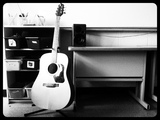
I have this idea. What if we put a guitar in every classroom? How about a piano? Maybe some drum machines. We’re always sitting around talking about BYOD this and 1:1 that. Why don’t we think outside the glowing screen for a moment or two? I used to use my guitar all the time early in my career, but I realized recently that I’d drifted away from it. Did I get crusty and rigid in my old age?
So I brought it back. This was partly inspired by the group of boys in my class who live for 70s prog rock. Let me tell you something: I’ve never taught a group that was into Rush or Emerson Lake and Palmer. Ever. I’ve taught kids who adored all kinds of nostalgia such as grunge, hip hop, gangsta rap, techno, brit pop, but never Eric Clapton. It’s a musical lesson for me.
They can’t keep their hands off the guitar. While talking about math, they strum. Sharing their insight into the big idea of a book, they pick and pluck. The give lunchtime concerts.
Today I actually heard them talking about drop D tuning. Yes, you can go right ahead and wikipedia that. I absolutely love listening to students having detailed conversations about topics of their own interest.
I was so horrified that I myself had gotten out of practice. I admonished myself for losing the calluses on my fingertips. How dare I forget the chords to Hallelujah? Shame on me. I wondered if it was symbolic of something.
I find it’s hard to keep joy out of your classroom when you have a guitar in there. Even if no one can play, you end up learning. And, boy, if there are some adept ones, watch out.
Long live the classroom piano/guitar.
Royan Lee
.
Blog
.
<span class='date ' tip=''><i class='icon-time'></i> Aug 23, 2015 05:12pm</span>
|
|
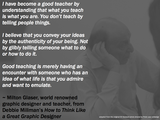
As I’ve written before, I don’t think there’s ever been a time when knowing how to skilfully communicate with images has ever been as important. We spend a lot of time deconstructing and constructing such texts in my class. Inspired by George Stroumboulopoulos’ show, we’ve been working on creating Best Stories Ever. Here’s one of my own below. If you should feel so inspired, why not record and/or film one of your own, post it on your blog, and tweet out with #BestStoryEver?
Note: My Best Story Ever was created and recorded using Haiku Deck and Disp Recorder for iPad.
Royan Lee
.
Blog
.
<span class='date ' tip=''><i class='icon-time'></i> Aug 23, 2015 05:12pm</span>
|
|
adapted from the original cc licensed photo shared by flickr user Eva Rinaldi Celebrity and Live Music Photographer
[So. 1 billion hits, eh? Here's my obligatory, belated, and uncomfortably personal Gangnam Styles ramble. If you're looking for objective media criticism, you might want to press the back button.]
A family with cultural capital? Didn’t have it. Stability in the home? Nope. Extra curricular activities? Only if shoving quarters in arcade games counts. A lot of freedom and time on my hands? One rare thing I had in spades. That’s why, growing up, media was the world to me.
I learned everything from TV, newspapers, and magazines. I thought Bill Cosby was the coolest dad. The Keaton family hugs blew me away. I read every magazine I could get my hands on from cover to cover. Muchmusic was my life’s blood. I wanted to be in a rock ‘n’ roll band.
The only thing media couldn’t do for me was help me make sense of being in the skin of diaspora. In fact, it exacerbated my insecurity and disorientation. I wanted to be a white kid with flowing, dirty blond locks, not a brownish boy whose house smelled of garlic. When I went over to my friend Seth’s house and had Kraft Dinner with a squirt of ketchup on the side, I thought it was the height of culture. I always remember that evening because it symbolizes the hegemony I was immersed in.
You can imagine what someone like myself thinks about Psy’s Gangnam Style. I always picture having some warped dream where I end up speaking to my 12-year-old self to tell him:
When you are a middle aged bloke with a family and a minivan (pause to laugh hysterically) there will be a dude that looks like your uncle who dances in a silly fashion and raps in Korean. Yes, you heard right: Korean. He will take the world by storm.
Incredulous would not cover it.
Of course, there was no internet. What’s more, I think most would agree that the Gangnam phenomenon does not occur in the media landscape of my childhood. MTV could not have acted as a successful agent for Psy’s little 1-2 step. And even if they had, I wonder how much of its success would be based mostly on irony and implicit racism. No. It could only occur virally. It’s the lack of contrivance that makes it all the more special to me.
This is by no means an original or hugely revelatory statement, but I really feel as though we are experiencing a watershed moment for the Asian immigrant experience. You could perhaps argue that my feelings about Psy, in fact, serve to support the marginalization of the other. You might even say that the seeking out of global, external fame is exactly what we hope to avoid in self-realisation and empowerment. But, since an academic, cultural deconstruction rarely ends up on the side of mainstream euphoria, I just want to let my FIFA World Cup lizard brain tell you how I really feel.
I’m proud of the little guy, and I’m even more exalted by the fact that I (and especially my children) live in a world where the kids at school think it’s kinda cool to have slanty eyes.
Royan Lee
.
Blog
.
<span class='date ' tip=''><i class='icon-time'></i> Aug 23, 2015 05:12pm</span>
|
|
cc licensed photo shared by flickr user charamelody
Reading and commenting on Aviva Dunsiger’s post on classroom desk arrangement reminded me of a related but different topic I’ve been wrestling with lately. I’ve been asking myself questions about what it means to do group work.
I’m not certain which lady or gentleman first automatically equated group work with collaboration, but I need to have a word with her/him. When it comes to project work, l’m a proponent of my students taking a larger role in deciding whether working with a partner to create, produce, and/or present is really in the interests of everyone’s progress and learning. Some cite the infamous ‘real world’, in which we are supposedly inundated with demands to work with random people (in many cases, ones we can’t stand), as the pedagogical impetus behind group assignments, but that reasoning just feels lukewarm to me. It’s a strangely defeatist vista which I don’t see reflective of reality, and essentially lays our own adult baggage onto kids. Just who are these masses of people creating great works with people they have little to no working chemistry with? And what kind of bias are we promoting for our extroverted learners over our introverted ones in this equation?
For the next group project you intend on assigning to your class, have you considering having some students work on their own? Shouldn’t our learners be comfortable with the idea that we can differentiate in this area? Why can’t the environment, culture, process, and assessment be collaborative, but products be individual?
On the other hand, perhaps there’s something to be said for the serendipity of picking names out of a bag, forcing learners out of their comfort zone? Perhaps it’s a comfortable idea for some but not others? Maybe it disturbs the regular social dynamics for the better?
How do you do group work with your learners?
Royan Lee
.
Blog
.
<span class='date ' tip=''><i class='icon-time'></i> Aug 23, 2015 05:11pm</span>
|
|
Susan Cain‘s Quiet: The Power of Introverts hit this teacher and parent like a tonne of bricks. Since I’m not in the mood to write a book review, I thought I’d publish a quick post of links for @shareski of my previous posts influenced by/connect to her ideas, as well as essential ‘cliff notes’ on the book many of you have already seen floating around the interwebz.
My explanation to Susan Cain on why I think Social Media transforms what it means to be shy or quiet in the classroom.
Is social media a game-changer for introverted kids? Susan’s interview with me.
My post on why Introverts Make Great Teachers Too.
Social Media and Introverts: Guest post on Stephen Hurley’s Teaching Out Loud blog.
My post wondering about group work in the classroom.
Susan’s informal ‘Quiet Quiz’.
A slightly modified version I use to assess my students.
The TED Talk and RSA Animate respectively:
Royan Lee
.
Blog
.
<span class='date ' tip=''><i class='icon-time'></i> Aug 23, 2015 05:11pm</span>
|
|
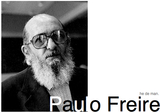
I’ve accompanied this post with an image of Paulo Freire because he was one of the first theorists that really rocked my boat in university. To this day, I find myself thinking of his ideas every day in the classroom, as well as in my reflections at home. One concept of his that meanders in my head at all times is praxis. There are so many different definitions and explanations for it, but I always look at it like this:
Powerful pedagogy comes from constantly intertwining theory with practice.
If life were a science-fiction movie, and I could have a coffee with Freire, I would love to talk to him about the possibilities of social media marrying praxis in schools.
Royan Lee
.
Blog
.
<span class='date ' tip=''><i class='icon-time'></i> Aug 23, 2015 05:10pm</span>
|
|
CC licensed image shared by Flickr user Foro do Eixo
I was perusing my hard drive, taking a click down memory lane. Man, I have no idea why I’ve never shared these before. I wish I could show you the accompanying music videos we created, but it’s difficult for me to work on the privacy rights on that one. I hope you enjoy them. Watching my students perform these songs for audiences is definitely one of the biggest highlights of my career.
Royan Lee
.
Blog
.
<span class='date ' tip=''><i class='icon-time'></i> Aug 23, 2015 05:09pm</span>
|
|
Royan Lee
.
Blog
.
<span class='date ' tip=''><i class='icon-time'></i> Aug 23, 2015 05:09pm</span>
|
|
CC licensed photo shared by Flickr user thejester100
Our school library is one of my favourite places to work. The hustle and bustle is so conducive to my concentration. I was working in there today during my prep and had the best time listening to a couple of kids from another class work on their research projects. I couldn’t resist taking notes:
Kid 1: How should we present this? Powerpoint?
Kid 2: Powerpoint?!?! Ugh, no way. Kill me now. We are not using Powerpoint.
Kid 1: OK what’s that one again where stuff flies around everywhere?
Kid 2: Ugh, hate that one too.
***
Kid 1: Ohmigod, look at this amazing website I found! It has all the information we need!
Kid 2: How do you know it’s true?
Kid 1: Um…
Kid 2: That looks totally unreliable to me.
***
Kid 2: There’s too much information out there.
Kid 1: I know right.
Royan Lee
.
Blog
.
<span class='date ' tip=''><i class='icon-time'></i> Aug 23, 2015 05:09pm</span>
|
|
CC licensed photo of Steven Pressfield’s very useful book shared by Flickr user aplumb
"Inspiration is for amateurs - the rest of us just show up and get to work." ~ Chuck Close on creativity.
It’s true, as Ken Robinson so seminally noted, that we often have homicidal tendencies with creativity in schools. Lectures, grades, high stakes standardized testing: no one’s ever going to go viral arguing the merits of these tools for creativity enhancement.
I feel, however, that one mistake we make when lauding creativity’s place in the classroom is we focus so much on the things which are supposedly stifling it, that we forget to describe how to advance it. We mystify and aggrandize it to the point where it becomes a spoiled child who gets praised a lot but no one ever tells to do anything. I’m wondering if the following would help.
1. Space and Time ~ If we really value creativity, eliminate, or at least diminish the power of, the things that make it impossible to occur. Then proceed to design adequate spaces and provide more time for it instead. Lots of time.
2. Figure out a way to assess it ~ Stop wringing our hands about the subjective nature of creativity, resorting to sheer relativism. Yes, we know it’s often in the eye of the beholder. Fine, so is pretty much everything else we do in education. Develop learning goals, establish criteria, provide feedback, model it. Forget the cliche about the mean grade 1 art teacher who laughed at my drawing of an elephant (which really looked like a fried egg with ears) so I never picked up a Crayola marker again. The problem wasn’t the mean teacher; it was the system that left you so vulnerable and unresilient to feedback, however bitter, twisted, and unnecessarily evaluative it was.
3. Forget the Work-Play Dichotomy ~ Creative work may not be the same as shovelling snow, but it is work nonetheless. We don’t need euphemisms for it.
4. Teach Workflow ~ If you talk to, or read about, creative people who actually (in Seth Godin’s words) ship, it’s pretty clear that the majority of them have strategies and tools to organize their ideas and stay productive. When our students get struck with inspiration, what tools do they use to remember it? What do they do to synthesize their own minds? Many creative people use notebooks, voice recorders, or cameras as metacognitive tools. Do our students?
5. Walk the Walk ~ Any approach to enhancing creativity in our systems cannot preclude the adults and professionals in our buildings from participating in the same processes. We cannot have creative students growing in the presence of adult bystanders. Numbers 1-4 above become a lot easier and context specific when students can actually learn implicit and explicit lessons from creative grown ups.
What else can we do to nurture creativity in our schools?
Royan Lee
.
Blog
.
<span class='date ' tip=''><i class='icon-time'></i> Aug 23, 2015 05:09pm</span>
|