Blogs
|
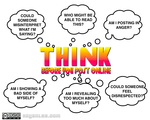
A few people have asked me for this graphic I made a while ago, so here is a new, high resolution version of it. Share and share alike:)
Royan Lee
.
Blog
.
<span class='date ' tip=''><i class='icon-time'></i> Aug 23, 2015 05:24pm</span>
|
|
Quite possibly a must-discuss in our classrooms…
Royan Lee
.
Blog
.
<span class='date ' tip=''><i class='icon-time'></i> Aug 23, 2015 05:23pm</span>
|
|
CC licensed photo shared by flickr user Vox Efx
A post from one of my student’s blogs:
Life is crazy. As young students we put too much pressure on ourselves to get good marks, in addition to keeping up good looks and sports and a social life. It can all be very tiring and sometimes frustrating. We sometimes wake up at 5am so we can straighten our hair or even study (I know I have done that before) or we wake up at 6am and skip breakfast so we can make it to school on time. Sometimes we just need to say forget this and just go have fun at the movies or something. We just need to let it all go. We are still young and we don’t need the pressure right now. We will obviously be under more pressure when we get older and have a job and kids to take care of. Right now as young people we just need to have fun. We need to have memories of our childhood growing up. We don’t want memories of missing parties because we had to study or missing out on the movies because we had a project. Don’t get me wrong you still need to have your assignments done on time but we have to put less pressure on ourselves. Me, I know I have gotten called before to go to the movies with some friends but I had to say no because I had to work on a project. Now I wish that I had had the time to go to the movies with them. I wish I hadn’t missed those laughs. We must have a balance of fun and education.
Most of us are scared of making mistakes but making mistakes is the number one way to learn. It is like riding our bike for the first time. We are scared to go because we don’t want to fall but once we get going and our parents let go we realize that it is not so bad. We are soaring on our own. We are scared to make a mistake mainly because we don’t know what comes next, but once we make the mistake and learn from it, most of the time we don’t make it twice. It’s bad for the moment. That is all.
If you think about it we can be compared to airplanes. When we are kids we’re backing up, we get older and we make it to the runway preparing for take off, then we grow up to be adults and the plane takes off, we are soaring on our own hoping everything is right.
We can’t plan out how we want to turn out. We can’t plan our lives. We can’t guarantee that the plane will fly smoothly. We will be given speed bumps in the air but we have to learn to deal with them and in the end it makes us stronger. We know how to deal with it the next time.
Don’t get frustrated every time you make a mistake, just learn and remember that the mistake is preparing you for take off.
We are young and we are learning. We are young, waiting to fly.
Royan Lee
.
Blog
.
<span class='date ' tip=''><i class='icon-time'></i> Aug 23, 2015 05:23pm</span>
|
|
CC licensed photo shared by Flickr user Shelley Panzarella
It seems the honeymoon is over with iPad devices in education. Whether it’s people questioning the efficacy of turning a personal device into a shared tool, the complex ethical dilemmas Foxconn presents us with, or the sheer consumerism and corporate lust that the words ‘iPad rollout’ imbue, the critics are many and mostly intelligent. As someone who has been lucky enough to use iPad devices with students since pretty much their release, I feel the need to briefly address and delicately admonish those that express perhaps the greatest criticism of iPad use in classrooms: it’s a consumption, not a creation, tool (you never hear this criticism of books).
After using the first generation of iPad with students for a year, I agreed with this point. That’s because, in 2011 (yes waaay back in 2011!) iPad apps were mostly consumption and game based. It also had no camera. As a result, we spent most of the year using the devices for a small degree of creative activities, but mostly as dummy terminals to the internet, connecting to our social media tools.
2012, equipped with iPad 2s, has been a far different story. The constant and exponential improvement of apps, coupled with the camera (integral, because it allows you to use it as a tool for capturing live learning), has turned it into a different device. I would describe our iPad 2s now as shared, digital scrap/sketchbooks. In fact, my students mostly use them for creation. Apps such as Sketchbook Pro and iMovie, while incomparable in capability to their desktop counterparts, are not silly little apps. They may be comparatively ridiculous for your average professional graphic designer, but are just what the doctor ordered in a classroom that values simple, embedded digital storytelling. On a daily basis, you will see my students using an iPad to:
mind and concept map
draw pictures
make movies
film learning as it happens
make music
create presentations
make animations
play games
read
research
make calculations
use manipulatives
(come back to me next week after another of my students discovers something new).
When people say that the iPad is not a creation tool, it’s mostly because those of us who write this stuff are coming from the perspective of the experienced, advanced desktop/laptop user. Based on that, everything mobile is a disappointment. What is more, I’ve noticed a trend that those who point out its lack of creative potential have often never used it for creative endeavours themselves. In fact, I myself hardly use my own iPad 1 for anything other than reading my RSS feeds. That doesn’t mean I cannot see its value for classroom use. The iPad presents us with a host of limitations for classroom application; perhaps that’s a good thing.
I loathe the fact that this post could be interpreted as an endorsement of a product. Nevertheless, I’m not going to hide the fact that I absolutely love using the iPad with students. It’s not my own personal favourite device, but I’m a big fan of its classroom application.
So, are we witnessing a natural backlash against the proverbial popular kid in school, or are iPad devices really bad for education? What do you think?
Royan Lee
.
Blog
.
<span class='date ' tip=''><i class='icon-time'></i> Aug 23, 2015 05:23pm</span>
|
|
The student who made a Lego QR Code in my class has struck again in the below video. It made all of us in class laugh our heads off so I thought I’d share it this oddly wintery Monday morning.
Royan Lee
.
Blog
.
<span class='date ' tip=''><i class='icon-time'></i> Aug 23, 2015 05:22pm</span>
|
|
Here’s the trailer for my very first keynote presentation on BYOD at the Waterloo District School Board on Saturday, April 28. Be there or be square.
Royan Lee
.
Blog
.
<span class='date ' tip=''><i class='icon-time'></i> Aug 23, 2015 05:22pm</span>
|
|
Inspired by Michael Hickox’s amazing Lego stop-motion videos, as well as Common Craft’s In Plain English series, and armed with the new iStopmotion for iPad, here are just three examples of the awesomeness that is transpiring in my room.
Royan Lee
.
Blog
.
<span class='date ' tip=''><i class='icon-time'></i> Aug 23, 2015 05:22pm</span>
|
|
I had too much fun working with leaders and instructors in the amazing Boys and Girls Clubs of Canada on web 2.0 tools they could use with the young people in their after school programs.
Check out the ‘Xtranormal for Beginners’ resource I made for them and the world. Below are just two examples my beginners were able to produce in just an hour. I just love Xtranormal!
Royan Lee
.
Blog
.
<span class='date ' tip=''><i class='icon-time'></i> Aug 23, 2015 05:21pm</span>
|
|
CC licensed photo shared by Flickr user gem fountain
Some of you who read this blog may know that I’m passionate about the vital role that parents must play as stakeholders in the process of transforming education. Last night I co-facilitated a humble little workshop for my school community entitled 21st Century Learning: Parents as Partners. I won’t bore you with the details of the entire hour and a half, but I do want to share with you some quick takeaways that have been sprinting through my mind ever since.
Parents are insecure about their levels of competency with new and emerging technologies. They are afraid that their children know more than them (where have we heard that before?), and wish that they could learn more, develop their own skills.
Parents are mystified as to what their children are doing online and with their gadgets.
Parents know that the world is different than when they were young. They know that their children’s paths, especially in regards to their careers, will not resemble their fathers’ and their fathers’ fathers’. Parents understand that we live in exponential times, and that, in our current era, a fancy $700 gadget feels old in a year. They know that you may be an expert today, but a dummie tomorrow. Parents know all this because they themselves are living it too. They just aren’t sure what this all means for learning and education.
Parents are confused by the mixed messages we send as educators: grades are important, but, no, they’re not; competition is healthy, but we need collaboration; technology is needed, and it’s a menace and a distraction; etc.
Parents want their kids to become resilient, patient, self-actualizing, passion-driven, mentally and physically healthy grown ups in a complex world in which they themselves are struggling to do the same.
Parents are terribly unsure about what role(s) they should play in their ‘Facebooky-Tumblr world’ (a parent’s awesome term). To end this post, I wanted to share with you an analogy I used for which I received wonderful feedback.
CC licensed photo shared by Flickr user 1.7ou ! (Les chiquitos)
Think of the world online as a massive, completely public, seemingly unending forest full of amazing, and sometimes scary, surprises. You would not send your child into these woods alone when they, and perhaps even you, are unfamiliar with its terrain. Should you then watch surreptitiously, behind trees, and pounce when bad things occur? No, because that’s not how you build trust, and, besides, you’re almost contributing to the idea of unseen, mythical dangers lurking. So you walk alongside him/her. You hold hands. You don’t pretend to be an expert of all the plants, animals, and weather you encounter, but you do ask good questions and model a sense of wonder. You help each other when knees get scraped, and branches get tripped over. You use tools to navigate this forest, some of which you have brought with you, others that you will find, and still more that you will literally construct using materials and resources found on your way. Ultimately, your goal is to release that responsibility gradually onto your child. Soon, they will be able to traverse the woods by themselves, with friends, and - gulp - even strangers. If the internet is a forest, then you need to walk it together.
I’ve said it before and I’ll say it again: We need to build real partnerships with parents in our school communities. A truly great education system won’t exist in its absence.
Royan Lee
.
Blog
.
<span class='date ' tip=''><i class='icon-time'></i> Aug 23, 2015 05:21pm</span>
|
|
It started after I watched this~
My students were inspired by data coming to life like this~
And then they went on their own explorations, asking questions, surveying, collecting, agonising, regretting, analysing, concluding, reflecting, and wanting to do it all again~
Royan Lee
.
Blog
.
<span class='date ' tip=''><i class='icon-time'></i> Aug 23, 2015 05:19pm</span>
|