Blogs
|
One of the things that fascinates me the most about teaching is the extent to which self-esteem and self-efficacy influence a child’s ability to learn. I have students that do remarkable things but are self-effacing to the point of negativity. I also come across kids with an hyperbolic sense of self even though, well, they’re just everyday people. And then we have all combinations and everything in between.
I consider an advanced student in my class to be someone who doesn’t easily get thrown off track by relatively minor failures, yet is able to recognize them and not make excuses for why they have occurred. If failure is not an issue, it’s like exponential learning.
It’s not surprising that self-confidence seems to equal more positive risk taking. That’s why, when I give feedback to students, I try my best to stress the positive in their work or behaviour. It’s an essential ingredient if you want to become someone that adapts to change quickly; optimism. When describing next steps, I try hard to be as practical as possible as well. To be honest, that’s one of the hardest parts of the job. It takes a lot of energy to be doing assessment like that every day. I often question whether I’m doing it well.
What do you do to foster a positive outlook in the people you work with or teach?
Royan Lee
.
Blog
.
<span class='date ' tip=''><i class='icon-time'></i> Aug 23, 2015 05:31pm</span>
|
|
CC licensed photo shared by stonepix_de
I really dislike the stereotype that a teacher needs to be an extroverted, demonstrative personality. I’m not saying it isn’t stupendous for colourful personalities to be teaching our kids. I simply find it unfortunate that this perception of the profession prevents amazing teachers from entering or staying in it. Introverts are often very reflective and less interested than extroverts at dominating talk. In other words, they don’t need to be the centre of attention. Isn’t that one thing we need more of?
Royan Lee
.
Blog
.
<span class='date ' tip=''><i class='icon-time'></i> Aug 23, 2015 05:29pm</span>
|
|
I read this on my student’s blog this morning and have been thinking about it ever since. Please consider leaving her a comment.
Royan Lee
.
Blog
.
<span class='date ' tip=''><i class='icon-time'></i> Aug 23, 2015 05:29pm</span>
|
|
Modaks Espresso in Dunedin, New Zealand, where I learned to make a beautiful latte.
Before becoming a crusty ol’ professional type, I sharpened my tools as a busboy/dishwasher/waiter/barista. It was not only a fantastic way of staying financially afloat while traveling the globe, but also a superb means of meeting some amazing people and having great experiences.
Here’s just a few ways making espresso and carrying hot cast iron plates of Chinese food made me a better educator.
Customer service
Working in hospitality brought me in contact with the hungry, snobby, drunk, lonesome, rich, poor, rude, and delightful. I served them all.
Attention to detail
A lot of places make coffee, hamburgers, medium-rare steaks, and chocolate cake. The difference between a good and memorable experience in a cafe, bar, or restaurant, however, usually comes down to the little touches. The fact that your latte was exactly the right temperature, or your entrée was brought at just the right time after your appetizer. It took me a long time (and many flabbergasted looks from my patient employers) but I eventually learned that, to be hospitable, one has to do the little things right.
Organization
If you are disorganized, you cannot work in hospitality. Not only will it be impossible for you to serve customers, but it will make your coworkers’ lives a living hell. They will yell and swear at you profusely. Clean as you go, put things where they need to be, and tidy up not only your own mess, but also the ones left by others.
Creating an environment
As a waiter I would sometimes become obsessed with what music was playing, lighting, table setting, the temperature, and table arrangements. I never would have guessed at the time that it was preparing me for having my own classroom one day.
The importance of community
I would say that cafe, as opposed to restaurant, work taught me most about being a facilitator of community. In a cafe, customers are regulars. They come daily for the coffee and cinnamon buns, sure, but that’s not the real reason. Mostly, they want a place where the proverbial everybody knows your name. Some of them want to chat, and others just want you to give them a tip of the hat.
Be at the ready, but don’t interfere
This is one of the hardest things to learn in the service industry. How do you be ready at all times to serve, yet never make the customer feel stalked or neglected?
Reading people
The best servers can tell what a customer wants/needs before being asked.
What did you learn in your previous jobs that inform who you are now?
Royan Lee
.
Blog
.
<span class='date ' tip=''><i class='icon-time'></i> Aug 23, 2015 05:29pm</span>
|
|
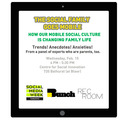
Join me, Alyson Schafer, Brad Moon, and Rebecca Brown for a panel discussion on how our mobile social culture is changing family life.
Date: Wed., Feb. 15
Time: 4-5:30pm
Place: Centre for Social innovation Annex, 720 Bathurst Street, Toronto
It would be great to see you there! Register here.
Royan Lee
.
Blog
.
<span class='date ' tip=''><i class='icon-time'></i> Aug 23, 2015 05:29pm</span>
|
|
CC licensed photo shared by Flickr user angela7dreams
I feel so fortunate that even a small amount of parents and parent advocates read this blog. Although it never fails to flummox me that anyone would look to me for any piece of advice on parenting, I’m starting to feel a lot more comfortable in my own skin as a ‘daddy blogger’. That’s because I’ve started to realize that this space is as much one where I ruminate on fatherhood as it is a place in which I contemplate education. After all, aren’t the two roles essentially one and the same? I don’t know about you, but I don’t really distinguish between me-the-dad and me-the-educator. Sure, the apple of working in an institution can bring different rewards and challenges to the orange of one’s own living room. Still, from the second that my first born began sharing the same oxygen with me, I intuitively knew that the pedagogy driving my classroom practice would invariably interlope with that which propels my life as a dad. I will never buy the claim that producing offspring makes a teacher better than his/her childless counterpart. That’s ridiculous. But I do subscribe to the notion, however trite, that we should always seek to educate as we would parent, and parent as if we were educating.
Royan Lee
.
Blog
.
<span class='date ' tip=''><i class='icon-time'></i> Aug 23, 2015 05:28pm</span>
|
|
My students have just completed Pecha Kuchas on fiction they read independently. It was one of the best projects we’ve ever done. The best part of it was the way they had to contend with, and enact, multiple modalities and literacies. If you’re looking for an idea for your class, I highly recommend it. Here are a few examples.
Royan Lee
.
Blog
.
<span class='date ' tip=''><i class='icon-time'></i> Aug 23, 2015 05:28pm</span>
|
|
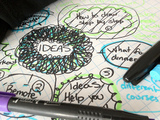
I’ve been helping my grade 7s learn about good ol’ fashioned mind mapping. It’s such a fun process. We’re basically learning how to track the learning process and, well, map our thinking. I don’t see how innovation is possible otherwise.
It’s been great to see my grade 7s picking their tool. It’s about 50/50 as to whether they want to use paper or digital. I love it. That’s exactly the right ratio, in my opinion.
Then one of my student comes over and says, "Mr. Lee, can I do it as a video journal instead? You know, like a vlog?"
Of course I said yes. And of course that made my day.
I want my students to use our/their technology like it’s a tool; one that they make metacognitive decisions about. Whenever you forget why it’s important to move away from computer labs and, instead, get the technology living in classrooms and kids’ pockets, mingling with paper and pens, remember my little story above.
Royan Lee
.
Blog
.
<span class='date ' tip=''><i class='icon-time'></i> Aug 23, 2015 05:28pm</span>
|
|
Watch this video. Tell me how our grading and reward systems help the problem described in it.
Royan Lee
.
Blog
.
<span class='date ' tip=''><i class='icon-time'></i> Aug 23, 2015 05:28pm</span>
|
|
CC licensed photo shared by Flickr user Trodel
One thing important to remember about teaching? You need to take care of yourself. And, by care, I mean physical and mental health. I’m talking about eating well, getting a good night’s sleep, exercising, having a laugh. Waiting for Superman? Try: Waiting for a Normal Man. I know what it’s like to give 99% of myself to the classroom. That’s too much. It’s not healthy. Once I got a body rash. Teachers should try their best, but never sacrifice personal growth and happiness. One thing we should always remember in the edublogosphere is not to set expectations ridiculously high so as to be unachievable. It’s not a marathon or a sprint. It’s a contemplative nature walk.
Be happy and healthy. It’s not easy, but it’s one thing we can all do for our students.
Royan Lee
.
Blog
.
<span class='date ' tip=''><i class='icon-time'></i> Aug 23, 2015 05:27pm</span>
|