Blogs
|
CC Licensed photo shared by Flickr user MarkyBon
Blogging is one of my main creative outlets. For the past 3-4 years, I’ve considered it as integral a part of my life as going for walks with the dog or cooking delicious and healthy family meals; seemingly mundane, but a must for my balanced lifestyle. The thing is, it’s not as though I have any more time than your average family man or professional. In fact, I would venture a guess that I have far less time than most individuals. But time is not a barrier to my blogging. If and when I stop or have breaks from posting, it will likely be more from a loss of commitment than a lack of minutes and hours.
Although I have touched upon this in past posts, I again want to share with you the process I go through to blog because I’m hoping it helps a reader or two. You could almost call my method Writing in Snippets.
Like a lot of people, I have thoughts. These range from lucid to muddled, and serious to ridiculous. These thoughts occur to me at any time in the day: while talking to a student in my classroom, over a bowl of ramen, while watching one of my kids at swimming class, as a result of listening to a podcast, reading a book, or singing along to my iPod.
And like a lot of people, I am rarely without a mobile device in hand or pocket. My phone is an essential blogging tool for me because, on it, I have my blog apps and, most importantly, Evernote. Let me break down for you how I wrote this very post.
On Sunday I had a friend message me a common refrain: "I don’t get how you find the time to blog!" Immediately, I said to myself, I should write a blogpost about this (an obnoxious response, I know). So as not to lose the thought, I pulled out my phone, opened up my Evernote app, and started a note called ‘How I Blog’. Inside my Evernote, I have a folder entitled ‘Blog’, which is where I put all of my blog drafts and ideas. At any given moment, I may have as little as zero notes in that folder, and as much as five or six.
On Monday, Tuesday, and Wednesday, I kept remembering the processes I go through from inspiration to ‘publish now’. These ideas came to me during my son’s piano lesson, while walking the dog, and even while buying a box of kimchi cabbage for my mother in the supermarket. Each time, I quickly jotted notes down in my Evernote. Some of these were sentences, and others were simple point form notes. Essentially, my entire outline for this post came about while walking around from this place to that, multitasking the entire time.
On Thursday, I had time in the evening to sit down at my laptop and look over my notes. I deleted some sentences, added others, and did my customary search on Flickr’s CC licensed photos for an image to accompany this post (my idea of fun). I always try to find a photo which is provocative and beautiful.
On Friday, while on the train home from a presentation, I spent 10 minutes scanning my post for spelling, punctuation, and grammar.
On Saturday morning, I hit publish.
I’m really curious - how do you blog?
Royan Lee
.
Blog
.
<span class='date ' tip=''><i class='icon-time'></i> Aug 23, 2015 05:08pm</span>
|
|
Royan Lee
.
Blog
.
<span class='date ' tip=''><i class='icon-time'></i> Aug 23, 2015 05:08pm</span>
|
|
CC licensed photo shared by Flickr user Lonics
In the same way that it is not for everyone in our everyday lives, is it not entirely possible that Twitter and blogging legitimately doesn’t apply to all educators? There’s no question that social media spaces can provide small to large benefits to pedagogues, ranging from simple utility to deep transformation respectively. However, who’s to say ?
I don’t know about you, but I have always felt comfortable and content with the idea that, while I myself cannot imagine doing this profession without my beloved learning network, perhaps it’s legitimately silly, if not irrelevant, for another educator.
What do you think: is tweeting for everyone?
Royan Lee
.
Blog
.
<span class='date ' tip=''><i class='icon-time'></i> Aug 23, 2015 05:07pm</span>
|
|
CC licensed photo shared by Flickr user pfüll
There’s this thing my friend Andrea Haefele says which I love. My paraphrasing is as follows.
We shouldn’t call it ‘gym’ because it implies the wrong paradigm of pedagogy. Would we call math class a ‘room’? Calling physical education ‘gym’ makes it hard to break free of old, tiresome connotations of mean, bellowing, whistle blowing teachers; period cramps; and getting picked last. Stuff that should be relegated to an 80s John Hughes movie.
In my efforts to explain to my students why we again wouldn’t be playing full court games of basketball in phys. ed. this year (it is exclusionary, inequitable, and makes us focus on esoteric rules rather than physical play, development, and exertion), and would, instead, be using a games for understanding model of learning to dribble, shoot, and pass a basketball, I had that moment of lingering doubt which all teachers feel when they’re attempting to swim against the proverbial tide.
Am I just ranting here, I sometimes wonder, imposing a pedagogical discussion on a bunch of kids that just wanna play a game of hoops?
But then I had another moment which made my tummy feel all warm inside, as my son would say. I overheard the following conversation in my classroom:
Student 1: What is it? Gym class?
Student 2: Ya, but don’t call it gym class. It’s physical education.
Student 1: Huh? Wha…?
Student 2: Because, remember what Mr. Lee said? Calling it gym class is like calling science class ‘Room 118′. It doesn’t make any sense and it’s too old school.
At that point, I couldn’t help looking at Student 2 and smiling. I cracked up laughing when she reciprocated by giving me a thumbs up and a wink, like ‘I got your back!’
OK, it’s pretty obvious I’m blogging right now about a child who complied with a dogmatic lecture I once told. It would most certainly be better if we attained the stage where simply doing it superseded saying it. But I admit it was awesome. Let’s not be afraid to concede that it’s sometimes nice to hear our students parrot some of our occasional diatribes.
What about you? Are your students/staff swimming against the tide with you? Have you got any similar stories?
Royan Lee
.
Blog
.
<span class='date ' tip=''><i class='icon-time'></i> Aug 23, 2015 05:07pm</span>
|
|
CC licensed photo of Cesar Millan’s dog Daddy shared by Flickr user puck90
When puppy fever hit the Lee family in the Spring of 2012, one of the many obsessive activites we engaged in was to watch every episode of every season of Cesar Millan’s Dog Whisperer. We read all of his books, subscribed to the Cesar’s Way blog, listened to every interview, and, heck, there might even have been a man crush or two developed. Cesar, with all his charisma, captured our imagination. We loved his messages about being a calm influence on your dog, and could see a lot of parallels to the kind of parenting we espouse.
We wanted our Harry to be that perfect dog Cesar always talked about: calm, obedient, submissive. Like so many over-confident new parents, we pretty much figured it would be easy. Hey, just follow Cesar’s recipe! We had it all under control.
Nope. Somehow the reality of becoming a dog whispering family felt a little like opening a can of Coke after a prankster has left it shaken for you.
That’s not to say we regret becoming dog owners. On the contrary, we now cannot imagine living on this planet without a pooch. Harry is the most active, fun, loyal creature in the world. He was relatively easy to potty train, has always loved playing with other dogs, and has had an enormously positive and powerful effect on our large family of four adults and three kids.
These days, however, we don’t watch The Dog Whisperer episodes, and Harry is by no means the perfect dog. He barks like a mother bear protecting her cubs if anyone parks in our driveway or knocks on our door; he turns his nose up at gourmet dog food; and he is the most brilliant, extrinsically motivated command following pooch in the world (Alfie Kohn would not approve). It’s not that we don’t like Cesar any more, and it’s not necessarily that we don’t subscribe to his ‘Way’. In fact, we don’t blame Cesar at all. It was us and our approach that was problematic. It made me reflect on a few things which are pertinent to the education sphere I am immersed in.
The Problem with Knowledge
I feel our experience with dog whispering was the perfect illustration of the limitations of knowledge on its own. We knew what we were supposed to do, and we were extensive in our knowledge of everything to avoid when raising our little guy, but, in practice, it was so much more complex. I had that hand into the shape of a dog’s mouth to correct bad behaviour down pat! Every time I saw Cesar do it on TV, dogs would look at him like he was the second coming. Every time I did it, however, Harry would look at me like, ‘Why did you just do that horrendous thing to me, and when can I exact my revenge on you for it?’ This reminded me a bit of our collective forays into inquiry based learning in schools. We seem very enamoured by the theories underpinning it, as well as what it should look, feel, and sound like when it is realized, but our ability to apply these concepts in a meaningful way leaves many of us a tad wanting.
The Problem with Gurus
Self-appointed gurus are often criticized (and rightfully so) for being disingenuous, if not outright fraudulent. However, I don’t think Cesar attained his status with this kind of subterfuge. From knowing a bit about his life history, my guess is there was a lot of serendipity and authenticity involved in his ascent to dog stardom. Still, I know there are many critics of Cesar Millan and his ‘Way’. I won’t pretend to deconstruct his method as I simply don’t have enough experience with the paw set. I am still wet behind the ears when it comes to dog ownership. So my problem with him as a guru has very little to do with accusing him of being hypocritical or false in any way shape or form.
Drinking the Dog Whisperer kool-aid, however, did remind me how important it is to avoid overly lionizing someone for their ideas or methods. In the education bubble, we are frequently guilty, if not pathological, when it comes to this propensity (my wife calls me Royan the Bandwagon Jumper). Do you remember the blue brain vs. pink brain craze that swept the education world approximately a decade ago? Well, you cannot be blamed if you missed it because Leonard Sax came along not long after, debunking all of it, then took over the gender guru helm with his theories on boys and girls. The education conference circuit may always need new second comings. Let’s always be wary of their bandwagons.
The Problem with Perfection
When you watch Cesar’s show, he frequently tames the wildest, most anxious canines. All the while, he proudly walks around with the most noble, calm looking animals under his own charge. Essentially, he is the perfect dog owner and has a wonderful disposition for communicating this perfection. In addition, the people he helps on the show frequently come across as having glaring imperfections in dog care, ones that seem so obvious to anyone on the other side of the LCD screen. When you juxtapose the two, you can’t help but tell yourself that you want to be perfect like Cesar, and not painfully imperfect like the people he visits. Seeking that perfection is usually our first mistake, dooming us to failure and, ironically, a lack of resilience. I worry about this sometimes when giving presentations about successes I’ve experienced in the classroom. Does this really help anyone if all it does is draw attention to the end results rather than the long, sometimes messy journey on the way? These days I’ve been trying to talk a lot more about failure and the importance of appreciating continuums of learning in my workshops.
Have you ever been led astray following a guru or a ‘way’ and realized that you should have looked more within yourself?
This is cross-posted at my dog blog Harry the Dawg.
Royan Lee
.
Blog
.
<span class='date ' tip=''><i class='icon-time'></i> Aug 23, 2015 05:07pm</span>
|
|
CC licensed photo shared by Flickr user colindunn
It goes without saying that media representations of education, schools, and the people who work and attend them leave a lot to be desired. That’s why I’m grateful for This American Life and their stories. For your listening pleasure, I’ve listed some pertinent ones below ascending in chronological order (I’ve put my absolute favourites in bold).
The Cruelty of Children: Stories of children being mean.
The Kids are Alright: Stories of kids taking matters into their own hands.
Prom: Stories of a right of passage.
Special Ed.: Stories about people who were told they were different.
Return to Childhood: Seventh grader Kayla Hernandez looks back on fifth grade.
Party School: Stories of what it’s like to go to one of America’s ‘party’ colleges.
Kid Politics: Stories of whether it would be better if kids ran the country.
Middle School: Stories of what it’s like for middle schoolers.
Back to School: Stories of those ominous first days of September.
Harper High School Part 1: Stories of what it’s like to go to a high school where 29 recent and current students were shot in the past year.
Harper High School Part 2: More stories from Harper.
Have I missed any?
Royan Lee
.
Blog
.
<span class='date ' tip=''><i class='icon-time'></i> Aug 23, 2015 05:07pm</span>
|
|
the internet speed I was getting in Iran
I couldn’t get to the BBC’s website
I couldn’t even get to our class blog!
A student of mine wrote a blogpost reflection upon his return from a family trip to his homeland of Iran. With permission from the author and his parents, I’ve reposted it below.
Imagine having a barrier around you, only allowing you to go forward a certain distance, but not expand. This, roughly, is describing a relatively new internet experience. A famous example, is the great firewall of China. Filters and Firewalls are political works, attempting to restrict a person of free internet surfing. I can talk with a little bit more experience on the matter, since I have felt the effects of this first hand. Now, my family and I recently went to Iran for a month to visit family. If you may have heard, Iran was recently suffering fights between the people and the government because of different reasons, and that’s why some things (such as internet censorship) have been strongly enforced. Of course, on a regular basis here at home, I take advantage of the internet to the fullest. This was not how it went in Iran. During a regular browsing, I noticed websites such as reddit.com, BBC, CNN, (and the list goes on) were restricted from access. What I assume is that anything that could give you access to foreign news was blocked. Now, looking through the government’s view, we may be able to find a couple of reasons for such actions, but by doing so, we’re forgetting the big picture. In our times, free internet access could be considered by some as a basic human right, therefore restricting internet access would be in some ways, a violation of this right. The ways that the internet is used by each person is different. I, for one, think of the internet as a beautiful tool, that allows you to expand. That may not be how everybody thinks about it. In the end though, I think the purpose of what I have told you, is to reduce how much a person like me could take our "basic human right" for granted.
By Amir Pseudonym
Royan Lee
.
Blog
.
<span class='date ' tip=''><i class='icon-time'></i> Aug 23, 2015 05:06pm</span>
|
|
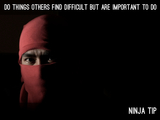
Stormshadow from GI Joe, Lego Ninjago, Teenage Mutant Ninja Turtles; it’s all about ninjas in my house of four - uh, I mean - three children. I have absolutely no idea how this happened. Every now and again, I get a bit Sensei on the kids and impart some Familylee Ninja Wisdom. Do you do anything similar and fun in your house/school/organization?
original CC licensed photo via Haiku Deck app
Royan Lee
.
Blog
.
<span class='date ' tip=''><i class='icon-time'></i> Aug 23, 2015 05:06pm</span>
|
|
Royan Lee
.
Blog
.
<span class='date ' tip=''><i class='icon-time'></i> Aug 23, 2015 05:06pm</span>
|
|
a tree that spoke to me
In the northern hemisphere, where the winters are long, and our children attend school from September to June, February can be a cruel month. Students are lethargic, parents are weary, teachers visit the liquor store.
I’ve been wondering why this is the case. What makes this time of year so debilitating? No doubt, the weather, vitamin D deficiencies, and general burnout that the September to January track meet can elicit has something to do with it. Still, does that really explain why?
I think it’s because February is the month of Failure. It’s the time in the year when we really discover if something is working or not. If you tried something new, however minor or major, you’ll know if it is turning out as you had hoped, or if it’s a wounded animal who needs to be put out of its misery. February is the test of an educator’s mettle. That relationship you were trying to build? It’s getting there, or it’s worse than ever. The initiative you were trying to spearhead? People gently hopped on the train or never even came to the station. The Twitter trend that all the eduspeakers are raving about that you really wanted to bring to fruition? The reality is staring you in the face.
On Wednesday, while walking to school with my daughter, I had the kind of personal epiphany that can only come about because of the wonders of our natural environment. I couldn’t remember the last time wet, heavy snow had fallen in such a way that every tree branch, all evergreen needles, and each whisker on your grandpa’s beard were coated in thick, wet, glistening snow. It resembled something only the White Witch from Narnia could have summoned. My daughter and I kept saying to one another, isn’t it funny how beautiful ‘bad weather’ can be?
The unusual beauty that I saw as February was fading out like one of those Neil Young guitar solos that goes a bit too long reminded me to embrace the failure. Look at it as a positive, not a degradation of your worth and purpose. You tried some things and discovered they are very, very difficult. Maybe it’s time you abandoned this idea. Perhaps you need to change track with that project. Your recognition of this is a strength, not a weakness.
Embrace, accept, and use February’s reminders of failure. March on with your head held high (I apologize profusely for that last pun; I tried with all my might to prevent it, but it overcame me).
Royan Lee
.
Blog
.
<span class='date ' tip=''><i class='icon-time'></i> Aug 23, 2015 05:06pm</span>
|