Blogs
|
by Shelly Blake-PlockTo the best of my ability I will paraphrase what was a conversation I had not long ago with a district supervisor who asked me for data demonstrating how 21st century teaching methods produced measurable results. I asked him what sort of pedagogy he was referring to. He responded, "21st century methods".I told him that while I could not speak for the whole of 21st century thought on teaching and learning, I'd be happy to explain my findings based on my own experience. He thought this was reasonable."So where were your students in terms of testing when you started?""I don't know.""What do you mean you don't know?""I mean, I never made that measurement.""But then, how did you measure the progress your students made?""I asked them," I replied."What do you mean you asked them?""I asked them. We talked about their learning all of the time. And we talked about their background. And what it was like to be a student. And we talked about whether they felt like they could tell when they really learned something or not. Real phenomenological stuff. And we tried different things to help us learn better in light of these conversations. Sometimes I came up with these ideas, sometimes the kids came up with the ideas. Sometimes things seemed to work, sometimes they didn't. Sometimes things we'd thought worked turned out later to not have worked so well. And sometimes things which in the moment we thought were useless turned out being rather helpful.""But how do you measure whether or not those things work?""Well, only by indirect means. In other words, by thinking about the value and relevance of exploration and inquiry to our community of learners rather than try to adhere to any objective of measurement defined by something out there that ostensibly defines an ideal of learning that applies to everyone all at the same time.""What do you mean?""I mean that if the sight of a mountain compels you to climb it, it really doesn't matter how many feet tall it is."We've spoken of education for so long as though it is representative of an objective academic truth that we've missed the fact that for the majority of human history it was a matter of survival. A matter of love. A matter of inspiration and compulsion. As often a matter of the irrational as the rational.The best advice I can give to anyone who reads this blog is to not believe any of it; rather, if you want to see if social tech and inquiry based education works -- and whether you will get results you can measure in one way or another -- just try some of the things we've talked about and debated over the last nearly three years. Even better, just get into the mindset of the debate -- whether you agree with me or not. Try things out. Maybe they'll work for you, maybe not; hopefully, one way or the other, it will inspire you to consider that there may not be any objectively "best" practices, only your communities' own best findings in any practice. Of course, within the context of social tech, this may mean something much more than what at first it may appear to mean.- Posted using BlogPress from my iPadLocation:Do Not Believe Me
Shelly Blake-Plock
.
Blog
.
<span class='date ' tip=''><i class='icon-time'></i> Aug 26, 2015 11:45am</span>
|
|
by David Andrade, http://tinyurl.com/edtechguyI haven't posted on Teach Paperless for quite a while, but I thought that this article would fit in nicely with the paperless theme and specifically on organizing lesson plans without paper. Like Shelley, I try to have a paperless classroom. Not all my students have smart phones, and I only have 7 student computers, but I've eliminated as much paper as possible. Here's how I organize my lesson plans without paper.Technology is a wonderful thing. I've been lucky in that my father, a chemist, and my mother, an elementary teacher, both realized that my siblings and I should be exposed to technology early on. I was using a TRS-80 computer in 7th grade (1986-87) and my parents bought us a Radio Shack Color Computer that same year. I took BASIC in high school, using Apple IIe's and then went off to college and majored in Engineering and was an Engineer for 10 years before becoming an educator. I used technology all the time. I started using a PDA in 2000 (Palm IIIxe) and continued on to other PDAs and now smartphones. This early and deep exposure to technology has made it very easy for me to integrate technology into my practice as an educator.I rarely carry anything home from school because of these tech tools. Administrators ask to see my lesson plans and they are all on the computer. Another teacher asked me how I do this, so after showing them, I thought I'd share it with my readers.I use a few different tech tools to organize my lessons and resources for school and use a variety of tech tools on a daily basis. Here is the list, with what I use them for. Click the hyperlinks for more information and details on the tool and how to use it.1. Evernote - Evernote is my main lesson and resource organizational tool. I have notebooks setup for lesson plans and lesson resources, along with notebooks for things to do, things to research, and things to share. My lesson plan notes are set up by unit and have the objectives, links, resources, and attached files (like handouts and lab packets). I also have notes setup by week that I use to keep track of where each class is and to schedule my plans out. I can easily share resources and information with my students or colleagues.2. Dropbox - I don't have every single file I use for my lessons on Evernote. Some of the materials, including videos and animations, are too big to upload to Evernote. I have all of my files on my home computer backed up to Dropbox, and then I sync the "School" folder to my school computer. This folder has resources, lecture materials, videos, and much more for each unit. I can also put files into a shared folder and share them with my students and colleagues. I also have students submit work to me to a Dropbox folder using Filestork and DropItToMe.3. Google - Google is my other main organizational tool. I use iGoogle, Google Calendar, Gmail, Google Docs and Blogger to organize my lesson materials and other resources, including my calendar. I use Blogger to create class blogs where I post their lesson schedule, assignments, and due dates, along with resources and links. I can share my calendar with students also. I also have files uploaded to my Google Docs account and use Google Docs to create lesson resources. I can then share or publish these documents, presentations, or spreadsheets for my students or colleagues to use. I also use Google sites for a class site that includes resources, files and links for both the students and myself.Google for Educators - Resources for using Google in school4. PowerPoint - I started organizing my lessons with PowerPoints when I used more lecture in my classrooms. I've moved to about 75% student centered learning now with projects, labs, and activities but PowerPoint can be used to organize lessons. Objectives, lecture slides, links to labs and other resources, embedded videos, and much more. I could just mark in my calendar what slide a class was on. That slide may be lecture notes, an assignment, a lab, or a quiz. I don't use this much anymore because I have my lesson plans organized in Evernote.These are just some ways to organize your lesson plans and resources.Other tech tools to organize lessons:Learnboost-online gradebook and lesson planner - announces lesson plan sharingDiscovery Education - lesson planner and integrated lesson planning in your accountRelated Articles:Unfettered by Stuff - or "Why I don't lug stuff home every night"Evernote - Get Organized for Free on All PlatformsMy History with TechnologyWhat tools do you use to organize your lessons?
Shelly Blake-Plock
.
Blog
.
<span class='date ' tip=''><i class='icon-time'></i> Aug 26, 2015 11:44am</span>
|
|
by John T. SpencerSometimes people create innovative solutions that seem logical, but end up being a step in the wrong direction. Either the tool is logical but not intuitive or it provides a solution for something that didn't require a solution or it made things easier while taking away autonomy. Regardless of the process, here are ten such tools:#1: Digital ClockI prefer analog, not for nostalgia or for beauty. I want to see the progression of time. I want a visual representation of just how close I am to moving toward the next minute. The digital clock doesn't reflect the human need to feel time progress. It is cold, logical and too far removed from the way we sense time naturally.#2: Alarm ClockI don't use an alarm clock for a few reasons. First, I want to trust my body. I want my sleep patterns determined by real sleep cycles. It's more than that, though. I want to wake up to silence. I want to begin my day in solitude. The shrieking sound of an alarm clock makes me irritable and panicky.#3: FaucetOkay, I know this sounds crazy, but I like the faucets with two handles. I like to control the exact temperature and water pressure. To me this is the classic case of "improving" something by allowing for less human autonomy.#4: eReadersI know. I know. I can highlight and tweet it out. It saves my spot automatically. I can jump from book to book. I can use a search function. I can use it on multiple devices. And yet . . . I like the feel of books. I like the way the weight changes as I progress toward the end. I like the asynchronous dialogue that happens when I let someone borrow and write notes in a book.#5: Cordless PhonesI don't mind being tethered to the kitchen if it means I can find the phone every time it rings. I have a feeling this will only get worse as the kiddos get older, too.#6: Automatic TransmissionsI drive an automatic right now and it bothers me. I miss the control of the clutch and the gears. The minute I got an automatic, driving became a very detached experience. And a part of me wonders if detachment is the ideal driving method.#7: Interactive WhiteboardsI like having a white board. I like being able to shine a projector on the white board and then sketching on top of it. Yes, it's less fancy. However, it's multifunctional and I can write on anything without having to change settings, save pictures to a folder, etc. Yes, but one can save a flip chart! True. However, one can also take a quick snapshot of a whiteboard and post it to a blog. #8: Complicated Remote ControlsI have never, in the process of channel surfing, decided that it would be great to adjust the color contrast, change the sleep function and set the time. It seems like these options ought to be part of a single menu from a single menu button. It's the classic case of offering too many choices when a set of numbers, a volume changer and an up/down button would suffice.#9: Digital SpeedometersI once had a car with a digital speedometer and it constantly flickered between two numbers. I'd rather gauge my speed quickly and move on.#10: ThermostatWhen I was a kid (back in the days of the Oregon Trail, Culture Club and Trickle-down Economics) the thermostat was simple. One could turn the nob to the exact place. From a design perspective, I wonder if we've made a mistake in replacing knobs with buttons. The knob is faster and more intuitive.Okay, that's enough. I promise that I'm not always such a curmudgeon.
Shelly Blake-Plock
.
Blog
.
<span class='date ' tip=''><i class='icon-time'></i> Aug 26, 2015 11:44am</span>
|
|
by Shelly Blake-PlockGrowing up in theBaltimore of the 80s and 90s, my personal heroes were the folks who developedtheir own way in the DIY community. From music to art to literature, it seemedlike these DIY'ers could do what ever they wanted -- and they could. Down in DC,Dischord Records went against everything the "record industry" of thetime stood for; they made their own records their own way and instigated thesame throughout a DIY culture that found itself sprouting up in every nook andcranny where young people were sick of the corporate status quo. Here in town,art co-ops and radical bookstores challenged the ideas that you needed acommercial gallery to make it as an artist or that you needed a publisher tomake it as a writer.This was all before theInternet, of course. And it had deep roots going back into the 60s, the 50s,and earlier.The DIY movement of the80s and 90s flourished at that moment because it had to. Like the Beats in the50s who found that Big Publisher wasn't going to touch their work and insteadthey had to do it themselves, the hardcore kids of east and west coast alikerealized that they were going to have to do it themselves. Like the avant-gardeNYC filmmakers of the mid to late 1960s developing their own community tocreate, show, and distribute their films beyond the reach of Hollywood, theweirdo Baltimore poets and zine writers of the 80s and 90s developed their owncommunity to print, share, and distribute their chapbooks, comics, and Xeroxedmasterpieces. And this sort of thing happened all over the place, from New Yorkto San Francisco to Toledo to Lincoln, Nebraska.I think we findourselves in this type of situation once again.Coming up through theedtech of the 80s and 90s was to come up through the era of hardware. Schoolsthat did tap into the tech current did so by purchasing ridiculously expensivecomputers and software. In a way, those schools that wanted tech were thenbeholden to computer companies and the companies who repair computers. Thatunderlying structure is still at the heart of so much that goes on in techacquisition. There was relatively little room for DIY to flourish in edtechbecause DIY'ers didn't have the capacity to keep up with the sort of demandeveryone thought they needed. Sure, there were always Open Source heads andhackers making cool stuff -- usually for their own schools/use; but there wasno major flourishing of local DIY tech communities that could really put a dentinto Big Software.How things have changed.Back in November, MikeBrenner brought http://educationhackday.org/ to Baltimore.The mission was simple: listento problems sourced by teachers from around the world, pick a dozen or so totackle, and form teams around those problems that would each come up with andexecute a creative solution to solve them.Teams comprised ofteachers, developers, and designers then spent two days creating apps specificto classroom needs. The results ranged from a school-specific mobile browser toteacher-customized video software to an image-to-speech app designed forspecial needs students. And one of the most interesting things to develop outof the event: teachers and technologists starting businesses based around theircollaborations.I see this as indicativeof the way forward. Whereas big legacy operations like Pearson may have themoney and the capacity, they don't have the feet on the ground -- i.e. thepeople creating their products aren't the people using their products. In thatway, they will always be behind the curve. They will always work with the"input" of teachers rather than "with" teachers. Ed HackDay showed a different model. A model not unlike those DIY companies thatdeveloped and in doing so gave something meaningful back to the local communitywhile creating a global ecosystem of DIY networks.That's what I see as aviable and sustainable way forward in edtech and entrepreneurship. With theadvent of an Internet that revolves around the Cloud and apps that arecost-effective and purchased as-needed (rather than as a big Office-stylepackage), we find ourselves in a situation where local entrepreneurs can besuccessful in tapping into big need -- and need driven by need rather than bygreed.Alas, there is a catch.(And as we all know, with edtech there is always a catch...)The catch is that the EdHack model only works because a teacher is involved. There are numerous edtechstart-ups (they are seeming to pop up every day). They see a fantastic marketopportunity created by common core standards, 1:1 mobile, and dis-satisfactionwith the state of schools. I recently talked to a guy who has created an entireLMS that he is selling to school districts and he ensured me that his LMS isthe future. The only problem I saw with his LMS is that from ateacher-perspective it sucked. The entire time I was demo'ing the software, itfelt like I was being forced to think like an engineer as opposed to thinkinglike an educator. While the basic idea of the program made a lot of sense -- andcertainly could be sold to districts -- when it came down to the brass tacks,it felt like something created by someone who had no sense of what it wasactually like to be in a classroom.That is why the teacherperspective is so important. That's why it is so important to have a teacherleading the design. But there is something else going on as well...Those Ed Hack projectscame out not only of the experience of real teachers in real classrooms, butthey were intended to be used by those teachers in their classrooms. In otherwords, the designer had a real stake in the usability of the app. This is atthe heart of DIY. And it is at the heart of the developing DIY edtechecosystem. Teachers making stuff for themselves and for other teachers likethem. Designers thinking hyperlocal and through collaboration and communityextending opportunities to the global.I love Baltimore. I grewup here and I have lived here most of my life. I've seen the best the town hasto offer and I've quite literally seen the darkest stuff. In my experience, themost rewarding thing about the city is the real sense of community that hasdeveloped amongst the seemingly fractious parts of the creative community. In away, Baltimore is a city of misfits. NYC and Philly dwarf us to the north andD.C. reminds us on a daily basis that we are not "serious" enough. Ifthe east coast were a high school, Baltimore would be the drama club.But because of this,we've developed interesting collaborations that may not make as much sense inother places. Collaborations between visionary art and antique cars, beatboxing and symphony halls, local politics and swimwear.And we may be on to something with edtech in the hands of educators andtechnologists working collaboratively.I would love to seeBaltimore develop into a Silicon Valley of edtech. Not a city of behemothmindless corporations, but a city where every classroom is a garage. I'd liketo see edtech bring opportunity to city kids and their families. I'd like tosee high school seniors start businesses based on their ideas and experienceusing and developing technology in the classroom rather than watch themstruggle to stay out of the street economy. I'd like to see non-profitsflourish -- advocacy and community training corps who would bring the digitalage directly to the communities most people ignore. I'd like to see small andmid-sized businesses flourish and bring pride back to neighborhoods that haveall but been given up on. I'd like to see edtech explored in dramatic ways notonly as a means of bringing kids up to speed on STEM subjects, but as a way toempower students to create and publish literature, art, movies, music.I'd like to see anedtech community develop whose goal was local but whose reach could be global.I'd like to see an edtech community develop whose eye wasn't on bringing up thebottom line, but in bringing up those students who have been on the bottom fortoo long. I'd like to see an edtech community develop that doesn't threatenteachers' jobs, but that rather empowers teachers to go farther with theirstudents than they ever thought possible.I'd like to see anedtech community that flourishes around the idea that we really are connected.And we really can do it ourselves -- together.
Shelly Blake-Plock
.
Blog
.
<span class='date ' tip=''><i class='icon-time'></i> Aug 26, 2015 11:44am</span>
|
|
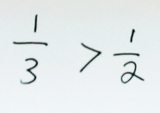
by John T. SpencerI know that "flipped" is a trendy idea right now. While I am intrigued by the idea of video tutorials to help guide students in learning, it is absurd to suggest that a video can replace a human in creating the ultimate customized learning experience. What this concept misses is the nature of human learning.Teaching is a relational endeavor.I'm a proponent of the flipped approach. But if we are pushing for flipped, we need to make sure that remains a conversation. Take the most objective part (an algorithm) of a subject (math) that is perceived to be more objective than the rest.If it's a multiple choice test, I can hope the answer matches the student's idea (rather than a simple guess). If it's an assignment, I can apply a red checkmark and tell the student that it's wrong. Either way, how does that help clarify a misconception. A simple glance at the problem suggests a few possibilities:The student guessed that it was greater than and doesn't understand the concept in the first placeThe student doesn't understand numerators and denominatorsThe student saw the bigger number and jumped to that rather than thinking through it logicallyThe student knows that one-third is less than one-half, but learned it wrong (a crocodile mouth or something like that) The student doesn't care, because greater-than and less-than doesn't feel the least bit relevant to any context within his or her world. At this point, a graded paper doesn't make any difference. A new tutorial video is a shot in the dark. What is needed is a conversation where the student can reflect on his or her misconceptions and the teacher can re-teach and clarify.Teachers can do this with small group pullouts and with student-teacher conferences. I'm a fan of both. However, here is where technology becomes exciting. See, with technology, the communication can be asynchronous. Here are some examples of technology as an interactive dialogue that helps push students toward deeper reflection:Google Docs: I can highlight text, add comments and start a conversation that will last anytime anywhere. It started with the writer's workshops, but eventually morphed into spreadsheets and documents in math. Students kept documents of common mistakes, vocabulary, etc.Blogs: Students can take a snapshot of their work and describe the process in steps or in a paragraph. This allows me to start a conversation at any time and any place. This is also a great place to keep math vocabulary or engage in conceptual conversations about the math that students are using.Multimedia: Students record videos and podcasts showing their math processes and other students have a chance to comment. This allows students to articulate their process and I have a chance to watch them at another time (prep period, early morning, for example)Twitter: Last year, students used #mathmisconception as a place to post their questions, comments and mistakes in processes.Forms: Though this is less conversational, sometimes it's as simple as crowd-sourcing the conversation with the use of a survey. Similar to an exit slip, students mark a series of questions and I can organize the data to help me figure out how to approach our one-on-one conversations. In the example above, I can use the five options and gauge how the class, in general, is doing with a particular skill set. So, when I think about the concept of "flipped," I wonder if the real flipping is allowing students to use the tools to demonstrate what they know, figure out what they don't know and engage in a process where they can fix their misconceptions.
Shelly Blake-Plock
.
Blog
.
<span class='date ' tip=''><i class='icon-time'></i> Aug 26, 2015 11:44am</span>
|
|
by John T. SpencerAny leader who can get me to wear this is a great leader, indeed.Have Fun: I'm not referring to simply hosting a potluck. Some of the best leaders go over-the-top either with zany humor or with something extra-classy or with something deeply thoughtful. The bottom line is that these types of events tell a team that the leader is willing to go beyond the expectation. Tomorrow I will sport that outfit above for our department Ugly Sweater party. It is, admittedly, goofy. However, there is power in a shared, memorable, goofy event. Be Supportive: I can't count the number of times that he has gone to bat for our department when we were being trampled on by the system or misunderstood by other leaders. Be Critical: Chad is the type of leader who isn't afraid to engage in hard conversations when things aren't working. I can trust his words of affirmation, because he is honest enough to be critical at the necessary times. Be Humble: I see this in small ways. For example, he sits with us rather than with the directors at meetings. He gives us credit anytime anything goes well and he takes the blame when things fail. He listens. He asks questions. When you work with a humble leader, you give them permission to enter into your world and the concept of submitting to authority doesn't feel like a chore.Be Innovative: Although creativity and innovation are edu-buzzwords, the reality is that the system often forces people to push compliance above change. I feel the freedom to push innovative ideas and the freedom to fail in the process. It's a powerful motivator. Be Present: There is an intentionality to the moments when I am in his office. He is truly present. I've worked with people who are thinking about other things or trying to multi-task and the result is something even colder and less relational than an e-mail. Trust: Although this is the last on the list, it's the most important. I trust my boss and because I trust him, I can be honest and vulnerable and he can step in and help when it's necessary. He doesn't micromanage. He doesn't nag. But he's not entirely "hands-off," either. Trust allows for freedom within the confines of safety.
Shelly Blake-Plock
.
Blog
.
<span class='date ' tip=''><i class='icon-time'></i> Aug 26, 2015 11:43am</span>
|
|
by Shelly Blake-PlockHad a conversation with a friend a while back; we were talking about how to best evaluate what was working in schools. After rambling through all the usual arguments about testing and achievement and technology and pd, he said to me, "You know, for all the effort we put into the kids while they are our students, we do really little to gauge how we did once they are out the door. We treat school as though it is the most important thing in the world; and then they get out only to find that most of what they spent all those years doing there wasn't relevant. The only ones who ever really come back to talk to us are the ones who got something relevant out of school -- whether with grades or football or even the class clowns who owned the place while they were here. The kids who got something out of school come back and tell us how great we were. So there we are only getting feedback from the kids for whom the whole thing -- or at least something important in it -- worked. But when's the last time you heard back from any of those kids at the bottom of the rung? The quiet kids? The ones whose names you never could remember right?"Most of the forms of evaluation and assessment we use have to do with finding out how a kid is doing right now; but "right now" isn't necessarily the best indicator of where we are headed. Even worse, "right now" often becomes a self-fulfilling prophecy. Think about how many kids in reality are graded and assessed in the minds of the teacher before they ever open their mouths; how they are assessed in advance based on the accumulation of all of those "right now" experiences and testing events devoid of the context of a child's life. Unfortunately, for a lot of kids, that becomes the de facto of their school experience.That's not to knock teachers, it's just reality; as institutions, schools are really good at stereotyping kids and how that plays out at the classroom level in terms of attitudes accorded to students by faculty and peers alike -- well, that's an unfortunate but absolutely real part of the school(ed) experience.And so we Scantron and five-paragraph essay our kids to death in the interest of getting them to achieve; but what is that elusive achievement? Is it a demonstrable improvement over time? (If so, why do we give grades based on summative assessments?) Is it an accumulation of honors? (If so, does that imply that most kids achieve nothing?) Is it an acceptance to the next level, the next school, the next diploma?And what of when they leave our tutelage?Imagine if schools were judged not by how well students achieved while they were in school, but in how well they achieved once they left. If schools saw their worth not in how many kids got accepted to college, but in how many kids went on to live meaningful and engaged lives and who would point back to their school years as the point of relevancy that was the foundation of it all.If schools gauged themselves not by how many kids passed a test, but in how well it prepared those kids who did not pass the test to see themselves as worthy of respect and ready to take on the challenges of life. In fact, if schools worked to make entrepreneurs and role models of every kid who failed a standardized exam. If failure became a calling card for innovation.If schools prided themselves on knowing the dreams of the quiet kids. If they prided themselves on helping those kids attain those dreams.Dreams don't always fit into curricula.Neither do successful failures. We need schools that recognize failure as being as much a matter of how well one fits into a prescribed system than how well one understands, well, much of anything really. And kids know we are blowing smoke when we give lip-service to how everyone should think outside-the-box and then we hand them a box and tell them that everything they've learned should fit back into it. And when they leave things outside-the-box we define them as failures.We do this at our increased peril.Because we are all failures of one sort or another. And though we like to focus on what we consider positive, it is more often the case that we live in a world comprised of systems of struggle and unanswerable questions. And we fail on a regular basis. And we need students who understand how to fail.And we know this, yet we continue to punish students who fail -- as though our invented system of textbooks and number-two pencils were a better predictor of intellectual and creative capacity than life itself.I wonder if I did a good enough job explaining that to my students. I wonder about the students who slipped through. I wonder about the ones who failed out.I feel like they are the ones we should be talking to.They are the ones who understand the impact of schooling. Enough of the smartest kids in the class always getting to answer the questions. I want to hear from the kids for whom school didn't work. I want to hear from the alumni who feel cheated by the system. I want our schools to be judged by how well we respected the humanity of the student who graduated with the lowest GPA and how we celebrated and engaged his or her capacity within society.Because we are a society, we are connected one and all; and ultimately, if school is not relevant for that kid, school is not relevant for any kid.
Shelly Blake-Plock
.
Blog
.
<span class='date ' tip=''><i class='icon-time'></i> Aug 26, 2015 11:43am</span>
|
|
By Noah GeiselI’m watching an ESPN profile on Green Bay Packers quarterback Aaron Rodgers. If you’ve listened to five minutes of sports talk radio in the last month, then you know people are talking about his season as one of the best played by any quarterback, ever. One thing that is striking about the story is how it relates to assessment. In the big money, high-stakes world of college football, a lot of work goes into evaluating young men and their potential. Expert scouting begins as early as 14-years-old. As a teacher, this sounds familiar.At the beginning of the profile, the reporter talks about Rodgers’ dream of playing for Bobby Bowden at Florida State, and how the assessments of his abilities missed the mark: "Florida State did not want Rogers. Nor did any other Division I school." A guy with a 1300 SAT who would go on to be a 1st Round Draft pick and NFL superstar launched his collegiate career at Butte Community College.When asked why he believes he was overlooked, Rodgers responds, "Far too much weight is put into your height, your weight, your ‘40’, your bench press. The things you can’t measure: your character, your confidence, your mental toughness, your physical toughness, not as much weight is put into that." Again, this sounds familiar to educators. The Aaron Rodgers story is yet another reminder of why we educators need to be implementing in our classes (and pushing for system-wide) assessments that seek to measure the important skills that we know are essential for 21st Century success. We work in a world of high-stakes testing that primarily focuses on evaluating students based on multiple-choice, knowledge-based questions. Certainly, there is a place for assuring that our students have acquired the desired knowledge in our classes but with the weight that is placed on district benchmark exams, statewide assessments and even national exams, we need to be evangelists for the importance of measuring not only what students know but what they are able to do as well.
Shelly Blake-Plock
.
Blog
.
<span class='date ' tip=''><i class='icon-time'></i> Aug 26, 2015 11:43am</span>
|
|
by John T. SpencerIt's a rough afternoon. My directions were too long and too specific and the students acted out in boredom. I took it personally and yelled. I'm trying to rethink my lesson for the following day with the knowledge that the Clipboard Crew will be stopping by in an effort to see the magical formula that leads to higher test scores. I should be honored, but I'm terrified. I'm doubtful. I'm doubtful about my inability to create the kind of story they're looking for.I turn on the Iron and Wine cover of the "Waiting for Superman." The song is the perfect marriage of a broken, lo-fi*, acoustic sound with the themes of humility and expectations. I'm reminded that we're human. We're all broken (even the Clipboard Crew) and the amazing story is that powerful things happen in humble places.It has me thinking about the notion of lo-fi and the concept that sometimes less is more:Tools: My students blog and podcast and tweet and all that. And yet, give them a composition book and let them draw in it, sketch in it, duct tape it, organize it however they want and their Individual Learning Journals become a powerful statement about minimalism, humanity and the power of low-tech learning. If the Eco House project was a tech-infused Postal Service tune, their journals were Sufjan Stevens with a banjo singing Casimir Pulaski Day in a way that would make you weep.Directions: The lo-fi approach reminds me that there is a power in simplicity. When I listen to Iron and Wine, I am reminded of the need to slow down and allow for additional mental space. Fewer directions. Fewer assignments. It's often where students find the autonomy to personalize their learning. An indie classroom should have indie thinkers and indie thinkers should be able to customize their learning.Discipline: One thing I love about the acoustic, minimalist sound is that it retains the human voice. I don't want a discipline management system. I want a relationship that respects the human voice.Approach: I think it's interesting that Iron and Wine has brought back a pastoral, naturalist lyricism (that never really left). It has me thinking that the natural, the pastoral, the outdated might just be the vintage, the classic and the sustainable that we're missing in our standardized Pop 40 system. It's not trendy by any means, but a philosophical discussion, a confusing parable or even a choral reading or a powerful story all have a place in the 21st Century Classroom. *I know some people would have a fit with me calling Iron and Wine lo-fi. I get it. Lo-fi is often used in metal (especially 80's lo-fi) but I'm really intrigued by the acoustic lo-fi sound.
Shelly Blake-Plock
.
Blog
.
<span class='date ' tip=''><i class='icon-time'></i> Aug 26, 2015 11:43am</span>
|
|
Shelly Blake-Plock
.
Blog
.
<span class='date ' tip=''><i class='icon-time'></i> Aug 26, 2015 11:43am</span>
|